Iran’s aggressive nuclear energy program seems to be constantly in the news these days; while other regional countries, including Jordan, have nuclear power ambitions of their own. As the fourth anniversary of the March 11, 2011 Fukushima nuclear reactor meltdown is commemorated by Japan last week, the world may still not have learned the entire lesson of that tragic event. Many environmental activists are referring to the Fukushima reactor meltdown as much worse than Chernobyl.
Fukushima is now considered the world’s worst nuclear power plant disaster, and at least 250,000 Japanese are still displaced from their homes and businesses by the effects of both the giant earthquake-caused tsunami and nuclear reactor meltdown that killed more than 16,000 people and resulted in 2,500 more still missing.
Extremely high levels of radiation in locations near the destroyed Fukushima facility have prevented many Japanese from returning to their former homes; possibly forever. Entire communities are now no more than ghost towns, where wild animals like wild boars and monkeys roam free.
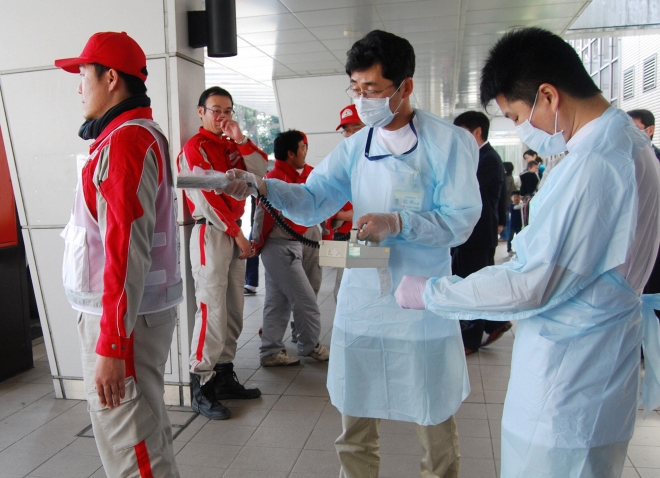
Not only the Japanese were affected, but also foreign rescue personnel who were sent there to aid and rescue the victims of this double tsunami and nuclear meltdown tragedy. This includes more than 500 American naval personnel who became ill from a variety of diseases and medical conditions which may have been caused by over-exposure to nuclear radiation.
Statistical information on radiation caused diseases, like cancer, and birth defects caused by the exposure of the Japanese population to high amounts of radiation have not yet been revealed as well.
Despite being the only country whose civilian population has experienced the effects of nuclear weapons first hand, Japan still depends on nuclear energy to supply much of its total electricity needs. The Fukushima tragedy may have changed this, however, with government officials now looking for other means to supply the country’s energy needs.
Statistically, the facts and figures of the need for nuclear reactors, are evident. Japan still has 48 nuclear reactors in operation, generating more than 42,500 MW of electricity. France, Europe’s largest nuclear reactor user, has 58 in operation, generating more then 63,000 MW. With 99, the USA has the largest number of nuclear reactors in operation, generating more than 98,700 MW of electricity.
The Middle East is still depending largely on oil and natural gas to supply its energy needs. At present only Iran has a functional nuclear reactor, producing around 915 MW of electricity. Seven more reactors are planned however. Other Middle Eastern countries planning to construct nuclear power reactors include Jordan with 2, Egypt with 2, Saudi Arabia with 16 and the UAE with 10 (3 are under construction).
These figures do not include “scientific reactors” in countries like Iran and Israel. With the tragic memories of the Fukushima reactor meltdowns still relatively fresh on peoples minds, we might all ask ourselves if the potential dangers of these power sources are really worthwhile?
Read more on Fukushima nuclear reactor meltdowns and the effect of nuclear energy on world environment:
Plans for Turkey’s First Nuclear Power Plant Revealed
Dr. Helen Caldicott: Fukushima nuclear meltdown much worse than Chernobyl
“Worst Case Scenario” Realized as Three Fukushima Nuclear Reactors Melt Down





 Travel to the Middle East has never been a better deal than now – in terms of economics (deep-discounted hotels and holiday packages), weather (
 Finding greener ways to bury our dead is nothing new. In both Judaism and Islam, people are




 IKEA and UNHCR (the United Nations High Commission for Refugees) emerged from



 Oryx, giraffes and
 Today is Pi Day. Celebrated around the world every March 14th (3/14), the day focuses on the mathematical symbol that represents the constant ratio of a circle’s circumference to its diameter, approximated as 3.14159. This year’s Pi Day is a once-in-a-lifetime event; it will be 100 years until we experience 3/14/15 9:26:53 again – that’s pi to ten places!