
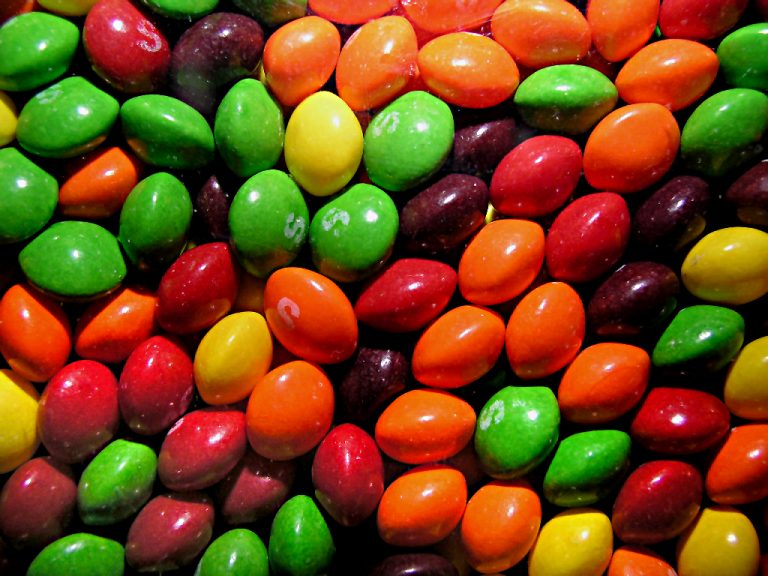
 I’m going to thank Donald Trump Jr. for providing a simple way to visualize our decisions regarding human refugees. He said that we should pretend that “those people” are skittles, not someone we could ever imagine being a loved-one– capable of thought, compassion, joy and loss as we believe of ourselves.
In junior Trump’s analogy, a bowl full of skittles represent men, women and children who somehow escaped bombings and other violence in their home and who somehow avoided drowning and starvation as they made a perilous journey across the Mediterranean, through Europe’s muddy hinterlands into your candy bowl. Now we are to imagine that there is one poisonous terrorist skittle in our candy bowl. Eat this and you will die.
Assuming we can stomach a moral worldview which equates human lives to candy, there is another problem– and another bowl of skittles.

Bowl #2 is a mandatory skittle bowl. You must eat from this one even though you know that many of its skittles are poisonous. How many? Well, let’s get back to bowl #1.
If each skittle represents a Syrian refugee taken into the US this year, there are 10,000 skittles. And how many are poison? Should we assume that the LA shooters and the Boston bomber brothers, the Orlando gay hater, the Jersey bomber and Saint Cloud stabber all belong in bowl #1? No, none of these were among the Syrian refugees the US took in this year but since we’re pretending, let’s assume that we can count all of them. That’s 8 poison skittles out of 10,000. So to fit Trump junior’s analogy, we need to resize our bowl to 1250 skittles, one of which is poison.
But we still have our mandatory skittle bowl #2. Sticking with Trump junior’s skittle-human life equivalence principle, lets assume there are 300 million red, white and blue skittles in bowl #2.
The poison skittle in bowl #1 represents death from a terrorist. The poison skittles in bowl #2 represent death from other causes. In the US these deaths are tracked by the Center for Disease Control (CDC.) So we know that for each terrorist poison skittle in bowl #1, in bowl #2 we would need:
- 299920000 empty calorie non-toxic skittles
- 35,000 poison heart disease skittles
- 34,000 poison cancer skittles
At this point I’m going to pause and say that I wish the U.S. government could shift a tiny fraction of its $5 trillion anti-terrorism spending into developing a cure for cancer and heart disease. Together these diseases are about 70,000 times more deadly than terrorism. But sadly, they are not the only cause of non-terrorist deaths. Bowl #2 must also contain these poison skittles:
- 4700 poison alcohol skittles
- 2000 poison car crash skittles
- 2000 poison gun violence skittles
- 2000 poison suicide skittles
- 452 poison HIV skittles
And a few hundred other poison skittles representing deaths from bathtubs, furniture, prescription drugs and various other causes that other countries might classify with the catch-all “death by misadventure.”
If you’re reading this, you’ve already survived mandatory skittle bowl #2 and now you have a choice. Do you take your next mandatory skittle straight from mandatory bowl #2? Or do you save thousands of lives by first pouring in the contents of bowl #1, infinitesimally increasing your risk by adding one more poison skittle to mandatory bowl 2 which already contains 80,000 poison skittles? You’ve got to ask yourself, ‘Do I feel that unlucky?’
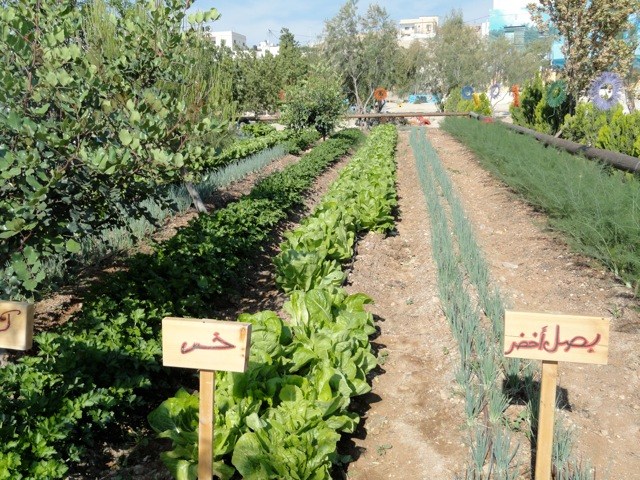
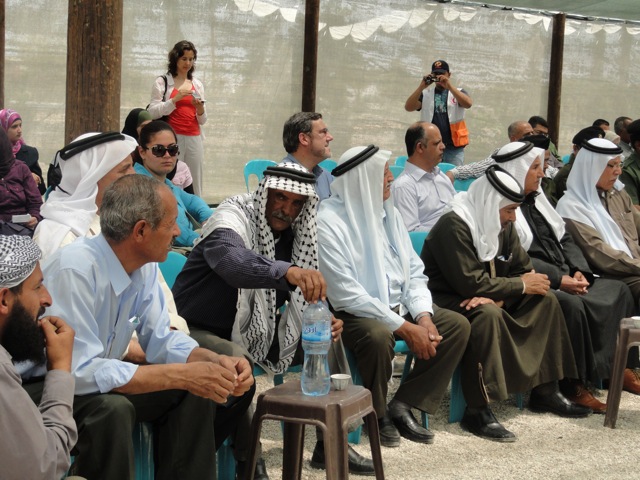
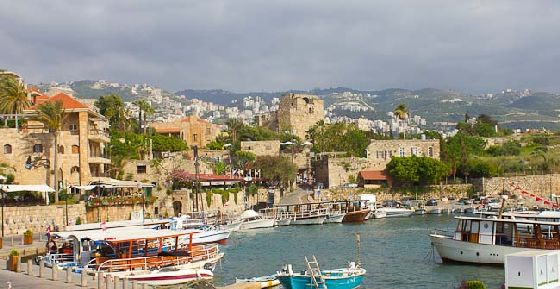
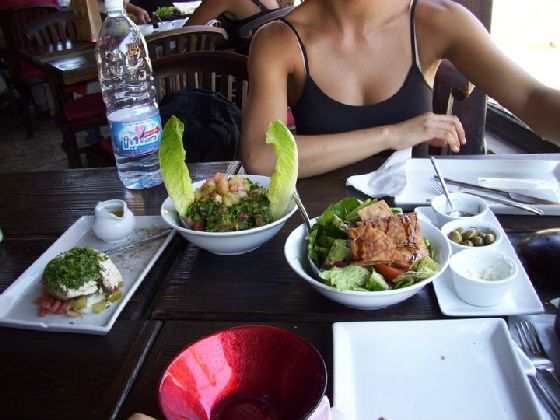
Images by Jene Bradbury, Green Prophet’s Laurie Balbo. The drawing is by a Syrian refugee child at Zaatari camp in Jordan.









 ines
ines

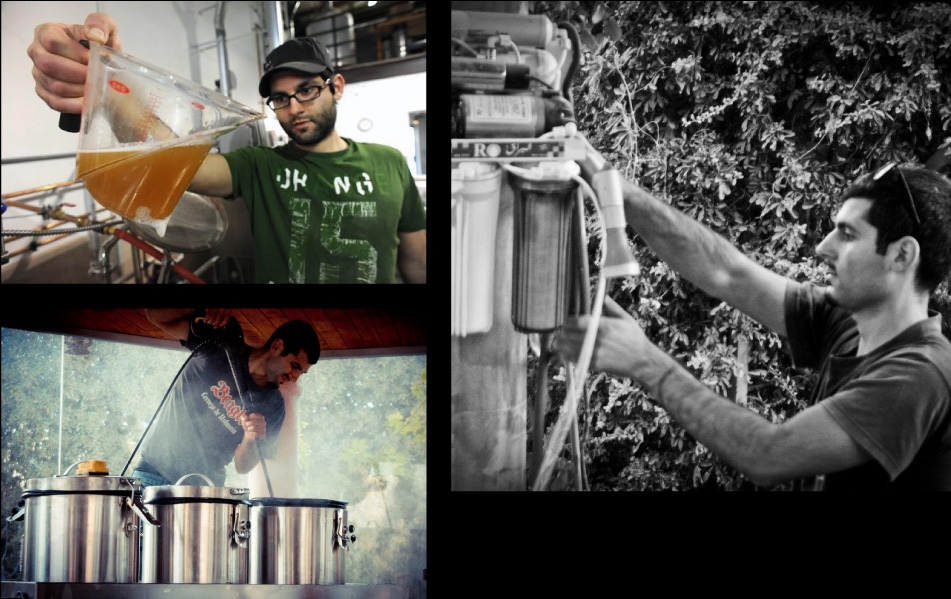

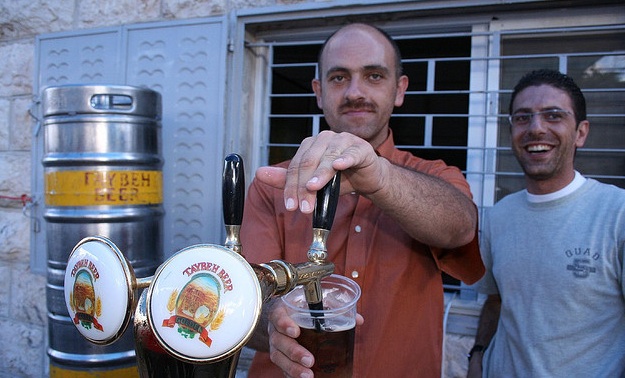


 Thanks to a french import Yossi Dan, and his company Challengy, Israel is about to put some serious spice into the international Food tech scene. Dan is looking for 100 Food Tech companies to duke it out Battleground style, at the Google Campus in Tel Aviv later this month.
 Details about the pitch:




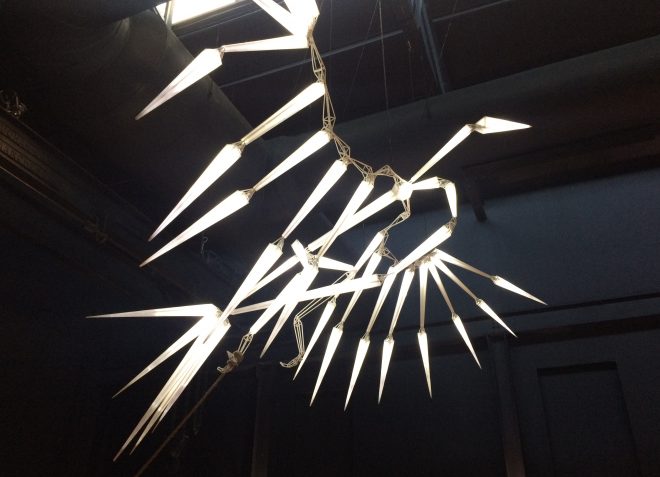 Pieces include a gigantic soaring bird made of electric light tubes by Iraqi artist Adel Abidin (above) and an intricately woven screen made of fine copper wire by Jordanian architect Hiba Shahzada (below).
 Architects Yazeed Obeid and Jeries Al Ali contributed a skeletal tower that references the welded metal minarets towering over rural Jordan. The sculpture morphs with movement; walk around it and the shape of the internal void creates new illusions of mass.
 There are spectacular furnishings made from marble and granite, some carved with lasers to mimic Palestinian embroidery. Arabesque motifs inspire the “Unfolding Unity Stool Marble Edition” by Aljoud Lootah Design Studio (below).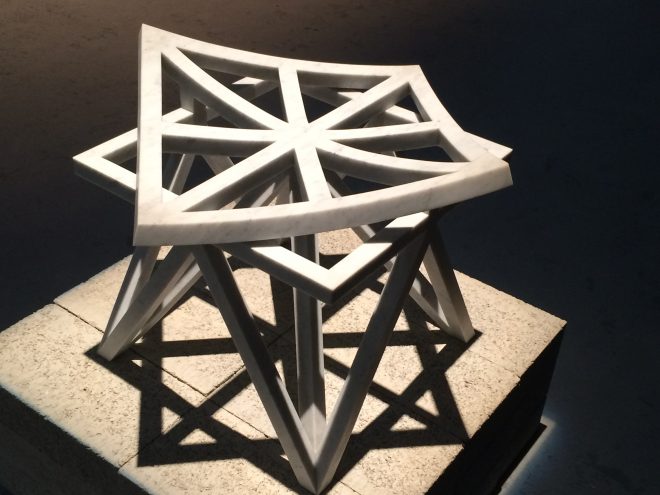
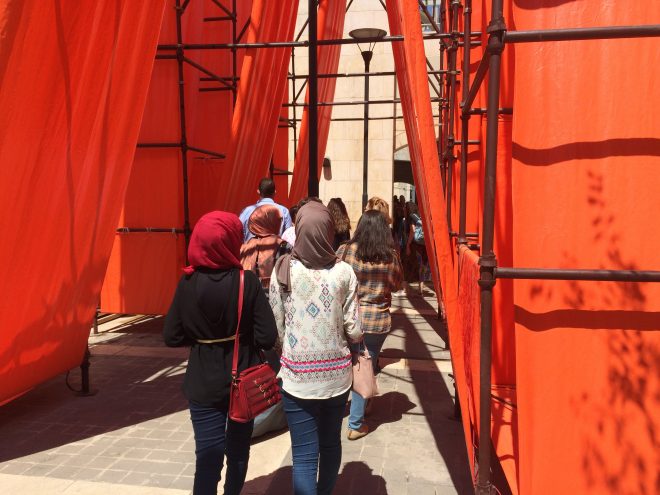
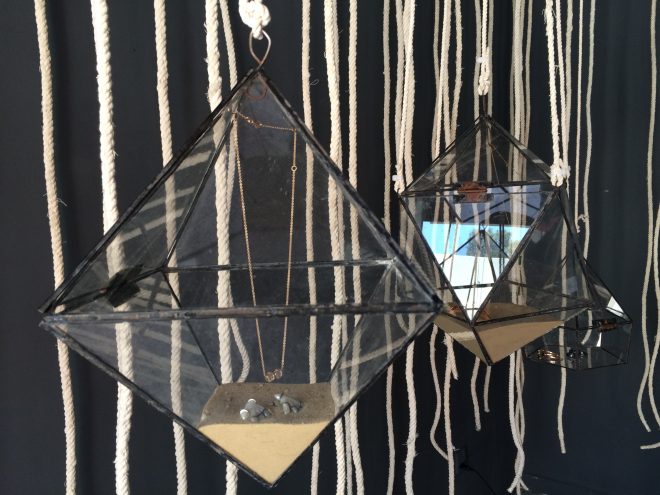
 The pieces begin to engage more fully with their urban surroundings at the Raghadan Tourist Terminal, where portions of the facility have been wrapped with brilliantly colored fabric and rope, creating marvellous shadows that move with the sun (above and below).
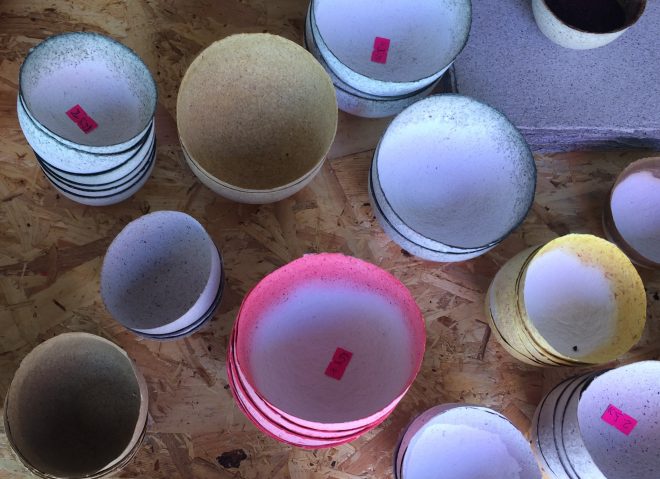
 Find handmade paper cards, notebooks, and home accessories by the Association of Iraq Al Amir Women, a small community south of Amman supported in part by the craft collective. Their colorful paper spice bowls are shown, below.
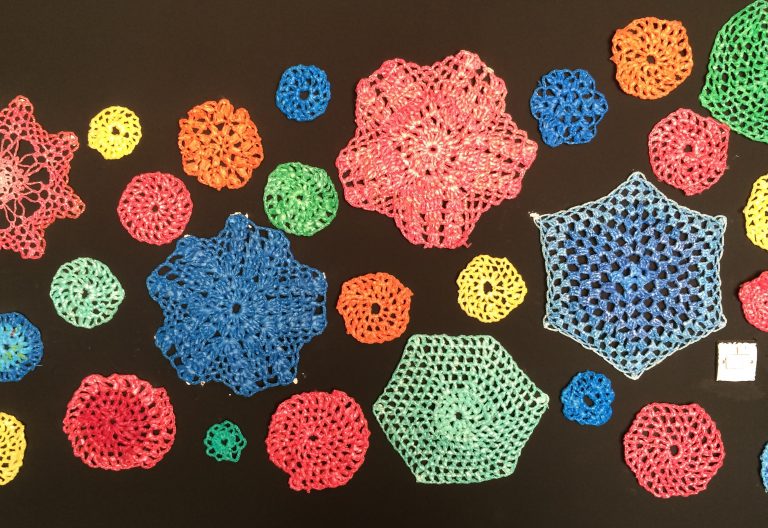
 Twenty-seven artists crocheted the #KeesChic Canopies providing shade along the marketplace corridors (below), diverting 25,000 plastic bags from local landfills.


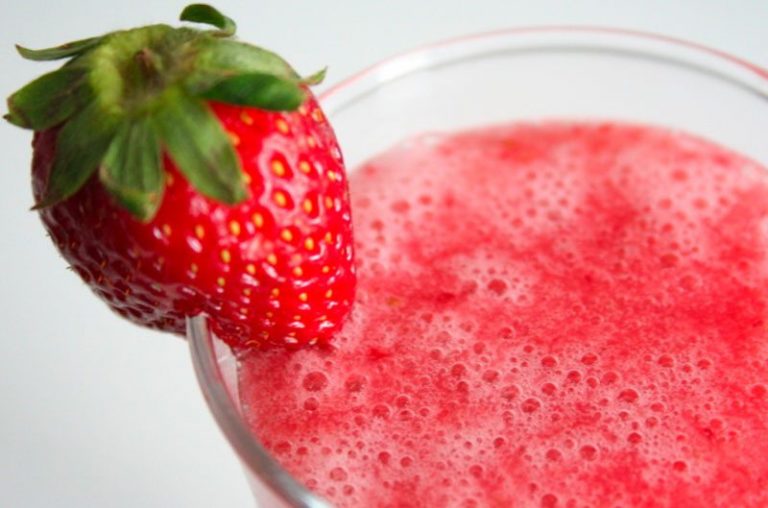
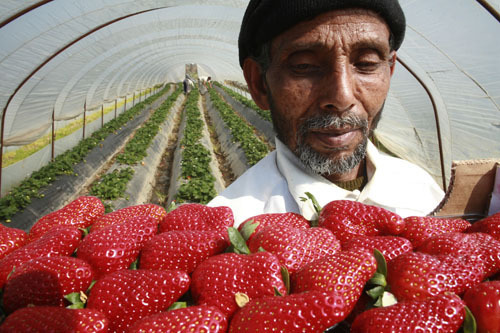
 If a tree falls in the woods, does it make a sound? If a food worker in Egypt fails to properly wash his hands, does it cause an epidemic in another nation? More than 80 people in seven US states have been infected with food-born Hepatitis A, and at least 32 people have been hospitalized. The outbreak is linked to frozen strawberries from Egypt that were served up in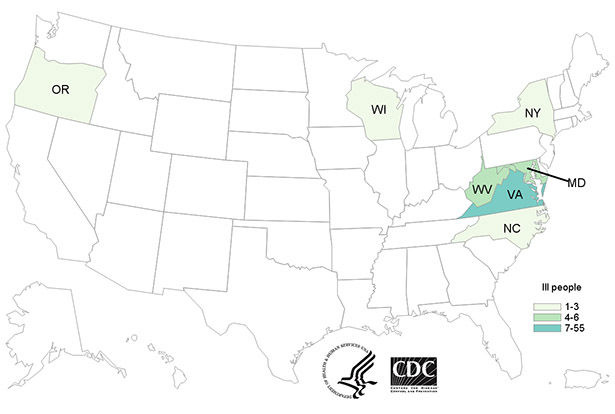
 Jerusalem’s Bezalel Academy of Art and Design – Israel’s oldest institution of higher learning – is a prolific incubator of brilliant ideas, with its post-grads serving as the school’s best advertising. They move on to produce beautiful artifacts, while kicking forward the antique design credo of “build a better mousetrap”. Now one student has developed a device that can