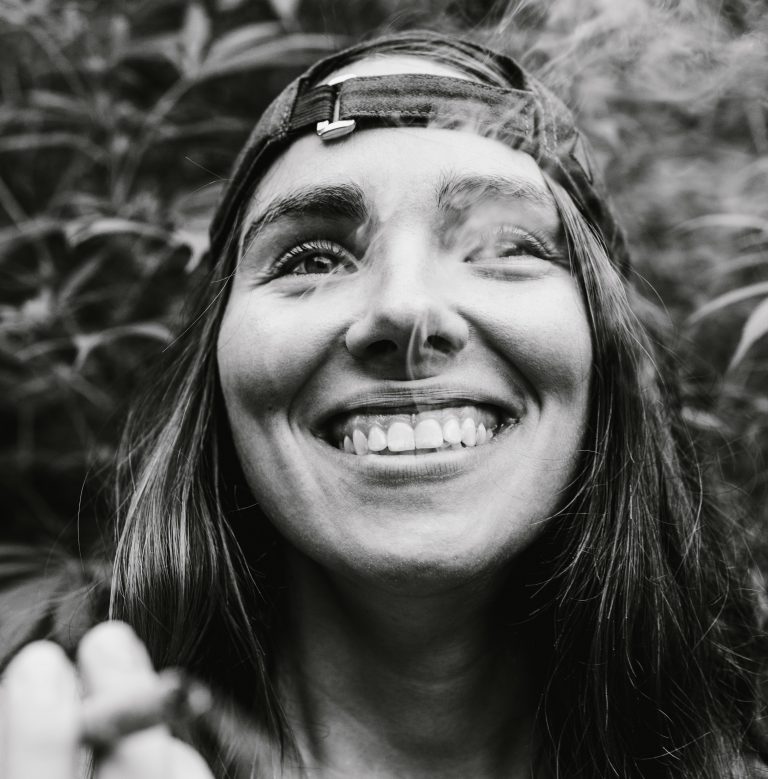
Maggie Baird, best known as the mother of Billie Eilish and Finneas O’Connell, is stepping into a much larger spotlight, this time as a climate storyteller.
Tillage is one of the clearest signals of how a farm treats its soil. Intensive plowing can degrade structure, release carbon, and increase erosion. Conservation practices—no-till, cover cropping, minimal disturbance—do the opposite. They build soil, retain water, and support biodiversity. But until now, measuring these practices at scale has been slow, expensive, and often self-reported.
Hydrophilis, Oliver Isler’s experimental rebreather suit, reimagines diving by reducing drag, eliminating bubbles, and bringing humans closer to the natural movement of marine life.
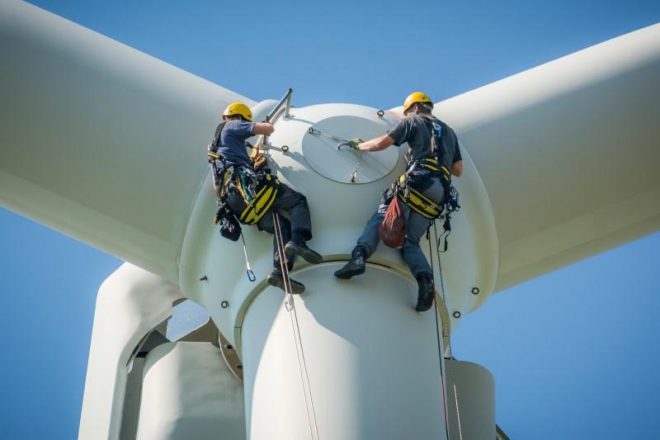
If you work as a roofer, landscaper, pool builder, or in construction, installing garden slabs or solar panels, building sheds, or working on outdoor home improvement projects, take note of new research that can help you protect your heart.
Maggie Baird, best known as the mother of Billie Eilish and Finneas O’Connell, is stepping into a much larger spotlight, this time as a climate storyteller.
Tillage is one of the clearest signals of how a farm treats its soil. Intensive plowing can degrade structure, release carbon, and increase erosion. Conservation practices—no-till, cover cropping, minimal disturbance—do the opposite. They build soil, retain water, and support biodiversity. But until now, measuring these practices at scale has been slow, expensive, and often self-reported.
Hydrophilis, Oliver Isler’s experimental rebreather suit, reimagines diving by reducing drag, eliminating bubbles, and bringing humans closer to the natural movement of marine life.
If you work as a roofer, landscaper, pool builder, or in construction, installing garden slabs or solar panels, building sheds, or working on outdoor home improvement projects, take note of new research that can help you protect your heart.
Maggie Baird, best known as the mother of Billie Eilish and Finneas O’Connell, is stepping into a much larger spotlight, this time as a climate storyteller.
Tillage is one of the clearest signals of how a farm treats its soil. Intensive plowing can degrade structure, release carbon, and increase erosion. Conservation practices—no-till, cover cropping, minimal disturbance—do the opposite. They build soil, retain water, and support biodiversity. But until now, measuring these practices at scale has been slow, expensive, and often self-reported.
Hydrophilis, Oliver Isler’s experimental rebreather suit, reimagines diving by reducing drag, eliminating bubbles, and bringing humans closer to the natural movement of marine life.
If you work as a roofer, landscaper, pool builder, or in construction, installing garden slabs or solar panels, building sheds, or working on outdoor home improvement projects, take note of new research that can help you protect your heart.
Maggie Baird, best known as the mother of Billie Eilish and Finneas O’Connell, is stepping into a much larger spotlight, this time as a climate storyteller.
Tillage is one of the clearest signals of how a farm treats its soil. Intensive plowing can degrade structure, release carbon, and increase erosion. Conservation practices—no-till, cover cropping, minimal disturbance—do the opposite. They build soil, retain water, and support biodiversity. But until now, measuring these practices at scale has been slow, expensive, and often self-reported.
Hydrophilis, Oliver Isler’s experimental rebreather suit, reimagines diving by reducing drag, eliminating bubbles, and bringing humans closer to the natural movement of marine life.
If you work as a roofer, landscaper, pool builder, or in construction, installing garden slabs or solar panels, building sheds, or working on outdoor home improvement projects, take note of new research that can help you protect your heart.
Maggie Baird, best known as the mother of Billie Eilish and Finneas O’Connell, is stepping into a much larger spotlight, this time as a climate storyteller.
Tillage is one of the clearest signals of how a farm treats its soil. Intensive plowing can degrade structure, release carbon, and increase erosion. Conservation practices—no-till, cover cropping, minimal disturbance—do the opposite. They build soil, retain water, and support biodiversity. But until now, measuring these practices at scale has been slow, expensive, and often self-reported.
Hydrophilis, Oliver Isler’s experimental rebreather suit, reimagines diving by reducing drag, eliminating bubbles, and bringing humans closer to the natural movement of marine life.
If you work as a roofer, landscaper, pool builder, or in construction, installing garden slabs or solar panels, building sheds, or working on outdoor home improvement projects, take note of new research that can help you protect your heart.
Maggie Baird, best known as the mother of Billie Eilish and Finneas O’Connell, is stepping into a much larger spotlight, this time as a climate storyteller.
Tillage is one of the clearest signals of how a farm treats its soil. Intensive plowing can degrade structure, release carbon, and increase erosion. Conservation practices—no-till, cover cropping, minimal disturbance—do the opposite. They build soil, retain water, and support biodiversity. But until now, measuring these practices at scale has been slow, expensive, and often self-reported.
Hydrophilis, Oliver Isler’s experimental rebreather suit, reimagines diving by reducing drag, eliminating bubbles, and bringing humans closer to the natural movement of marine life.
If you work as a roofer, landscaper, pool builder, or in construction, installing garden slabs or solar panels, building sheds, or working on outdoor home improvement projects, take note of new research that can help you protect your heart.
Maggie Baird, best known as the mother of Billie Eilish and Finneas O’Connell, is stepping into a much larger spotlight, this time as a climate storyteller.
Tillage is one of the clearest signals of how a farm treats its soil. Intensive plowing can degrade structure, release carbon, and increase erosion. Conservation practices—no-till, cover cropping, minimal disturbance—do the opposite. They build soil, retain water, and support biodiversity. But until now, measuring these practices at scale has been slow, expensive, and often self-reported.
Hydrophilis, Oliver Isler’s experimental rebreather suit, reimagines diving by reducing drag, eliminating bubbles, and bringing humans closer to the natural movement of marine life.
If you work as a roofer, landscaper, pool builder, or in construction, installing garden slabs or solar panels, building sheds, or working on outdoor home improvement projects, take note of new research that can help you protect your heart.
Maggie Baird, best known as the mother of Billie Eilish and Finneas O’Connell, is stepping into a much larger spotlight, this time as a climate storyteller.
Tillage is one of the clearest signals of how a farm treats its soil. Intensive plowing can degrade structure, release carbon, and increase erosion. Conservation practices—no-till, cover cropping, minimal disturbance—do the opposite. They build soil, retain water, and support biodiversity. But until now, measuring these practices at scale has been slow, expensive, and often self-reported.
Hydrophilis, Oliver Isler’s experimental rebreather suit, reimagines diving by reducing drag, eliminating bubbles, and bringing humans closer to the natural movement of marine life.
If you work as a roofer, landscaper, pool builder, or in construction, installing garden slabs or solar panels, building sheds, or working on outdoor home improvement projects, take note of new research that can help you protect your heart.
Bacteria can be added to fashion, as living eco-couture, those working with Eshel Ben-Jacob discovered. A team at an Israeli university find that bacteria might play a role in a vaccine against Covid-19.
Some years ago when I was working as a writer for Tel Aviv University I got to hang out with one of the world’s most interesting and maybe unknown researchers in bacteria. Eshel Ben-Jacob. He was a physicist but extremely multi-disciplined. Together we met Stephen Hawking and he implored me to write a book with him about bacteria. They are smarter than we are, he told me. And looking around at his cadre of collaborators I thought maybe he was right. Students around him from engineering to fashion design were working on bacteria.
In a new study published today in Nature, scientists report that bacteria might be the best anti-viral for fighting Covid-19.
A group of scientists working at the Weizmann Institute of Science has uncovered a gold mine of antiviral substances that may lead to the development of highly effective antiviral drugs.
Virus-fighting viperins, part of the human immune system, turn out to have bacterial counterparts that might boost the fight against human disease, scientists from Rehovot, Israel report.
Viperins were previously known to exist only in mammals, and have now been found in bacteria. The molecules produced by the bacterial viperins are currently undergoing testing against human viruses such as the influenza virus and COVID-19. The study was published today in Nature.
Studies conducted over the past decade by Prof. Rotem Sorek have revealed that bacteria have highly sophisticated immune systems, despite their microscopic size.
In particular, they are equipped to fight off phages – viruses that infect bacteria. These differ from the kind that infect humans in their choice of targets, but they all consist of genetic material – DNA or RNA – that hijacks parts of the host’s replication machinery to make copies of themselves and spread.
Sorek has found that some of these bacterial immune responses suggest evolutionary links to our own immune systems, and the present study in his lab shows the strongest evidence yet: They discovered that viperin antiviral enzymes – whose function in the human immune system was understood only two years ago – play a role in the immune system of bacteria.
“Whereas the human viperin produces a single kind of antiviral molecule, we found that the bacterial ones generate a surprising variety of molecules, each of which can potentially serve as a new antiviral drug,” says Sorek.
In humans, viperin belongs to the innate immune system, the oldest part of the immune system in terms of evolution. It is produced when a signaling substance called interferon alerts the immune system to the presence of pathogenic viruses.
The viperin then releases a special molecule that is able to act against a broad range of viruses with one simple rule: The molecule “mimics” nucleotides, bits of genetic material needed to replicate their genomes. But the viperin molecule is fake: It is missing a vital piece that enables the next nucleotide in the growing strand to attach. Once the faux-nucleotide is inserted into the replicating viral genome, replication comes to a halt and the virus dies.
This simplicity and broad action against many different viruses suggested viperins had been around for some time, but could they go back as far as our common ancestors with bacteria? Led by former postdoctoral fellow Dr. Aude Bernheim in Sorek’s lab, the group used techniques that had been developed in his lab to detect bacterial sequences encoding possible viperins. They then showed that these viperins did, indeed, protect bacteria against phage infection.
Based on the genetic sequences, Sorek and his team were able to trace the evolutionary history of viperins: “We found that this important component of our own antiviral immune system originated in the bacterial defense against viruses that infect them,” says Sorek.
If the bacterial viperins prove effective against human viruses, Sorek thinks it may pave the way for the discovery of further molecules generated by bacterial immune systems that could be adopted as antiviral drugs for human diseases.
“As we did decades ago with antibiotics – antibacterial substances that were first discovered in fungi and bacteria – we might learn how to identify and adopt the antiviral strategies of organisms that have been fighting infection for hundreds of millions of years.”
Further studies are underway to determine which of the bacterial viperins could be best adapted to fighting human viruses, including, of course, COVID-19. Also participating in this research were Adi Millman,Gal Ofir, Gilad Meitav, Carmel Avraham, Sarah Melamed and Dr. Gil Amitai, all of Sorek’s group in the Weizmann Institute of Science’s Molecular Genetics Department.
If you want to learn more about bacteria, and in memory of Eshel Ben Jacob, watch a video of him and his love for bacteria:
Even if you aren’t an artist, writer, musician or other “creative” type, creativity — and the ability to be creative — is a part of your life. Creativity is necessary when you need to solve a tricky dispute between your children, or find a way to make everyone’s schedules work when you’re balancing work, school, and other responsibilities (especially when everyone is trying to do everything remotely). And speaking of work? Creativity is a must when you’re trying to come up with ways to trim costs, or attract new business, or solve a customer’s problem.
The bottom line? Creativity extends well beyond the art studio — and everyone has the potential to be creative. However, you might be one of those people who insists that you aren’t creative, or maybe you just feel like you’re stuck in a rut and cannot find inspiration anywhere. If that sounds familiar, there may be a solution you haven’t considered: cannabis.
For those of you residing in Canadian cities Cannabis is legal and you can easily find a wide selection of cannabis strains including Hybrid, Sativa, and Indica types that can boost your creativity. With so many marijuana choices, you can be sure to find one that suits your needs, whether it is for a boost of energy or for medicinal purposes.
The Connection Between Marijuana and Creativity
The suggestion of using marijuana to increase your creativity might have you scoffing. There’s a difference, after all, between the random musings of your friendly neighborhood stoner and actual creative ideas that make sense. And no one is suggesting that you smoke before heading in to present the third quarter numbers to your boss.
However, there is some evidence cannabis can increase your ability to be creative, and loosen up those creative muscles to help you better meet the challenges you face every day. There’s a wealth of anecdotal and scientific evidence showing that using marijuana can help open your mind to new possibilities and ideas — and there is actually a physical reaction that increases creativity.
Cannabis and the Brain
Brain researchers have discovered that creativity is associated with the brain’s frontal lobe. Regardless of whether you consider yourself creative or not, research has found that when you’re performing tasks that require creative thinking, there’s an increase in blood flow and activity in that part of the brain. In short, the more active that area, the more creative you are. Using marijuana also blood flow to that part of the brain increases, creating a similar experience to performing creative tasks.
However, it’s not just the increased activity in your frontal lobe that can spur creativity. The frontal lobe is also where a concept known as “divergent thinking” takes place. This is a creative form of thought that isn’t necessarily linear or even always logical. It’s the part of the brain that allows you to brainstorm or spur free flowing ideas. It’s the type of thinking that allows you to come up with new solutions, or to look at problems from multiple viewpoints and explore different innovations. In short, by stimulating the part of the brain that supports this kind of thinking, it only makes sense that marijuana can contribute to more creative thoughts and ideas.
There’s also some evidence that cannabis can make you more impulsive — which when it comes to creativity, isn’t necessarily a bad thing. Many artists note that using cannabis while creating spurs them to take more chances, and reduces the anxiety that can come with the process of creation. Instead of focusing on perfection, and the outcome, the effects of marijuana allow you to focus on the creative process and trying new things that you might not have otherwise considered, or been afraid of.
The Individual Aspects of Creativity and Cannabis
Although many cannabis products purport to increase creativity, the fact is that the effects are very individual, and depend on a variety of factors. The strain you smoke, the potency, and even your own propensity toward creative thought can all make a difference in how well the drug works for you.
One landmark 2012 study found that marijuana only seemed to increase creativity for those who already consider themselves creative to start with. Researchers evaluated people who self-rated as “high creativity” or “low creativity” both before and after using cannabis. Those who considered themselves “low creativity” saw some increase in their creativity after using, while those who labeled themselves as creatives saw little to no increase after smoking.
The researchers surmise the results indicate that marijuana users may be more open-minded to begin with, and there may be a placebo effect associated with smoking in creativity. In other words, those who don’t typically smoke may feel more creative simply by virtue of smoking.
It should also be noted that the dosage of THC you take has a profound impact on creative though. Unsurprisingly, lower doses of THC (less than 5.5 mg) are more closely associated with divergent thinking, a variety of ideas, and the sheer number of new ideas you develop. By the same token, larger doses of THC have the opposite effect, and can actually hinder creative thought.
Ultimately, whether or not cannabis can increase creativity comes down to personal experience. If you’re stuck in a creative rut, or you just lack inspiration, consider trying some THC. You might just find it gives you the answers you’re searching for.
A pair of Jewish rabbis who call themselves “eco-rabbis” have taken the Bible, also known as the Torah in Hebrew, and found hundreds of passages in it relating to ecology, animal rights, regenerative agriculture, the 3Rs and more, and have found a way to make old ideas relevant to us all in modern times. They live in Jerusalem, the Holy City and are calling it the Eco Bible.
The Eco Bible is a green compass helping us navigate some of the ethical challenges that align with environmentalism.
Since converting to Judaism I always found it eerie how similar modern law practiced in Canada where I am from (but also the US and Europe) is very similar to ancient Talmudic Law. A pair of American lawyers compared the systems here in this PDF.
Ancient Jewish scholars in the Sanhedrin would define ethics from Biblical sources and form judgements in their courts of law. I find the whole process of ancient problems and how to solve them both fascinating and exhilarating because most of them are the same problems we have today 2000 years later.
This is the basis of being human and one of our “defects” or gifts is that we have to see the world as being built for us. We need to discover things as though we are pioneers. So I guess we have to make mistakes and if you look at the planet we have some major mistakes to fix.
I often look to examples of stories I see in the Talmud (the Jewish oral laws and stories written down) to how I relate to myself and the world around me. Why invent the wheel when people before us had the same questions and possibly came up with creative and successful solutions long before us?
Yonatan Neril and Leo Dee his partner have done just that in their new book – find it on Amazon. They have collected wisdom from dozens of scholars and hundreds of sources to stitch them together to make an Eco Bible. This I can only guess is to inspire and illuminate the path forward out of climate change –- using faith as our guide. The Eco Bible book can be appreciated by everyone of any faith, I can imagine.
Yonatan Neril, co-author of Eco Bible coming out November 16
Covid-19 has created a spiritual awakening in us all and this new book might help you justify and share the challenges of being ecologically awoke. Buddhism is great for helping us feel the here and now, but an Eco Bible could help us in Phase II – springing into action.
“Applying Hebrew Bible teachings to stewardship of our global environment is not just an idea for today—but essential for a future in which we achieve a balanced, worldwide ecosystem and thrive on a planet viable for all life,”says co-author Rabbi Yonatan Neril, coauthor and founding director of the international Interfaith Center for Sustainable Development (ICSD), which is publishing the book.
“At a time of both ecological and spiritual crisis, understanding the Hebrew Bible can have profound impact on human behavior towards God’s creation, since billions of people worldwide consider it a holy book.”
Indeed if you read a bit of the Bible here and there you will find extremely important teachings that can help guide your eco-ethical compass. There are passages about how to set up cities and factories around the perimeter so that “emissions” don’t pollute the residents, there are extensive laws and thoughts on the public versus private space, and there are very clear examples of damages –- and how people should be compensated when harm is done to them.
Recently there is a big debate as to whether or not a former American Ambassador house built in Israel near the sea with a pool now on public land should be put back in the hands of the public. (The house was recently sold to billionaire Sheldon Adelson). I have visited the house and it is spectacular with the best part of it being the cliff-view (public space) fenced off from the public for security concerns to the ambassador. Can the public reclaim this land set aside for diplomatic purposes which are now over? I’d ask the eco rabbis and the Eco Bible about that.
Currently it seems like the world is mostly “winging” it or looking to other faiths for guidance when clear ecological ethics is spelled out in the Bible and is quite applicable to modern times and to all of the three monotheistic faiths that are based on the Biblical laws: Judaism, Christians and Muslims.
The book connects the Five Books of Moses (Pentateuch), and Jewish rabbis’ biblical teachings past and present, with contemporary scientists’ understanding of human health, biodiversity, and environmental protection of air, land and water.
Bill Brown, Professor of Old Testament at Columbia Theological Seminary in Georgia, calls Eco Bible, “a rich repository of insights . . . for people of faith to move forward with wisdom, inspiration, and hope, all for the sake of God’s good creation.”
I haven’t read an advance copy it but I have known Rabbi Neril for about 10 years since he started his center for faith-based education in Jerusalem. He is a humble man who walks the walk -–– on a journey of finding God along the path of environmentalism.
Raised in California, Neril has a BA and MA from Stanford with a focus on global environmental issues. He lives with his wife, Shana and their two children in Jerusalem. Neril’s center publishes materials on religion and ecology, including Eco Bible and Report on Faith and Ecology in North American Seminaries, and organizes interfaith environmental conferences.
The year 2020 onwards will be the decade of action for renewable energy. Green bonds can help get us there.
Renewable energy is something we all want. Churches in the US are putting their faith and investments in them, and governments –– Germany, Australia, Israel on a smaller scale, the United Arab Emirates, Canada and even Saudi Arabia have set goals for attaining 100% renewables one day. How fast countries support businesses and award tenders for solar power plants and wind turbines depends not only on governments but the corporate funding mechanisms in place and the people who want to support green energy.
Bonds, or more specifically, green bonds, are just one way that institutional investors – but also individuals – can fulfil client demands to be more green. Colleges investing an endowment, even unions that represent teachers, cities, labourers and artists, can consider green bonds as a carbon-forward structure that puts your clients’ money where their values are.
Today we speak with Peter Leighton, Chief Operating Officer and Co-founder, RE Royalties in Canada to learn more about how green bonds work, and what they can do for us.
Peter Leighton, RE Royalties Co-Founder and COO
Green Prophet: A wind energy farm in British Columbia. A solar park in Texas. What metrics do you look for when financing a deal? Are you looking for more companies to invest in? Tell us about a “dream” deal you would love to see.
Peter Leighton: When we examine an opportunity, we first ensure that the opportunity meets our corporate objective of acquiring a portfolio of long term, stable, and diversified royalty streams that will provide our investors with sustainable long term cash flows.
Specifically, we are looking for the following:
Renewable or sustainable energy projects;
Commercially viable technologies;
Operating projects or those that will reach operation in the very near term – we like near term cash flow;
Projects that have a strong ability to offset GHG emissions;
Global diversification but limited to OECD countries in the near term; and
Targeted returns in the mid-teens.
Yes, we are always looking for new clients and new opportunities!
Our dream opportunity is a developer/owner/operator who has a portfolio of operating renewable energy projects and has an opportunity to develop a new renewable energy project and/or projects but needs financing to realize on that opportunity.We love it when the opportunity has a tight time line because we firmly believe that our speed to close a transaction is unmatched in the industry and we think this give us a competitive edge in the market place and helps our clients do what they want to do – build more renewable energy projects more quickly.
What has been the perception of renewables since Covid-19, before and after.
A2: When I first started working in the renewable energy space some 25 years ago, there was a broad perception that renewable energy was expensive and a bit of a science experiment.What we have seen in the last 10 years, however, is an order of magnitude decrease in the cost of renewables, specifically wind and solar, combined with an order of magnitude increase in the efficiency of both generation technologies.
Immediately prior to Covid-19, I would say that most people still saw renewables as being a bit of a fad, even though in 2018 over $200 billion was invested in renewables across the globe, more money than was invested in either the Mining Industry or the Oil and Gas Industry during the same time.
I do not think that any of us can predict the long-term impact of Covid-19 on energy intensive industries such as transportation, home and office heating, and industry in general.We do know that right now, solar and wind are the cheapest sources of new electricity in more than 2/3 of the world and are expected to be the cheapest everywhere by 2030.
One thing that Covid-19 has proven is that renewables are really quite resilient. In Q2 2020 there was a total investment in renewables of $69.9B compared to Q2 2019 investment of $70.1B, a decline of less than 1%. Even despite the economic impact of Covid-19, the investment in renewables remains robust.
Covid-19 has, and will continue to change the way our society consumes energy and the form of energy we utilise but I do not think it will reduce our overall demand for energy
What do you think is driving up the price of Tesla stock?
A3: If I knew the answer to this question, I would be living off of my capital gains instead of taking part in this interview!I do follow Tesla and I do believe that the age of the electrical vehicle has finally arrived.Economically and environmentally it just makes sense.Carbon and other emissions alone almost make the business case.Then when you add in the fuel cost savings, and the reduction inoperating expenses, (approximately 30,000 moving parts in an internal combustion engine versus approximately 20 moving parts in an electric engine), not to mention the reduction in noise pollution, the case for EV’s is pretty solid.
The other thing that Tesla has done very well, is to bring some of the best innovative aspects of the technology sector to what has been a static automotive sector.Tesla is pushing the boundaries on materials, manufacturing, distribution, and pricing, and their shareholders are getting rewarded based on tech valuations instead of traditional automotive manufacturing valuations.
What kind of risks are your investors looking to avert?
A4:Our shareholders and our green bond investors have told us that they like the fact that investing in either our shares or our green bonds provide them with capital protection, immediate cash flow and attractive risk adjusted returns.We believe that we deliver on the trifecta of growth and yield while helping the planet.Our approach is much like a lead-off hitter in baseball; we are aiming for doubles while targeting a very high on base percentage.
Q5: The Middle East is opening up channels to renewable energy to mitigate carbon emissions and to diversify away from oil. What country or two in the Middle East would be an ideal partner for growing your firm’s values? How would you give them value?
A5: We have spent some time looking at renewable diesel opportunities in Canada with groups refining waste products into transportation fuels and we have also been looking at a few renewable natural gas opportunities in both Europe and Ontario.
To date, we have not been exposed to any opportunities in the Middle East.Our values are aligned with the United Nations Sustainable Development Goals as set out in 2015 and we would be open to exploring any opportunity that allows us to meet our corporate objective of acquiring a portfolio of long term, stable, and diversified royalty streams that will provide our investors with sustainable long term cash flows while helping to reduce global carbon emissions.
Who should invest in green bonds?
A6: We think our green bonds are an ideal investment for anyone who wants to earn a solid, safe return while helping the planet.These bonds will offer a strong fixed income return of 6% per annum, and the proceeds will be used to invest in renewable energy projects that will help reduce global carbon emissions and help mitigate climate change. One unique aspect of our green bond offering is that the ability to invest in these bonds is truly democratic; the minimum investment size is only $5,000, and the bonds are eligible for registered accounts. This means that investors can purchase the green bonds in their RSP, RESP, TFSA, or RIF accounts.
Are companies/institutions using your investment as part of their CSR Corporate Social Responsibility plan? Can they use it as carbon credits, for the media? What are you seeing interest in there?
A7: Yes, companies/institutions could use an investment in either our green bonds or our shares as part of their Corporate Social Responsibility plan.The projects we invest in currently offset 321,667 tonnes of CO2 equivalent emission, and any investor would be able to point to their support of that emission reduction.
Any advantages with you being Canadian for US/foreign investors? Explain.
A8: The Canadian securities regulations require a high degree of disclosure and transparency so that fact that we are traded on the Canadian exchange may be an advantage for some foreign investors.The fact that we trade in Canadian dollars may also be some advantage to either US/foreign investors who are looking to increase their exposure to the Canadian dollar.Some investors in very low interest rate environments such as Europe or Japan may also find the 6% yield on our green bonds very attractive.Even in the United States, a 6% yield on the bonds look attractive.
About RE Royalties
RE Royalties Ltd. is a specialty finance company created in 2016 that creates stable long-term cash flow streams by utilizing a royalty financing model to provide loans to, and acquires revenue-based royalties from, renewable and clean energy projects and companies globally. The company’s mission is to provide innovative financing for climate change solutions. RE Royalties is a publicly traded company on the TSX Venture Exchange under the symbol “RE”, and the first to pioneer the royalty-financing model for renewable energy projects.
Bio – Peter Leighton, Chief Operating Officer and Co-founder, RE Royalties
Peter Leighton is an experienced renewable energy executive with over 20 years of experience in project development and mergers and acquisitions in the energy sector. He is the Co-Founder and Chief Operating Officer of RE Royalties, an innovative finance company specializing in renewable energy. With climate change a pressing issue globally, RE Royalties has become an important source of capital for renewable energy projects. In 2016, RE Royalties officially launched as the first company to take the royalty-financing model, well proven in other industries, and apply it to the renewable energy sector. RE Royalties is a publicly traded company on the TSX Venture Exchange under the symbol “RE”.
Peter is the former President and Chief Operating Officer of Finavera, where he delivered $750 million worth of wind energy projects from the embryonic stages of development through to the ready to build stage. He also worked as the Chief Operating Officer of Accenture’s Business Services for Utilities, the Director of Clean Energy B.C. from 2010 to 2016, and Health Shared Services B.C. from 2009 to 2018. This year Peter was named as an Honouree to Canada’s Clean50 for 2020. Peter holds a Bachelor of Science Degree (BSc) in Geography/ Geology from Queen’s University and a Master, Business Administration (MBA) from the University of British Columbia.
Tuna nets and 360,000 now pollute the once pristine island. It is the largest accumulation of plastic waste reported for any single island in the world. And we are all responsible for it. Boyan Slat – where are you already?
A new Oxford study following a five-week clean-up on Aldabra Atoll, one of Seychelles’ UNESCO World Heritage Site, found that it would take $4.68 million, 18,000 person‐hours of labor to clean up the entire atoll. The plastic sample they collected in their new study amounted to 25 tonnes.
Some 513 tonnes remain on the island,dominated by waste from regional fishing – buoys, ropes, nets – and 360,000 individual flip flops.
“We highlight that the main sources of the pollution arriving on Aldabra are related to the fishing industry in Seychelles, which provides tuna to EU countries and other high-income markets around the world.
“There should be some recompense for the damage being caused,” says one of the study’s authors.
Removing the plastic waste equates to $10,000 per day of clean‐up operations or $8,900 per tonne of litter —well beyond the capacity of non-profit organisations like the Seychelles Islands Foundation.
Small island developing states receive unprecedented amounts of the world’s plastic waste. In March 2019, a team from the University of Oxford and Seychelles Islands Foundation, a public trust which manages Aldabra, removed just 5% of the litter washed up on Aldabra’s shores in a five-week mission.
“This eye-watering price-tag makes the economic burden of the unsanctioned import of plastic litter on small island states abundantly clear,” Oxford authors state. “The project has highlighted how even remote highly-protected island ecosystems are now being impacted by global pollution and how difficult and costly it is to remedy.”
Aldabra is an iconic site, described by David Attenborough as one of the world’s last remaining natural treasures. It has remained relatively pristine and is home to an array of incredible wildlife.
Lindsay Turnbull, co-author of the study, said: “Our research spells out the unfairness and inequality whereby small island states and islands like Aldabra are paying the bill, both ecologically and financially for actions – or the lack of them – taken elsewhere.
“As with the climate crisis, small island states are at the frontline in dealing with the impacts of actions in which they played very little part. It is time this inequality was addressed with direct financial assistance to rectify and ameliorate these threats.”
The team, led by April Burt and Jeremy Raguain from the Seychelles Islands Foundation recorded all costs associated with the clean-up, and the effort required to do so, by timing clean-up sessions and estimating the amount of litter collected per person per unit time.
The waste collected was weighed and categorised and additional surveys were conducted in each coastal habitat type to estimate the total remaining marine plastic litter on Aldabra and its composition. The composition data was used to determine the main sources of litter arriving on Aldabra.
Burt said: “The biggest surprise was that the composition by weight was dominated by waste from the fishing industry: 83% of the estimated 500 tonnes of litter remaining on Aldabra is fishing-industry related. This is extremely alarming because it shows that waste generated by the local fishing industry is polluting island ecosystems and having indirect negative impacts on the fish communities it needs to sustain.”
Given the serious detrimental effects of plastic litter on marine ecosystems, the researchers conclude that clean‐up efforts are a vital management action for islands like Aldabra, despite the high financial cost and should be integrated alongside policies directed at ‘turning off the tap’.
They recommend that international funding be made available for such efforts, highlighting the transboundary nature of both the marine plastic litter problem and the ecosystem services provided by biodiversity‐rich islands.
The scientists are continuing their data collection on litter accumulation rates and other aspects of the impact of plastics to Aldabra’s ecosystems. There is still 500 tonnes of litter to remove from Aldabra and the scientists say, ‘the project is not over yet.’
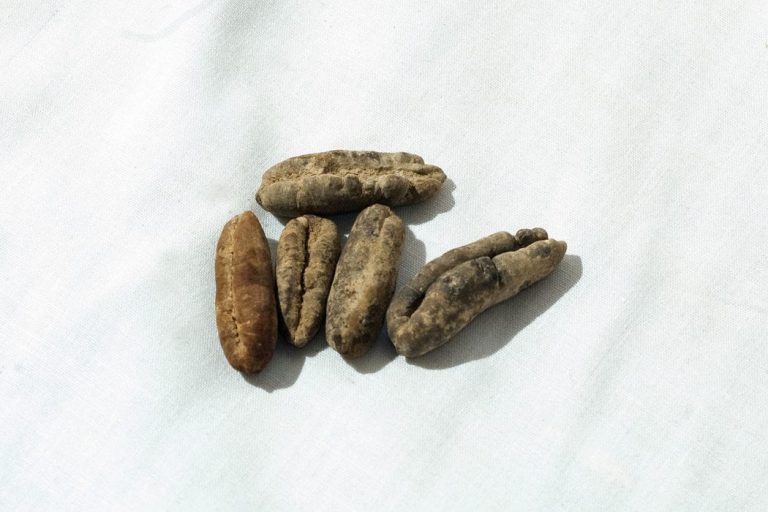
Judean dates were famous in the Levant and Europe in ancient times, prestigious fruit treasured for their superior taste and alleged medicinal qualities. Jewish farmers grew them. But the Jews were driven out of Israel during the Second Roman Wars (132-136 CE), and the secrets of the dates’ propagation were forgotten.
In 2005, date pits excavated from the Masada fortress were revived almost miraculously by Professor Elaine Solowey of the Center for Sustainable Agriculture at the Arava Institute for Environmental Studies. Read the story of the 2000-year-old date pits that sprouted under her care here.
The ancient date seeds
When we first interviewed Solowey in 2012, she was hoping to mate the male palm that sprouted – named Methusalah – with compatible female trees imported from Egypt. She didn’t expect to see fruits from Methusaleh and his green concubines for at least another ten years. But edible dates from Methusalah and Hannah, a female palm sprouted from pits of the same Judean variety, now exist.
It’s mind-blowing to realize that today, we might taste dates grown from seeds eaten and thrown away 2000 years ago. Dates that might have been eaten by Bar-Kochbah, leader of the Jewish rebellion. Or, at a different time and place, eaten by Jesus and his followers.
Dr. Sarah Sallon, of the Natural Medicine Research Unit of Hadassah Hospital initiated the project in 2005. The date pits, excavated from the Masada fortress in the 1960s, were lying in storage at the Bar Ilan University. Inspired to achieve the impossible, Sallon issued a challenge to attempt sprouting them. Solowey answered the challenge and succeeded in germinating one solitary seed, who grew tall and leafy – Methusalah.
Spurred by the success, Solowey and Sallon tried the experiment again. Out of 32 other excavated seeds, six sprouted, and two are female. One, named Hannah, bore 111 dates. The team at the Arava Institute tasted some, and sent the rest away for research.
Ronley Konwiser, managed a date farm some years ago and understands the pleasure of harvesting fruit:
“From 2008 to 2010 I was fortunate to be a foreman on the “Jericho Dates” plantation, which is in the Judean desert, adjacent to Jericho.
“What I learnt from my experiences as foreman is that dates and palm trees are very special. One of the very special qualities of a date is its ability to last. Most varieties of dates are harvested off the tree already in its dry form.
“And if stored correctly, it will last and be enjoyed at any time as if it was just picked. Therefore it is not surprising, but really incredible that 2000 year old seeds that were found in the Judean desert can still be viable.”
Young man working on the farm managed by Ronley Konwiser
Thanks to the vision of Drs. Solowey and Sallon, we can now hope to see a grove of Judean date palms, DNA – true descendants of the fruit that the ancients ate. Maybe in time, we’ll even shop for them at the supermarket. Incredible.
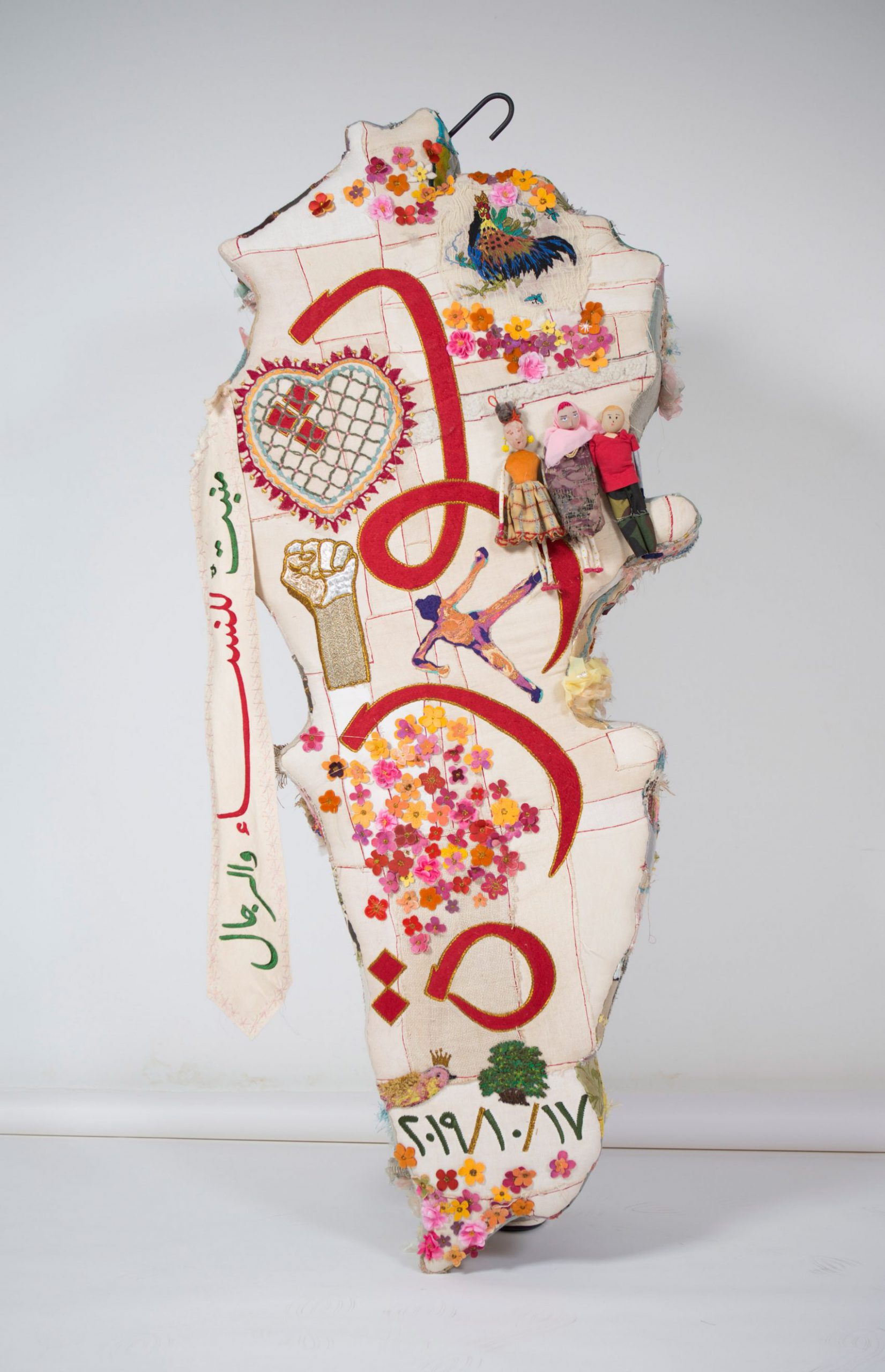
Lebanese designers from the much-loved embroidery collective Bokja in Beirut have offered to suture and repair home furnishings damaged in the Beirut explosion on August 4. This is the same collective that burned tires in their own special way a few years ago.
Mending what is broken
The explosion of 2,750 tons of ammonium nitrate at a port warehouse caused widespread destruction and injured more than 5,000 people in Beirut last month.
Bokja Beirut showroom
Founders Hoda Baroudi and Maria Hibri have transformed their Beirut studio into a community center to help “rebuild a sense of comfort,” the ladies said.
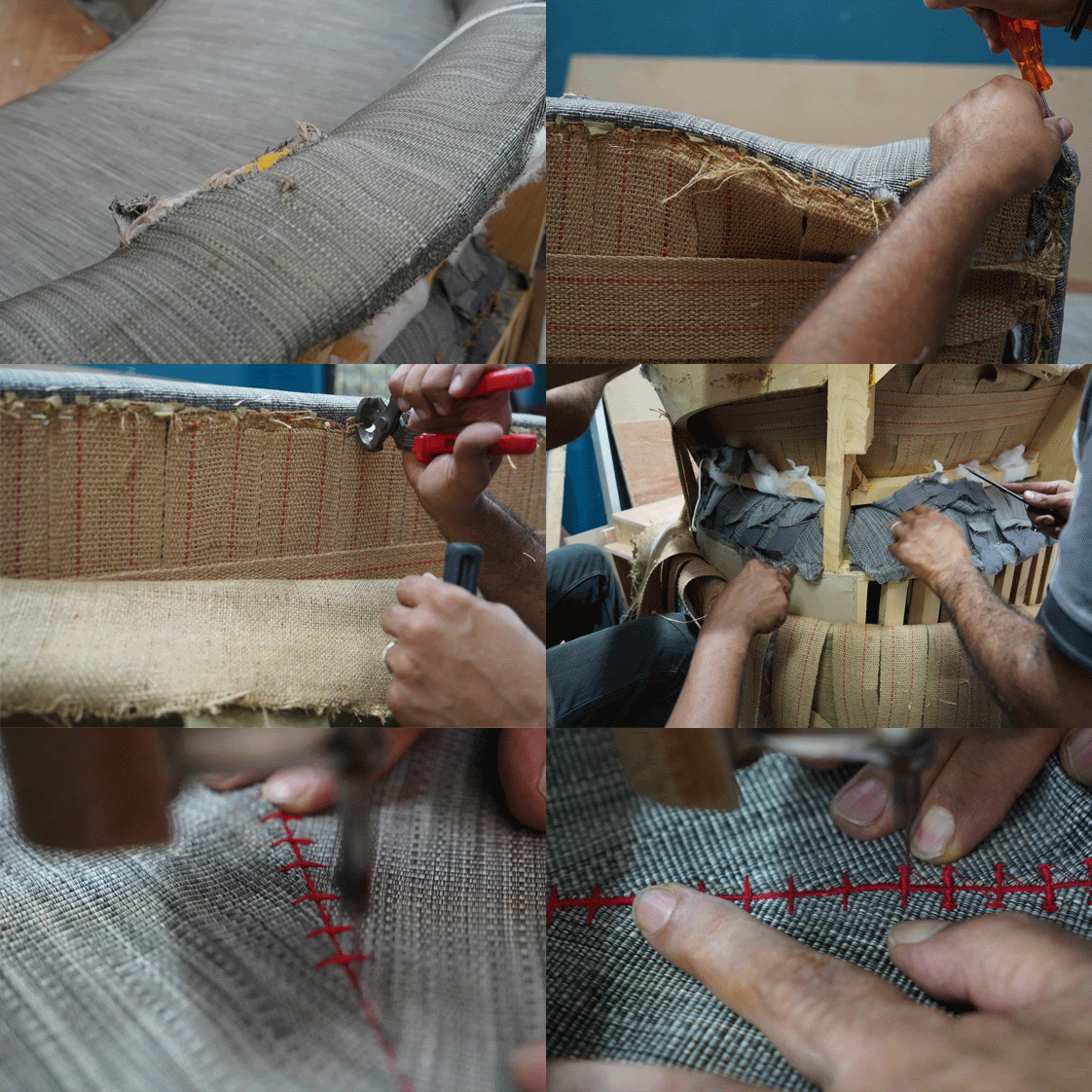
The artisans who have joined in are now working under Bokja Mends to use a signature red stitch to sew the pieces back together.
Red in the region is also a kabbalistic sign worn to keep the evil eye away. Go visit the Western Wall in Jerusalem and you will be offered a red string for protection against jinn and bad luck.
Lebanon in stitches
Rising from the dust
Instead of complaining from the rubble Baroudi and Hibri give us all hope that together we can rebuild, even when there are forces out there that want to destroy.
“From the beginning we were so enthralled by the handmade works of embroiderers alongside the Silk Road, their steadfast pace when manipulating a textile, their use of color and pattern, and their intense personal association to the object created,” the duo told Green Prophet.
“Our intention is to celebrate a local cultural identity through reviving and contemporizing a disappearing artisanry. We seek to trigger the evolution of local crafts in the region, forming a newfound language of expression consequently informing a Lebanese aesthetic and identity,” they added.
In good times, Bokja has been working tirelessly by reviving regional textile practices, redefining them in a contemporary voice as it should be.
The showroom of embroidered whimsy
Bokja’s existing body of work combines artisans, carpenters and designers and like Ondi from Om Khadi – it takes a village. Behind every Bokja design is a team of 35 people from 10 countries such as Iraq, Syria, Kurdistan, Egypt and Lebanon.
Transforming what’s lost to be remembered
Their textile practice is a representation of a diverse cluster of textile traditions. As we learned from Bedouin women in Lakia, Israel, who practice desert embroidery, and from my Scottish ancestors who put pride in their tartan, every textile tells a rich story of humanity and tradition.
Memory cushions from old stamps
And in a culture of fast fashion from H&M and IKEA our humanity is getting lost in a low cost capitalist culture which our culture pays for in a heavy price.
Sofas, armchairs and bed headboards are some of the items that have been brought in for repair in Beirut. Bokja is doing more that repair a home, they are repairing a country still reeling and bleeding with open wounds.
You can make an eco office work in the city or the forest.
Thanks largely to the internet and the COVID-19 pandemic, working from home has become the norm for many employees as well as entrepreneurs. With the likes of Twitter stating that much of its workforce can work from home as long as they want to, it seems likely that the remote-working trend may be here to stay.
Despite the economic difficulties, 2020 has been a year for startups too. With many people starting their own business from home, attempting to reduce overheads and mitigate their financial risk. With ancillary businesses such as Moneypenny virtual receptionists reporting remarkable growth, 2020 could mark the beginning of a new era and the mainstream arrival of remote-working entrepreneurship.
This is potentially great news for the environment. Fewer cars on the road during rush-hour, means less pollution, especially in city centres. It may also be good news for the wellbeing of the workforce, with less time on the road meaning less stress & burnout and more time with loved ones.
What would also be mutually beneficial to workers and the environment – would be a home office, that is powered by renewable energy – solar, wind and/or water. If you don’t have room for an office in the house, consider purchasing a shed – if budget, allows, a Tuff Shed is a great option for an office or workshop.
Warning – please consult a professional before attempting any electrical work yourself. Faulty set up could result in fire or electric shock.
Create a Portable Solar Power Unit
Solar power is the go-to for renewable energy, especially in states such as California. To start your solar power system, by creating a portable one that you can take with you and hook up virtually anywhere.
Battery – you will need a battery for power storage in an off-grid system. In this video, they used a deep-cycle marine battery as it should tolerate daily charges and discharges of energy for some time.
Inverter – a Go Power generator rated at 1750 watts is a good choice for a portable system and its output is suitable for small electronic devices as well as larger ones. It boasts a power display and comes with 2 AC outlets.
Power Strip – to add more devices at once, you can add a power strip with plug sockets and USB sockets.
Solar Panel – a Renogy 200w solar panel is an excellent choice for a portable solar panel kit. It comes with a charge controller and everything required for the ‘solar-side’ of a generator. The charger has a 400w capacity, so can be used with more solar panels.
A Batter Maintainer – a battery maintainer can be added to keep the battery at full capacity.
Heavy Duty Hand Truck – If you want to have a portable solar panel system, then it can be fitted to a hand truck, with a few adjustments. You may need to, for example, add some ‘sides’ to the bottom to form a unit around the relatively large battery.
Be careful if you want to transport the unit in a car or van. If turned over, the battery can leak.
If putting together a portable system from scratch sounds a bit daunting – you can be prebuilt systems from the likes of Yeti. You can find more information here.
Wind Powered Office
For a home office, you can install a micro wind turbine. For a wind turbine to be cost-effective, you’ll need to live somewhere that gets quite a lot of wind! Beware that they are quite tall and relatively heavy – between 10 and 20kg typically. They can also be very tall – up to 50ft, but if you get a lot of wind, you might not need to erect it so high.
You may need to create some kind of base, or support to hold the turbine up. In this video, they used a scaffold pole against a fence for additional support.
Micro Wind Turbine
Obviously, for wind energy, you will need a wind turbine. The Cloudsto 500w Wind Turbine Kit comes with free worldwide shipping (at the time of writing).
Three Phase Cable
You may need to extend the reach of the cable that comes with the wind turbine. A 3 phase cable with high-quality copper is ideal if your home office is a few meters or more from the turbine’s location.
Junction Box & Charger
Most turbines will come with a charger, the junction box is simply a three-point adapter that connects to the 3 phase cable. It is possible to buy a ‘rectifier’ too – this will change the AC charge from the turbine to DC.
Charge Controller
If you want to charge specific batteries – such as lithium batteries – you may wish to connect the charger or the rectifier to the charger. You can buy a charge controller from Amazon, but you may want to buy from an independent store as they are more likely to give you specialist advice on which one to invest in. Tesup sells a range of high-quality controllers, for example with most of them coming with a free 5-year warranty.
There are other ways to generate renewable energy. If you have a large roof, and live in a rainy area (like anywhere in the UK!), you can use a Pelton wheel turbine to harness the flow of water in your gutter. More information on the ‘gutter hydropower’ system can be found on this Youtube Video.
Look out for an eco dentist to avoid exposure to dangerous chemicals at a young age.
In our everyday lives, almost everything we do has an environmental impact that can affect this generation and the next. When it comes to potential health services, it’s also important to see how our everyday tools, resources, and emissions can affect the world and environment around us.
It is part of social responsibility—especially as a business—to find and define where possible problem areas might be in the way we do business from our equipment to the everyday use of tools and resources.
Playing a part in the health of our environment should be at the forefront of any dentist’s practice goals.
In this article, we’re going to discuss the environmental impact that dentistry plays in the world around us and how both business and clientele can do their part in helping reduce our carbon footprint and impact our environment for the better.
Doing Your Part
If you’re a dental practitioner, you should do your part in recognizing the very specific, yet forward-thinking actions that you can take on an everyday basis that can help reduce your footprint and improve the environment around you.
However, before you have an impact in the world, you have to first focus on what’s happening in your own office.
Materials and Procedures
By first focusing on the materials you use in your dentist office and how they may affect the environment around us, you can then make small, simple changes to minimize the production of these wastes. This can help reduce the overall negative environmental effects and slowly, but surely, reduce your footprint.
Ask your dentist about these eco hazards
To help you identify which wastes from your health center are disturbing the environment, look into how your office is getting rid of or using these common wastes:
Dental amalgam
Lead
Silver
Biomedical, general office waste
Their environmental impact:
Biomedical waste—this can include materials that may cause disease or have pathogenic organisms that can be harmful to any person or persons around. In practical terms, they are gauzes, tissues, and syringes that have blood on them or have had contact with the blood of another person. This type of material can also be broken into two classified groups—sharp and non-sharp.
Obviously, the non-sharp biomedical waste should be disposed of in a properly-labeled bag. The sharp waste—like needles and syringes—should instead be placed in a puncture-resistant, leak-proof, properly labeled container.
General office waste—not just confined to the dental industry, the negative impact of the environment can be reduced by minimizing plastic use and transitioning to environmentally-friendly office supplies that have minimal packaging and reusable plastic. An office can also try to switch to energy-efficient lighting and temperature regulation—this can reduce the energy use and output of a building.
Lead—for lead, you can return the lead shields that are produced from film packets—collected and returned to the manufacturer so they can be properly recycled. This is a simple way to get rid of waste efficiently in a way that doesn’t harm the environment.
Silver—this heavy metal can improperly infiltrate our water system if it is not disposed of correctly in the dental office. This can be toxic to the local population, so it’s important to try your best in doing your proper to properly dispose of it or limit the use of it in your office.
Mercury—although there isn’t a ton of mercury produced by the individual dentist, the accumulated waste of mercury is extremely unfriendly for the environment. A dental professional can simply adopt the most practical approach when disposing of waste to minimize their possible negative environmental impact.
Dentistry leaving a positive impact
Whether it’s making a positive impact for clientele or impacting the environment around us in a beneficial way, we always want to approach each situation in a cooperative light to help the world around us improve. As the technology in the dental industry gets more and more prevalent around us, our social responsibility should also hold importance.
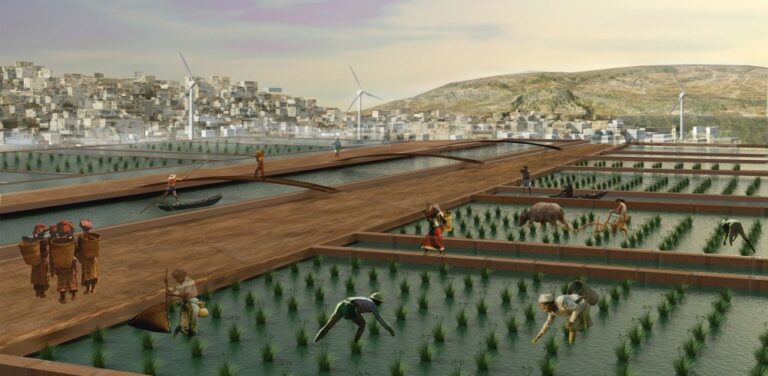
Regenerative agriculture, like the proposed Hydropolis in Egypt, is one way to green the CBD and hemp industry.
If there’s one thing that CBD companies have in common, it’s their deep-seated desire to help their customers. Why else would you get into such a niche (but growing) industry? So, if you are in the CBD industry, you already care about providing the cleanest, perhaps most organic products you can, and that desire to do what is best for the human body likely bleeds into a desire to do what is best for the earth as well.
However, building sustainable business practices that protect the health of the earth isn’t always easy, especially when you are working in an industry that relies heavily on the gifts mother nature gives us. When you sell a product like CBD and seek to run an eco-friendly company, not only do you need to worry about how to keep your packaging and shipping practices sustainable, but you need to make sure your farmer’s growing practices protect the environment as well.
If the idea of creating a sustainable CBD business has your head spinning, never fear. There are a few simple things you can do as a business owner to ensure that your product doesn’t unintentionally disparage the environment from the time the hemp seeds are planted to the time your customer uses the last bit of their product and disposes of the packaging. Keep reading for some fresh ideas to keep sustainability at the forefront of your mind throughout your CBD production process.
Sustainable Farming Practices
Woody Harrelson promotes regenerative farming
One of the best parts of working in the CBD industry is the sustainable attributes of the hemp plant. Hemp farmers don’t have to do much to ensure their practices are sustainable because the plant takes care of a lot of the headache for them.
For example, hemp uses 50% less water than cotton, making it a much more eco-friendly crop. And, not only does hemp produce lifestyle products like CBD oil, but it can also be used to make things like paper and clothing much more sustainably. So, by increasing the demand for hemp in general by running your own CBD company, you are allowing farmers to make the switch to a crop that will lead to more sustainable consumption in the future.
Not only does the hemp plant cause less damage to the earth, but it also actually improves the soil it grows in, in many cases removing toxins from the soil. Because of its hardy profile, hemp can be grown in almost any environment, whether it is in the deserts of the western United States or the more rain-drenched eastern seaboard. This is because hemp plants grow long, deep roots which actually help stabilize the soil around them, preventing erosion and retaining nutrients. Additionally, hemp is already naturally resistant to most pests, allowing farmers to avoid using harmful pesticides and chemicals in their fields.
Sustainable Extraction Practices
If you are familiar with CBD extraction methods, you know that there are many ways to harness the power of the hemp plant and bottle it up for your customers’ consumption. You can use CO2, solvents, or even olive oil to extract CBD from the plant before putting it into your products.
When you hear the term “CO2” in conjunction with sustainability conversations, it’s usually considered a bad word. After all, we are often talking about reducing CO2 emissions or our carbon footprint when it comes to building a greener society. However, while it may not seem like it from the name, CO2 extraction is actually the most environmentally-friendly option.
This is because the CO2 extraction process produces the safest, purest CBD without leaving behind any toxic residues, like the solvent method might. Plus, it doesn’t tap into our limited olive oil supply. The only drawback to using the CO2 method is that it requires specific equipment and expertise. This investment is completely worth it, though, if you’re looking to create a sustainable CBD product.
Sustainable Distribution Practices
CBD is often turned into an oil but it can be delivered in beverages and edibles for pain relief, romance
Once you’ve extracted your CBD, you’re ready to put it into products. Whether you’re focusing on tinctures, gummies, topical products, or all of the above, there is a lot you can do on the distribution side of the CBD business to ensure your practices are sustainable.
First, think about your packaging. In what ways can you reduce the amount of material that is not recyclable or reusable? Can you put your tinctures and gummies in glass containers, or offer a send-back program for your packaging that incentivizes customers to participate with a small discount? If you sell CBD bath bombs, can you wrap them in recycled paper rather than shrink-wrapped plastic?
If your company owns a storefront, think about the ways you can make your brick-and-mortar practices eco-friendly as well. Perhaps you can pin some QR codes with a link to your product offerings rather than printing menus and brochures. Again, you could also incentivize your customers to bring back the containers once they finish the products so that you can wash and reuse them.
If you find yourself filling and shipping a lot of orders, there are ways to keep that part of your business sustainable as well. You’ve likely been hearing a lot of news lately about big companies like Amazon and Apple going carbon neutral in their shipping policies, and you can get in on this practice as well. Shipping something “carbon neutral” means that while sending it on a truck somewhere might add to your carbon footprint, you (or the company you ship through) is doing something to offset those carbon emissions, like planting trees. UPS currently offers a carbon neutral shipping service, or you can team up with an app like Shop by Arrive to allow your customers to choose carbon neutral options.
Sustainability Is Key
Climate change issues are not just simply going to go away on their own—as business owners, we must consciously make an effort if we want to affect real change. Luckily, there is a lot you can do in this day and age to reduce your—and your CBD company’s—carbon footprint. Taking even one of these steps can really make a difference.
If you are in the market for CBD for personal use, you can also think about choosing a sustainably-minded company to purchase your products from. One such company is Joy Organics. All of their products are premium grade, broad spectrum, and tested by third party labs, so you can trust that you are getting the best of the best. Plus, you’ll be supporting the hemp industry, which just might be a major answer to our global climate crisis.
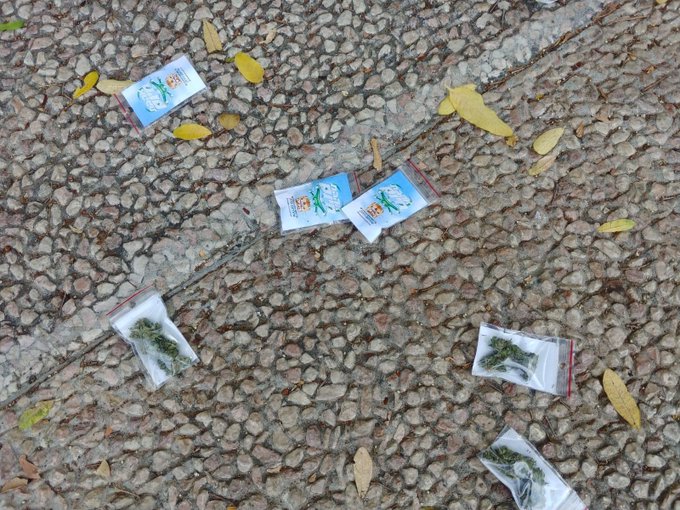
Some of the packets that rained down from the drone. Like manna from heaven
Hundreds of 2-gram bags containing marijuana dropped out of the sky over Rabin Square, for the comfort and delight of the population enduring pandemic times. It was the brainchild of a Telegram group calling themselves “Green Drone,” who champions making cannabis legal in Israel.
Green Drone published a mysterious message on Telegram before releasing cannabis to the wind. It read:
“It’s time my dear brothers. Is it a bird? Is it a plane? No, it’s the green drone, handing out free cannabis from the sky… Enjoy my beloved brothers, this is your pilot brother, making sure we all get some free love.”
While Tel Avivians scrambled to pick the little bags off the street, the police were less than pleased with Green Drone’s altruistic gesture. The two men who operated the drone have been arrested.
An announcement of the “Cannabis Rain Project” drops on the Telegram channel said that 1 kilogram (or 2.2 pounds) of cannabis, divided into 2 gram bags, will be dropped each week in a different part of the country.
And that’s not the only novel thing people in Tel Aviv are doing with drones. Check out the video we made of a guy fishing in the Mediterranean Sea using a drone:
The list of banks supporting damaging practices to the Amazon include Banco do Brasil, Rabobank, and JPMorgan Chase.
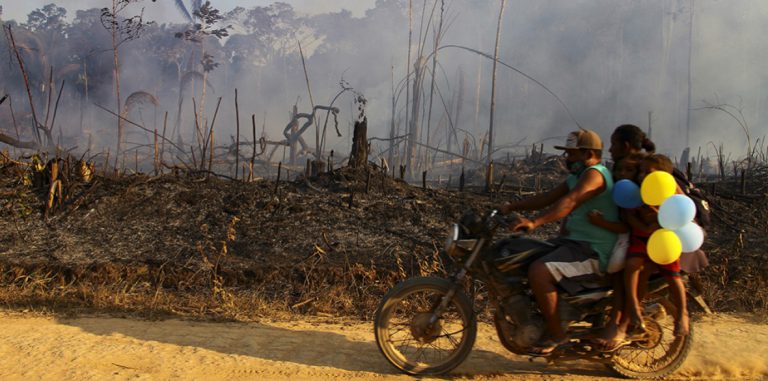
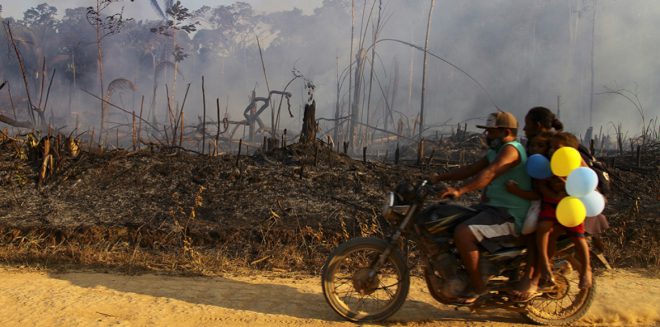
Amid a tropical forest fire season that is shaping up to be more disastrous than the one from last year, a new database built by environmental activists reveals that global banks, some of which you might belong to, have funnelled 154 billion USD into the production and trade of commodities driving deforestation and land degradation in the three major tropical forest regions –– Southeast Asia, Brazil and Central and West Africa –– since 2015.
Overall, credit to these commodities has increased by 40% since the Paris Agreement was signed in December 2015. As of April 2020, investors also held USD 37 billion in bonds and shares in these companies.
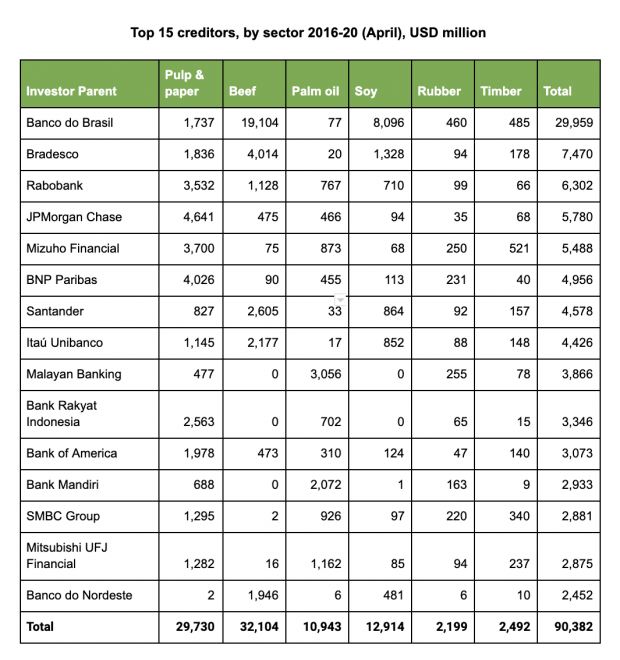
Banco do Brasil was found to be the largest creditor overall, having provided 30 billion USD to forest-risk commodity operations, since 2016. This was almost exclusively for companies operating in Brazil, going into beef, soy and pulp and paper operations.
Also in the top five of largest creditors are the Brazilian bank Bradesco, with USD 7.5 billion, the Dutch bank Rabobank (which lauds its developments in agriculture), with USD 6.3 billion, US-based JPMorgan Chase, with USD 5.8 billion, and Japanese bank Mizuho Financial, with USD 5.5 billion.
I reached out to a contact I have at Rabobank before this research was released and there was no comment.
“Right now, intentionally lit fires are burning through the world’s last remaining rainforests as fire is used as a ‘cheap’ way to clear land for commodity production. Global banks and investors are knowingly financing agribusiness giants that are fueling the fires,” said Merel van der Mark, Coordinator of the Forests and Finance Coalition, one of the groups who created the report.
“Despite the financial sector’s commitments to the Sustainable Development Goals and the Paris Agreement, their pursuit of profits are driving us toward a climate and public health disaster at full speed.”
Launched by Forests & Finance — an initiative by the Forests & Finance Coalition including Rainforest Action Network, TuK INDONESIA, Profundo, Reporter Brasil, Amazon Watch and BankTrack — the database reveals the financial flows between January 2013 and April 2020 to more than 300 of the biggest forest-risk commodity companies whose operations impact forests in Southeast Asia, Central and West Africa, and Brazil.
Banking, lending, and these risks are complicated business. In a way we are all part of it when we buy a non eco product or drive our cars. While we aren’t suggesting to boycott anyone right now, these are definitely questions boardrooms and executives should be asking each other. How can we do this better?
According to the press release sent out by the above groups, they say that “despite various multilateral and industry commitments to zero deforestation, tropical deforestation has nearly doubled over the past 10 years.”
They explain that forests are being primarily cleared for agribusiness commodities, often illegally and with strong ties to corruption, tax evasion and organized crime.
Collectively known as forest-risk, the commodities are beef, palm oil, pulp & paper, rubber, soy and timber. In 2019 alone, tropical deforestation reached 11.9 million hectares. Deforestation and the associated loss of wildlife habitat is also a critical factor in the emergence of zoonotic diseases such as COVID-19, according to the UN Environment Programme.
Credit and investment is critical to the expansion and day-to-day operations of companies responsible for deforestation.
Just 15 banks in the list below accounted for approximately 60% of the USD 154 billion in credit extended to forest-risk companies since the signing of the Paris Climate Agreement, the alliance who funded the research contest.
Eight of these banks are signatories to the UN’s Principles for Responsible Banking, which includes a commitment to align bank operations with the Paris Agreement and Sustainable Development Goals (SDG), including SDG 15 to “halt deforestation [and] restore degraded forests” by 2020. In terms of source finance, banks from Brazil, China, Indonesia, Malaysia, United States and Japan represented the largest flows of finance. These findings illustrate the lack of regulations and company policies necessary to bring the financial sector into line with global environmental and social priorities.
“The Amazon’s indigenous peoples are facing a catastrophic burning season heaping tragedy on the toll of the COVID-19 pandemic,” said Christian Poirier of Amazon Watch. “Fires across the Brazilian Amazon are at a 10-year high, with a 77 percent increase on indigenous territories since last year. These spikes are the product of criminal deforestation and arson fueled by forest-risk commodities and bankrolled by global financial giants. To global banks and investors: this database unequivocally exposes your complicity in this disaster.”
The research methodology segregates and calculates credit and investment that can be reasonably attributed to the production, primary processing, trading, and manufacturing divisions of companies with forest-risk operations in each tropical forest basin.
Below is a table with information on loans and underwriting provided by the top 15 creditors to forest-risk commodity companies across the three tropical regions, with a breakdown per sector.
We’d love to hear the banking side of the story. Reach out for a contributing voice [email protected]
Green Prophet talks with cleantech experts about the opportunities in energy, water, and a great big amount of peace for the world through the new UAE-Israel peace alliance, brokered by the US.
The Arab world has bravely taken on a new partner in peace and prosperity this week by welcoming the first flight of Israeli and American diplomats on an historic flight to Abu Dhabi yesterday. It is a new dawn where two moderate superpowers were only operating cooperatively quietly – until now. Israel and the UAE foment their willingness to create a new Middle East (or Western East) with an official visit by an Israel-US delegation led by Jared Kushner this week.
Emiratis say goodbye to their American and Israeli friends this week in Abu Dhabi. Source unknown.
Israel and the United Arab Emirates –– also known as the UAE –– have a lot more in common in renewable energy, water resume and conservation and desert agriculture, than let’s say Israel does with the northern country of Norway. But for years outdated Middle East bigotry pervaded the ranks of the Arab League of which Israel was never a part despite about half its population being both Israeli Arabs and Arab Jews from countries like Iraq, Morocco, Jordan, Syria and Lebanon.
Business will find a way and did go on over the years go on behind the backs of the bullies. I have met with leaders from Arab nation governments, including Iraq, that were very keen on cooperating with Israel on cleantech and water tech. What was stopping them from doing it in the open was a broker and the US President Trump helped achieve that.
We spoke with experts from a variety of fields: carbon, energy, water, and green building to find reasonable opportunities and pathways for NGOS, businesses and humankind to go forward with building this world into a net positive place. We all want prosperity for all.
He knows the sweet spots of both nations: decarbonizing together
François Le Scornet
François Le Scornet is president of Carbonexit Consulting in Grenoble, France, where he works as a senior energy consultant, supporting industry, startups, investors and NGOs. He was at the last World Energy Congress in Abu Dhabi last September and understands the challenges and opportunities that such an agreement can bring.
Le Scornet tells Green Prophet: “I strongly believe that the very recent UAE-Israel peace deal can only be seen as a positive step when it comes to the development of the low-carbon energy sector in Israel in particular.
“The UAE is clearly an oil giant, no doubt, I actually had the chance to visit the impressive The Abu Dhabi National Oil Company or ADNOC headquarters in Abu Dhabi last September, and they are also extremely active in the renewable sector of course.”
Le Scornet continues: “They host IRENA as well as some of the largest solar PV solar plants in the world and we sometimes forget about that in the West. The Emirates Water and Electricity Company (EWEC) actually announced partners to develop the world’s largest solar power plant: 2 Gigawatts at the Al Dhafra plant– just a few days ago.
“With very limited oil and gas, Israel has a lot of innovative startups in the decarbonized power sector and a strong solar sector like the UAE. Israel will strongly push for new energy and water infrastructures in the frame of its post-COVID-19 stimulus plan and a strong growth is expected in the solar sector with a total of 2GW to be installed for about $1.6B within the next few years.
“Israel could become a new market for the UAE renewable energy companies as well as for the players involved in the energy hungry desalination plant ecosystem. On the other hand, many Israeli startups may use the UAE as a way to penetrate the regional Middle Eastern market for their innovative products and services in energy storage, smart grids etc,” Le Scornet concludes.
Renewable energy will reduce conflict
Mark Cann
Mark Cann, the CEO of Cryomatiks in Florida works to provide zero emission technology for transportation and energy storage. He knows about the cost of conflict for Mother Earth: “Military conflict is notoriously difficult on the environment,” he tells Green Prophet.
“Even potential conflict has long lasting negative effects on the environment with the toxic military sites left over from the Cold War as just one example. So any step towards de-escalation of potential military conflict should normally be a boost for the environment.
Cann continues: “As far as an increase in renewable energy as a direct impact from the current Israel-UAE agreement, that’s a bit like the tail wagging the dog. Ahmed Zaki Yamani, Saudi Arabia’s former Minister of Oil, was famously quoted as saying ‘The Stone Age didn’t end for lack of stone, and the oil age will end long before the world runs out of oil.’
“In other words, it’s not so much that the current agreement will result in more renewable energy but rather renewable energy will result in more agreements. Commerce has proven to be a productive pathway for various states and regions to co-exist. Countries that are heavily dependent on exporting petroleum to balance sovereign budgets may experience more social unrest relative to the countries that don’t.”
Agriculture is energy too so save water
Aadith Moorthy
Aadith Moorthy, founder and CEO of ConserWater is working between San Francisco and Israel and they are invested in the peace deal already. His company offers a sensor-free way to grow more food using less water. “We have large initiatives in Israel and with the peace deal, we have also seen a stronger uptick of collaboration between our Israel team and upcoming projects in the UAE,” he tells Green Prophet,
“This deal is going to be very great from an environment perspective for the entire world: Israel has historically been a leader in water technology and precision agriculture, which is necessary for the world’s population to better adapt to climate change, which will result in greater resource scarcity and more frequent droughts,” Moorthy says.
“On the other hand,” he notes, “the UAE has recently become a global clean energy hub through its aggressive investment in cleantech in the past decade. The synergy of the combination of these two will provide humanity with the right resources to both reduce further climate change, while also enabling humanity to adapt to the warming that is already happening.”
Desalinating Israel and the UAE is also reducing wars on the horizon
Pablo Soloman promotes ideas in his designs like seawater flush toilets, the Red-Dead Sea Canal, and vertical agriculture.
Environmental designer and artist Pablo Soloman from Texas considers himself a lifelong leader in conservation, a person of science, an “accurate futurist” and also grew up in a very multicultural mixed home where they spoke a number of languages including Arabic. He was the first to come up with the idea of the Red Dead Sea Canal, and explained to the world why tree planting is good for carbon sequestering.
He believes that all renewable energy applications are limited in use until we find ways to store electricity efficiently, and desalination can be the key as both nations are now heavily reliant on desalination for freshwater, a process which is very energy intensive: “The best use in many places for renewable energy that cannot be directly stored is to use that electricity to desalinate seawater and/or to pump water into reservoirs for hydroelectric power back up,” he tells Green Prophet.
“Desalinating seawater cheaply will be the greatest boost to the health, economies and peace in the Middle East. More fresh water would increase food production and would reduce the chance of wars over water that are currently on the horizon. Renewable energy is only one part of cleaning up our environment. Use of natural gas is a step up from less clean carbon fuels,” he notes.
But Soloman addresses, “Keep in mind that in effect fossil fuels are stored solar energy. They pack a huge amount of energy in a small package. As economies expand, more money will be available to develop more efficient and effective ways of cleaning and repurposing emissions from fossil fuels.
“As peace and prosperity expand, nuclear material money can be used for electrical generation instead of bomb making. As economies interact peacefully and share technology, there will be increased cultural understanding and possibly tolerance and acceptance. People gain greater understanding and respect through working together on shared interests than from threats of war,” Soloman concludes.
Invest in solar, destabilize destroyers
Joshua M. Pearce, a PhD and director of the Michigan Tech Open Sustainability Technology (MOST) Lab, Michigan Technological University says that “renewable energy deployment in the Middle East can be a key factor in promoting peace.
If the US continues to follow the standard model, relatively weak diplomacy, military threats and economic sanctions could lead to another Iraq-like war. Although Iran and Iraq have differences, most observers would agree that the same outcome and price are likely results. In purely economic terms, the CBO estimates that the Iraq-US war cost about $2.4 trillion.
“In a study published in the Pearce Studies Journal, I showed that strong US support for solar in Iran would obtain all the benefits from denuclearizing Iran for a fraction of the cost of the standard model, while earning a higher return and improve environmental impact in the process,” Pearce tells Green Prophet.
Pearce explores: “Today, the region’s operational PV capacity is at $5 to 7.5 billion USD, with another $15 to 20 billion USD slated for deployment by 2024. The Middle East Solar Industry Association reports energy investment in the Middle East region could hit $1 trillion USD in the next few years.
“The peace deal between Israel and the United Arab Emirates (UAE) unquestionably benefits the $1 trillion of solar energy goal. Peace and stability will provide the security for investors that is needed to drop PV prices even further with scale of both large centralized and distributed generation solar options in the Middle East. The UAE is already a solar leader in the region for PV, which now can be more easily exported in the region.
“My research has clearly shown that a wiser, more-profitable way to invest in the elimination of nuclear capability in Iran is through solar. This ‘generous solar option‘ shows that the US can obtain all the benefits from denuclearizing Iran for a fraction of the cost of the standard model, while earning a higher return and improve environmental impact in the process.
“This generous solar option is not even necessary if the region can enjoy <$0.02/kWh solar electricity funded by partnerships between the Arab world and Israel.
“Why invest in nuclear if solar beats it without any of the risk?”
Franklin Tree, (Franklinia alatamaha), NatureServe Global Conservation Status: Possibly Extinct (GX) in the Wild.
Plants: They seem more resilient than we are. And there are so many wild places in the world that they can take over. But a new study reveals that along with large mammals, amphibian and creatures of the sea, plants are going extinct faster than we thought possible.
Time to start saving seeds. And not just in war times as Syria has been doing at the Svalbard Global Seed Bank in Norway. Every plant is a medicinal plant. Losing one could mean losing a universe of opportunities.
A new study reveals that 65 plant species have gone extinct in the continental United States and Canada since European settlement, more extinctions than any previous scientific study has ever documented. Led by Wesley Knapp of the North Carolina Natural Heritage Program, a group of 16 experts from across the United States collaborated to document the extinct plants of the continental United States and Canada for the first time in history.
Their report has been published by the international journal Conservation Biology.
The team found that most plant extinctions occurred in the western United States, where the vegetation was minimally explored before widespread European settlement. Because many extinctions likely occurred before scientists explored an area, it is extremely likely the 65 documented extinctions vastly underestimate the actual number of plant species that have been lost.
Previous studies documented far fewer plant extinctions on the North American continent.
“Preventing extinction is the lowest bar for conservation success we can set, yet we are not always successful,” Knapp said. “This study started as an academic question but later developed into an opportunity to learn from what we have lost. By studying the trends and patterns of plants that have already gone extinct, hopefully we can learn how to prevent plant extinction going forward.”
Of the 65 documented extinctions in the report, 64% were known only from a single location. While conservation often focuses on protecting entire landscapes, this finding points to the importance of small-scale site protection in order to prevent extinctions.
Because plants serve as the foundation for most terrestrial ecosystems, the urgency for documenting plant extinctions is especially great if extinction rates rise as predicted over the next century. Anne Frances, lead botanist at NatureServe, states, “In most cases, we can stop plants from going extinct, we just need the resources and commitment to do so.”