“In the midst of uncertain time, renewable energy remains consistent and steadfast in its expansion,” said Francesco La Camera, IRENA’s Director-General. “A more decentralised energy system, with a growing share of renewables and more market players, is structurally more resilient.”
Health insurance is a regulated financial product. Insurers operate under binding contracts, overseen by state insurance commissioners, that legally obligate them to pay claims meeting policy terms. Policyholders who believe a covered claim was wrongfully denied have legal recourse through state regulatory channels.
The New Zealand Merino Company, now rebranded as Zentera, has quietly removed the phrase “world’s leading ethical wool brand” from its website, a notable change that comes after a disturbing investigation by PETA Asia-Pacific into the company’s ZQ-certified wool supply chain, PETA reports to Green Prophet.
Somehow vegetables with short seasons excite the imagination and appetite more sharply than produce that’s available all year around. Good Middle Eastern cooks have many recipes for delicate fava beans, and this turmeric-fragrant soup is one.
“In the midst of uncertain time, renewable energy remains consistent and steadfast in its expansion,” said Francesco La Camera, IRENA’s Director-General. “A more decentralised energy system, with a growing share of renewables and more market players, is structurally more resilient.”
Health insurance is a regulated financial product. Insurers operate under binding contracts, overseen by state insurance commissioners, that legally obligate them to pay claims meeting policy terms. Policyholders who believe a covered claim was wrongfully denied have legal recourse through state regulatory channels.
The New Zealand Merino Company, now rebranded as Zentera, has quietly removed the phrase “world’s leading ethical wool brand” from its website, a notable change that comes after a disturbing investigation by PETA Asia-Pacific into the company’s ZQ-certified wool supply chain, PETA reports to Green Prophet.
Somehow vegetables with short seasons excite the imagination and appetite more sharply than produce that’s available all year around. Good Middle Eastern cooks have many recipes for delicate fava beans, and this turmeric-fragrant soup is one.
“In the midst of uncertain time, renewable energy remains consistent and steadfast in its expansion,” said Francesco La Camera, IRENA’s Director-General. “A more decentralised energy system, with a growing share of renewables and more market players, is structurally more resilient.”
Health insurance is a regulated financial product. Insurers operate under binding contracts, overseen by state insurance commissioners, that legally obligate them to pay claims meeting policy terms. Policyholders who believe a covered claim was wrongfully denied have legal recourse through state regulatory channels.
The New Zealand Merino Company, now rebranded as Zentera, has quietly removed the phrase “world’s leading ethical wool brand” from its website, a notable change that comes after a disturbing investigation by PETA Asia-Pacific into the company’s ZQ-certified wool supply chain, PETA reports to Green Prophet.
Somehow vegetables with short seasons excite the imagination and appetite more sharply than produce that’s available all year around. Good Middle Eastern cooks have many recipes for delicate fava beans, and this turmeric-fragrant soup is one.
“In the midst of uncertain time, renewable energy remains consistent and steadfast in its expansion,” said Francesco La Camera, IRENA’s Director-General. “A more decentralised energy system, with a growing share of renewables and more market players, is structurally more resilient.”
Health insurance is a regulated financial product. Insurers operate under binding contracts, overseen by state insurance commissioners, that legally obligate them to pay claims meeting policy terms. Policyholders who believe a covered claim was wrongfully denied have legal recourse through state regulatory channels.
The New Zealand Merino Company, now rebranded as Zentera, has quietly removed the phrase “world’s leading ethical wool brand” from its website, a notable change that comes after a disturbing investigation by PETA Asia-Pacific into the company’s ZQ-certified wool supply chain, PETA reports to Green Prophet.
Somehow vegetables with short seasons excite the imagination and appetite more sharply than produce that’s available all year around. Good Middle Eastern cooks have many recipes for delicate fava beans, and this turmeric-fragrant soup is one.
“In the midst of uncertain time, renewable energy remains consistent and steadfast in its expansion,” said Francesco La Camera, IRENA’s Director-General. “A more decentralised energy system, with a growing share of renewables and more market players, is structurally more resilient.”
Health insurance is a regulated financial product. Insurers operate under binding contracts, overseen by state insurance commissioners, that legally obligate them to pay claims meeting policy terms. Policyholders who believe a covered claim was wrongfully denied have legal recourse through state regulatory channels.
The New Zealand Merino Company, now rebranded as Zentera, has quietly removed the phrase “world’s leading ethical wool brand” from its website, a notable change that comes after a disturbing investigation by PETA Asia-Pacific into the company’s ZQ-certified wool supply chain, PETA reports to Green Prophet.
Somehow vegetables with short seasons excite the imagination and appetite more sharply than produce that’s available all year around. Good Middle Eastern cooks have many recipes for delicate fava beans, and this turmeric-fragrant soup is one.
“In the midst of uncertain time, renewable energy remains consistent and steadfast in its expansion,” said Francesco La Camera, IRENA’s Director-General. “A more decentralised energy system, with a growing share of renewables and more market players, is structurally more resilient.”
Health insurance is a regulated financial product. Insurers operate under binding contracts, overseen by state insurance commissioners, that legally obligate them to pay claims meeting policy terms. Policyholders who believe a covered claim was wrongfully denied have legal recourse through state regulatory channels.
The New Zealand Merino Company, now rebranded as Zentera, has quietly removed the phrase “world’s leading ethical wool brand” from its website, a notable change that comes after a disturbing investigation by PETA Asia-Pacific into the company’s ZQ-certified wool supply chain, PETA reports to Green Prophet.
Somehow vegetables with short seasons excite the imagination and appetite more sharply than produce that’s available all year around. Good Middle Eastern cooks have many recipes for delicate fava beans, and this turmeric-fragrant soup is one.
“In the midst of uncertain time, renewable energy remains consistent and steadfast in its expansion,” said Francesco La Camera, IRENA’s Director-General. “A more decentralised energy system, with a growing share of renewables and more market players, is structurally more resilient.”
Health insurance is a regulated financial product. Insurers operate under binding contracts, overseen by state insurance commissioners, that legally obligate them to pay claims meeting policy terms. Policyholders who believe a covered claim was wrongfully denied have legal recourse through state regulatory channels.
The New Zealand Merino Company, now rebranded as Zentera, has quietly removed the phrase “world’s leading ethical wool brand” from its website, a notable change that comes after a disturbing investigation by PETA Asia-Pacific into the company’s ZQ-certified wool supply chain, PETA reports to Green Prophet.
Somehow vegetables with short seasons excite the imagination and appetite more sharply than produce that’s available all year around. Good Middle Eastern cooks have many recipes for delicate fava beans, and this turmeric-fragrant soup is one.
“In the midst of uncertain time, renewable energy remains consistent and steadfast in its expansion,” said Francesco La Camera, IRENA’s Director-General. “A more decentralised energy system, with a growing share of renewables and more market players, is structurally more resilient.”
Health insurance is a regulated financial product. Insurers operate under binding contracts, overseen by state insurance commissioners, that legally obligate them to pay claims meeting policy terms. Policyholders who believe a covered claim was wrongfully denied have legal recourse through state regulatory channels.
The New Zealand Merino Company, now rebranded as Zentera, has quietly removed the phrase “world’s leading ethical wool brand” from its website, a notable change that comes after a disturbing investigation by PETA Asia-Pacific into the company’s ZQ-certified wool supply chain, PETA reports to Green Prophet.
Somehow vegetables with short seasons excite the imagination and appetite more sharply than produce that’s available all year around. Good Middle Eastern cooks have many recipes for delicate fava beans, and this turmeric-fragrant soup is one.
Catch a cab in Dubai? And want to make it electric? Try hailing one through Arabia Taxi, the latest company to add all-electric Teslas to its offerings. Arabia Taxi has invested in 269 Tesla Model 3 to be used in the city of Dubai. From 2027 onwards, only electrified taxis will be permitted in the city. Arabia Taxi currently operates 6,000 vehicles throughout the United Arab Emirates, and 83 percent of them are hybrids.
Going electric doesn’t solve climate change if the power produced to charge the cars comes from natural gas or oil, but electric certainly stops emissions and asthma in cities where small particulate matter causes harm to human health.
The Tesla cabs are “a giant leap towards converting the company’s fleet to fully electric,” the cab company said in a press statement.
Arabia Taxi is a subsidiary of the Economic Group owned by the ruling family and run by Sheikh Majid bin Hamad Al Qasimi. He noted that the company was working on a strategic plan to convert the remaining vehicles into fully electric cars ones and possibly hydrogen (a pet project of rich Arab countries) as it goes ahead “expanding its cooperation with Tesla and several electric car manufacturers.”
Dubai is always the first of Arab cities to try out the latest in green technology. Back in 2008 they were the first to let these all electric cars on the road.
The Roads and Transport Authority’s Ahmed Bahrozyan said: “This step confirms the efforts of Arabia Taxi working to translate the directions of our wise leadership, to rationalize the use of energy in the UAE, and to create a safe, clean and sustainable environment that lives up to the level of reputation and prestige of the Emirate of Dubai, as well as promoting the Dubai government’s initiative to introduce green vehicles for a cleaner environment.”
Police going electric
Dubai policewomen drive Lambos
The COP28 UN climate summit will take place in Dubai later this year. And the police are towing the green line: they h electric sports car to their luxury fleet: The Audi RS e-tron GT will be one of the cars driven by the Dubai police. The patrol car costs about $110,000 (USD) and has a top speed of 249kph.
Dubai Police’s fleet of supercars already includes Lamborghini, Aston Martin, Bugatti, Ferrari, Bentley, Porsche, McLaren.
Water conservation is among the many ways of reducing water scarcity and combating climate change. Unfortunately, most water conservation efforts are directed at industries, often forgetting that small and established businesses also have a role to play in ensuring environmental sustainability.
Surprisingly, water conservation measures for businesses involve simple practices, such as reminding employees to use reusable water bottles, tracking water use, and inspecting water fixtures regularly. Businesses can also conserve a lot of water by actively embracing water recycling. Among the most innovative technologies for wastewater treatment and reuse, compact membrane bioreactors, also known as MBR systems, stand out for its efficiency and cost-effectiveness.
Membrane Bioreactors are tremendous at reducing pollutants, contaminants, and overall wastewater volume, leading to cleaner effluent and more efficient water reuse.
Why Should Businesses Recycle Water?
Water recycling is beneficial to businesses and the environment in the following ways:
1.Cost saving
While the initial costs of setting up a water recycling system are high, recycling wastewater helps businesses save on costs and improve their bottom line in the long term. For starters, most businesses incur a lot of costs transporting wastewater to offsite facilities. Businesses also save on the costs of purchasing fresh water.
2.Protects the environment
Recycling water reduces the amount of contaminated water that ends up in water bodies. Releasing contaminated water to natural water bodies affects aquatic life and animals that depend on these water sources. Untreated wastewater pollutes streams, rivers, and oceans. Recycling water also means you won’t have to fetch water from natural resources, conserving the ecosystem.
3.Avoid non-compliance fines
Besides protecting the environment, embracing wastewater recycling helps businesses avoidnon-compliance fines and fees imposed by local authorities on businesses that discharge wastewater. Environmental protection fines are hefty and can affect your cash flow.
Water Conservation Tips for Businesses
Businesses should proactively adopt the following tips to reduce water usage and recycle wastewater:
Prioritize water efficiency – Businesses that rely on water-intensive machines, like washing machines, should instruct employees to operate them only when full to reduce water wastage. Air conditioners and cooling units also use a lot of water and should be turned on only when necessary.
Educate employees on water conservation efforts – Businesses should ensure all employees are versed in water conservation measures. Your employees should practice water efficiency and learn the importance of turning off faucets and other conservation measures.
Install low-flow water fixtures – You can also regulate water usage by reducing water flow. Installing low-flow water fixtures in the bathroom and kitchens automatically regulates water usage.
Use recycled water – Using recycled water for your business processes is another effective way businesses can conserve water. You can recycle clean stormwater, wastewater, and evengreywater, for other business operations, such as fire protection, water cooling towers, irrigation, cleaning surfaces, and more.
Endnote
If properly treated, recycled water can satisfy the water demands of most businesses. Businesses that rely on water for basic operations, such as mining sites, farms, car washes, transport companies, and fleet operators, should be at the forefront of adopting water conservation practices. While most people focus on the environmental benefits of water conservation, businesses also benefit immensely.
Solar panels are changing lives in Lebanon. People are going “green” without even realizing it.
Lebanon’s got power problems: government authorities are supplying minimal access to electricity, about one to three hours a day, and in rural locations less, while those who can afford solutions are buying generators and solar energy systems. But a lack of power doesn’t just apply to basic needs like milk or medicine stored in a fridge: it also impacts one’s access to clean water.
Areas of Lebanon blessed with a regular supply of water rely on pumps to pull out water from springs and aquifers and store them for use. With irregular and fewer hours of electricity, locals in some areas are getting cut off from water as a result. Or they see just one or two hours of municipal water every 15 days.
Over in Afghanistan off-grid opiate farmers are watering poppies using solar energy pumps; Lebanese are also taking the matter into their own hands using solar power to pump water. Some villages are now investing in solar power.
Solar panels are a boon for the planet but they are now fuelling bumper crops of poppies for the opium trade. Via the NY Times.
According to The National the mountain town of Baalchmay plans to install solar panels near its well so it can stop relying on state-provided electricity to pump water to residents.
The mayor of the town had a private generator installed using his own money and took donations from the local community but the scope was limited due to the cost of fuel for running the generator. Instead the town turned to solar energy and using 230 solar panels bought from funding from the Japanese Embassy in Lebanon, and with support from the Environment Academy — at the American University of Beirut.
Power collected from the solar panels will run the well and this is expected to keep the town’s water source flowing into people’s homes.
Lebanon passed a civil war 48 years ago and the current climate and political situation is not looking good. People who don’t have access to power or water won’t be happy people. These are the same conditions that started the civil war in Syria in 2011. We wrote about the severe drought in Syria back in 2009 when environmentalists warned that conflict and water and climate change are linked.
An idea for change? Sponsoring more villages to adopt solar power. Time magazine (above photo) has a great story on individuals going for solar. A system might cost $10,000 USD but it saves them $3 to $4,000 USD a year on power. Power that they probably wouldn’t have been able to buy even if they wanted to.
That goal of using renewable energy in Lebanon has been helped by the fact that solar power is now cheapest way to generate electricity around the world. The cost has dropped by more than 90% over the past 10 years, thanks to rapid technology gains and a glut in solar-panel production.
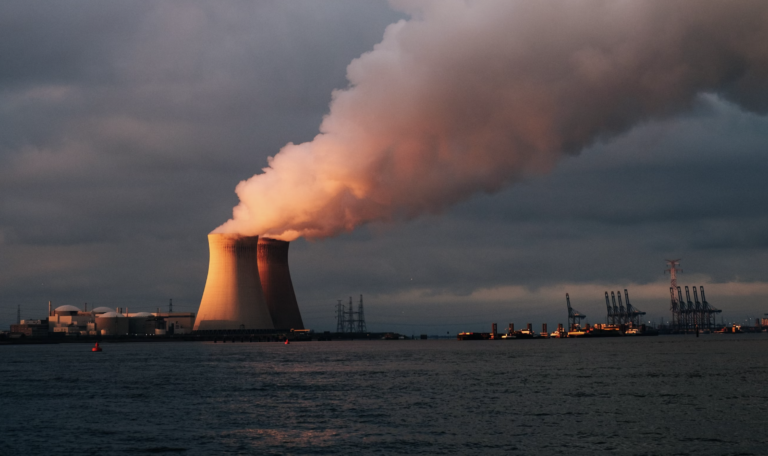
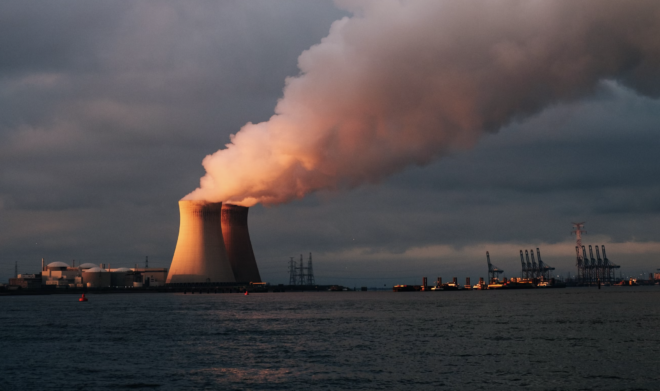
Germany, one of the world’s leading producers of clean, renewable energy has officially shut down its last nuclear reactor last month. On the flip-side, Turkey, the world’s most liberal Muslim country, has fired up its first. What does this say about where the Middle East is heading?
On April 16 this year, commercial power generation by nuclear energy in Germany came to an end with the separation of the Isar 2, Neckarwestheim and Emsland nuclear power plants from the power grid. Germany is leading the way when it comes to renewable energy production: in 2022 renewable energy sources provided 254 billion kilowatt-hours of electricity and accounted for 46.2 percent of Germany’s electricity demand. With wind power being the most important energy source in the German electricity mix.
Where does Germany compare to the world on renewables? Albania, Iceland, and Paraguay obtain essentially all of their electricity from renewable sources (Albania and Paraguay 100% from hydroelectricity, Iceland 72% hydro and 28% geothermal). Norway obtains nearly all of its electricity from renewable sources (97 percent from hydropower).
Germany knows that nuclear power is dangerous and unsustainable. I know this too because the fear of nuclear was raised into me as a Canadian; Canada is one of 30 countries that uses nuclear energy, with operating plants in Ontario and New Brunswick. Some 4% of Canada’s energy comes from nuclear.
Thousands of years can go by before spent nuclear rods will no longer be a radiation hazard to humans, plant and animal life. Nuclear explosions and leaks pose an enormous threat to human life and health on a daily basis.
And accidents do happen: Of course there is Chernobyl, and Three Mile Island in the US but in more recent history in 2011 we saw what happens when a developed country like Japan suffers an explosion –– see the Fukushima Disaster. We also saw how unprepared Turkey was when it dealt with its lack of oversight and management of construction after a massive earthquake a couple of months ago.
Critics have long described nuclear energy source as dangerous and unsustainable. After years of contentious debates, Germany has shut down its last three remaining nuclear power plants. Greenpeace has consistently been demanding that Germany shut down its nuclear reactors, and over the years documented leaks.
Greenpeace research
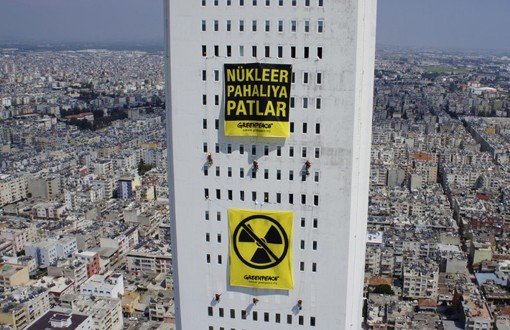
Greenpeacers protest the Akkuyu nuclear power plant construction
Greenpeace has repeatedly protested against the transport of nuclear waste from German nuclear power plants to the reprocessing plants in Sellafield (England) and La Hague (France) and was also able to prove that these plants are anything but harmless.
Greenpeace measurements from 1998, for instance, showed that soil samples from the vicinity of the Sellafield nuclear plant were comparable to radioactively contaminated samples taken from the 30-kilometer exclusion zone around the Chernobyl reactor.
By around the year 2000, in the North Sea off La Hague Greenpeace found radiation levels well above regulatory limits, revealing routine illegal discharges of radioactive waste water.
The latest major milestone of the anti-nuclear movement led by Greenpeace was the decision against the Gorleben repository: the dilapidated salt dome was found unsuitable for storing radioactive waste, which must be kept safe for hundreds of thousands of years.
Akkuyu nuclear power plant on the Mediterranean Sea
Advocates of nuclear power want to pass on their problems to future generations: there is not one safe repository for nuclear waste anywhere in the world. Germany will now no longer produce any more nuclear waste.
Activists have been protesting against the Turkish nuclear reactor for about 10 years, to no avail. Turkey has been snubbed by the EU and looks to align with Russia which has financed the nuclear power plant under its state-owned company Rosatom. The Akkuyu Nuclear Power Plant is located in Turkey’s southern Mersin province.
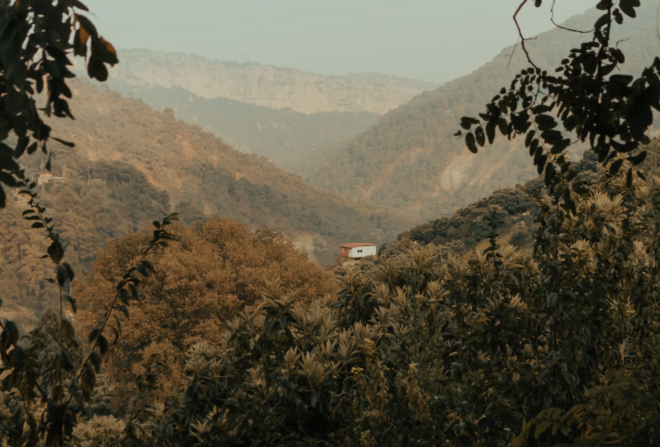
Mersin Province, in Turkey
Russian President Vladimir Putin hailed Moscow’s economic ties with Ankara as he and Turkish President Tayyip Erdogan took part virtually in a ceremony inaugurating Turkey’s first nuclear power plant.
“This is a flagship project,” Putin said via video. “It brings both mutual economic benefits and, of course, helps to strengthen the multi-faceted partnership between our two states.”
Buying into Russia’s cheap energy
Putin described Akkuyu as “the largest nuclear construction project in the world” and said that it would mean Turkey having to import less Russian natural gas in the future.
“But Turkey will enjoy the advantage of a country that has its own nuclear energy, and nuclear energy, as you know, is one of the cheapest,” Putin added.
Turkey’s Akkuyu Nuclear Power Plant was not damaged in any way by the major earthquake that struck central Turkey and northwest Syria earlier this year, said an official from the Russian company building the plant. The chance of an earthquake affecting it are one in every 10,000 years, according to estimates.
The Russian-designed VVER-1200 reactors in the power plant, which cost $20 billion USD to build, are expected to be fully operational by 2026. The reactor will produce about 10% of Turkey’s energy needs. Despite European sanctions on Russia, Turkey moved ahead with its decision to go nuclear thus sending a clear message to the world where Turkey stands on unsustainable energy and its future ties with Europe.
Passion Led Us Here sign on sidewalk is a the new motto for young people looking for meaning at work. ESG and the planet is at the core of what matters.
In recent years we have been reading about a phenomenon called the Great Resignation. While the Great Resignation may have started before the COVID-19 pandemic, however, it has become much more prominent since then. It is the name given to the trend of employees switching jobs, choosing to leave their workplaces, or those who are choosing to work for themselves. The labor market has been disrupted and changed by this phenomenon, and many companies are struggling to find workers or are having to change their hiring practices, change the way they offer benefits, or change the expectations they have for workers.
Employees are looking for healthier work environments as well as fulfilling, interesting work to do. They also want freedom from restrictive and controlling managers, schedules, and tasks. Workers are questioning their priorities and asking themselves if they want to spend their lives doing the jobs and careers that they are currently doing. There are many complex factors that have driven the Great Resignation, but most of them can be summed up into this list:
Burnout
Employees often mention burnout as one of the things contributing to their desire to switch jobs or begin working from home. Burnout often happens when workers are working too hard or have no support. It can also happen when they don’t enjoy their work, aren’t feeling appreciated, or there is a toxic work environment. Employees who are feeling burnt out may often switch workplaces or even change careers in an effort to alleviate the feeling.
Reevaluating Priorities
Many employees found that their priorities shifted during and after the pandemic. Some people say this happened during the lockdown when people found themselves at home and spending a lot of time with their families, their hobbies, or other similar priorities. People found that they didn’t want to go back to their regular hours and in some cases, no longer wanted to work out of the home at all. Priorities, especially the priorities of family and children, often shifted for people and drove the desire to work from home or have a flexible schedule.
For other people, reevaluating priorities impacted the companies that they chose to work for. People are less willing to be associated with companies whose moral values are opposed to their own, and in many cases, won’t continue working with businesses in these situations. Quitting has become a new way to boycott companies. For example, the 2023 Esker Survey: Sustainability in the Workplace explains how vital a company’s economic policy is to workers.
Focus on Work-Life Balance
In the wake of the pandemic, many individuals are prioritizing their personal lives and well-being over their careers. This has led to an increased focus on work-life balance, with more people seeking careers that allow for flexible scheduling, remote work, and other benefits that allow them to prioritize their personal lives. A new focus on work-life balance has also come about because of the increasing focus on mental health both in the workplace and at home. During the pandemic, we saw very high rates of mental health concerns, and this may have influenced workers’ desire to have a better work-life balance.
Pursuing Passions
With the pandemic forcing many people to re-evaluate their priorities, more individuals are pursuing careers that align with their passions and interests. This has led to an increase in entrepreneurship, as well as a shift towards careers in the creative industries, such as art, music, and writing. Many of these interests led to new businesses and opportunities for these people, and in some cases, completely new careers.
Emphasis on Purpose
In addition to pursuing their passions, many individuals are seeking careers that provide a sense of purpose and meaning. This has led to an increase in careers related to social impact and sustainability, as well as a greater emphasis on companies with clear missions and values. Many workers found that a sense of purpose and causes outside of work can increase their quality of life and help them to feel more interested and fulfilled in life.
Desire for Autonomy
The pandemic has also highlighted the importance of autonomy in the workplace. Many individuals are seeking careers that allow for greater independence and control over their work, rather than being micromanaged by their employers. For many people, this looks like flexible hours or remote work. For others, it can mean leaving the workplace altogether. These people are seeking to retire early, become freelance workers, or start their own businesses.
Importance of Company Culture
With so many individuals working remotely, the importance of company culture has become more vital than ever. Many individuals are seeking careers with companies that have a strong culture of support and collaboration, as well as a focus on employee well-being and mental health. Company culture and environment, as well as the company’s mission and focus on humanitarian causes, environmental causes, and other charitable causes can help workers feel connected and appreciated and give them a sense of purpose.
Conclusion
Overall, the Great Resignation has caused a significant shift in the way people are choosing their careers. It was a complex phenomenon caused by several factors, many (but not all) of which were driven by the pandemic and by an increasing desire for a better work environment. In order to stay competitive in the labor market, employers must adapt to these changes and offer flexible work arrangements, meaningful work, and opportunities for professional development to retain their employees.
Your house is your private heaven. Upgrade it ecologically and insure it from theft and damage.
There are many different ways to be an ethical landlord in this day and age. For starters, ethical landlords are often conscientious enough to maintain landlord insurance or attend to tenant maintenance concerns in a timely manner. Ethical landlords can also be counted on to stay compliant with fair housing laws, ensuring that their properties are always leased out fairly and that their existing tenants can live comfortably and securely. And then there’s green leases, a novel and exciting way to practice ethical landlordship today.
But what exactly are ‘green leases’? We’ll be answering just that question today, by exploring the concept in more detail, as well as outlining just how landlords can transform all of their rental properties into sustainable green leases for their tenants to enjoy.
A working definition of the ‘green lease’
At its simplest definition, a ‘green lease’ is a tenanted property that has been designed to reduce that property’s overall environmental impact. Green leases typically include eco-friendly features like solar panels, energy-efficient lighting, heating, or plumbing systems, and perhaps even a garden space with composting facilities for tenants to ethically dispose of their household food waste.
There’s no legal definition of a green lease as of yet, nor are there special parameters for green lease agreements. Because of this, there is really nothing stopping every landlord from making some eco-oriented alterations to their rental properties. You don’t need to go the whole hog here either. Even just incorporating one or two eco-friendly features can make your rental feel like a haven for sustainability-oriented tenants.
The benefits of offering green leases
The question that many landlords may have on their minds right now is whether or not there are any financial benefits to offering green leases. After all, these properties are basically just regular leases anyway, and must adhere to the same rental requirements of regular leases. So what are the actual benefits of investing in the greenification of your property portfolio?
The primary benefit is that green leases are attractive to tenants, particularly tenants who are looking to lay down their roots, so to speak. With more focus on sustainable (and perhaps even self-sustaining) living than ever before, more long-time renters are looking for properties where they can feel free to cultivate the land that they occupy. And evidence of this growing demand for green spaces can be seen virtually everywhere, from inner city apartment dwellers to property booms in rural areas following the COVID-19 pandemic.
Green leases that are fitted out with solar panels and energy-efficient fixtures will also help tenants keep their utility costs down. This opportunity to save big is yet another reason why green leases can expect longer tenancies than your run-of-the-mill rental properties. That, and these premium property features may provide you with fair reasoning to increase rental rates whilst still advertising exceptional savings potential for prospective tenants.
One final benefit to keep in mind for any who are looking to take on the helm of ethical landlordship, is that maintaining green leases naturally requires more communication and collaboration between tenants and their landlords. As you and your tenants are likely to be on the same page when it comes to maintaining the property, landlords that offer green leases may find their relationships with their tenants to be slightly improved when compared to those offering standard leases. And positive landlord-tenant relationships are truthfully beneficial for both parties.
How to transform your rental property into a green lease
Now that we’ve showcased all the benefits and advantages of offering green leases, your next question may be how exactly you can transform your existing rental properties into sustainable green leases. If you’ve been paying attention thus far, you’ll know that turning any rental property into a green lease is actually a fairly simple process. All you need to do is figure out exactly which green features you’d like to incorporate into each property in your portfolio.
For many landlords, adding garden facilities like a compost bin or a small tool shed can be easy and low-cost inclusions to make. You may even decide to install a small rainwater tank to make garden maintenance even more sustainable.
As for inside the home, swapping outdated light bulbs for energy-efficient LEDs can also be a low-cost change that improves the overall sustainability of all your rental properties. Similarly, swapping out kitchen appliances for more energy and water-efficient alternatives is also a good foot forward, as is swapping out any outdated kitchen taps and showerheads.
If swapping out appliances isn’t a feasible option, then installing solar panels on the roof of your property can help ensure that a portion of that property’s energy usage is always going to be carbon neutral. You may be able to secure solar panels on a payment plan that allows homeowners to sell excess energy back to their local electricity grid for a profit. Be sure to look into these details to determine whether or not investing in solar is the right move for you.
Tenant responsibilities for maintaining green leases
So with all of these sustainable investments made, landlords may be wondering exactly where tenants fit into the picture, especially when it comes to maintaining the new features and facilities provided in your green lease. The good news is that existing tenant responsibilities actually do work to ensure that your property’s green amenities stay in good shape.
Long-time landlords would know all too well that tenants are contractually obligated to leave the property in the same or similar condition it had been in at the beginning of their lease agreement, with changes due to general wear and tear aside. Because of this, tenants are obligated to ensure that your green features and facilities are also kept in good condition, as they would’ve been in good condition on the day they moved in.
Landlords may also find that in most instances where green leases are offered, many tenants will actually want to do their part, as they themselves can greatly benefit from cultivating the property’s garden spaces and keeping water consumption and energy usage as low as possible. In other words, the work that goes into maintaining your green lease is going to be both highly rewarding and also fairly minimal, in the grand scheme of things. All you really have to do is let your tenants enjoy the green haven you’ve created, and collect the rent cheques as they come in every month.
~
All things considered, offering green leases can provide landlords and tenants alike with plenty of benefits, ranging from the opportunity to rent your properties out at a higher rate, to enjoy longer than average tenancies, and to cultivate positive landlord-tenant relationships.
For more information about green leases, read over this guide provided by the Australian Government’s Department of Climate Change and Energy Efficiency. Keep in mind that definitions provided in this guide may differ from those in your own region, so be sure to conduct your own research on green leases where possible.
Wadi Rum (Arabic: وادي رم Wādī Ramm, also Wādī al-Ramm), known also as the Valley of the Moon (Arabic: وادي القمر Wādī al-Qamar), is a valley cut into the sandstone and granite rock in southern Jordan, near the border to Saudi Arabia and about 60 km (37 mi) to the east of the city of Aqaba.
The four-wheel drive vehicle rattled over the desert stones between Wadi Rum village and the Mohammed Mutlak Camp. A vast silence washed over us the moment the driver turned off the engine. A dust storm had passed through earlier in the afternoon but now there was no sound of wind, bird or beast between us and the rust-colored mountains on the horizon.
Anyone who has visited a seashore, forest or meadow thick with birds and insects will know that nature isn’t always quiet. In his poem The Lake Isle of Innisfree the poet W.B. Yeats wrote of a bee-loud glade, cricket sings, low sounds by the shore where “And I shall have some peace there, for peace comes dropping slow…”
But the peace of the Wadi Rum desert dropped quickly like a cotton cloud over ears that were still ringing from the cacophony of ordinary life. The previous night we had accidentally booked a hotel across the street from a UN peacekeeping rock concert in Aqaba. The loud peace concert kept us awake far too late so the silence of the Wadi Rum was welcome.
Our children each found a personal hollow in a wind-worn rock formation to sit and listen to the silence and remember their names. (A wiser person than me once said, “In the desert you can remember your name.’Cause there ain’t no one for to give you no pain.”)
The Covid-19 lockdown silence wasn’t as sudden or complete. We no longer heard the sound of the motorway three kilometers away but we could hear a dog barking somewhere between our home and the vacant airport. Birdsong suddenly seemed so loud that our 13-year-old complained of it in the morning. We could hear the tide rush in and out of the gates of the railway, though trains were now a rarity. When did I last see a sky so unmarred by a contrail? When did I last experience an April with so many consecutive clear days and so little rain? Ah yes, the Wadi Rum desert!
As the lockdowns ended and ordinary life returned I had nearly forgotten about the desert and its silence. But again I was reminded of it while watching Dune(2021.)
Parts of this movie was filmed at this same rock formation near the Mohammed Mutlak Camp. The actor Jason Mamoa played Duncan Idaho in the movie. In this short video Jason explains how the beautify and silence of this desert touched him.
Thankfully we didn’t see any giant sandworms during our visit. We didn’t encounter scorpions, insects or snakes either. Though we wondered what might be lurking just beneath the surface.
Something lives in the sand in Wadi Rum
Jordan’s Wadi Rum desert served as the real life location of T.E. Lawrence in the film “Lawrence of Arabia(1962).” It was a stand-in for the planet Mars in The Martian.
In their own way each of these films celebrate the beauty of this amazing place. But all fall short of capturing the full experience of the silent desert. No hum of machinery, no highways, flowing rivers, dogs barking, power lawnmowers, leaf blowers. Some of the camp’s electricity came from green and silent photovoltaic(PV) solar panels so we didn’t hear any diesel generators or loud transformers. Jordan’s Abdullah II bin Al-Hussein is urging the implementation of a Wadi Rum development master plan to improve infrastructure for tourism. Hopefully this can be done without leaving behind the eco in ecotourism.
My family practised some yoga on a rock as the sun set. A short time later Mohammed Mutlak’s campfire chefs prepared a beautiful meal and tea for us. They sang, played guitar and drum. We laid back on a blanket and watched the stars.
The desert is perfect for yoga and meditation
I became interested in astronomy during the days of the Apollo moon missions but light pollution gradually encroached on the night sky I once knew. Most people now live their lives without ever having seen it and explaining it becomes like explaining a seashore or sunset to someone who spent their lives inland or indoors. Sometimes I wonder if this loss is some part of what is wrong with the world. The wonder of the desert sky inspired so many poems, stories, songs and works of art. When we lose touch with what the ancients knew, maybe we forget our place in the universe.
The stars come out in Wadi Rum at night
Some dust was still in the air from the afternoon storm so the sky wasn’t as clear as it might have been and yet I’ve seldom seen so many stars.
Wadi Rum, night sky
We were only there for one night but the organizers of the camp made us feel welcome, safe and comfortable. The next time we visit we can explore other parts of the desert and maybe try more adventurous things. If you need a break from the loud and fast-paced world, you might find your peace of mind in the Wadi.
The garden dormouse, a small European rodent species, has joined a growing list of animals known to display photoluminescence – but the reason for the phenomenon is a mystery.
Every year scientists discover more photoluminescence in nature. You are probably familiar with glowing plankton at sea, but photoluminescence also appears in mammals and why they glow under the right light is often a mystery to science.
If you’ve bought your kid a UV light to find crystals or scorpions out in the wild, now add doormice, the duck-billed platypus (Ornithorhyncus anatinus), squirrels springhare’s to your list.
A new study on the European garden dormouse, animals who probably spend their lives trying not to be seen, found they can glow. Researchers looked at the feet and nose of the hibernating dormouse: these cute bodyparts displayed greenish-blue photoluminescence under UV light through a yellow filter, while the fur was bright red.
Dormice have been found to glow
The live animal version of garden dormice showed vivid red colouring compared to deceased museum specimens. No animals were hurt in the study.
Why mammal species glow is not known, but various explanations have been offered: for the duck-billed platypus it could be part of interspecies interactions, while in springhares, the unusual patchy appearance of their photoluminescence suggests it could be used as camouflage. As for the dormice, no one knows for sure.
Garden dormice glow under UV light
It is possible that the photoluminescence found in rodents is a by-product of something they eat. It’s also not clear if the dormice can perceive these colours themselves — humans certainly can’t without the help of an artificial source of UV light.
“There is a whole world we cannot see,” says Grette Nummert, who initiated the study at the Tallin Zoo in Estonia: “Animals perceive the world differently from us.”
The famous lab worm — Caenorhabditis elegans — gets the ‘munchies’ when it’s exposed to cannabis, scientists report. After soaking in a bath with endocannabinoids, the worms were placed in a simple maze and when given a choice munched on nutrient-rich, rather than nutrient-poor, bacteria. They fed for a longer amount of time than the “sober worms” or worms without activated endocannabinoid receptors.
Does this prove that using cannabis, or medical cannabis gives you the munchies?
“The fact that worms share this ‘hedonic feeding’ response with mammals, including rats and humans, points to the deep evolutionary origin of cannabinoid receptors and behaviours influenced by the molecules,” authors from the study report.
Medical cannabis is legal in more than half of all US states and it is 100% legal across Canada. Thailand tourism has been given a boost with cannabis farms and shops opening up to travellers for as little as $3 for a joint at a pub.
Cannabis users are often perceived as lazy and irresponsible but medical cannabis is often used to self medicate for disorders like anxiety and PTSD. Scientists I’ve interviewed in Israel studying neuro-receptors in cannabis say one should never judge those who use cannabis frequently.
“The more we know at a basic level about drug physiology, the more healthy our society will ultimately be,” says Shawn Lockery, a neuroscientist at the University of Oregon in Eugene who led the research.
How can you teach your entire engineering team a new set of software? Being energy efficient applies to how you train your employees on new tools.
Navigating the onboarding process can be one of the most difficult challenges businesses and organizations face. It requires extensive planning, research, and communication between executives, human resources professionals, and new or existing employees. To help streamline this process for companies of all sizes, innovative software applications have been designed to make onboarding easier than ever before. With features tailored specifically to address common issues related to employee recruitment and integration – from generating paperwork automatically to simplifying complex information into easy-to-follow steps – these applications can provide a powerful toolkit for improving organizational productivity while keeping employees happy. In this blog post, we will explore how leading software solutions are revolutionizing corporate onboarding practices in order to create a smoother transition throughout the entire organization.
Design a well-structured onboarding process that covers all aspects of the job and the company culture:
A thorough onboarding process not only sets employees up for success but also fosters a positive company culture. Bites Onboarding and Training can help overcome onboarding challenges by streamlining processes, providing personalized experiences, and facilitating communication between new hires and their teams. From detailed training sessions to informative handbooks, every new employee has the tools and knowledge they need to succeed in their roles. Additionally, introduce new employees to the company culture, values, and mission. The goal is to make every new employee feel welcome and supported from day one, so they can hit the ground running and contribute to the success of our company from the very start.
Use technology to automate administrative tasks, such as filling out forms and collecting documents:
As technology continues to advance, we’re finding new and innovative ways to streamline mundane administrative tasks. With the advent of software applications specifically designed for this purpose, we can now automate many of the procedures formerly done manually, such as filling out forms and collecting documents. This not only makes things much easier for the people involved, but it can also save a lot of time and money in the long run. By utilizing these tools, we can ensure that each step is completed accurately and quickly without the need for human intervention. All in all, it’s an exciting time for administrative automation, and the possibilities are endless!
Provide interactive and personalized training materials, such as videos, quizzes, and simulations, to help new hires learn at their own pace:
Learning new skills can be intimidating, especially for new hires. The innovative software applications provide interactive and personalized training materials to make the transition smoother. With the combination of videos, quizzes, and simulations, new hires can learn at their own pace and feel confident in their knowledge. No more sitting through hours of lectures; these materials keep new hires engaged and interested in the learning process. Whether mastering a new software program or learning company policies, our system provides a comprehensive and efficient learning experience that benefits employers and employees alike.
Facilitate communication and feedback between new hires and their colleagues through chat tools, forums, and feedback mechanisms:
Effective communication is essential when onboarding new hires in any organization. No organization can undermine the importance of facilitating communication and feedback between new hires and their colleagues. The range of chat tools, forums, and feedback mechanisms enable new hires to connect easily with their peers, communicate their concerns, and receive prompt feedback. A user-friendly interface ensures that new hires can easily navigate the platform and access the resources they need to succeed in their new roles. By fostering open communication and providing regular feedback helps new hires feel valued and supported, ultimately leading to greater engagement and productivity.
Use data analytics to monitor the onboarding process and identify areas for improvement, such as high drop-out rates or low engagement levels:
The onboarding process can be an incredibly vital period for new hires, yet it’s often overlooked or treated as a formality. However, utilizing data analytics can provide invaluable insight into how successful your onboarding process is and where it can be improved. By tracking metrics such as drop-out rates or engagement levels, the software applications can pinpoint where certain individuals in the onboarding process struggle or lose interest. With this information, adjustments can be made to streamline the process and provide a better experience for new hires that sets them up for possible success. Employing data analytics to assess the onboarding process proves that even minor tweaks can lead to significant changes in retention and employee satisfaction.
Continuously update and improve the onboarding process based on feedback and data analysis to ensure that new hires are integrated quickly and effectively:
The onboarding process is a crucial step in integrating new hires into any organization. Companies must continuously update and improve their onboarding process to ensure a seamless transition and successful integration. By incorporating feedback from new hires and utilizing data analysis, companies can identify areas of improvement and make necessary changes. The goal is to create a personalized and effective onboarding experience that prepares new employees for success. With this commitment to excellence, companies can integrate new hires quickly and effectively, ensuring that they can hit the ground running and contribute to the success of our company.
In order to maximize the onboarding experience for organizations, having the right tools and technology in place is essential. By leveraging innovative software applications designed to streamline administrative tasks and facilitate communication and feedback between new hires, organizations can create an efficient onboarding process that eliminates common challenges. With this approach, new hires will have a positive experience from day one that supports faster integration. Organizations should also continuously review and improve their onboarding processes based on data analysis and feedback in order to make changes as needed. By taking this proactive approach, they will ensure success while fostering an atmosphere of collaboration and innovation that sets them up for long-term growth and success.
Sustainable building is the only future we can predict with climate change. Follow The Arc at the Green School in Bali.
30% of the world’s energy usage is attributable to buildings. Buildings account for a similar share of energy-related carbon emissions (28%), too. Today the world is striving to meet the goals of the Paris Agreement on climate change. Those goals include making the building sector net zero carbon. The Agreement proposes making the entire sector net zero by 2050, with all new structures after 2030 built to be net zero. Making the world’s buildings more sustainable is a tall order; right now, roughly 1% of buildings qualify as net zero carbon.
Growing public awareness of the problems of climate change puts pressure on developers, construction firms, and building managers to meet the goals of the Paris Agreement. According to research, 70% of building-owning organizations have plans to achieve net zero, near-zero, or positive carbon status in one or more of their structures within the next decade. This number is growing rapidly; it is up 7% since 2019.
This is only the first step on the road to sustainable building, though. Technology is poised to be critical in reducing the emissions of buildings regardless of their use.
How To Reach Net Zero
Carbon offset plans can help to reduce the net carbon emissions from new construction and renovation projects. In the longer term, builders need to look at minimizing the actual emissions caused by the production of building materials, the supply chain that delivers them, and the construction process itself.
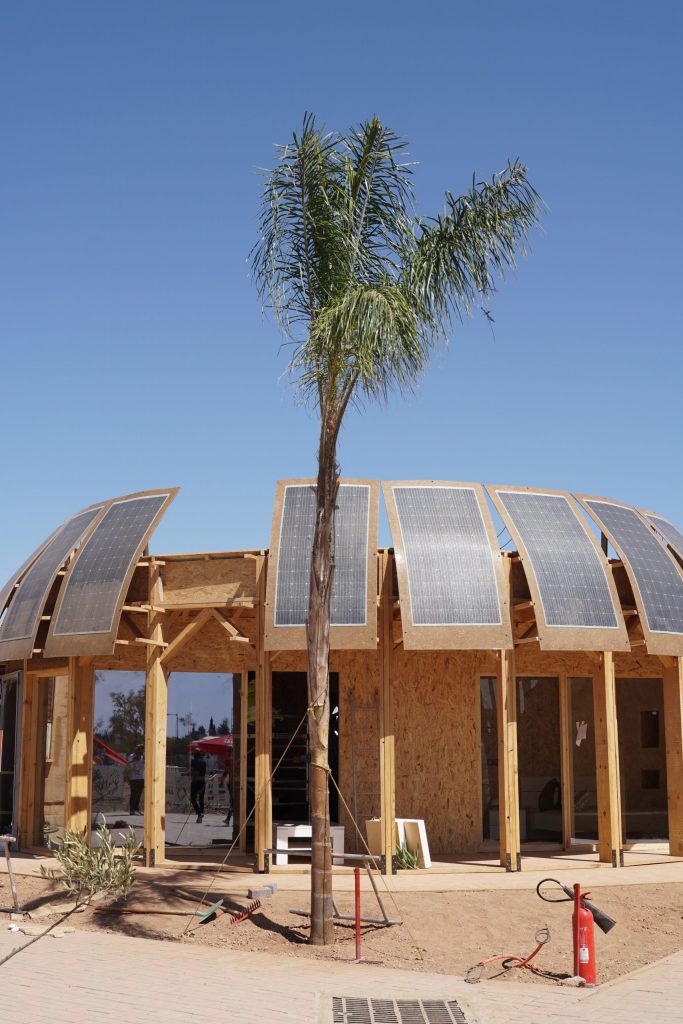
SunImplant, a solar home made from hemp in Morocco.
Carbon neutrality also applies to the day-to-day operation of buildings. Any building that aims for net zero carbon emissions should be as energy efficient as possible. This means relying on renewable energy sources (either on or off-site) and, if necessary, putting a continuous offset plan in place.
Changes In Smart Building Techniques
The first designs that tried to reduce emissions concentrated on increasing infrastructure efficiency and better facility management. Next, digital technologies were incorporated to make space utilization and building operation even more efficient.
Now, the latest smart buildings utilize an array of connectivity technology (fixed, wireless, and cellular) to enhance residents’ experiences while also minimizing their environmental impact. A modern smart building can use a great variety of smart technologies, including IoT sensors, biometric security barriers and access control point from Genetec, and smart HVAC and water systems.
The Key Purpose Of Smart Technology
Every home should feel like an eco oasis, and it can be done by saving energy.
When it comes to maximizing building sustainability and minimizing emissions, smart technology has a vital role to play. The sensors and networks built into smart buildings provide accurate data on the ongoing consumption of energy in your buildings. Technology also helps you understand and use that data, transforming your structures and facilities into greener spaces.
Incentivizing Smart Building
Beyond its ethical and environmental appeal, going net zero makes good economic sense for a lot of builders and building owners. The business incentives don’t necessarily come from government subsidies, either. Sustainability is highly popular with modern consumers, especially young ones. 50% of Millennials and 54% of Generation Z say in surveys that they’re willing to pay prices that are 10% higher (or more) if they feel confident that the products in question are being produced sustainably. This increased sensitivity to environmental impact also affects the market for rental space: the younger generations of residential and commercial renters want to live and work in green, low-emission spaces.
Connectivity As The Fourth Utility
In the 20th century, water, gas, and power emerged as the Three Utilities: The services considered indispensable for any building. In the 21st century, connectivity joins those services as an equally-vital resource. Connectivity is particularly important for smart and green buildings. Maximizing the efficiency of a building’s use of energy and space and minimizing its carbon emissions relies utterly on reliable connectivity.
In smart spaces, sensors and objects of every sort are linked together to pass data and instructions to each other and to computing systems that can monitor and control the built environment. In the future, we believe networks will converge and integrate, producing a single unified infrastructure for the use of building managers, residents’ IT departments, and building owners.
This new infrastructure will handle every possible building management application, like Wi-Fi, cellular, environmental sensors, security systems, building automation, and more. The level of transparency and control this infrastructure offers you will make it easier to achieve your goals for sustainability and to meet net zero targets.
Hipster, handmade candy is making a comeback. Candy won’t go away, but our relationship to it can change for the better.
Candy stores are a magical place where all our childhood dreams come true. With their vibrant colors, sugary aromas, and endless options, they transport us to a world of pure imagination. Here are some of the world’s most incredible candy stores that are sure to satisfy your sweet tooth and leave you in a candy-induced trance.
Dylan’s Candy Bar, New York City, USA Dylan’s Candy Bar is the ultimate candy lover’s paradise. Located in the heart of New York City, this three-story store boasts over 7,000 candy varieties from around the world. The store is so large that it even has a candy-themed café and a mini-candy museum.
Papabubble, Barcelona, Spain Papabubble is a small artisan candy store that specializes in handmade hard candies. Each piece is crafted using traditional candy-making techniques, and the shopkeepers perform mesmerizing live demonstrations. Visitors can even create their own custom candy designs.
Sticky, Melbourne, Australia Sticky is a candy store that takes inspiration from the Japanese art of candy-making known as amezaiku. The shopkeepers use molten sugar to create intricate animal and fruit-shaped candies. Each piece is handmade, making it a true work of art.
Candylicious, Dubai, UAE Candylicious is one of the world’s largest candy stores. It spans over 10,000 square feet and offers over 5,000 different types of candy from around the globe. The store also features a lollipop garden, a chocolate room, and a candy art gallery.
Mamegui, Tokyo, Japan Mamegui is a small candy store located in the trendy Shibuya district of Tokyo. The store specializes in konpeito, a traditional Japanese candy that is made by slowly crystallizing sugar syrup. The colorful, star-shaped candies are a beloved snack in Japan.
Sugarfina, Los Angeles, USA Sugarfina is a luxury candy boutique that offers beautifully packaged sweets that are perfect for gifts. The store features a wide range of candies, including champagne gummy bears, rosé-infused gummies, and matcha green tea caramels.
Confiserie Sprüngli, Zurich, Switzerland Confiserie Sprüngli is a Swiss chocolate and candy shop that has been in business since 1836. The store is famous for its luxurious chocolate truffles and pralines, which are made using only the finest ingredients.
Berrisom, Seoul, South Korea Berrisom is a candy store that specializes in lip tint candies. The store offers a wide range of flavors, including cherry, grape, and peach. Each candy leaves a long-lasting tint on your lips, making it a fun and unique beauty product.
Visiting one of these candy stores is an experience like no other. Whether you’re a candy fanatic or just looking for a fun adventure, these shops are sure to delight your senses and leave you in a state of pure bliss. So go ahead and indulge in some sugary goodness—your taste buds will thank you! If you can’t wait, don’t forget to check out your local online candy store and pick up some bulk candy for a great price. Candy made simple, without preservatives and trans-fats are the ones to look out for.
Hydroponic gardening has gained popularity in recent years as an innovative and sustainable way of growing plants without soil.
This method of gardening is particularly beneficial for urban dwellers with limited space, as it allows for the cultivation of fresh produce in a small area. One form is particularly suited to small urban spaces is the indoor garden kit. In this article, we will explore the benefits of hydroponic gardening for urban dwellers with limited space, with a focus on the vertical garden.
Hydroponic gardening has been made more accessible and efficient by modern technology, such as Gardyn’s products. Gardyn’s vertical garden system uses patented nanotech materials and an autonomous watering system to grow plants with minimal maintenance required. With a sleek and compact design, the Gardyn system can be used indoors, making it ideal for urban dwellers with limited space. Moreover, the system’s mobile app provides personalized tips and recommendations for plant care, ensuring optimal growth and yield. With the Gardyn system, individuals can enjoy fresh, healthy produce without the need for a traditional outdoor garden, making it a convenient and eco-friendly solution for modern living.
Maximizing Space
Hydroponic vertical gardens are a great way to maximize limited space in urban areas. This method of gardening involves stacking plants vertically, using a soilless growing medium and a nutrient-rich water solution. This allows for a high-density planting arrangement, with many plants growing in a small area. These gardens can be installed on walls, balconies, or even indoors, making them a popular choice for urban dwellers with limited space.
Reduced Water Usage
It uses significantly less water than traditional soil-based gardening. This is because hydroponic systems recycle water and nutrients, meaning that water is not wasted through runoff or evaporation. This is particularly important in urban areas, where water resources can be limited. Hydroponic vertical gardens are particularly water-efficient, as the plants are stacked vertically, allowing for the efficient use of water.
Improved Yield
This kind of gardening can improve crop yields compared to traditional soil-based gardening. This is because hydroponic systems provide a consistent supply of water, nutrients, and oxygen to plants, which promotes faster growth and higher yields. In addition, these systems can be optimized for plant growth, with nutrient solutions tailored to the specific needs of each crop. This means that it can produce more food per unit of space than traditional gardening methods, making it an ideal choice for urban areas with limited space.
Reduced Pests and Diseases
One of the biggest challenges facing urban gardeners is pest and disease control. Traditional soil-based gardening is particularly vulnerable to pests and diseases, which can quickly spread through the soil and affect multiple plants. Hydroponic gardening, on the other hand, is less susceptible to pests and diseases, as the growing medium is free from soil-borne pathogens. In addition, these systems can be designed to minimize the risk of pest infestations, with measures such as screening and controlled airflow.
Year-Round Growing
This is particularly beneficial for urban gardeners, who may not have access to outdoor growing spaces or who may face weather-related challenges. Hydroponic vertical gardens can be installed in any indoor space with adequate lighting, making them an ideal choice for urban dwellers who want to grow fresh produce all year round.
Conclusion
Hydroponic gardening is a sustainable and innovative way to grow fresh produce in small urban spaces and is an ideal choice for those who want to cultivate their own food and contribute to a more sustainable food system.
Plastic surgery is harmful to the environment. Here’s how.
Millions of individuals worldwide have opted for plastic surgery in recent years to improve their looks. While cosmetic operations might boost an individual’s sense of well-being and confidence, they can have certain negative effects on the natural world that shouldn’t be ignored.
In our talks with plastic surgeon Dr. Piraniwe uncover that the plastic surgery process has a substantial carbon footprint from the manufacturing and shipping of materials through the final disposal of medical waste. This article will discuss the environmental effects of cosmetic surgery and the steps that may be taken to lessen such effects. By discussing these concerns, we may move toward developing a plastic surgery practice that is less harmful to the environment.
Plastic Surgery and Medical Waste: The Disposal Problem
Used surgical tools, gauze, gloves, and other disposable supplies are just a few of the plastic surgery medical waste that accumulates over time. Because of the probable presence of toxic chemicals and infectious organisms, this garbage poses a threat to both nature and human health. When medical waste is not disposed of properly, it may contaminate groundwater, pollute the air, and even transmit illness.
Furthermore, there are a lot of rules and regulations around the disposal of medical waste, which makes the procedure expensive and complicated. It is essential that the trash be properly sorted, bagged, and shipped off to treatment and disposal facilities.
This adds to the environmental damage done by cosmetic surgery since it requires a lot of energy and materials. Plastic surgery centers and hospitals need to improve their waste management to combat this problem. One way to do this is by switching to reusable tools and materials wherever practical.
Energy Consumption and Greenhouse Gas Emissions in Plastic Surgery
Energy consumption during plastic surgery operations is high because of the extensive usage of electrical tools and infrastructure. Greenhouse gases, such as carbon dioxide, are released as a result of this energy usage, contributing to climate change. Greenhouse gases are also released during plastic surgery’s supply manufacture and shipping processes.
Clinics and hospitals doing cosmetic surgery should encourage energy efficiency and the use of renewable energy sources to lessen their negative effects on the environment. Energy-efficient HVAC systems, energy-saving appliances, and LED lights are all examples of this. Additionally, clinics might investigate alternative energy options like solar and wind power for their operations.
Environmental Impact of the Production and Transportation of Plastic Surgery Supplies
There is a major environmental effect from the manufacturing and shipping of plastic surgery materials. Implants, surgical equipment, and disposable materials like gloves and gowns are all examples of plastic surgery supplies that take resources, energy, and time to produce and deliver.
Extraction and processing of raw resources like petroleum and metals for use in plastic surgery supply manufacturing may have harmful effects on the environment, including habitat loss and pollution. Greenhouse gases are produced and energy is used in the transit of these commodities.
Clinics may do their part to lessen cosmetic surgery equipment’s ecological footprint by giving preference to supplies made from renewable resources. Disposable materials may be made from biodegradable or recyclable materials, and single-use plastics should be avoided wherever possible. Clinics may also lower their carbon footprint by working with vendors to purchase locally sourced materials and goods that are made using sustainable techniques.
Chemical Pollution and Plastic Surgery
Both the chemicals used in plastic surgery and the disposal of hazardous waste contribute to chemical contamination.
Disinfectants, anesthetics, and cleaning agents are only some of the chemical substances that are used during plastic surgery treatments. If not dealt with and disposed of appropriately, these substances may have serious consequences for the ecosystem. The environment, animals, and people may all be negatively impacted by the improper disposal of chemicals.
Needles, syringes, and other sharp objects used in plastic surgery must be disposed of safely to avoid contamination of the environment.
Clinics and hospitals doing plastic surgery should make using eco-friendly and non-toxic cleaning solutions and disinfectants a top priority to lessen the environmental effect of chemical pollution. In addition, they need to separate, store, transport, and dispose of hazardous material in accordance with best practices in waste management. Clinics may limit the potential for environmental contamination by working with hazardous waste management providers.
The Importance of Eco-Friendly Practices in Plastic Surgery Clinics
It is essential for cosmetic surgery clinics to embrace eco-friendly methods as the world becomes more conscious of the influence of human activities on the environment. In addition to helping the planet, plastic surgeons who use eco-friendly procedures report higher patient satisfaction and lower operating expenses.
Reducing single-use plastics, saving water and energy, and switching to sustainable modes of transportation are all examples of sustainable behaviors. Clinics may make changes like switching to reusable or biodegradable materials from single-use ones. In addition to helping the environment, this practice might end up saving money.
Increased patient happiness and positive publicity are two other benefits of being green. Many modern patients care deeply about environmental protection and will choose a clinic that shows it is committed to sustainability.
Final Words
Energy usage and greenhouse gas emissions, as well as the disposal of medical waste and toxic chemicals, all contribute to the plastic surgery industry’s negative environmental effects.
Plastic surgery may have a significant influence on the environment, thus it’s important that hospitals and clinics adopt eco-friendly policies. Waste minimization, resource conservation, environmentally sound modes of transportation, and the use of environmentally benign materials and goods are all part of this strategy.
Plastic surgery hospitals and clinics may help safeguard the environment, improve public health, and keep up with the rising demand for sustainable practices by putting them first.
Are you starting a new foodtech company to find plant alternatives to meat? Get your startup costs of equipment you will need to buy or rent.
Are you starting a new laboratory or optimizing an old one? You must know that each laboratory needs standard supplies for an easy workflow and accurate test results.
There are many different tools used for specific functions. However, some laboratory supplies are must-haves, regardless of your scientific practice. Check with your laboratory equipment supplier and go through this checklist of those necessities.
Beakers & Test Tubes – Whether they’re broad or petite, your laboratory needs beakers and test tubes. To properly mix, dissolve, or stir solutions and chemicals, these lab instruments are necessary to perform essential laboratory tests.
Microscopes – Microscopes can especially be necessary for microbiological uses. These can be as high-powered or low-powered as you need them to be so you can perform your practice as easily and accurately as possible. As an extension, microscope slides are a necessity as well.
Pipettes and Burettes – These tools are used to dispense specified amounts of liquid. Very small quantities of liquid can be transferred using these tools, and every lab needs a few.
Burners – No matter what your scientific practice is, chances are you need a heat source. Burners are perfect for heating, burning, or melting substances for a chemical reaction. You can purchase burners according to your requirements for a heat source, including butane, propane, or alcohol.
Funnels & Bottles – These tools are larger versions of pipettes and burettes. Their various sizes and stem lengths help carry larger quantities of liquid from one place to another.
Mechanical Equipment – Any scientific engineer will need mechanical tools. These could look like drill presses, shapers, milling machines, and other quality pieces of machinery.
Safety Equipment – Safety is the most important factor in a laboratory, and safety equipment comes in many forms. These can include safety goggles, lab coats, fire extinguishers, first aid kits, an eyewash station, fire blankets, safety gloves, and so much more.
Other Lab Equipment
There are hundreds of types of lab supplies that make a laboratory the most efficient workspace necessary. Temperature test machines, photometers, spectroscopy equipment, freezers, microtome blades, and test swabs are just some of the common types of lab supplies. Does your lab have everything it needs?
Pipettes and Burettes – These tools are used to dispense specified amounts of liquid. Very small quantities of liquid can be transferred using these tools, and every lab needs a few.
Burners – No matter what your scientific practice is, chances are you need a heat source. Burners are perfect for heating, burning, or melting substances for a chemical reaction. You can purchase burners according to your requirements for a heat source, including butane, propane, or alcohol.
Funnels & Bottles – These tools are larger versions of pipettes and burettes. Their various sizes and stem lengths help carry larger quantities of liquid from one place to another.
Mechanical Equipment – Any scientific engineer will need mechanical tools. These could look like drill presses, shapers, milling machines, and other quality pieces of machinery.
Safety Equipment – Safety is the most important factor in a laboratory, and safety equipment comes in many forms. These can include safety goggles, lab coats, fire extinguishers, first aid kits, an eyewash station, fire blankets, safety gloves, and so much more.
Other Lab Equipment There are hundreds of types of lab supplies that make a laboratory the most efficient workspace necessary. Temperature test machines, photometers, spectroscopy equipment, freezers, microtome blades, and test swabs are just some of the common types of lab supplies. Does your lab have everything it needs?