
Developer’s Artificial Reefs Unlikely to Restore Gulf Damage

artificial reef, manmade islands, gulf, persian gulf, arabian gulf, dubai, marine ecosystem, coral reefs, environmental destruction

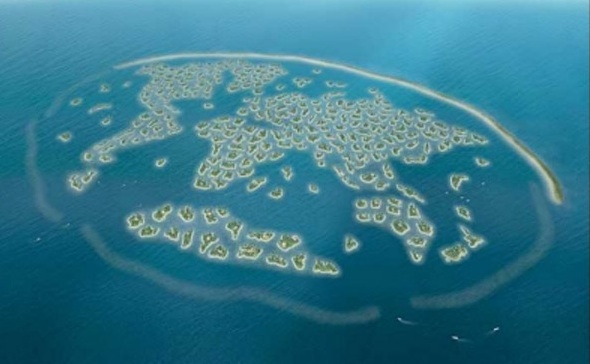
A report last week showed that development projects like The World manmade islands above are destroying the Gulf’s fragile marine ecosystem. One major culprit, Nakheel, aims to restore their own damage with 500 artificial reefs.

Last week the United Nations University Institute for Water, Environment and Health in Toronto released the first official report linking rapid development projects with widespread destruction to the Gulf’s marine environment. Environmentalists and activists have long suspected that man-made islands and row after row of the world’s biggest this and that could not possibly be sustainable but the report taken up by such prestigious journals as Nature finally made that truth unequivocal.

Much of the damage done to this fragile ecosystem can be attributed to real estate developers Nakheel, which is behind such projects as The World manmade islands, Palm Jumeirah, and Palm Jebel Ali. Although they told The National it has nothing to do with the damning report released last week, the company recently announced that they will build 500 artificial reefs in an effort to restore the ecosystem in and around their own projects. 

Bring back the fish

The National reports that Nakheel is working with Emirates Marine Environmental Group to develop a vast system of artificial reefs that is expected to attract fish back to the site within the next 6 months. Whereas previously divers and fishermen were not permitted to visit the areas surrounding Nakheel’s numerous coastal developments, they are now promising to open up 10% of the area to the public.

Nakheel’s chairman Ali Rashid Lootah told The National:

We thought it is important to help increase the marine life,” adding “It’s a normal practice that international businesses do some social work and we thought that because most of our development is on the marine side, we thought [such work] should be that side.”

Artificial reefs are manmade structures that are usually placed in fairly shallow waters. Concrete, metal, plastic and other materials are anchored permanently to not only attract fish and boost fishing or diving during a particular season, but also to act as a deterrent to destructive fishing practices such as bottom trawlers.

Unhappy investors 

It is unclear how much Nakheel will spend to realize this ambitious program, though investors waiting for their own projects to be completed are reportedly not thrilled with this newly announced expenditure.

The World Wildlife Fund has listed the Gulf’s ecosystem as critically endangered as a result of overfishing and warmer, more acidic waters that are melting coral reefs around the world. It is believed that restoring these ecosystems that provide crucial habitat to a variety of marine life, can help to mitigate much manmade damage.

The Food and Agriculture Organization of the United Nations (FAO) cautions, however, that artificial reefs are not a panacea. On their website they note that “In terms of habitat rehabilitation, artificial reefs have little, if any, success as they only concern a limited area.”

:: The National
 

Tafline Laylin
Tafline Laylinhttp://www.greenprophet.com
As a tour leader who led “eco-friendly” camping trips throughout North America, Tafline soon realized that she was instead leaving behind a trail of gas fumes, plastic bottles and Pringles. In fact, wherever she traveled – whether it was Viet Nam or South Africa or England – it became clear how inefficiently the mandate to re-think our consumer culture is reaching the general public. Born in Iran, raised in South Africa and the United States, she currently splits her time between Africa and the Middle East. Tafline can be reached at tafline (at) greenprophet (dot) com.

TRENDING

The life of a coral gives clues to the origins of our heartbeat

A joint study by Tel Aviv University (TAU) and the University of Haifa set out to solve a scientific mystery: how a soft coral is able to perform the rhythmic, pulsating movements of its tentacles without a central nervous system. The study’s findings may change the way we understand movement in the animal kingdom in general and particularly in corals.

Dive into the Sheybarah sea pods on deserted island in the Red Sea

Now that Saudi Arabia is opening up to tourism, westerners can skip the controversial Maldive Islands and head to the Red Sea of Saudi Arabia instead. Built on a pristine island is Sheybara, a series of water pods that offer privacy, and exclusivity. 

Dive boat tourist raises concerns and tips for dive safety

Be very aware of safety concerns when researching a Red Sea live-aboard trip. Review your chosen boat's safety provisions. Book (and insist upon receiving) an upper-deck cabin.

Tom Brady, Will Smith yacht into Sindalah luxury resort in Saudi Arabia

Sindalah is the first of the Saudi Arabia luxury locations to open its doors

Reefs get a boost from Zeroe in the UAE

Project Reeframe is a pioneering coral reef restoration project based in the UAE, run by Freestyle Divers. By creating artificial reefs and transplanting rescued coral fragments, Project Reeframe aims to restore damaged reefs, promote biodiversity, and enhance the resilience of marine ecosystems.

Should You Invest in the Private Market?

startustartup Unlike public stock exchanges, which offer daily trading, strict...

How to build a 100-year-company

Kongō Gumi is a Japanese construction company, purportedly founded in 578 A.D., making it the world's oldest documented company. What can we learn about building sustainable businesses from them?

From Pilot Plant to Global Stage: How Aduro Clean Technologies’ 2026 Expansion Signals a Turning Point for Chemical Recycling Investors Like Yazan Al Homsi

The company's Next Generation Process (NGP) Pilot Plant in London, Ontario, has officially moved into initial operating campaigns, generating the kind of structured, repeatable data that separates laboratory promise from commercial viability.

How AI Helps SaaS Companies Reduce Repetitive Customer Support Work

SaaS products are designed for large numbers of users with different levels of experience, and also in renewable energy.

Pulling Water from the Air

Faced with water shortage in Amman, Laurie digs up...

Turning Your Energy Consultancy into an LLC: 4 Legal Steps for Founders in Texas

If you are starting a renewable energy business in Texas, learn how to start an LLC by the books.

Tracking the Impacts of a Hydroelectric Dam Along the Tigris River

For the next two months, I'll be taking a break from my usual Green Prophet posts to report on a transnational environmental issue: the Ilısu Dam currently under construction in Turkey, and the ways it will transform life along the Tigris River.

6 Payment Processors With the Fastest Onboarding for SMBs

Get your SMB up and running fast with these 6 payment processors. Compare the quickest onboarding options to start accepting customer payments without delay.

Related Articles

Popular Categories