Debunking the ‘Green’ Biofuel Myth

Is biofuel from the Jatropha tree- which Jordan is experimenting with- really as green and sustainable as we think?

In a recent article, I debated whether we should encourage the Middle East to embrace biofuels as a real and sustainable alternative to the region’s current dependence on gas and oil. It followed an announcement from the Jordanian government that they would be experimenting with planting the jatropha plant, an oil-bearing shrub which produces bio-diesel that can be used in cars.

In the end, it seemed illogical to use up resources (water, land space) to produce fuel for cars which could be used to grow food and I argued against biofuels. However, comments from our esteemed readers- who argued that there was no harm in growing a plant which flourishes in places where crops couldn’t- have raised some important issues which I have tried to address here.

Fuel vs. Food Tension in Biofuels is Dangerous

A major problem with jatropha is that although the plant can grow in semi-arid conditions, to produce sufficient fuel the plant requires water and nutrients. Therefore, to increase yield better irrigation is needed and consequently many studies have concluded that “if an investment in irrigation and fertilizer is required, why not grow food crops instead.”

It’s a perfectly logical conclusion and one which highlights the real tension in the fuel vs. food debate on biofuels. Yes, the plant does create fuels by growing in places that no other crop can grow but to make biofuel production more efficient (which is understandable) resources which could be used to grow food will be used to generate fuels. Without these improvements, growing jatropha would be uneconomical especially as jatropha performs poorly on the return on labour input compared to other biofuel feedstocks.

Study: Jatropha released 6 times more GHG than Fossil Fuels

A recent study by ActionAid, the Royal Society for the Protection of Birds and Nature Kenya which tested whether biofuel from jatropha grown in the Dakatcha woodlands in Kenya is really green also has some interesting findings. The study found that the production and consumption process of jatropha in Dakatcha would emit between two and half and six times more greenhouses gases than fossil fuels. The reason behind this high carbon footprint is that woodland had to be cleared and so carbon locked up in the trees was released- in fact, forest destruction is one of the major problems with biofeuls.

The study added that the Kenyan government has decided to halt the clearing of 500,000 hectres of forest, which would have displaced 20,000 people, to grow jatropha and is now carrying out an environment assessment report.

Cutting Forests and Displacing Populations

This is not to say that jatropha is not a useful plant for poor communities- grown locally, it can provide essential fuel for generators, pumps and stoves. The problem is that once a plant is earmarked as having potential for biofuels the reality is that as opposed small-scale farming, huge plantations are grown. Chris Coxon of ActionAid told IRIN that he was concerned by the growing move towards massive plantations of jatropha in developing countries.

It appears that the constant demand for fuel is once again negatively affecting other people’s lives and livelihoods in the developing world- the only difference is that this time it’s for so called ‘green’ fuel to run our cars.

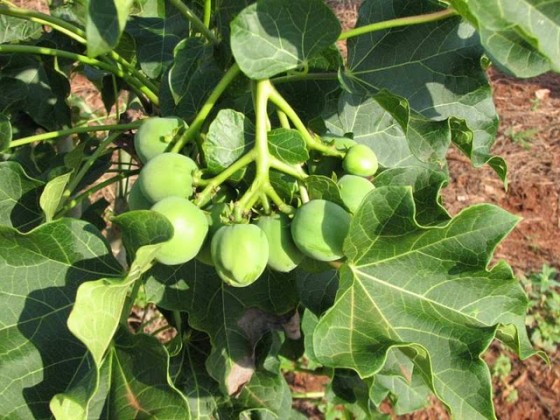
::Image via Ray Weil on Picasa.

For more on Biofuels in the Middle East see:

Is the Middle East Buying into Disastrous Biofuels?

With So Much Oil and Natural Gas, Is Biofuel A Viable Mideast Fuel Option?

Abu Dhabi’s Solid Gold ‘Biofuel’ Mercedes and other dubious ‘green’ developments

Arwa Aburawa
Arwa Aburawahttp://www.greenprophet.com
Arwa is a Muslim freelance writer who is interested in everything climate change related and how Islam can inspire more people to care for their planet and take active steps to save it while we can. She is endlessly suspicious of all politicians and their ceaseless meetings, especially as they make normal people believe that they are not part of the solution when they are the ONLY solution. Her Indian auntie is her model eco-warrier, and when Arwa is not busy helping out in the neighborhood alleyway garden, swap shopping or attempting fusion vegetarian dishes- with mixed success, she’d like to add- she can be found sipping on foraged nettle tea.

TRENDING

As Planes Go Green, Is Sustainable Space Fuel Next?

Meanwhile, Singapore’s GenZero, in partnership with the World Economic Forum, has launched the Green Fuel Forward Initiative, aiming to scale SAF across the Asia-Pacific region. This initiative unites airlines, aerospace manufacturers, and financiers to create a self-sustaining SAF market—one that can meet the demand of one of the world’s fastest-growing aviation hubs.

How to help Gaza fishermen

The destruction of Gaza's two main aquaculture farms, along with the hatchery facility, has also left the sector unable to produce alternative aquatic foods through aquaculture. 

Europe’s Environmental Crossroads: New Commissioner Faces Challenges 

While the debate over Nutri-Score has captured significant political and media attention, it seems to be a distraction from the more pressing environmental challenges facing Europe. With the EU struggling to meet its climate goals and facing significant pushback on essential regulations like the anti-deforestation law, it is crucial that policymakers focus on the bigger picture. 

Dudley Gann Explains: What Is Greenwashing and How to Avoid It

It's crucial to define what greenwashing is and what it isn't. Greenwashing occurs when companies falsely claim to be environmentally friendly or socially responsible without evidence to support these claims. 

The EU’s new Deforestation Regulation is a Game-Changer

Forest bathing is a kind of therapy called for in some cultures like Japan. It can help you communicate better with people. All the more reason to protect this vast natural resource with policy and deforestation regulation.

Should You Invest in the Private Market?

startustartup Unlike public stock exchanges, which offer daily trading, strict...

How to build a 100-year-company

Kongō Gumi is a Japanese construction company, purportedly founded in 578 A.D., making it the world's oldest documented company. What can we learn about building sustainable businesses from them?

From Pilot Plant to Global Stage: How Aduro Clean Technologies’ 2026 Expansion Signals a Turning Point for Chemical Recycling Investors Like Yazan Al Homsi

The company's Next Generation Process (NGP) Pilot Plant in London, Ontario, has officially moved into initial operating campaigns, generating the kind of structured, repeatable data that separates laboratory promise from commercial viability.

How AI Helps SaaS Companies Reduce Repetitive Customer Support Work

SaaS products are designed for large numbers of users with different levels of experience, and also in renewable energy.

Pulling Water from the Air

Faced with water shortage in Amman, Laurie digs up...

Turning Your Energy Consultancy into an LLC: 4 Legal Steps for Founders in Texas

If you are starting a renewable energy business in Texas, learn how to start an LLC by the books.

Tracking the Impacts of a Hydroelectric Dam Along the Tigris River

For the next two months, I'll be taking a break from my usual Green Prophet posts to report on a transnational environmental issue: the Ilısu Dam currently under construction in Turkey, and the ways it will transform life along the Tigris River.

6 Payment Processors With the Fastest Onboarding for SMBs

Get your SMB up and running fast with these 6 payment processors. Compare the quickest onboarding options to start accepting customer payments without delay.

Related Articles

Popular Categories