

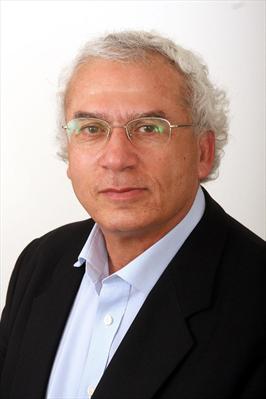
 As we introduced yesterday, Green Prophet and the Strategic Foresight Group have been interviewing key water leaders from Israel’s water industry to understand what contributions the country can make for sustainable solutions in the region. Today we interview Shimon Tal, the former Water Commissioner in Israel and the president of the Israeli Water Association.
As the CEO of Tal Content – Consulting & Enterprise Ltd, Tal (whose surname means “dew” in Hebrew) has over 30 years of experience in professional and executive duties in Israel’s water resources management and water supply sectors. In the following interview, Tal gives us a brief and comprehensive summary of Israel’s water situation, the regional water situation and the potential for regional water cooperation. We’d sent Tal five questions, but he answered us in a letter.
Here’s his response: The five questions you sent me touch the real problems of water in our region. I will provide you with some facts and personal conclusions that might answer your questions: Water shortage is a common property of all the parties in our region (Jordan, PA and Israel). We also share mutual natural water resources. Therefore it is impossible to manage the water sector in one country separately from the regional water problems. The region is actually on the edge of the desert and extreme changes in the climate are common. A series of drought years should be taken into consideration in planning water supply and the use of natural water resources (“dryness routine”). The affect of climate change on water in our region is neglected in comparison to the affect of population growth. Today, natural water resources in the region (Jordan, PA and Israel) can supply around 200 cubic meters per capita every year. This quantity of water is only 40% of the “Shortage Red Line” – the line determined by the United Nations as the quantity of water that represents a severe shortage of water. If nothing is done now, then in 20 years natural water resources will be able to satisfy only the domestic and municipal demand. We will not be able to satisfy the overall demand for food, to sustain environmental values or develop places of work. Life will be impossible. What will happen after 2025? The rough regional water balance shows that, even if we use the regional natural water resources efficiently (2.65 BCM/year) and we reuse all the sewage effluents mainly for agriculture, we will still incur a water shortage of 1.3 BCM/year of fresh water (that is if we maintain the standard of living and upgrade the Palestinians water supply to acceptable quantities). This means that the region has to produce new freshwater resources – 50% more than the average yield of the natural water resources.
Regional cooperation is key
Therefore redistribution of the existing natural water resources between the parties is important but cannot serve as a comprehensive solution to the water shortage. Only cooperation between the parties in the region, to produce new water resources on a very large scale can enable us to sustain an advanced society at the edge of the desert. The water issue is only one among a constellation of issues that will build a peace agreement among the countries in the Middle East. The redistribution of the existing natural water resources will be solved, one way or another, but it is more important that countries cooperate and seriously study every “crazy idea” that might contribute to solve the regional water shortage problem.
Such as importing water from Turkey or from the north, the Red Dead project etc. In addition, natural water resources should be used in a sustainable way. Future generations deserve sustainable and clean water resources. The production of additional new water resources will help remove a considerable amount of pressure from natural water resources.
We have to stop the contamination of all kinds of water resources and deal with the contamination that already exists. Sewage must be treated adequately and reused for agriculture to prevent environmental damage. Efficient use of water must become a way of life in this region. We should invest in educating people especially the younger generation on how to use water much more efficiently and to invest in the development of new technologies that can reduce water demand.
Maybe, in a way, I am kind of naïve, but my vision is that the severe shortage of water and the necessity for new water resources on a large scale will create the right conditions for regional cooperation. Since I left my position as the Water Commissioner of Israel 3.5 years ago I am not involved in the management of the Israel Water Sector, but I am sure that Israel will be ready for such cooperation and has already taken steps toward future possible collaborations.
More on Israel and water: All the Water in Israel: Interviews with Government, Analysts and Researchers
The Agricultural Roots of Israel’s Water Crisis


[…] of the experts: 1. All the Water in Israel: Interviews with Government, Analysts and Researchers 2. Interview with Israel’s past water commissioner, Shimon Tal 3. Gidon Bromberg on Water Security and Sustainability in the Middle East 4. Read our interview […]
[…] water series: 1. All the Water in Israel: Interviews with Government, Analysts and Researchers 2. Interview with Israel’s past water commissioner, Shimon Tal 3. Gidon Bromberg on Water Security and Sustainability in the Middle East 4. Read our interview […]
[…] water series: 1. All the Water in Israel: Interviews with Government, Analysts and Researchers 2. Interview with Israel’s past water commissioner, Shimon Tal 3. Gidon Bromberg on Water Security and Sustainability in the Middle East 4. Read our interview […]
[…] Update: Read our interview with Israel’s Water Commission Interview with Israel’s past water commissioner, Shimon Tal […]
News:: Shimon Tal: Some Facts and Personal Opinions on Water from Israel's Former Water Commissioner http://bit.ly/8tmSS2
Israel’s Former Water Commissioner on sustaining water: http://www.greenprophet.com/2010/01/01/15397/shimon-tal-israel-water-commissioner/