The Shmita year and its connection to the environment

Shmita year in Israel sabbath for the land
Thousands of years before green became hot, the Jewish people were observing the Shmitta, or shmita, a sabbatical year.

The Shmitta is documented in the bible as a year where farmers are forbidden to work the land in order to give the land a rest.

The Lord said to Moses on Mount Sinai. (2) Speak to the Israelites and say to them: ‘When you enter the land I am going to give you, the land itself must observe a sabbath to the Lord. (3) For six years sow your fields, and for six years prune your vineyards and gather their crops. (4) But in the seventh year the land is to have a sabbath of rest, a sabbath to the Lord. Do not sow your fields or prune your vineyards.’(Lev. 25: 1-4).

Talk about giving it a rest! In yesterday’s post we spoke about how radically we could cut down our emissions if the world would take upon itself the Jewish Sabbath. Now we would like you to consider the ramifications of taking a whole Sabbatical year.

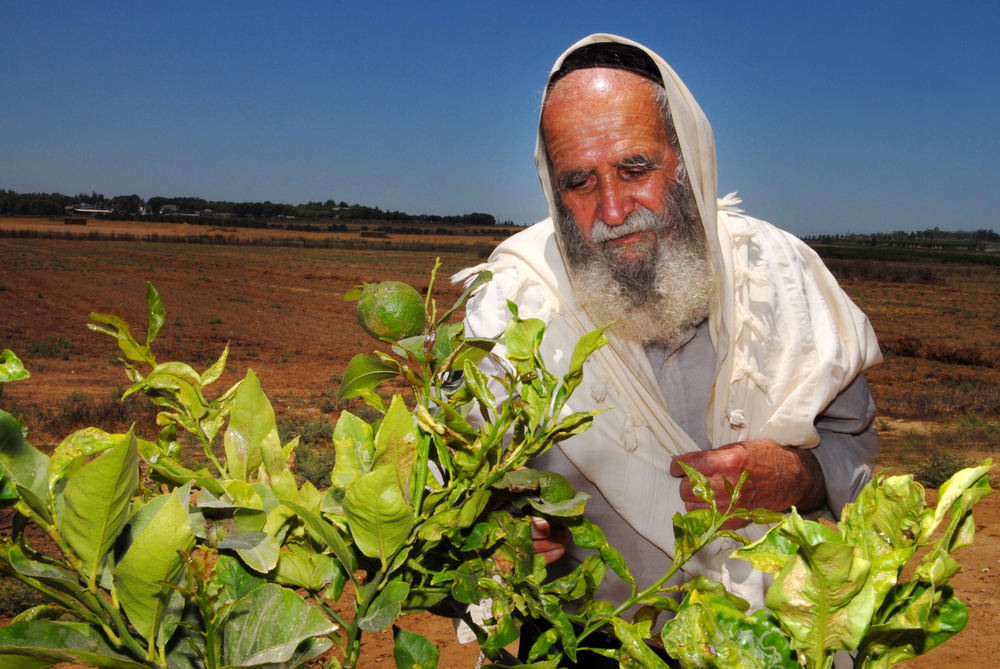
For one out of seven years, religious Zionist farmers give the land a rest. No farming, no pruning, nada! Rabbis later on amended this law so that if there will be damage to your land as a result, you can take minimum care of your land so that you will not lose out in the long term.

It would take some pretty drastic planning ahead, stockpiling grains, pre-freezing fruits and veggies so that during the year off we could eat. But it could be feasible. The whole world could give it a try… The question is would it be good for the land?

Early crop rotation methods were mentioned in Roman literature, and referred to by several civilizations in Asia and Africa. Crop rotation is used in order to fortify the farmed land against depletion of its minerals. This isn’t quite the same, would a Sabbath replenish the land?

Israel’s Ministry of Foreign Affairs discusses this very same question on their website. Samuel Chayen explains that there is a current world-wide debate about sustainability; how to modify our current practices so that we can ensure a future for many years to come.

Chayen shares an anecdote: “Ten years ago, while attending a conference on Microbial Ecology, I listened to a “roundtable” debate dealing with Sustainable Agriculture. One of the speakers mentioned that in some places grazing land is abandoned every few years to let the grass grow and to enhance nitrogen assimilation on the roots of legumes by Rhizobacteria, thus increasing productivity in the following years.

“Given permission to speak, I pointed out that the Jewish law of Shmitta, the Sabbatical Year, provides exactly such orders for the Jewish farmer.”

Above image: ChameleonsEye / Shutterstock.com

Jack Reichert
Jack Reicherthttps://www.greenprophet.com/
As far back as he can remember Jack Reichert has been interested in the environment. In the second grade, he rallied all of his classmates to donate one recess a week to cleaning up litter from the schoolyard. That was the same year that a city councilman asked him to help with his campaign because of the letter Jack had written asking him to clean up Boston Harbor. Ever since Jack has followed the development of the international green conscience with anticipation and hope that one day we will treat Mother Earth with the respect she deserves and not turn her into another Giving Tree. For tips, feedback and prophet sightings, Jack can be reached at jack (at) greenprophet (dot) com.
4 COMMENTS
  1. I’ve never professed to be a writer nor do I think I want to be one. It was Dan’s intention to have Michele Borntreger with Kaleozone.com write a post but I felt led, as Michele’s husband, to write a post after reading the first few parts of The Naked Gospel.

  2. Worldwide??
    Im sure the Muslims would agree to that one.
    .
    And I dont see Torah really being followed, even by orthodox Jews. What happened to animal sacrifices, where is the Levitical priesthood and all the other things prescribed in the Torah?

Comments are closed.

TRENDING

Eco organization offices destroyed by Iran missile

Tel Aviv's eco organization, the Heschel Center, was impacted by an Iranian missile.

What are AWG air-water generators, and why they aren’t a golden-bullet solution (yet)

Atmospheric water generators (AWGs) sound like magic: machines that can pull drinking water out of air. The idea is mentioned in the Bible, where the elders would pray for water collected as dew on plants and the catch on turning this into a machine is in the physics. To turn invisible vapor into liquid, you must remove heat, especially the latent heat of condensation.

Jordan’s $6 Billion Aqaba–Amman Desalination Project from the Red Sea Moves Forward

In 2025, the Jordanian government signed agreements with a consortium led by Meridiam and SUEZ, alongside VINCI Construction and Orascom Construction. Under a 30-year concession agreement, the consortium will design, build, finance, operate, and maintain the system before transferring it back to the Jordanian government. The total investment is estimated at approximately $6 billion USD.

The Saudi Startup Turning Desalination’s Toxic Waste Into Its Own Disinfectant

For millennia, the Middle East's water crisis seemed an immutable fact of geography — a region defined as much by what it lacked as by what lay beneath its sands. Today, a convergence of plummeting solar costs, advancing membrane technology, and hard-won engineering expertise is rewriting that story.

Earth building with Dead Sea salt bricks

Researchers develop a brick made largely from recycled Dead Sea salt—offering a potential alternative to carbon-intensive cement.

How AI Helps SaaS Companies Reduce Repetitive Customer Support Work

SaaS products are designed for large numbers of users with different levels of experience, and also in renewable energy.

Pulling Water from the Air

Faced with water shortage in Amman, Laurie digs up...

Turning Your Energy Consultancy into an LLC: 4 Legal Steps for Founders in Texas

If you are starting a renewable energy business in Texas, learn how to start an LLC by the books.

Tracking the Impacts of a Hydroelectric Dam Along the Tigris River

For the next two months, I'll be taking a break from my usual Green Prophet posts to report on a transnational environmental issue: the Ilısu Dam currently under construction in Turkey, and the ways it will transform life along the Tigris River.

6 Payment Processors With the Fastest Onboarding for SMBs

Get your SMB up and running fast with these 6 payment processors. Compare the quickest onboarding options to start accepting customer payments without delay.

Qatar’s climate hypocrisy rides the London Underground

Qatar remains a master of doublethink—burning gas by the megaton while selling “sustainability” to a world desperate for clean air. Wake up from your slumber people.

How Quality of Hire Shapes Modern Recruitment

A 2024 survey by Deloitte found that 76% of talent leaders now consider long-term retention and workforce contribution among their most important hiring success metrics—far surpassing time-to-fill or cost-per-hire. As the expectations for new hires deepen, companies must also confront the inherent challenges in redefining and accurately measuring hiring quality.

8 Team-Building Exercises to Start the Week Off 

Team building to change the world! The best renewable energy companies are ones that function.

Related Articles

Popular Categories