Autumn shades, elevated: why The Avantguard’s new sunglasses are a genuinely sustainable idea

The Avantguard sunglasses

As the light gets lower and the days grow shorter, sunglasses become less of a summer fling and more of an everyday essential. When the world was more naive, entrepreneurs made sustainable shades out of wood. Now the The Avantguard—a woman-owned luxury eyewear brand founded by entrepreneur and philanthropist Faiza Seth—is betting that the accessory you reach for most should also be the one you feel best about. Its new Autumn/Winter Edit shows how eco-luxury can be more than a mood board: it can be a measurable design choice.

Materials with intent. Instead of relying on virgin, petroleum-based plastics, The Avantguard frames are crafted from biodegradable, recycled, and plant-based acetates. The goal: cut fossil inputs, keep the hand-feel and durability luxury frames demand, and design from the start for lower impact.

Every pair ships with UV400 lenses for full-spectrum UV defense and blue-light protection—a detail that traces back to Seth’s personal experience with early-stage cataracts and her desire to blend medical prudence with everyday elegance. Circular by design. Beyond the frames, the brand leans into plastic-free, recyclable, and reusable packaging and a partnership with AirRobe, which makes it easy to resell or rehome glasses for a second life. That’s a practical nudge toward longevity and waste reduction.

Luxury that lasts. The collection favors timeless silhouettes over trend churn—an underrated sustainability lever. As Seth puts it: “For me, it’s about buying better, buying less, and investing in products that stand the test of time.”

From rich tortoiseshells to smoky, translucent hues, the palette channels changing light, bark, loam, and sky—frames that feel at home on a forest walk or a weekday commute.

Why this qualifies as a sustainable idea (not just sustainable styling)
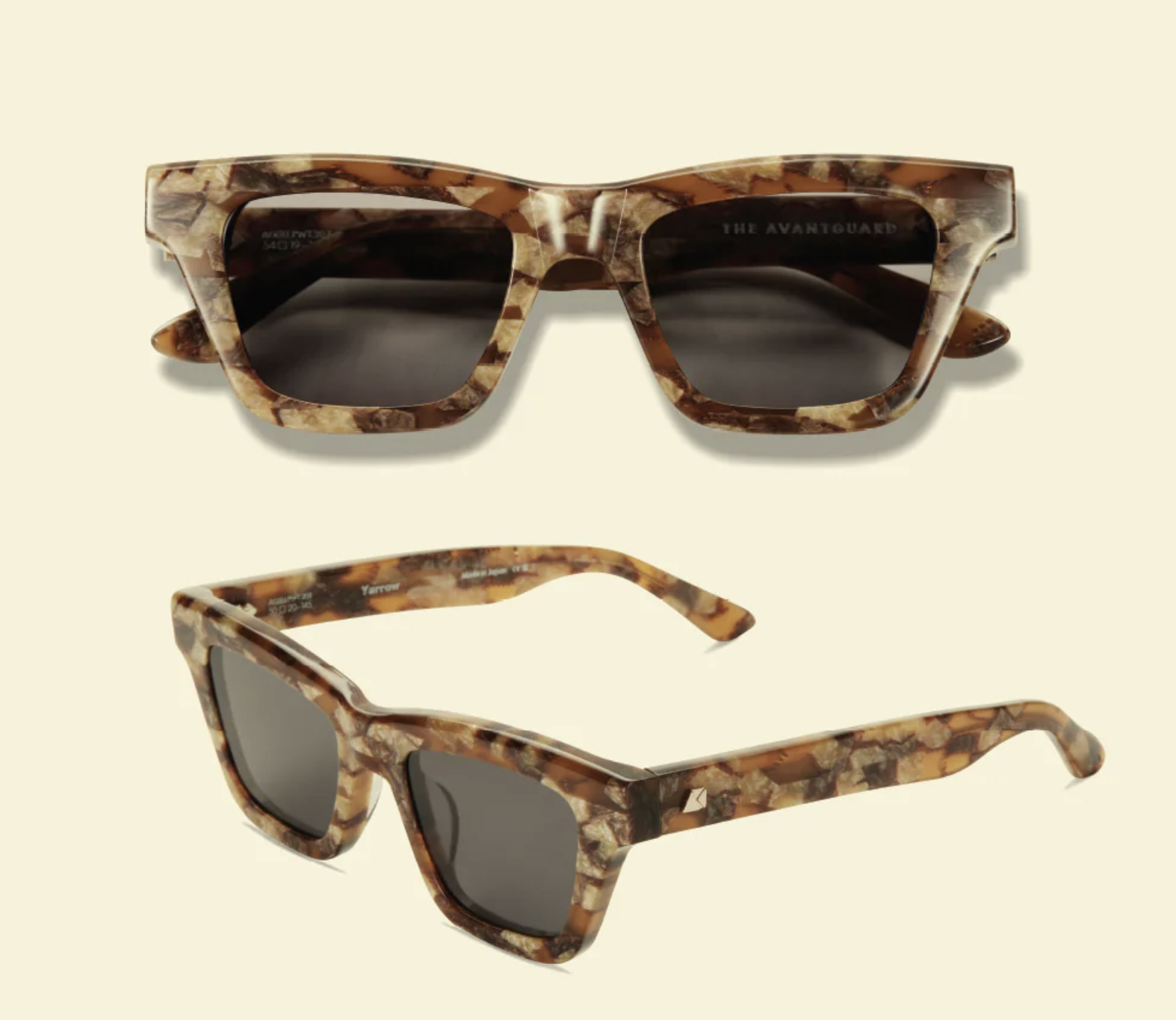
Yarrow glasses

Material substitution: shifting from conventional plastics to plant-based/biodegradable and recycled acetates reduces dependence on virgin petrochemistry. Use-phase health benefit: UV400 + blue-light filtering supports long, frequent wear—extending product life by making the functional case for sunglasses year-round. System thinking: circular pathways (resale/rehome) and low-waste packaging mean the sustainability story doesn’t stop at checkout. Durability and design for keeps: classic silhouettes curb the “buy-discard-repeat” loop that dominates accessories.

The Avantguard’s Autumn/Winter Edit doesn’t treat sustainability as a seasonal color; it treats it as a product requirement—materials, packaging, and circularity all pulling in the same direction. If eco-luxury is to mean anything in 2025, it should look a lot like this: fewer, better things that protect your eyes, respect the planet, and still feel beautiful in the hand.

Editor’s note: we will update readers after hands-on testing of a pair from the Autumn Edit.

::Avantguard

Read More

LEAVE A REPLY

Please enter your comment!
Please enter your name here

TRENDING

Meet Seramic Materials from Abu Dhabi

Based in Masdar City, Abu Dhabi, Seramic Materials was founded in 2019 by Dr. Nicolas Calvet and Dr. Jean-François Hoffmann, researchers working at the intersection of renewable energy and materials science. The company grew out of the Masdar Institute ecosystem and is supported by clean tech programs like The Catalyst, with early backing of around $150,000 and more than $2 million invested in research and development over time.

Make paper mache with flowers to create stunning vase

There’s something quietly beautiful about what Rebloom Studio is doing, and it starts with waste. At wholesale flower markets, mountains of unsold blooms are tossed out at the end of each cycle. Perfect flowers, just not sold in time. Most of them are burned or dumped. Rebloom takes that moment and turns it into something else.

Leopoldo Alejandro Betancourt López Turned Ocean Plastic Into Profitable Sunglasses

Few fashion accessories carry the environmental burden of sunglasses. Most frames are constructed from petroleum-based plastics and acrylic polymers that linger in landfills for centuries, shedding microplastics into soil and waterways long after they've been discarded. Leopoldo Alejandro Betancourt López, president of the Spanish eyewear brand Hawkers, saw this problem differently than most industry executives.

Stella McCartney shoes, bags, perfume coming back sustainably to H&M

All of us may have more chances to dance in sustainable style as Stella McCartney, the sustainable fashion icon and daughter of Paul McCartney, is working again with the fast fashion label H&M. Fast fashion, Zara, Shein, Mango and COS, show us that they aren't going anywhere.

How to quiet noise from construction in your office

Streets need to be resurfaced in New York but the humming and grinding noise is unsettling. Noise is environmental pollution. 

EarthX and a blueprint for sustainable investing

Trammell S. Crow, a Dallas-based businessman and father of four, is focusing his efforts on impact investing, and media that focuses on saving the planet through EarthX.

Mining Afghanistan’s Mineral Discoveries Similar to Avatar

Now that American forces in Afghanistan are commemorating the longest period of any war that America has been involved in, including the 1965-73 Vietnam War, the recent discoveries of large and extremely valuable mineral and metal deposits may finally bring to light a reason to continue the presence of US fighting forces in this war torn and backward country.

From Pilot Plant to Global Stage: How Aduro Clean Technologies’ 2026 Expansion Signals a Turning Point for Chemical Recycling Investors Like Yazan Al Homsi

The company's Next Generation Process (NGP) Pilot Plant in London, Ontario, has officially moved into initial operating campaigns, generating the kind of structured, repeatable data that separates laboratory promise from commercial viability.

Nobul’s Regan McGee on Shareholder Value: “Complacency Is the Silent Killer” 

Why the governance framework designed to protect shareholders so...

Should You Invest in the Private Market?

startustartup Unlike public stock exchanges, which offer daily trading, strict...

How to build a 100-year-company

Kongō Gumi is a Japanese construction company, purportedly founded in 578 A.D., making it the world's oldest documented company. What can we learn about building sustainable businesses from them?

How AI Helps SaaS Companies Reduce Repetitive Customer Support Work

SaaS products are designed for large numbers of users with different levels of experience, and also in renewable energy.

Popular Categories