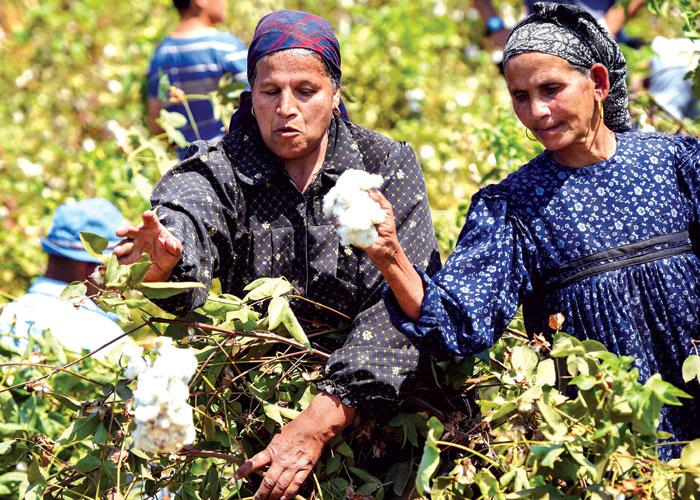


At one point, Egypt supplied nearly one-tenth of the world’s cotton exports, but today, less than 0.5 percent of the world’s cotton is produced in Egypt. Climate change is impacting their harvest. Magued Makram/UNIDO Egypt, Kafr ElSheikh, Egypt 2019
The world’s leading sustainability initiative for cotton, Better Cotton, whose members include international fashion and textile brands, has issued a stark warning to leaders during COP27: global leaders must not only strengthen their commitment but turn talk into action. They must ensure a just transition for everyone and prioritise climate justice for the world’s farmers and agricultural workforce.
Better Cotton is asking for greater collaboration across the fashion sector and its textile value chains to drive greater transparency, advocacy, and action to support smallholder farming communities around the globe. The sector’s key players, including alliances, trade associations, brands, retailers, and governments, must continue o advance the goals of the Paris Agreement to avoid catastrophic climate and environmental tipping points. Better Cotton believes that climate mitigation and adaptation as well as a just transition are only possible if there is sustained investment in regenerative agriculture and sustainable farming.
“We know that climate change poses a great risk to cotton farmers – with rising temperatures and more extreme weather events like flooding and unpredictable rains. We will help on the ground by incentivising farmers to embrace both climate-smart and regenerative agricultural practices, in turn helping cotton communities survive and thrive,” says Alan McClay, CEO, Better Cotton.
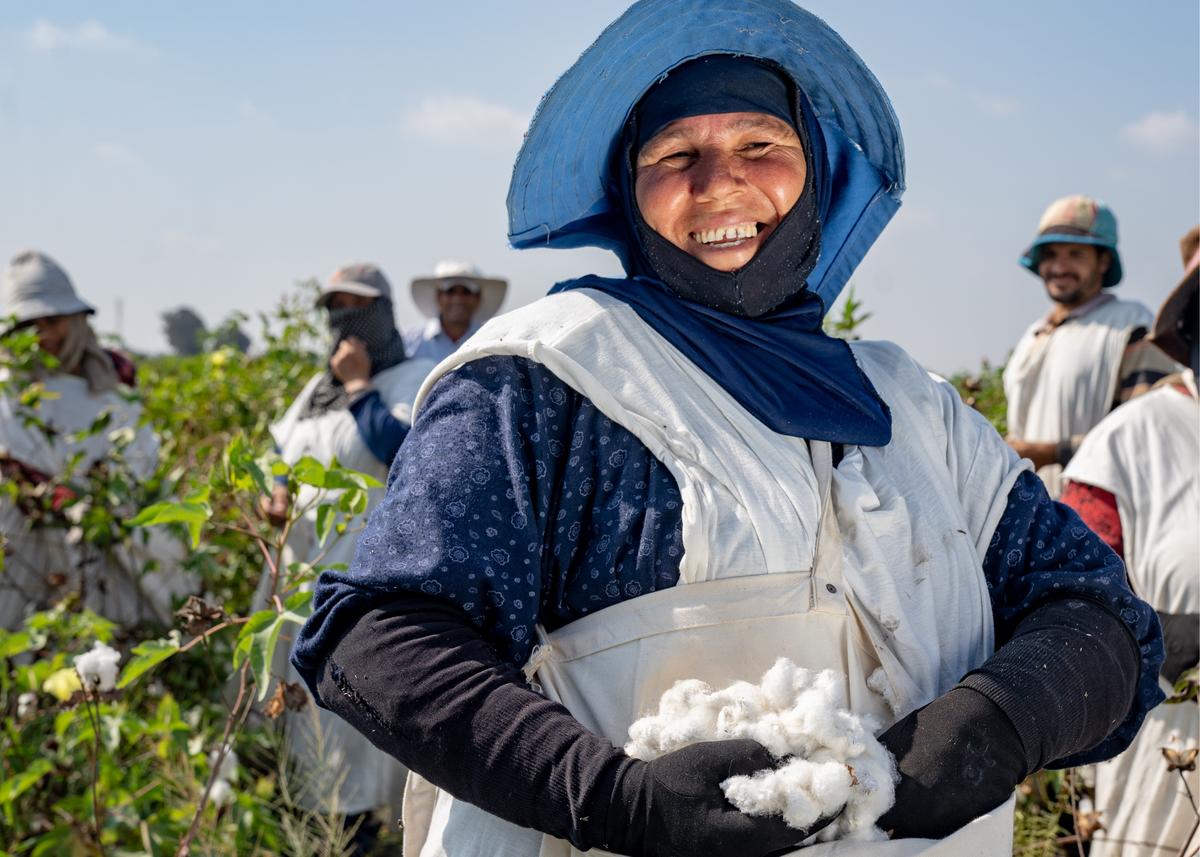
Farmers celebrate their hard work during the cotton harvest, Magued Makram/UNIDO Egypt. Kafr ElSheikh, Egypt, 2019
Leaders must strengthen and accelerate climate interventions that support the world’s smallholder agricultural producers before further catastrophic climate change events change the course of many peoples’ lives.
Changes in temperature and rainfall patterns linked to climate change are likely to make cotton more challenging to grow in many regions. Expected increases in temperatures and the difference in their seasonal patterns could lead to a decrease in the agricultural productivity of some crops. Lower yields will therefore impact the lives of already vulnerable communities.
The recent tragic floods in Pakistan illustrate how the cotton sector can be impacted overnight by extremes in weather patterns and affect the livelihoods of millions of people. According to McKinsey, the fashion sector must align with the 1.5-degree pathway over the next eight years and intensify its efforts to make agricultural practices more sustainable. If the textile industry does not address this, the 2030 emissions reduction targets will be missed.
Sustainable solutions for cotton farmers
Solutions already exist. Egyptian cotton farmers have been embracing and implementing the Better Cotton Standard as a tool to set metrics and establish more sustainable production practices in recent years. Since 2020, Better Cotton has been working closely with on-the-ground partners – the Cotton Research Institute and the United Nations Industrial Development Organisation (UNIDO). They help to ensure that Egyptian farmers gain access to the knowledge and tools they need to adopt more sustainable practices and improve their livelihoods.
Some 2,000 smallholder cotton farmers in the Kafr El Sheikh and Damietta Governorates of Egypt participate in the Better Cotton programme.
As part of Better Cotton’s bold strategy designed to deliver substantial environmental, social and economic impact across the cotton industry by 2030, it launched its climate change mitigation target in 2021. The target was set to reduce overall greenhouse gas emissions per tonne of Better Cotton produced by 50% by 2030 (from a 2017 baseline).
Four additional targets covering soil health, pesticide use, smallholder livelihoods and women’s empowerment are expected to be announced in early 2023 with impact indicators providing robust metrics for tracking and evaluating against the baseline.
Since its formation in 2009 Better Cotton has had a significant impact on the sustainability of the world’s cotton production. For example, on average Better Cotton production had a 19% lower GHG emissions intensity per tonne of lint than comparison production across China, India, Pakistan, Tajikistan and Turkey, a recent study analysing data from three seasons (2015-16 to 2017-18) showed.
Better Cotton is taking the lead in developing solutions for physical traceability enabling retailers and brands to make stronger sustainability claims related to the cotton content and provenance of their products, as well as a mechanism for farmers to be remunerated for their more sustainable practices.