Gulf Municipality Pampers Villa Owners Who Don’t Get Green Building

green building, sustainable building, energy, water, carbon footprint, Estidama, United Arab Emirates, villas, Abu Dhabi, pearl ratingGoing green doesn’t come naturally to wealthy villa owners in the Gulf.

An online real estate  company listed a seven bedroom villa in Dubai’s neighboring Emirate Abu Dhabi for $95,300 a year, which amounts to nearly $8,000 a month. Anyone who can afford to spend that much money on rent probably has little incentive to turn off the lights in order to conserve energy or shorten their showers, which may explain why the Abu Dhabi Urban Planning Council sometimes has to meet with villa owners six times before they grasp the minimum requirements of the country’s mandatory Estidama green building code.

Energy and water guzzlers

Government subsidies keep energy and water costs unrealistically low in the Emirates, despite its dubious distinction of having the world’s largest per capita carbon footprint. And many foreigners who have flocked to the Emirate to help the country exploit their enormous resource wealth live behind tall walls in self-enclosed villas.

So it’s hardly surprising that they are perplexed by the Estidama Pearl Rating System that was established in September, 2010 as a mandatory means to reduce the carbon and water footprint of all structures built in Abu Dhabi.

In order to help them find their way, the Abu Dhabi Urban Planning Council has launched an online tool that villa owners on a step-by-step journey through this unknown landscape. Appropriately called the “e-villa configurator,” this platform demonstrates to new builders what techniques can be used to save “precious water” resources, according to The National.

Pampering the un-green

“When users click on a category, they can learn how it will affect their final design and what the environmental benefits will be,” the paper reports.

Despite this serious pampering, people aren’t catching on as quickly as the UPC would like. Only 50% of the 1500 applications for Estidama have been approved since November, 2010, and these aren’t strident requirements. Although Government Buildings are required to achieve at least two out of five pearls, villa owners only have to earn one.

An adviser for Estidama, Edwin Young told the paper that it “once took applicants between four and six attempts to get through the process; now the UPC aims for two.”

The building requirements for villa developers have been simplified; hopefully they’ll get the hang of going green soon.

:: The National

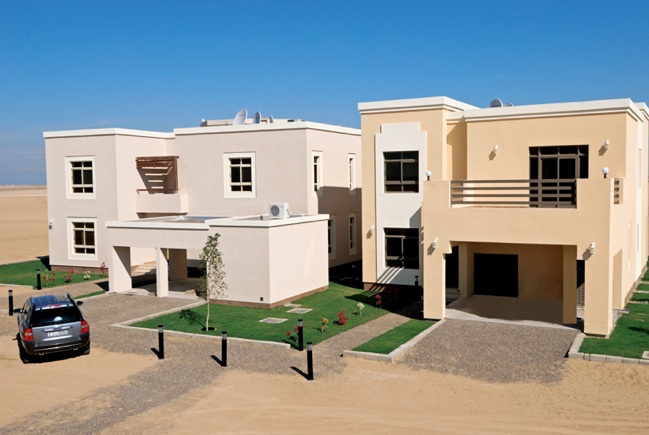
image via World Property Channel

More on Green Building in The Emirates:

A Greener Space Planned Between Abu Dhabi and Dubai

Dubai Ends Cheap Local Gas

Former Masdar Director Says the UAE Must End Subsidies

Karin Kloosterman
Karin Kloostermanhttp://www.greenprophet.com
Karin Kloosterman is an award-winning journalist, innovation strategist, and founder of Green Prophet, one of the Middle East’s pioneering sustainability platforms. She has ranked in the Top 10 of Verizon innovation competitions, participated in NASA-linked challenges, and spoken worldwide on climate, food security, and future resilience. With an IoT technology patent, features in Canada’s National Post, and leadership inside teams building next-generation agricultural and planetary systems — including Mars-farming concepts — Karin operates at the intersection of storytelling, science, and systems change. She doesn’t report on the future – she helps design it. Reach out directly to [email protected]

TRENDING

SolCold wants to cool buildings using sunlight

For centuries people living in hot climates have tried...

BM Studios is designing systems, not just buildings in the UAE

Balsam Madi is an architect and systems thinker whose work bridges culture, sustainability, and design intelligence across the Middle East and Europe.

How you create green steel on a blockchain

The thing about raw materials is that once they are melted down, you can't prove the source of the material. Same is true with gold, cucumbers and even forged products that look the same as the real thing. When it comes to steel, and how we produce it, it has a massive carbon problem. What's happening in Japan right now could change how we think about heavy industry and climate action.

EU Ports Still Power Russia’s Arctic Gas Exports Despite Phase-Out Pledge

The findings suggest that rather than declining, Europe’s reliance on Yamal LNG intensified in 2025. Yamal cargoes accounted for 14.3% of the EU’s total LNG imports, equivalent to roughly one in every seven LNG ships arriving at European terminals.The findings suggest that rather than declining, Europe’s reliance on Yamal LNG intensified in 2025. Yamal cargoes accounted for 14.3% of the EU’s total LNG imports, equivalent to roughly one in every seven LNG ships arriving at European terminals.

Inflatable concrete homes: a California and Ontario case study

Across Ontario and California, builders are rethinking concrete housing through inflatable-shell design—an approach that replaces wooden formwork with air and innovation. A 1,000-square-foot low-carbon concrete shell, insulated with hempcrete, can be erected in a day and cost far less than conventional construction. Over time, the savings in energy, materials, and mortgage costs make this model a realistic response to rising living expenses and climate stress. With low-carbon cement, hempcrete walls, and renewable energy, inflatable concrete homes show how even the world’s most carbon-heavy material can become part of a sustainable future—if built smartly, and within local building codes.

Should You Invest in the Private Market?

startustartup Unlike public stock exchanges, which offer daily trading, strict...

How to build a 100-year-company

Kongō Gumi is a Japanese construction company, purportedly founded in 578 A.D., making it the world's oldest documented company. What can we learn about building sustainable businesses from them?

From Pilot Plant to Global Stage: How Aduro Clean Technologies’ 2026 Expansion Signals a Turning Point for Chemical Recycling Investors Like Yazan Al Homsi

The company's Next Generation Process (NGP) Pilot Plant in London, Ontario, has officially moved into initial operating campaigns, generating the kind of structured, repeatable data that separates laboratory promise from commercial viability.

How AI Helps SaaS Companies Reduce Repetitive Customer Support Work

SaaS products are designed for large numbers of users with different levels of experience, and also in renewable energy.

Pulling Water from the Air

Faced with water shortage in Amman, Laurie digs up...

Turning Your Energy Consultancy into an LLC: 4 Legal Steps for Founders in Texas

If you are starting a renewable energy business in Texas, learn how to start an LLC by the books.

Tracking the Impacts of a Hydroelectric Dam Along the Tigris River

For the next two months, I'll be taking a break from my usual Green Prophet posts to report on a transnational environmental issue: the Ilısu Dam currently under construction in Turkey, and the ways it will transform life along the Tigris River.

6 Payment Processors With the Fastest Onboarding for SMBs

Get your SMB up and running fast with these 6 payment processors. Compare the quickest onboarding options to start accepting customer payments without delay.

Related Articles

Popular Categories