There is a growing concern that the free trade agreement between Iran and Turkey has encouraged an increase in the production and transit of drugs in the Middle East. Following the 2009 agreement to enhance co-operation efforts of land, air, and sea transportation, politicians and economic analysts have grown ever more concerned about the rising threat of drugs amid a free trade environment.
Iranians a Force in Turkish Drug Industry
Experts would appear to have every right to feel concerned, with statistics showing that heroin seizures increased from 2,025kg to 3,044kg between 2009 and 2010, which is just a year since the free trade agreement. Prior to the agreement, it had taken three years for a similar increase between 2005 and 2008. Those statistics represent the seizures of heroin, an opium-based drug, being transported to Turkey.
For the drug traffickers who are not caught during transit, close to one million Iranian nationals have chosen to continue living in Turkey instead of returning to their homeland. But rather than choosing to move for an improved quality of life, many of the illegal migrants are making the move for the purpose of becoming involved in the lifestyle offer by drug trafficking.
In fact, Turkey’s Department of Anti-Smuggling and Organised Crime (KOM) revealed in 2011 that 34% of all foreign nationals arrested in the country were Iranian. No other national demographic had a higher rate of drug-related arrests than Iranians, with these individuals dominating in the Turkish drug industry.
Hash Usage in Iran
Iran is not only making the headlines for drugs in the wider Middle East, but also within its own borders. Economic struggles within the country, combined with the readily available presence of cheap drugs, have driven many young Iranian nationals to consume drugs until the point of addiction is reached.
Prior to the development of serious addictions, Iranians are legally allowed to consume hashish, a product that is prepared from the readily available cannabis plants that are available throughout North Africa and the Middle East. Consumption of hash can act as a gateway drug for many young people, who turn to escapism to cope with the economic struggles of Iran. Wellness centres like FloridaBeachRehab.com have witnessed this problem on many occasions.
However, there is a considerable catch associated with the legal status of hash. While many hash users in the rest of the world will choose to smoke it through a variety of delivery methods, Iranian nationals can only legally consume hash by oral means. Effectively, this creates a situation where hash is easy to come by. Once in possession of the drug, it is then possible for the purchaser to smoke it in private.
Opiates Causing Damage
Iran has previously revealed to Economist.com that more than 2 million of 75 million people living in the country are addicted to damaging opiate-based drugs. Along with heroin, many of those 2 million addicts are using a cheaper derivate heroin, which is known as crack or shishe (this term is used to name cocaine in its freebase form). Users will gather in public places to smoke shishe and pose a threat to others.
The major problem with shishe is that it is not just poorer sections of Iranian society turning to the drug. Alarmingly, weight-conscious and beauty-obsessed women from the middle class are turning to shishe as a cure for weight loss. Courses are also said to be available for those who would like to manufacture shishe from the comfort of their own home.
To tackle the epidemic, Iran has attempted to implement a number of policies. Leading the charge are programmes formed to encourage safe disposal of needles, as well as methadone clinics to assist heroin addicts. With a 15% rate of HIV diagnosis among needle users in Iran, such initiatives are vital for responding to the troubling issue.
Iran is facing a battle on two fronts, with some of its citizens engaging in the trafficking of opiates to Turkey and then later settling there to join the local drug industry. Free trade is said to be the catalyst behind the first issue. Next, the dire economic conditions of Iran have driven many to consume cheap opium-based drugs. Iran has years of effort to combat the growing threat of drugs in the Middle East.
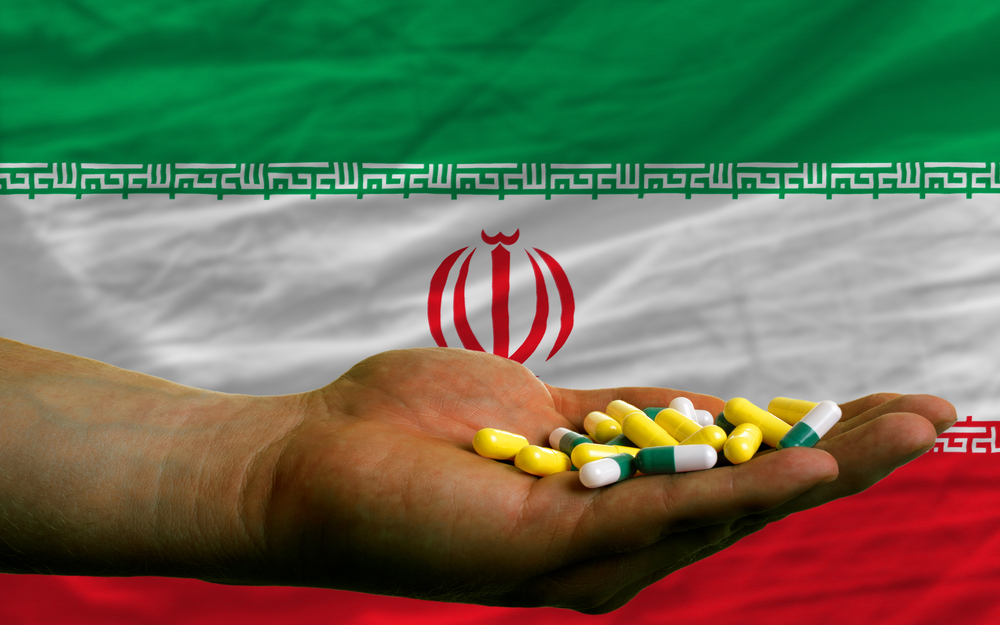
Image of drugs in Iran from Shutterstock