What biomimicry architects can learn from scorpions

Pinshow scorpion burrow_570x428
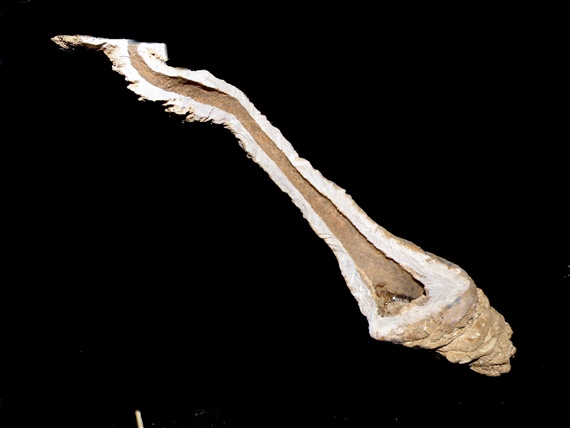
Ben-Gurion University of the Negev scientists have poured molten aluminum into a scorpion burrow and discovered that scorpion burrows have a platform on which to warm up before the evening hunt.

Amanda Adams from the Jacob Blaustein Institutes for Desert Research and Professor Berry Pinshow, her adviser, are investigating the burrows of wild Large-Clawed Scorpions (Scorpio maurus palmatus) in the Negev Desert of Israel.

After trapping the scorpions, they prepared replica casts of their burrows by filling them with molten aluminium. Once the casts had solidified, they were then dug out to be analysed by a 3-D laser scanner and computer software.

pinshow casting the scorpion burrow aluminum

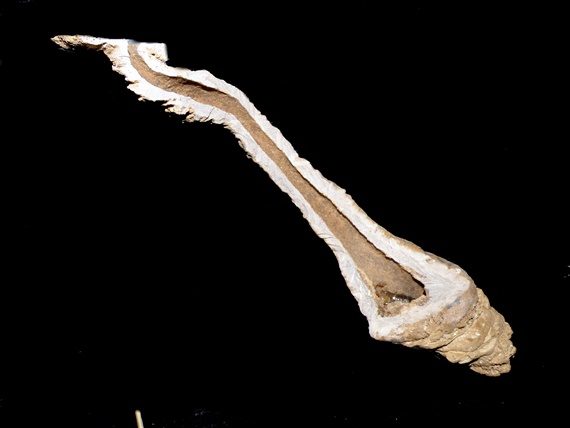
Rather than being simple holes in the ground, it was found that the burrows followed a very sophisticated design. Each burrow began with a short, vertical entrance shaft that flattened out a few centimeters below the surface into a horizontal platform.

The researchers believe that this provides a safe, warm place for the scorpions to increase their body temperature before they leave the burrow to forage at night. As ectothermic animals, scorpions rely on energy from the environment to regulate their internal temperature.

RELATED: A deadly scorpion can be a safe pesticide

The burrows then turn sharply downwards, descending further below ground to form a dead-ended chamber. Being cool and humid, this chamber provides a refuge for the scorpions to rest during the heat of the day, where evaporative water loss is minimal. As the design was common to all the burrows studied, this suggests that burrow building in scorpions has evolved by natural selection to meet the animals’ physiological needs.

“Very little is known about burrow environments,” says Dr. Adams. “We plan to expand our studies to more scorpion species around the world to test how burrow structure is shaped to be part of the burrow builder’s extended physiology.” Understanding the relationship between environmental conditions and burrow structures, meanwhile, could help to predict how burrow-builders will respond to climate change.

Scorpions are predatory arachnids, found on all continents except Antarctica. They occupy a range of habitats, including forests, grasslands, mountains and deserts. Their varied diets include arthropods, lizards and even small rodents.

Karin Kloosterman
Karin Kloostermanhttp://www.greenprophet.com
Karin Kloosterman is an award-winning journalist, innovation strategist, and founder of Green Prophet, one of the Middle East’s pioneering sustainability platforms. She has ranked in the Top 10 of Verizon innovation competitions, participated in NASA-linked challenges, and spoken worldwide on climate, food security, and future resilience. With an IoT technology patent, features in Canada’s National Post, and leadership inside teams building next-generation agricultural and planetary systems — including Mars-farming concepts — Karin operates at the intersection of storytelling, science, and systems change. She doesn’t report on the future – she helps design it. Reach out directly to [email protected]

Read More

2 COMMENTS

LEAVE A REPLY

Please enter your comment!
Please enter your name here

TRENDING

Operational Integrity and Safety-Oriented Aviation Management in Contemporary Private Aviation: The Hera Flight Framework

The modern private aviation industry has undergone substantial structural...

Robot Monk Gabi Takes Vows in Seoul. What Would the Buddha Have Thought?

  How many of us looked twice when we saw...

8 Questions Families Should Ask Before Choosing Assisted Living

Few family decisions carry as much weight as choosing...

The fossil fuel problem hiding in your wardrobe

The fuel pumps don't lie. When oil prices spike,...

Australia’s $25 Billion AI Moment: Infrastructure Is the Easy Part

  Microsoft's record investment in Australia will build data centres....

How to quiet noise from construction in your office

Streets need to be resurfaced in New York but the humming and grinding noise is unsettling. Noise is environmental pollution. 

EarthX and a blueprint for sustainable investing

Trammell S. Crow, a Dallas-based businessman and father of four, is focusing his efforts on impact investing, and media that focuses on saving the planet through EarthX.

Mining Afghanistan’s Mineral Discoveries Similar to Avatar

Now that American forces in Afghanistan are commemorating the longest period of any war that America has been involved in, including the 1965-73 Vietnam War, the recent discoveries of large and extremely valuable mineral and metal deposits may finally bring to light a reason to continue the presence of US fighting forces in this war torn and backward country.

From Pilot Plant to Global Stage: How Aduro Clean Technologies’ 2026 Expansion Signals a Turning Point for Chemical Recycling Investors Like Yazan Al Homsi

The company's Next Generation Process (NGP) Pilot Plant in London, Ontario, has officially moved into initial operating campaigns, generating the kind of structured, repeatable data that separates laboratory promise from commercial viability.

Nobul’s Regan McGee on Shareholder Value: “Complacency Is the Silent Killer” 

Why the governance framework designed to protect shareholders so...

Should You Invest in the Private Market?

startustartup Unlike public stock exchanges, which offer daily trading, strict...

How to build a 100-year-company

Kongō Gumi is a Japanese construction company, purportedly founded in 578 A.D., making it the world's oldest documented company. What can we learn about building sustainable businesses from them?

How AI Helps SaaS Companies Reduce Repetitive Customer Support Work

SaaS products are designed for large numbers of users with different levels of experience, and also in renewable energy.

Popular Categories