Sinkholes and Shrinking Shores: The Race to Rescue the Dead Sea

Picture of the Dead Sea
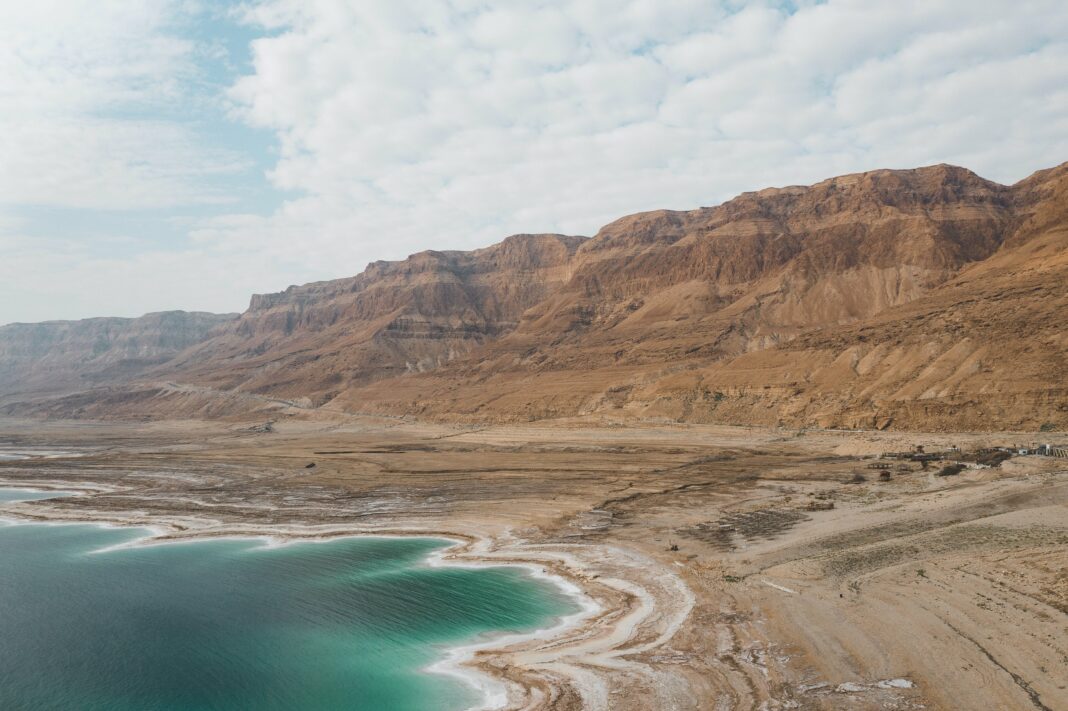
The shore of the Dead Sea

On August 5th, 2025, environmental experts from Israel, Jordan, and the Palestinian territories descended upon the University of Leeds for a three-day event centered around the Dead Sea and its irreversible decline. The gathering highlighted the urgency and attention that the region directs towards the Dead Sea.


Once spanning over 400 square miles, the Dead Sea now covers approximately 230 square miles. Currently, the Dead Sea’s water is dropping 3.3 feet per year due to the diversion of the Jordan River and the overextraction of the sea’s minerals. 

See Related Article: Environmentalist: “Explore Alternatives to Red-Dead Canal Project”

The area surrounding the sea has changed drastically in the past half-century. Landscapes are riddled with sinkholes, human activity, and leftover mineral deposits. 
https://www.nasa.gov/image-feature/the-dead-sea/
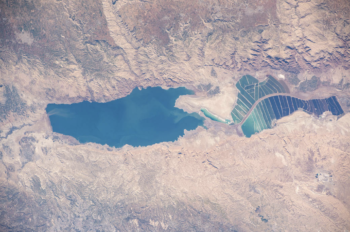
Overhead image of the Dead Sea

The Dead Sea’s rapid decline is not only an aesthetic decline but also one that affects various aspects of the world. First, it affects ecosystems and biodiversity. All parts of the natural world are connected, and something as prominent as the Dead Sea being destroyed will affect life around it. Also, local communities and infrastructure must be altered and changed due to the new sea levels and sinkholes caused by the decline. The region surrounding the sea is also a tourism hotspot, and if the Dead Sea becomes an undesirable location, the people will stop coming. Finally, the Dead Sea and its resources are not only Israel’s. Jordan and the Palestinian territories also utilize the Dead Sea. A destroyed Dead Sea would increase political tensions due to each country being negatively impacted. 

See Related Article: How EcoPeace Uses Environmental Education to Bridge Borders in the Jordan Valley

The summit, held at Leeds, brings together various actors. Israelis, Jordanians, and Palestinians represent the regional interest, and participants from the UK and other Western countries participated to assist. The talks that they had were aimed at discussing improving and creating coordinated and interconnected action. 


There have been efforts to save the Dead Sea. The Jordan River is the sea’s water source. However, now only 10% of the original water flow reaches the basin. A key effort in reviving the Dead Sea is to stop the diversion of the river’s water and allow it to flow to the Dead Sea. Additionally, there are regulations on mineral extraction and building. At the Leeds conference, many new ideas were created and shared. Water sharing frameworks, combined with river restoration efforts, re-zoning, desalination brine water, and international funding, provide help. These efforts and efforts of the future also provide an avenue for increased regional stability. Israel and Jordan both use the sea for its resources and the tourism aspect. However, there is minimal cooperation between the countries, leading to an increased decline of the sea. If the countries strengthen, add new efforts, and rely on each other more than it would cause there to be more needed cooperation. 
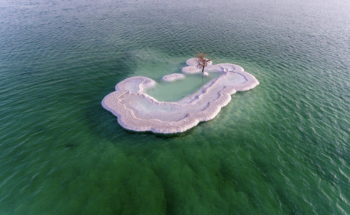
Salt in the Dead Sea

The Dead Sea’s rapid collapse is a tragedy not only for Israel but for the region as a whole. It also tests whether environmental necessity can lead to regional stability. The Leed summit is one of the many conversations currently being had to try to save the sea. Conversations are one thing; action is another, and action is needed to save the Dead Sea. 

Max Izaks
Max Izaks
Max Izaks is an environmental studies student at the University of Colorado Boulder. His academic work focuses on climate policy, environmental justice, and urban sustainability, with a particular interest in the intersection of environmental policy, justice, and law. Max has participated in educational and cultural programs abroad, including a specialized educational trip to Israel, where he broadened his professional experience. Max brings a global perspective and a commitment to finding and communicating environmental challenges and solutions. Reach out directly to [email protected]

TRENDING

Eco organization offices destroyed by Iran missile

Tel Aviv's eco organization, the Heschel Center, was impacted by an Iranian missile.

What are AWG air-water generators, and why they aren’t a golden-bullet solution (yet)

Atmospheric water generators (AWGs) sound like magic: machines that can pull drinking water out of air. The idea is mentioned in the Bible, where the elders would pray for water collected as dew on plants and the catch on turning this into a machine is in the physics. To turn invisible vapor into liquid, you must remove heat, especially the latent heat of condensation.

Jordan’s $6 Billion Aqaba–Amman Desalination Project from the Red Sea Moves Forward

In 2025, the Jordanian government signed agreements with a consortium led by Meridiam and SUEZ, alongside VINCI Construction and Orascom Construction. Under a 30-year concession agreement, the consortium will design, build, finance, operate, and maintain the system before transferring it back to the Jordanian government. The total investment is estimated at approximately $6 billion USD.

The Saudi Startup Turning Desalination’s Toxic Waste Into Its Own Disinfectant

For millennia, the Middle East's water crisis seemed an immutable fact of geography — a region defined as much by what it lacked as by what lay beneath its sands. Today, a convergence of plummeting solar costs, advancing membrane technology, and hard-won engineering expertise is rewriting that story.

Earth building with Dead Sea salt bricks

Researchers develop a brick made largely from recycled Dead Sea salt—offering a potential alternative to carbon-intensive cement.

Should You Invest in the Private Market?

startustartup Unlike public stock exchanges, which offer daily trading, strict...

How to build a 100-year-company

KongĹŤ Gumi is a Japanese construction company, purportedly founded in 578 A.D., making it the world's oldest documented company. What can we learn about building sustainable businesses from them?

From Pilot Plant to Global Stage: How Aduro Clean Technologies’ 2026 Expansion Signals a Turning Point for Chemical Recycling Investors Like Yazan Al Homsi

The company's Next Generation Process (NGP) Pilot Plant in London, Ontario, has officially moved into initial operating campaigns, generating the kind of structured, repeatable data that separates laboratory promise from commercial viability.

How AI Helps SaaS Companies Reduce Repetitive Customer Support Work

SaaS products are designed for large numbers of users with different levels of experience, and also in renewable energy.

Pulling Water from the Air

Faced with water shortage in Amman, Laurie digs up...

Turning Your Energy Consultancy into an LLC: 4 Legal Steps for Founders in Texas

If you are starting a renewable energy business in Texas, learn how to start an LLC by the books.

Tracking the Impacts of a Hydroelectric Dam Along the Tigris River

For the next two months, I'll be taking a break from my usual Green Prophet posts to report on a transnational environmental issue: the Ilısu Dam currently under construction in Turkey, and the ways it will transform life along the Tigris River.

6 Payment Processors With the Fastest Onboarding for SMBs

Get your SMB up and running fast with these 6 payment processors. Compare the quickest onboarding options to start accepting customer payments without delay.

Related Articles

Popular Categories