Extreme Heat Is Testing Israel’s Energy System

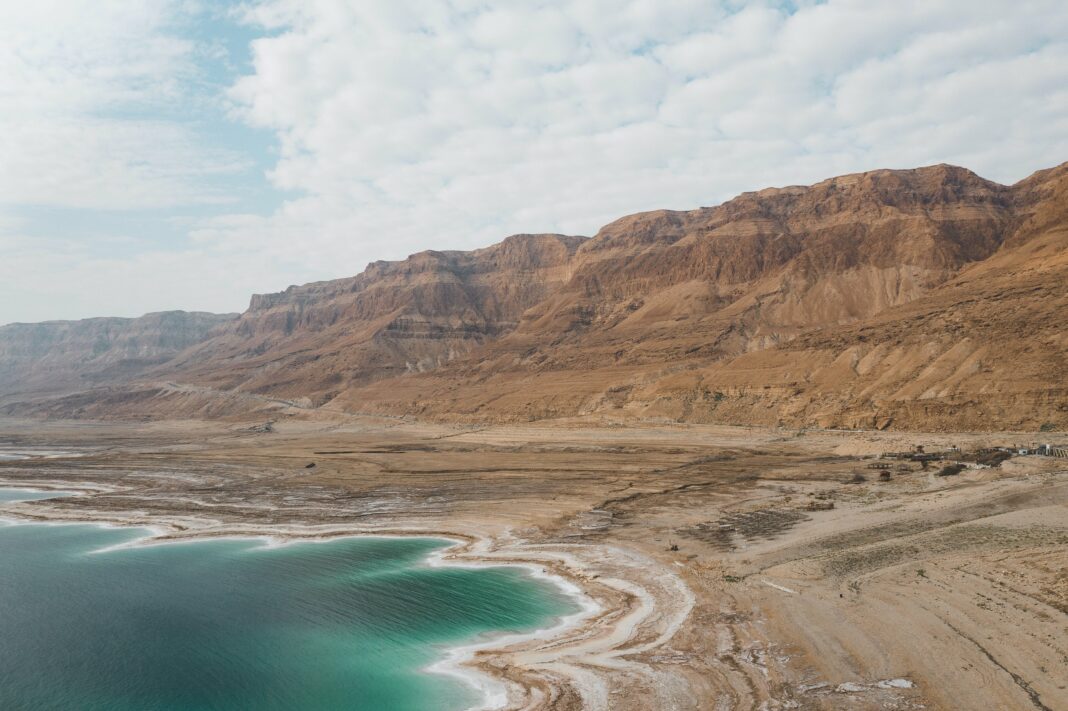
Solar power plant in the Negev

This August, Israel is facing one of the most punishing heat waves in recent history-exactly the kind of event that climate scientists have warned will grow more intense and common in the Middle East. Forecasters predict that temperatures will rise to 8-10 degrees Celsius, above early-August averages. In Jerusalem, the temperature will surge from a pleasant 29°C to a blistering 40°C. Additionally, the Jordan Valley will have temperatures as high as 50°C. The heat is expected to last around a week.


Israel’s public health system, water infrastructure, and power grid operators the heat is a high-pressure test. Demand for all of the aforementioned services soars during times of high heat. Israel will be tested to see if their energy, water, health, and other essential services can keep up with the high temperatures and the demand that comes from it. 


The Middle East has proven to be at the epicenter of global warming and climate change. It warms much faster than the global average. The increase in multi-day heat events proves this fact. Israeli authorities have sent out messages this week urging stronger precautions. Hydration, staying inside, and providing extra care for vulnerable groups are just some of the ways to help against this major public-safety hazard
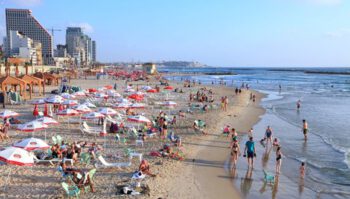
Israelis enjoying the beaches of Tel-Aviv

The heat also compounds other environmental pressures. In Eastern Israel, near the Dead Sea and Jordan valley, high temperatures drive water demand. 


One silver lining, which is also one of the causes of the heat wave, is that Israel has an abundance of strong sunlight. Solar farms and rooftop panels help provide the power grid with low-cost electricity and energy. The government and people of Israel have bought into the solar energy wave. According to the Energy Ministry, approximately 15% of electricity in Israel is solar, and the target is to get to 30% by 2030. 

See Related Article: Yosef Abramowitz: The Israeli Bringing the Sun to the World’s Darkest Places

While solar energy helps provide an abundance of energy, especially during a heat wave, energy demand grows in the evening as the sun sets. Energy storage is the solution. Private companies, homes, and the government have invested in storage. Increased storage leads to increased energy reserves, which allows the grid to handle more stress, for example, more air conditioning units being turned on during a heat wave.


When a heat wave hits, it exposes weak links across a country’s whole system. Traditional energy infrastructure does not function to its best capabilities under the stress of extreme heat. That is why Israel has invested more in solar energy. However, with this increase comes more storage, panels, and other energy-related projects. These new developments are not only more cost-effective in the long term, but they can also be potentially life-saving during emergencies. 


With high heat periods comes an increase in water demand. However, at the same time, reservoirs and water sources are put under stress due to increased evaporation. In a time of consistent global warming and existing water pressures, a heat wave is an added emergency for water. 

See Related Article: Sea of Galilee still critical water levels, despite winter rain

The ecosystem is also affected. Specifically, the marine ecosystem of Israel. In Eilat, the corals are known to be resistant. Even the resilience of the coral cannot help during a time of heat waves. This affects marine life and, therefore, humans who use the ocean as a natural resource. 


Israel’s upcoming heat wave is an example of why countries need increased climate readiness. With more storage and increased use of solar power, Israel is more prepared to face this extreme weather. 

Max Izaks
Max Izaks
Max Izaks is an environmental studies student at the University of Colorado Boulder. His academic work focuses on climate policy, environmental justice, and urban sustainability, with a particular interest in the intersection of environmental policy, justice, and law. Max has participated in educational and cultural programs abroad, including a specialized educational trip to Israel, where he broadened his professional experience. Max brings a global perspective and a commitment to finding and communicating environmental challenges and solutions. Reach out directly to [email protected]

LEAVE A REPLY

Please enter your comment!
Please enter your name here

TRENDING

Earth building with Dead Sea salt bricks

Researchers develop a brick made largely from recycled Dead Sea salt—offering a potential alternative to carbon-intensive cement.

Farm To Table Israel Connects People To The Land

Farm To Table Israel is transforming the traditional dining experience into a hands-on journey.

Huge Fish Nursery Discovered Under Freezing Arctic Seas

In 2019, an underwater robot camera exploring the seabed...

Remilk makes cloned milk so cows don’t need to suffer and it’s hormone-free

This week, Israel’s precision-fermentation milk from Remilk is finally appearing on supermarket shelves. Staff members have been posting photos in Hebrew, smiling, tasting, and clearly enjoying the moment — not because it’s science fiction, but because it tastes like the real thing.

An Army of Healers Wins the 2025 IIE Goldberg Prize for Peace in the Middle East

In a region more accustomed to headlines of loss than of listening, the Institute of International Education (IIE) has chosen to honor something quietly radical: healing. The 2025 Victor J. Goldberg Prize for Peace in the Middle East has been awarded to Nitsan Joy Gordon and Jawdat Lajon Kasab, the co-founders of the Army of Healers, for building spaces where Israelis and Palestinians — Jews, Muslims, Christians, Druze, and Bedouins — can grieve, speak, and rebuild trust together.

Qatar’s climate hypocrisy rides the London Underground

Qatar remains a master of doublethink—burning gas by the megaton while selling “sustainability” to a world desperate for clean air. Wake up from your slumber people.

How Quality of Hire Shapes Modern Recruitment

A 2024 survey by Deloitte found that 76% of talent leaders now consider long-term retention and workforce contribution among their most important hiring success metrics—far surpassing time-to-fill or cost-per-hire. As the expectations for new hires deepen, companies must also confront the inherent challenges in redefining and accurately measuring hiring quality.

8 Team-Building Exercises to Start the Week Off 

Team building to change the world! The best renewable energy companies are ones that function.

Thank you, LinkedIn — and what your Jobs on the Rise report means for sustainable careers

While “green jobs” aren’t always labeled as such, many of the fastest-growing roles are directly enabling the energy transition, climate resilience, and lower-carbon systems: Number one on their list is Artificial Intelligence engineers. But what does that mean? Vibe coding Claude? 

Somali pirates steal oil tankers

The pirates often stage their heists out of Somalia, a lawless country, with a weak central government that is grappling with a violent Islamist insurgency. Using speedboats that swarm the targets, the machine-gun-toting pirates take control of merchant ships and then hold the vessels, crew and cargo for ransom.

Leopoldo Alejandro Betancourt López Turned Ocean Plastic Into Profitable Sunglasses

Few fashion accessories carry the environmental burden of sunglasses. Most frames are constructed from petroleum-based plastics and acrylic polymers that linger in landfills for centuries, shedding microplastics into soil and waterways long after they've been discarded. Leopoldo Alejandro Betancourt López, president of the Spanish eyewear brand Hawkers, saw this problem differently than most industry executives.

Why Dr. Tony Jacob Sees Texas Business Egos as Warning Signs

Everything's bigger in Texas. Except business egos.  Dr. Tony Jacob figured...

Israel and America Sign Renewable Energy Cooperation Deal

Other announcements made at the conference include the Timna Renewable Energy Park, which will be a center for R&D, and the AORA Solar Thermal Module at Kibbutz Samar, the world's first commercial hybrid solar gas-turbine power plant that is already nearing completion. Solel Solar Systems announced it was beginning construction of a 50 MW solar field in Lebrija, Spain, and Brightsource Energy made a pre-conference announcement that it had inked the world's largest solar deal to date with Southern California Edison (SCE).

Related Articles

Popular Categories