Mars found a way to store carbon. Can we?

Mars
What we can learn from Mars about climate change

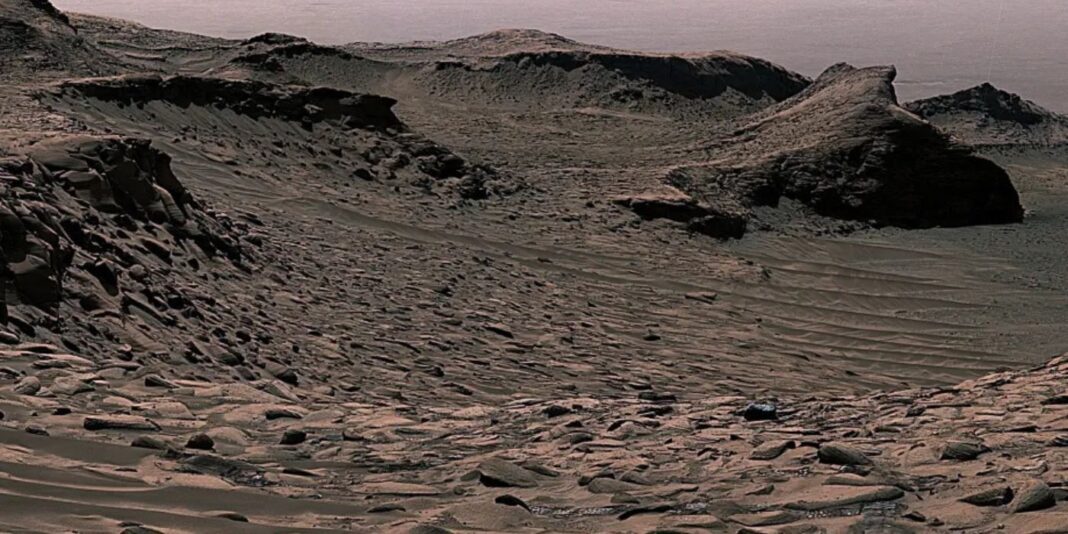
Mars, the dusty red planet that once held our wildest dreams of alien life, is revealing its past—and perhaps a glimpse of Earth’s future. Today it’s a frozen desert, with no breathable atmosphere and no surface water in sight. But new findings from NASA’s Curiosity Rover suggest Mars was once warm, wet, and much more Earth-like—possibly with rivers, rainfall, and lakes.

The key? A humble mineral called siderite, a type of iron carbonate that’s helping scientists piece together how Mars may have once locked away its carbon—and lost its atmosphere in the process.

Related: This Dune suit could keep us alive on Mars

In a recent SETI Live conversation, Dr. Ben Tutolo, a geochemist at the University of Calgary and a science team member on the Curiosity mission, shared the breakthrough. While analyzing rocks inside Gale Crater, Curiosity detected up to 10.5% siderite in some layers of Mount Sharp—far more than expected.

This wasn’t just a geochemical oddity. It was evidence that Mars once had abundant CO₂, likely released by volcanoes, which dissolved in ancient waters and was then mineralized into rock. That’s the same basic carbon capture strategy we’re exploring here on Earth today to combat climate change—except Mars figured it out a few billion years earlier.

Carbon Capture on a Planetary Scale—Then Collapse

On Earth, carbon gets locked up in limestone—made of calcium carbonate. On iron-rich Mars, siderite takes that role. Its presence, alongside evaporite minerals like magnesium sulfate, suggests a long phase of evaporation, meaning Mars had standing water. For that to happen, the atmosphere had to be thick—at least 1,000 times denser than it is today, rich in CO₂.

Related: rogue geo-engineers chased by the EPA for injecting sulphur into the atmosphere

But something happened: the atmosphere thinned, water disappeared, and the climate collapsed. Where did the CO₂ go? Some was lost to space, but this discovery shows that much of it was mineralized into the Martian crust.

The lesson is sobering. On Earth, we’re now injecting carbon into the atmosphere faster than the planet can absorb it. Mars shows us what can happen when a planet’s carbon cycle gets thrown off balance—even slightly—over geological timescales. A world once capable of supporting liquid water became uninhabitable. This is more than a Martian mystery; it’s a cautionary tale. If Mars could lose its habitability after capturing its carbon, what could happen to Earth if we fail to?

Related: dealing with gravity on Mars

The next steps will involve returning samples from these siderite-rich layers to Earth, possibly offering clues not just to climate, but to life. If Mars held onto water for long enough, it might have also given life a fighting chance. And if a “dead” planet like Mars once supported a warm, wet climate, then our definition of what makes a world habitable—whether in our solar system or beyond—may need a radical rethink. Maybe Elon Musk will get there soon with SpaceX and report back to earth before it’s too late. The United Arab Emirates plans on joining Musk on Mars.

LEAVE A REPLY

Please enter your comment!
Please enter your name here

TRENDING

Huge Fish Nursery Discovered Under Freezing Arctic Seas

In 2019, an underwater robot camera exploring the seabed...

Remilk makes cloned milk so cows don’t need to suffer and it’s hormone-free

This week, Israel’s precision-fermentation milk from Remilk is finally appearing on supermarket shelves. Staff members have been posting photos in Hebrew, smiling, tasting, and clearly enjoying the moment — not because it’s science fiction, but because it tastes like the real thing.

The US leaves 66 United Nations organizations to “put America first”

The world needs a reset and to restart well intentioned cooperation projects from start. Because right now the UN and EU projects look like software built on code from the 80s, rickety, patched, slow to adapt, and prone to crashing under the weight of outdated assumptions.

Turkey named as climate change COP31 home in 2026

Murat Kurum as President-Designate of COP31

Ancient air trapped in Canadian salt bubbles foretells climate future

Opening these samples is like cracking open air that existed long before dinosaurs, before forests, before animals of any kind. As lead researcher Justin Park put it: “It’s an incredible feeling to crack open a sample of air that’s a billion years older than the dinosaurs.”

Qatar’s climate hypocrisy rides the London Underground

Qatar remains a master of doublethink—burning gas by the megaton while selling “sustainability” to a world desperate for clean air. Wake up from your slumber people.

How Quality of Hire Shapes Modern Recruitment

A 2024 survey by Deloitte found that 76% of talent leaders now consider long-term retention and workforce contribution among their most important hiring success metrics—far surpassing time-to-fill or cost-per-hire. As the expectations for new hires deepen, companies must also confront the inherent challenges in redefining and accurately measuring hiring quality.

8 Team-Building Exercises to Start the Week Off 

Team building to change the world! The best renewable energy companies are ones that function.

Thank you, LinkedIn — and what your Jobs on the Rise report means for sustainable careers

While “green jobs” aren’t always labeled as such, many of the fastest-growing roles are directly enabling the energy transition, climate resilience, and lower-carbon systems: Number one on their list is Artificial Intelligence engineers. But what does that mean? Vibe coding Claude? 

Somali pirates steal oil tankers

The pirates often stage their heists out of Somalia, a lawless country, with a weak central government that is grappling with a violent Islamist insurgency. Using speedboats that swarm the targets, the machine-gun-toting pirates take control of merchant ships and then hold the vessels, crew and cargo for ransom.

Leopoldo Alejandro Betancourt López Turned Ocean Plastic Into Profitable Sunglasses

Few fashion accessories carry the environmental burden of sunglasses. Most frames are constructed from petroleum-based plastics and acrylic polymers that linger in landfills for centuries, shedding microplastics into soil and waterways long after they've been discarded. Leopoldo Alejandro Betancourt López, president of the Spanish eyewear brand Hawkers, saw this problem differently than most industry executives.

Why Dr. Tony Jacob Sees Texas Business Egos as Warning Signs

Everything's bigger in Texas. Except business egos.  Dr. Tony Jacob figured...

Israel and America Sign Renewable Energy Cooperation Deal

Other announcements made at the conference include the Timna Renewable Energy Park, which will be a center for R&D, and the AORA Solar Thermal Module at Kibbutz Samar, the world's first commercial hybrid solar gas-turbine power plant that is already nearing completion. Solel Solar Systems announced it was beginning construction of a 50 MW solar field in Lebrija, Spain, and Brightsource Energy made a pre-conference announcement that it had inked the world's largest solar deal to date with Southern California Edison (SCE).

Related Articles

Popular Categories