Saudi Arabia initiates a wild plant survey

Plant hunter Saudi Arabia

Saudi Arabia until recently was hermetically sealed to the outside world. But times are changing and the Kingdom of Saud which once dwelled in mud palaces are opening up the oil-wealthy kingdom to tourists, archeologists, divers, hydroponics companies, and lately for seeds banks.

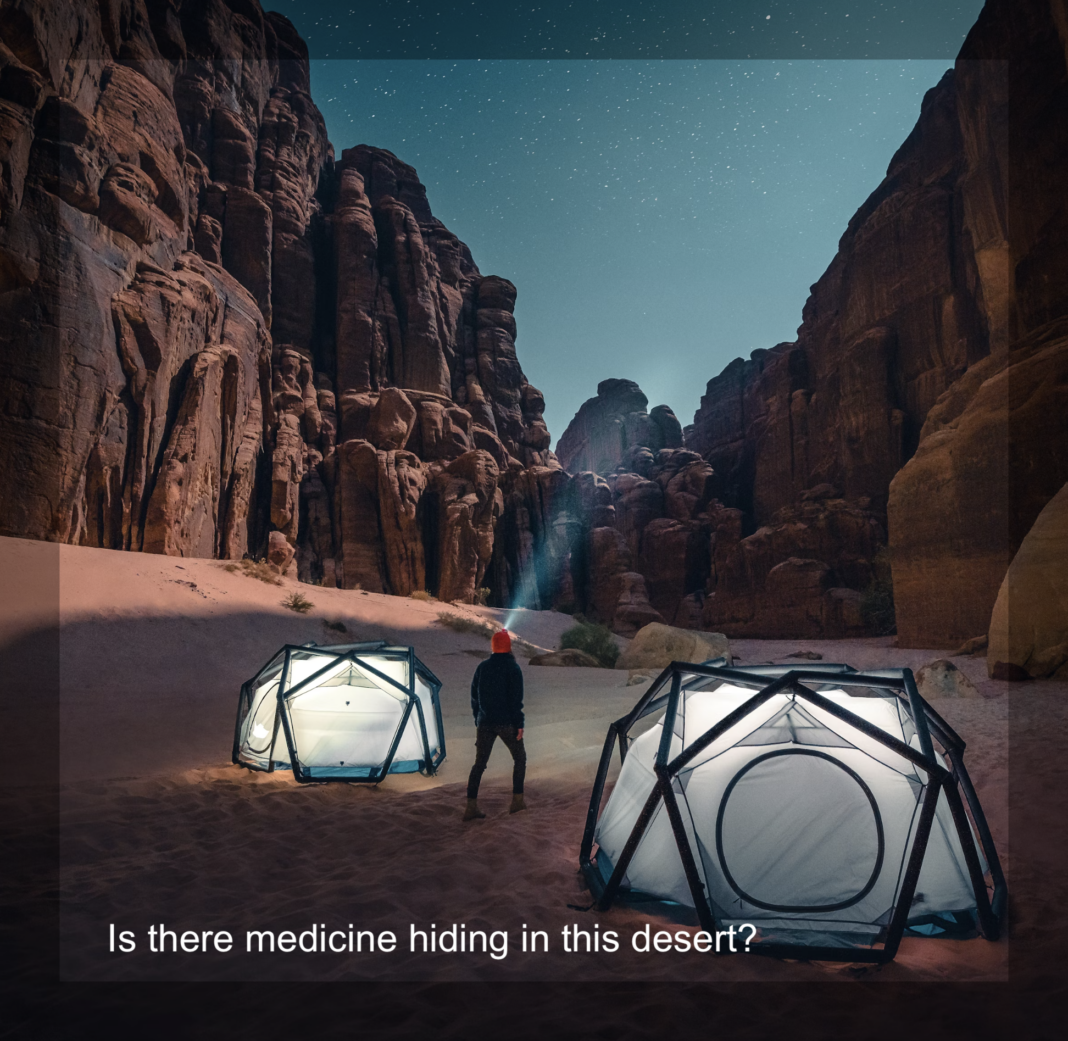
The National Center for Vegetation Cover Development and Combating Desertification (NCVC) has launched a project to catalog and analyze wild plants in Saudi Arabia with medicinal, aromatic, toxic, nutritional, and economic properties.

This initiative, in collaboration with the College of Pharmacy at King Saud University, aims to expand scientific knowledge of the Kingdom’s native plant species and provide research-based guides to support sustainable resource use and conservation. Such pharmacological data could lead to new discoveries in medicine.

The project will create detailed guides featuring scientific and geographical insights on wild plants with medicinal, aromatic, toxic, nutritional, and economic value. It will document key findings, map plant locations and characteristics, and benchmark them against the latest regional and global research. Additionally, the initiative includes the development of tailored media content and digital resources to raise awareness among all segments of society about the importance of native plants and their diverse applications.

This effort aligns with the NCVC’s mission and supports the goals of the Saudi Green Initiative and Vision 2030. It strengthens research partnerships among government agencies, academic institutions, and private sector stakeholders, fostering environmental and economic sustainability. By safeguarding the Kingdom’s plant resources, the project further underscores the NCVC’s role as a leading authority on vegetation cover and biodiversity conservation.

The NCVC remains committed to protecting and rehabilitating vegetation sites across Saudi Arabia, combating illegal logging, and managing rangelands, forests, and national parks. These efforts contribute to sustainable development and the preservation of the Kingdom’s natural heritage, in line with the objectives of the Saudi Green Initiative.

Here is a list of 10 unusual medicinal plants found in Saudi Arabia, along with their common names in Arabic and English, and their traditional uses:


Plant Name Common Name (Arabic) Common Name (English) Traditional Use
Calotropis procera العشار (Al-‘Ashar) Apple of Sodom Used for treating skin diseases and as an anti-inflammatory agent.
Ziziphus spina-christi السدر (As-Sidr) Christ’s Thorn Jujube Employed to treat various ailments, including digestive disorders and infections.
Reichardia tingitana الهندباء (Al-Hindiba) Wild Chicory Its leaves are used to treat constipation, colic, and inflamed eyes.
Ruellia tuberosa غير متوفر Minnieroot Used as a diuretic, anti-diabetic, antipyretic, analgesic, antihypertensive, and to treat gonorrhea.
Rumex crispus الحميض (Al-Humeidh) Curly Dock The root is used for treating anemia, skin conditions, respiratory issues, and enlarged lymph nodes.
Commiphora gileadensis بلسان مكة (Balsan Makkah) Balm of Gilead Renowned for its aromatic resin used in perfumes and traditional medicine for its healing properties.
Soda rosmarinus الأشنان (Al-Ushnan) Saltwort Historically used for producing potash and as a cleansing agent; also employed in traditional medicine for oral health.
Anethum graveolens الشبت (Al-Shabat) Dill Commonly used to aid digestion and soothe upset stomachs.
Mentha longifolia النعناع البري (Al-Na’na’ Al-Bari) Wild Mint Popular in teas, sauces, and desserts; also used for digestive comfort.
Peganum harmala الحرمل (Al-Harmal) Syrian Rue Traditionally used for its analgesic and anti-inflammatory properties.
Karin Kloosterman
Karin Kloostermanhttp://www.greenprophet.com
Karin Kloosterman is an award-winning journalist, innovation strategist, and founder of Green Prophet, one of the Middle East’s pioneering sustainability platforms. She has ranked in the Top 10 of Verizon innovation competitions, participated in NASA-linked challenges, and spoken worldwide on climate, food security, and future resilience. With an IoT technology patent, features in Canada’s National Post, and leadership inside teams building next-generation agricultural and planetary systems — including Mars-farming concepts — Karin operates at the intersection of storytelling, science, and systems change. She doesn’t report on the future – she helps design it. Reach out directly to [email protected]

Hot this week

How Renewable Energy is Revolutionizing the Way We Power Our World

Solar has become the star of the transition thanks to modular hardware and straightforward installation. It fits dense cities and remote towns alike. Many companies are turning to rooftop arrays and carport systems - and exploring commercial solar installation as a practical way to lock in future savings.

How does one start prepping?

Faced with an extreme winter storm this year, Americans wonder how to be prepared for catastrophe. Miriam has lived through wars in the Middle East - so she's prepared on giving you a guide to prepping.

Fishermen sue tire manufacturers on behalf of the salmon

A federal trial in San Francisco has brought US tire manufacturers, fishing groups, and environmental scientists into court over a chemical most drivers have never heard of — but which scientists say may be silently reshaping aquatic ecosystems.

Listening to Water: Tarek Atoui’s Next Work for Tate Modern

Born in Beirut, Lebanon in 1980 and now living in Paris, Atoui has spent years building instruments that don’t sit comfortably in concert halls. Many of them involve water, glass, and ceramics — materials that react to sound instead of simply producing it.

Leading Through a Dual-Energy Transition: Balancing Decarbonisation with Energy Security

Experience in one area of the energy industry isn't enough to guarantee readiness across all the others. That's where a structured program like an MBA in energy can come in. Today's advanced curricula explore energy economics, finance, policy, and strategic management alongside the technical subjects. And when pursuing an energy MBA online, professionals can skill up and retrain without having to step out of the labor market -- an important perk at a time when skilled professionals are already in short supply.

Topics

How Renewable Energy is Revolutionizing the Way We Power Our World

Solar has become the star of the transition thanks to modular hardware and straightforward installation. It fits dense cities and remote towns alike. Many companies are turning to rooftop arrays and carport systems - and exploring commercial solar installation as a practical way to lock in future savings.

How does one start prepping?

Faced with an extreme winter storm this year, Americans wonder how to be prepared for catastrophe. Miriam has lived through wars in the Middle East - so she's prepared on giving you a guide to prepping.

Fishermen sue tire manufacturers on behalf of the salmon

A federal trial in San Francisco has brought US tire manufacturers, fishing groups, and environmental scientists into court over a chemical most drivers have never heard of — but which scientists say may be silently reshaping aquatic ecosystems.

Listening to Water: Tarek Atoui’s Next Work for Tate Modern

Born in Beirut, Lebanon in 1980 and now living in Paris, Atoui has spent years building instruments that don’t sit comfortably in concert halls. Many of them involve water, glass, and ceramics — materials that react to sound instead of simply producing it.

Leading Through a Dual-Energy Transition: Balancing Decarbonisation with Energy Security

Experience in one area of the energy industry isn't enough to guarantee readiness across all the others. That's where a structured program like an MBA in energy can come in. Today's advanced curricula explore energy economics, finance, policy, and strategic management alongside the technical subjects. And when pursuing an energy MBA online, professionals can skill up and retrain without having to step out of the labor market -- an important perk at a time when skilled professionals are already in short supply.

From Green Energy to Healthy Societies: Why old systems thinking is becoming relevant again

Across the Middle East and North Africa, large investments are being made in green hydrogen, renewable energy, water infrastructure and sustainability. Most of these efforts are discussed in the context of climate change, decarbonization and economic diversification. That framing is important, but it may not capture their full value.

We saw peace – an interreligious encounter deep in our eyes

They came from Israel, Palestine, Jordan, Iraq, Yemen, Morocco, Tunisia, Lebanon, Egypt… There are Sunni Muslims, Shiite Muslims, Jews (Orthodox and Reform), Orthodox Christians, Coptic Christians, Protestant Christians, Druze, Baha'is, a Scientologist.

Can biochar reduce ‘Forever Chemicals’ in food if it’s used in farms?

Biochar is produced by heating organic material in a low-oxygen environment so it does not burn. This process, known as pyrolysis, transforms plant matter into a stable, carbon-rich material.

Related Articles

Popular Categories