
Like smells, music stimulates your mood, transporting you quickly to the past and present, elevating emotions. A new study at Tel Aviv University shows that music can very quickly help physicians detect cognitive decline in the elderly, paving the way for quick intervention to help stave off Alzheimers, maybe even the lasting effects of a TIA or a stroke. Music such as Mozart has been shown in the past to help premature babies gain weight. Music can now be used later in life to measure a brain’s health.
The application of the test uses music and a small portable EEG device that can measure brain activity using 3 electrodes and 15 minutes of measuring brain activity while asking patients to respond to cues by pressing buttons and other simple tasks. The tools require no special training for the care-giver.
The method enables routine monitoring and early detection of cognitive decline in order to provide treatment and prevent rapid, severe deterioration.
Prophylactic tests are commonly accepted for a variety of physiological problems such as diabetes, high blood pressure or breast cancer; however, to date no method has yet been developed to enable routine, accessible monitoring of the brain for cognitive issues.
Tests of this kind are particularly important in light of increasing life spans of the elderly population.
The study was by PhD student Neta Maimon from the School of Psychological Sciences and the Buchmann-Mehta School of Music, and Lior Molcho from Neurosteer Ltd, headed by Prof. Nathan Intrator from the Blavatnik School of Computer Science and the Sagol School of Neuroscience.
The article was published in the journal Frontiers in Aging Neuroscience.
As part of the study, the researchers developed a method combining a portable device for the measurement and innovative analysis of electroencephalography (EEG), developed by a company called Neurosteer, and a short musical test of about 12-15 minutes, developed by Maimon.
During the test, the subject is connected to the portable EEG device by means of an adhesive band with only three electrodes attached to the forehead. The subject performs a series of musical-brain tasks according to audible instructions given automatically through earphones.
The tasks include short melodies played by different instruments, with the subjects instructed to perform various tasks on them at varying levels of difficulty.
For example, pressing a button each time any melody is played or pressing it only when the violin plays. In addition, the test includes several minutes of musically guided meditation designed to bring the brain to a resting state, as this state is known to indicate cerebral functioning in various situations.
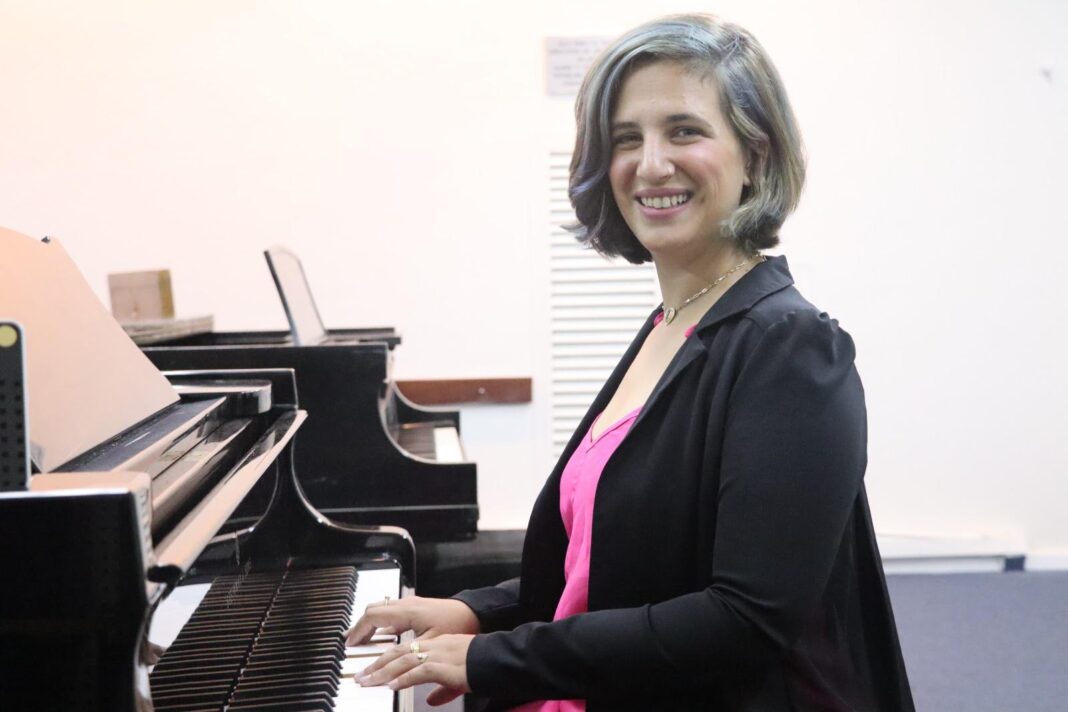
Maimon, who specializes in musical cognition, says that music has great influence on different centers in the brain. On the one hand, music is known to be a quick mood stimulant, particularly of positive emotion. On the other hand, in different situations, music can be cognitively challenging, activating the frontal parts of the brain, especially if we try to concentrate on different aspects of the music, and at the same time perform a particular task.
According to Maimon, if we combine these two capabilities, we can create cognitive tests that are quite complex, yet also pleasant and easy to perform. Furthermore, music that is positive and reasonably rhythmic will enhance concentration and performance of the task. F
or example, the famous “Mozart effect,” showing improved performance on intelligence tests after listening to Mozart’s music, actually has nothing to do with Mozart’s music, but rather the fact that music creates a positive mood and stimulates us to a state that is optimal for performing intelligence and creativity tests.
Accordingly, the researchers hypothesized that with musical tools, it would also be possible to challenge the subjects to an extent that would enable testing of the brain’s frontal activity as well as raising their spirits, thus enhancing their performance on the test while the overall experience is pleasant.
Today’s tests are frustrating and difficult to excel at for anyone who has been hospitalized for more than a few days. It’s easy to be bored and to lose track of the days, making the tests of knowing the days of the week or counting the years backwards annoying and difficult for the patient to perform. This new musical test however is pleasant and enjoyable, the researchers explain.
Maimon says: “We have actually succeeded in illustrating that music is indeed an effective tool for measuring brain activity. The brain activity and response times to tasks correlated to the subjects’ cerebral conditions (correlating to the mini-mental score assigned to them).
“More importantly, all those who underwent the experiment reported that, on the one hand, it challenged the brain, but on the other it was very pleasant to perform”.
In her experiment she tested 50 elderly people who scored 18 to 30 points (30 being the highest score) on a mini mental, indicating varying levels of cognitive achievements.
The same participants then performed the musical-cognitive tasks, administered automatically. The EEG device registered the electrical activity in the brain during the activity, with the results analyzed using machine learning technology.
Mathematical indices were identified that precisely correlated with the mini-mental test scores; “in other words, we obtained new neuro-markers (brain markers) that may stand alone as indices of the subject’s cognitive status,” says Maimon.
“Our method enables the monitoring of cognitive capability and detection of cognitive decline already in the early stages. all by simple and accessible means, with a quick and easy test that can be conducted in any clinic,” she points out.
“Our method could pave the way towards efficient cognitive monitoring of the general population, and thus detect cognitive decline in its early stages, when treatment and prevention of severe decline are possible. It is therefore expected to improve the quality of life of millions around the world.”