What will you eat on Mars?

600_456642919

Israel agtech company flux aims to feed hungry astronauts with novel “plant language translation” technology

Internet entrepreneur and Silicon Valley icon Elon Musk has declared he is sending humans to Mars. But who will feed them? Leading Israeli agritech companies, along with hackers, foodies, past members from the Israel Space Agency and international guests from Holland are devising the way. They are calling themselves Mars Farmers, and will meet for the first time in Jaffa, Wednesday December 14 to lay the groundwork for creating farms and food for hungry astronauts and Martians. Join them here.

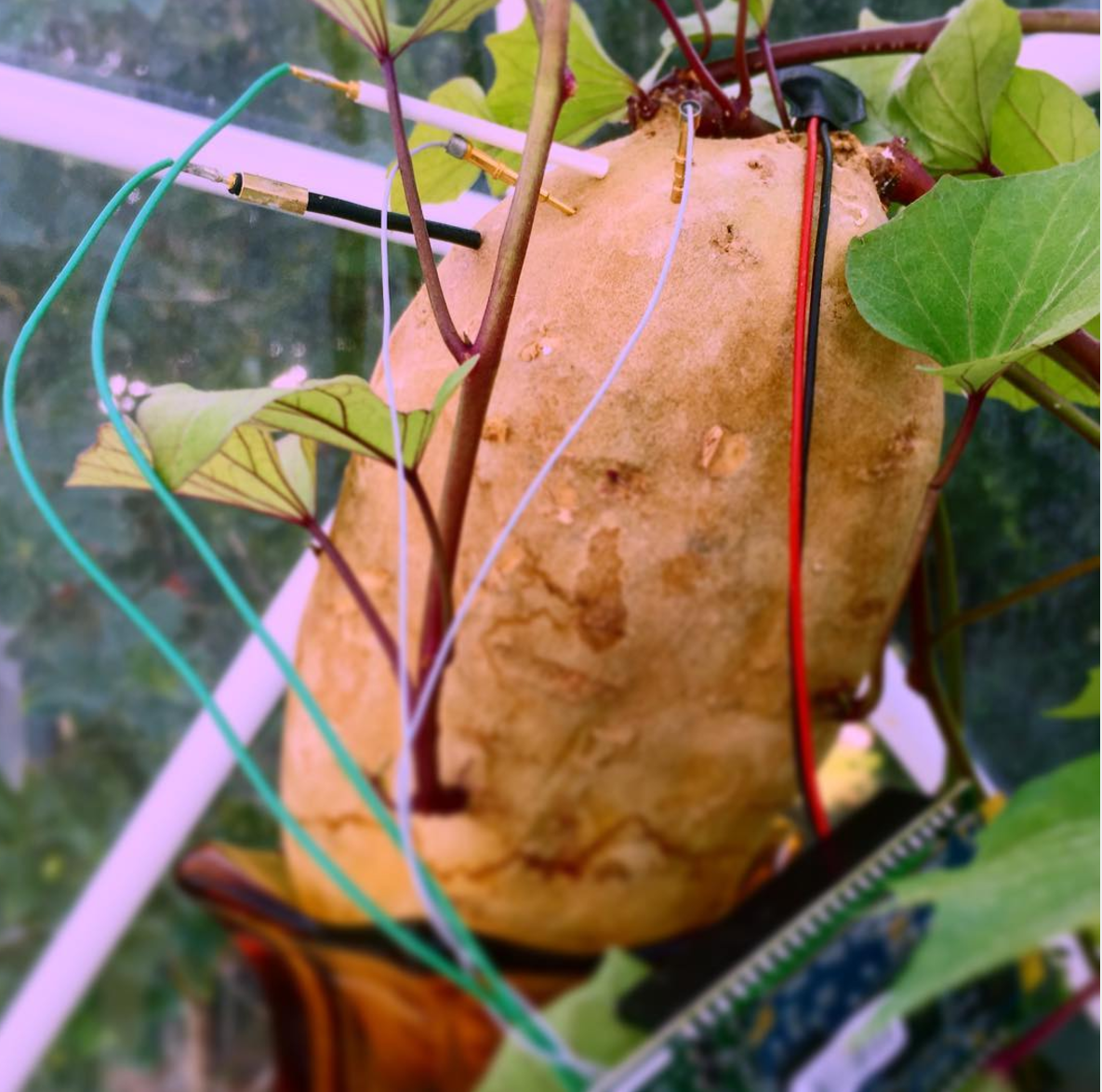
The group is led by the Israeli-American agriculture startup flux (www.fluxiot.com), which has created a device called Eddy that listens to the language of plants, allowing people to grow hyper-personalized and sustainable food; and Holland’s Border Labs, a futuristic think-tank working with the European Space Agency on devising ultra-efficient ways to grow food on earth and in the toughest conditions in Space.

All the talk of missions to Mars are enrapturing the brightest minds in tech,” says Blake Burris, the CEO of flux. “It’s time for us humans to get out of our circular way of thinking. To make radical, disruptive change to our broken food system, we’ve made a beeline for Space.

“Going in that trajectory challenges to innovate in the toughest conditions in the Universe, and the fruits of such thinking leads to novel approaches we can apply to live in symbiosis with plants and our food on Earth.

“We are taking the lead in this space will empower the first farmers on Mars,” says Burris.
screen-shot-2016-12-07-at-12-48-52-pm

The meeting scheduled in Jaffa (http://fluxiot.com/marse.io/) will include workshops to create an open-source standards for collecting earth data, as well as building blueprints for vertical farms that could work in Tel Aviv, Chicago, Toronto –– and on Mars. The intent is to use the forum to begin new initiatives in food and sustainable cities that will be suitable for Mars but also be directly applicable to life on the Blue Planet.

Karin Kloosterman, originally from Canada, founded flux with an Israeli R&D team to take the best of Israel’s military smarts to create benevolent technologies that can feed humans more sustainably. She is also the founder of Green Prophet. The company’s first product is focused on hydroponics, or growing food on treated water, with no dirt.

“Hydroponics is the most progressive way to grow food and medicine, and it will be the only way to feed people on Mars,” says Kloosterman, who explains that while it’s still just catching on in Israel, it’s widely accepted in countries like Canada and the US: “Innovation that’s created in this space has radical implications for business too: in cultivating raw materials for pharmaceuticals, personalized food, and of course, food that’s rich in variety and full of flavor.
geektime-flux-eddy
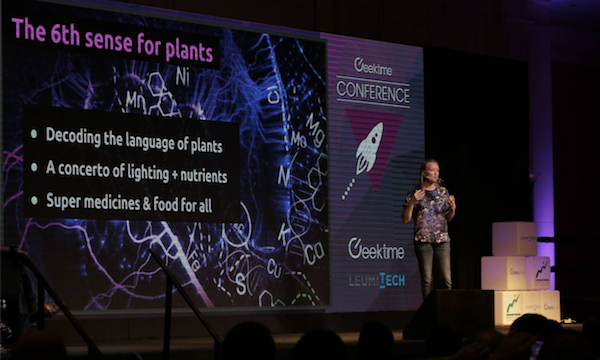
Karin Kloosterman presents Eddy at Geektime’s annual conference. flux was chosen to be one of Israel’s top 10 startups in 2016.

“To consumers, think about how fun it could be to grow food you love, but with specific flavors and characteristics such as strawberries with flavors from our grandparent’s time, but with 100X the antioxidants of what you can find on the market. We are not talking about GMOs, but rather using environmental sensing and finely-tuned orchestrations of lighting and nutrients, to help a strawberry or any plant, grow in a way that is suitable to you.”

High-profile guests from Israel’s food industry will be there, as well as top thinkers in areas of Blockchain and cloud computing.  

mars-farm-o

Bhok Thompson
Bhok Thompsonhttp://www.greenprophet.com
Bhok Thompson is an “eco-tinkerer” who thrives at the intersection of sustainability, business, and cutting-edge technology. With a background in mechanical engineering and a deep fascination with renewable energy, Bhok has dedicated his career to developing innovative solutions that bridge environmental consciousness with profitability. A frequent contributor to Green Prophet, Bhok writes about futuristic green tech, urban sustainability, and the latest trends in eco-friendly startups. His passion for engineering meets his love for business as he mentors young entrepreneurs looking to create scalable, impact-driven companies. Beyond his work, Bhok is an avid collector of vintage mechanical watches, believing they represent an era of precision and craftsmanship that modern technology often overlooks. Reach out: [email protected]

Read More

TRENDING

Code Red from the Galapagos: human drugs and sunscreen are polluting the sea

Millions of visitors swim in the pristine waters of the Galápagos each year, but new research suggests sunscreen chemicals and other human-made pollutants are reaching even the islands' most protected marine habitats. Scientists are calling for urgent monitoring to safeguard one of Earth's most iconic ecosystems.

AI will crack the codes from the Dead Sea Scrolls

Artificial intelligence is opening a new chapter in Dead Sea Scrolls research. By combining machine learning with chemical analysis, scientists hope to uncover where the ancient manuscripts were produced, identify connections between scribes, and reveal hidden patterns across more than 25,000 fragments that have remained unsolved for decades.

90% of Americans worry about microplastics

Microplastics are showing up everywhere—from dollar store toys and synthetic clothing to bottled water, toothbrushes and even human sperm. A new Ocean Conservancy survey finds that nearly 9 in 10 Americans are concerned about the health impacts of microplastics, while support is growing for tougher regulations. As scientists uncover plastic particles in the heart, placenta and reproductive organs, the question is no longer whether microplastics are affecting our lives, but how much damage they are already doing.

Understanding Food Production: Karl Studer on the Urban-Rural Knowledge Gap

Karl Studer occupies an unusual position in American business. As President of Quanta Services, he oversees electrical infrastructure operations across the United States, Canada, and Australia, managing thousands of employees and multibillion-dollar projects.

Tigris River oil spill highlights Iraq’s environmental oversight and our addiction to oil

A fresh oil spill in the Tigris River, filmed by an Iraqi university student, has reignited concern over Iraq's polluted waterways. From ancient Mesopotamia to modern Basra, the country's dependence on oil has come at a steep environmental and human cost, with activists warning that unchecked contamination is putting ecosystems and public health at risk.

Yerukim Forms a New Green Economy Where the Money is Really Green

The Yerukim members who pick up the recyclables get to keep the monetary reward, the public earns "green" bills that can be used in shops, and business owners get to be associated with environmentalism.

Choosing Riyadh over Dubai? What Investors Should Know

Saudi Arabia is deploying capital at unmatched scale to catalyze tourism and advanced industry while rewiring its power-and-water backbone. The investable frontier is widening—especially in renewables, grid storage, water efficiency/desal retrofits, and hospitality operating platforms. Prudent investors will insist on phased delivery, enforceable KPIs (energy, water, biodiversity), and RHQ/zone compliance—while pricing political-economy and reputational risks alongside growth upside.

Sell your cooking oil for biodiesel money

Want to make money on old french fry oil? Sell it.

Qatar Alternative Energy Summit Pairs Investors And Innovators

Alternative energy investors and innovators can meet n' greet in Doha, Qatar March 16 and 17.

Here’s How To Implement The Four Pillars Of Employee Engagement

If you throw a party for your work team and they are vegans, don't make it a barbecue. Know the sustainability values of your team to boost moral and retain good people.

Locals From Rishon Fight IKEA

Big Box stores are a pretty new concept in Israel, and thank God that not every Israeli city wants them in their backyard. A word from someone who has see the beautiful farmland around her hometown Newmarket, Ontario stripped and converted into vulgar strip malls of big box shops: they have no place in a healthy and sustainable town or city.

The Jewish National Fund Meets An Inconvenient Truth

According to the JNF, it has transformed thousands of acres of barren land into green forests in Israel. They state that each person emits about 23 tons of carbon per year, estimating that each tree planted can absorb one ton of carbon in its lifetime. That's a whole lot of trees you'd need to be planting. Could so many fit in Israel?

How to quiet noise from construction in your office

Streets need to be resurfaced in New York but the humming and grinding noise is unsettling. Noise is environmental pollution. 

Popular Categories