
 Collateral Repair Project (CRP) is a scrappy nonprofit in Amman, Jordan that brings critical help to people commonly referred to as “collateral damage” – urban refugees, victims of war and conflict, and those on the lowest rung of the local economic ladder. Read on to learn how a group of Amman’s most marginalized women are giving back to an issue affecting women around the world.
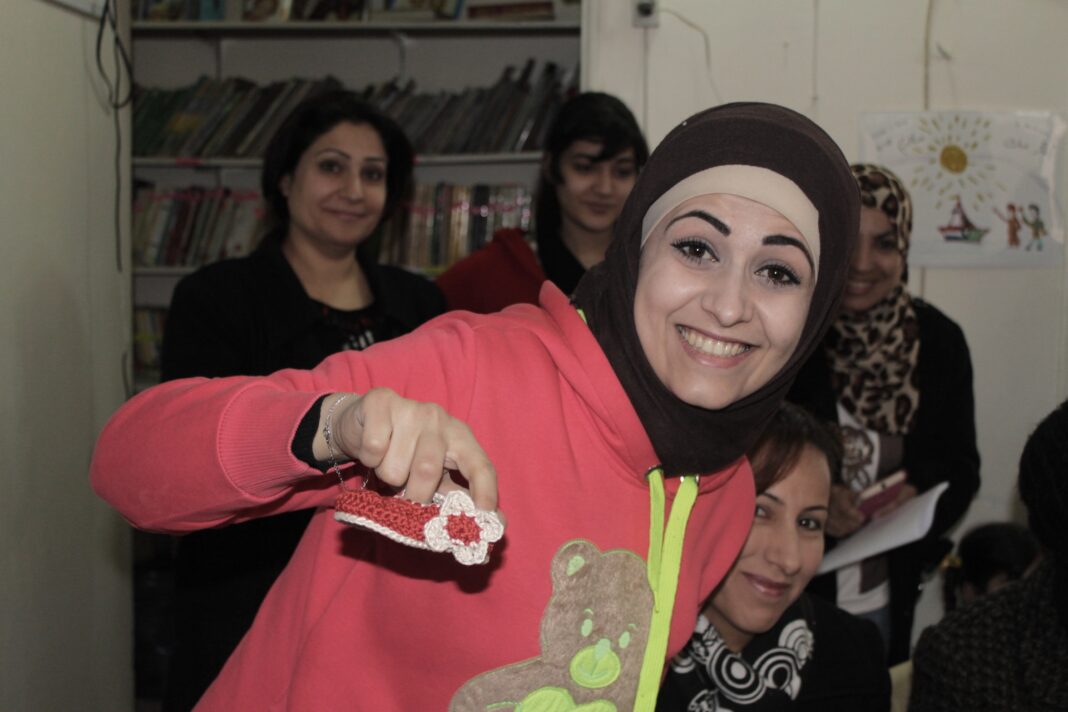
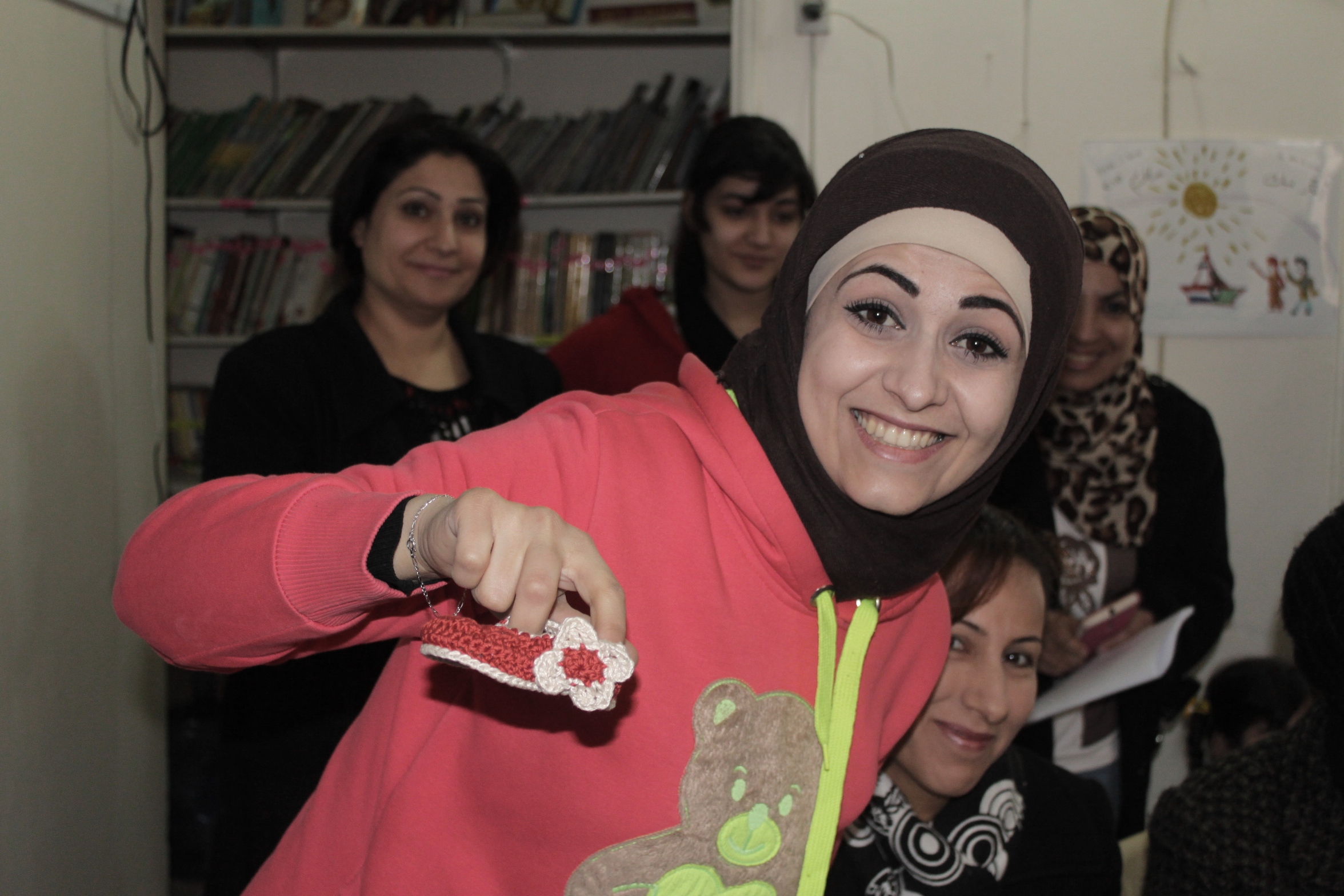
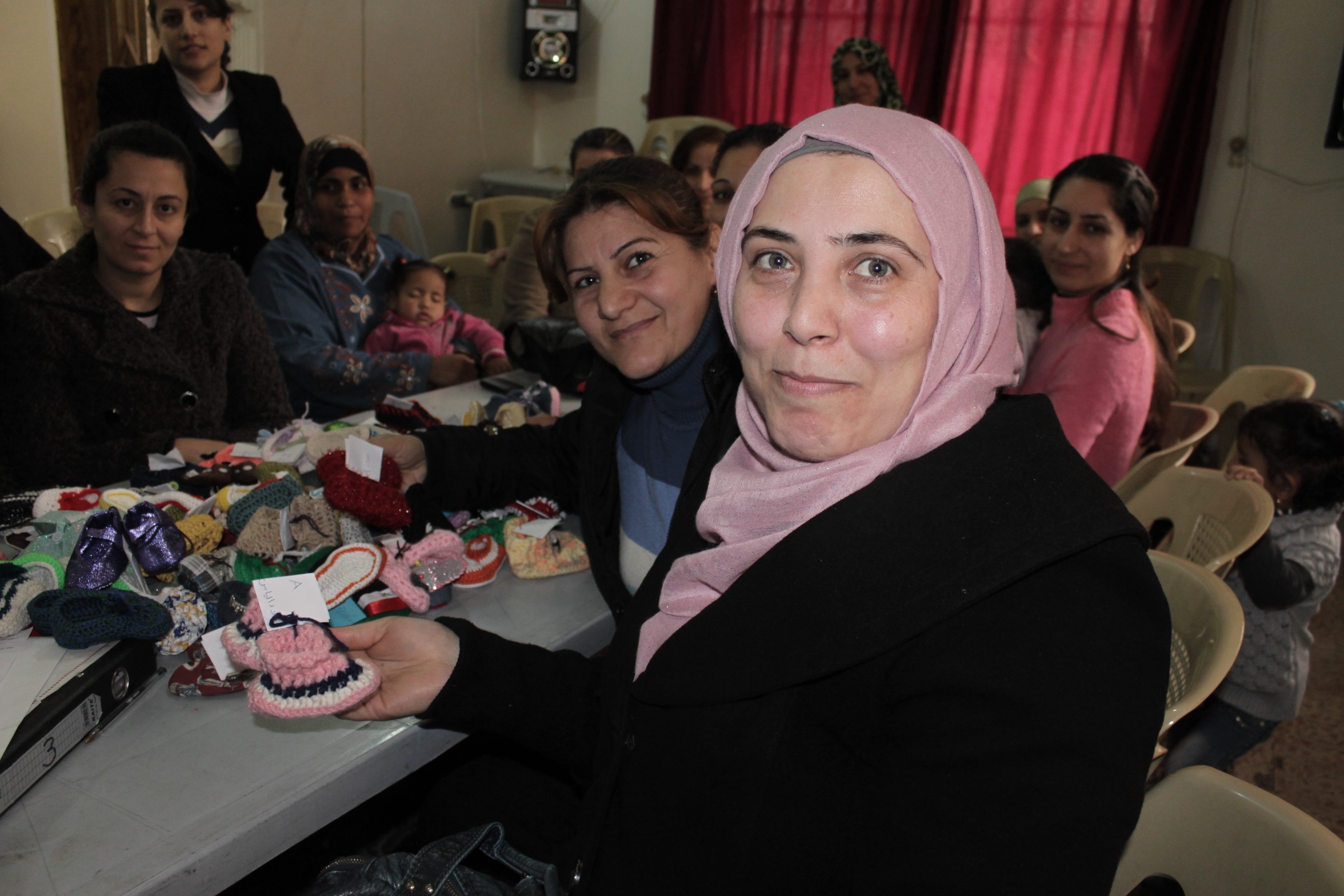 Along with the amazing Shaza (that’s her mugging it up in the lead image), I help run CRP’s Hope Workshop, a craft cooperative composed of about two dozen women who meet weekly to learn new skills using mostly donated materials. It’s a raucous few hours swapping stories that thread through women’s groups everywhere.
We talk about our kids, joke about our weight, complain when we drop a stitch, and help each other master new techniques. They test me with their English, I try my faulty Arabic. The Iraqis say I sound Syrian, and the Syrians say I sound Egyptian. Shaza’s translating makes it all work.
 The group has a more serious mission. It serves as safe haven to relax and create. We are always on the lookout for new projects to work on (often using recycled, re-purposed and donated materials) which we can sell to buy supplies for more challenging projects. This is where an astonishing opportunity from Texas comes in.

Enter Beverly Hill, founder and president of Gendap, the Dallas-based Gendercide Awareness Project, which focuses on what she calls the global epidemic of female murder. Says Hill, “Gendercide proceeds from the belief that female life is disposable. Gendercide devastates the hopes of women everywhere. It is unworthy of us as human beings. It is time to end this silent slaughter.”
 The United Nations Population Fund, which tracks this problem, has estimated that 117 million women are “missing” in the world due to due to sex-selective abortion, female infanticide, female child neglect, unnecessary maternal death, and (for older women and widows) unequal access to food and shelter.
Gendap is raising awareness to the issue through a variety of activities, including an ambitious art installation to show the sheer scale of gendercide.
The installation features a long corridor lined with 11,700 pairs of baby booties, each pair representing 10,000 missing women. When it opens in 2015, the show will urge support for education, paid labor and women’s health care to bring about change.
Hill discovered CRP’s Hope Workshop on the Dining for Women website. She told me, “It’s hard to find women’s sewing and knitting coops in developing countries, as they often don’t come up in web searches. I found that foundations such as Dining for Women or the larger Global Fund for Women have sometimes given grants to such groups, so I scan their sites looking for coops in particular countries or regions that are not yet represented in our art exhibit. I found a number of coops this way.”
The video below offers a fly-through simulation of the ambitious exhibit.
[youtube]http://youtu.be/w4s7nrX8ISI[/youtube]
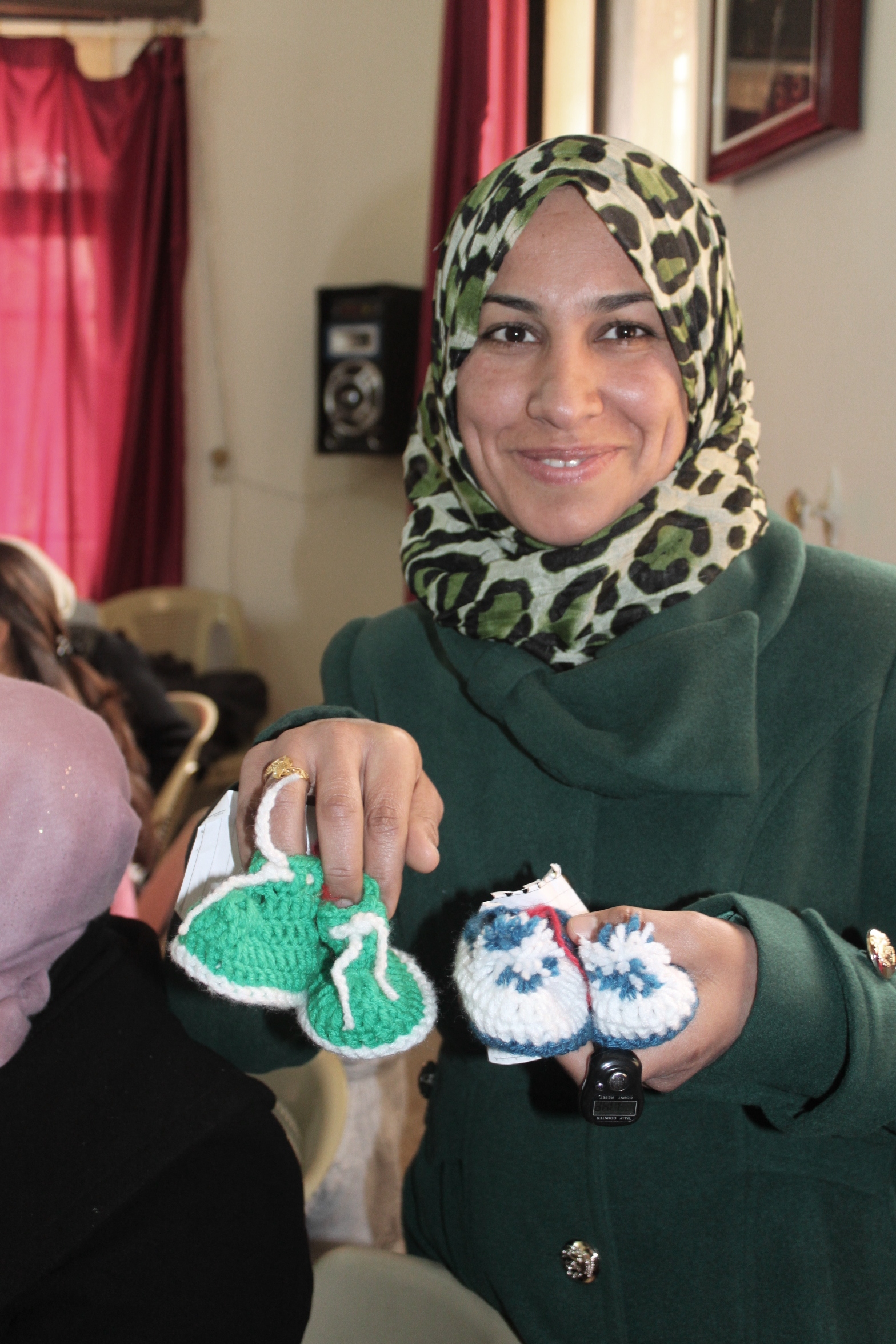
She emailed CRP director Amanda Lane to introduce the project (Gendap pays $3USD per pair to cover material costs and shipping to Texas) and invite Hope Workshop to make 200 pairs of booties. The women tucked in. Some shoes were delicately hand sewn, others knit from traditional yarn, and more crocheted from shredded plastic bags. Upcycled plastic food packaging was cut into soles. About 25 per cent of the booties are red, black, green and white – the shared colors of the Iraqi, Syrian and Jordanian national flags.
The women of Hope Workshop bear deep wounds of war, displacement, and immeasurable personal loss. They could easily retreat into a belief that the world has forgotten them. Instead, they chose to give freely to a project that insists women not be forgotten.
Founded in 2006 with a mission to support Iraqi refugees entering Jordan, CRP now runs an emergency help program that provides food and household items to the most destitute refugees from Iraq, Syria, as well as Jordanian poor – all of whom lack other assistance. CRP’s Community and Family Resource Center offers many activities and learning opportunities that allow refugees to begin to rebuild a sense of community in the Hashemi al Shamali neighborhood they now call home. Support CRP via their website (link here).
The Gendercide Awareness Project presents basic facts about gendercide, its consequences for society, and practical measures to end it. Support them via their website (link here).
Or chose to get involved with Dining for Women (link here), a giving circle headquartered in Greenville, South Carolina which raises monthly for international charities that support women and girls facing extreme challenges in developing countries.
Each will turn a small private donation into powerful positive change.