
Robert Upton’s Philosophy of Planning and the Middle East

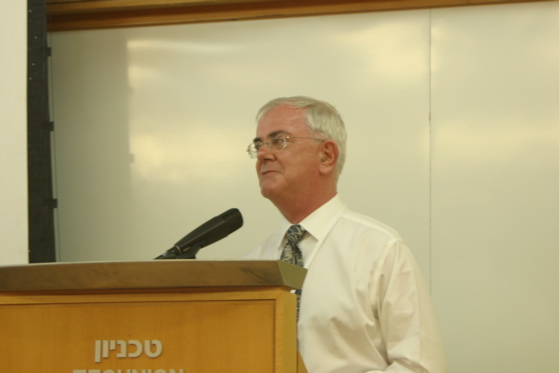
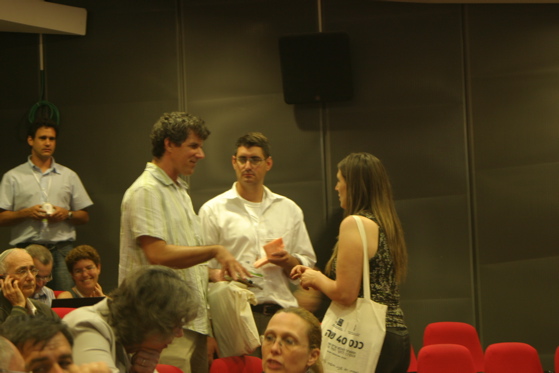
robert-upton-haifa“How Do We Want to Live?” asks England’s Former Secretary-General of the Royal Town Planning Institute Robert Upton at an urban planning conference in Israel.

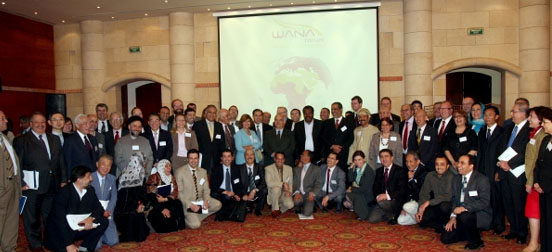
Whereas Colombian planner Oscar Diaz (who we interviewed here) was practical and sited specific planning examples at the anniversary conference at the Technion-Israel’s Institute of Technology,  England’s planner Mr. Robert Upton’s speech was more philosophical.  This seasoned response from the fourth Royal Town Planning Institute Secretary-General (and the only one to make it out alive, Upton jokes), asked of Israel’s planning audience to think reflectively about the challenges of their profession.

He began by recalling the history of England’s Royal Town Planning Institute,  a relatively brief history that began in 1914.  But he said that early on the profession became “cluttered” with “no shortage of bodies who claim to be specialists.”  And the public was skeptical.

In a personal interview with Green Prophet he was careful to clarify that in the context of WWII, there was a tremendous need for England to rebuild itself and planners such as Thomas Sharp took on the challenge.  Sharp later became “disillusioned” according to Upton, as the public became increasingly dissatisfied.

robert-upton-introduction

The profession also suffers from a sort of existential dilemma.  It is never clear whether planners are designers or technical, whether the field falls under the parlay of social science, or if it is a hybrid.

Israelis such as architect Amos Brandeis and government planner Shamay Asif, who provided commentary after Upton’s presentation, also identified with this dilemma.

Another shared conflict in England and Israel is that between architects and planners.  What role should design play in the planning process?

Architects believe that they should play an important role in the planning process, but planners think they are redundant. Upton says that it is important that planners “dont’ take the design out of the plan – design creates understanding.”

However, he also quoted English author Samuel Johnson, who said approximately that it isn’t necessary to know how to make a good chair in order to be able to recognize one.  The fire rages on.

Upton summarized his discussion with the question “how do we want to live?”  This is the question that all planning institutes should answer, for which Upton agreed with me that there is no blanket answer.  The answer depends on the following variables: “what are our options? Our values?  What are the facts?  What are the rules? The power of relations?  Who benefits, and who is not represented?”  The answers will be different in every community.
daniel-orenstein-haifa

Alexandra Frackelton from The Arava Institute raised the question of public participation.  It was agreed that public participation in Israel is neglected, and that the process of encouraging it needs to be streamlined.

As a legal problem, it is currently being addressed.  Meanwhile, going forward, Upton believes it is important to find a “shared ethic.”

While Mr. Upton’s presentation raised more questions than provided answers, John Simone believed that framing the right questions is the key to wisdom.  Israeli planners are faced with a rapidly growing population, diminishing natural resources, and imminent climate change:  their greatest challenge will be to find questions that will produce the best solutions for the greatest number of people.

More on Planning from The Middle East:

Jordanian Sustainable Building Conference
Ecoweek
Rawabi, the First Planned Palestinian City
Tafline Laylin
Tafline Laylinhttp://www.greenprophet.com
As a tour leader who led “eco-friendly” camping trips throughout North America, Tafline soon realized that she was instead leaving behind a trail of gas fumes, plastic bottles and Pringles. In fact, wherever she traveled – whether it was Viet Nam or South Africa or England – it became clear how inefficiently the mandate to re-think our consumer culture is reaching the general public. Born in Iran, raised in South Africa and the United States, she currently splits her time between Africa and the Middle East. Tafline can be reached at tafline (at) greenprophet (dot) com.
1 COMMENT
  1. I agree totally with most of the points raised by mr Upton. I would love to attend such conference in future. I am a final year student from africa studying town and country planning

Comments are closed.

TRENDING

Eco organization offices destroyed by Iran missile

Tel Aviv's eco organization, the Heschel Center, was impacted by an Iranian missile.

What are AWG air-water generators, and why they aren’t a golden-bullet solution (yet)

Atmospheric water generators (AWGs) sound like magic: machines that can pull drinking water out of air. The idea is mentioned in the Bible, where the elders would pray for water collected as dew on plants and the catch on turning this into a machine is in the physics. To turn invisible vapor into liquid, you must remove heat, especially the latent heat of condensation.

Jordan’s $6 Billion Aqaba–Amman Desalination Project from the Red Sea Moves Forward

In 2025, the Jordanian government signed agreements with a consortium led by Meridiam and SUEZ, alongside VINCI Construction and Orascom Construction. Under a 30-year concession agreement, the consortium will design, build, finance, operate, and maintain the system before transferring it back to the Jordanian government. The total investment is estimated at approximately $6 billion USD.

The Saudi Startup Turning Desalination’s Toxic Waste Into Its Own Disinfectant

For millennia, the Middle East's water crisis seemed an immutable fact of geography — a region defined as much by what it lacked as by what lay beneath its sands. Today, a convergence of plummeting solar costs, advancing membrane technology, and hard-won engineering expertise is rewriting that story.

Earth building with Dead Sea salt bricks

Researchers develop a brick made largely from recycled Dead Sea salt—offering a potential alternative to carbon-intensive cement.

Should You Invest in the Private Market?

startustartup Unlike public stock exchanges, which offer daily trading, strict...

How to build a 100-year-company

Kongō Gumi is a Japanese construction company, purportedly founded in 578 A.D., making it the world's oldest documented company. What can we learn about building sustainable businesses from them?

From Pilot Plant to Global Stage: How Aduro Clean Technologies’ 2026 Expansion Signals a Turning Point for Chemical Recycling Investors Like Yazan Al Homsi

The company's Next Generation Process (NGP) Pilot Plant in London, Ontario, has officially moved into initial operating campaigns, generating the kind of structured, repeatable data that separates laboratory promise from commercial viability.

How AI Helps SaaS Companies Reduce Repetitive Customer Support Work

SaaS products are designed for large numbers of users with different levels of experience, and also in renewable energy.

Pulling Water from the Air

Faced with water shortage in Amman, Laurie digs up...

Turning Your Energy Consultancy into an LLC: 4 Legal Steps for Founders in Texas

If you are starting a renewable energy business in Texas, learn how to start an LLC by the books.

Tracking the Impacts of a Hydroelectric Dam Along the Tigris River

For the next two months, I'll be taking a break from my usual Green Prophet posts to report on a transnational environmental issue: the Ilısu Dam currently under construction in Turkey, and the ways it will transform life along the Tigris River.

6 Payment Processors With the Fastest Onboarding for SMBs

Get your SMB up and running fast with these 6 payment processors. Compare the quickest onboarding options to start accepting customer payments without delay.

Related Articles

Popular Categories