

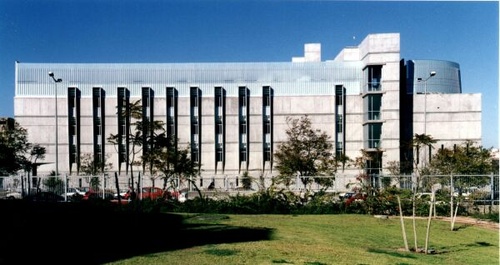
Ben Gurion University to Host International Desertification Conference

ben gurion university desertification conference image

Convening at the Ben Gurion University’s Sede Boqer campus on December 14-17, over 350 people from 40 countries are expected to meet and map out ways to combat desertification around the world. The four-day gathering is the largest international conference ever held in Israel focused on an environmental topic, and probably the largest international academic forum ever on desertification. Delegates will be coming from as close as Jordan, and as far away as China, North Africa, India and Pakistan.

Amid warnings by the United Nations of a looming desertification crisis in both the developed and underdeveloped world, the Jacob Blaustein Institutes for Desert Research (BIDR) at Ben-Gurion University of the Negev will be hosting a major conference aimed at examining new ideas to combat the phenomenon.

Beyond the academic and practical aspects of the conference, the forum will also serve as a meeting place for scientists, farmers and bureaucrats from across the globe to share their experiences and exchange ideas.

Participants and journalists will also be able to attend field trips for a close-up look at Israel’s work in the field. These include examining eco-tourism in deserts, social challenges, afforestation, solar energy, conservation, desert agriculture, desalination and more.

“The Blaustein Institutes are the only academic institution in the world trying to look at desertification from an inter-disciplinary approach,” says Prof. Avigad Vonshak, director of BIDR.

According to conference organizer Prof. Alon Tal, also from the BIDR, a UN study has found that one-third of the Earth’s population – about two billion people – are potential victims of desertification’s creeping effect. From sub-Sahara Africa to the former Soviet republics in central Asia, human abuse and malpractice of the land are making the matter worse. “But Israel’s success in changing large sections of the Negev into fecund agricultural lands and forested parks makes its record somewhat unique in a world where most of the desertification trends are negative,” he explains.

Tal anticipates that the conference this year will be twice the size as the first one held in 2006. Enjoying dozens of sponsors, including UNESCO and Israel’s Foreign Ministry – some 100 African experts, practitioners and officials will be participating as part of the MASHAV program, learning from Israel’s experience in the field.

2 COMMENTS
  1. When studying desertification, do not skip one of its main causes: aquatic weeds. Water hyacinth, water lettuce, Typha and others clog the waters of Africa and elsewhere, sucking them dry. The Typha Australis infestation in Lake Chad and its tributaries is the dessication machine expanding the Sahel. All of these aquatic weeds need clearing, but clearing them is a never ending task. Without a profit, it will bankrupt anyone. Typha can be harvested at a profit in food and fuel and fiber. It is an extremely productive crop, but not just any can be eaten- aquatic weeds like pollutants and collect them. It is excellent feedstock for ethanol and can be made into “green charcoal” for traditional African use. The frontline against the desert is in the wetlands, turning swamps back into rivers and lakes.

Comments are closed.

Hot this week

The Christ’s thorn (sidr tree) is also a well-known folk medicine

Christ’s thorn jujube (Ziziphus spina-christi) also known as the sidr tree is a real, identifiable tree native to the Middle East, and it appears—directly or indirectly—in Islam, Judaism, and later Christian tradition. The connections between the three faiths are not theological agreements but overlapping uses, names, and symbolic associations rooted in the same landscape.

Farm To Table Israel Connects People To The Land

Farm To Table Israel is transforming the traditional dining experience into a hands-on journey.

The Lote Tree of the Utmost Boundary, explained

In Islamic tradition, there is a point where creation ends — a boundary that marks the limit of what any created being can reach. That boundary is called Sidrat al-Muntahā, often translated as “the Lote Tree of the Utmost Boundary.”

The Air Tea Kettle creates a new way to meet plants and herbalism

Air Tea is a new technology. Instead of drinking tea, you inhale herbal vapor through warm air extraction. There is no water and no combustion. The warm air releases essential oils that are often lost in hot water and digestion.

Why Health Systems Are Reaching a Turning Point

Health emerges from a continuous energy and material flow from water through food to human physiology. Technical energy systems support this cycle through water treatment, agriculture, and infrastructure.

Topics

The Christ’s thorn (sidr tree) is also a well-known folk medicine

Christ’s thorn jujube (Ziziphus spina-christi) also known as the sidr tree is a real, identifiable tree native to the Middle East, and it appears—directly or indirectly—in Islam, Judaism, and later Christian tradition. The connections between the three faiths are not theological agreements but overlapping uses, names, and symbolic associations rooted in the same landscape.

Farm To Table Israel Connects People To The Land

Farm To Table Israel is transforming the traditional dining experience into a hands-on journey.

The Lote Tree of the Utmost Boundary, explained

In Islamic tradition, there is a point where creation ends — a boundary that marks the limit of what any created being can reach. That boundary is called Sidrat al-Muntahā, often translated as “the Lote Tree of the Utmost Boundary.”

The Air Tea Kettle creates a new way to meet plants and herbalism

Air Tea is a new technology. Instead of drinking tea, you inhale herbal vapor through warm air extraction. There is no water and no combustion. The warm air releases essential oils that are often lost in hot water and digestion.

Why Health Systems Are Reaching a Turning Point

Health emerges from a continuous energy and material flow from water through food to human physiology. Technical energy systems support this cycle through water treatment, agriculture, and infrastructure.

Sustainability That Sells: How Profit and Purpose Come Together in the Hive

Whether you are a commercial grower, hobbyist beekeeper or retail equipment supplier, this system opens a new income stream with minimal environmental impact.

The Fitness App Revolution: Building the Future of Wellness Through Strategic Development

In an era where smartphones are ubiquitous and health consciousness is at an all-time high, the fitness industry has undergone a radical digital transformation. Fitness applications have moved far beyond simple pedometers, evolving into comprehensive wellness platforms that serve as personal trainers, nutritionists, and community hubs right in our pockets.

A Brief History of Basil From India to Italy

Beloved, fortunate, sweet, and royal; an herb with a long and storied history in Asia and across the world. Called by many names, basil has featured in previous Green Prophet articles, so enjoy another serving, a brief history of basil.

Related Articles

Popular Categories