With larger, land-bound animals human encroachment and Middle East warns make it more troubling for the survival of migratory animals on land, air and at sea. A new United Nations report released this week warns that the situation is getting worse, not better.
Piñatex was among the earliest widely publicized plant-based leather alternatives and played a significant role in raising awareness of agricultural waste valorization within fashion supply chains.
With larger, land-bound animals human encroachment and Middle East warns make it more troubling for the survival of migratory animals on land, air and at sea. A new United Nations report released this week warns that the situation is getting worse, not better.
Piñatex was among the earliest widely publicized plant-based leather alternatives and played a significant role in raising awareness of agricultural waste valorization within fashion supply chains.
With larger, land-bound animals human encroachment and Middle East warns make it more troubling for the survival of migratory animals on land, air and at sea. A new United Nations report released this week warns that the situation is getting worse, not better.
Piñatex was among the earliest widely publicized plant-based leather alternatives and played a significant role in raising awareness of agricultural waste valorization within fashion supply chains.
With larger, land-bound animals human encroachment and Middle East warns make it more troubling for the survival of migratory animals on land, air and at sea. A new United Nations report released this week warns that the situation is getting worse, not better.
Piñatex was among the earliest widely publicized plant-based leather alternatives and played a significant role in raising awareness of agricultural waste valorization within fashion supply chains.
With larger, land-bound animals human encroachment and Middle East warns make it more troubling for the survival of migratory animals on land, air and at sea. A new United Nations report released this week warns that the situation is getting worse, not better.
Piñatex was among the earliest widely publicized plant-based leather alternatives and played a significant role in raising awareness of agricultural waste valorization within fashion supply chains.
With larger, land-bound animals human encroachment and Middle East warns make it more troubling for the survival of migratory animals on land, air and at sea. A new United Nations report released this week warns that the situation is getting worse, not better.
Piñatex was among the earliest widely publicized plant-based leather alternatives and played a significant role in raising awareness of agricultural waste valorization within fashion supply chains.
With larger, land-bound animals human encroachment and Middle East warns make it more troubling for the survival of migratory animals on land, air and at sea. A new United Nations report released this week warns that the situation is getting worse, not better.
Piñatex was among the earliest widely publicized plant-based leather alternatives and played a significant role in raising awareness of agricultural waste valorization within fashion supply chains.
With larger, land-bound animals human encroachment and Middle East warns make it more troubling for the survival of migratory animals on land, air and at sea. A new United Nations report released this week warns that the situation is getting worse, not better.
Piñatex was among the earliest widely publicized plant-based leather alternatives and played a significant role in raising awareness of agricultural waste valorization within fashion supply chains.
It was neat to see the billboards are off of Ilan Pivko’s tower, in Tel Aviv today. The Ayalon Highway is pretty much free from all of the billboard clutter. In light of Ilana’s post yesterday, we thought we’d post this little ditty that we wrote for Heeb Magazine this summer, before they canned their Israel issue (or maybe they were just being polite).
It’s about billboards, it’s about Israel, and it’s about advertising junk seeping into your subconscious.
Look at My work, how beautiful and perfect is everything that I created. I created it for you. Be careful not to ruin and destroy My world. If you ruin it, there is nobody to restore it after you…” (Ecclesiastes Rabba 7:28)
Those timely words written back somewhere between the sixth and eighth centuries pretty much sums up the basic party line for ecologists everywhere.
One of my more vivid childhood memories is of the drive across the George Washington Bridge from New York to New Jersey, and zoning out to stare at what seemed like an endless procession of towering billboards displaying images of shiny cars, shiny models, and shiny promises of success.
Seriously, is there a kid in America who can’t name at least three cigarette brands offhand by the age of 6? We’re not so much aware of the ads as much as they sink in insidiously, becoming an integral part of our landscape.
This insidious manipulation was recently called into question in Israel’s High Court of Justice, by none other than the State Prosecutor’s Office. Green Action (Peula Yeruka) had brought charges against Nur Advertising for posting billboards on the Ayalon Highway. The charges? That the billboards flouted the Road Affixing of Signs Law, damaging the landscape and posing a threat to security.
The Porter School of Environmental Studies at Tel Aviv University is looking for a few good green men and women. Think you have what it takes to become a fellow? The school is seeking fellowship candidates for a potential faculty position.
The fine folks at Porter have sent us a note that they are advertising spaces to fill for up to three temporary positions. After one or two years, the position may lead to a tenure track position at TAU. Jump over to the next page if you have a PhD and need more deets. Otherwise, back to our regularly scheduled programming.
Environmental Energy Resources, Ltd. (EER) is using Israeli-developed technology to set up Romania’s first plasma waste treatment facility. The system was developed by scientists at the Technion Israel Institute of Technology, and the claim is that it can handle radioactive and medical waste as well as the more conventional kinds. Cost of the project: $30 million.
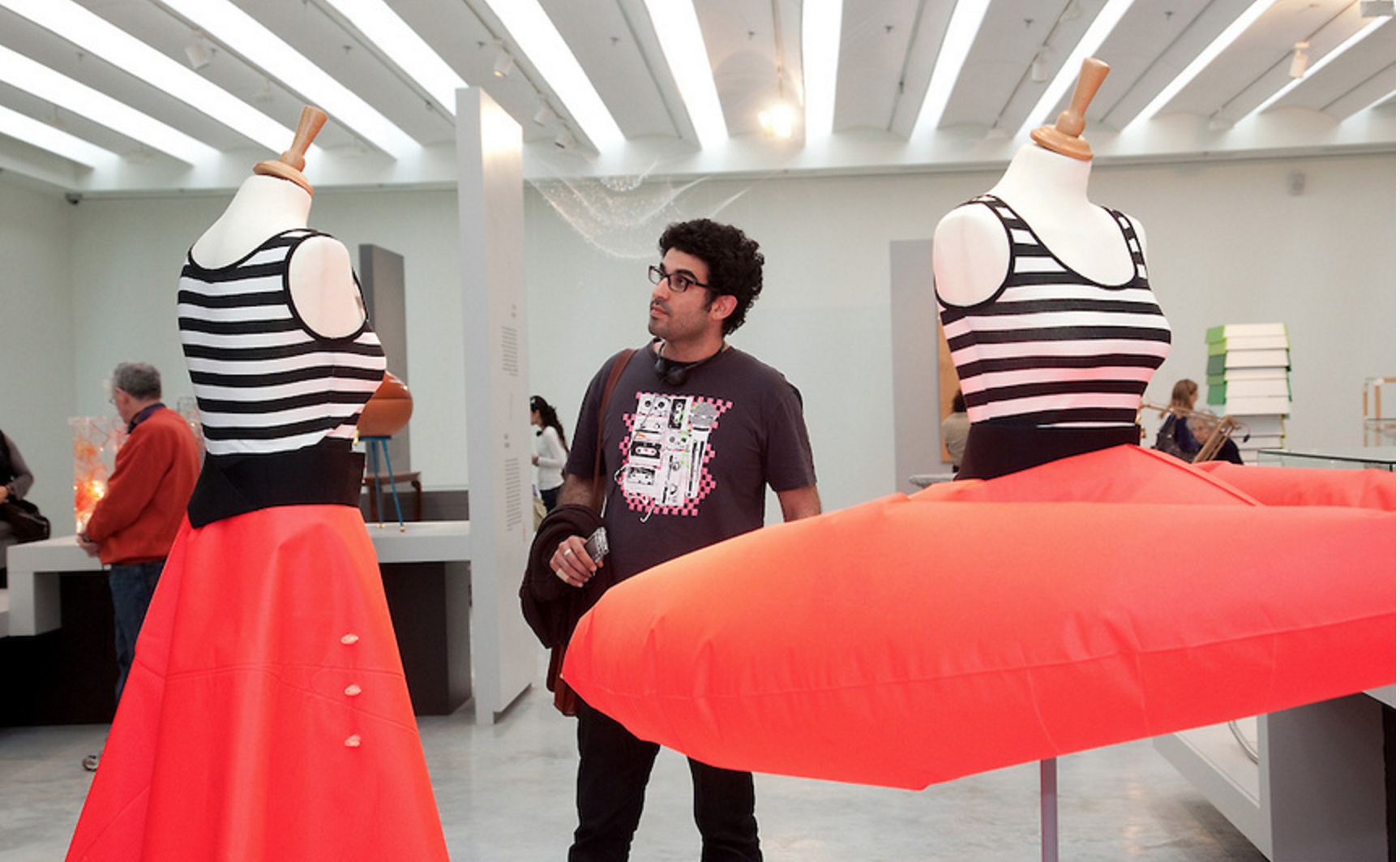
Yael Mer’s “Evacuation Skirt” was designed tongue-in-cheek. Or was it?
Conceived after the New Orleans hurricane and flood, says Yael: “The skirt keeps its glamorous look when it’s deflated on the one hand, and on the other, it inflates into a kayak with the right amount of volume to carry a grown up woman.
She adds, “I wanted to raise the question of emergency and beauty and to explore whether they can meet each other.”Green Prophet says S.O.S.
If sea levels in the Middle East rise (that’s what the experts say will happen, after global warming sets in), we’ll be ordering a few of these skirts.
Yael Mer’s partner looks on at her design for a normal day, and the one of the right for days with floods.
We wonder if Yael has a prototype for men, kids and pets in the works?Yael’s design is quirky, but totally thought-provoking, wouldn’t you say?
Two Architecture lecturers from the Technion Institute in Haifa have designed a high-rise sustainable energy apartment complex that includes greenhouses for all its residents, and are building it in Wuhan Province, China.
Tagit Klimor and David Knafo, who also run their own architectural practise Knafo Klimor, with offices in Tel Aviv and Haifa, believe in the importance of people growing their own food.
“This project, which we have named Agro Housing, constitutes a revolution in the existing social and urban order,” Knafo says.
Israeli designer Shay Alkalay is a man modeled after our own green heart. And with his cheeky invention, you will never have to say ‘out, out, damn spot,’ ever again.
Taking over your coffee spills (which might have otherwise ruined your best white shirt), is a little iron-on alien, known as a stickystain. A great way to keep your loved clothing item in circulation.
Shay says: “These are iron-on stickers that turn unsightly stains into attractive doodles. An alternative way to prolong the life of stained clothes. A postcard sized sheet that would be enough to rescue at least 4 different stains.”
Hear, hear! We can imagine that they are great for kids clothes, too.
Shay’s not selling his stickies at the moment, as it’s just a concept idea for design school but you can make your own or order them from Etsy.
See also Shay’s partner’s wacky invention, the Evacuation Skirt – perfect for inflating in times of need. Like when global warming kicks in perhaps? If that invention doesn’t float your boat, she’s also made the Slipper Rocker. Part slipper, part rocker.
Yael Mer’s Evacuation skirt transforms to a canoe when climate change sets in. For Tel Aviv that happened in the winter of 2019-2020. The city was flooded and people died.
With the panoramic view that I have from my window, I tend to find myself awed by the sunset. Often, I tell myself how incredibly artistically talented God is, the hues, the use of shadow, the definition… it’s beautiful. Oh how many times I wished that I could create such breathtaking scenes, on a daily basis. It is inspiring, and not only for me. Many artists I have spoken to, have told me that they have similarly, been inspired by God’s creative hand.
Now, with the hard work of Zev Labinger, and along with the help of Artists For Nature’s director and founder Yserand Browers, artists can give back. Labinger and Browers have arranged for seven, internationally renowned artists, to visit Israel for a week to help raise awareness about Lake Agmon in the Hula Valley.
When I moved to Israel I started to understand, that not everywhere in the world things are going the same way. I grew up in Germany, where the convenience of a quiet and more or less unworried life, enables politicians to talk and act in terms of environment. Water saving, recycling and other environmental issues were familiar to me and my friends. I never really thought about it, it was just part of my daily life.
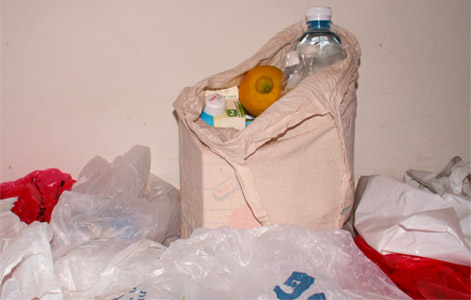
Due to this background, my first shopping tour in the small super market around the corner of my apartment in Tel Aviv was a big surprise. The cashier took all my things and stuffed them in several plastic bags. Taking her job seriously, she used at least 5 bags for the few things, to be sure that none of my bags will rip. Finally I ended up with 5 bags (one carried only my organic eggs, which by the way were wrapped in Styrofoam) for which I didn’t even have to pay a single cent.
It wasn’t that long ago when wild beasts roamed the earth. Lions, tigers, woolly haired mammoths and even elephants traipsed over the changing ecology of the Middle East up to the start of the early 15th century. Lions remain as the roaring yet watchful emblem of Jerusalem.
Now humans are the wild beasts that dominate, and in many cases, destroy, other species and their habitats. Man’s dominion has brought us to this environmental predicament, and only within the past couple of hundred years.
It is this wider picture that is addressed in Werner Herzog’s stunning documentary ‘Grizzly Man’, out now on DVD (and available to rent from The Third Ear stores country-wide). Ostensibly exploring the erratic and tragic life of Timothy Treadwell, a maverick young American, who found his life’s passion in being with and studying wild bears in Alaska. This he did for 13 summers, until one ate him and his girlfriend.
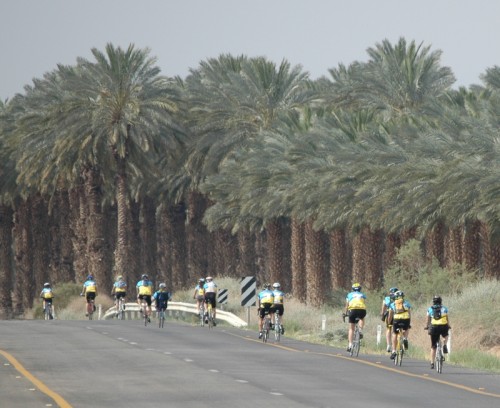
Being such a small place, you’d think Israel would be a simple place to get around on less than four wheels. But, alas, this is not the case since it’s cities and roads continuously choked with traffic. So it’s reassuring to hear that more Israelis are swapping their polluting automobiles for the most eco-friendly, not to mention wallet-friendly, mode of transport – the bicycle. Well, at least this is the case in Tel Aviv, where the number of people jumping on their bikes each day has risen by 300 percent in the last decade, according to the Yisrael Bishvil Ofanayim (Israel Bicycle Association or IBA).”Today some 7 percent of trips taken in the city are done on bikes. Recently this two-wheeled public has received real encouragement thanks to the announcement by the Transportation Ministry of an investment of NIS 50 million in the establishment of a national bike-trail infrastructure,” reported Ha’aretz. What’s more, the IBA are also campaigning for secure bike parking at railway stations as well as storage on trains themselves.
Ironically, for a planet that over 70% of it’s surface is covered by water, water is becoming quite a commodity. While it may be true that the black gold of 20th century is being phased out, the new liquid gold, it appears, is Blue Gold aka water. According to an article published in USA Today, “More than half of humanity will be living with water shortages, depleted fisheries and polluted coastlines within 50 years because of a worldwide water crisis.”
In attempt to stay ahead of the market the Technion– Israel Institute of Technology has created a Bachelors of Science in Civil Engineering – Water Resources and Environmental Engineering. This program “involves fields in which Israeli technology achieved a leading place world-wide” the university describes, “The water industry in Israel is one of the most advanced and complex systems in the world.”
Citizens and tourists rejoice: the Clean Coast Project of 2007 has ensured that we can hit those beaches in 2008. At least that’s according to the Israel Ministry of Environmental Protection, which reports that 80% of Israel’s beaches have been declared clean, with a mere 2% getting the dreaded rating of “dirty.”
This is is a massive jump from the start of the Clean Coast Project in 2005, when a whopping 27% of Israel’s beaches were declared clean.
Ronen Alkalay, coordinator of the Clean Coast Project in the Ministry of Environmental Protection says,”The integration of coastal cleanups by local authorities, assisted by a northeasterly wind, which cleaned the coasts and resulted in a calm sea emitting very little waste, along with the small number of visitors to the beaches, combined to bring about this favorable result – a clean coast.”
In previous articles, we’ve illustrated that religious Jewish practices such as Shabbat and Shmitta have the potential to affect the environment in a positive way. This makes us happy, as we at Green Prophet like when Jewish customs dovetail with the ideals of sustainability that we want to promote.
We therefore regret to report that Mikvah, or ritual immersion, is currently motivating some people to have a negative impact on one of Israel’s most endangered species, the orange salamander.