“In the midst of uncertain time, renewable energy remains consistent and steadfast in its expansion,” said Francesco La Camera, IRENA’s Director-General. “A more decentralised energy system, with a growing share of renewables and more market players, is structurally more resilient.”
Health insurance is a regulated financial product. Insurers operate under binding contracts, overseen by state insurance commissioners, that legally obligate them to pay claims meeting policy terms. Policyholders who believe a covered claim was wrongfully denied have legal recourse through state regulatory channels.
The New Zealand Merino Company, now rebranded as Zentera, has quietly removed the phrase “world’s leading ethical wool brand” from its website, a notable change that comes after a disturbing investigation by PETA Asia-Pacific into the company’s ZQ-certified wool supply chain, PETA reports to Green Prophet.
Somehow vegetables with short seasons excite the imagination and appetite more sharply than produce that’s available all year around. Good Middle Eastern cooks have many recipes for delicate fava beans, and this turmeric-fragrant soup is one.
“In the midst of uncertain time, renewable energy remains consistent and steadfast in its expansion,” said Francesco La Camera, IRENA’s Director-General. “A more decentralised energy system, with a growing share of renewables and more market players, is structurally more resilient.”
Health insurance is a regulated financial product. Insurers operate under binding contracts, overseen by state insurance commissioners, that legally obligate them to pay claims meeting policy terms. Policyholders who believe a covered claim was wrongfully denied have legal recourse through state regulatory channels.
The New Zealand Merino Company, now rebranded as Zentera, has quietly removed the phrase “world’s leading ethical wool brand” from its website, a notable change that comes after a disturbing investigation by PETA Asia-Pacific into the company’s ZQ-certified wool supply chain, PETA reports to Green Prophet.
Somehow vegetables with short seasons excite the imagination and appetite more sharply than produce that’s available all year around. Good Middle Eastern cooks have many recipes for delicate fava beans, and this turmeric-fragrant soup is one.
“In the midst of uncertain time, renewable energy remains consistent and steadfast in its expansion,” said Francesco La Camera, IRENA’s Director-General. “A more decentralised energy system, with a growing share of renewables and more market players, is structurally more resilient.”
Health insurance is a regulated financial product. Insurers operate under binding contracts, overseen by state insurance commissioners, that legally obligate them to pay claims meeting policy terms. Policyholders who believe a covered claim was wrongfully denied have legal recourse through state regulatory channels.
The New Zealand Merino Company, now rebranded as Zentera, has quietly removed the phrase “world’s leading ethical wool brand” from its website, a notable change that comes after a disturbing investigation by PETA Asia-Pacific into the company’s ZQ-certified wool supply chain, PETA reports to Green Prophet.
Somehow vegetables with short seasons excite the imagination and appetite more sharply than produce that’s available all year around. Good Middle Eastern cooks have many recipes for delicate fava beans, and this turmeric-fragrant soup is one.
“In the midst of uncertain time, renewable energy remains consistent and steadfast in its expansion,” said Francesco La Camera, IRENA’s Director-General. “A more decentralised energy system, with a growing share of renewables and more market players, is structurally more resilient.”
Health insurance is a regulated financial product. Insurers operate under binding contracts, overseen by state insurance commissioners, that legally obligate them to pay claims meeting policy terms. Policyholders who believe a covered claim was wrongfully denied have legal recourse through state regulatory channels.
The New Zealand Merino Company, now rebranded as Zentera, has quietly removed the phrase “world’s leading ethical wool brand” from its website, a notable change that comes after a disturbing investigation by PETA Asia-Pacific into the company’s ZQ-certified wool supply chain, PETA reports to Green Prophet.
Somehow vegetables with short seasons excite the imagination and appetite more sharply than produce that’s available all year around. Good Middle Eastern cooks have many recipes for delicate fava beans, and this turmeric-fragrant soup is one.
“In the midst of uncertain time, renewable energy remains consistent and steadfast in its expansion,” said Francesco La Camera, IRENA’s Director-General. “A more decentralised energy system, with a growing share of renewables and more market players, is structurally more resilient.”
Health insurance is a regulated financial product. Insurers operate under binding contracts, overseen by state insurance commissioners, that legally obligate them to pay claims meeting policy terms. Policyholders who believe a covered claim was wrongfully denied have legal recourse through state regulatory channels.
The New Zealand Merino Company, now rebranded as Zentera, has quietly removed the phrase “world’s leading ethical wool brand” from its website, a notable change that comes after a disturbing investigation by PETA Asia-Pacific into the company’s ZQ-certified wool supply chain, PETA reports to Green Prophet.
Somehow vegetables with short seasons excite the imagination and appetite more sharply than produce that’s available all year around. Good Middle Eastern cooks have many recipes for delicate fava beans, and this turmeric-fragrant soup is one.
“In the midst of uncertain time, renewable energy remains consistent and steadfast in its expansion,” said Francesco La Camera, IRENA’s Director-General. “A more decentralised energy system, with a growing share of renewables and more market players, is structurally more resilient.”
Health insurance is a regulated financial product. Insurers operate under binding contracts, overseen by state insurance commissioners, that legally obligate them to pay claims meeting policy terms. Policyholders who believe a covered claim was wrongfully denied have legal recourse through state regulatory channels.
The New Zealand Merino Company, now rebranded as Zentera, has quietly removed the phrase “world’s leading ethical wool brand” from its website, a notable change that comes after a disturbing investigation by PETA Asia-Pacific into the company’s ZQ-certified wool supply chain, PETA reports to Green Prophet.
Somehow vegetables with short seasons excite the imagination and appetite more sharply than produce that’s available all year around. Good Middle Eastern cooks have many recipes for delicate fava beans, and this turmeric-fragrant soup is one.
“In the midst of uncertain time, renewable energy remains consistent and steadfast in its expansion,” said Francesco La Camera, IRENA’s Director-General. “A more decentralised energy system, with a growing share of renewables and more market players, is structurally more resilient.”
Health insurance is a regulated financial product. Insurers operate under binding contracts, overseen by state insurance commissioners, that legally obligate them to pay claims meeting policy terms. Policyholders who believe a covered claim was wrongfully denied have legal recourse through state regulatory channels.
The New Zealand Merino Company, now rebranded as Zentera, has quietly removed the phrase “world’s leading ethical wool brand” from its website, a notable change that comes after a disturbing investigation by PETA Asia-Pacific into the company’s ZQ-certified wool supply chain, PETA reports to Green Prophet.
Somehow vegetables with short seasons excite the imagination and appetite more sharply than produce that’s available all year around. Good Middle Eastern cooks have many recipes for delicate fava beans, and this turmeric-fragrant soup is one.
“In the midst of uncertain time, renewable energy remains consistent and steadfast in its expansion,” said Francesco La Camera, IRENA’s Director-General. “A more decentralised energy system, with a growing share of renewables and more market players, is structurally more resilient.”
Health insurance is a regulated financial product. Insurers operate under binding contracts, overseen by state insurance commissioners, that legally obligate them to pay claims meeting policy terms. Policyholders who believe a covered claim was wrongfully denied have legal recourse through state regulatory channels.
The New Zealand Merino Company, now rebranded as Zentera, has quietly removed the phrase “world’s leading ethical wool brand” from its website, a notable change that comes after a disturbing investigation by PETA Asia-Pacific into the company’s ZQ-certified wool supply chain, PETA reports to Green Prophet.
Somehow vegetables with short seasons excite the imagination and appetite more sharply than produce that’s available all year around. Good Middle Eastern cooks have many recipes for delicate fava beans, and this turmeric-fragrant soup is one.
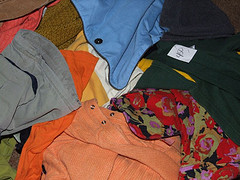
It may be a status symbol to wear the latest styles, but every think about wearing the best? If it works, why fix it?
There’s a new movement now among the avant-garde to mix-match old clothing. It gives a retro funky look and now represents caring about your world.
I’m not telling you to look like a derelict. But think twice before you throw it out. And if you wont wear it again, there are plenty of places that will take it and give it a chance to be someone else’s new look.
Be creative, and it can become another way you can GreenYourselfDaily.
While the subject of air travel has become a hot topic this week, it’s worth remembering that it’s not just people that travel by jumbo jet – lots of the food eaten in Western countries is flown across the globe before it reaches our plates.
Israel is in a unique position globally in that it produces virtually all of it’s own fresh food itself and even has a healthy export surplus.
But the phenomenon of ‘food miles’ has become a cause celebre for environmentalists in Europe and the USA where, in countries like the UK, the proportion of imported food is growing steadily as agricultural self-sufficiency spirals ever downwards.
When your printer misprints, or you misprint with your printer, save your paper. This paper can be used in a number of alternative ways. If you have children, this paper is great for coloring on (and then of course covering your fridge with).
Many people like to jot down ideas before typing them up, (re)use this paper. I have also seen in one office, instead of the usual colorful square note pages on people’s desks, last month’s memo on the back to today’s note page…
It may not be as glamorous, but it’s a great way to GreenYourselfDaily!
Etihad business class. Small cabins flying through the air. A necessity or carbon gluttony?
Things are really hotting up this week in the great debate about air transport being the big nasty in terms of pollution and climate change, as well as the social impact of airport expansion.
Firstly, Virgin Airways, of the entrepreneurial Richard Branson type, unleashed its first test flight of a plane using bio-fuel from Heathrow.
The environmental media in the UK was scathing of this first-ever flight: “coconut airways – jet on a flight to nowhere” taunted The Guardian. While Branson hailed the flight from London to Holland as revolutionary, it was revealed that of the 747’s 4 fuel-carrying tanks, 3 were filled with regular fuel, while the 4th had a mixture of 80% regular fuel, and 20% coconut and babassu palm oil.
Branson, as well as getting involved in some interesting plans for commercial space travel, and working with Green Prophet hero Al Gore on a range of environmental technology schemes, is starting to invest the profit from his transport network into bio-fuels research, particularly into algae as a major component.
Friends of the Earth UK and the World Development Movement (WDM) both commended the experiment but said it didn’t go far enough in seriously attempting to reduce emissions in the aviation Industry. Earlier bio-fuels trials in the UK by both bus and train companies were abandoned, due to research and financial restraints.
Back to Heathrow, and anyone who has ever flown there (via British Airways or El Al from Israel) will be aware of the controversy surrounding the new terminal – which is built and shortly to be opened, and the proposed new runway.
People have had compulsory purchase orders upon their land and property in the area, and a river has been diverted. This morning this short film When I Grow Up arrived in my inbox, graphically showing the effect of increased aviation on the children in the area.
Here at Green Prophet, we love writing about water, probably because water issues are such a big deal in the region. Now at Tel Aviv University, water and politics has become an international course of action. The following is a news item about a new undergrad water course happening this summer — bound to be a splash for both foreign students and locals.
In Israel, there is the Sea of Galilee, the Red Sea, the Dead Sea – and even the Mediterranean Sea. Israel is home to some of the world’s most diverse and unique bodies of water, yet a sustainable source of drinking water for the region, is yet to be secured.
For the first time ever, TAU’s Porter School of Environmental Studies, is opening its classrooms, and Israel’s waterways, to overseas students. Through a new summer course, English speaking students are invited to enter the scientific and political discourse on the region’s precious water resources.
Educating about the environment is considered a very powerful way of carbon offsetting. By inspiring others to change their habits not only are you fighting the battle for our planet, you are getting others to as well.
Just one tip:
Don’t be forceful or obnoxious about it. Mr. Dale Carnegie said: “A man convinced against his will is of the same opinion still.” Don’t argue to win, you will actually loose the battle in the end.
Instead, be gentle and model correct behavior for others. By doing so you not only GreenYourselfDaily but others as well.
Issa Zananiri (left) and his supervisor from the Technion.
It might be a bit of a head-scratcher for those who see nothing but the violent clashes on TV, but a Palestinian is now part of a Tel Aviv design and planning team, working on the city’s new light rail train project, to be completed by 2012. The train is expected to ease congestion and pollution in the city’s busy streets. And with Issa Zananiri on board, it might also help ease a little of the tension between Palestinians and Israelis.
“I can’t wear that! It’s SOO last season.” Instead of trying to eternally keeping up with the Hiltons why not create you own fashion?
Well, now you can! Project Dlaat(Project Pumpkin) is an environmental-social project. Its purpose is to promote recycling by providing second-hand clothing and channels the proceeds to different social purposes.
Let your towel hang dry in between uses so that you can reuse your towel. After your shower you should be clean. You are not necessarily getting your towel dirty by drying yourself of on it. If you do this you not only will be saving money on washing costs, water and the time you would waste doing washes, your towels will last much longer. Also, you will not be dispersing as much toxic soaps into our water… It’s an easy way to save for yourself and save your planet and of course…
We here at Green Prophet are all about writing about the environment, and so we were very excited when an ‘environmental writing residency’ opportunity cropped up and landed on the desk today, and eager to share this with our readers.
An organisation based in Minnesota, USA is giving writers and artists the chance to stay and work at a research station on the banks of the St. Croix River in Minnesota, for sessions of different lengths ranging from 2 to 4 weeks, from May through to August, as artists in residence. They are calling for applications from “natural history artists and writers, who seek field experience and closeness to nature to provide inspiration for their work.”
Remember, you can always take more, but most people won’t appreciate it if you put your unfinished food back into the pot. This way you won’t have to plan tomorrow’s lunch and you can GreenYourselfDaily.
The week began with a battle for high ground in Florentine. But that’s a skirmish compared to the bitter battle for the beach. Because nothing says “bitter” like a cause-centric Facebook group.
Cardboard solutions upcycle wasted materials into portable cradle.
So being an ecomum, buying new furniture for my daughter is not really my style, but when something like an EcoCradle comes along I am seriously tempted and definitely recommend this as the eco-guilt-free solution for parents or grandparents who would like to buy new furniture. To make it even better this cardboard-sourced EcoCradle is blue and white brought to us by cardboard furniture company Green Lullaby (and another ecomum). It’s made from recycled cardboard and toxin-free fire-retardants.
Israel is known for it’s plastic shopping bags. While it’s better to bring your own reusable sturdy shopping bags when you go shopping, sometimes we find ourselves deciding to stop by the store spontaneously. Of course that would be the only way we would find ourselves using plastics…
If you are going to use plastic bags from the store save them and reuse them. They make great small trashcan bags or for cleaning up after Spartacus, your dog. These bags also make a great alternative for packing instead of newspapers.
So keep your bags, be creative and GreenYourselfDaily.
We’ve had several rainstorms this year but it seems that they are not enough. This winter’s meager rainfall has done nothing to replenish shrinking Golan Heights streams or the mountain and coastal aquifers, and concern is growing again for the country’s water supply.
“Cute little trickles like this will not save Lake Kinneret,” Yeruham Kantman, director of the Keshet Nehusha field school in Moshav Keshet on the Golan Heights said.
You’d think that some rain is good, but quality is not enough. We need quantity as well. “It takes three days of hard rain for a strong flow, for the soil to be soaked and forthe water to wash to the streams.
“So far this year we’ve only had brief rainfalls and hence a 1 cm rise in the Kinneret. When the flow is strong the Kinneret level rises some 5 cm a day, ” explains Hillel Glazman, the head of stream monitoring for the Israel Nature and Parks Protection Authority (INPA).









 World Water Day is every year on March 22.

 Issa Zananiri (left) and his supervisor from the Technion.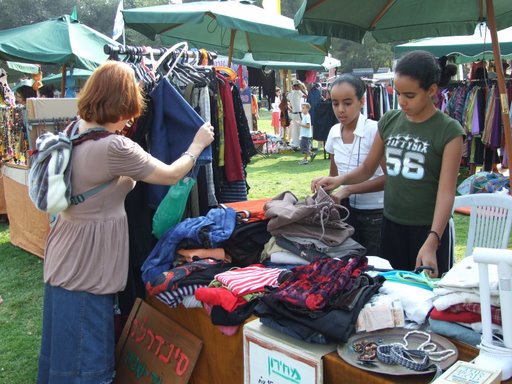


 Let your towel hang dry in between uses so that you can reuse your towel. After your shower you should be clean. You are not necessarily getting your towel dirty by drying yourself of on it. If you do this you not only will be saving money on washing costs, water and the time you would waste doing washes, your towels will last much longer. Also, you will not be dispersing as much toxic soaps into our water… It’s an easy way to save for yourself and save your planet and of course…





 Cardboard solutions upcycle wasted materials into portable cradle.