Health insurance is a regulated financial product. Insurers operate under binding contracts, overseen by state insurance commissioners, that legally obligate them to pay claims meeting policy terms. Policyholders who believe a covered claim was wrongfully denied have legal recourse through state regulatory channels.
The New Zealand Merino Company, now rebranded as Zentera, has quietly removed the phrase “world’s leading ethical wool brand” from its website, a notable change that comes after a disturbing investigation by PETA Asia-Pacific into the company’s ZQ-certified wool supply chain, PETA reports to Green Prophet.
Somehow vegetables with short seasons excite the imagination and appetite more sharply than produce that’s available all year around. Good Middle Eastern cooks have many recipes for delicate fava beans, and this turmeric-fragrant soup is one.
Health insurance is a regulated financial product. Insurers operate under binding contracts, overseen by state insurance commissioners, that legally obligate them to pay claims meeting policy terms. Policyholders who believe a covered claim was wrongfully denied have legal recourse through state regulatory channels.
The New Zealand Merino Company, now rebranded as Zentera, has quietly removed the phrase “world’s leading ethical wool brand” from its website, a notable change that comes after a disturbing investigation by PETA Asia-Pacific into the company’s ZQ-certified wool supply chain, PETA reports to Green Prophet.
Somehow vegetables with short seasons excite the imagination and appetite more sharply than produce that’s available all year around. Good Middle Eastern cooks have many recipes for delicate fava beans, and this turmeric-fragrant soup is one.
Health insurance is a regulated financial product. Insurers operate under binding contracts, overseen by state insurance commissioners, that legally obligate them to pay claims meeting policy terms. Policyholders who believe a covered claim was wrongfully denied have legal recourse through state regulatory channels.
The New Zealand Merino Company, now rebranded as Zentera, has quietly removed the phrase “world’s leading ethical wool brand” from its website, a notable change that comes after a disturbing investigation by PETA Asia-Pacific into the company’s ZQ-certified wool supply chain, PETA reports to Green Prophet.
Somehow vegetables with short seasons excite the imagination and appetite more sharply than produce that’s available all year around. Good Middle Eastern cooks have many recipes for delicate fava beans, and this turmeric-fragrant soup is one.
Health insurance is a regulated financial product. Insurers operate under binding contracts, overseen by state insurance commissioners, that legally obligate them to pay claims meeting policy terms. Policyholders who believe a covered claim was wrongfully denied have legal recourse through state regulatory channels.
The New Zealand Merino Company, now rebranded as Zentera, has quietly removed the phrase “world’s leading ethical wool brand” from its website, a notable change that comes after a disturbing investigation by PETA Asia-Pacific into the company’s ZQ-certified wool supply chain, PETA reports to Green Prophet.
Somehow vegetables with short seasons excite the imagination and appetite more sharply than produce that’s available all year around. Good Middle Eastern cooks have many recipes for delicate fava beans, and this turmeric-fragrant soup is one.
Health insurance is a regulated financial product. Insurers operate under binding contracts, overseen by state insurance commissioners, that legally obligate them to pay claims meeting policy terms. Policyholders who believe a covered claim was wrongfully denied have legal recourse through state regulatory channels.
The New Zealand Merino Company, now rebranded as Zentera, has quietly removed the phrase “world’s leading ethical wool brand” from its website, a notable change that comes after a disturbing investigation by PETA Asia-Pacific into the company’s ZQ-certified wool supply chain, PETA reports to Green Prophet.
Somehow vegetables with short seasons excite the imagination and appetite more sharply than produce that’s available all year around. Good Middle Eastern cooks have many recipes for delicate fava beans, and this turmeric-fragrant soup is one.
Health insurance is a regulated financial product. Insurers operate under binding contracts, overseen by state insurance commissioners, that legally obligate them to pay claims meeting policy terms. Policyholders who believe a covered claim was wrongfully denied have legal recourse through state regulatory channels.
The New Zealand Merino Company, now rebranded as Zentera, has quietly removed the phrase “world’s leading ethical wool brand” from its website, a notable change that comes after a disturbing investigation by PETA Asia-Pacific into the company’s ZQ-certified wool supply chain, PETA reports to Green Prophet.
Somehow vegetables with short seasons excite the imagination and appetite more sharply than produce that’s available all year around. Good Middle Eastern cooks have many recipes for delicate fava beans, and this turmeric-fragrant soup is one.
Health insurance is a regulated financial product. Insurers operate under binding contracts, overseen by state insurance commissioners, that legally obligate them to pay claims meeting policy terms. Policyholders who believe a covered claim was wrongfully denied have legal recourse through state regulatory channels.
The New Zealand Merino Company, now rebranded as Zentera, has quietly removed the phrase “world’s leading ethical wool brand” from its website, a notable change that comes after a disturbing investigation by PETA Asia-Pacific into the company’s ZQ-certified wool supply chain, PETA reports to Green Prophet.
Somehow vegetables with short seasons excite the imagination and appetite more sharply than produce that’s available all year around. Good Middle Eastern cooks have many recipes for delicate fava beans, and this turmeric-fragrant soup is one.
Health insurance is a regulated financial product. Insurers operate under binding contracts, overseen by state insurance commissioners, that legally obligate them to pay claims meeting policy terms. Policyholders who believe a covered claim was wrongfully denied have legal recourse through state regulatory channels.
The New Zealand Merino Company, now rebranded as Zentera, has quietly removed the phrase “world’s leading ethical wool brand” from its website, a notable change that comes after a disturbing investigation by PETA Asia-Pacific into the company’s ZQ-certified wool supply chain, PETA reports to Green Prophet.
Somehow vegetables with short seasons excite the imagination and appetite more sharply than produce that’s available all year around. Good Middle Eastern cooks have many recipes for delicate fava beans, and this turmeric-fragrant soup is one.
While we at Green Prophet wouldn’t encourage anyone to clutter their lives with tons of stuff, there are some wonderful green gadgets on the marketplace now – the Solio mobile phone charger for instance, uses all this wonderful ‘shemesh’ we have instead of electricity … and Israel is at the forefront of this research and development.
So, while we respectfully and dutifully support recycling and re-using (see recent posts on recycling and re-using stuff here and baby toys and clothes in particular here), and I’m spending more and more hours each day trying to reduce our household waste by composting mounds of cardboard –– also take a look Life Goggles, which is a US-based great green review site, with organic products, lifestyle book reviews, great planet-friendly gadgets, tips, the odd green gag and short films, and lots more besides.
The organic trend has definitely hit Tel Aviv, and in all of the expected ways. With small organic markets, imported organic wines, organic goat cheeses, and organic gourmet foods.
But organic foods usually appeal to a certain type of food shopper, and not always the kind who sits down on a busy street to eat a plate of hummus.
That’s why its so great that Abba Gil Hummus – Israel’s first organic hummus restaurant – has been successfully offering organic hummus to the Tel Aviv masses for three years.
In honor of Earth Day this year, the US-based zine Jewcy goes green. Helen Jupiter, an editor and commentator at the site, offers up a fantabulous list of green reads, suited for Jewish souls, or any soul for that matter –– see 10 Books on the Intersection of Judaism and the Environment.
“There are a lot of paths leading from Judaism to environmentalism and vice versa,” writes Jupiter, “and the following ten books offer gateways and guidance. Hopefully they’re printed on recycled paper, too.”
Among the chosen books, is one of our favorites: Pollution in a Promised Land: An Environmental History of Israel, by Alon Tal – one of Israel’s most prominent eco-heroes, and founder of Adam Teva Va’Din.
The Washington Post (one of the best papers in the free world) calls Jewcy, “the accoutrement of choice for a new breed of Jewish hipsters…”
Feeling gloomy and despondent about Climate Change? Do you feel, like my dear Welsh friend Tim in London whose default position on this (and everything) is that we are all “doomed”?
Well, we here at Green Prophet are all about finding optimistic solutions, and giving attention to some of the projects that are trying in unique ways to educate and change – one such arrived on my desk this week, that is a call for your submissions to a new anthology of writings about Climate Change: ‘Facing the Change: Citizens Respond to Global Warming.’
In honor of international Earth Day, which was on April 22nd, we’ll be devoting a series of posts this week to Israeli ventures and businesses that make our consumption a little greener by reinventing used materials.
If we don’t reuse our resources we may lose them altogether, so these green heroes definitely deserve our attention and support.
If you see something you don’t like in the newspaper today – have no fear. They say that today’s newspaper will be used to line bird cages and wrap fish tomorrow. Or will it? Israel’s many papier mache artists prove otherwise.
I know that in Israel we do not yet celebrate this joyous week, but coming from blighty and being a bigoldfan of cloth nappies I am going to throw down the gauntlet for us sometimes slow-to catch-up Israelis.
England is celebrating Real Nappy Week from the 21st to the 28th of April: It’s the 12th annual event coordinated by The Real Nappy Campaign. This year they are concentrating on how using real nappies can help fight climate change.
With simple guidelines for cloth nappy use, parents can really make a difference to the effect disposable nappies have on our environment by reducing waste (some 6,000 nappies per child) and greenhouse gases (from methane gas at the landfill).
So here are some tips for your real nappy care that help keep your nappy footprint small.
In honor of international Earth Day, and any time of the year, we’ll be devoting a series of posts this week to ventures and businesses that make our consumption a little greener by reinventing used materials.
If we don’t reuse our resources we may lose them altogether, so these green heroes definitely deserve our attention and support.
Adults may understand that reusing is important because it requires less energy for production of new items, less resources, and that it reduces the amount of waste in landfills. But how do you get the message across to young children and start their eco-education early?
With some wholesome green fun.
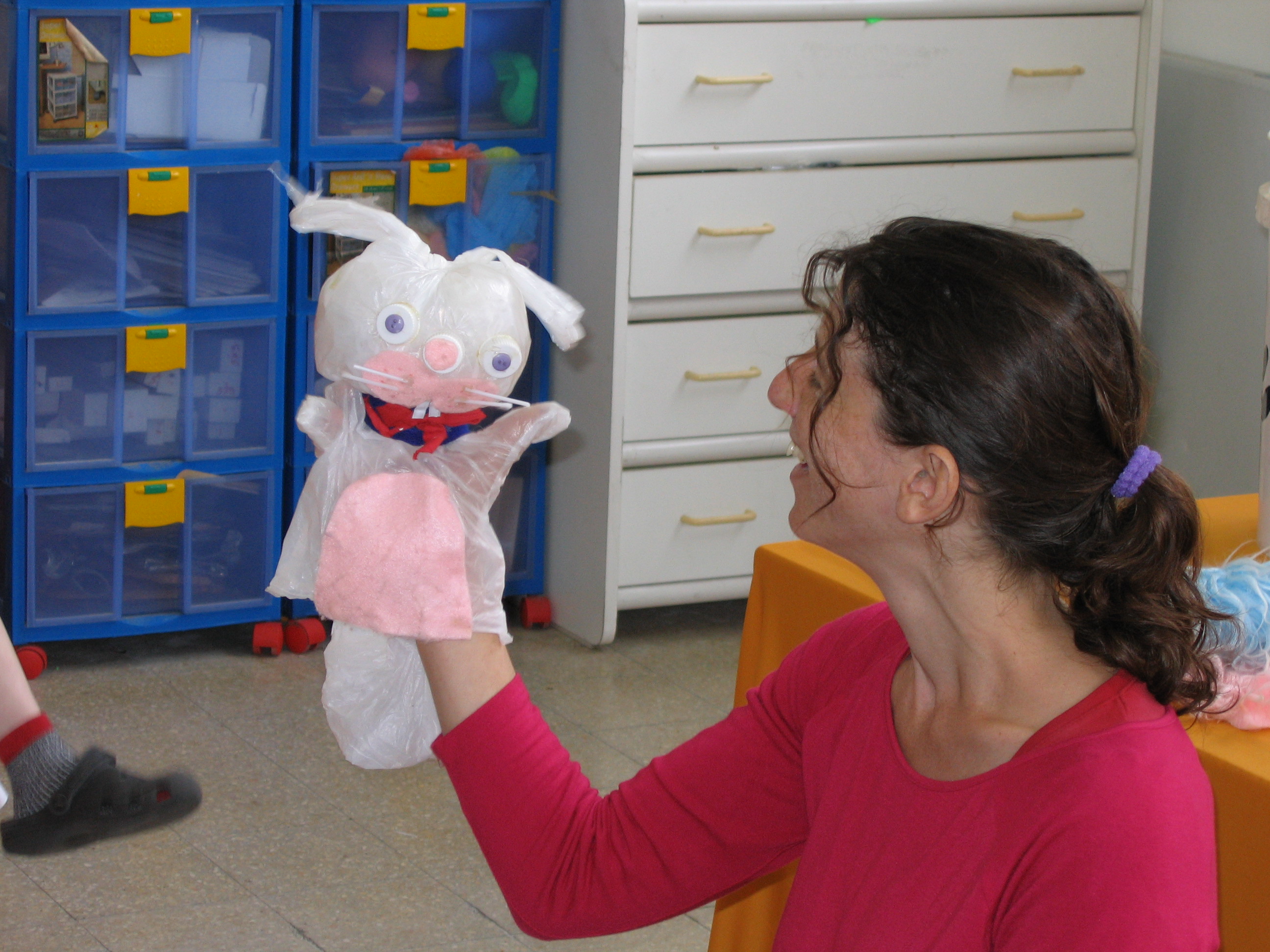
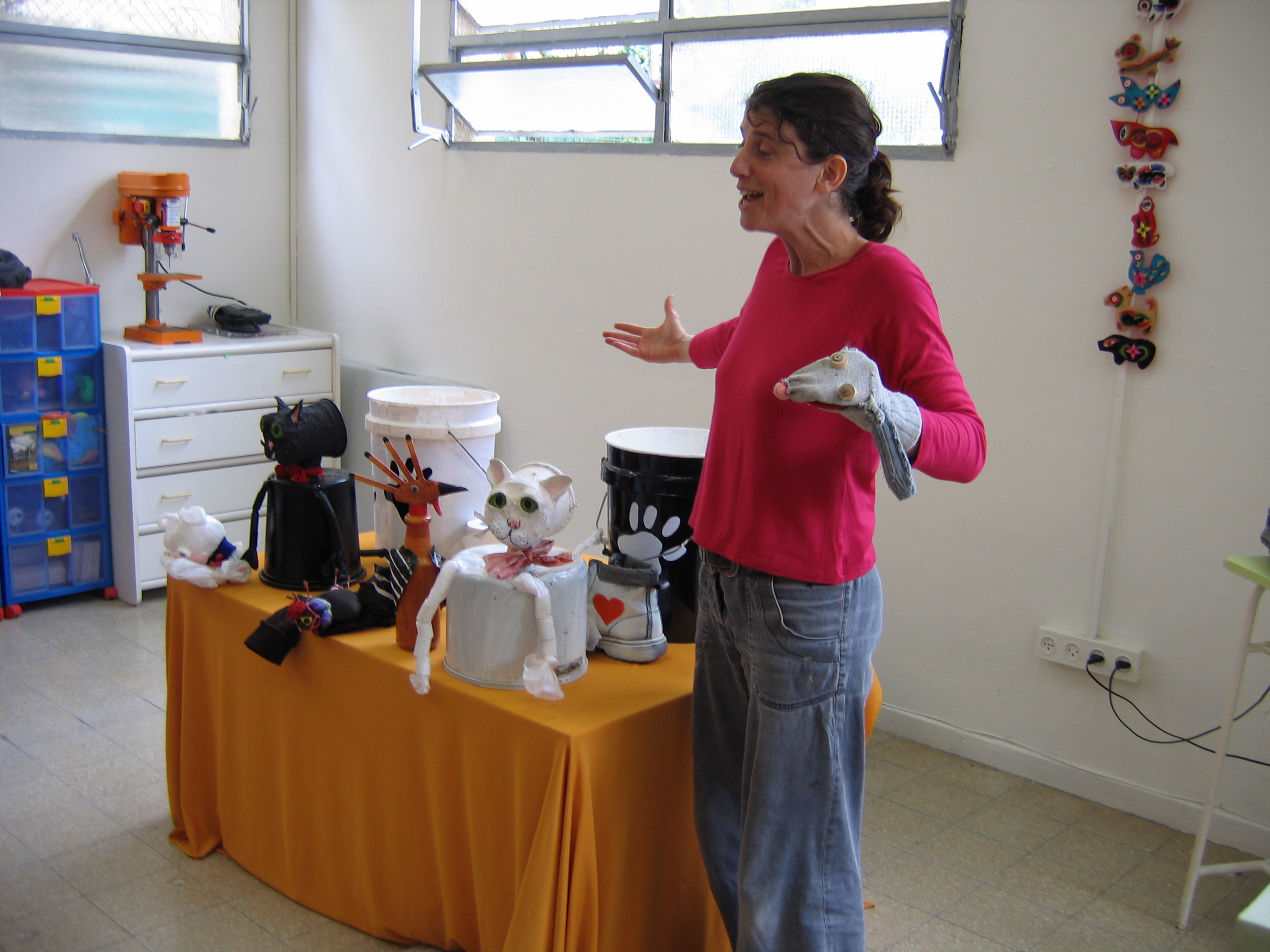
Anat Geiger, a puppeteer in Israel, offers just that. The puppets in her puppet shows are all made by her out of repurposed household items, and by performing with “reused” puppets for children she teaches them a valuable lesson about saving resources and the potential for creativity.
In Anat’s own words, “the ready material is a limitation that I work with and that I start from, and it changes the way that I look at objects and materials around me completely. In every hanger, bag, or box that I look at I search to see where their nose is, where the eyes are, what personality they have, how they walk…
“It is a lot of fun and creativity, and I think that message gets across to the audience that watches the show.”
Anat’s variety of puppet shows – ranging from A. Hillel stories to “Shmendrik and the Monster” – are geared towards children aged 3-7 and are suitable for school activities, community centers, library story telling, and birthdays.
Anat also occasionally hosts reused puppet workshops for children, which are often held after her puppet shows.
Jews all over the world have been working for weeks cleaning their houses from all remnants of unleavened bread. There are Jewish philosophers that explain that by cleaning their houses from this bread they are vicariously also cleaning their hearts from unwanted deficiencies.
Part of daily green living is introspection and thinking of ways that you can green yourself even more. Take this Earth Day to clean your hearts from any unwanted leavening agents hurting our planet.
Mongolia, nestled between twin superpowers China and Russia, is home to the world’s last truly nomadic population of herders, living seasonally across the vast Gobi Desert. I’m a passionate scholar of all things Mongolian, having lived there for nearly a year some years back, and this gave birth to my fascination with Indigenous peoples and desert-dwellers – hence my work with Bedouin here in the Negev, and research upon the impact of humans on the environment.
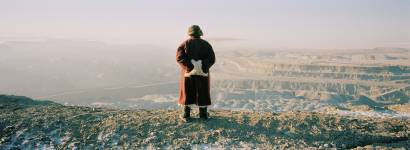
If you are also interested in foreign-language films that explore culture and environmental issues, ‘Khadak’, a 1996 Belgian-made feature film, offers valuable insight, and reveals not only how Mongol nomads live, but also how it can destroy them once they are uprooted from their natural habitat.
In honor of International Earth Day, which is today, we’ll be devoting a series of posts this week to Israeli ventures and businesses that make our consumption a little greener by reinventing used materials.
If we don’t reuse our resources we may lose them altogether, so these green heroes definitely deserve our attention and support.
So far we’ve got our books and our babies covered, but what about everything else? If you’re looking for something specific or if you’re just wondering what other kinds of second hand items are out there, Israel’s many second hand online resources are the way to go.
For free used items there’s the Freecycle network, which is a global, grassroots, non-profit movement of people who are giving away and receiving items for free (and preventing stuff from ending up in landfills). Freecycle connects people within the same area so that those trying to get rid of used items can post a message to the group and give their items to someone nearby.
In honor of international Earth Day, which is on April 22nd, we’ll be devoting a series of posts this week to Israeli ventures and businesses that make our consumption a little greener by reinventing used materials.
If we don’t reuse our resources we may lose them altogether, so these green heroes definitely deserve our attention and support.
Baby toys and clothes, though irresistibly adorable, have the potential for environmental disaster.
They’re used for a short period of time due to the rapid development of babies, many baby toys are made out of plastic or other non-biodegradable materials, and unless a family is planning on having another child then many perfectly good baby items get tossed out.
Combine DIY eco-tourism with Israel’s new wine industry this Passover: Israel’s Ministry of Tourism offers a website chock full of great ideas. The latest is a biking tour between the vineyards and wineries between Jerusalem and Israel’s Northern Negev.
Although the ministry maps out an itinerary you could follow (which we’ve included here for your reference), the guide can be used as a rough outline for day trips on your bike. While most Israeli wines are not organic *yet*, we’d love to hear about ones that are.
Now for the tour:
Day One Jerusalem to Ramat Raziel
Approx 35 Km.
The oldest documented wineries in Jerusalem existed in the Jewish Quarter of the old city in the time of the Ottoman Empire. Today several wineries produce wine mainly with locally grown grapes.
Leave Jerusalem through the Jerusalem Forest road heading down the hill to Beit Zait. Enter the moshav (agricultural community) and head towards the Zmora Winery, overlooking west to the Jerusalem hills.
In honor of international Earth Day, which is on April 22nd, we’ll be devoting a series of posts this week to Israeli ventures and businesses that make our consumption a little greener by reinventing used materials. If we don’t reuse our resources we may lose them altogether, so these green heroes definitely deserve our attention and support.
For the avid readers out there, how about greening your reading? Books are a great form of non-electric entertainment, but the paper resources and energy required to produce them are significant. There’s an easy way around this. Read used books and share the books that you’ve finished reading.







 In honor of international Earth Day, which was on April 22nd, we’ll be devoting a series of posts this week to Israeli ventures and businesses that make our consumption a little greener by reinventing used materials.







 For free used items there’s the



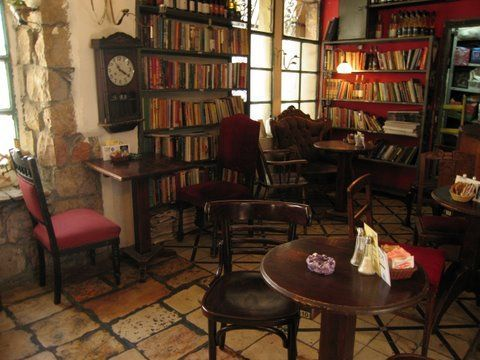
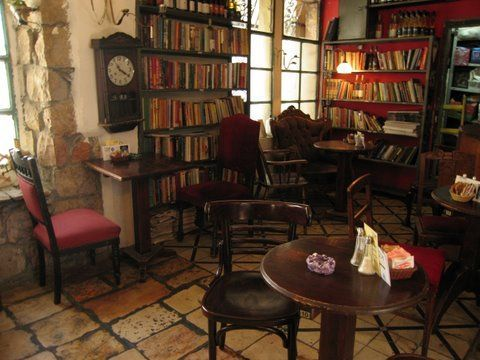 In honor of international Earth Day, which is on April 22nd, we’ll be devoting a series of posts this week to Israeli ventures and businesses that make our consumption a little greener by reinventing used materials. If we don’t reuse our resources we may lose them altogether, so these green heroes definitely deserve our attention and support.