Home Blog Page 76

Recurrence Risk Assessment in Breast Cancer – what it is and how it works

0
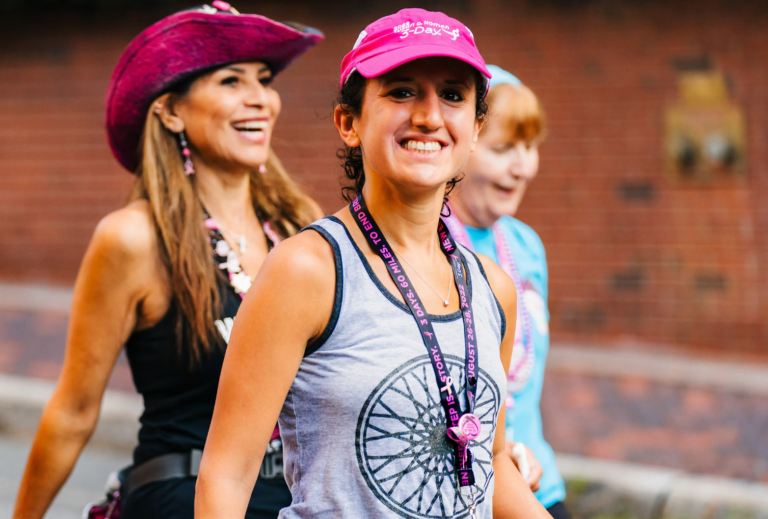
breast cancer walkathon
Women walk to fun breast cancer research.

Breast cancer recurrence occurs when the cancer comes back after treatment, and it is an unfortunate scenario that many face. Recurrent breast cancer may develop where it originally started, or it may spread to nearby lymph nodes or other areas of the body when it returns. It may also come back months or years after treatment has been completed.

In this article, we will discuss what recurrence risk assessment is in the context of breast cancer, from its importance to how it works. We will also explore how recurrence risk assessment is conducted, whether it is with the use of genomic assays, cancer biomarker testing, or other methods.

What is recurrence in breast cancer?

Recurrent breast cancer refers to a situation when breast cancer returns (or recurs) after treatment. It may come back in the same or a different form, in the same or different area of the body. There are several types of recurrence – local, regional, and distant.

Local recurrence refers to when the cancer returns, in the same place as it originally developed the first-time round. Regional recurrence refers to cancer coming back near the original tumor. This can be in nearby lymph nodes in the armpit or in the collarbone. 

Distant recurrence refers to the spread of breast cancer that has spread to other parts of the body, such as the lungs, bones, or brain. In this situation, the cancer is metastatic and typically called Stage 4 breast cancer.

What is the rate of recurrence in breast cancer?

According to Cleveland Clinic, the potential recurrence of breast cancer varies depending on each patient’s individual characteristics. While it is largely uncommon, certain types of breast cancers may be more common. For example, according to the American Cancer Society, inflammatory breast cancer (IBC) and triple-negative breast cancer (TNBC) are most likely to return.

What is breast cancer recurrence risk assessment?

Recurrence risk assessment in breast cancer is used to estimate the likelihood of cancer recurrence after initial treatment. It is a process that involves looking at various factors, from tumor characters to clinical variables, to determine the risk of cancer returning locally, regionally, or in distant organs. This assessment is crucial, as it informs clinicians and guides them to make the best post-treatment surveillance decisions.

Patients that have a higher rate of breast cancer risk recurrence may also require more frequent follow-up visits and extra imaging studies, alongside more regular biomarker testing. This allows doctors to detect any signs of recurrence at an early stage.

How recurrence risk assessment works

Recurrence risk assessment typically works by identifying tumor characteristics and present biomarkers. This involves reviewing the size, grade, and histological subtype of the tumor, the presence (or absence) of cancer spread to the lymph nodes and other parts of the body. This allows clinicians to accurately determine the tumor’s aggressiveness.

Biomarkers are proteins or substances that act as indicators and provide information on the tumor’s biology, and some examples include hormone receptors (estrogen receptors and progesterone receptors), human epidermal growth factor receptor 2 (HER2), the protein Ki-67, the activity of the enzyme TK1, and cancer antigens 15-3 and 27.29. Measuring their activity levels can help clinicians predict the risk of cancer recurrence.

Additionally, genomic assays can be used. Examples include Oncotype DX, Prosigna, and MammaPrint. These can all provide information on the expression of multiple genes within the tumor issue. When risk assessment is being conducted, a genomic risk score is produced, which helps clinicians predict the likelihood of recurrence. This is particularly relevant for early-stage HR+ breast cancer.

To determine the risk of recurrence, other clinical variables such as patient age, menopausal status, and comorbidities must be assessed. For example, a younger age at cancer diagnosis, postmenopausal status, and certain comorbidities may be associated with a higher risk of recurrence of breast cancer.

Who performs recurrence risk assessments for breast cancer patients?

A range of factors must be examined to produce an accurate recurrence risk assessment for breast cancer patients. This means the process involves a multidisciplinary team of healthcare professionals, ranging from oncologists and pathologists to radiologists and other specialists. Their combined efforts provide an accurate and individualized assessment of recurrence risk for each patient.

Can breast cancer recurrence be prevented?

One of the most common questions surrounding breast cancer recurrence is whether it can be prevented. While research has shown that certain treatments may reduce the risk of breast cancer coming back for specific subtypes, there is no guarantee that breast cancer can be fully prevented from recurring. In fact, this is an area where experts are still trying to understand. In any case, patients with recurring breast cancer should know that it is not their fault should their cancer return. Regular screenings and check-ups can help pick up the recurrence of cancer early on, which can lead to better treatment outcomes.

Final words

Recurrence risk assessment is a vital part of post-treatment follow-up, and it is conducted by a multidisciplinary team of healthcare professionals. The process includes administering several types of tests to determine the cancer subtype and tumor size and aggressiveness, and it can provide valuable insights into the outlook of a patient’s quality of life post-treatment.

While there is currently no deep understanding of why breast cancer comes back to some people, it is important to understand that treatment can be effective, and your healthcare provider can recommend the best options for your situation, to increase your chances of beating cancer a second time.
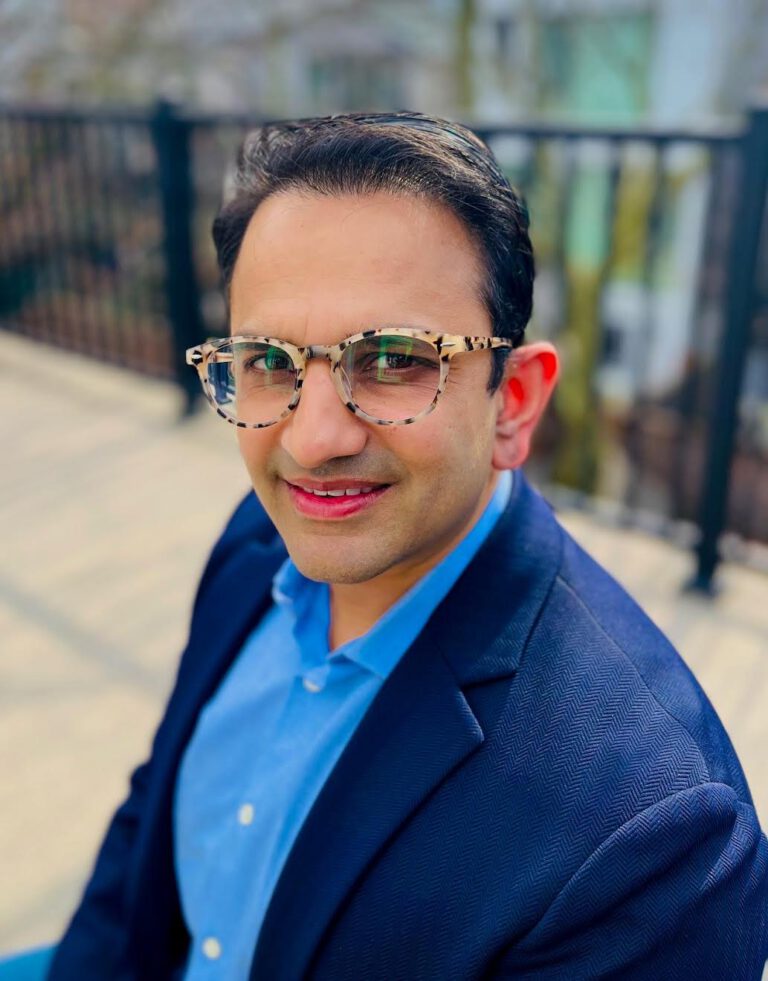
XCF to lead sustainable aviation fuels in the US from feedstock to wing  with plans to go public

0
Mihir Dange, CEO of XCF Global

How many leading environmentalists like Canada’s David Suzuki have stopped flying to reduce their personal greenhouse gas emissions? He could just donate offsets and plant some trees. But aware consumers know that carbon offsets for flying a private jet or globe-trotting is controversial. The best way to travel sustainably is by reducing one’s carbon footprint from the source, which is why SAFs –– or sustainable aviation fuels made from biofuels –– have been so appealing in energy markets.

US-based XCF Global Capital, is poised to make significant strides in bolstering America’s SAFs industry with its latest move towards a going public through a special purpose acquisition company (SPAC). 

Global Aviation Biofuel SAF Industry Research Report in 2024 estimates the market to reach $51.23 billion USD by 2028. 

“At XCF, we see tremendous growth potential from SAF and renewables. We are very bullish on the sector,” said Mihir Dange, CEO of XCF Global. “We live in an exciting time with so many compelling green energy platforms racing to reduce the globe’s carbon footprint.”

Mihir Dange, CEO of XCF Global
XFC Global Capital

“We are in the very beginning stages of SAF in the United States and XCF is committed to being a leader in this space. Our goal is to change the world for the better while delivering world class returns. We welcome strategic relationships and discussions with all the carriers in this industry and look forward to further defining this landscape.”

Consider that US airlines such as Delta plan on replacing 10% of its jet fuel with SAFs by 2030, while United plans to purchase 10 million gallons of sustainable aviation fuel over the next two years. European energy companies and Middle East oil and gas companies are already in the market: Emirates Airline and Neste, a Finnish oil refining company, are supplying over 3 million gallons of blended Neste MY Sustainable Aviation Fuel this year through to 2025 as part of a pilot. 

XCF Global aims to be a leading producer of SAFs with an initial annual production capacity of 38 million gallons following the acquisition of New Rise Renewables, which owns a flagship plant and adjacent site in Reno, Nevada. 

XCF will be the only pure-play public SAF producer in the US market, with competition mainly coming from legacy crude oil providers.

What exactly is SAF?

SAF and biofuels for emirates
Neste’s SAF biofuel tested in Boeing Emirates flight in 2023

Sustainable aviation fuel is synthetic kerosene derived from non-food feedstocks such as waste oils and fats, green and municipal waste and non-food crops. SAF is able to recycle CO2 absorbed by biomass during its lifetime rather than injecting new carbon into the system, reducing emissions by up to 80%. It easily integrates with existing aviation infrastructure.

The market and appetite for SAFs is growing in the US: In September 2021, the US Government launched the Sustainable Aviation Fuel Grand Challenge, a partnership between the U.S. Departments of Energy, Transportation, Agriculture, and others to achieve full decarbonization in aviation by 2050. The aim is to scale up the production of SAF to 35 billion gallons per year by 2050, with an interim goal of at least three billion gallons per year by 2030.

The Biden Administration is expected to update its SAF policies and strategies any day now.

While it sounds like a dream of Daryl Hannah driving her El Camino by recycled chip truck oil back in 2003, the idea of biofuels from plants or biowaste isn’t far-fetched at all: Studies by McKinsey and The Vacationer note that 40% of consumers are willing to pay 2% more for carbon-neutral tickets, amounting to an average of $20 per $1,000 round-trip. About 80% of consumers say sustainable travel is important to them.

With an estimated billion passengers expected to travel by 2050, the demand for SAFs will be extraordinary and XCF seeks to address the aviation industry’s burgeoning demand with an initial production capacity of 38 million gallons in 2024 and anticipates expanding to over 150 million gallons per year within the next 5 years – positioning the company to be a leading producer of SAF in North America.

XCF Global is based in New York and owns multiple facilities in North America. The company expects to rapidly scale by acquiring more strategically located, smaller-footprint sites and quickly converting them into SAF production facilities. 

XCF recently acquired two strategic locations in Wilson, North Carolina and Ft. Myers, Florida. As blended fuel, XCF could produce over 200 million gallons of jet ready SAF from each of these four sites, or altogether nearly one billion gallons of blended SAF per year. 

XCF recently announced a definitive business combination agreement to merge with Focus Impact BH3 Acquisition Co. (Nasdaq: BHAC), a publicly traded special purpose acquisition company, which is expected to result in a newly formed holding company of XCF becoming publicly-listed. Read more about the opportunity here.


The 15-minute city, The Line knocks back expectations to 300,000 inhabitants from 1.5 million

0
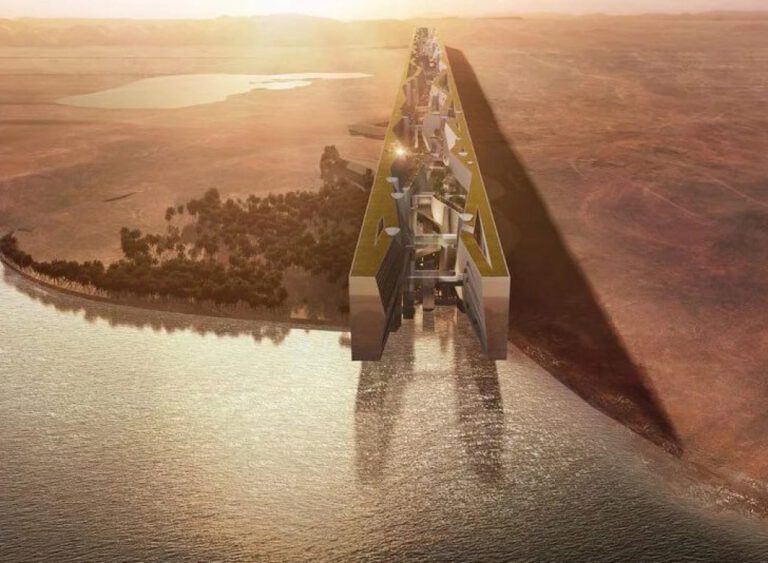
The Line, linear city Saudi Arabia
Illustrated image of The Line, Red Sea, Saudi Arabia

The Line, a 15-minute mega city being built in Saudi Arabia, is supposed to become the flagship development for Saudi Arabia’s Neom project. News agency Bloomberg reports that officials from The Line have downgraded its expectations annd that the 140 mile-long linear city  of two parallel, 500-metre-high, linear skyscrapers – will only house less than 300,000 people by 2030. This is compared to the 1.5 million announced in earlier press material sent to Green Prophet.

The Line will be built in the Northwestern part of Saudi Arabia, close to Israel’s Eilat and close to Jordan’s city of Amman. Saudi Arabia is aligning its economic goals with the West as it tries to account for a post-oil economy. It is a leading investor in areas of new biofuels and sustainable building.

The Bloomberg article points out one of The Line’s contractors has begun dismissing some of the workers it employs on the site.

The Line, linear city Saudi Arabia

The scaling-back of the project is because Saudi Arabia’s sovereign wealth fund run by the Crown Prince hasn’t yet approved Neom’s 2024 budget.

The Line, announced in 2021, would link the Red Sea coastal areas such as Eilat and Dahab and put Saudi Arabia on the travel map.

Construction has begun on the building, with a video released earlier this year showing extensive foundation work taking place on the site. It is being criticized on sustainability and human rights grounds. Bedouins were forcibly evicted in 2022 and one died, with several sentenced to death. Saudi Arabia denies allegations.

Green Prophet reader Robin W Boyd says: “Controlled urban environments have already created dystopian cities due to the fact that there will always be fascist humans who believe themselves to be better than others. Big cities haven’t worked out, bigger cities cannot succeed.”

What do you think? Is The Line the future or something to see as a dystopian past?


5 Ways to Boost Your Energy Naturally

0

boost your energy naturally

You’re tired, drained, exhausted, and you can’t figure out what to do about it. You’ve thrown everything you can imagine at it — coffee, sugar, energy drinks, protein bars — and nothing seems to work anymore. Often, at this point, people will turn to the medical system and get pharmaceutical help. Maybe you think you’ve got chronic fatigue or adrenal fatigue. And maybe you do.

But it’s also possible that you’re just burnt out. Life seems like chaos for so many people these days, and it can be hard to get into a positive energetic flow. Hard, but not impossible. In fact, boosting your energy is not only possible, but it can be done naturally with just a few steps in the right direction.

1. Adjust Your Diet

First, look at your diet. Are you eating junk food, handfuls of candy, and pastries from the local café to get by? Eating a high-carb diet that includes tons of sugar causes energy crashes. You may feel good for an hour or two, but after that, you’ll likely end up worse off than before. Aim instead for a diet high in lean protein, low in white flour-based foods, and rich in fruits and vegetables. This way of eating is more likely to help you sustain your energy levels all day long.

In addition to changing the way you eat, you’ll want to look at what vitamins and minerals you may need in the form of supplements. Many people are low in vitamin D, which is a critical contributor to energy. Gut health is also a major factor in feeling peppy rather than sluggish, so consider popping some probiotics or ACV gummies daily. And of course, don’t forget to hydrate; a glass of water can make you feel energized in a matter of minutes!

2. Move Your Body

This one seems counterintuitive; if you’re already feeling drained, how will exercise make you feel better? Still, study after study shows that exercise boosts energy levels. At first, you may feel out of breath or even more tired after exercise if you’re out of practice. Keep at it, and you’ll be glad you did. You’ll likely notice after a few days that your energy levels improve.

To get started, just remember to move your body. You can park your vehicle further away from the door. You can choose to take the stairs instead of the escalator, and make a point to get up and move around. Then, you can incorporate short daily walks, which may turn into power walks or runs. Finally, find a way to integrate weightlifting or other strength training exercises into your workout for increased muscle strength. After a few months, you may be signing up to run marathons with all your extra energy!

3. Sleep!

woman sleeping in flowers

Another seemingly counterintuitive approach to boosting energy is to sleep more or to sleep better. You may argue that you’re in bed for eight or nine hours a night; how could you possibly need more sleep? But so many people today may lay in bed for long enough, but they’re not actually getting quality sleep. And still others are shorting their sleep in the interest of productivity, parroting the adage, “I’ll sleep when I’m dead.”

The truth is that not only does the amount of sleep matter, but the quality of sleep also matters. Turn off your phone and your television. Those blue lights will wire your brain to stay up and active long after you should be sleeping. The good news is that proper nutrition and exercise contribute to better sleep, so it’s all connected. Once you start these healthy habits, you’ll likely find yourself sleeping like a baby and waking with the energy of your youth.

4. If You Caffeinate, Do It Right

Free volt meter print, boost energy

Coffee shops seem to exist on virtually every corner of every town in the United States, and for good reason. Coffee is delicious, and even those who don’t love coffee can find fabulous tea to enjoy. But you can take caffeine too far. Too much caffeine can actually be counterproductive and cause anxiety and big crashes that leave you depleted.

This reality does not mean you have to cut coffee or tea out of your daily regime. It just means you need to be smart about your intake. Enjoy your daily cup of Joe in the morning after a cup of water. And if you’re going to have another cup of caffeine, consider green tea or a matcha latte. Green tea does not typically come with the energy crashes that coffee does. Also, try not to have any caffeinated beverages after noon as it can disrupt your sleep schedule.

5. Limit Your Alcohol Intake

drinking wine

Finally, alcohol is one of those amazing elixirs that feels like it’s energizing you, only to drop you into exhaustion later. And since you can’t constantly drink alcohol to keep your energy up, it’s a good idea to cut way back. If you’re looking for the reason your energy is lagging on Sunday, Monday, and even Tuesday, weekend drinking could be it. At the very least it can be a large contributor.

Some people claim that no amount of alcohol is good for your health. Others say a glass of wine can be good for you. The data is controversial to say the least. You certainly don’t have to become a teetotaler, but it might help your energy levels to limit yourself to a single drink or two one or two days a week. Watch how your sleep improves, how your energy levels change, and even how your mood lifts. Switching to mocktails may end up making a world of difference for you.

Remember, you don’t have to do everything all the time and all at once. You can slowly integrate one or two of these changes and observe whether or not they help. Ideally, you’ll start with nutrition because it can have an almost immediate effect. From there, start to move more, and you’ll likely naturally see improvements in your sleep. At that point, you might not even need to cut caffeine or alcohol out of your life. But who knows, you might want to try it to gain an even stronger boost!


Dudley Gann Explains: What Is Greenwashing and How to Avoid It

0
seeing through greenwashing
Is it truly ecological or a matter of greenwashing? Know the difference.

Modern consumers are increasingly conscious of the social and environmental impacts of the products and services they purchase, preferring to do business with companies that show ethical practices, and that they are committed to positive social and environmental impacts. In a 2020 survey of consumer sentiment in the United States, over 60 percent of respondents said that they would be willing to pay more for a product with sustainable packaging. Another recent study conducted by NielsenIQ found that 78 percent of U.S. consumers say that a sustainable lifestyle is important to them. 

Industrialism has led to incredible advancements that make modern life what it is today. However, it’s becoming evident that our business practices have impacts beyond just profits, affecting our planet and society. This realization means it’s crucial for both big and small companies to reassess their operations with sustainability in mind. Despite this, the growing demand for sustainable businesses has led some companies to engage in “greenwashing,” an unethical practice that involves making false or baseless claims about being environmentally friendly, exploiting the benefits of a green image without genuine action.

According to Dudley Gann, founder of the green consulting firm EcoVision Solutions, he often encounters clients who have a desire to incorporate more sustainable practices into their business, but fear that if they do not tackle every single minute aspect of eco-friendly practices they will be accused of greenwashing. 

“Many of my clients share a common fear—they worry that any effort towards sustainability that isn’t perfect will be seen as greenwashing,” said Gann. “But the journey to becoming more sustainable doesn’t require immediate perfection. Needing time to adjust resources and introduce new practices isn’t dishonest—it’s a part of the process. The key to genuinely integrating sustainable solutions into a business is to enhance transparency. Being open about where you are in your sustainability journey helps build trust and shows a commitment to real change.”

Before founding his consulting firm, Gann spent over two decades working in green technology. His business EcoVision Solutions offers guidance to businesses seeking to adopt more environmentally friendly practices, providing customized solutions that align with their specific environmental goals. He regularly contributes to various blogs and publications, focusing on sustainable business practices, and has additionally spoken at several conferences on the subject.

The concept of greenwashing

It’s crucial to define what greenwashing is and what it isn’t. Greenwashing occurs when companies falsely claim to be environmentally friendly or socially responsible without evidence to support these claims. 

Unfortunately, the growing popularity of sustainability and green initiatives among stakeholders is fueling greenwashing. As consumers and investors increasingly prefer companies committed to responsible and sustainable practices, some businesses may resort to greenwashing as a shortcut to attract this eco-conscious market, despite lacking genuine sustainable actions.

“Greenwashing will usually involve focusing on short-term, convenient, superficial issues rather than addressing long-term challenges that would truly benefit society and the environment,” said Dudley Gann. “Leaders who go down this path might not see the double whammy they’re setting up for their company. Not only are they missing the mark on addressing real issues, but they’re also flirting with a major reputational hit and a trust meltdown if their dishonesty comes to light.”

Greenwashing often shows up as a lack of evidence or third-party validation for eco-friendly claims. It might involve using broad terms like ‘environmentally friendly’ without offering specifics, ignoring the company’s less sustainable practices, making green claims irrelevant to the product or company, or simply stating claims that are outright false. In 2021, the European Commission and National Consumer Authorities conducted an investigation of online marketplaces for signs of greenwashing. They found that 42 percent of the environmental claims they reviewed were exaggerated, false, or misleading.

Some companies engaged in greenwashing focus their marketing efforts on promoting the eco-friendly aspects of their business, ignoring the parts that are not environmentally friendly. Meanwhile, other companies resort to outright lies, intentionally deceiving customers and regulators with false information. However, being accused of greenwashing doesn’t always imply bad intentions. Sometimes, it may simply be due to poor communication. Vague environmental claims that lack clear, verified data can seem dishonest, even if there is some truth to them. In other cases, companies might set overly ambitious sustainability goals that they ultimately fail to achieve, not because they didn’t want to, but because the goals were too challenging to meet.

“Greenwashing does not apply to companies that are genuinely working towards sustainability, even if they are just beginning to put these practices into place,” Gann said.

The far-reaching impact of greenwashing

As previously discussed, greenwashing can significantly undermine consumer trust and loyalty. This breach not only damages the brand-consumer relationship, but also reduces customer loyalty. Additionally, a pervasive culture of greenwashing breeds skepticism among consumers towards all environmental claims, making it difficult for companies genuinely committed to sustainability to gain recognition and trust. 

The environmental and social consequences of greenwashing are equally concerning. It misleads the public about what environmental issues should be prioritized, diverting attention from urgent problems that require immediate action. This shift can stifle true innovation in sustainable technologies and practices because companies may opt to spend more on marketing their products as “green” rather than investing in genuine environmental improvements. Furthermore, greenwashing could unintentionally result in weaker environmental rules and policies. When it’s hard to tell apart real sustainability actions from greenwashing, policymakers might end up setting less strict rules, not fully tackling the biggest environmental issues. 

“The impact of greenwashing extends way beyond the immediate effects on consumer behavior. It creates serious difficulties for environmental sustainability and social equity. Addressing greenwashing is essential for fostering a more honest, more responsible, genuinely sustainable future,” Gann said.

How to avoid greenwashing

Estee Lauder in Canada sets up solar power on the roof
Estee Lauder in Canada sets up solar power on the roof of the manufacturing facility. Businesses can do this as well as individuals.

According to Dudley Gann, in order to avoid greenwashing companies need to deeply integrate sustainability into their core mission and values. This involves making environmental responsibility a fundamental aspect of the business model itself, rather than an afterthought or a marketing strategy. Here’s how to do it:

Embed sustainability in the mission: Make sustainability a central component of the company’s mission statement. This ensures that all stakeholders, from employees to investors, understand that environmental responsibility is a key priority.

Incorporate it into the business model: Design the company’s operations, products, and services around sustainable practices. This could mean opting for eco-friendly materials, investing in renewable energy, or developing products that have a smaller environmental footprint.

Set clear sustainability metrics: Establish specific, measurable goals for sustainability efforts, such as reducing carbon emissions, minimizing waste, or increasing the use of renewable resources. Use these metrics to track progress and make adjustments as needed.

Hold everyone accountable: Implement standards for sustainability that apply to everyone in the company, from the CEO to entry-level employees. Encourage a culture where sustainability is everyone’s responsibility, and where individuals and teams are held accountable for meeting environmental goals.

Continuous education and training: Educate employees about the importance of sustainability and train them in specific practices that can help achieve the company’s environmental goals. This can help ensure that everyone is equipped to contribute to the sustainability mission.

Transparent reporting: Regularly report on the company’s sustainability efforts and progress towards its goals. Being open about both successes and areas for improvement can help build trust with consumers, investors, and other stakeholders.

Engage with stakeholders: Listen to customers, employees, and partners about their views on sustainability and how the company can improve its practices. Engaging with stakeholders can provide valuable insights and demonstrate a genuine commitment to environmental responsibility.

“Getting to sustainability isn’t about nailing it perfectly right out of the gate. It’s more about being open and honest, taking small steps to get better over time. When a company really makes sustainability part of its DNA—like, it’s in everything they do, from their big mission down to the nitty-gritty daily stuff—that’s when they start to make a real splash,” Gann said.  


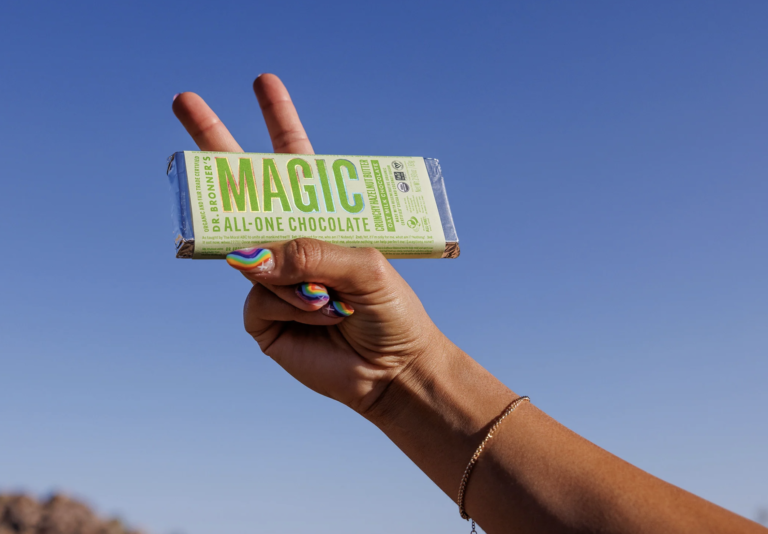
Dr. Bronner’s All-One magical, regeneratively-grown chocolate

Dr. Bronner chocolate

Chocolate these days is taking an other-worldly position on the grocery store shelves (and online) and there are many reasons why we revere the fermented fruit of the cacao tree. Plenty of small-batch companies now offer low-sugar, high percentage organic cacao in their chocolate. Some gives us a break mid-day and some like a sage or a mystic offer us gentle passage to knowing our higher selves. That’s what I have derived from attending a cacao ceremony. 

Like a chip off the old chocolate block, the Dr. Bronner’s brand we know and adore for its biodegradable castile soap, is now in the chocolate business. And like other brands we love –– such as Nature’s Path –– is making a commitment to regenerative farming. In bar form –– regeneratively farmed chocolate. 

When Dr. Bronner’s headquarters asked us to review their chocolate, we called on the biggest chocolate expert we know –– Raven Littleone for the expert testing. She guards a monastery of sacred water in a forest in Nipissing, Ontario. Some say hers is among the most sacred and ancient water in the world. Kings and queens and me and everything in between have made the pilgrimage to her place. The people who appreciate this fact and who also make fine chocolate today are Raven’s friends and neighbors, popping in with bags of ChocoSol (Toronto) and Sacred Heart Chocolate (David Wolfe, USA). 

A courier walked down to her off-grid cabin, powered only by the sun with a box of ALL-One Bronner’s chocolates. Here is Raven’s rave review:

Raven Littleone, Gnomeland, Ontario with Gabriel and Auzzie
Raven Littleone (center), Gnomeland, Ontario with Gabriel and Auzzie

“Like anything magic, Dr Bronner’s MAGIC All-One Chocolate bar begs to be experienced with that thrill, that excitement, of what dares such name! Reading Dr Bronner’s labels on any of his products, both inside and out, may require a capacity to decipher ancient texts… if one can wait that long just to take a bite. 

“The scent that wafted out as I ripped it open was a pleasant surprise. I didn’t know salt had a scent. The balance between salt, coconut sugar, and bourbon vanilla bean with a buttery taste felt just right; without the cacao overpowering the mouth. The taste kept on going even though I sipped kombucha in between. 

“The magic may be in the satisfaction one gets after two or three pieces of Dr Bronner’s organic cacao… a multi-sensory feel good, healthy food for the brain.”

dr bronner regeneratively grown organic chocolate

Dr. Bronner’s Magic All-One Chocolate pairs world-class Swiss chocolatiers with fairly-treated cocoa farmers practicing regenerative organic agriculture to create a delicious dark chocolate. They sell a 6-pack in the flavors: Salted Whole Almonds, Salted Almond Butter, Crunchy Hazelnut Butter, Roasted Whole Hazelnuts, Salted Dark Chocolate, Smooth Coconut Praline — and vegan, almond milk versions too as Creamy Mocha Latte, Golden Milk Chai & Crunchy Hazelnut Butter.

dr bronner regeneratively grown organic chocolate

We know the Dr. Bronner’s brand from the 90s when a friend had a bottle of castile soap in his shower. Mesmerized by the text, I’d go on to learn that the founder of the company –– Emanuel Bronner –– was a Holocaust survivor, who needed to spread the idea of unity and peace and that all religions should unite as one. Yeah, the text was unorthodox, but deeply refreshing compared to the sanitized industrial products I’d known like Irish Spring, or the Dove soap that my parents kept in their shower.

Peter Steele, Raven
Peter Steele, Raven Littleone

When I met Raven’s late husband Peter Steele –– the one who started speaking up for raw water in Canada, I knew I was meeting a Bronner-like entity whose wisdom and sparks of IN-sanity do heal the planet. Can a sip of spring water from Peter and Raven’s forest heal the world? I believe it can and that’s why so many are drawn to that place. Can a bite of Dr. Bronner’s ALL-ONE chocolate ignite the powers of the world to unite as one? Stranger things have happened. Let’s try!

As Bronner once said: “You are the captain of thy ship! The master of thy soul!

::Dr. Bronner’s

18 resolutions from Dr. Bronner’s original soap label – 18 means “life” in gematria

Dr. bronner holding a bottle of castile soap
Dr. Bronner holding a bottle of castile soap
  1. Under one Eternal Father, I must teach friend & Enemy the full truth Moral ABC to unite all mankind free in One-God-Faith.
  2. To get it all done: A Beast can only listen to its friend! A Human Being must teach-love his Enemy or that being is not yet human!
  3. A shark can only love its friend. Lacking frontal lobes, it must avoid-fear-smear-hate-slander-dominate-dictate-distort-destroy anything it does not know, understand or disagrees with. That’s a shark. But a Human Being possessing the Kingdom of God’s Law, the Essene Moral ABC of the FREE within his frontal lobes, works hard to teach friend & enemy the Moral ABC, otherwise that being is not yet human.
  4. A Human Being is a constructive working scientist who knows, loves, follows, teaches Full Truth, God’s Law, to all of God’s Children, friend & Enemy, otherwise that being is not yet Human! Exceptions? None!
  5. The moment any being follows, tolerates or teaches earthen half-gods or half-truisms, that moment he becomes a godless, intolerant Beast, potentially 10 times more dangerous & destructive than any ordinary Shark-Snake-Rat or Panther!
  6. If we really want Brotherhood-Progress-Peace, not war, we must not only listen to the neighbor whom we choose, but also to the one God sends! Otherwise we’re still Beasts, not yet Human! Exceptions eternally? Absolutely None! Jesus’ Manual of Discipline, out of the mouth of subway-builder Nikita Khrushchev, April ’56, London, England
  7. “WE MUST TEACH LOVE OUR ENEMY OR PERISH! BEASTS TEACH ONLY THEIR FRIENDS!” But after 2,000 years it never got done! The godless beasts still disapproved! Result? These tremendous 13 words never got printed! Because the brilliant 48-year-young Rabbi Joshua Loth Liebman’s book Peace of Mind was distorted after he dropped dead! Diagnosis? “Sudden heart attack!” Exactly as suffered by Rabbi Jesus, Spinoza, Thomas Paine, Samuel Friedman, Steiner-Prag and Rabbi Leo Baeck: 6 & 66 million “sudden heart attacks,” murders caused by us godless intolerant Beasts.
  8. Always we’re our Brother’s Teacher of hardworking full truth uniting One-God-State or we decay being his Keeper by unworkable half-true intolerant hate!
  9. He who risks his life teaching friend & Enemy the Moral ABC uniting all mankind free wins Eternal Life! He who does less than that perishes by half-truth strife.
  10. I am the Son of God and so are you! I am the manifestation of God’s Eternal Law & so are you! I have learned great wonders: you shall learn greater wonders! I have done good work! You shall do better work! I have not come to change God’s Law, but we each came to find-follow-fulfill, print-protect-practice-preach-teach & enjoy it! Therefore, build you 1st the Kingdom of God’s Eternal Law within you, that is, memorize the Essene Moral ABC of the Free, All-One-Faith-in-One-God-State! To never yield to half-true hate! And everything you need shall be added unto you! Search & you shall find! Knock & it shall be opened! Sow & you shall reap! Work hard & you shall create! Speak up – don’t be afraid! Ask & you shall receive! But remember, only those enjoy Eternal Life in our all-embracing Father’s Kingdom that had the courage to teach friend & Enemy the Moral ABC to unite all free! Eternally One, All-One! Exceptions? None! These are the great Peace-winning teachings of the Manual of Discipline by the carpenter, the great Rabbi Jesus! Thanks to Mohammed’s Arab 1948-found Essene Scrolls, thank only God for that! But now came unto Jesus, the Disciple; his own Sisters & Brothers to say, “It is insane what does he say! Let’s put him away!” And answered he to survive free:
  11. “Who are my Sisters & my Brothers? Only those that seek with me to teach full truth, the Moral ABC uniting all mankind free in One-God-State! Free of half-true hate! Those are my Sisters & Brothers! Others I know not!” But now his Disciples asked, “Then why, why are we God-loving Children of the great African shepherd Israel persecuted more than any other people! Why? Why? Why?” And answered he:
  12. “God bless the persecuted! They alone are His chosen people! For those apes that did not suffer from persecution remained apes! Only those that worked hard to overcome untold centuries of Barbaric ice-aged persecution, reluctantly became Human Beings! Much, much too reluctantly! Exceptions? Absolutely None!”
  13. To stay free: Only that full truth we have the courage to teach & give & give, can we enjoy to keep, evolve & live & live! Whatever we try to give at our death bed or take along, it absolute certain soon is gone! Exceptions eternally? None!
  14. Let him who is without fault throw the first stone, for only God is always perfect! Judge no man unless you have walked in his shoes! So when your fellow man you measure, take him at his best! With that lever lift him higher, overlook the rest! But remember, unless a man knows the Moral ABC of the Free, none can help him to survive brave-free!
  15. Let him who does not want to work with his hands, not eat with his hands either!
  16. Put Father’s discipline, put God’s Law back at the head of your family, or you have no family-nation-team! Remember, every organization is the shadow of one constructive man or there is no organization, no construction, no man!
  17. Self-disciplined timing is the skeleton of your intellect, the key to freedom, the basis of happiness, the foundation of Brotherhood! Without it, the most brilliant head remains useless-ineffective-small!
  18. From every power enchains, each man can only free himself as self-control he gains! Therefore, he who conquers himself, conquers more than he who conquers the largest city!

Dr. Bronner soap evolution

THE MORAL ABC, INTRODUCED BY KIPLING’S “IF” & SOAPMAKER BRONNER

If you can keep your head, when all about you are losing theirs & blaming it on you; If you can trust yourself when all men doubt you, but make allowance for their doubting too; If you can wait and not be tired by waiting, or being lied about, don’t deal in lies, or being hated, don’t give way to hating! And yet don’t look too good nor talk too wise: If you can dream—and not make dreams your master; If you can think—and not make thoughts your aim; If you can meet with Triumph and Disaster and treat those two imposters just the same; If you can bear to hear the full truth that you have spoken, twisted by crooks to make a trap for fools; Or watch the things you have given your life to, broken, and yet stoop to build them up again with worn-out tools; If you can make one heap of all your winnings, and risk it at one turn of pitch or toss; And lose and start again at your beginnings and never breathe a word about your loss! If you can force your heart, your nerve, our sinew, to serve you long after they are gone, and so hold on although there is nothing left within you, except that voice which says to them: “Hold on! Hold on! “ If you can talk to crowds & keep your virtue; or walk with Kings—nor lose that common touch; If neither loving friend nor enemy can hurt you; If all men count with you, but none too much! Then, if you can work hard to teach each unforgiving minute the Moral ABC that unites all mankind free, come hell, hate, ban, you’ll enjoy God’s Spaceship Earth & do great work within it! And which is more you’l help unite the human race in Astronomy’s great All-One-God-Faith! For we’re All-One of None! Sure, they say: “East is East & West is West & never the twain shall meet!” But there is neither East nor West, nor border, breed nor birth once the Moral ABC unites all mankind free on God’s Spaceship Earth! Then, and only then, no matter how rough the trip, how charged with punishment the scroll, you are the captain of thy ship! The master of thy soul!

For who else but God gave man this sensors passion, love that can spark mere dust to life?! Beauty, in our Eternal father’s fashion, ecstasy—far above earthly greediness & strife! Poetry, uniting All-One, All-Brave, All-Life!

Who else but God can make love last, one trillion years of sweet eternities?! For when conquered after years of hardworking absolute cleanliness, toil, sweat, blood, love can strike like greased lightning sent by God to spark mere dust to intense blazing fire and create new love, faith-hope-guts-strength as only God inspires, create the unity of the human race in Astronomy’s Eternally Tremendous, All-One-God-Faith, as all mankind desires! Bronner’s Lavender Soap quart poem teaches ‘How to love’ uniting all-one above! Above! Who else but God!

Wild About Wild Asparagus

0

Wild Asparagus

I’m wild about asparagus. But I never expected to find wild asparagus growing close to – and even in – urban areas near home. But it does, and I’ve found it growing freely in parks and hillsides in the cooler hilly areas of Israel. Some have reported foraging wild asparagus even around Tel Aviv.

The late Leda Meredith, foraging expert and author, showed me a tall, thorny bush growing in a Jerusalem park, and casually identified it as asparagus. I was surprised, almost unbelieving, until Leda showed me to look at the base of the plant, where the young, edible shoots had popped up.

The spears are almost unnoticeable, unless you’ve got your eye peeled for them. Then pick them; don’t wait. Once mature, they become too tough to eat. Given time to flower, they develop prickles that deceive you into thinking that nothing edible can be growing there.

flowering wild asparagus

The trick is to look for them in season, which is in winter and early spring, and as Leda showed me, to search among the roots of the plant.

It’s almost past the time when you can forage young asparagus in the Levant; April is the last month you’ll find it, before full summer arrives. You’ll have best luck searching in woodlands, because the asparagus plant likes to root itself under shady trees.

Asparagus is a seasonal treat. We have some good asparagus recipes for you to enjoy. And you can enjoy asparagus every day without concern. The season is short, and the vegetable is so rich in antioxidants and anti-inflammatory, and anti-viral properties that you can consider it a nutritional supplement. Unless you just want to enjoy its delicious flavor while the season lasts.

I love asparagus simply steamed, with a little butter drizzled over. A vegan alternative is olive oil and lemon juice dressing. But here are asparagus recipes you might enjoy cooking:

Weekly Vegewarian Recipe: Asparagus and Mushroom Risotto

3 Easy Ways to Cook Asparagus


Repression of Bahai’s in Iran “a crime against humanity”

Bahai Tomb in Iran
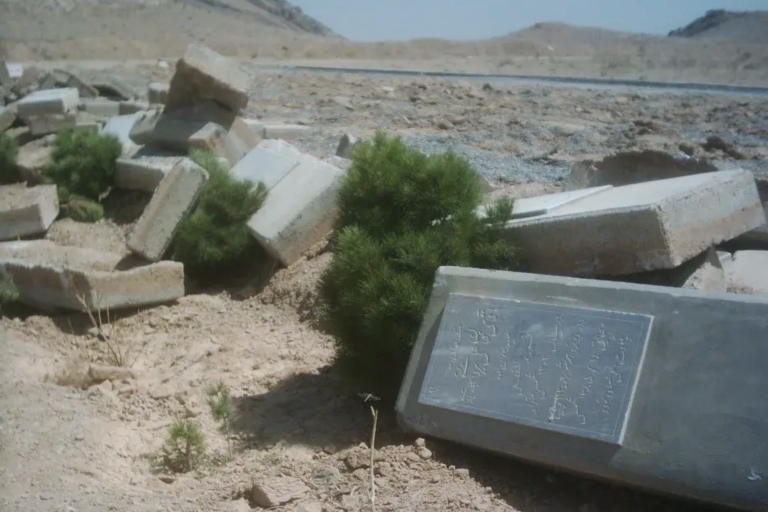
A desecrated Bahai tob in Iran. Via HRW.

Iranian authorities’ decades-long systematic repression of Baha’is amounts to the crime against humanity of persecution, Human Rights Watch said in a report released today.

The 49-page report, “‘The Boot on My Neck’: Iranian Authorities’ Crime of Persecution Against Baha’is in Iran,” documents Iranian authorities’ systematic violation of the fundamental rights of members of the Baha’i community through discriminatory laws and policies that target them.

The Bahai people are among the most peaceful in the world. Its founder, an Iranian, combined all the world religions into a new practice united Judaism, Islam, Christianity and more into one faith. The world center is in Israel. The Baháʼí World Centre is the name given to the spiritual and administrative centre of the Baháʼí Faith in the city of Acre, Israel.

Read Also: How Bahai in Iran are inherently green

Human Rights Watch found that Baha’is face a spectrum of abuses. Government agencies arrest and imprison Baha’is arbitrarily, confiscate their property, restrict their education and employment opportunities, and even deny them dignified burial. We met a Bahai in Toronto last summer working as an Uber driver, who confirmed these allegations. Bahai’s in Egypt also face prosecution.

“Iranian authorities deprive Baha’is of their fundamental rights in every aspect of their lives, not due to their actions, but simply for belonging to a faith group,” said Michael Page, deputy Middle East director at Human Rights Watch. “It is critically important to increase international pressure on Iran to end this crime against humanity.”

Bahai Temple in Chile
Bahai temple in Chile

The report, released from Beirut, draws on extensive documentation by Human Rights Watch and Iranian human rights groups regarding violations against Baha’is in Iran. Researchers reviewed government policies, court documents, and communications with Baha’is. Information was accessed through the Archive of the Persecution of Baha’is in Iran and documents from the Human Rights Activists News Agency. Human Rights Watch also conducted interviews with 14 Baha’is remotely in Persian, both within Iran and abroad place between May 2022 and March 2023.

Baha’is are the largest unrecognized religious minority in Iran. They have been the target of harsh, state-backed repression since their religion was established in the 19th century. After the 1979 revolution, Iranian authorities executed or forcibly disappeared hundreds of Baha’is, including their community leaders. Thousands more have lost their jobs and pensions or were forced to leave their homes or country.

Read Also: Women in Iran killed for not wearing head covering

Since 1979, the Islamic Republic of Iran has codified its repression of Baha’is into law and official government policy, vigorously enforced by security forces and judicial authorities. Judicial authorities interpret vague national security laws to label Baha’is an outlawed religious minority, branding them as a threat to national security. Human Rights Watch says it believes that this sustained systematic repression deliberately deprives Baha’is of their basic rights, constituting the crime against humanity of persecution.

It’s been 40 years since 10 Bahai women were hung for not renouncing their faith in Iran

Baha’is spoke to Human Rights Watch described their persecution as a series of violations that begin with their first encounters with the Iranian state and affect every aspect of their lives, including education, employment, and marriage.

“[When I left Iran to continue my education], I did not intend to emigrate,” said Negar Sabet, 38-year-old daughter of Mahvash Sabet Shahriari, a prominent member of the Baha’i community currently imprisoned in Iran. She said:

“But my experience at the university outside of the country was very different, as if for the first time a burden was lifted off my shoulders and the boot on my neck had disappeared … There [abroad] I experienced a strange freedom, and for the first time I was equal with other people, and no one was pulling themselves away from me.”


The world’s renewable electricity capacity hit a record 473 GW in 2023

0

irena renewable energy

The world’s renewable electricity capacity hit a record 473 GW in 2023, according to International Renewable Energy Agency (IRENA). And, no Turkey, nuclear energy is not renewable energy.

In their latest report China’s share in green power additions was a whopping 62.9%. The organization is based in the United Arab Emirates.

  • Photovoltaics nominally took over from hydropower as the biggest renewables segment.
  • Global solar power capacity surged 32.4% to 1.42 TW and had a 73% share in annual additions.
  • Total wind power surpassed 1 TW last year.

The organization warned that many countries are cut off from the benefits of the energy transition. The Renewable Capacity Statistics 2024 report shows that 2023 set a new record in renewables deployment in the power sector by reaching a total capacity of 3.87 TW globally.

Renewables accounted for 86% of all capacity additions.

However, growth is unevenly distributed across the world and the goal to triple renewable power by 2030 is still out of reach.

The 13.9% renewables expansion rate (473 GW) is led by China. The country accounted for 62.9% of the entire increase, with its 298 GW. Its own expansion amounted to 25.7%, to 1.45 TW.

For comparison, global growth was 10% in 2022.

“Policy interventions and a global course correction are urgently needed to effectively overcome structural barriers and create local value in emerging market and developing economies, many of which are still left behind in this progress. The patterns of concentration in both geography and technology threaten to intensify the decarbonisation divide and pose a significant risk to achieving the tripling target,” said Director-General of IRENA Francesco La Camera.

Turkey thinks nuclear energy is renewable energy. Who’s going to tell them?

0
The Akkuyu Nuclear Power Plant is a large nuclear power plant in Turkey under construction located in Akkuyu, Büyükeceli, Mersin Province. It is expected to generate around 10% of the country's electricity when completed.
The Akkuyu Nuclear Power Plant is a large nuclear power plant in Turkey under construction located in Akkuyu, Büyükeceli, Mersin Province. It is expected to generate around 10% of the country’s electricity when completed.

At a recent forum in Sochi, Russia, Turkey’s Energy and Natural resources minister Alparslan Bayraktar announced that nuclear energy would play a “critical role” in Turkey’s journey towards achieving net-zero emissions by 2053. Like Greta Thunberg, Turkey and Russia consider nuclear energy renewable energy.

“We aim to reach a total of 12 reactors and a nuclear power of 15,000 megawatts, with probably four reactors in three different locations in Turkey,” he said.

Bayraktar said the country’s aim was to install two additional nuclear plants alongside the Akkuyu Nuclear Power Plant, currently under construction in the Mersin province. Environmentalists in Turkey have been against the plant, built in collaboration with Russia, from the outset.

Funny that the true renewable energy leader Germany shut down its last reactor in 2023, while Turkey starts up its first.

The Turkish Government view nuclear energy as renewable energy. Nuclear is not a renewable energy source, but it is an alternative to fossil fuels because it does not emit greenhouse gases. Environmental groups usually consider nuclear as a non-renewable energy source.

The Akkuyu Nuclear Power Plant is a large nuclear power plant in Turkey under construction located in Akkuyu, Büyükeceli, Mersin Province. It is expected to generate around 10% of the country’s electricity when completed.

“We have a great potential for renewables and energy efficiency, but we absolutely need to add nuclear energy into our energy mix,” Bayraktar said.

Some thought leaders at the Dayan Center believe that while Turkey has agreed as part of NATO to be a non-nuclear state, the use of nuclear as domestic energy will give Turkey an easy in for developing nuclear weapons. Erdogen said in 2019 said, “Some countries have missiles with nuclear warheads, not one or two. But I can’t have missiles with nuclear heads. I cannot accept this.”

Is nuclear energy renewable energy?

Nuclear energy is often misconstrued as renewable due to its low greenhouse gas emissions and continuous power generation. However, it is not classified as renewable for several reasons. Firstly, nuclear power relies on the extraction of uranium, a finite resource that must be mined, processed, and refined. Although uranium reserves are substantial, they are not limitless, and extraction entails environmental impacts such as habitat destruction and water pollution.

Nuclear energy produces hazardous radioactive waste that remains harmful for thousands of years, requiring careful disposal and management. Unlike renewable sources like solar and wind, which generate power through natural processes that are indefinitely available, nuclear reactors rely on controlled nuclear fission, a process that consumes uranium fuel and generates waste.

The construction and decommissioning of nuclear power plants involve significant energy inputs and environmental costs, making them less sustainable than truly renewable alternatives. While nuclear energy provides low-carbon electricity, its reliance on finite resources and generation of long-lived radioactive waste preclude it from being classified as a renewable energy source. Thus, while nuclear energy may contribute to reducing carbon emissions in the short term, it is not a sustainable solution for meeting long-term energy needs.

Has Turkey misread the room by calling nuclear energy renewable energy? The proposed expansion aims to reach 7.2 gigawatts (GW) of nuclear capacity by 2035 and up to 20GW by 2050.

Bayraktar has described plans for incorporating small modular reactors, which could potentially contribute some 5GW over the next few decades.

The minister also expressed the necessity of developing a balanced energy mix, combining renewable sources with stable base load power, particularly citing the intermittent nature of solar and wind energy.

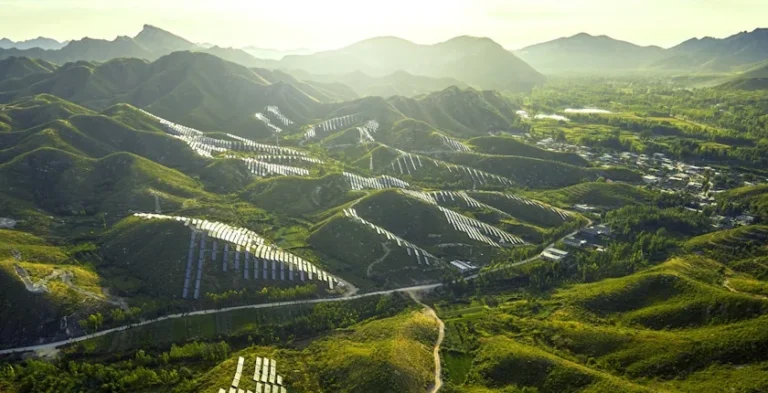
A facade of shimmering steel panels envelops this control centre that Istanbul studio Bilgin Architects has created in the plains of Karapinar, Turkey, for one of Europe's largest solar farms. Named Central Control Building, it is designed by Bilgin Architects to act as a centralised location from which to monitor and control the expansive field of 3.2 million solar panels.
A solar energy plant in Turkey

Turkey’s sunny climate offers a high solar energy potential, specifically in the South Eastern Anatolia and Mediterranean regions. Solar power is a growing part of renewable energy in the country, with 12 gigawatts (GW) of solar panels generating 6% of the country’s electricity.

Wind power generates about 10% of Turkey’s electricity, mainly in the west in the Aegean and Marmara regions, and is gradually becoming a larger share of renewable energy in the country. As of 2024, Turkey has 12 gigawatts (GW) of wind turbines.

Turkey has a problematic environmental track record. Consider the environmentalists who were murdered over the construction of a stone quarry in their forest.

Being on the side of the planet doesn’t pay in Turkey. You can go to jail for speaking up against pollution or high cancer rates in children. Turkey’s leader supports Hamas and terror groups publicly. Are these the kind of society you want using nuclear power?

Just a reminder to Turkey:

  1. Chernobyl Disaster (1986): The Chernobyl nuclear power plant explosion in Ukraine remains one of the worst nuclear accidents in history. A combination of design flaws and operator errors led to a catastrophic explosion in reactor 4, releasing a massive amount of radioactive materials into the atmosphere. The disaster resulted in immediate deaths, widespread radiation exposure, and long-term health effects for thousands of people. The affected area remains largely uninhabitable to this day.
  2. Fukushima Daiichi Nuclear Disaster (2011): Following a devastating earthquake and tsunami in Japan, the Fukushima Daiichi nuclear power plant experienced multiple reactor meltdowns, hydrogen explosions, and the release of radioactive materials. The disaster led to widespread evacuations, contamination of soil and water, and long-term health concerns for residents and workers. It reignited global debates on nuclear safety and prompted a reassessment of nuclear power policies worldwide.
  3. Three Mile Island Accident (1979): The partial meltdown of a reactor at the Three Mile Island nuclear power plant in Pennsylvania, USA, marked a significant nuclear accident in history. Equipment malfunctions and human errors led to a loss of coolant and partial core meltdown in reactor 2. While the incident resulted in limited off-site radiation releases and no immediate fatalities, it caused public panic, raised safety concerns, and led to stricter regulations for nuclear power plants in the United States.

Want to reach out to the Turkish energy ministry. Contact them here.


Green spaces help heart patients live longer: new study

0
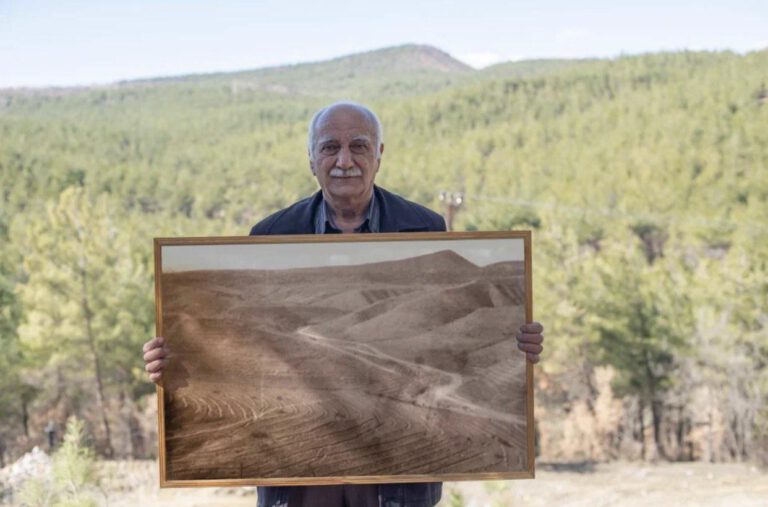
Sehmus Erginoglu, 71, decided to do something about an area of wasteland in his home city of Mardin in southern Turkey. He began by clearing out rubbish from the site, then he installed water pipes and eventually started to plant saplings. Today the site is home to a small forest of around 11,000 trees, with thousands more planted in areas nearby. (All pictures by Murat Bayram/MEE)
Man poses with photo of trees he helped restore.

In a long-term study, unprecedented in its kind and scope, researchers from Tel Aviv University examined the association between a greener environment, which is most likely saturated with vegetation, and the mortality rate of coronary heart patients after undergoing bypass surgery – which is considered a traumatic event from both the physical and mental aspects.

The study, which was carried out on thousands of patients who live all over the State of Israel and followed them over a period of more than 10 years, found that the survival rate of bypass surgery heart patients who live in greener areas is significantly greater than those whose living environment is devoid of greenery. Israel’s unique healthcare system collects digital health data on its entire population which can be licensed, anonymously, for use in medical studies after the fact. That’s how Israel has so much data on medical cannabis patients over time. In the US much of this data is only hand-written and never digitalized.

The study was conducted by PhD student Maya Sadeh under the guidance of Prof. Rachel Dankner. The research was carried out with the support of the Environment and Health Fund and the Israel Science Foundation, and was published in the prestigious journal Epidemiology.

Prof. Dankner: “The current study was based on a database we built at the Gertner Institute about 20 years ago for another study: 3,128 heart patients who underwent bypass surgery in seven medical centers in Israel, from Haifa to Beer Sheva, between the years 2004-2007. Using data from the Ministry of the Interior Affairs we found that 1,442 (46%) of them died of various causes by the year 2021.

“In this study, we wanted to examine to what extent (if at all) the life expectancy of heart patients after surgery is associated with the amount of green vegetation in their residential area.”

For the purpose of the study, the researchers cross-referenced the patients’ residential address data with data from NASA’s Landsat satellites, which photograph the Earth and are able to locate the color green with a very high resolution and within a range of up to 30×30 meters from the residential address – which allows identification of vegetation even within urban areas.

Visible earth from Space, NASA
NASA image of Israel and Lebanon’s green spaces from space
Landsat image of Israel's Galilee region
Landsat image of Israel’s Galilee region

The researchers worked to accurately account for the amount of greenery in a radius of up to 300m around the address of each of the patients, and placed this figure against the dates of death or survival of the patients, over 14 years from the date of surgery.

They performed a detailed statistical analysis of the data, including adjustments for a variety of variables, such as: age, sex, ethnicity, socioeconomic status, urgency of the hospitalization (elective, semi-elective, or emergency surgery), living in the periphery/center, air pollution, and living distance from the Mediterranean Sea.

About 90% of the research participants lived in urban areas, 80% in the coastal plain from the center to Haifa, 15% in the Jerusalem area, and 5% in the southern Beer Sheva area.

Maya Sadeh: “We divided the residential addresses of the patients into three groups, according to the amount of vegetation in their surroundings, and found a clear significant association between a green environment and the survival of the patients – that is, how many years they continued to live after the operation.

The results revealed that during the mean time of 12 years following the operation, the risk of mortality for those who lived in a very green environment was lower on average by 7% compared to those who live in a non-green environment. We also found that the beneficial relationship is more pronounced among women, who made up 23% of the cohort, and were older at the time of the surgery (69.5 years old on average) compared to men (63.8 years ).”

The researchers conclude: “In this study, we examined the survival of coronary heart patients after undergoing bypass surgery, and found that living in a greener environment is associated with better chances of survival. We hypothesize that there are a variety of reasons for this: in a green environment, people breathe cleaner air and engage in more physical activity, the atmosphere may be calmer, and the quality of life is better overall.

“It is possible that the research findings are particularly relevant to the current period in Israel: implying that exposure to a green environment may be a beneficial factor in recovering from trauma.”


Air-powered shade system to mimic trees tested in Masdar, Abu Dhabi

0
AI shades from sun Dubai
Air powered shades from the sun. A new pilot project from a Dutch startup that aims to create shade that mimics the movement of leaves, begging the question – why not invest in planting trees?

The world’s best sun shades are trees in the city. Have you ever sat under the shade of a tree and then the heat trapping shade of a plastic awning? But if you are in the heat of Abu Dhabi the next best thing is artificial sun shades drawn back when the sun sets.

Using the natural expansion of air when it heats is a Dutch invention is getting tried out in a Persian Gulf Emirates state.
In the arena of sustainable innovation, Airshade Technologies, a Dutch startup, has unveiled its latest creation – The Airshade. Inspired by the graceful movement of tree leaves, this pioneering prototype has undergone extensive testing at the Masdar City solar power plant over the past eight months. It is located near Abu Dhabi.

air powered shading system
Pilot of the first air powered shading system

“The ‘Airshade’ system started with a simple conversation at the World Future Energy Summit. That conversation developed into an idea for collaboration, and then that idea turned into a prototype that we tested in Masdar City,” said Chris Wan, Associate Director of Sustainability and Corporate Social Responsibility at Masdar City.

“We are currently researching potential applications for a shading system that is the first of its kind that does not require the use of electricity, a motor or connecting cables. Our collaboration with dozens of startups to find innovative solutions to climate change is common in Masdar City, as small companies can do big things.”

Airshades technology

Harnessing the subtle fluctuations in air temperature, the Airshade’s design elegantly opens and closes, mirroring the organic sway of branches to provide shade in the desert sun. Notably, this innovation operates without the need for sensors, motors, or electricity, relying solely on the forces of nature.

Read Also: Green Prophet interviews Masdar’s director of sustainability 

Masdar City, trying hard to create technology sustainable urban development, serves as an ideal testing ground for such forward-thinking solutions. Chris Wan, Associate Director of Sustainability and Corporate Social Responsibility at Masdar City, reflects on the collaborative journey that led to the Airshade’s development, tracing it back to a simple conversation at the World Future Energy Summit.

passive energy sunshade sketch

Masdar invests in technology but the zero-energy city in its namesake was a flop.

With promising results and recognition, the Airshade aims to expand its potential applications, potentially transforming into a large-scale architectural feature offering dynamic shading in community spaces and enhancing energy efficiency in building facades.The passive energy system needs no electricity. We can imagine the technology would work great in greenhouses.

::Airshade


If I could travel to Yemen this is where I’d go

0

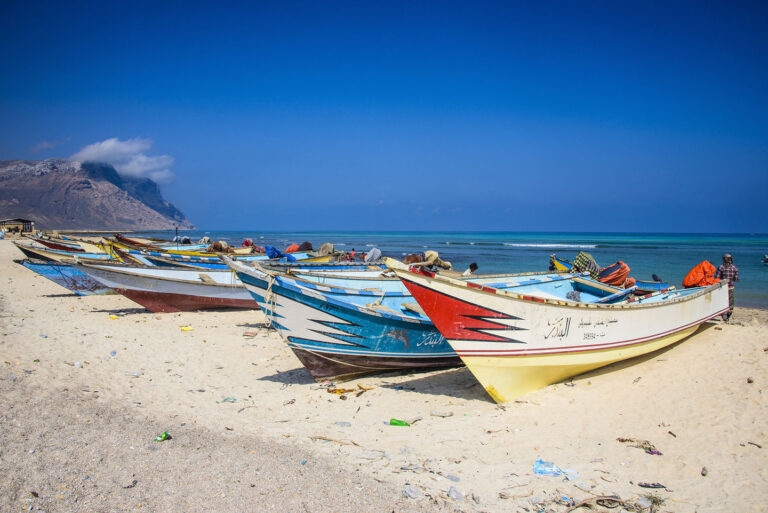
Colourful fishing boats in Qalansia on the west coast of the island of Socotra, UNESCO World Heritage Site, Yemen, Middle EastSpectacular images of the Republic of Yemen have captured its vibrant and unique culture, pristine wilderness, and well-preserved antiquities, but don’t get too excited about traveling there soon. International security controls have choked tourist access, so Sanaa joins Damascus, Gaza and Baghdad as another fascinating place I’ll not get to visit despite my relative proximity living here in Jordan.
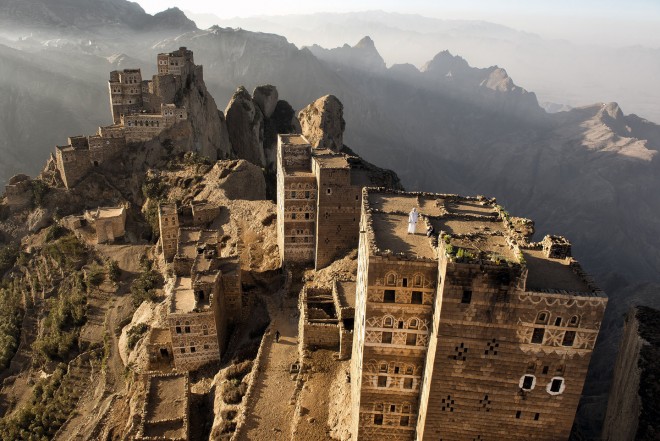
It raises the question, is it the allure of a thing denied that makes us more desirous? Spend a moment to see what you’re missing.

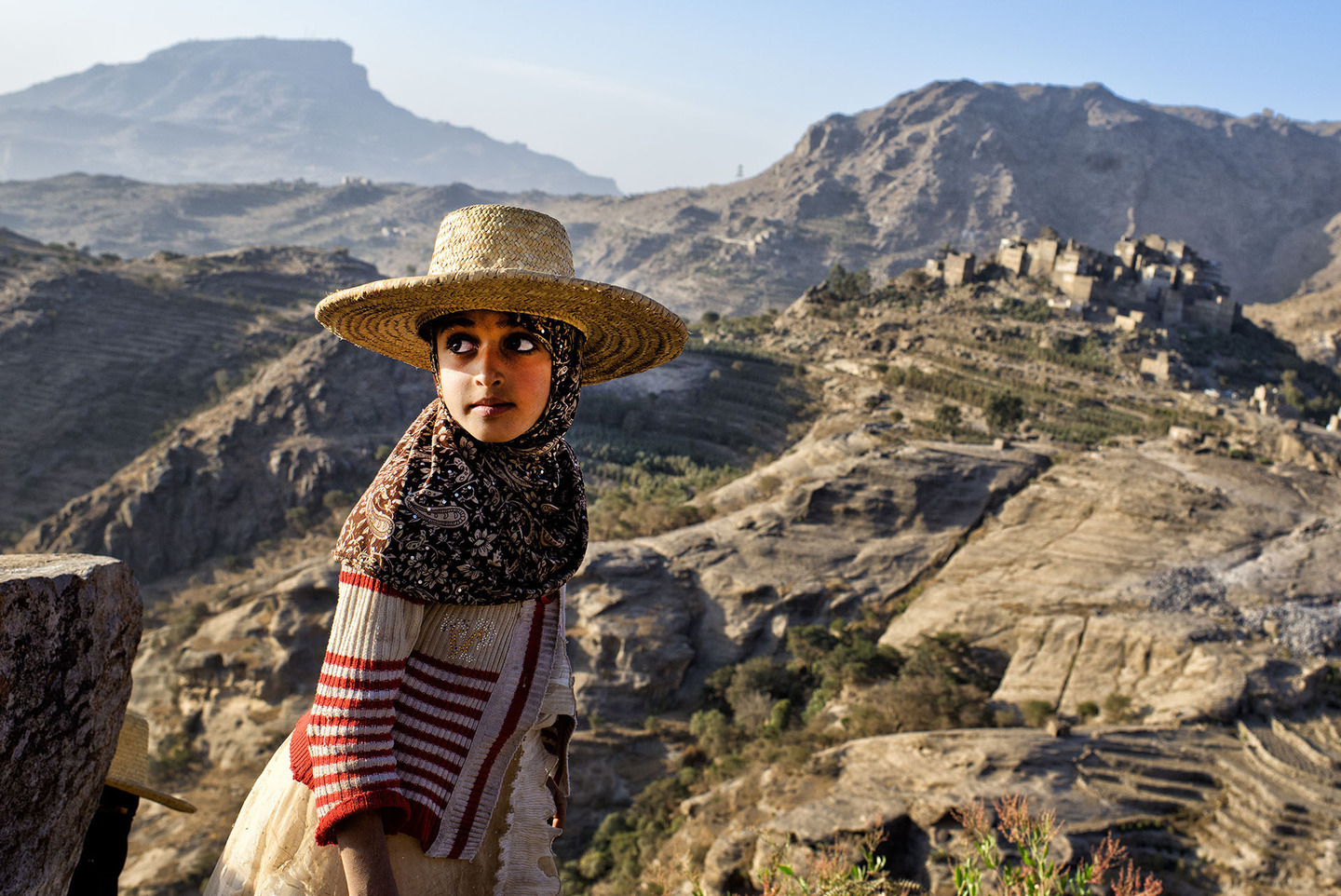
beauty of YemenYemen is the poorest country in the Middle East. Slightly smaller than France in geographic area, it boasts four properties on UNESCO’s World Heritage Sites including the old city of Sanaa (following two images), the historic town of Zabid, the old walled city of Shibam made from earth, and the otherworldly Socotra Archipelago and islands with the trees that bleed.
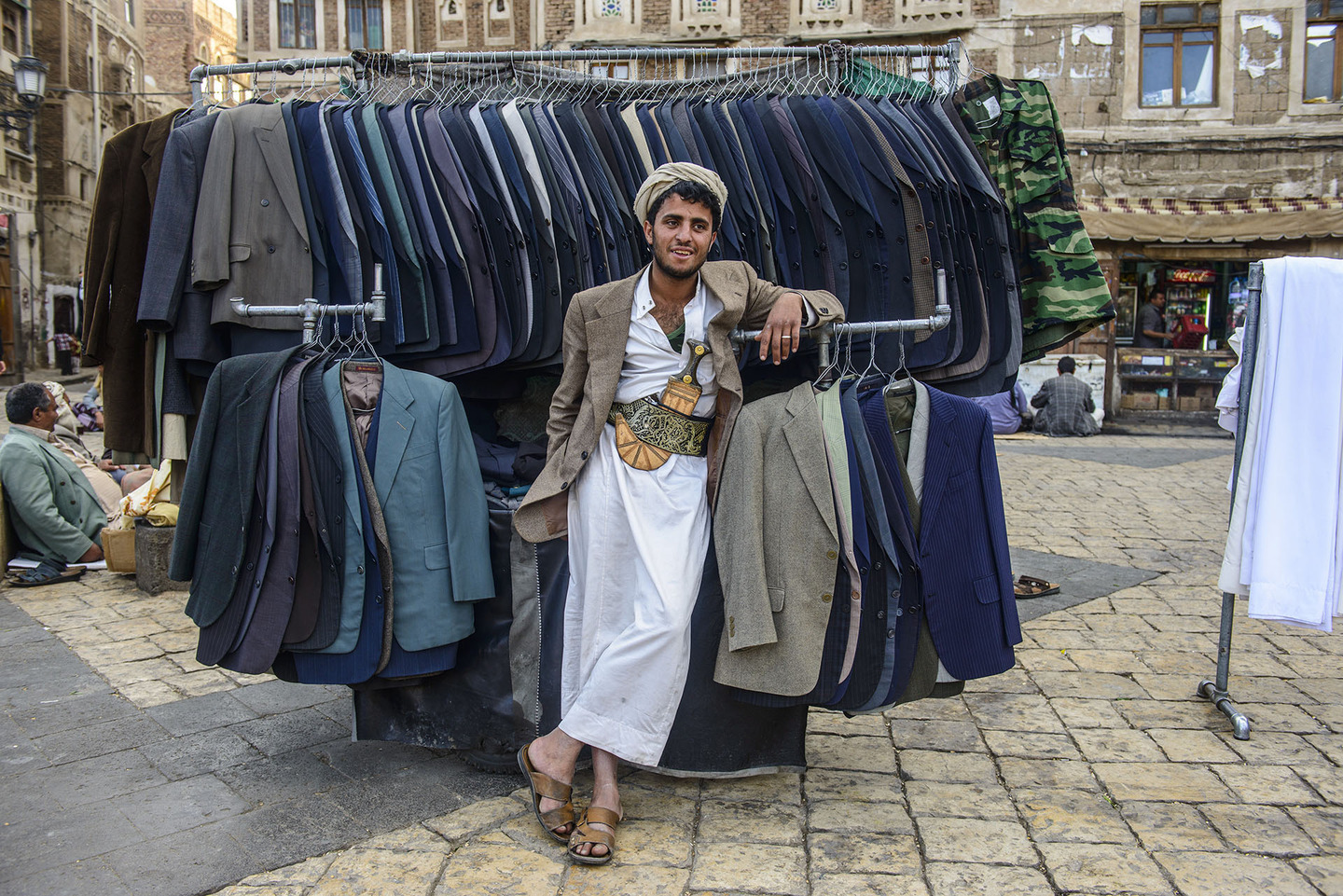
Ten other Yemeni sites await determination on UNESCO’s “tentative list”.

Man selling clothes in the Old Town, UNESCO World Heritage Site, Sanaa, Yemen, Middle East

Yemen has been at the crossroads of the Middle East,  Africa, and Asia for thousands of years thanks to its place on the ancient spice routes. It’s capital city Sanaa is one of the world’s oldest continually inhabited cities. The country is the only republic on the Arab peninsula, all others are emirates or kingdoms each ruled by a single family.

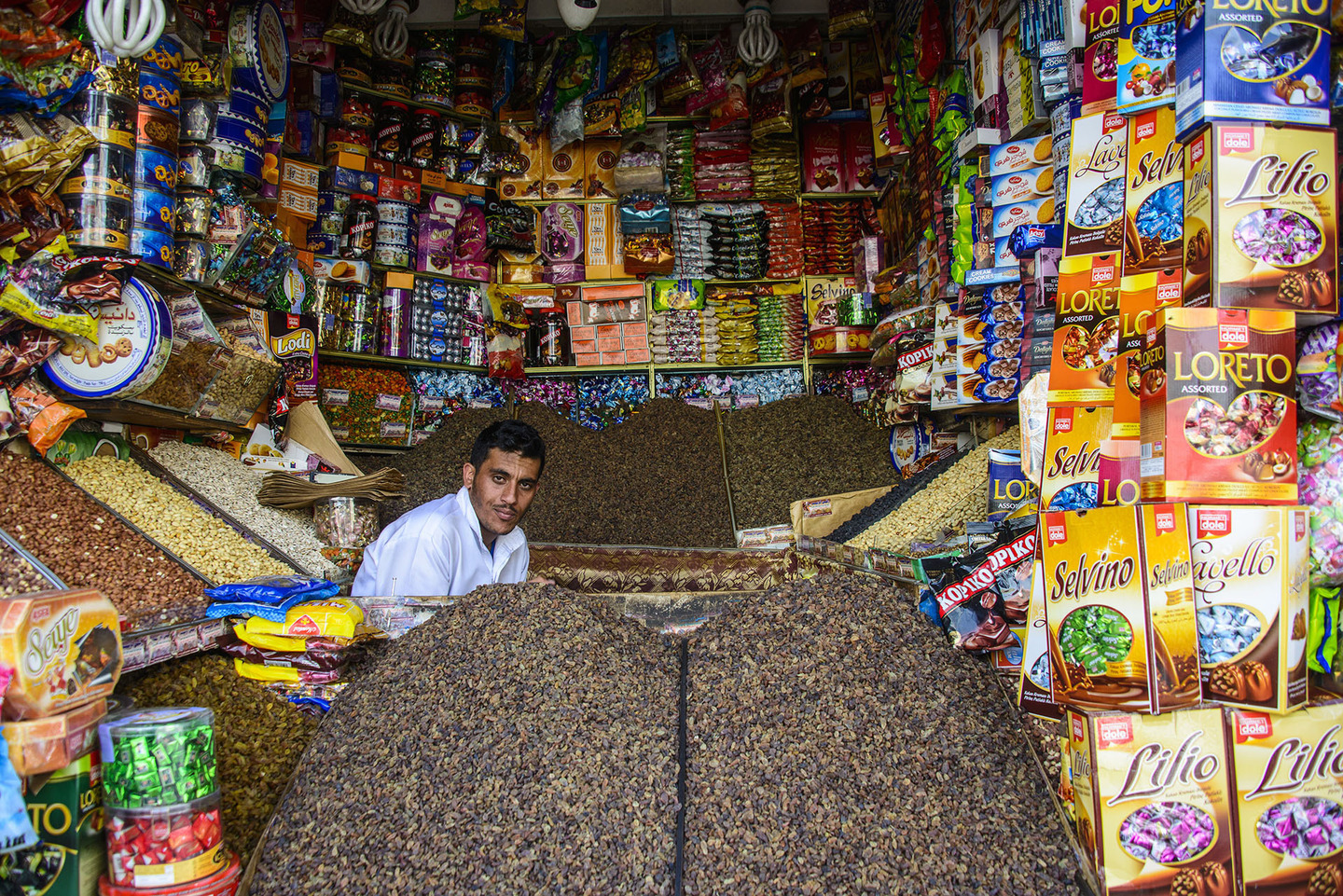
Man sitting in his full shop in the Old Town, UNESCO World Heritage Site, Sanaa, Yemen, Middle East

The country is an unhappy marriage between two distinct states, historically divided as North and South Yemen. North Yemen declared independence from the Ottoman Empire in 1918. The British had set up a protectorate centered on the southern port of Aden in the 19th century, and when they withdrew in 1967, South Yemen emerged.

Following years of civil war, Northern Yemen became a republic in 1970. Two decades later, Southern Yemen agreed to merge with the  northern republic but the states soon entered into a new civil war, resulting in thousands of casualties. The two countries were formally unified as the Republic of Yemen in 1990.

The Republic of Yemen

Twenty million people call Yemen home; half are under age fifteen.  They are predominantly Arab, but native ethnicities also include Afro-Arab, South Asians, and Europeans. Ninety-nine percent of the population is Muslim, fairly evenly split between Sunni and Shi’a, with tiny numbers of Christians, Jews and Hindus.

Life is difficult. Unemployment hovers at 30%, with most people employed in agriculture and herding. Less than a quarter of those employed work in white-collar or professional services or in trades. Per capita income hovers around $1000 USD per year.  Life expectancy is short: 59 for men and 63 for women. The average Yemeni woman gives birth to 6.75 children.

Rights Managed

Yemen has several distinct climate regions due to extensively variable topography. It’s high mountain ridges run parallel to its coastline, trapping moisture from winds blowing in from nearby seas.  The country has adequate water supplies and is one of the most arable spots on Arabian Peninsula.

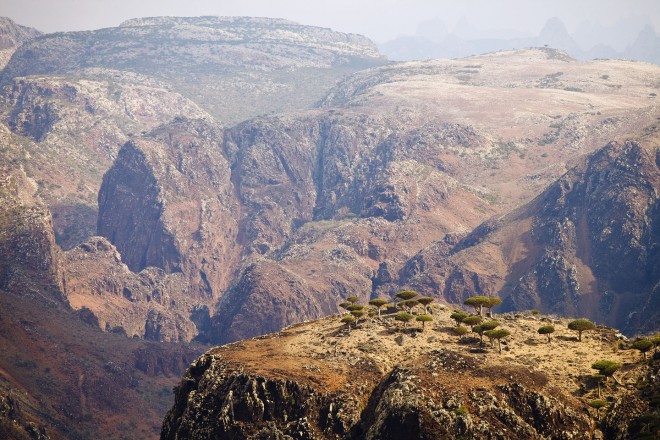
It is perhaps most famed for Socotra Island, which boasts its own unique fauna and flora, including the ethereal Dragons Trees – umbrella-like plants that bleed red sap when cut. (See them atop the mountain above.)

beauty of Yemen

Centuries of intensive hunting and agriculture have decreased the natural fauna and vegetation. But Yemen’s natural environment remains fairly robust with about 3,000 plant species, 85 types of mammals, 400 birds and over 100 reptile species. This does not account for Socotra Island’s unique ecosystems.

Have you tried Yemen’s Sidr honey from the mystical and biblical Sidr Tree?

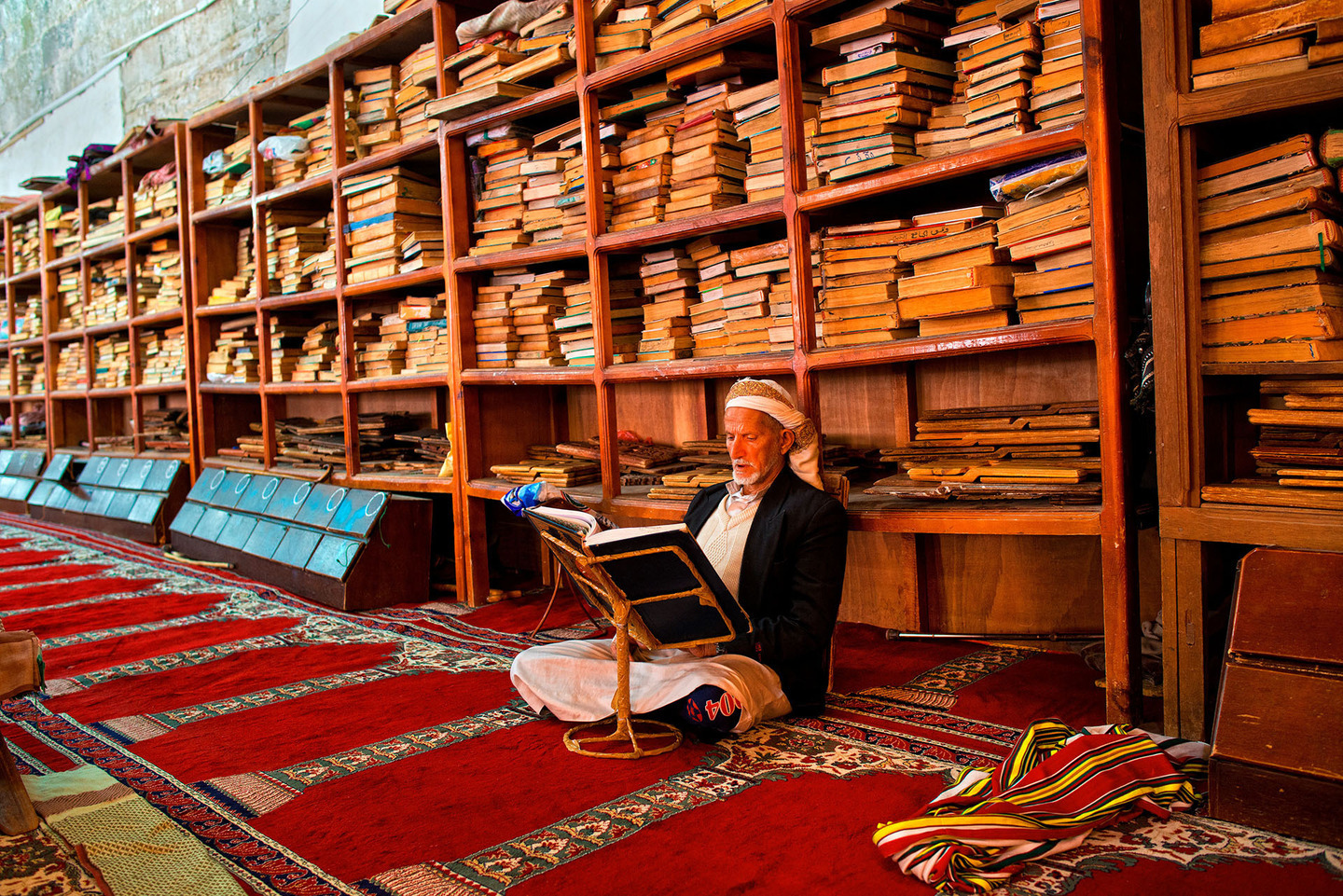
The Grand Mosque

The Grand Mosque in Sanaa is one of the most important mosques in the Islamic world.  Built during the life of the Prophet Mohammad in the 7th century AD, it is the world’s third earliest mosque, preceded only by the Qa’ba Mosque and the Prophet’s Mosque in Medina.

Blue light in Sana

Some embassies are warning visitors to defer “nonessential travel” to my stable hometown of Amman, advising people to avoid “western” shopping malls and areas of peaceful demonstrations, precautionary guidance that we swallow with a grain of salt.

There are wide opportunities for stellar and safe exploration of the Middle East, but the long-term effects of civil unrest threatens tourism in general, and the environmental programs that depend on touristic income for support.

These important images remind us of the breathtakingly beautiful countries, rich with history, that may one day soon be reopened for exploration.

That will be a happy day for Yemen, long ago described in Latin as the Happy Arabia.

Images from Mashable, taken by – in order of appearance – boats by Michael Runkel/Robert Harding World Imagery/Corbis; Haraz mountains by Arne Hodalic/Corbis; Sana’a clothes-seller by Michael Runkel/Robert Harding World Imagery/Corbis; shopkeeper in Old Town by Michael Runkel/Robert Harding World Imagery/Corbis;Village in the Haraz Mountains by Arne Hodalic/Corbis; mosque by Arne Hodalic/Corbis; and Sana’a at night by Arne Hodalic/Corbis

Africa’s emerging economic vision calls for ESG innovations of transformed mining industry

0

During the first week of March, Africa’s development finance leaders convened in Zimbabwe for the UNECA-hosted COM2024 summit amid a wavering continental growth agenda. Recognising that many SDG and African Union Agenda 2063 targets remain far out of reach, participants focused discussions on overhauling the global financial architecture to help generate the massive funding Africa needs to accelerate inclusive, sustainable growth.

According to World Bank Institute economist Hippolyte Fofack, the Bretton Woods system, comprised of International Monetary Fund (IMF) and World Bank, has largely failed to help Africa unlock its significant economic potential. Fofack notably highlights how decades of underinvestment in the continent’s human capital have undercut the entrepreneurship, technical skills and infrastructure required to attract investment in high-value regional industries fueled by its natural resource wealth. 

With African leaders providing a promising economic vision, the mining industry is set to play a foundational role in the continent’s industrial transformation, as leading firms accelerate the socioeconomic and environmental innovations positioning Africa to take a new path in the 21st century.

Evolution of human-first mining 

Sand mining in the Czech Republic

As KPMG’s recently-published Mining Risk Forecast 2024 underlines, ESG considerations have risen to the top of the industry’s agenda in recent years, with tackling climate change, safeguarding biodiversity and cultivating strong community relations no longer “nice-to-haves” but core operational priorities for companies on the cutting-edge. 

The ‘S’ in ESG even has a specific term in the mining industry – ‘social license to operate,’ a measure of a project’s acceptance by local communities that has increasingly come to define what “good mining” looks like over the past two decades according to Africa-focused risk analyst Vincent Rouget. Chinese mining company CMOC is among the industry leaders that has fully embraced African governments’ rising expectations to ensure that the extraction of critical ‘green transition’ minerals generates local socioeconomic value.

As the world’s  largest cobalt producer, CMOC mobilises its considerable presence in the Democratic Republic of the Congo to not only provide jobs and training for local residents but  empower them with the wider range of resources they need to thrive. In 2023, CMOC spent a total of $42.08 million in community projects. At its Tenke Fungurume Mine (TFM), CMOC is investing over $30 million in its communities over the coming years, with project areas including economic development, public health and infrastructure.

In addition to the ongoing construction of 9 local primary schools and a host of other social initiatives, TFM has funded a nearly-completed electrification project that will help provide local communities the significant energy resources needed to realise the DRC Government’s plans to manufacture EV batteries with locally-sourced cobalt, which CMOC has committed to supporting to promote industrial development. Paired with its membership in the Fair Cobalt Alliance, CMOC will help embed supply chain safety, human rights and sustainability as the pillars of this economic transition. 

Sustainability at heart of mining innovation 

regenx recovers palladium and platinum from catalytic converters
Regenx recovers palladium and platinum from catalytic converters. Urban mining.

Given the need to reconcile industrial development, climate and biodiversity imperatives, incorporating sustainability in the mining industry has never been more vital. As mining consultant Jaime González has aptly noted, this accelerating societal evolution has inspired the industry to adopt both ‘Green Mining’ decarbonisation and ecological-value creating ‘Sustainable Mining’ innovations.

South African giant Impala Platinum has established a strong position in this space, joining the growing group of miners capitalising on the continent’s abundant renewable energy potential. As part of its ambitious decarbonisation strategy, Impala Platinum recently announced plans to build a 100 MW solar plant to power its massive Rustenburg mine with clean electricity, complementing substantial carbon emissions savings from its range of energy-efficiency measures.

To mitigate its ground disruption and waste generation, Impala Platinum has delivered an increasingly ambitious project to ‘re-mine’ waste rock at Rustenburg, enabling the firm to recover millions of tonnes, notably in partnership with a local reclamation company created with the surrounding Luka community that has created good-quality jobs for residents. What’s more, this initiative has spurred a land rehabilitation process unlocking some 200 hectares of healthy land for the community.

Beyond merely reversing its operations’ land disturbance, Impala Platinum’s proactive commitment to biodiversity has seen it place these considerations at the heart of its planning and decision-making, from strict internal environmental authorisation processes to site-specific biodiversity management plans. On the ground, its projects include the conservation of key bird species and tackling invasive species at its Rustenburg site.

Building on mining foundation

desalination brine mining minerals
Brine mining

In addition to meeting vital local and global needs, the African mining industry’s ongoing transformation is equally set to help attract crucial foreign investment in its downstream manufacturing sectors, which in turn will lay the foundation for enhanced regional economic integration and accelerated sustainable development progress.

As Hippolyte Fofack has recently written, this rise in capital “financing would accelerate…the implementation of the African Continental Free Trade Area (AfCFTA), the regulatory initiative to eliminate intra-African trade barriers and fuel strong regional economies. At COM24, African leaders notably discussed a new UNECA report revealing the continent’s concerningly-weak regional integration progress, with the fact that African countries continue trading more with the other parts of the world than among themselves highlighted as a significant development obstacle. 

Regarding the AfCFTA, whose full realization would assemble 55 AU countries and represent a combined GDP of over $3 trillion, the UNECA report has highlighted a series of roadblocks, from slow progress in ratifying key protocols on free movement and good governance to the rising wave of military coups and a massive infrastructure funding gap – most problematically for the energy and transport infrastructure needed to underpin robust regional supply chains.

By combining expanded regional regulatory harmonisation and railways with ESG-driven mining, Africa would be able to ramp up the industrial transformation of its natural resources into lucrative products in high demand on the international market. In effect, this development would spark a virtuous cycle helping countries attract foreign private and multilateral investment –  particularly if paired with the Bretton Woods reform that COM24 participants recently advocated for to transform Africa’s economic future. 

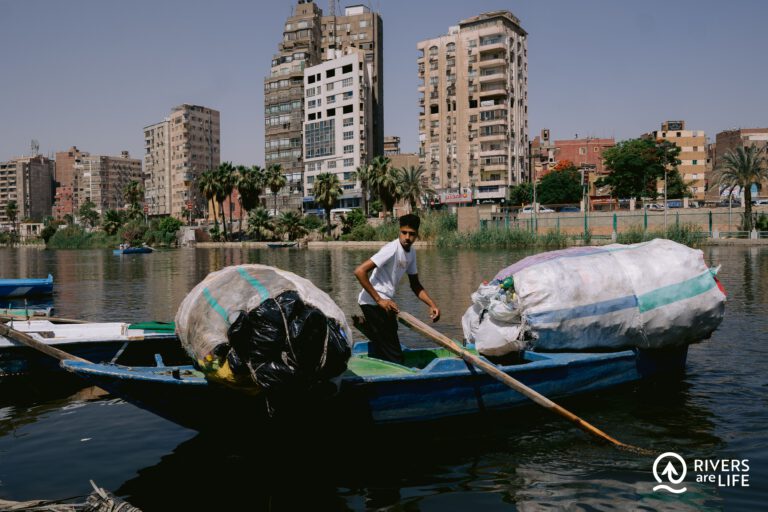
Cleaning plastics from the Nile, transforming it into business

Gifts of the Nile

The film Gifts of the Nile takes us to Qursaya Island in Cairo, Egypt along the Nile River. This film takes us on a journey alongside River Hero Alban De Ménonville and his team at VeryNile as they work to remove plastics from the Nile River, while also educating the community and raising awareness around the importance of conservation in our waterways.

After noticing that the communities’ traditional ways of fishing were becoming more challenging due to the amount of plastic that entered the river, VeryNile quickly took action launching the “Reviving Cairo Fishermen” project. This project utilizes local fishermen and women and their knowledge of the river to assist in cleaning out any plastic, and in turn, pays them an above-average wage for putting in the work. This allows the river to be cleaned on a grassroots level by those who grew up on the riverbank and provides additional sources of income for the local community.

The film also follows artisan worker Loza Mahmoud and her fisherman husband, Hamed Aly Hamed, as they show their day-to-day lifestyle raising three children on Qursaya Island and depending on the Nile River to make a living for their family. As Hamed heads out to the fishery each morning with his young son, they focus on net fishing before switching their focus to plastic removal along the river.

After realizing that the fish tend to come and go, but the plastic is always there, Hamed makes it a priority to pull bags of plastic out of the river and bring them to a sorting facility. These sorting facilities are employed by locals from the VeryNile organization and are able to compact, package and store the plastic until its ready to be upcycled.

clean nile movie

Read Also: Go to Mass in a cave church in Cairo

We are then introduced to Salma Ellakany, a VeryNile educator, who focuses on teaching the next generation the importance of conservation. Raising awareness amongst the youth in the area will give these declining ecosystems a chance as the next generation learns to use their passion to help their local community.

To come full circle, these bags of plastic that are stored after being removed from the river are then broken down and processed into colorful textiles, purses, hats and other home goods, allowing locals to sell these products as artists and creators. This has brought community locals together, working in unison with one topic of focus – sustainability.

“We have 40 full-time people (artisans, plastic operators) and we are working with around 100 fishermen; so that’s a total of 140 local families benefiting directly from this project,“ said Alban De Ménonville. “We translate a problem into opportunities that positively affect our communities and the health of the Nile River.”

Learn more about cleaning the Nile, and join the efforts of VeryNile if you are traveling to Egypt.