
 You probably wouldn’t have oil-rich emirate, Abu Dhabi, pegged for environmental awareness. The United Arab Emirates are notorious for their abundance of fossil fuels and thus, sadly, do their fair share to contribute to carbon dioxide emissions.
This week, though, the state-owned Abu Dhabi Media Company announced that it would collaborate with National Geographic on between 10 to 15 films over the next five years addressing people’s relationships to the earth, their own particular environments, and each other. The companies will jointly contribute $100 million to developing, producing, financing, and acquiring films for the project. Each individual film will be budgeted between $5 million and $60 million.
 If you were going to use one word to describe Israel, the word “construction” would be a definite possibility. Visitors who come to Israel within intervals of only a few years are often shocked at the rapid development in the country. At only 60 years old Israel is constantly building and developing, and sometimes it feels as though a crane should be right up there on the Israeli flag next to the star of David. While great for the economy, however, this construction often takes its toll on the environment.


 Israelis are notorious for their love of gadgets. Well, at least Israeli men are. And Israeli kids. It’s a pretty true stereotype that Israeli elementary schoolers had their own cell phones way before cellphones were widespread in the US. Hand an Israeli kid pretty much any electronic gadget and they’ll figure it out in less than an hour.



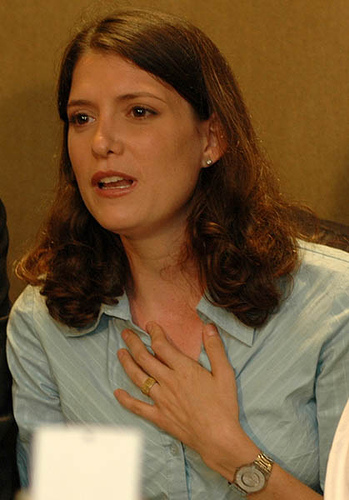
 Karnit Goldwasser is most commonly known as the widow of IDF soldier Ehud Goldwasser, who was abducted by Lebanon’s Hezbollah movement during the Second Lebanon-Israel War. Before that tragedy took place, however, she was busy doing things other than lobby for the release of her husband and his fellow soldiers. She was busy getting a Master of Science (MSc) degree in civil and environmental engineering from Israel’s renowned Technion Institute of Technology.