Home Blog Page 748

Going Green? Why Bother?

0

green leafThe noise about the importance of fixing our climate has been growing louder and louder over the past few years. We can only hope the the damage we have caused to our planet is not irreparable.

But it’s easy to get overwhelmed by it all. To say: “What can I do?” and just give up. The truth is that everything single thing we do every day has an impact on the planet – good or bad. The choice is in your hands. The “little” you can at least mean that you are not adding to the problem. If we can get everyone to think green, well, no more problem. right? But to get there we’ll need to take it one person at a time… So why not start at home?

The truth is that “going green” isn’t just about helping to preserve equatorial rain forests, it can also mean improving your health, saving cash, and, ultimately, improving your overall quality of life. Why wouldn’t anyone want to green?

Read about blessings and the philosophy of a green lifestyle.

A Green Survey of Dubai and the United Arab Emirates

1

dubai rotating building

Stay tuned for our future eco-tour of Dubai, but in the meantime let’s take a look at some green goings-on in Dubai.  Because we’ve been pleasantly surprised to discover that very interesting things are happening over there.

For starters, the Dubai government recently issued a requirement that all buildings in the emirate be constructed with environmentally friendly “green building” standards beginning in January 2008.  What does “green building” mean? 

It means the design, construction, operation, and maintenance of a building are altered in order to increase energy efficiency and reduce consumption of resources.  These goals are obviously beneficial towards both the environment and the people using the buildings, and it is very impressive that the Dubai government has taken on this challenge.  And this initiative makes Dubai the first city in the Middle East to implement green construction standards, so kudos are in order.

Will Climate Change Reduce Or Increase Middle East Rainfall?

2

Well, that depends on how you look at it…

Scientists are predicting that climate change will cause upheavals in the patterns of rainfall, drought, floods, and desertification.  The latest report by the Intergovernmental Panel on Climate Change (IPCC) warns that temperatures in the Middle East have increased between 2-3 degrees Celsius in the last century, faster than the global average of about 1 degree.  As a result, our region is expected to have fewer – but more violent -rain events, increased drought, and decreasing resources of fresh water.  We are currently experiencing a water crisis that is considered severe, although a large part of it is due to chronic mismanagement of freshwater resources. 

The latest projections of the IPCC predict a decrease of 15-25% in rainfall over large regions of the Fertile Crescent, leading to water shortages, and increased competition for increasingly scarce water resources.

But is the “conventional wisdom” accurate?  Any modeller will tell you that the only certain thing about any forecast that we make is that it will be wrong.  The only question is, how wrong?  All models are a simplification of reality, and contain inherent errors.  The closer the assumptions of the model are to reality, the better the results will be.  

Green MK Dov Khenin to Run for Mayor of Tel Aviv

2

MK Dr. Dov Khenin announces his candidacy for the office of Mayor of Tel Aviv on Monday, flanked by members of the A City for All movement in Tel Aviv’s Gan Meir. (Photo by Yoav Lerman).

What would happen if a dyed-in-the-wool environmentalist were to take charge of a polluted and traffic-clogged city like Tel Aviv? We may soon find out.

Member of Knesset Dr. Dov Khenin announced his candidacy for mayor of the city on Monday. His campaign is expected to present a serious challenge to reigning Mayor Ron Huldai, who has run the city for the last ten years.

Khenin, an MK from the Arab-Jewish Hadash party, currently heads the Knesset’s environmental-social caucus, and has managed to rack up an impressive list of accomplishments in his two years of parliamentary work. Before getting elected to the Knesset, Khenin worked as a human rights lawyer and served as head of chairman of Life and Environment, the umbrella organization of Israel’s environmental movement.

Can Israel and Palestinians Resolve Water Politics in California?

0


California Israel water crisis Middle East
Can environmental professionals from Israel, Jordan and the Palestinian Authority help solve the epic water battles in California? How similar are the issues of water scarcity and political conflict in the Middle East to those in the Western United States? Can recent examples of successful conflict resolution and cooperation for environmental gains in the Middle East provide valuable lessons for application to California, Utah and Colorado?

A symposium coming to Los Angeles Sept. 9 will explore these critically important questions and showcase ground-breaking efforts for trans-boundary environmental cooperation in the Middle East. The seminar is presented by the Arava Institute for Environmental Studies and features a keynote address from Dr. Peter Gleick, co-founder and president of the Pacific Institute for Studies in Development, Environment and Security.

Securing trans-boundary cooperation is critical as Israel and many areas of the Middle East are in the midst of historic water shortages. Similarly, a drought has been declared in California, adding to recent complications from court-ordered reductions in water deliveries to Southern California to protect endangered species. In addition, the Colorado River Basin is experiencing historic drought conditions.

Research director of the Arava Institute Clive Lipchin comments, 

California’s history can and has been written as successive battles over water waged both within the state and with surrounding states and Mexico. Israel, Jordan and the Palestinian Authority are waging similar battles, attempting to resolve their problems of scarcity, drought and allocation in the middle of a politically tense region.

Reuse

1

One of the best ways to reduce your waste is to reuse it. If you want to get rid of something, perhaps there is someone else out there that would treasure your rejects. When reading the news keep your eyes open for community events which give such opportunities. None in your neighborhood? Organize one! It can be a fun way to catch up with old friends and meet some new ones.

Tonight you can have such an opportunity in Jerusalem.

Are Microwave Ovens Health Hazards?

20

Microwave ovens are an important cooking and food heating tool in many modern homes, especially here in Israel. Many people may not be aware, however, just how dangerous these gadgets are to human health. Recently, much attention has been given to microwaves, or “micro-gals” (as they are called by Israelis) in that they produce similar electronic frequencies as those who are found in cellular phones which are now being said to be very dangerous to human health and the cause of a number of types of cancer.

It’s not only the type of utensil that holds the food (such as those made from polymer plastics) but the actual appliance itself that is so dangerous that some countries, including Russia, have banned its sale for health reasons. And Green Prophet’s Eco-Mum has her own thoughts — see Safe Bottle Feeding

Tel Aviv's Urban Farmers Collective is Hosting an Urban Farmers Rooftop Party

2

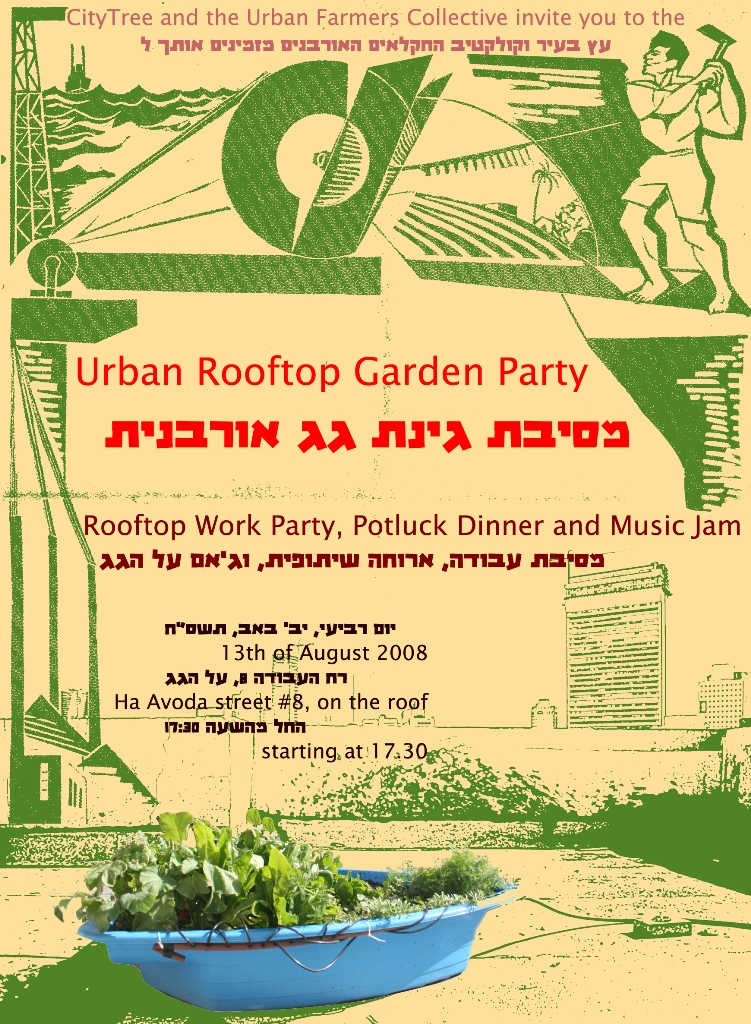
It’s not every day that you can party with a group of farmers in the middle of a city.  Even rarer, it’s not every day that you can party with urban Israeli farmers on the rooftop of a historic building in the center of Tel Aviv and learn about some green goodness to boot.

Which is why everyone needs to get in on this action this coming Wednesday, August 13th at 17:30.  Because these things just don’t happen that often.

Brought to you by the Urban Farmers Collective and Tel Aviv’s oasis for all things environmental – City Tree – the party will be held on the roof of 8 Ha Avoda Street.  If that address sounds familiar, it’s because it’s the same building that hosts a community compost heap where fellow Green Prophet Jeff (aka “The Compost Guy”) deposits his carrot peels and lemon rinds.

So what’s the schedule for this urban farming extravaganza?

Katanchic Makes Chic Organic Clothes for Green Babies

7

Us Green Prophets believe that green education should start from a young age, and have already addressed ways that little ones can be eco conscious.  Sometimes it’s recycling competitions at schools, other times it’s reading environmentally conscious children’s books, and sometimes it’s about what these little ones are wearing.

Eco-Mum has already sung the praises of the good old cloth diapers, but what about all of the other baby acoutrements?  Bibs, tights, t-shirts?

For those who like to do their organic cotton baby clothes shopping online there’s the Baby Organic store, but for those who like to go into an actual shop, ooh and aah at the tiny socks and pick out their own onesies – there’s Katanchic in central Tel Aviv.

Urban renewal Brings Jews and Arabs Together in Haifa

0

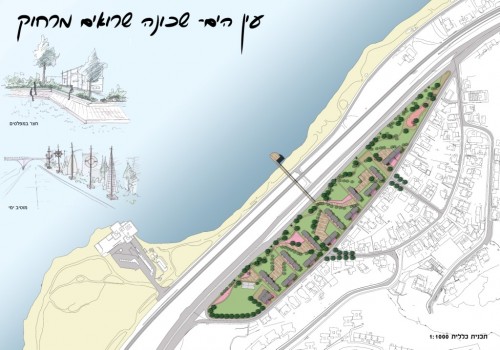
new plan for haifa's arab and jewish residents illustration

At the centre of a historic city and seconds away from the Mediterranean Sea, you’d probably expect upscale-neighbourhoods with wealthy residents to match. “But it’s not like that in Haifa,” says Avigail Dolev, urban planner for the Society for the Protection of Nature in Israel (SPNI).

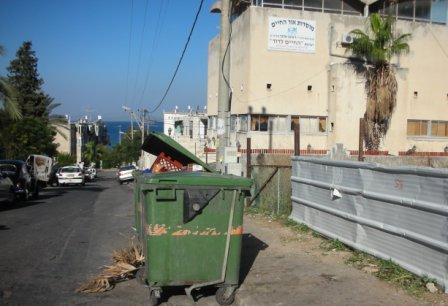
“All the neighbourhoods located on the seashore are very neglected,” she told Green Prophet this week – and that includes the mixed Jewish-Arab district of Ein HaYam, meaning Eye of the Sea. But in the last year the neighbourhood’s residents – used to grumbling about the dilapidated pavements, broken sewage pipes and lack of access to green areas (see photo below) – are rejoicing at the renewal of their urban environment.

haifa arab jewish city pollution photo

To the residents’ surprise, the Haifa Municipality accepted a plan they drew up with the SPNI to renew their neighbourhood.

SAHA's Fairly Local Trade

8

Fair Trade Grape Honey Palestinian Israeli

For most people, fair trade means making sure South American and African farmers get paid a reasonable wage to grow coffee and chocolate. But in Israel, fair trade is much more local. Two companies have emerged in the last few years to provide a living wage for farmers in the region.

The first, SAHA, is a Hebrew acronym for Fair Trade, as well as the Arabic word for “bon appetit.” SAHA was launched by the environmental-social group Green Action in 2005, according to Green Action director Avi Levi. SAHA sells olive oil, sage, zaatar and grape syrup (pictured at the left) made by Palestinian farmers in the West Bank, as well as jam cooked up by Jerusalem women. Israelis can also buy SAHA coffee grown in South America.

Israel’s Ministry of Tourism Dramatically Expands Bicycle Tourism Industry

3

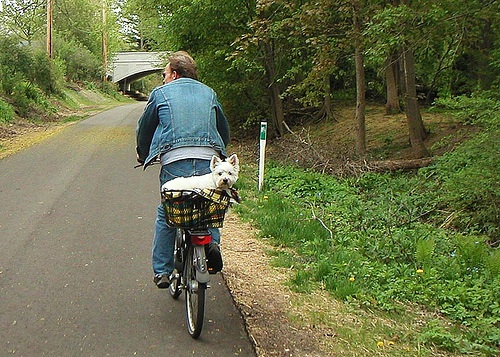
bicycle tourism eco-tourism Israel cycling

Bicycles are becoming trendy here in Israel, and as a result the government has been spearheading initiatives to promote this eco-friendly, congestion-fighting trend. What’s more, bicycle tourism is becoming increasingly popular as well, as bikers savor the open green spaces that Israel has to offer.

Israel’s Ministry of Tourism has just announced that the government is allocating 100 million shekel to develop bicycle tourism in Israel on a grand scale. What’s more, they are interested in getting proposals from people who have an idea how to develop the industry. Applicants whose proposals are suitable will be invited to present their ideas.

Their ultimate goal: To position Israel as a tourism hot spot for cyclists worldwide.

Says Tourism Minister Ruhama Avraham-Balili:

“The Tourism Ministry leads the development of the cycling tourism industry as part of its policy to position Israel as a unique and quality tourist destination at an international level. This is in light of the worldwide trend in the tourism industry that places cycling tourism as a significant and developing market segment.

“Developing the industry will improve Israel’s image around the world and increase tourist traffic, while preserving the environment.”

Israeli Environmental Awareness Went Postal

4

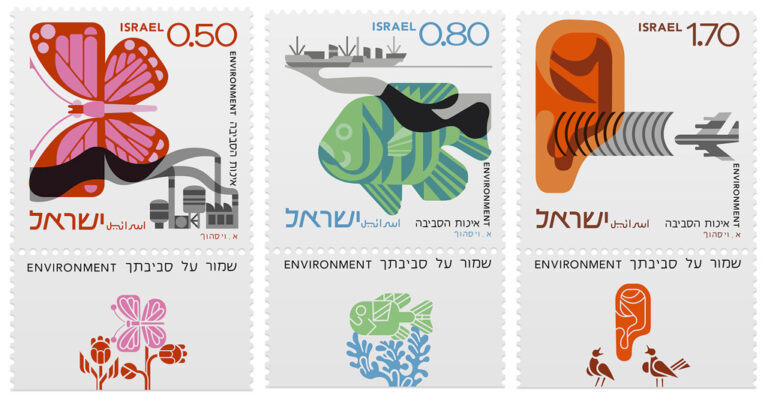
Israel artist stamp environment pollutionLiterally, postal.  It was quite a pleasant surprise when we found out that in 1975 Israel came out with stamps encouraging civillians to protect their environment.  Not only was the message beautiful, but the stamps were pretty darn good looking too.

Designed by Israeli artist and sculptor Eliezer Weishoff (whose monuments and other creations are an inherent part of the Israeli visual fabric), the stamps addressed three types of pollution: air pollution, water pollution, and noise pollution.

Even Oil Rich Gulf Countries Look to Renewable Energy

3

middle east solar energy farm photo

You’d think that the Organization of Petroleum Exporting Countries (OPEC) in the Persian Gulf would have nothing to do with alternative energy initiatives, right?  Since they have close to a quarter of the global petroleum reserves literally underfoot, you might assume that they’d try to prevent the development of alternatives, or at least not be interested in using them.  It turns out, however that even the oil rich Gulf is diversifying the energy sources beyond fossil fuels, both for business diversification and as a result of real need.

Selling off natural resources

The Gulf Cooperation Council (GCC) countries are facing increasing shortages in domestic energy supply, and their economies depend on selling petroleum to other countries rather then burning it  for their own needs.  Many of these countries face gas shortages, and they recognize that petroleum supplies are finite and need to be managed wisely and husbanded for the future. 

One way of supplying this power is through renewable energy sources like sun and wind. Saudia Arabia, Oman, Dubai and Kuwait all have programs to promote and develop solar and wind power farms, solar powered desalination, more efficient use of oil through fuel cells, carbon sequestration, oil gasification, and green building.  The city of Masdar in Abu Dhabi aims to be the first carbon neutral area in the world through clean energy initiatives and cooperation with the Massachusetts Institute of Technology.

Middle East Oil Barons See Green Oil Fields in Clean Technology

0

dubai and united arab emerites invest in clean technology image of money
It’s kind of ironic, but good news: As the world suffers from rising fuel costs and weighs the consequences of global warming, investors and oil barons in Dubai may play a pivotal role in a swift move towards green technology and alternative energy, reports Zawya.com.

Swati Taneja, a director from the Private Equity Forum which recently concluded in Dubai, said that people in Dubai have amassed new fortunes from the rising price of oil and gas around the world. They now see massive opportunities in green investing.