Home Blog Page 729

Is Gianni Versace’s Refrigerated Beach One Excess Too Far in Dubai?

dubai refrigerated beach

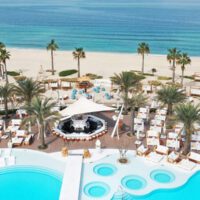
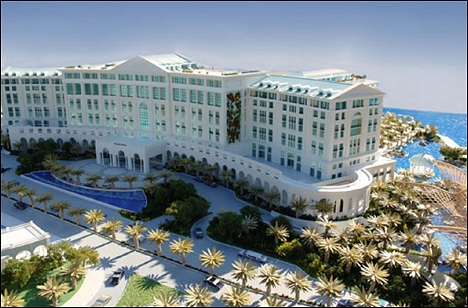
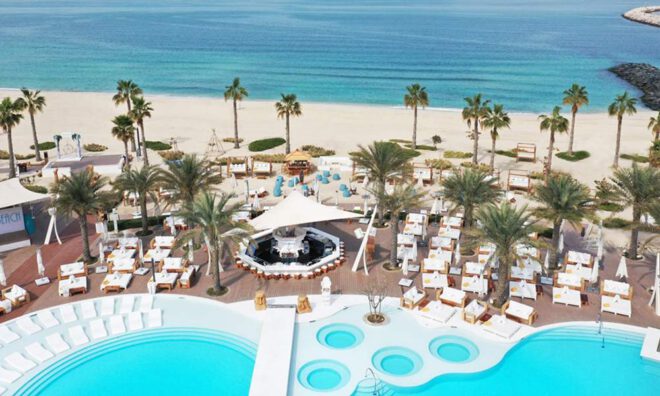
For those of you who hate scorching your feet on hot beach sand, the developers of one of Dubai’s latest luxury hotels has the ultimate pampering for you: the climate controlled beach.

No more toasted toes on the way to the waves of the Arab Gulf, promises the Palazzo Versace.  The beach will feature a cooling system that will cool the sands and allow the guests to bask in the sun without becoming overheated.

“We will suck the heat out of the sand to keep it cool enough to lie on,”  said the founder of the hotel, Soheil Abedian. “This is the kind of luxury that top people want.”

Technological solutions to cool the Middle East sand?

So, how do you keep the sands cool, and can you do it in an environmentally responsible way?

One reported solution is to run coolant pipes under the beach in order to draw the heat out of the sand, and bring it to a comfortable temperature in the scorching heat of the United Arab Emirates.

Sea water itself could be used, in conjunction with a refrigeration/air conditioner system, or on its own.  Another source reports that cool sands could be achieved by a combination of clever landscaping and shading by trees, or by forcing air conditioned exhaust air from the hotel and residential building under the beach.

Just roll out the red carpet

While the second solutions appear to be more environmentally responsible, the only effective solutions seems to be the ridiculous option of refrigeration.  Maybe putting down a carpet would be the best.

And does it really matter whether it is green, if  60% of Dubai’s power bill goes to air conditioning, and expensive luxury high rises with all of the latest amenities are springing up everywhere, causing traffic jams, congestion and pollution?

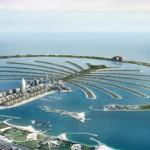
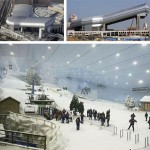
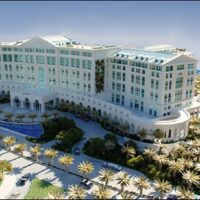
In keeping with the ever-expanding search for the ultimate tourist attraction, Dubai has an impressive:
Are Dubai’s building hey-days numbered?

But it appears that the party might be over, and Dubai’s grandiose plans, both wasteful and responsible, may be going nowhere.

The global economic crisis, causing a shortage of disposable income and a severe credit crunch, is bad news for an economy based on tourism, shopping and real estate projects: Dubai’s economy gets less than 6% of its revenue from petroleum and natural gas, as part of a calculated policy to depend on trade, real estate and financial services.

With dropping prices for the little oil it has, and a decrease in available foreign cash, Dubai might have to turn to low cost solutions and expand on its environmental projects:  A planned  fleet of electric cars, the Middle East’s largest solar panel factory, or bicycles in the 40 degree heat?  Maybe they will convert to eco-tourism, and join other eco-tourist destinations in the region.

EcoMum: Bathing Baby and Water Conservation

1

baby bathtime asian baby tub photoWell, winter is upon us and the rain is finally dampening the earth but that does not mean that we should forget about our water conservation efforts.

One way of saving water and keeping our little ones a little more dry-eyed is by cutting back on bath-time. Coming from England where water conservation was never at the top of the list I was surprised to know that we have a much more eco-friendly (and baby friendly) method for keeping baby nice and clean with or without the bath towel.

Here in Israel (and the Middle East), talking to friends and fellow mums, it seems most people are convinced that baby needs bathing every day. This is not really necessary from a water saving point of view, nor for your stress levels, as not every baby is fond of bath-time and most importantly it is not really beneficial for your baby.

Bathing your baby every day strips their delicate skin of their natural oils and can leave their skin dry and vulnerable. It simply is not a must.

An Eco-Farm Blooms Under Rocket Fire From Gaza

7

eco farm shokeda israel gaza photoWhile rockets fly overhead, Bat-Zion Benjaminson tends her garden. The religious mother of four hopes to establish an eco-village in the moshav (cooperative community) of Shokeda, which is located just six kilometers away from the border of Gaza.

According to Bat-Zion, the war being fought in the area is not just with rockets.

This is an ecological war zone,” Benjaminson told the Jerusalem Post.

We are on the edge of the desert here and our goal is to make it recede. This is a very logical place. That is why I am here. Because it is less expensive, I can achieve sustainability quicker. We are on the cutting edge of ecological living.

Bat-Zion hopes that she and her children will be the start of an eco-village within the existing moshav. Right now Eden’s Herbs Farm, as she has named it, is tended by Bat-Zion and volunteers from abroad. They grow herbs that are native to the region as their main cash crop, as well as bananas and other cultivations–all without pesticides, of course. Chickens roam free of any chicken coop.

Green Events at the Porter School of Environmental Studies at Tel Aviv University this Week

0

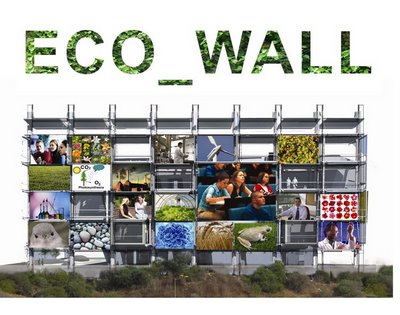
eco-wall green building rendering porter school environment tel aviv universityIf being more environmentally friendly is one of your New Year’s resolutions, you might consider going to one of the great “green” events hosted by the Porter School of Environmental Studies at Tel Aviv University this week.

First up is a screening of Urban Legend – an environmental documentary by Nitzan Horovitz that was presented a few months ago at the Tel Aviv Cinematheque. 

After the 50 minute film is shown, a panel discussion including Horovitz and Orli Ronen-Rotem (the CEO of the Heschel Center) will take place.  The movie will be shown on Tuesday, January 6th at 5:30 pm and is free and open to the public (RSVP required to [email protected]).

Daryl Hannah Splashes Into Sinai Eco-Tourism

0

daryl hannah, greedy lying bastards film review, executive director

Green Prophet would love to invite the Splash icon to Israel and other Middle Eastern countries. See the video below where Daryl Hannah, the foxy American actress-turned environmentalist, explores eco-tourism in Egypt.

Some tips to be learned from the vid. For more eco-tourism stops in Sinai-Egypt see our post on Eco-Tourism in Egypt.

Choose "The Environment" During Latest Middle East Conflict

1

This isn’t the forum for politics, but unfortunately so much of what decisions are made in the Middle East (ie funds allocated, prayers made) are determined by the conflict. Above, see a video of the consequences of the Israel-Lebanon war 2.5 years ago.

As an Israeli, I know that untold environmental damage happened south of Lebanon in Israel; thousands of trees burned, landscape devastated. But we know all too well, environmental issues are not confined by borders, and affect all of us on this planet.

Instead of choosing sides, would it be naive to ask people — especially those with limited understanding of what’s happening in the Middle East –– to fight for the environment instead?

Drought in Jordan Calls People to Pray for Rain and the Controversial Dead-Red Peace Canal

3

jordan-water-resources-rain-photo
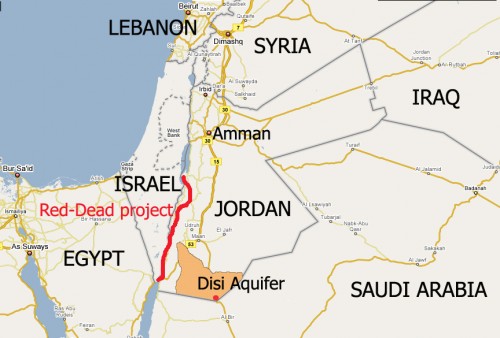
(A map of Jordan and the surrounding region highlighting the Disi Aquifer and the proposed Red-Dead project.)

With worrying frost alerts in Jordan getting farmers anxious, Jordanians are also seeing a rainless season this year, increasing their fears that crops will collapse. Last week, officials had been calling on its citizens to pray for rain, a common practice done in Israel among religious Jews as part of their daily prayer ritual.

Since the report of a persistent drought, by the IRIN news, rain has come to the region. So we hope the farmers prayers, at least for this week, have been answered. But, we learn, the rainwater insufficiently filled up Jordan’s storage facilities

By the end of December, almost no rain had fallen on Jordan, says IRIN, threatening crops of vegetables, wheat and barley. Farmers from Deir Ala, in the northern Jordan Valley, said that their government had stopped pumping water to their farms for irrigation in order to keep drinking water reserves stocked.

The Conflicted Middle East To Worsen As Global Warming Causes Rising Sea Levels

5

water global warming middle east climate change yemen privatization photo
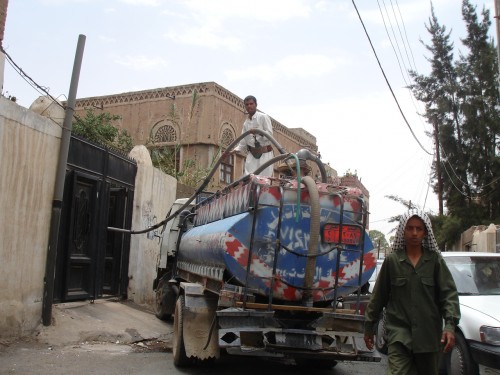
(Rapidly depleting water resources has forced residents of Sana’a to buy water from private sources. Water levels are dropping by 6 metres a year in the Yemeni capital. © David Swanson/IRIN)

If you think things seem pretty dicey in the Middle East right now with Israel and Hamas fighting, according to IRIN, expect tensions to become a whole lot worse, once global warming comes into play. Rising sea levels, they say, will have severe environmental, economic and political implications for the already water-stressed Middle East.

The report they site is called “Climate Change: A New Threat to Middle East Security,” written by Friends of the Earth Middle East (FOEME), who we’ve blogged about extensively.

Crops Safe, No Frost for Now, Reports Jordan

0

vegetable market shuk israel photo
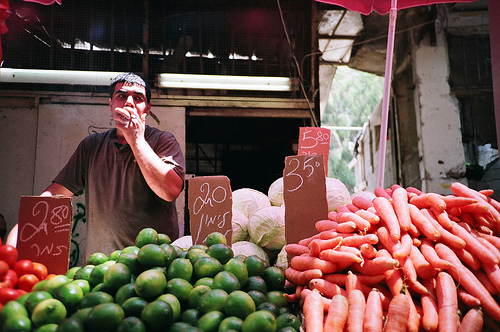
(Does this guy look worried about the frost? A smokin’ vegetable vendor in a Petach Tikva market, Israel. Credit anyalogic)

While North Americans in the higher latitudes are sipping hot cocoa, and have Jack Frost nipping at their noses, farmers in the Middle East pray that the frost won’t come. Last year, sub-zero temperatures wiped out millions of dollars worth of crops in the region, causing basics like lemons to cost a fortune in the supermarket.

Farmers so far, reports The Jordan Times, are in the clear from frost. Although temperatures dipped to sub-zero this week night as a cold and dry air mass overwhelmed the region, Jordan’s Agriculture Ministry officials said no reports on crop damage were received.

The officials, however, renewed a call on farmers to take precautionary measures against frost formation to avoid vast crop damages similar to what happened early last year when over 15,000 dunums of vegetables were damaged in Jordan alone.

Jacob’s trees were the Cedars of God

0

conservation, biodiversity, eco-tourism, climate change, Lebanon
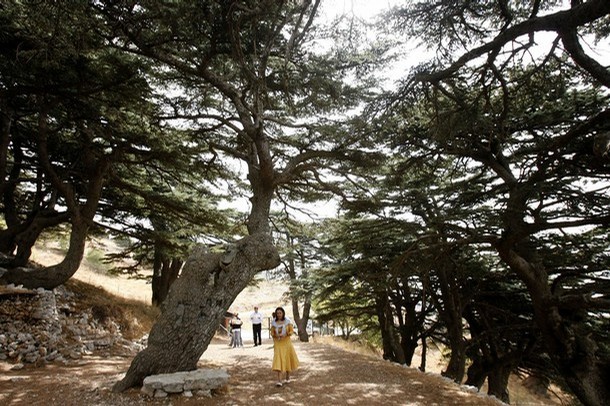
Cedars of God, in Lebanon

In this week’s segment from the Torah, Parshat Vayigash, Jacob and his family go down to Egypt to Joseph, who is now second, only to Pharaoh, in Egypt. On his way down the Bible explains that Jacob went via Beersheba.

The Midrash Bereshit Rabbah, a sixth century commentary on the bible, notices extra language used to describe that journey and explains further. It explains that Jacob, on the way down to Egypt, stopped and cut down the cedar-trees that his grandfather, Abraham, planted.

The Midrash continues that Jacob foresaw that his great-great grandchildren would need that wood, in the desert, to build the Tabernacle on their way back to Israel. This was built from the cedars of Lebanon.

The people of Israel, while in Egypt, kept the wood intact. They did not use it for anything else; their purpose was passed down from one generation to the next. If they had been used for idolatry, while in Egypt, they would not have been suitable to be used in building the Tabernacle. But the message was passed on, along with the wood, from one generation to the next. This message was one of hope that the wood would be needed, on their way out of slavery, back to the Promise Land.

This Midrash has a message of its own, a message of hope as well. Deuteronomy (20:19) likens man to a tree. In Judaism, this parallel is significant. The Midrash is telling us that Jacob passed the message that while in Egypt the Israelites need to remain a holy people; trees fit to worship God in the building of the Tabernacle.

Cedars of God, or the Cedars of Lebanon

while in the worst conditions, slaves in a society that stood for everything that they did not believe in, they remained a holy people, and the wood was usable in the building of the Tabernacle.

Today we are at a crossroad, similar to the one that Jacob was at. We are living during difficult times, and there may be more difficult times ahead. It is important now, more than ever, to pass the message of the tree onto our children, both actually, and metaphorically. We need to replenish our forests, and all that that signifies: a symbiotic relationship with our planet and a sense of responsibility and caring for the future.

We also need to replenish the forests in our souls: the message that no matter what the situation – markets crashing, war, poverty, global warming or terrorism – it does not justify actions that are in any way less than human. This is the message of Jacob and this is the message that we need to pass on to our children if we want our world to heal on a global level.

A Distraction From The Conflict With More Eco-Travels In Vietnam

0

plastic-bags-vietnam-israel

(Plastic bags on the trees in Vietnam)

With the bombing and chaos in Israel and Gaza right now, it’s a little hard to focus on positive green news from the Middle East. My passion for it, is a little clouded by all the politics and news of violence. See my latest post on TreeHugger “When the Green Side of Israel Gets Tainted Black.”

So instead of looking for green news from the Middle East region, where many people from both sides of the Green Line are looking to survive, we take you from our regularly scheduled programming, and re-visit Tania Guenter, a friend I met in Tel Aviv from New Zealand, as she eco-tours it around Vietnam. You can read her previous post on Where Things Come From in Vietnam.

Now, what’s new with Tania:

Eco-Village Kramim: A Green Ray of Light in the Negev

6

With so much negativity in the southern part of the country and the Negev right now, it is refreshing to learn about positive things going on in the region, such as the blossoming eco-village Kramim.

Founded recently by a group of visionary young Israelis and immigrant families, Kramim hopes to serve as a multicultural model of environmental sustainability in Israel.  As the writers of the Eco-Village Kramim website describe themselves:

“Using sustainable design and ‘green’ architecture, combined with environmental technologies and services, Ecovillage Kramim is set to become a thriving hub of social and business entrepreneurship, multicultural partnerships, fair-trade, environmental initiatives, and a source for the protection of the environment and wildlife in the Negev.”

Cradle to Cradle or Cradle to Grave?

4
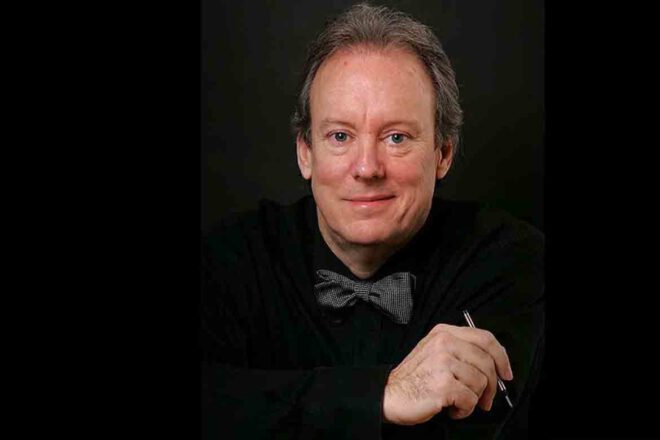
William Andrews McDonough is an American architect, designer and author. McDonough is founding principal of William McDonough + Partners, co-founder of McDonough MBDC as well as co-author of Cradle to Cradle: Remaking the Way We Make Things and The Upcycle: Beyond Sustainability—Designing for Abundance.
William McDonough is an architect who woke the profession up to the idea of designing with no waste.

Two of the most basic terms in the ecological and sustainable design and architecture fields are Cradle to Grave and Cradle to Cradle. They relate to the product life cycle from the raw materials (Cradle) to disposal (Grave). If you are in design school or architecture college or are thinking about an MBA in a sustainable field, you should know the book Cradle to Cradle. It’s a primer for sustainabilists. Well, for anyone in the design or product business.

What is Cradle to Grave

Cradle to Grave is a term used in life-cycle analysis to describe the entire life of a material or product up to the point of disposal. In other words, cradle-to-grave is a take, make, waste system. Making a plastic bottle by Coca Cola that has no intention of being recycled or which physically cannot be recycled or used is a product that goes from the cradle to the grave. Flip-flips that wash up onshore. Cradle to the grave. It gets more complex when we talk about cars, electronics, and large building projects. But architects today, especially in forward-thinking sustainable cities like Rotterdam are thinking about building materials that can see a new life after the current structure is demolished.

What is Cradle to Cradle

Cradle-to-cradle is the creation and qualification of a circular economy. It’s a way of designing and producing that honors all future generations by designing and manufacturing for next use, instead of end of life.

A model of industrial systems in which material flows cyclically in appropriate, continuous biological or technical nutrient cycles. All waste materials are productively re-incorporated into new production and use phases, such as “waste equals food,” according to William McDonough, the architect who conceived the concept.

William McDonough
William McDonough

The famous three Rs—reduce, reuse, recycle—are steadily gaining popularity in the home as well as the workplace. Reduction, reuse, and recycling slow down the rates of contamination and depletion but do not stop these processes.

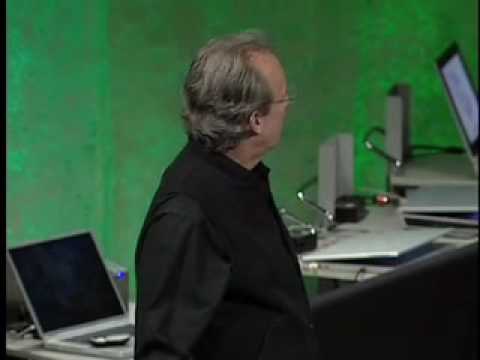
Watch a TED video of William McDonough below

Recycling is more expensive than it needs to be, partly because traditional recycling tries to force materials into more lifetimes than they were designed for. Very few objects were designed with recycling in mind. If the process is truly to save money and materials, products must be designed from the very beginning to be recycled or even “upcycled”—a term we use to describe the return to industrial systems of materials with improved, rather than degraded, quality.

Why Cradle to Cradle is more important

The notion of Cradle to Cradle conveys a message of “Do good” instead of “Do less bad.”

Here’s an experiment. Choose any of your favorite blogs/websites and skim their latest articles. How many of them are all about how to do less so it will have less of an effect on the environment?

The environmental message that consumers take from all of this can be strident and depressing: stop being so bad, so materialistic, so greedy. Do whatever you can, no matter how inconvenient, to limit your consumption. Buy less, spend less, drive less, have fewer children — or none.

About the technical metabolism

Aren’t the major environmental problems today — global warming, deforestation, pollution, waste — products of our decadent Western way of life? If you are going to help save the planet, you will have to make some sacrifices, share some resources, perhaps you can go without.

With a Cradle to Cradle mindset you don’t try to design a bottle from less plastic but rather design a bottle from materials that can fully enter a new life cycle either back to nature or back into the design process as a new product.

Biological nutrients will be designed to return to the organic cycle—to be literally consumed by microorganisms and other creatures in the soil. Products composed of materials that do not biodegrade should be designed as technical nutrients that continually circulate within closed-loop industrial cycles—the technical metabolism.

Recycling Bins Take the Form of Art in Tel Aviv

5

Tel Aviv recycling image
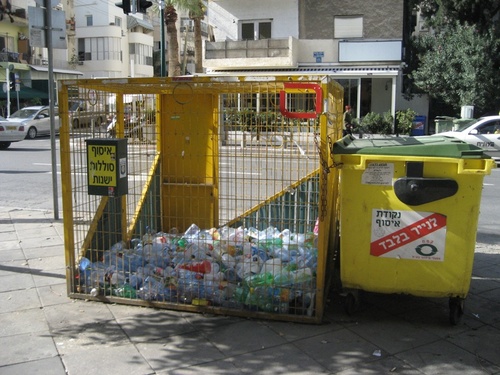
These yellow metal recycling cages can be seen along major arteries like Ben Yehuda and Dizengoff streets here in Tel Aviv. Some are strategically placed in front of supermarkets which make them user friendly and in turn gives more of an incentive to recycle.

When I first saw these cages the logistics of putting the bottles in was easier to grasp then getting the bottles out. My question was answered one day when I spotted a “super truck” operated by the L.D.S. Recycling Industries taking care of business. This truck is in fact a vacuum cleaner that is designed especially for the function of bottle removal.

Recycling and Deifying Donkey Dung in Israel

The Christmas season in Europe is often silly season for the world’s media outlets, when they outdo each other to find the strangest, weirdest and oddball news story to give people an extra sparkle to their celebrations.

Strange shaped vegetables, or bagels that bleed are the sort of stories that crop up. Despite the crisis in the South of Israel, the BBC managed to find its own silly and strange story in the Holy Land, close to the Galil. Dung, from horses, donkeys and cattle, has for many centuries and across many countries and cultures, been used both as a fuel for heat and as a fertiliser for agriculture.

This is one of the most basic, and successful, forms of recycling that there is. Reusing animal waste, which is generally made up of green plant matter, is extremely green. So green that many herders collect it as an essential item, and might look at you strangely if you commented on it!

Menachem Goldberg, who runs a visitors centre at Kedem, has come up with the extra-ordinary idea of preserving pieces of donkey dung within a plastic cube, that is inscribed with holy writings from the Talmud. Mr Goldberg says that the idea came to him from the Talmudic phrase: (and I quote) “Let the Messiah come…may I be worthy to sit in the shadow of his donkey’s dung”. Make of this what you will!

Comments welcome, and any visitors to Kedem, please confirm this craziness for us.