It's sea turtles which may in the end save islands in the Seychelles. They may also better help us understand climate change. Like rings on a tree, scientists have found a way to read sea turtle shells and how they are impacted by climate change tells a story.
For centuries, the Sámi shaman drum was one of the most powerful sacred objects in northern Europe, and one of the most feared by church and state. If ISIS looks bad to us today for its religious fundamentalism, Christians were just as fervent.
In a real emergency, romance takes a back seat to physics, panic, and how fast 150 people can squeeze through a narrow tube. The Federal Aviation Administration says every aircraft must be evacuated within 90 seconds. That’s the gold standard. But new research suggests that in the real world, especially as we age, that number might be more aspirational than achievable.
Research from the Wildlife Conservation Society (WCS) and the University of Queensland, published in Ocean & Coastal Management, found that nearly three out of four marine protected areas (MPAs) worldwide are exposed to sewage pollution.
It's sea turtles which may in the end save islands in the Seychelles. They may also better help us understand climate change. Like rings on a tree, scientists have found a way to read sea turtle shells and how they are impacted by climate change tells a story.
For centuries, the Sámi shaman drum was one of the most powerful sacred objects in northern Europe, and one of the most feared by church and state. If ISIS looks bad to us today for its religious fundamentalism, Christians were just as fervent.
In a real emergency, romance takes a back seat to physics, panic, and how fast 150 people can squeeze through a narrow tube. The Federal Aviation Administration says every aircraft must be evacuated within 90 seconds. That’s the gold standard. But new research suggests that in the real world, especially as we age, that number might be more aspirational than achievable.
Research from the Wildlife Conservation Society (WCS) and the University of Queensland, published in Ocean & Coastal Management, found that nearly three out of four marine protected areas (MPAs) worldwide are exposed to sewage pollution.
It's sea turtles which may in the end save islands in the Seychelles. They may also better help us understand climate change. Like rings on a tree, scientists have found a way to read sea turtle shells and how they are impacted by climate change tells a story.
For centuries, the Sámi shaman drum was one of the most powerful sacred objects in northern Europe, and one of the most feared by church and state. If ISIS looks bad to us today for its religious fundamentalism, Christians were just as fervent.
In a real emergency, romance takes a back seat to physics, panic, and how fast 150 people can squeeze through a narrow tube. The Federal Aviation Administration says every aircraft must be evacuated within 90 seconds. That’s the gold standard. But new research suggests that in the real world, especially as we age, that number might be more aspirational than achievable.
Research from the Wildlife Conservation Society (WCS) and the University of Queensland, published in Ocean & Coastal Management, found that nearly three out of four marine protected areas (MPAs) worldwide are exposed to sewage pollution.
It's sea turtles which may in the end save islands in the Seychelles. They may also better help us understand climate change. Like rings on a tree, scientists have found a way to read sea turtle shells and how they are impacted by climate change tells a story.
For centuries, the Sámi shaman drum was one of the most powerful sacred objects in northern Europe, and one of the most feared by church and state. If ISIS looks bad to us today for its religious fundamentalism, Christians were just as fervent.
In a real emergency, romance takes a back seat to physics, panic, and how fast 150 people can squeeze through a narrow tube. The Federal Aviation Administration says every aircraft must be evacuated within 90 seconds. That’s the gold standard. But new research suggests that in the real world, especially as we age, that number might be more aspirational than achievable.
Research from the Wildlife Conservation Society (WCS) and the University of Queensland, published in Ocean & Coastal Management, found that nearly three out of four marine protected areas (MPAs) worldwide are exposed to sewage pollution.
It's sea turtles which may in the end save islands in the Seychelles. They may also better help us understand climate change. Like rings on a tree, scientists have found a way to read sea turtle shells and how they are impacted by climate change tells a story.
For centuries, the Sámi shaman drum was one of the most powerful sacred objects in northern Europe, and one of the most feared by church and state. If ISIS looks bad to us today for its religious fundamentalism, Christians were just as fervent.
In a real emergency, romance takes a back seat to physics, panic, and how fast 150 people can squeeze through a narrow tube. The Federal Aviation Administration says every aircraft must be evacuated within 90 seconds. That’s the gold standard. But new research suggests that in the real world, especially as we age, that number might be more aspirational than achievable.
Research from the Wildlife Conservation Society (WCS) and the University of Queensland, published in Ocean & Coastal Management, found that nearly three out of four marine protected areas (MPAs) worldwide are exposed to sewage pollution.
It's sea turtles which may in the end save islands in the Seychelles. They may also better help us understand climate change. Like rings on a tree, scientists have found a way to read sea turtle shells and how they are impacted by climate change tells a story.
For centuries, the Sámi shaman drum was one of the most powerful sacred objects in northern Europe, and one of the most feared by church and state. If ISIS looks bad to us today for its religious fundamentalism, Christians were just as fervent.
In a real emergency, romance takes a back seat to physics, panic, and how fast 150 people can squeeze through a narrow tube. The Federal Aviation Administration says every aircraft must be evacuated within 90 seconds. That’s the gold standard. But new research suggests that in the real world, especially as we age, that number might be more aspirational than achievable.
Research from the Wildlife Conservation Society (WCS) and the University of Queensland, published in Ocean & Coastal Management, found that nearly three out of four marine protected areas (MPAs) worldwide are exposed to sewage pollution.
It's sea turtles which may in the end save islands in the Seychelles. They may also better help us understand climate change. Like rings on a tree, scientists have found a way to read sea turtle shells and how they are impacted by climate change tells a story.
For centuries, the Sámi shaman drum was one of the most powerful sacred objects in northern Europe, and one of the most feared by church and state. If ISIS looks bad to us today for its religious fundamentalism, Christians were just as fervent.
In a real emergency, romance takes a back seat to physics, panic, and how fast 150 people can squeeze through a narrow tube. The Federal Aviation Administration says every aircraft must be evacuated within 90 seconds. That’s the gold standard. But new research suggests that in the real world, especially as we age, that number might be more aspirational than achievable.
Research from the Wildlife Conservation Society (WCS) and the University of Queensland, published in Ocean & Coastal Management, found that nearly three out of four marine protected areas (MPAs) worldwide are exposed to sewage pollution.
It's sea turtles which may in the end save islands in the Seychelles. They may also better help us understand climate change. Like rings on a tree, scientists have found a way to read sea turtle shells and how they are impacted by climate change tells a story.
For centuries, the Sámi shaman drum was one of the most powerful sacred objects in northern Europe, and one of the most feared by church and state. If ISIS looks bad to us today for its religious fundamentalism, Christians were just as fervent.
In a real emergency, romance takes a back seat to physics, panic, and how fast 150 people can squeeze through a narrow tube. The Federal Aviation Administration says every aircraft must be evacuated within 90 seconds. That’s the gold standard. But new research suggests that in the real world, especially as we age, that number might be more aspirational than achievable.
Research from the Wildlife Conservation Society (WCS) and the University of Queensland, published in Ocean & Coastal Management, found that nearly three out of four marine protected areas (MPAs) worldwide are exposed to sewage pollution.
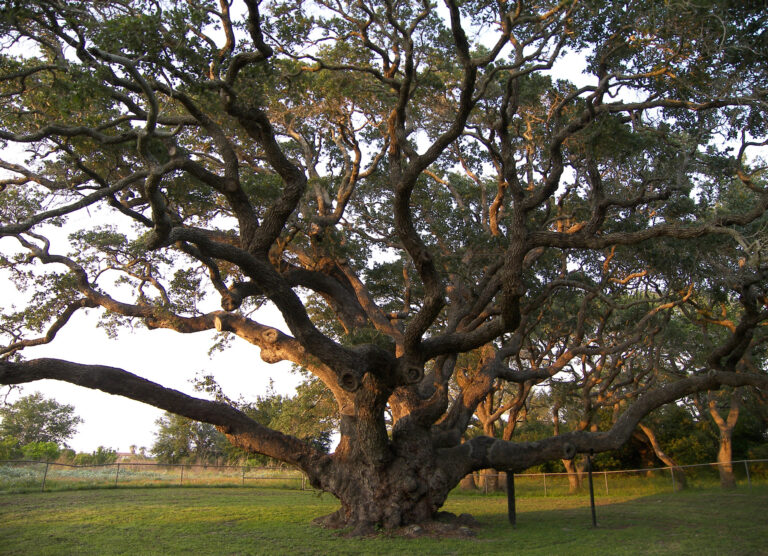
Tu B’Shvat is the Jewish holiday marking the beginning of a new year for trees, and is usually celebrated by planting trees and exchanging gifts of dried fruit with loved ones. While these traditional activities are great and we support going out to plant trees (thus increasing the amount of carbon-eating leaves out there), these activities sound a little stale.
Tu B’Shvat Party at City Tree, Tel Aviv: Get down with fellow green folks in Tel Aviv’s ecological apartment – City Tree. Enjoy dates, carobs, dried fruit cookies, organic wine, and other surprises. Saturday February 7th, 23 Bialik Street, Tel Aviv, 8pm-11pm
The Giving Tree, Jerusalem: The Society for the Protection of Nature in Israel is hosting an evening to discuss the topic of The Giving Tree: How to Protect Adult Trees in the City. The evening will include lectures, film, a discussion of the Jerusalem municipality’s policy on urban trees, and a presentation of a map of the Jerusalem trees being discussed. For details and reservations contact the Center for Green Culture, 02-6252357.
From Garbage Hill to Green Park: Join the Society for the Protection of Nature in Israel for a tour of Hiria, a former garbage-dump-turned-national-park, to learn about recycling. A highlight of the tour includes a hike to the top of Hiria to see an impressive view of the Gush Dan region. February 5th. Reservations required, 057-200-30-30.
Tu B’Shvat Street Party, Tel Aviv: Alma, the Home for Hebrew Culture, is hosting a cultural Tu B’Shvat street party which will include artistic installations, a theatrical performance, live jazz music, and activities for kids.
The main event will be a performance by Marap (which includes musician Kobi Oz, the lead singer of popular Israeli band Tipex). Friday February 13, 12:00-4:00pm, reservations required.
Here at Green Prophet we’ve covered a variety of conferences, with the most recent being a seminar in Jerusalem about architecture (coming up on January 25th). We have yet to cover a conference (let alone an environmental conference) in Libya, though, which is why we were so happy to learn about a call for papers from a sustainable architecture conference there.
I went to see Scott Hamilton Kennedy’s documentary film, “The Garden,” at Tribeca Cinemas in Manhattan, part of docs on the shortlist for the Gucci Tribeca Documentary Fund. I went with a group of farmers living in New York, some of whom work on urban farming projects in and around the City.
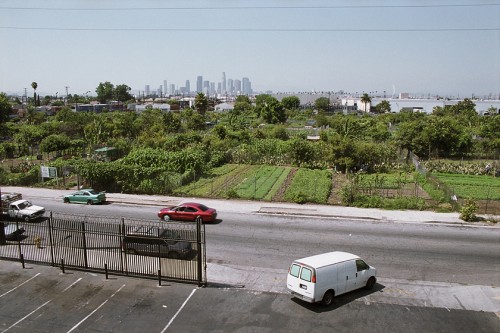
The film tells the tragic story of the largest community garden in the United States in South Central Los Angeles.The garden, a full-fledged 14 acre farm in a blighted neighborhood, was created in response to the LA riots in an effort to heal the city. Lower income residents tended the garden. As the demographics of the area changed, more Latin Americans moved to the area and soon made up a majority of the farmers.
The film shows stunning images of corn and tomatoes growing amidst and industrial backdrop.In fact, the viewer sees countless helicopter images of this impressive green square in the middle of Los Angeles sprawl, demonstrating the stark contrast between sunflowers and concrete, verdancy and the pallor of urban industry. The importance of the garden to many of the gardeners is most inspiring, as many relied on the garden to feed their families and had been looking for empowering work to do in the city that would allow them to feed their families hearty and healthy meals.
The story, however, takes a dreadful turn as we see the end result of a failure of government.Without notice the farmers arrive one day to see a letter of eviction, signed by a developer whose name the farmers did not recognize.The mostly immigrant farmers were left asking, who is this developer, and isn’t this government land?
Special guest desert dwelling activist and academic Lucy Michaels, gets to the heart of the matter with a classic eco text: “The burnt cliffs and lonely skies … all that which lies beyond the end of roads:” From Desert Solitaire and why Israel’s deserts need their own Edward Abbey.
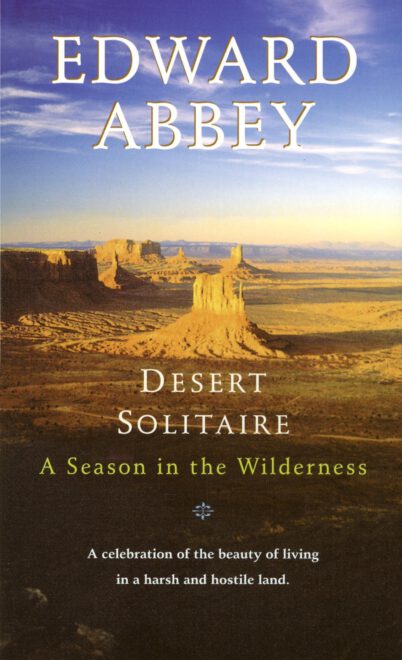
In the late 1950’s, a young ranger and sometime philosopher, Edward Abbey, spent three seasons as a ranger at Arches National Monument, a national park in southeast Utah in the USA. Desert Solitaire, his classic memoir of life in the desert wilderness chronicles both his adventures and his quest to experience nature in the raw.
“The idea of wilderness needs no defense, it only needs defenders.” ― Edward Abbey“Why this cult of wilderness?… because we like the taste of freedom; because we like the smell of danger.” ― Edward Abbey
Abbey’s book, however, transcends specific locations and speaks directly to the desert experience. His world is the slickrock desert with views open and perfect in all directions. A world of natural arches like jug handles or flying buttresses, tilted or warped by pressures from below or eroded by water or wind.
His garden is the pinyon pine and the juniper; the cactus and the cliffrose. His neighbours: the kangaroo rats, tiger lizards and beetles. His world turns from off-white to buff, pink, brown and red, tones which change with the time of day and the moods of light, weather and the sky. Out here, 20 miles from civilisation, his ticking watch is meaningless, ridiculous.
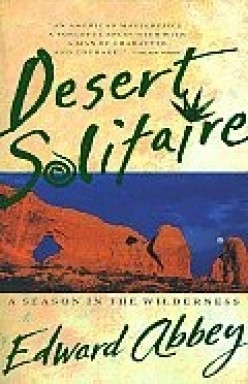
Desert Solitaire, original cover
Against this vast canvas, Abbey’s stories are small yet riveting. His communion with the snakes that visit his trailer; the survey crew who lay the flags for a new paved road through the national park, which he carefully removes later that night; the fates of the local cowboys, Indians and prospectors; the moon-eyed horse gone feral in Salt Creek; the dead man at Grandview Point.
The centrepiece his dreamlike adventure paddling down Glen Canyon to witness “a portion of earth’s original paradise” that would soon be drowned forever by the damming of the Colorado River. All the while time passes and seasons change as he sits out on his porch surveying his 33,000 acre view.
More than nature writing
Abbey’s book is, however, more than just nature writing at its finest (a definition he personally hated); it is an urgent call to defend the canyon lands from encroaching development.
For Abbey “Desert Solitaire” is both a memorial to “places already gone or going under fast” and “a tombstone or a bloody rock” to be hurled defiantly at “something big and glassy” such as the windows of a corporate headquarters.
It is not surprising, therefore, that Abbey is widely acknowledged as an inspiration to the American wilderness defence movement.
Abbey reserves special venom for tourists who drive in national parks, but not through other sacred places, such as cathedrals or museums. Besides “you can’t see anything from a car; you’ve got to get out of the goddamned contraption and walk, better yet, crawl, on hands and knees over the sandstone; through the thornbush and cactus. When traces of blood begin to mark your trail you’ll see something, maybe. Probably not.” The desert lands move too slowly for those of us hurtling about in our everyday lives.
Abbey’s great gift to us in “Desert Solitaire” is in noticing and revelling in the imperceptible things that simply don’t exist from a passing car window.
Wit as sharp as desert cliffs
What makes this book so engaging is that Abbey’s wit is as sharp as the jagged cliffs he describes. At times sanctimonious and overly dramatised, for the most part he is startlingly sincere.
Whist his tone is definitely his own, his message draws deeply on Thoreau and Emerson in perceiving wilderness as humankind’s sacred ancestral home and sole source of hope. For Abbey, the wilderness is essential as a place of freedom and escape to complement and complete civilization. “It is not a luxury, but a necessity as vital to our lives as water and good bread. A civilisation which destroys what little left remains of the wild cuts itself off from its origins. Industrial man…will make himself an exile from the earth and will know, at last, the pain and agony of final loss.”
Since the days of Abraham, and very probably long before, Israel’s mythical deserts have been sacred: a place of spirit, of revelation and renewal. Yet prominent Zionist leaders, notably Israel’s first prime minister, David Ben Gurion, came to see the desert in a very different light: it needed to be subdued and “made to bloom” to meet the needs of the young state. While this vision may have improved our material understanding of deserts, it has also engendered the destruction of exquisite places causing untold environmental damage for the sake of haphazardly placed factories, waste dumps, greenhouses, plantations and mines.
And Israel’s deserts are still threatened by Ben Gurion’s dictum: from sand mining in Israel’s last intact sand dune to build hotels in Eilat and the re-introduction of copper mining in Timna.
From the plans to build a hotel for 4X4 drivers in the peaceful Sasgon valley, to the Valley of Peace – a proposal to transform the Arava into a Las Vegas of the East by billionaire Itzhak Tshuva, clearly a megalomaniac of Nebuchadnezzan proportions. Besides, much of Israel’s spectacular open spaces are located in military zones, tantalisingly out of reach, whilst other places are deeply scarred by tanks, bulldozers and off-road vehicles, whose tracks remain decades after they are gone.
Desert Solitaire demands another understanding. It is for those who have rambled through Israel’s desert lands following a tempting track down a wadi or tracking the ibex across the cliffs. It is for those who yearn for the shadows cast by the setting sun on the Edom Mountains, have charted the movements of the stars across the vast night skies or made coffee on an open fire under the shade of an acacia tree.
It is for those who have drawn inspiration from the eroded paths and changing colours of the day. It is for those for whom the desert simply is; and not for those for whom the desert waits to be something else. As a desert dweller myself, it was overwhelming to find such an articulate voice for the inexpressible sentiments that I feel for the land around me.
A call to defend the desert
While these deserts have had their literary champions in the past, from Dhu al-Rumma to TE Lawrence, Gertrude Bell and Pierre Loti, Israel’s deserts of today cry out for defenders. Defenders who understand what is at stake when we despoil our deserts and ride roughshod over their ancient wisdom for the sake of short term profits. Defenders who support mindful and sustainable development where necessary, and not simply development that claims to be “green” or “eco” when it is nothing of the sort. Defenders to encourage Israeli school kids to read old “Cactus” Ed as they memorise Ben Gurion. This would leave them with no excuse for perceiving the Negev and the Arava as blank canvases for exploitation and development.
The Negev does have some powerful literary voices, among them both Daniel Hillel and Haim Watzman. The Negev and Arava also have many unsung heroes who have also resisted sprawl and unnecessary development in recent years, but there are too few of us.
Put this book in your rucksack next time you go for a tiyul (trip). Find a shady spot on a craggy hilltop with a huge view, and read. You may well return home transformed.
About Lucy Michaels
Lucy grew up in North London, a long way from her current desert home, but has always followed the call of the wild. At university she discovered Earth First! and has been active in radical environmental and anti-globalisation movements ever since. This included a five year stint as a director/researcher at Corporate Watch in Oxford.
From the first moment she arrived at Kibbutz Lotan in the Arava valley in Spring 2005 she knew she had come home. After a year working in Jerusalem, she found her way back down: first, to study and then work at the Arava Institute for Environmental Studies and now as a doctoral student of Professor Alon Tal at Ben Gurion University’s Desert Studies Institute in Sde Boqer where she is researching what Israelis think about climate change. She’s happiest when out hiking in the desert or involved in some crazy permaculture project.
Lucy currently lives with husband Uri Gordon somewhere on the route 40 between Kibbutz Lotan and Sde Boqer.
Some say that Eco-Design and other green initiatives are just a trend and it’ll go away like many other buzzwords. According to Trendwatching.com this is not the case.
It looks like Simplexity is going to rule 2009. We’ll see more designed products that carry a simple design, maintaining ease of use while not giving up on complex features. Some say it’s because the Baby Boomers are growing up wanting comfortable products but still technologically innovative.
The economic crisis requires designers to be more creative in their designs using smaller budgets. We might see bolder designs than what we’re used to.
Among the leading trend in 2009 are:
Retro design
Simplexity
Minimalism
Bold designs
Designs clashing clean designs together with prominent colors
Eco-Design
Personalized designs.
Eco-Design will be mentioned more as Sustainable design. We’ll see more companies like Nike that design entire collections from sustainably-sourced fabrics, and footware from sustainable materials.
Each week Orthodox Jews read one segment of the Five Books of Moses so that they can complete the entire Five Books within the course of a year. In last week’s Eco-Rabbi post we discussed Jacob’s passing on and blessing his children, this week begins several generations later. Jacob’s children have been living in Egypt and multiplying in numbers but have been oppressed into slavery.
Moses has run away from Egypt. Apparently being raised in Pharaoh’s home isn’t enough to avoid being chased into the desert for killing in defense of a slave. Traveling through the wilderness Moses finds himself a home with one of the Medians. Moses finds a helpmate there and becomes a shepherd of his father in law’s sheep.
While out with his father in law’s sheep Moses stumbles upon Mount Horev, which consequently, tradition explains, is actually Mount Sinai. On the mountain Moses finds a “sneh boer,” a burning bush from which God appears to him and presents him with the task of taking the Jewish people out of Egypt.
The commentaries have a field day explaining the significance of the burning bush, especially since trees are so important in Judaism. Midrash Exodus Rabbah, 11th century exegesis on the Bible, asks why is it that God appears to Moses from a burning bush? Bushes have thorns, are short, live off of any water source; in short, are not divine in any way.
Mifal Hapayis (the Israel National Lottery) is opening new windows of opportunity for environmentally aware artists and designers. This year, the Arts and Culture Council turned to the public for suggestions on areas worthy of support and the people spoke up! Letting in a breath of fresh air in more ways than one, the new categories reflect a growing interest in ecology and awareness of the environment.
Seeking to encourage environmental awareness in all aspects of design, performance and art, Mifal Hapayis will give special attention to ecologically oriented projects.
In the performing arts, street theater and other performance events taking place outside conventional frameworks have been added to the list.
In the visual arts, the committee will place an emphasis on:
Architecture and the Urban Environment
Art and Ecology
One project already in the works is “Ecosphera” – which aims to be the largest green event held in Israel. Scheduled to take place in the Artist’s Village of Ein Hod and its environs in mid-April, the festival will be dedicated to the theme of “sustainability.”
In addition to workshops, theatrical events, and an organic farmer’s market, the highlight of the festival will be an international exhibit of green art curated by Dana Tagger.
The Board of Directors has allocated 12 million NIS to fund projects in a variety of areas. Artists, designers, cultural institutions and dreamers who would like to submit proposals may do so in the months of February and May.
It’s a spread like hummous; it’s used like ketchup. And it’s also a sauce. The recipe is from Syria, but find it in Lebanon, Turkey, and Jordan.
Winter cooking is often pantry cooking. When the rain is coming down at a 45° angle, the last thing most of us want to do is brave the elements to make a grocery run.
It’s handy to have a stash of recipes that rely on what you already have in the cupboard – and conversely, to stock your cupboard with great ingredients you can use whenever the spirit strikes. It’s especially great if those recipes aren’t last resorts, but lead to dishes that you find cozy and comforting and help you combat the stormy weather outside.
We’re obviously big fans of cooking with the seasons, using whatever is just fresh and coming ripe. But – even in the Mediterranean – there’s not always something to be harvested. Cooking healthy food made from the locally-sourced dry and canned goods is a great alternative.
In the hopes of fighting our own winter blahs, we thought it would be fun to try and work through some of the classic recipes in the canon of Middle Eastern cooking – the old standbys and familiar dishes that are especially soothing when you’re spending the weekend curled up inside.
Now, we’re not claiming that we’ll be able to reproduce your favourite hummus perfectly – that kind of standard is entirely beyond us. There are as many versions of hummus as there are people that make it, after all. If your grandmother has passed her secrets on to you, consider yourself blessed. (And share in the comments!) If you’re still trying to muddle your way through, however, consider these your yummy, customizable starting-points.
First up, muhammara: the garlicky, earthy, addictive red pepper and walnut spread that originally hails, so we understand, from Aleppo, Syria.
Muhammara
2 slices of bread (can be stale, whole wheat is good), toasted
4 whole roasted red peppers (preferably packed in oil), coarsely chopped
1/2 cup walnuts, toasted lightly and chopped
2 garlic cloves, mashed with 1/2 tsp salt
1 tablespoon fresh lemon juice, or to taste
1 tablespoon pomegranate molasses
1 teaspoon ground cumin
1/2 teaspoon dried hot red pepper flakes
1/4 cup extra-virgin olive oil
Place the toasted bread in the bowl of a food processor and pulse until it is reduced to fine breadcrumbs.
Add in all the remaining ingredients except the oil and process until the mixture is uniform and the ingredients are fully incorporated. With the motor running, add the oil gradually; continue blending until the dip reaches your preferred consistency – anywhere from smooth to slightly chunky.
Taste and adjust seasonings, adding salt if necessary and a bit more pomegranate syrup if you’d like more sourness.
Transfer the muhammara to a bowl and serve with pita triangles and veggies for dipping.
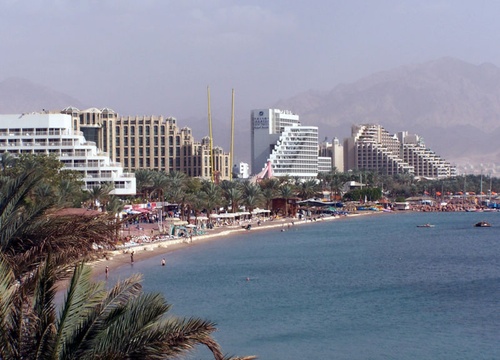
Despite the ongoing conflict in Israel, a three-day international conference on renewable energy planned for February is going ‘full steam ahead,’ according to organizers.
This is the second major renewable energy conference for Eilat, and hundreds of clean technology leaders, entrepreneurs, VCs, companies and government representatives from around the world are expected to take part.
A perfect destination for clean energy
An abundance of blinding sun, and few rainy days, makes the Israeli city of Eilat a perfect destination for farming clean energy from the sun. Located at the tip of the Red Sea, where Israel meets Sinai and Jordan, Eilat has been getting serious about clean technologies for some years.
Noam Ilan, project developer for the Renewable Energy Authority of Eilat-Eilot, the body organizing the conference, says that a major goal of the event is to show how Israel plans to implement its own world-class clean technologies. Known around the world for water technologies and solar energy, the conference will shine a bright green light on local projects, and the region’s own Timna Renewable Energy Park.
The conference will “stir up a great momentum,” for clean technology projects, Ilan tells ISRAEL21c. He predicts that within a short time, Eilat will be a renewable energy hub in Israel, and possibly the world.
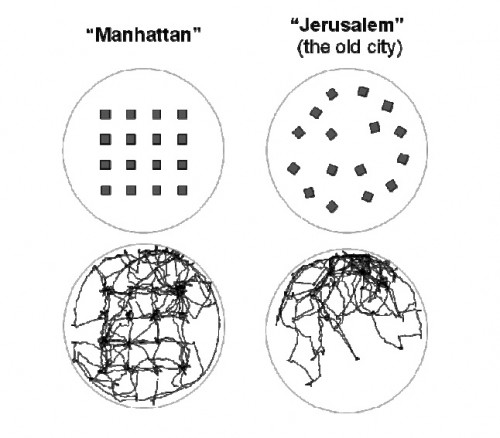
“Rat tracks” made by rats in two city plans: Manhattan-style (left) and New Orleans or Jerusalem-style (right). In both plans rats cover the same distance, but rats in the “Manhattan” grid cover more territory.
Rats Say: Manhattan Rules!
Before “green” urban planners build that new sub-division, neighborhood, city street, or town, they might want some invaluable advice that can spare years and millions of dollars from going down the drain. They just need to ask the rats.
Researchers at Tel Aviv University have found that if you leave it up to the rats, New York City beats the Old City of Jerusalem or New Orleans any day.
This surprising finding comes from new research by TAU zoologists and geographers, who are working together to invent a novel way to test urban designers’ city plans. Instead of using humans as guinea pigs, the scientists went to their nearby zoo and enlisted lab rats to determine the functionality of theoretical and existing plans.
They’ve already tried their theory in the academic setting by blindfolding human biology students to confirm that human orientation strategies and instincts are similar to those of their fellow four-legged city dwellers.
If you are looking to sharpen your composting skills, banish flies, kill odors, and speed along the making of rich fertilizer for your garden, while running a greener kitchen, City Tree has the answer.
This Thursday at 8 at Bialik 23 in Tel Aviv is the First Israeli Composters’ Forum.
Bring a notebook and maybe some shekels to buy worms for your indoor bins.
For more information (in Hebrew), check out the Facebook event.
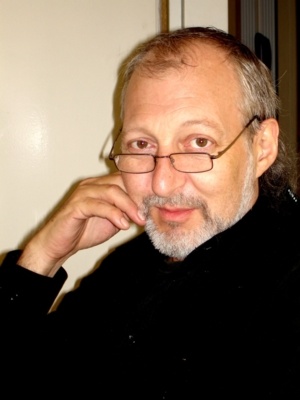
Green Prophet recently interviewed Achmed Khammas. Achmed grew up in Syria and now lives in Germany, and he tells us about the new popular online resource he built: The “Book of Synergy,” and his vision and research in renewable energy, environmental activism in Syria, and personal views on Middle East peace.
My full name is Achmed Adolf Wolfgang Khammas, and I was born to a German mother and Iraqi father in 1952 in Berlin. I grew up in Damascus.
After finishing the school in Syria I worked, but did not study, for a few years at the Technical University in Berlin (TUB). Then, in 1977, I took over the engineering office of my parents in Damascus.
I started my own experiments and developments in 1979 in the field of domestic solar thermal devices and the training of staff members.
The first solar collector was produced then in 1980, which was the beginning of a ten year long odyssey with a lot of trouble and a lot of fun and success. Our team also worked in the field of wind energy, in which I used to have a European Patent for a new ‘splitted blade.’
As a Green Prophet studying at Ben Gurion University, for the last two weeks I have been out of school due to rockets on Beer Sheva. Earlier this week I took advantage of BGU’s location in the desert to hike away from the sirens and remember the beauty of being outside in the undeveloped areas of Israel.
Enjoy this account of a night hike, first posted on January 11 at TheTruthHerzl.com.
***
I woke up this morning thinking I was on the streets of Chicago with the wind loudly blowing between the blocks of skyscrapers. It took a few minutes to realize this howling wind was actually the rocket siren, an especially long one.
The siren is a wail that crescendos and decrescendos; usually the rockets fall 60 seconds after it starts. Since this one was so long, I heard a boom in the middle of it. The house shuddered; the rocket must have fallen nearby (I returned to Beer Sheva last week). The siren stopped and I dozed off again.
On Thursday, January 15, several organizations are joining together for a forum titled “Greening of Jerusalem.” The event is bringing together local cleantech companies, investors, Jerusalem government officials and the Jerusalem public in a joint effort to make the vision of a cleaner, more sustainable world possible and to make Jerusalem and Israel the center of innovation for it and prime example of it.
The event will feature some of Jerusalem’s cleantech companies including bSolar, Cequesta, Leviathan Energy, EnerT Global, EXX Solar, 3GSolar and Solaris Synergy.
During these tough times in the south of Israel and Gaza, it’s heartening to discover that some events are continuing, and that the determination to green things up, either by accident or design, continues apace.
Here at Green Prophet, we’ve kept a keen eye on green design and sustainable architecture, both here and abroad. I was cheered this weekend to discover that the Jerusalem Seminar in Architecture is planning its annual conference shortly, and its to be held here in Jerusalem this month, from the 25th to the 27th, with the theme of ‘Green Design – from theory to practice.’
A distinguished panel of practicing architects and experts, chaired by Dr. Ken Yeang, will explore an array of current projects and technological advancements in the field. Bringing together architects from the US, the UK, Holland and Malaysia and several other nations as well as Israel, this conference promises much in the way of green thinking and reflections upon how the natural world can and should influence our buildings and structures.







 The centrepiece his dreamlike adventure paddling down Glen Canyon to witness “a portion of earth’s original paradise” that would soon be drowned forever by the damming of the Colorado River. All the while time passes and seasons change as he sits out on his porch surveying his 33,000 acre view.
 Lucy grew up in North London, a long way from her current desert home, but has always followed the call of the wild. At university she discovered Earth First! and has been active in radical environmental and anti-globalisation movements ever since. This included a five year stint as a director/researcher at Corporate Watch in Oxford.






 Green Prophet recently interviewed Achmed Khammas. Achmed grew up in Syria and now lives in Germany, and he tells us about the new popular online resource he built: The “Book of Synergy,” and his vision and research in renewable energy, environmental activism in Syria, and personal views on Middle East peace.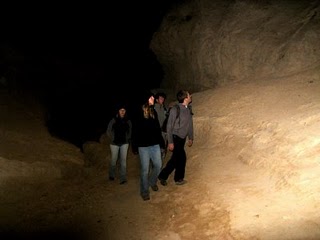
 As a Green Prophet studying at Ben Gurion University, for the last two weeks I have been out of school due to