Home Blog Page 72

Turkey thinks nuclear energy is renewable energy. Who’s going to tell them?

0
The Akkuyu Nuclear Power Plant is a large nuclear power plant in Turkey under construction located in Akkuyu, Büyükeceli, Mersin Province. It is expected to generate around 10% of the country's electricity when completed.
The Akkuyu Nuclear Power Plant is a large nuclear power plant in Turkey under construction located in Akkuyu, Büyükeceli, Mersin Province. It is expected to generate around 10% of the country’s electricity when completed.

At a recent forum in Sochi, Russia, Turkey’s Energy and Natural resources minister Alparslan Bayraktar announced that nuclear energy would play a “critical role” in Turkey’s journey towards achieving net-zero emissions by 2053. Like Greta Thunberg, Turkey and Russia consider nuclear energy renewable energy.

“We aim to reach a total of 12 reactors and a nuclear power of 15,000 megawatts, with probably four reactors in three different locations in Turkey,” he said.

Bayraktar said the country’s aim was to install two additional nuclear plants alongside the Akkuyu Nuclear Power Plant, currently under construction in the Mersin province. Environmentalists in Turkey have been against the plant, built in collaboration with Russia, from the outset.

Funny that the true renewable energy leader Germany shut down its last reactor in 2023, while Turkey starts up its first.

The Turkish Government view nuclear energy as renewable energy. Nuclear is not a renewable energy source, but it is an alternative to fossil fuels because it does not emit greenhouse gases. Environmental groups usually consider nuclear as a non-renewable energy source.

The Akkuyu Nuclear Power Plant is a large nuclear power plant in Turkey under construction located in Akkuyu, Büyükeceli, Mersin Province. It is expected to generate around 10% of the country’s electricity when completed.

“We have a great potential for renewables and energy efficiency, but we absolutely need to add nuclear energy into our energy mix,” Bayraktar said.

Some thought leaders at the Dayan Center believe that while Turkey has agreed as part of NATO to be a non-nuclear state, the use of nuclear as domestic energy will give Turkey an easy in for developing nuclear weapons. Erdogen said in 2019 said, “Some countries have missiles with nuclear warheads, not one or two. But I can’t have missiles with nuclear heads. I cannot accept this.”

Is nuclear energy renewable energy?

Nuclear energy is often misconstrued as renewable due to its low greenhouse gas emissions and continuous power generation. However, it is not classified as renewable for several reasons. Firstly, nuclear power relies on the extraction of uranium, a finite resource that must be mined, processed, and refined. Although uranium reserves are substantial, they are not limitless, and extraction entails environmental impacts such as habitat destruction and water pollution.

Nuclear energy produces hazardous radioactive waste that remains harmful for thousands of years, requiring careful disposal and management. Unlike renewable sources like solar and wind, which generate power through natural processes that are indefinitely available, nuclear reactors rely on controlled nuclear fission, a process that consumes uranium fuel and generates waste.

The construction and decommissioning of nuclear power plants involve significant energy inputs and environmental costs, making them less sustainable than truly renewable alternatives. While nuclear energy provides low-carbon electricity, its reliance on finite resources and generation of long-lived radioactive waste preclude it from being classified as a renewable energy source. Thus, while nuclear energy may contribute to reducing carbon emissions in the short term, it is not a sustainable solution for meeting long-term energy needs.

Has Turkey misread the room by calling nuclear energy renewable energy? The proposed expansion aims to reach 7.2 gigawatts (GW) of nuclear capacity by 2035 and up to 20GW by 2050.

Bayraktar has described plans for incorporating small modular reactors, which could potentially contribute some 5GW over the next few decades.

The minister also expressed the necessity of developing a balanced energy mix, combining renewable sources with stable base load power, particularly citing the intermittent nature of solar and wind energy.

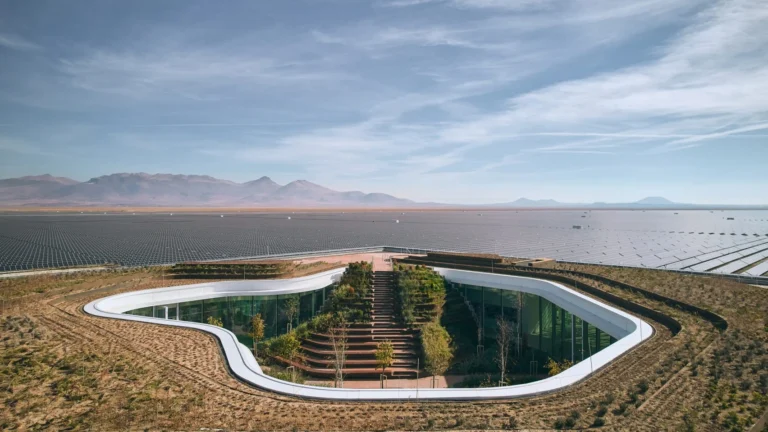
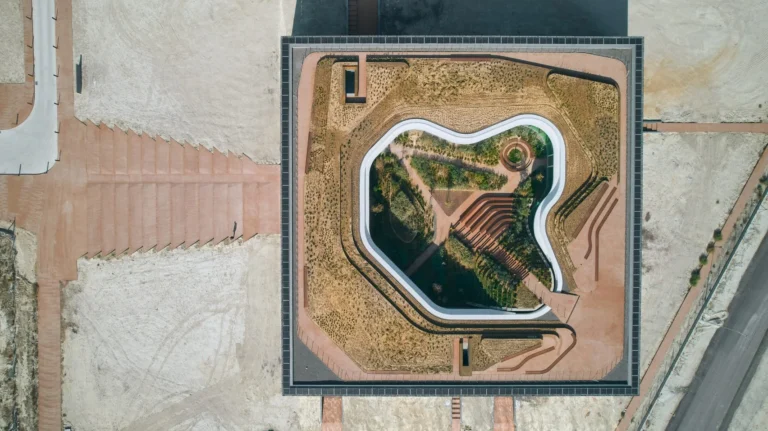
A facade of shimmering steel panels envelops this control centre that Istanbul studio Bilgin Architects has created in the plains of Karapinar, Turkey, for one of Europe's largest solar farms. Named Central Control Building, it is designed by Bilgin Architects to act as a centralised location from which to monitor and control the expansive field of 3.2 million solar panels.
A solar energy plant in Turkey

Turkey’s sunny climate offers a high solar energy potential, specifically in the South Eastern Anatolia and Mediterranean regions. Solar power is a growing part of renewable energy in the country, with 12 gigawatts (GW) of solar panels generating 6% of the country’s electricity.

Wind power generates about 10% of Turkey’s electricity, mainly in the west in the Aegean and Marmara regions, and is gradually becoming a larger share of renewable energy in the country. As of 2024, Turkey has 12 gigawatts (GW) of wind turbines.

Turkey has a problematic environmental track record. Consider the environmentalists who were murdered over the construction of a stone quarry in their forest.

Being on the side of the planet doesn’t pay in Turkey. You can go to jail for speaking up against pollution or high cancer rates in children. Turkey’s leader supports Hamas and terror groups publicly. Are these the kind of society you want using nuclear power?

Just a reminder to Turkey:

  1. Chernobyl Disaster (1986): The Chernobyl nuclear power plant explosion in Ukraine remains one of the worst nuclear accidents in history. A combination of design flaws and operator errors led to a catastrophic explosion in reactor 4, releasing a massive amount of radioactive materials into the atmosphere. The disaster resulted in immediate deaths, widespread radiation exposure, and long-term health effects for thousands of people. The affected area remains largely uninhabitable to this day.
  2. Fukushima Daiichi Nuclear Disaster (2011): Following a devastating earthquake and tsunami in Japan, the Fukushima Daiichi nuclear power plant experienced multiple reactor meltdowns, hydrogen explosions, and the release of radioactive materials. The disaster led to widespread evacuations, contamination of soil and water, and long-term health concerns for residents and workers. It reignited global debates on nuclear safety and prompted a reassessment of nuclear power policies worldwide.
  3. Three Mile Island Accident (1979): The partial meltdown of a reactor at the Three Mile Island nuclear power plant in Pennsylvania, USA, marked a significant nuclear accident in history. Equipment malfunctions and human errors led to a loss of coolant and partial core meltdown in reactor 2. While the incident resulted in limited off-site radiation releases and no immediate fatalities, it caused public panic, raised safety concerns, and led to stricter regulations for nuclear power plants in the United States.

Want to reach out to the Turkish energy ministry. Contact them here.


Green spaces help heart patients live longer: new study

0
Sehmus Erginoglu, 71, decided to do something about an area of wasteland in his home city of Mardin in southern Turkey. He began by clearing out rubbish from the site, then he installed water pipes and eventually started to plant saplings. Today the site is home to a small forest of around 11,000 trees, with thousands more planted in areas nearby. (All pictures by Murat Bayram/MEE)
Man poses with photo of trees he helped restore.

In a long-term study, unprecedented in its kind and scope, researchers from Tel Aviv University examined the association between a greener environment, which is most likely saturated with vegetation, and the mortality rate of coronary heart patients after undergoing bypass surgery – which is considered a traumatic event from both the physical and mental aspects.

The study, which was carried out on thousands of patients who live all over the State of Israel and followed them over a period of more than 10 years, found that the survival rate of bypass surgery heart patients who live in greener areas is significantly greater than those whose living environment is devoid of greenery. Israel’s unique healthcare system collects digital health data on its entire population which can be licensed, anonymously, for use in medical studies after the fact. That’s how Israel has so much data on medical cannabis patients over time. In the US much of this data is only hand-written and never digitalized.

The study was conducted by PhD student Maya Sadeh under the guidance of Prof. Rachel Dankner. The research was carried out with the support of the Environment and Health Fund and the Israel Science Foundation, and was published in the prestigious journal Epidemiology.

Prof. Dankner: “The current study was based on a database we built at the Gertner Institute about 20 years ago for another study: 3,128 heart patients who underwent bypass surgery in seven medical centers in Israel, from Haifa to Beer Sheva, between the years 2004-2007. Using data from the Ministry of the Interior Affairs we found that 1,442 (46%) of them died of various causes by the year 2021.

“In this study, we wanted to examine to what extent (if at all) the life expectancy of heart patients after surgery is associated with the amount of green vegetation in their residential area.”

For the purpose of the study, the researchers cross-referenced the patients’ residential address data with data from NASA’s Landsat satellites, which photograph the Earth and are able to locate the color green with a very high resolution and within a range of up to 30×30 meters from the residential address – which allows identification of vegetation even within urban areas.

Visible earth from Space, NASA
NASA image of Israel and Lebanon’s green spaces from space
Landsat image of Israel's Galilee region
Landsat image of Israel’s Galilee region

The researchers worked to accurately account for the amount of greenery in a radius of up to 300m around the address of each of the patients, and placed this figure against the dates of death or survival of the patients, over 14 years from the date of surgery.

They performed a detailed statistical analysis of the data, including adjustments for a variety of variables, such as: age, sex, ethnicity, socioeconomic status, urgency of the hospitalization (elective, semi-elective, or emergency surgery), living in the periphery/center, air pollution, and living distance from the Mediterranean Sea.

About 90% of the research participants lived in urban areas, 80% in the coastal plain from the center to Haifa, 15% in the Jerusalem area, and 5% in the southern Beer Sheva area.

Maya Sadeh: “We divided the residential addresses of the patients into three groups, according to the amount of vegetation in their surroundings, and found a clear significant association between a green environment and the survival of the patients – that is, how many years they continued to live after the operation.

The results revealed that during the mean time of 12 years following the operation, the risk of mortality for those who lived in a very green environment was lower on average by 7% compared to those who live in a non-green environment. We also found that the beneficial relationship is more pronounced among women, who made up 23% of the cohort, and were older at the time of the surgery (69.5 years old on average) compared to men (63.8 years ).”

The researchers conclude: “In this study, we examined the survival of coronary heart patients after undergoing bypass surgery, and found that living in a greener environment is associated with better chances of survival. We hypothesize that there are a variety of reasons for this: in a green environment, people breathe cleaner air and engage in more physical activity, the atmosphere may be calmer, and the quality of life is better overall.

“It is possible that the research findings are particularly relevant to the current period in Israel: implying that exposure to a green environment may be a beneficial factor in recovering from trauma.”


Air-powered shade system to mimic trees tested in Masdar, Abu Dhabi

0
AI shades from sun Dubai
Air powered shades from the sun. A new pilot project from a Dutch startup that aims to create shade that mimics the movement of leaves, begging the question – why not invest in planting trees?

The world’s best sun shades are trees in the city. Have you ever sat under the shade of a tree and then the heat trapping shade of a plastic awning? But if you are in the heat of Abu Dhabi the next best thing is artificial sun shades drawn back when the sun sets.

Using the natural expansion of air when it heats is a Dutch invention is getting tried out in a Persian Gulf Emirates state.

In the arena of sustainable innovation, Airshade Technologies, a Dutch startup, has unveiled its latest creation – The Airshade. Inspired by the graceful movement of tree leaves, this pioneering prototype has undergone extensive testing at the Masdar City solar power plant over the past eight months. It is located near Abu Dhabi.

air powered shading system
Pilot of the first air powered shading system

“The ‘Airshade’ system started with a simple conversation at the World Future Energy Summit. That conversation developed into an idea for collaboration, and then that idea turned into a prototype that we tested in Masdar City,” said Chris Wan, Associate Director of Sustainability and Corporate Social Responsibility at Masdar City.

“We are currently researching potential applications for a shading system that is the first of its kind that does not require the use of electricity, a motor or connecting cables. Our collaboration with dozens of startups to find innovative solutions to climate change is common in Masdar City, as small companies can do big things.”

Airshades technology

Harnessing the subtle fluctuations in air temperature, the Airshade’s design elegantly opens and closes, mirroring the organic sway of branches to provide shade in the desert sun. Notably, this innovation operates without the need for sensors, motors, or electricity, relying solely on the forces of nature.

Read Also: Green Prophet interviews Masdar’s director of sustainability 

Masdar City, trying hard to create technology sustainable urban development, serves as an ideal testing ground for such forward-thinking solutions. Chris Wan, Associate Director of Sustainability and Corporate Social Responsibility at Masdar City, reflects on the collaborative journey that led to the Airshade’s development, tracing it back to a simple conversation at the World Future Energy Summit.

passive energy sunshade sketch

Masdar invests in technology but the zero-energy city in its namesake was a flop.

With promising results and recognition, the Airshade aims to expand its potential applications, potentially transforming into a large-scale architectural feature offering dynamic shading in community spaces and enhancing energy efficiency in building facades.The passive energy system needs no electricity. We can imagine the technology would work great in greenhouses.

::Airshade


If I could travel to Yemen this is where I’d go

0

Colourful fishing boats in Qalansia on the west coast of the island of Socotra, UNESCO World Heritage Site, Yemen, Middle EastSpectacular images of the Republic of Yemen have captured its vibrant and unique culture, pristine wilderness, and well-preserved antiquities, but don’t get too excited about traveling there soon. International security controls have choked tourist access, so Sanaa joins Damascus, Gaza and Baghdad as another fascinating place I’ll not get to visit despite my relative proximity living here in Jordan.

It raises the question, is it the allure of a thing denied that makes us more desirous? Spend a moment to see what you’re missing.

beauty of YemenYemen is the poorest country in the Middle East. Slightly smaller than France in geographic area, it boasts four properties on UNESCO’s World Heritage Sites including the old city of Sanaa (following two images), the historic town of Zabid, the old walled city of Shibam made from earth, and the otherworldly Socotra Archipelago and islands with the trees that bleed.

Ten other Yemeni sites await determination on UNESCO’s “tentative list”.

Man selling clothes in the Old Town, UNESCO World Heritage Site, Sanaa, Yemen, Middle East

Yemen has been at the crossroads of the Middle East,  Africa, and Asia for thousands of years thanks to its place on the ancient spice routes. It’s capital city Sanaa is one of the world’s oldest continually inhabited cities. The country is the only republic on the Arab peninsula, all others are emirates or kingdoms each ruled by a single family.

Man sitting in his full shop in the Old Town, UNESCO World Heritage Site, Sanaa, Yemen, Middle East

The country is an unhappy marriage between two distinct states, historically divided as North and South Yemen. North Yemen declared independence from the Ottoman Empire in 1918. The British had set up a protectorate centered on the southern port of Aden in the 19th century, and when they withdrew in 1967, South Yemen emerged.

Following years of civil war, Northern Yemen became a republic in 1970. Two decades later, Southern Yemen agreed to merge with the  northern republic but the states soon entered into a new civil war, resulting in thousands of casualties. The two countries were formally unified as the Republic of Yemen in 1990.

The Republic of Yemen

Twenty million people call Yemen home; half are under age fifteen.  They are predominantly Arab, but native ethnicities also include Afro-Arab, South Asians, and Europeans. Ninety-nine percent of the population is Muslim, fairly evenly split between Sunni and Shi’a, with tiny numbers of Christians, Jews and Hindus.

Life is difficult. Unemployment hovers at 30%, with most people employed in agriculture and herding. Less than a quarter of those employed work in white-collar or professional services or in trades. Per capita income hovers around $1000 USD per year.  Life expectancy is short: 59 for men and 63 for women. The average Yemeni woman gives birth to 6.75 children.

Rights Managed

Yemen has several distinct climate regions due to extensively variable topography. It’s high mountain ridges run parallel to its coastline, trapping moisture from winds blowing in from nearby seas.  The country has adequate water supplies and is one of the most arable spots on Arabian Peninsula.

It is perhaps most famed for Socotra Island, which boasts its own unique fauna and flora, including the ethereal Dragons Trees – umbrella-like plants that bleed red sap when cut. (See them atop the mountain above.)

beauty of Yemen

Centuries of intensive hunting and agriculture have decreased the natural fauna and vegetation. But Yemen’s natural environment remains fairly robust with about 3,000 plant species, 85 types of mammals, 400 birds and over 100 reptile species. This does not account for Socotra Island’s unique ecosystems.

Have you tried Yemen’s Sidr honey from the mystical and biblical Sidr Tree?

The Grand Mosque

The Grand Mosque in Sanaa is one of the most important mosques in the Islamic world.  Built during the life of the Prophet Mohammad in the 7th century AD, it is the world’s third earliest mosque, preceded only by the Qa’ba Mosque and the Prophet’s Mosque in Medina.

Blue light in Sana

Some embassies are warning visitors to defer “nonessential travel” to my stable hometown of Amman, advising people to avoid “western” shopping malls and areas of peaceful demonstrations, precautionary guidance that we swallow with a grain of salt.

There are wide opportunities for stellar and safe exploration of the Middle East, but the long-term effects of civil unrest threatens tourism in general, and the environmental programs that depend on touristic income for support.

These important images remind us of the breathtakingly beautiful countries, rich with history, that may one day soon be reopened for exploration.

That will be a happy day for Yemen, long ago described in Latin as the Happy Arabia.

Images from Mashable, taken by – in order of appearance – boats by Michael Runkel/Robert Harding World Imagery/Corbis; Haraz mountains by Arne Hodalic/Corbis; Sana’a clothes-seller by Michael Runkel/Robert Harding World Imagery/Corbis; shopkeeper in Old Town by Michael Runkel/Robert Harding World Imagery/Corbis;Village in the Haraz Mountains by Arne Hodalic/Corbis; mosque by Arne Hodalic/Corbis; and Sana’a at night by Arne Hodalic/Corbis

Africa’s emerging economic vision calls for ESG innovations of transformed mining industry

0

During the first week of March, Africa’s development finance leaders convened in Zimbabwe for the UNECA-hosted COM2024 summit amid a wavering continental growth agenda. Recognising that many SDG and African Union Agenda 2063 targets remain far out of reach, participants focused discussions on overhauling the global financial architecture to help generate the massive funding Africa needs to accelerate inclusive, sustainable growth.

According to World Bank Institute economist Hippolyte Fofack, the Bretton Woods system, comprised of International Monetary Fund (IMF) and World Bank, has largely failed to help Africa unlock its significant economic potential. Fofack notably highlights how decades of underinvestment in the continent’s human capital have undercut the entrepreneurship, technical skills and infrastructure required to attract investment in high-value regional industries fueled by its natural resource wealth. 

With African leaders providing a promising economic vision, the mining industry is set to play a foundational role in the continent’s industrial transformation, as leading firms accelerate the socioeconomic and environmental innovations positioning Africa to take a new path in the 21st century.

Evolution of human-first mining 

Sand mining in the Czech Republic

As KPMG’s recently-published Mining Risk Forecast 2024 underlines, ESG considerations have risen to the top of the industry’s agenda in recent years, with tackling climate change, safeguarding biodiversity and cultivating strong community relations no longer “nice-to-haves” but core operational priorities for companies on the cutting-edge. 

The ‘S’ in ESG even has a specific term in the mining industry – ‘social license to operate,’ a measure of a project’s acceptance by local communities that has increasingly come to define what “good mining” looks like over the past two decades according to Africa-focused risk analyst Vincent Rouget. Chinese mining company CMOC is among the industry leaders that has fully embraced African governments’ rising expectations to ensure that the extraction of critical ‘green transition’ minerals generates local socioeconomic value.

As the world’s  largest cobalt producer, CMOC mobilises its considerable presence in the Democratic Republic of the Congo to not only provide jobs and training for local residents but  empower them with the wider range of resources they need to thrive. In 2023, CMOC spent a total of $42.08 million in community projects. At its Tenke Fungurume Mine (TFM), CMOC is investing over $30 million in its communities over the coming years, with project areas including economic development, public health and infrastructure.

In addition to the ongoing construction of 9 local primary schools and a host of other social initiatives, TFM has funded a nearly-completed electrification project that will help provide local communities the significant energy resources needed to realise the DRC Government’s plans to manufacture EV batteries with locally-sourced cobalt, which CMOC has committed to supporting to promote industrial development. Paired with its membership in the Fair Cobalt Alliance, CMOC will help embed supply chain safety, human rights and sustainability as the pillars of this economic transition. 

Sustainability at heart of mining innovation 

regenx recovers palladium and platinum from catalytic converters
Regenx recovers palladium and platinum from catalytic converters. Urban mining.

Given the need to reconcile industrial development, climate and biodiversity imperatives, incorporating sustainability in the mining industry has never been more vital. As mining consultant Jaime González has aptly noted, this accelerating societal evolution has inspired the industry to adopt both ‘Green Mining’ decarbonisation and ecological-value creating ‘Sustainable Mining’ innovations.

South African giant Impala Platinum has established a strong position in this space, joining the growing group of miners capitalising on the continent’s abundant renewable energy potential. As part of its ambitious decarbonisation strategy, Impala Platinum recently announced plans to build a 100 MW solar plant to power its massive Rustenburg mine with clean electricity, complementing substantial carbon emissions savings from its range of energy-efficiency measures.

To mitigate its ground disruption and waste generation, Impala Platinum has delivered an increasingly ambitious project to ‘re-mine’ waste rock at Rustenburg, enabling the firm to recover millions of tonnes, notably in partnership with a local reclamation company created with the surrounding Luka community that has created good-quality jobs for residents. What’s more, this initiative has spurred a land rehabilitation process unlocking some 200 hectares of healthy land for the community.

Beyond merely reversing its operations’ land disturbance, Impala Platinum’s proactive commitment to biodiversity has seen it place these considerations at the heart of its planning and decision-making, from strict internal environmental authorisation processes to site-specific biodiversity management plans. On the ground, its projects include the conservation of key bird species and tackling invasive species at its Rustenburg site.

Building on mining foundation

desalination brine mining minerals
Brine mining

In addition to meeting vital local and global needs, the African mining industry’s ongoing transformation is equally set to help attract crucial foreign investment in its downstream manufacturing sectors, which in turn will lay the foundation for enhanced regional economic integration and accelerated sustainable development progress.

As Hippolyte Fofack has recently written, this rise in capital “financing would accelerate…the implementation of the African Continental Free Trade Area (AfCFTA), the regulatory initiative to eliminate intra-African trade barriers and fuel strong regional economies. At COM24, African leaders notably discussed a new UNECA report revealing the continent’s concerningly-weak regional integration progress, with the fact that African countries continue trading more with the other parts of the world than among themselves highlighted as a significant development obstacle. 

Regarding the AfCFTA, whose full realization would assemble 55 AU countries and represent a combined GDP of over $3 trillion, the UNECA report has highlighted a series of roadblocks, from slow progress in ratifying key protocols on free movement and good governance to the rising wave of military coups and a massive infrastructure funding gap – most problematically for the energy and transport infrastructure needed to underpin robust regional supply chains.

By combining expanded regional regulatory harmonisation and railways with ESG-driven mining, Africa would be able to ramp up the industrial transformation of its natural resources into lucrative products in high demand on the international market. In effect, this development would spark a virtuous cycle helping countries attract foreign private and multilateral investment –  particularly if paired with the Bretton Woods reform that COM24 participants recently advocated for to transform Africa’s economic future. 

Cleaning plastics from the Nile, transforming it into business

Gifts of the Nile

The film Gifts of the Nile takes us to Qursaya Island in Cairo, Egypt along the Nile River. This film takes us on a journey alongside River Hero Alban De Ménonville and his team at VeryNile as they work to remove plastics from the Nile River, while also educating the community and raising awareness around the importance of conservation in our waterways.

After noticing that the communities’ traditional ways of fishing were becoming more challenging due to the amount of plastic that entered the river, VeryNile quickly took action launching the “Reviving Cairo Fishermen” project. This project utilizes local fishermen and women and their knowledge of the river to assist in cleaning out any plastic, and in turn, pays them an above-average wage for putting in the work. This allows the river to be cleaned on a grassroots level by those who grew up on the riverbank and provides additional sources of income for the local community.

The film also follows artisan worker Loza Mahmoud and her fisherman husband, Hamed Aly Hamed, as they show their day-to-day lifestyle raising three children on Qursaya Island and depending on the Nile River to make a living for their family. As Hamed heads out to the fishery each morning with his young son, they focus on net fishing before switching their focus to plastic removal along the river.

After realizing that the fish tend to come and go, but the plastic is always there, Hamed makes it a priority to pull bags of plastic out of the river and bring them to a sorting facility. These sorting facilities are employed by locals from the VeryNile organization and are able to compact, package and store the plastic until its ready to be upcycled.

clean nile movie

Read Also: Go to Mass in a cave church in Cairo

We are then introduced to Salma Ellakany, a VeryNile educator, who focuses on teaching the next generation the importance of conservation. Raising awareness amongst the youth in the area will give these declining ecosystems a chance as the next generation learns to use their passion to help their local community.

To come full circle, these bags of plastic that are stored after being removed from the river are then broken down and processed into colorful textiles, purses, hats and other home goods, allowing locals to sell these products as artists and creators. This has brought community locals together, working in unison with one topic of focus – sustainability.

“We have 40 full-time people (artisans, plastic operators) and we are working with around 100 fishermen; so that’s a total of 140 local families benefiting directly from this project,“ said Alban De Ménonville. “We translate a problem into opportunities that positively affect our communities and the health of the Nile River.”

Learn more about cleaning the Nile, and join the efforts of VeryNile if you are traveling to Egypt.

AI finds impact of noisy ships on dolphins 

0

dolphins and ship noise

A new study has used artificial intelligence (AI) technology to prove for the first time that ship noise affects dolphins.

Maritime traffic has a very strong impact on the environment and public health in general and on the marine environment in particular, and is a factor that motivates the migration of species from one marine environment to another. Until now, it was not known whether dolphins were affected by ship noise; the evidence in this regard was mainly anecdotal and visual. The main difficulty is to systematically determine the behavior of dolphins encountering ship noise.

“Although it seems obvious, until now there was no empirical evidence that dolphins are affected by ship noise. Using AI, we were able to show that dolphins communicate in a unique way when ship noise is nearby. The influence of ship noise on communication between dolphins can cause them to move away from noise sources, which in some cases are their feeding grounds,” explains Prof. Roee Diamant and Dr. Aviad Scheinin, two of the authors of the study.

Read Also: How people and dolphins fish together

dophins leaping for fishers, fishermen in Brazil
Researchers have confirmed how people and dolphins benefit from a centuries-old practice of fishing together in southern Brazil.

The current study, supported by the Data Science center at the University of Haifa, was conducted in collaboration between the Underwater Acoustic and Navigation Laboratory (ANL), headed by Prof. Diamant, and the Marine Apex predator laboratory, headed by Dr. Scheinin. The researchers combined acoustic studies of dolphin whistles (the form of communication used by the mammals) with AI software that searched for patterns in the cries.

As mentioned earlier, one of the main problems with studies of this type is observing the dolphins’ behavior, firstly when there is no ship noise and secondly when there is. This is the only way to determine whether the same dolphin behaves differently in each case.

For this purpose, the researchers chose a location close to the dolphin reef in Eilat, where Common bottlenose (Tursiops truncatus) dolphins are regularly found. Recording devices placed at a depth of 50 meters continuously recorded the sounds of nearby dolphins and shipping noise.

Read Also: Greenpeace is not condemning violent missiles and attacks in the Red Sea

From all the recorded sounds, the researchers filtered out 12,000 dolphin whistles and were able to assign them to the dolphins that were at that location. The algorithm developed by the researchers identified around 60,000 dolphin whistles when a ship was nearby, and the same number of whistles where identified when no ships were present.

According to Prof. Diamant, not visual inspection of the signals nor direct feature extraction were able to distinguish between the two groups of whistles – with and without presence of a ship. Instead, this was analyzed by a deep learning algorithm.

Woman marries dolphin in Eilat

This algorithm was trained over 20% of the whistle database and tested on the remaining whistles. The result was a 90% success rate in classifying between the two sets. In other words, the AI was able to recognize a certain pattern in the whistles of the dolphins exposed to shipping noise, well above the chance level. The researchers concluded from this result that a clear impact on the dolphins occurs when vessels were around.

“The problem with deep learning is that it’s a kind of a ‘black box’ and it’s hard to associate the classification result to a physical meaning within the signal. We still don’t know what unique pattern the AI system has recognized, but we know that it is related to the type of communication they make, and previous studies have already shown that changes in vocal behavior can be the result of stress and distress. In other words, dolphins communicate in a different way and change their vocal behavior when they encounter ship noise. In our upcoming studies, we will try to understand the nature of the effects,” the researchers conclude.

The research was conducted at the Charney School of Marine Sciences at the University of Haifa was published in the Nature Group journal Scientific Reports

First pig kidney transplant in a person

0
NEWS22 March 2024 Clarification 22 March 2024 Correction 22 March 2024 First pig kidney transplant in a person: what it means for the future The early success of the operation has made researchers hopeful that clinical trials for xenotransplanted organs will start soon. By Smriti Mallapaty & Max Kozlov Twitter Facebook Email Melissa Mattola-Kiatos, RN, Nursing Practice Specialist, removes the pig kidney from its box to prepare for transplantation. A pig kidney is unpacked for transplant into 62-year-old Richard Slayman of Massachusetts.Credit: Massachusetts General Hospital
A pig kidney is unpacked for transplant into 62-year-old Richard Slayman of Massachusetts. Credit: Massachusetts General Hospital

A 62-year-old man with end-stage renal failure has become the first living person to receive a pig kidney transplant at Massachusetts General Hospital in Boston, USA. The world has made advances in transplants since we reported a human uterus transplant in 2011.

The kidney was taken from a miniature pig carrying a record 69 genomic edits, which were aimed at preventing rejection of the donated organ and reducing the risk that a virus lurking in the organ could infect the recipient.

So far, the patient is recovering well and the pig kidney is producing urine and showing other signs of a working organ. This early success has raised researchers’ hopes for larger clinical trials involving pig organs. It follows from news last week that surgeons say they have transplanted a genetically modified pig liver into a person for the first time.

Transplanting pig organs into humans, a process known as xenotransplantation, presents challenges stemming from both biological and ethical considerations.

Biologically, the differences between pig and human physiology pose significant obstacles to successful organ transplantation. While pigs can be genetically engineered to reduce the risk of organ rejection, there are still fundamental disparities in immune compatibility and physiological function between the two species. For instance, the human immune system might recognize pig cells as foreign and mount a vigorous immune response, leading to organ rejection.

Surgeons in Boston, Massachusetts, perform the first transplant of a pig kidney into a living person.Credit: Massachusetts General Hospital

Pig organs may carry the risk of transmitting infectious diseases to humans, such as porcine endogenous retroviruses (PERVs), which are integrated into the pig genome. Despite efforts to mitigate this risk through genetic modification and stringent screening processes, concerns persist about the potential for cross-species transmission of pathogens.

Pigs are used in heart valve replacement in humans. The valve from the pig is completely cleaned from biological factors that would cause an immune response, but complex organs can’t be dealt with in this way.

Read Also: Beard transplants a growing trend

From an ethical perspective, the prospect of using pig organs raises complex moral questions, particularly for religious communities such as Muslims and Jews. Both religions have dietary laws that prohibit the consumption of pork, and while the transplantation of pig organs may not necessarily violate these laws directly, it raises concerns about the sanctity of human life and the permissible limits of medical intervention.

According to Judaism it is allowed and you are even allowed to eat pork in medicine if it will save your life.

In Islam, Imam Ibn Uthaymeen permitted it when he was asked about putting an artery from a pig into a person’s heart, and he replied by saying, “There is nothing wrong with it, and one should look at what is most suitable for his heart because this is not food, and this is out of necessity.”

Our source says, “It is clear here that it is permissible to benefit unless one finds benefit in a pure thing. If the benefit is found in a pure thing, it is forbidden to benefit from what is impure.

Some vegans may view xenotransplantation as an exploitation of animals.

Looking ahead, the horizon of xenotransplantation remains both promising and uncertain. Advances in genetic engineering and immunosuppressive therapies offer hope for overcoming biological barriers to pig-to-human organ transplantation.

Yemen’s aquifers to run dry by 2030

Carl-Waldmeier
A child in Yemen by Carl Waldmeier, licensed by CC.

The Yemeni Houthis are a problem as they blow up ships passing through the Red Sea toward the manmade Suez Canal. The Houthis astarving out their own people. They use water as a weapon in their war against the west. In a recent UN report by UN Food and Agriculture Organization (FAO), they estimate that all of Yemen’s freshwater resources will be depleted by 2030.

It said that most conflicts revolve over water in Yemen, which remains the poorest in the world in terms of water resources. In a report entitled “To leverage Water for Peace,” FAO said Yemen urgently needs to fully understand the water governance systems, how resources are extracted, used, shared and replenished.

Watch Also: Yemen Jews have a song for the Houthis

“Our experience in Yemen has shown glaring gaps between policy and the ultimate use of the precious commodity. Another gap is limited funding to replicate best water management practices which have been piloted and proven effective,” the report said.

Also, Yemen is the poorest country in the world in terms of water resources.

The annual per capita share of water is a lowly 83 cubic meters compared to the absolute threshold of 500 cubic meters.

According to FAO, the agricultural sector accounts for about 90% of water use, most of it going to qat growing. It added that groundwater is being depleted at twice the rate it is being replenished and that groundwater resources are being used randomly.

“At the current extraction rate, by 2030, the water basins will be depleted,” the report warned, “This will be catastrophic for a country where 70% of the rural community practice agriculture.”

Yemen women

Also, the agri-food systems transformation agenda will be lost with the depletion of water resources in Yemen, it noted.

Climate change and rapid population growth have also put additional pressure on Yemen’s limited water resources.

FAO said about 14.5 million people in Yemen are without access to safe drinking water and reliable sanitation facilities. “Women bear the brunt of this water situation which not only affect their crop and livestock production but entails more labor and time is used to travel to collect, store, and distribute water,” the report explained.

Navigating the Maze: 8 Must-Know SEO Strategies for Small Business Success in 2024

0
Innovation Africa
If you are running an impact charity or a small impact solar energy business, you need to know all the ins and outs of search engine optimization for people to find you on the internet

In the fast-paced world of digital marketing, understanding SEO is like finding the map that leads your small business through the huge and sometimes confusing web visibility maze. The details of SEO management best practices change as we get closer to 2024. This means that you need a method that not only increases organic traffic but also makes your digital mark stronger. This article is your guide to mastering SEO if you are an entrepreneur or small business owner in the sustainability news field. In order to ensure that your valuable content reaches the right audience, we want to provide you with a comprehensive SEO plan.

In 2024, why should small businesses put SEO first?

Today, when the digital world is getting more and more crowded, it’s important to stand out. With its promise of organic exposure, SEO is no longer a choice; it’s a must. It’s a great chance for small businesses, especially those that write about sustainability, to connect with an enthusiastic and involved audience that will bring them more customers and make a difference.

What Is the Format of a Complete SEO Strategy?

Technical SEO site architecture, interesting content, and authoritative backlinks are all part of a strong SEO plan. But how can you make these things work well together? Here are ten techniques that will help you not only find your way through the SEO maze in 2024, but also beat it.

Accept technical SEO as the basis of your online presence

Technical SEO makes sure that search engines can crawl and index your page. Without it, even the most interesting material can’t be seen. Start with a strong site structure, put mobile optimization first, and make sure pages load quickly to please both users and search engines.

That being said, context is truly king

A facade of shimmering steel panels envelops this control centre that Istanbul studio Bilgin Architects has created in the plains of Karapinar, Turkey, for one of Europe's largest solar farms. Named Central Control Building, it is designed by Bilgin Architects to act as a centralised location from which to monitor and control the expansive field of 3.2 million solar panels.
A new solar energy park in Turkey

It is imperative to create high-quality, interesting material. In 2024, though, circumstance is just as important. If you want your content to really connect with people who are interested in sustainable news, make sure you answer their specific questions and address their specific problems.

The words “your guiding stars”

Keywords are like direction points that lead people to your content. Do a lot of study to find search terms that match the needs of your audience, especially ones that have to do with sustainability. Then, use these keywords in all of your material, from the titles to the meta descriptions, without making any changes. Make a Mark on the Map with Local SEO

Local SEO is very important for small businesses

Claim your Google My Business page, make sure your NAP (Name, Address, and Phone Number) is correct everywhere online, and get reviews from people in your area. This approach works especially well for businesses that want to make a difference in their local community.

E-A-T: More Than a Meal

Google uses the words Expertise, Authoritativeness, and Trustworthiness (E-A-T) to judge the quality of material, especially when it comes to YMYL (Your Money or Your Life) topics like sustainability. Use well-researched pieces, expert interviews, and reliable sources to show off your knowledge. Link Building: How to Make Online Friends

Backlinks from high-quality, trustworthy sites not only help your SEO, but they also make your site look more trustworthy. Focus on getting to know sustainability blogs, news outlets, and eco-friendly companies so that you can get these useful links.

How the user feels (UX) is what SEO is all about

A smooth UX keeps people on your site longer and lowers the number of people who leave right away, which tells search engines that your site is important. To improve the user experience, make sure the site is easy to navigate, loads quickly, and works well on mobile devices. Voice search optimization: now is the time

As voice search grows, it’s more important than ever to optimize for conversational questions. To reach this growing group, use long-tail terms and try to get into Google’s featured snippets.

Video Content: A Treat for the Eyes

roots up collect water and dew
Water device collects dew. How can you tell the world about this great invention?

Adding videos to your site can make your SEO much better. Make movies about sustainability that are interesting and use descriptive titles, tags, and transcripts to help them get more views and comments. Analytics: Check, Study, and Change

Use tools like Google Analytics to keep an eye on how your site is doing on a regular basis. Figure out what works and what could be done better, then change your approach to stay ahead of the curve.

You need to be patient, persistent, and ready to change with the times if you want to use these tactics. But the benefits—a strong online profile, more visitors, and, eventually, more business growth—are well worth the work.

As we learn how to use SEO, keep in mind that it’s not about getting quick results; it’s about building a long-lasting, trustworthy online brand that speaks to your audience. Small companies, especially those that cover sustainability news, can succeed in the digital world by giving a comprehensive SEO strategy top priority.

In conclusion, small business owners are still finding their way through the SEO maze, but these tips should help them get there in 2024 and beyond. Take on the task, learn as much as you can, and watch your business grow in the vast world of computers.

Houthis Red Sea rockets causing Yemen’s population to starve

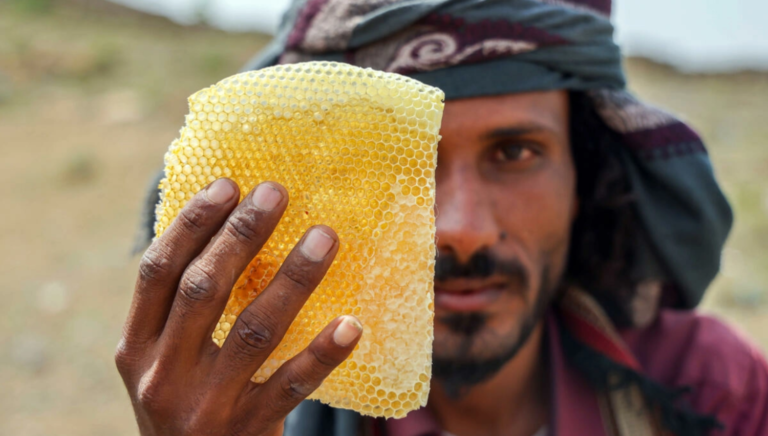
Yemen beekeepers keep ancient tradition alive
Yemen beekeepers

Houthi terror rockets affecting dire humanitarian situation in Yemen – the UN warns

The escalation of the Houthis Red Sea attacks where they sink ships with fertilizer, is poised to accelerate the increase in shipping costs, delay the delivery of essential food or lead to a complete suspension of trade routes and closure of Yemeni ports, a new report released by the Food and Agriculture Organization of the United Nations (FAO) finds. Yemeni people who struggle to afford essential food items will be at a dire risk for starvation.

According to the Potential Impacts of Red Sea Crisis Escalation on Food Insecurity in Yemen report, the food security situation in Yemen is already fragile and further shocks emanating from the Houthi attacks will cause additional harm to an already dire situation that can be described as one of the worst humanitarian emergencies in the world.

Almost 5 million people or 45 percent of the population analyzed in the Government of Yemen’s controlled areas is estimated to be in Crisis or worse.

Read Also: These Yemenis have a special song for the Houthis

Yemen relies heavily on imports for the food requirements of its population, with around 90 percent of its needs in staple cereals imported. According to the FAO report, if the current escalation is sustained for the next three months, imports will most likely slow down, affecting food availability and prices in the domestic markets.

While commenting on the key findings of the report, the FAO Representative in Yemen, Hussein Gadain, urged the international community to address the possible deterioration of the already severe humanitarian crisis in Yemen. He emphasized that the Red Sea conflict has erupted at a time when focus on Yemen is receding as humanitarian actors shift their attention and resources to other global hotspots, including Ukraine, Gaza and the Sudan.

Read Also: How the Houthis are using water as a weapon

“We cannot afford to wait until the humanitarian emergency worsens even further. This is the time to coordinate efforts and de-escalate the Red Sea crisis,” Gadain said. “We should facilitate an uninterrupted flow of commercial and essential humanitarian food supplies. This crisis, if not attended to, threatens to reverse the gains we have made in restoring livelihoods of Yemenis since the start of the conflict eight years ago.”

The report warned that a further escalation of the crisis will also disrupt livelihoods and certain value chains. Fishermen, for example, may abandon their activities due to increased insecurity at sea and at landing sites, which would not only impact their income opportunities and livelihoods but also affect the availability of fish – an important source of protein – in the market.

Additionally, increased military activities in the Red Sea may lead to the destruction of critical infrastructure, including ports and storage facilities, further hampering efficient distribution and storage of food in the country and aggravating food insecurity.

locusts in Yemen
Yemenis are often overrun by locusts which attack their food supply.

In the latest release from the FAO where Yemenis are facing starvation from lack of impacts, they do not mention the Houthis by name, but rather mention a “Red Sea” crisis ongoing which also makes no mention of terror operatives hurting their own people. Sounds like Greenpeace’s inability to condemn the Houthis. On one hand Greenpeace and the UN supports terror, but they can’t say so publicly. The plus side to all the Houthi attacks: the world now knows that Yemen exists. That it’s one of the world’s driest countries and that it’s been facing acute starvation for decades. In 2022 there was the locust crisis. 

How the Houthis use water as weapon in Yemen

0

Filling jerrycans from the water tank built by YECRP in Quhal, Iyal Surayh district, Amran. | Photo Credit: UNDP Yemen/2021 On her way to collect water. Photo Credit: UNDP Yemen/2021

In Yemen there are “girls who don’t have an education because they must spend their entire day walking hours to carry back water that is far too heavy for their bodies.”

In a bid to control and subvert the nonviolent people in Yemen, Houthi rebels use water as a weapon, says a new report. Women and younger women are especially put in harm’s way.

According to New Security Beat the Houthis are blocking and restricting water to the Yemeni population.

“Water has absolutely had an impact on women in a much more acute way in Yemen,” says report co-author, Niku Jafarnia. “It’s an area where the gender discrepancy is obvious, particularly among younger girls.

“One large impact is that girls have had to drop out of school to go and get water. We published a short piece in November on a lack of water and electricity in Aden, where there’s evidence that girls have dropped out of school. Aden is the most well off and stable part of the country, yet you still see girls who don’t have an education because they must spend their entire day walking hours to carry back water that is far too heavy for their bodies.

Filling jerrycans from the water tank built by YECRP in Quhal, Iyal Surayh district, Amran. | Photo Credit: UNDP Yemen/2021

“It’s a treacherous journey. Just by virtue of walking long distances in rural areas, there’s a higher likelihood that you might run into a landmine. There’s also obviously potential for encountering sexual and gender-based violence. Activists have told us that this wasn’t as large of an issue in the past, but has become more widespread recently.

Read Also: The Yemeni Jews write a song for the Houthis

“Globally, women are usually in charge of the household, and are the caretakers, and so they will be the last ones to drink and eat when there’s a shortage of something. So I would imagine across the board, it’s hard to track these sorts of impacts. But it’s going to have an impact on women’s health as well, based on the fact that they’ll probably be the last ones to take water for themselves.”

Green Prophet has written about the Houthi conflict over the last years, mobilizing green groups like Greenpeace to help remove environmental dangers like the FSO Safer, a ship full of oil they captured, out of their control. We also were the first to ask Greenpeace why they haven’t been condemning the Houthis for sinking ships in the Red Sea. They have never replied.

Yemen has been water-starved for decades and was the first to have the world’s only waterless capital. If we want to help the starving, oppressed Yemeni people, the world needs to help stop the Houthis. They are global terrorists, the same as ISIS, Boko Haram, the Muslim Brotherhood, Hamas, Islamic Jihad and Al Qaeda.

Giant water bug makes its way to Cyprus

0

Giant water bug
Giant water bug

Eyes open and toes out of water: how a giant water bug reached the island of Cyprus

The island of Cyprus, although considered a hotspot for biodiversity in the Mediterranean (and occupied by Turkey on its northern border), is more famous for its beautiful sunny coasts than for its insect fauna. Some visitors of its highly populated beaches, with their observations and curiosity, have provided important information for a species never recorded before on the island: a the giant water bug, also known as a toe biter.

Scientists Michael Hadjiconstantis from the Association for the Protection of Natural Heritage and Biodiversity of Cyprus, Iakovos Tziortzis from the Ministry of Agriculture, Rural Development and Environment of Cyprus, and Kadir Boğaç Kunt from the Cyprus Wildlife Research Institute collected information and specimens from an increasing number of records of the giant water bug on the east coastline of the island in late spring and summer of 2020 and 2021.

The species, known for inhabiting ponds and slowly moving freshwaters, had never been recorded on the island before, although established populations are known in adjacent Mediterranean countries such as Greece, Turkey, and Israel.

Also referred to as Electric light bug, this giant water bug is described as a vicious hunter, praying on invertebrates, fish, turtles, and even birds.

Read Also: Cypriots are poaching songbirds for illegal dish

What is even scarier, as the largest European true bug and the largest European water insect and measuring up to 12 cm, it has a reputation of inflicting very painful bites when handled carelessly.

Its appearance, mainly on the eastern coastal front of the island, was initially recorded by swimmers, who were surprised by the fearsome looks and size of the bug. They either directly contacted the experts or published photos and videos online, mainly on Facebook groups related to biodiversity.

The authors collected some of the specimens for further study.

They also proceeded with an extensive online search on relevant online observation platforms (i.e. iNaturalist) in order to track any other reports of the species on the island.

In addition, they sampled nearby wetlands, but did not spot the bug.

More about giant water bugs

One of the most intriguing features of giant water bugs is their predatory prowess. Despite their name, they are not true bugs but rather aquatic insects known for their voracious appetite. Armed with piercing mouthparts, they ambush and capture a variety of prey, including small fish, amphibians, and even other insects.

Moreover, giant water bugs play a crucial role in freshwater ecosystems as top predators, helping to regulate populations of smaller organisms and maintain ecological balance. Their presence serves as an indicator of environmental health, making them important subjects of study for scientists and conservationists alike.

In addition to their ecological significance, giant water bugs captivate with their unique reproductive behavior. Females deposit eggs on the backs of males, who then carry them until they hatch—a remarkable example of paternal care in the animal kingdom.

Luxury train by the Orient Express heading to Egypt

Slow Train, in the style of the Orient Express to be built in Egypt

Luxurious Slow Travel: A Sustainable Journey through Egypt’s Ancient Splendor

Travelers usually take a slow boat down the Nile but soon a new luxury slow mode of travel will be available for seeing Egypt’s ancient sites and wonders:

In a world where speed often reigns supreme, there’s a growing appreciation for the unhurried elegance of slow everything. Slow food, slow parenting like Waldorf education which is in demand for elite and down to earth environmentalists, and there is also slow travel.

Egypt’s Ministry of Tourism & Antiquities, the Ministry of Transportation, and ‘Arsenale’, the renowned luxury hospitality group, heralds the arrival of a new era in opulent exploration: the Land of the Pharaohs luxury train experience.

Scheduled to debut in 2026 the journey will invite travelers to embark on an odyssey from Cairo to Upper Egypt, tracing a path through the storied landscapes of Luxor, Aswan, and Abu Simbel. Each stop along the way is carefully curated to offer an immersive encounter with Egypt’s timeless wonders.

As the world eagerly anticipates the unveiling of the Land of the Pharaohs, one cannot help but marvel at the vision behind this project. At its core lies a commitment to sustainable luxury—a concept that melds indulgence with responsibility, promising a harmonious coexistence with the environment and local communities.

The Land of the Pharaohs luxury train epitomizes this ethos. Crafted with meticulous attention to detail, its forty lavishly appointed cabins offer a sanctuary of refinement and comfort, where guests can unwind amidst opulent surroundings. As the train meanders alongside the majestic Nile, travelers are encouraged to embrace the art of leisure, savoring moments of tranquility as they gaze upon the ever-changing vistas outside their windows.

As peace efforts are bolstered between the allies of Egypt, Jordan, Israel and Saudi Arabia we are hoping that this luxury train will be able to start in Cairo and end in Saudi Arabia.

Read Also: Slow train travel in Saudi Arabia 

luxor_egypt_relief

What truly sets this venture apart is its profound reverence for the ancient wonders that dot Egypt’s landscape. With each stop, travelers are granted the opportunity to explore iconic landmarks such as the majestic temples of Luxor, the serene waters of Lake Nasser, and the awe-inspiring temples of Abu Simbel

In embracing sustainable slow travel, the Land of the Pharaohs luxury train embodies a holistic approach to tourism—one that seeks to minimize its ecological footprint while maximizing its positive impact on local communities.


Egypt’s El Gouna Film Festival 2024 Scheduled for October 24th to November 1st

0

El Gouna Film Festival

The seventh edition of the El Gouna Film Festival (GFF) has been officially announced, scheduled to take place from October 24th to November 1st. The festival disclosed the dates for the upcoming edition in a statement, reaffirming their dedication to bolstering the Arab film industry. The previous edition of GFF was held from December 14th to December 21st.

The El Gouna Film Festival (GFF), founded in 2017, in Egypt serves not only as a platform for cinematic celebration but also as a catalyst for addressing pressing global issues, particularly those concerning sustainability and the environment. Amidst its vibrant tapestry of films, the festival emphasizes the power of art to foster awareness and dialogue about ecological challenges while promoting cultural exchange and understanding.

This year is a good time to support the film festival with a visit because the Hamas attack on Israel has desatbilized the region and tourism has tanked in Egypt.

Within the realm of Arab cinema, there has been a notable emergence of films that delve into themes of ecology, the planet, and renewable energy, shedding light on the intricate relationship between humans and the natural world. These cinematic works not only entertain but also provoke thought and inspire action towards a more sustainable future.

Consider Arab films like Theeb, a Jordanian drama set against the backdrop of the Arabian Desert during World War I, offers a compelling exploration of humanity’s impact on fragile ecosystems. As the character embarks on a perilous journey through the unforgiving landscape, the film confronts themes of survival, exploitation, and the consequences of environmental degradation. By immersing viewers in the harsh beauty of the desert, Theeb prompts reflection on the need for responsible stewardship of natural habitats and resources.

Sand Storm, an acclaimed drama from Israel’s Negev Desert, delves into the complexities of gender dynamics and environmental conservation within Bedouin society. Through its intimate portrayal of a mother-daughter relationship and the tensions that arise when tradition clashes with modernity, the film offers insights into the socio-cultural forces shaping attitudes towards the environment. Sand Storm underscores the importance of fostering inclusive dialogues and empowering marginalized communities to participate in efforts towards sustainable development.

There is Raha Shirazi’s film Acqua, almost guaranteed to make you never take water for granted again. In it, a woman walks through snow in search of water with a jar on her back. Everywhere there is water, but after reaching a specific destination, she experiences some kind of trauma that especially resonates with us given the region’s tremendous water scarcity.

Beyond the realm of narrative cinema, Arab filmmakers have also embraced the documentary format to explore environmental issues in depth. For instance, Rafea: Solar Mama follows the journey of a Bedouin woman from Jordan as she trains to become a solar engineer, challenging gender norms and advocating for renewable energy solutions in her community. Through her inspiring story, the documentary showcases the transformative potential of renewable technologies in empowering marginalized populations and mitigating the impacts of climate change.

Sola Mama film
Solar Mama

The El Gouna Film Festival serves as a platform for amplifying voices that champion environmental stewardship and sustainable development in the Arab world and beyond. By showcasing films that tackle ecological issues with nuance and empathy, the festival harnesses the power of art to inspire collective action and promote a deeper understanding of our interconnectedness with the planet.

While the festival isn’t selling itself as an eco film festival, artists can certainly exert their influence by submitting films of this nature. The festival does offer a $10,000 prize for films in the “green star” category. More on that here.