Tel Aviv is becoming a sustainable city by focusing on pedestrians and noisy cars.
Hurried honking is a thing arguably invented by New Yorkers and is too common in the Middle East in Jordan, Israel, Syria, Lebanon Egypt and even southern Italy. The culture of waiting and honking is quite prevalent in the Middle East and around the Mediterranean. But all that honking gets to you.
It startles drivers, frays the nerves of pedestrians and pets and those working and living nearby face untold effects on their health and immune system.
To combat impatient honkers Tel Aviv, the startup city, has developed an automated system to detect a honk and activate a camera to determine if it’s hurried honking or honking for another purpose. Honkers will get a bill in the mail for about $125.
Don’t Honk signs are coming down in New York because people just ignore them. It’s a bid to declutter the city.
The country has already rolled out camera-based ticketing when people drive in public transport zones in cities and between them. The noise challenge gets answered by this new honking operation that will collect millions in fines in the first year.
Honking is like talking in the Middle East. It works but only because our tolerance for waiting while an inconsiderate person is chatting from their car to a friend on the road has worn down. We know that complaining doesn’t go far to change things, but honking can get a reaction – if only for a moment.
“Although the law states that one must honk only when there is real danger, many drivers still honk to encourage the driver in front of them to start driving, even before the traffic light changes to green,” Ron Huldai, the mayor of Tel Aviv said in a statement. “This bad habit is about to disappear from our urban lives, with the help of a unique identification technology that was developed especially for this purpose.”
Cameras connected to dozens of microphones will be set up on Tel Aviv streets to automatically detect honking outlaws. Expect a fine in the mail – if the post can actually find you. Mail service in Israel is notoriously bad.
The Middle East also has a poor track record for worker’s rights. Luckily those in Bahrain will get an outdoor work siesta during midday starting Monday, July 1. Labour Minister Jameel bin Mohammed Ali Humaidan said that this measure has significantly improved worker health and productivity, aligning with Bahrain’s commitment to safe working conditions and international labor standards.
The ban runs from 12pm to 4pm and aims to protect workers from the intense afternoon heat which is unbearable even in the shade.
In Middle East countries like Qatar more than 6500 foreign workers have died since the World Cup was hosted there. Some sources suggest this might be underestimated and that the numbers of undocumented workers dying is likely much higher. Qatar has been blamed by UK media for practices of modern day slavery.
Rub’ al Khali, Empty Quarter, Saudi Arabia (Wikipedia). Turns out the “Empty” is full of oil
Saudi Arabia’s energy minister announced Aramco‘s discovery of seven new oil and gas deposits in the Kingdom’s Eastern Province and Empty Quarter.
Prince Abdulaziz bin Salman said that Saudi Aramco found two unconventional oil fields, a light Arabian oil reservoir, two natural gas fields, and two natural gas reservoirs.
In the Eastern Province, the “Ladam” unconventional oil field was discovered, producing very light Arabian oil at 5,100 barrels per day, along with 4.9 million standard cubic feet of gas daily. The “Al-Farouk” oil field produces 4,557 barrels per day of ultra-light oil and 3.79 million cubic feet of gas per day.
The “Unayzah B/C” reservoir in the Mazalij field produces 1,780 barrels of light oil and 0.7 million cubic feet of gas daily.
In the Empty Quarter, the “Al-Jahaq” field produces 5.3 million cubic feet of gas from the “Al-Arab-C” reservoir and 1.1 million cubic feet from the “Al-Arab-D” reservoir.
The “Al-Katuf” field flows at 7.6 million cubic feet of gas and 40 barrels of condensate per day.
The “Hanifa” reservoir in the Asikra field yields 4.9 million cubic feet of gas per day, with the “Al-Fadhili” reservoir adding 0.6 million cubic feet of gas and 100 barrels of condensate daily.
Does that mean the price of gas will go up? Or go down? What about Saudi Arabia’s so-called sustainability vision for the year 2030? Looks like business as usual.
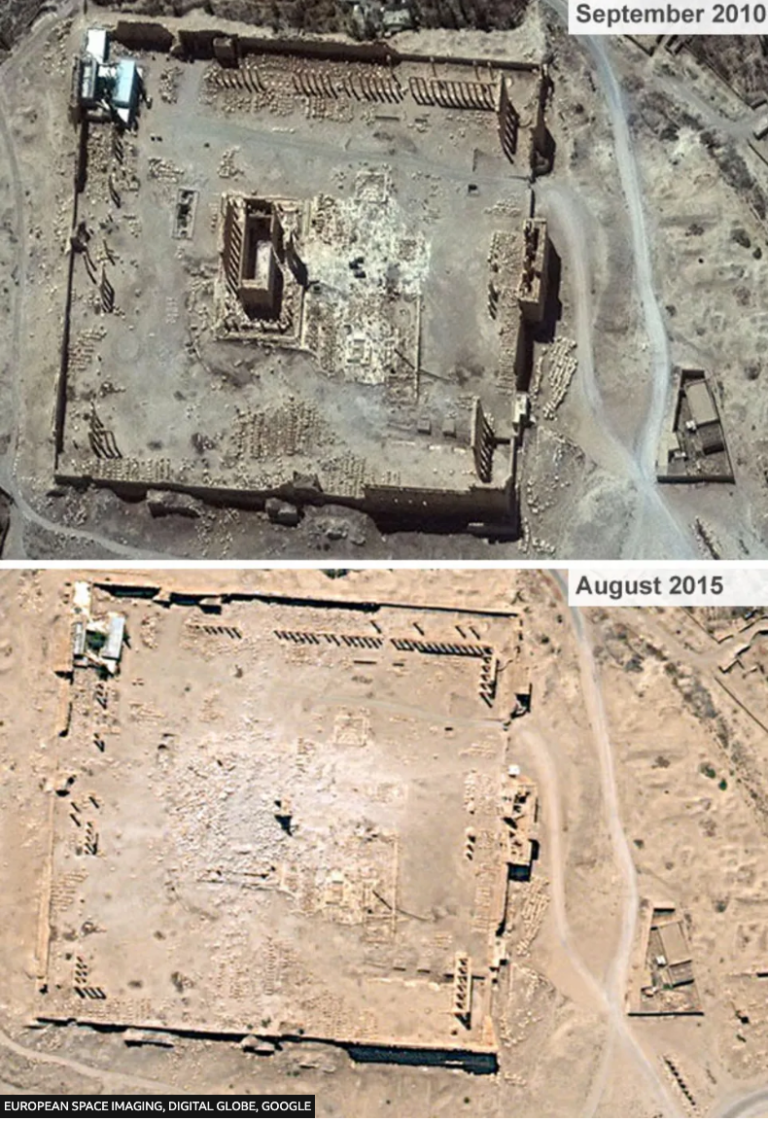
The Temple of Bel stands in the ancient Syrian city of Palmyra, adjoining a desert oasis with palm trees and bountiful water. In 2015, the temple was destroyed by ISIS explosives. Here is the before and after photos.
We visited Palmyra 20 years. Its pillars preserved standing tall in the middle of the desert and strangely out of place in Syria, a memory from another time when Romans were expanding their empire. Some say this ancient city would make Rome blush.
The Temple of Bel stands in the ancient Syrian city of Palmyra, adjoining a desert oasis with palm trees and bountiful water. Constructed in the first two centuries of the Common Era, the temple served for nearly two thousand years as a sanctuary for locals and as a site of significant archaeological interest. In 2015, the temple was destroyed by ISIS explosives. ISIS went on a blowing up rampage and destroyed whatever was in its way, such as Jonah’s Tomb.
Palmyra was the capital of an independent and far-reaching Roman-style empire, expanding its borders beyond Syria to Egypt and much of Asia Minor. Islamic jihads hated the idea that traces of ancient infidels should remain in Muslim countries.
In “The Future of the Temple of Bel in Palmyra after its Destruction,” a new paper from the Bulletin of the American Society of Overseas Research, authors Maamoun Abdulkarim and Jacques Seigne argue for the urgent need to intervene in the restoration of the temple, and to facilitate the return of the Palmyrene population, in order to ensure this World Heritage site’s enduring existence.
The Temple of Bel was built on an ancient tell and consecrated to a Mesopotamian god. The central cella structure stands in a courtyard, surrounded by Corinthian columns. During the temple’s long history, the building was variously used as a church, and then a mosque, before being converted into a residential shelter, which was its function through the early 20th century.
Between 1920 and 1946, Syria and Lebanon were governed under the French mandate, and during this time, French authorities interested themselves in the preservation of Syria’s antiquities. The villagers of Palmyra were displaced from the Bel sanctuary into a settlement constructed nearby while the French administration catalogued and cleaned the temple site.
And although the residents of Palmyra returned to their home following the French archaeological mission, they would be forced to flee again in 2015 and 2016, during two occupations by ISIS. Once a population of some 40,000, by 2022, only 2,000 people had returned to the village inside the temple walls.
The bombs ISIS detonated in the summer of 2015 caused great damage to the Temple of Bel, but did not succeed in destroying the structure entirely. Specialists visiting the site after its 2016 liberation from the terrorist group were able to confirm that although the walls of the cella had collapsed, along with columns of the surrounding porticos, a large western gate and the foundations of the temple walls remained intact.
Nevertheless, write Abdulkarim and Seigne, the structure’s devastation disastrously impacted not only the site itself but also the lives of the citizens surrounding it. The return of the Palmyra community is crucial, the article authors write, “not only because they are a source of labor and practical expertise, but also due to their collective memory and ownership of the site. They are a part of its story.”
The story of the Temple of Bel is long and complex, including not just its origins in the age of the Roman Empire and its archaeological significance to visitors from across the world, but even, the authors note, its catastrophic bombing at the hands of extremists. The marks of destruction, they write, “are only another stage in the life of an exceptional, unique monument.”
Yet despite this context, preservation, continue Abdulkarim and Seigne, is ultimately paramount. The site in its current state could pose dangers to those that visit it. Furthermore, the Temple of Bel’s place in the history of Syria must be stabilized. They add, “Palmyra has witnessed the worst of times—the authors’ plea is for global cooperation and a shared ambition to protect the Temple of Bel, ensuring the return of a far more positive narrative.”
My experience in Syria is that nothing was being protected or preserved by western standards. Visitors had no supervision to archeological sites, payment was a couple of dollars to explore and locals often tried to give us or sell artifacts looted from the rubble and monuments. Meanwhile Syria is building its economy on a drug trade, Captagon. The archeology that they overtook when Arabs moved to Palmyra should be preserved as a legacy to all Middle Eastern heritage.
French energy giant EDF have made an investment in agRE.tech, a pioneering startup in the Agrivoltaic sector
The company has completed a pre-seed fundraising round, securing approximately $2 million USD for the development of an advanced robotic operating system tailored for agrovoltaic fields.
The start-up agRE.tech is pioneering the development of advanced robotics technology and artificial intelligence for use in agriculture and climate management. This innovative approach addresses manpower challenges in agriculture, increases productivity, and supports the global goals of large-scale green energy such as solar energy production within the same agricultural areas.
This fundraising round saw notable contributions from key players in the economy, including Zemach Mifalim (Zemach Regional Industries) and EDF. Zemach Mifalim, a co-initiator of agRE.tech, leads the way through the “Kinneret Innovation Center,” specializing in climate and agriculture.
EDF, the French Energy giant, brings its international expertise in energy to the project, furthering the vision of leveraging agricultural spaces for green energy production.
Over the past year, agRE.tech has been dedicated to developing an advanced robotic operating system tailored for agrivoltaic areas. This system, integrated into existing photovoltaic infrastructure, utilizes artificial intelligence to execute complex agricultural tasks autonomously, such as selective spraying, pruning, and harvesting. Additionally, it oversees the control and maintenance operations of the solar fields.
CEO and co-founder Elad Levy brings a wealth of experience in robotics, having previously served as Founder & CEO of Roboteam, a company with thousands of robotic systems deployed worldwide. Elad leads the team alongside Yaniv Marmur, a seasoned expert in multidisciplinary systems engineering, serving as CTO. The company has filed several patents in the field and has already established a development field above a vineyard where its robotic operating system is operational.
The Agrivoltaics market, which combines solar energy production with agriculture, presents a $4 billion opportunity. agRE.tech is poised to accelerate and expand this market to tens of billions of dollars with its groundbreaking technology.
agRE.tech is currently in the advanced stages of establishing the first commercial fields with integrated robotic capabilities in both local and international markets, including Italy, where a significant budget of 1.7 billion euros has been allocated for grovoltaic projects.
“After over a decade in defense and civil robotics, we identified climate and agriculture as burgeoning fields where we can contribute to global efforts addressing the climate crisis and food security,” says Elad Levy, CEO of agRE.tech. “The convergence of these sectors presents immense potential for technological and business innovation. It’s a great honor for us to have esteemed companies like EDF and Zemach partnering with us to spearhead the robotic agrivoltaic sector and pave the way for a sustainable future for all”
EDF, with an installed capacity of approximately 137GW and an installed solar capacity of over 3,000MW, is a frontrunner in renewable and solar energy. The company invests heavily in international research and development in the agrivoltaic field, anticipating significant growth in the coming years.
Just recently EDF invested in the The Dumat Al-Jandal wind farm with a capacity of 400MW, stands as a pioneering endeavor in Saudi Arabia’s renewable energy landscape in an ancient land. It’s Saudi Arabia’s first wind farm. At 400MW, it is the largest wind farm in the Middle East, displacing almost one million tonnes of CO2 annually.
The wind farm is located 900 kilometers north of Riyadh in the Al Jouf region of north-western Saudi Arabia. The project is 51 per cent owned by EDF Renewables and 49 per cent by Masdar.
Developed by a consortium led by EDF Renewables (51%) and Masdar (49%), with the client being Saudi Aramco this project not only marks the kingdom’s inaugural utility-scale wind power initiative but also ranks among the largest wind farms in the Middle East.
Solar thermal collectors made like honeycombs trap more heat from the sun to heat homes in cold countries like Germany.
TIGI (TASE: TIGI), a provider of renewable heat generation and storage solutions and services with offices in Israel and Austria, is pleased to announce that it has entered into a partnership with Eren Groupe, a leading global player in energy transition. Eren will participate in a fundraising round to become a minority shareholder of TIGI and boost its growth. Heat can be transferred straight from the sun and pumped to storage and where it’s needed, showed Maria Telkes in the US decades ago.
Up to 40M Euros will be made available for equity financing of projects providing capacity to finance projects valued at 100M Euros.
Maria Telkes and the Dover Sun House. The large windows faced the sun and collected heat and stored the energy in salts. Dover Sun House was one of the world’s first solar-heated houses.
As the energy market transitions from natural gas to renewable energy, the heat sector has become a focal point, representing a large share of global energy demand. Recent developments, particularly in the wake of the war in Ukraine, have triggered an increased drive for transition away from fossil fuels.
TIGI has recently completed the acquisition of Austrian-based SOLID, a leader in large-scale solar thermal heating systems. TIGI and SOLID installed over 250 systems in over 30 countries and cater to a variety of industries and geographies. Finalizing the agreement with Eren, a pioneer of renewable energies in Europe, creates a combined global partnership that spans technology leadership, global execution, and strong financial capacity.
“We are pleased to be partnering with TIGI to jointly form a first-of-its-kind renewable heat project platform,” commented Yonatan Shek, Managing Director of Eren Groupe. “We believe that large-scale renewable thermal energy presents a considerable global opportunity that was previously underserved but has recently gained momentum. I believe that by joining all three companies’ expertise, technology, and know-how, we set the premise for the next important step of our journey to facilitate the energy transition and a route for further decarbonization.”
Zvika Klier, CEO of TIGI, states, “This marks the dawn of a pivotal journey for TIGI. We are excited to join forces with Eren to provide a platform for Heat-as-a-Service projects. This collaboration and the recent announcement with SOLID take us one step closer to being a renewable heat powerhouse, offering end-to-end solutions globally. With a tightly focused international team and projects spanning multiple continents, TIGI is set to make a significant impact on the global transition to clean energy.”
Earlier this year TIGI bought SOLID, a global player in the renewable heat domain, of which TIGI holds 90%. This strategic consolidation enables TIGI to combine its renewable heat technology with SOLID’s global experience and execution capacity in solar-thermal systems, placing TIGI in a key position to expand into new markets and become a leader in the International Renewable Heat Energy sector.
“The acquisition of SOLID will enable us to develop and implement renewable energy-based heat projects for commercial, industrial and district heating uses on a global scale,” said Klier.
“TIGI and SOLID will work diligently to expand our joint reach and to further enhance our offering in the Heat-as-a-Service business model. The landscape of renewable heat is undergoing a seismic shift, and by joining forces with such a notable team, we are well positioned to serve this significant opportunity.”
Historically Israel has a great tract record for collecting thermal heat. Almost every Israeli home has a Dude Shemesh, a solar thermal unit that heats shower water and kitchen water from the sun.
Florida carpenter ants (Camponotus floridanus) bite off injured nest mates’ limbs to save them from deadly infections. It’s the first example of animals other than humans performing such life-saving amputations.
“The ant presents its injured leg and calmly sits there while another ant gnaws it off,” explains animal ecologist and study co-author Erik Frank. “As soon as the leg drops off, the ant presents the newly amputated wound and the other ant finishes the job by cleaning it.”
Life stages and kinds of carpenter ants
That ants can amputate limbs to stave off infection is a revelation to many homeowners. Those who deal with carpentry ants probably aren’t happy about this new and would rather seek out natural solutions to keep the ants away.
We have a short guide here on natural solutions to keep ants out of your kitchen. Natural pest control always starts with eliminating the habitat and food source for critters like ants. As carpenter ants can get into foundations and destroy frames of homes, non-natural solutions might need to be combined with more holistic methods.
Gulf Contracting & Landscaping (GCL), an Al Khayyat Investments (AKI) company, has unveiled one of the UAE’s largest horticulture nurseries in a move to further optimize local natural resources while serving its customers across the UAE. The expanded nursery is located in Al Rahba, Abu Dhabi, covering 1.25 million sqft and holding more than a million plants that thrive within the local climate. Trees make cities and towns more beautiful and can reduce local temperatures by 10 degrees C because of canopy cover and tree respiration.
Plants and Trees of the Persian Gulf area include:
The facility has undergone remarkable growth since its formation in 2007, with GCL steadily acquiring adjacent nurseries in Abu Dhabi as well as developing sites in other emirates. Today, GCL nurseries are home to over 300 varieties of plants, shrubs, trees, and ground cover for use in GCL’s landscaping projects as well as for external developments.
Along with the expanded Al Rahba site, GCL is enlarging its nurseries across the UAE and GCC, and is planning to build a new facility – set for completion in 2025 – that will span more than 1.5 million sqft.
The announcement comes at a time when the UAE is rapidly transforming its outdoor spaces and advancing green developments, embodied in recent plans such as the Dubai Quality of Life Strategy 2033, which includes developing over 200 parks in the emirate alone, and the Abu Dhabi 2030 Urban Structure Framework Plan, which aims to improve the liveability of the capital’s residents.
“At GCL, we are committed to playing an integral role in making the UAE greener in line with the leadership’s vision for enhancing quality of life,” said Rami Hamad, CEO of GCL. “Moreover, we see great potential to provide local, sustainable solutions for such projects, using the latest engineering technologies to maximise efficiencies and preserve natural ecosystems.”
Today, GCL provides end-to-end expertise in site preparation, landscaping, infrastructure, civil works, aquatic works, design and fit out, allowing the company to create everything from manicured greens to strikingly designed public and private spaces. GCL’s design and turnkey implementation capabilities span parks, streetscapes, public realms, residential community areas, as well as golf courses, sports fields, and cycling and jogging tracks.
Pre-diabetics know that diet can help mitigate disease progression. An apple with nuts is one way to start.
Semaglutide has emerged as a groundbreaking drug, significantly altering the treatment landscape for diabetes. This medication not only helps regulate blood sugar levels but also offers cardiovascular benefits and aids in weight management. Let’s dive into how semaglutide is transforming diabetes care.
Understanding Semaglutide
Semaglutide is a GLP-1 receptor agonist, a class of drugs developed to address the need for more effective diabetes treatments. The development of semaglutide was driven by the goal of improving blood sugar control and reducing the complications associated with diabetes. Since its approval, semaglutide has become an integral part of diabetes management. Developed by Novo Nordisk, semaglutide was first approved by the FDA in 2017 for the treatment of type 2 diabetes. It was later approved for chronic weight management in 2021 under the brand name Wegovy.
The Role of Semaglutide in Diabetes Management
Eric Ravelo, artist. Child obesity is on the rise. The best way to avoid is by augmenting diet.
One of the primary benefits of semaglutide is its ability to effectively manage blood sugar levels (click here for more about gestational diabetes). Patients using semaglutide experience significant reductions in HbA1c levels, a critical marker for long-term blood glucose control. Compared to other medications in its class, semaglutide consistently provides superior blood sugar regulation. Studies have shown reductions in HbA1c by up to 1.8% in patients taking semaglutide, which is a substantial improvement over many other diabetes medications.
Cardiovascular Benefits
Semaglutide provides significant advantages for cardiovascular health according to the FDA. Research has demonstrated that it lowers the risk of major cardiovascular incidents, including heart attacks and strokes. This makes semaglutide an attractive option for patients with type 2 diabetes who are at an increased risk of cardiovascular disease. The SUSTAIN-6 trial demonstrated a 26% reduction in the risk of cardiovascular death, non-fatal myocardial infarction, or non-fatal stroke among patients treated with semaglutide.
Weight Management
Weight management is another critical aspect of diabetes care where semaglutide excels. By reducing appetite and promoting a sense of fullness, semaglutide helps patients achieve significant weight loss. This weight reduction not only improves diabetes management but also enhances overall health and quality of life. Patients in clinical trials have reported an average weight loss of 15-20% of their body weight over 68 weeks of treatment, highlighting the drug’s effectiveness in combating obesity.
Clinical Evidence Supporting Semaglutide
The effectiveness of semaglutide is supported by extensive clinical research. Major trials have demonstrated that semaglutide significantly lowers HbA1c levels and reduces cardiovascular risks. These trials also highlight the long-term efficacy and safety of semaglutide, solidifying its role in diabetes treatment.
In real-world settings, patients treated with semaglutide report improved blood sugar levels, weight loss, and better overall health. These positive outcomes reinforce the findings from clinical trials and underscore the transformative potential of semaglutide in diabetes care. Patients have noted improvements in energy levels, reduced need for other medications, and a lower risk of diabetes-related complications.
Practical Applications of Semaglutide
Semaglutide is particularly beneficial for individuals with type 2 diabetes who have not achieved adequate blood sugar control with other medications. Healthcare providers assess each patient’s medical history and current health status to determine if semaglutide is an appropriate treatment option. It is also considered for patients with obesity, especially those with a BMI over 30, or those with a BMI over 27 who have weight-related health issues.
Administration Guidelines
Semaglutide is available as an injectable and an oral tablet. The injectable form is administered once weekly, while the oral form, marketed as Rybelsus, is taken daily. Patients interested in oral medication can buy Rybelsus tablets from pharmacies and online retailers. Healthcare providers typically start patients on a lower dose and gradually increase it to minimize side effects. For instance, the injectable form often begins at 0.25 mg per week for four weeks before increasing to 0.5 mg or 1 mg depending on the patient’s response and tolerance.
Managing Side Effects
Common side effects of semaglutide include nausea, vomiting, diarrhea, and constipation. These symptoms are usually mild and decrease over time. Regular monitoring and communication with healthcare providers help manage any potential side effects and ensure the safe use of semaglutide. Patients are advised to take the medication with food to reduce gastrointestinal discomfort and to stay hydrated to help mitigate these side effects.
Integration into Diabetes Care Plans
Semaglutide can be combined with other diabetes medications to enhance overall glycemic control. Healthcare providers carefully manage potential drug interactions and create comprehensive care plans that include lifestyle modifications such as diet and exercise. Combining semaglutide with medications like metformin or insulin can provide synergistic effects, improving overall diabetes management.
Educating patients about semaglutide is crucial for successful treatment. Patients need to understand how to use the medication correctly, recognize potential side effects, and follow their prescribed regimen. Resources such as instructional guides, counseling, and support groups can provide valuable assistance. Patients are also encouraged to maintain a balanced diet and regular physical activity to maximize the benefits of semaglutide.
Conclusion
Semaglutide represents a significant advancement in diabetes treatment. Its ability to improve glycemic control, reduce cardiovascular risks, and aid in weight management makes it a revolutionary drug in diabetes care. As research continues and more patients benefit from its use, semaglutide is poised to transform diabetes treatment, offering a brighter future for millions of individuals worldwide. With ongoing innovations and expanding applications, semaglutide stands as a beacon of hope in the fight against diabetes and its many challenges.
Disclaimer: buy online herbs, medication and neutraceuticals and use them only after consulting with a trusted healthcare provider.
Maldives Minister Fathimath Shamnaz Ali Saleem, was suspended and arrested along with her two siblings on charges of performing witchcraft on the Maldives President Mohamed Muizzu. Where are the feminists and Greta Thunberg when we need them?
The Maldives, in the news recently for its refusal to accept Israeli Jews as tourists to its series of sinking islands southwest of India, has suspended its environment minister on accusations of black magic.
According to local news sources, the Maldives Minister Fathimath Shamnaz Ali Saleem was suspended and arrested along with her two siblings on charges of performing witchcraft and black magic on the Maldives President Mohamed Muizzu.
Shamnaz, who was a state minister at the Ministry of Environment, was arrested on June 23.
Maldives, a Muslim majority nation, does not allow non-Muslims to become citizens. It is a great destination for halal-observant Muslims, but may be intolerant to “others” ways of life. Wearing bikinis on a public beach is forbidden and tourists are only allowed to wear swimwear in tourist-only beaches, making one wonder what is an Apartheid state these days, when the term is thrown around so loosely against democratic nations that it’s now cringe.
We could not confirm what kinds of witch-craftery Minister Fathimath has performed. But the nation is 100% intolerant to the rich history of the island which included Buddhism and Hindu traditions of the past. Believing in any other tradition may have you imprisoned for years.
Some of the practices we are seeing today in some Muslim nations reminds us of the Inquisitions, forced conversions and “burn the witch” problems of Europe hundreds of years ago.
For the Cornell researchers trying to date the famous Hellenistic-era Kyrenia shipwreck, which was discovered and recovered off the north coast of Cyprus in the 1960s, the real treasure was not gold coins, but thousands of almonds found in jars among the cargo.
The almonds, combined with newly cleaned wood samples and the team’s modeling and radiocarbon-dating expertise, led the Cornell Tree-Ring Laboratory to identify the likeliest timeline of the Kyrenia’s sinking as between 296-271 BCE, with a strong probability it occurred between 286-272 BCE.
Kyrenia model
The team’s paper, “A Revised Radiocarbon Calibration Curve 350-250 BCE Impacts High-Precision Dating of the Kyrenia Ship,” was published on PLoS ONE in June. The lead author is Sturt Manning, Distinguished Professor of Arts and Sciences in Classical Archaeology in the College of Arts and Sciences.
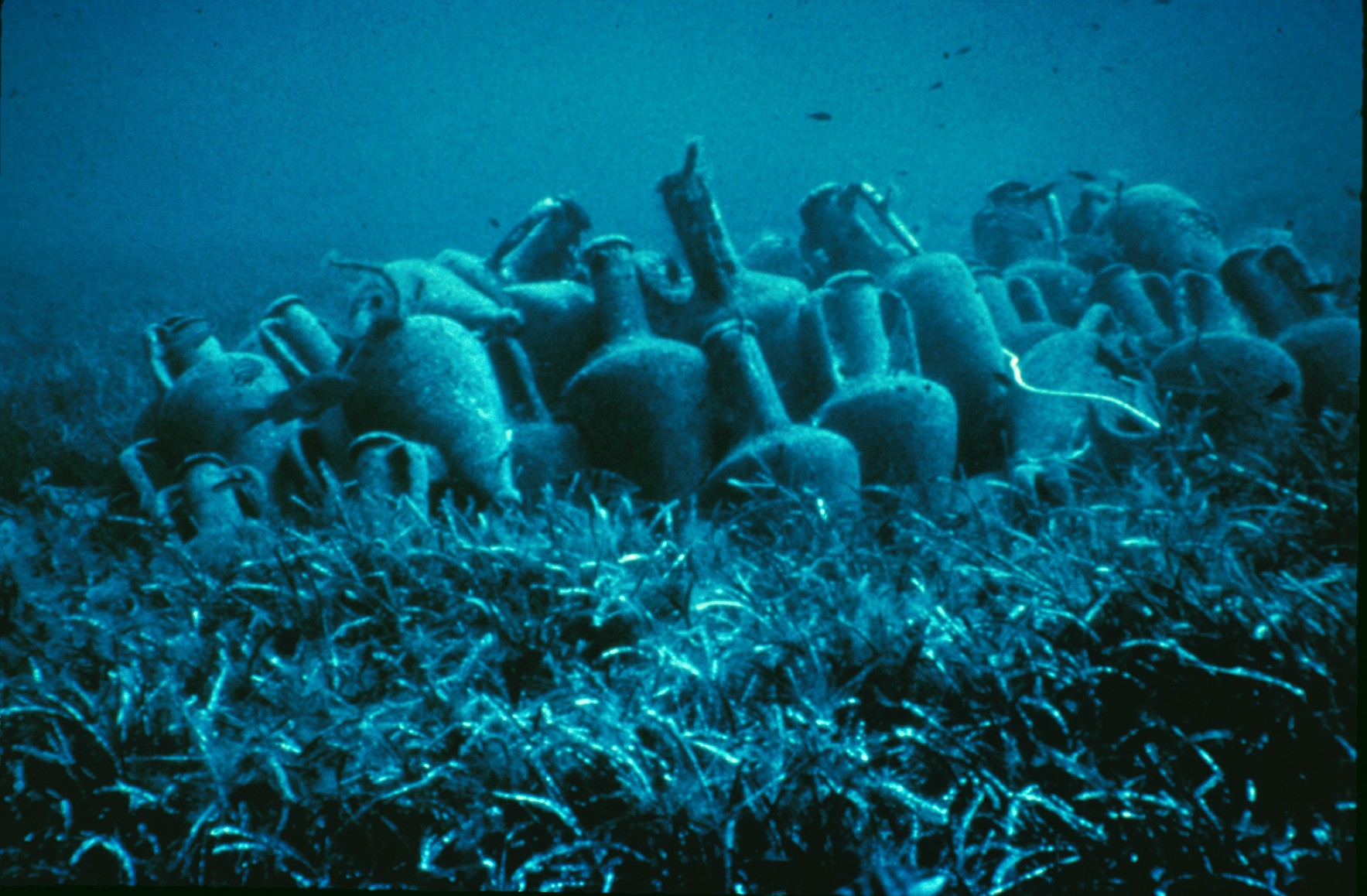
The Kyrenia has a storied legacy as the first major Greek Hellenistic-period ship to be found, in 1965, with a largely intact hull. From 1967-69, it was excavated along with its cargo, which included hundreds of ceramic vessels, then reassembled offsite and scientifically studied.
“Kyrenia was one of the first times it was realized this type of rich evidence from the classical world could be found largely intact more than 2,000 years later on the seabed, if you could find it,” said Sturt Manning. “It was a bit of a landmark moment, the idea that you actually could dive, excavate and bring up a classical-era ship and so discover this long-past world directly. Shipwrecks are unique time capsules, and you can get amazing preservation.”
For the last six decades, the Kyrenia has provided archeologists and historians with key insights into the development of ancient ship technology, construction practices and maritime trade. To date, no fewer than three Kyrenia replicas have been produced and launched, and these reconstructions have yielded considerable information on ancient ships and their sailing performance.
However, the timeline of the Kyrenia’s provenance and the exact date of its sinking has always been vague at best. The initial efforts to date the ship were based on its recovered artifacts, such as the pottery on board and a small batch of coins, which initially led researchers to estimate the ship was built and sank in the later 300s BCE.
“Classical texts and finds at port sites already told us this era was significant for widespread maritime trade and connections all around the Mediterranean — an early period of globalization,” Manning said.
“But the discovery of the Kyrenia ship, just under 15 meters long, likely with a crew of four, dramatically made this all very immediate and real. It yielded key insights into the practicalities of the earlier part of a millennium of intense maritime activity in the Mediterranean, from Greek through Late Antique times.”
The first volume of the final publication of the Kyrenia ship project, released last year, argued the wrecking date was a little later, closer to 294-290 BCE, but the primary piece of evidence — a poorly preserved, nearly illegible coin — was not watertight.
Manning’s team, which included co-authors Madeleine Wenger ’24 and Brita Lorentzen, ’06, Ph.D. ’15, sought to secure a date.
The perils of polyethylene glycol
The biggest hurdle for accurately dating the Kyrenia has been another artifact, one from the 20th century: polyethylene glycol (PEG). Excavators and preservationists often applied the petroleum-based compound to waterlogged wood to prevent it from decomposing after it was lifted out of the ocean’s oxygen-free environment.
“PEG was a standard treatment for decades. The trouble is it’s a petroleum product,” Manning said, “which means that if you’ve got PEG in the wood, you have this contamination from ancient fossil carbon that makes radiocarbon dating impossible.”
Manning’s team worked with researchers at the University of Groningen in the Netherlands to develop a new method to clean PEG out of wood, and they demonstrated it on PEG-treated Roman-era samples from Colchester, England, that already had established dendrochronological (tree-ring sequence) dates.
“We removed the PEG from the wood, we radiocarbon dated it and we showed that in each case, we got a radiocarbon age consistent with the real (known) age,” Manning said. “We basically got 99.9% of the PEG removed.”
They used that technique to remove PEG from a Kyrenia sample that Manning and collaborators had tried, and failed, to accurately date 10 years ago. The team also now dated a tiny, twisted piece of wood that was salvaged from the Kyrenia in the late 1960s but was too small to be included in the reconstruction, thus avoiding PEG-treatment. It subsequently sat in a jar of water in a museum for 50-odd years.
The dates showed that the most recent preserved tree-rings from these timbers grew in the mid-later 4th century BCE. Because the samples did not include bark, the researchers couldn’t determine the exact date the original trees were felled, but could say the date was likely after approximately 355-291 BCE.
Organic evidence
Working with the Kyrenia’s original excavation team, the researchers examined its various artifacts, including the pottery and coins, with a focus on organic materials, including an astragalus (a sheep or goat ankle bone once used for games and divining rituals in several ancient cultures) and thousands of fresh green almonds found in some of the large amphorae, i.e., ceramic jars. These “short-lived” sample materials helped define the date of the ship’s last voyage.
The team applied combined statistical modeling with the dendrochronology of the wood samples to get a level of dating that was much more precise than previous efforts. The modeling identified the most likely range of dates for the final voyage to be between 305-271 BCE (95.4% probability) and 286-272 BCE (68.3% probability) — several years more recent than current estimations.
But there was one big hiccup along the way. The new dates didn’t align with the international radiocarbon calibration curve, which is based on known-age tree-rings and is used to convert radiocarbon measurements into calendar dates for the northern hemisphere.
Manning took a closer look at data behind the calibration curve, which has been assembled over many decades by dozens of labs and hundreds of scientists. He discovered that the period between 350 and 250 BCE had no modern accelerator mass spectrometry (AMS) radiocarbon data behind it. Instead, the calibration curve in this period relied on only a few measurements conducted in the 1980s and 1990s using an older type of radiocarbon-dating technology. With collaborators in the U.S. and the Netherlands, the team measured known-age single-year sequoia and oak samples to re-calibrate the curve for the period 433-250 BCE. That not only helped clarify a big spike in radiocarbon production caused by a minimum of solar activity centered around 360 BCE, but also led to important revisions to the curve in the period around 300 BCE — improvements that were critical to dating the Kyrenia.
Manning anticipates the new findings will not only clarify the timeline of the Kyrenia and its cargo but will also help researchers using the calibration curve for very different projects.
“This revised curve 400-250 BCE now has relevance to other problems that researchers are working on whether in Europe or China or somewhere else in the northern hemisphere,” he said. “Half of the people who cite the paper in the future will be citing the fact that we’ve revised the radiocarbon calibration curve in this period, and only half will be saying the Kyrenia shipwreck is really important and has a much better date.”
Co-authors include researchers from the Oxford Dendrochronology Laboratory, the University of Groningen and the University of California, Irvine.
Plastic is one of the greatest inventions of all time. It allows us to preserve food and water easily and cheaply. Its light weight nature makes it ideal in cars, airplanes and in shipping. Out lives would not be the same without out. But as plastics become cheaper, and more accessible, the plastic waste and pollution problem is too hard to ignore. wnat to be motivated to do better without changing your lifestyle forever?
July, for environmental activists around the world has become a month to go Plastic Free. You have probably seen videos and testimonials of people who try and do zero waste year round. Now is a challenge for you to try it out for a month. There is lots you can do.
Who started plastic free July?
Plastic Free July
Plastic Free July was started by Rebecca Prince-Ruiz, the founder of the Plastic Free Foundation, and a small team in local government in Western Australia, and is now one of the most influential environmental campaigns in the world. The idea is take on a challenge, small or big, and see what kind of impact you can make for the month of July.
How can you go plastic free?
Some ideas are bringing a usable coffee cup to your favorite cafe. Some of the hipper ones have been running loyalty shelves for years, allowing regulars to store their mugs on the wall. We saw this years ago at University Toronto at Diablo’s Cafe. Also at Cafelix in Jaffa.
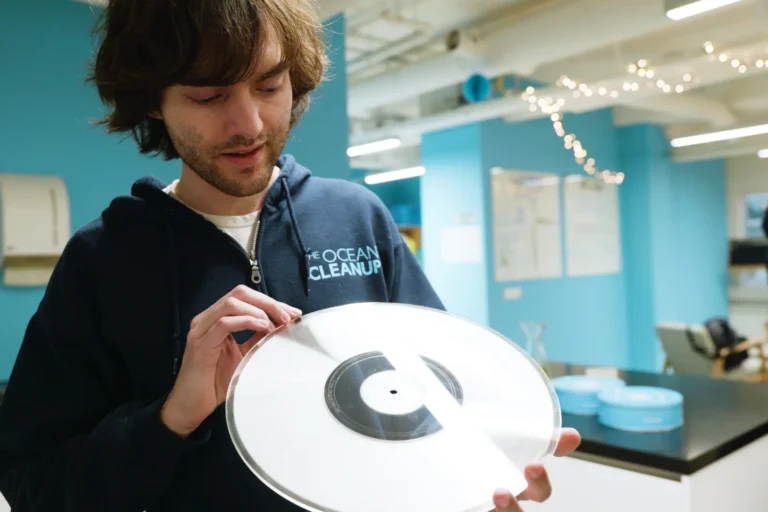
Artists like Coldplay are offering limited release album made using waste plastic recovered from the Rio Las Vacas river in Guatemala by the Ocean Cleanup. The Nile River has a plastics cleanup program as well where byproducts are being turned into new objects.
But the best way to reduce plastics is by not using them in the first place. Common sense ideas are being canvas bags for shopping and avoiding the so-called reusable bags, made from plastic but which degrade quickly and are more polluting that simple plastic bags.
Buy in bulk at your local grocers that offer bulk and come with your own containers. Bulk Barns and bulk buying has always been around. You just need a little pre-planning and it’s easy to skip the waste.
Choose to buy natural fibre clothing and not that made from polyester and synthetics.
We don’t want to tell you to ditch your plastic aligners used to straighten your teeth, but if you are considering orthodonture work, consider a non-plastic solution to be on the safe side.
Microplastics and orthodontic plastic aligners. Is there a health risk of keeping plastic in your months for weeks, months and years?
Getting rid of plastic for a month also sounds like a nice project Christians could try for the 40 days leading up to lent. (See Christians go on a carbon fast). Elevate your spiritual life and doing good by the planet will make a lot more sense. We know that when we spend a lot of time in nature, all the things of city life suddenly make less sense. Who cares about new clothes anyway? Second hand is the best.
Dublin based HT Materials Science (HTMS) has developed a breakthrough energy savings solution called Maxwell that can slash operating costs, increase system capacity in new and existing builds and offer carbon credits
Water is the universal heat transfer fluid for commercial and industrial HVAC systems. While water is plentiful and cheap there are additives to water which can improve its thermal capacity and that’s the elegant and planet-smart idea from Irish-Italian company HT Materials Science based in Dublin, Ireland.
HTMS has developed a heat transfer fluid branded Maxwell to increase the thermal capacity of water –– allowing it to store up to 20% more energy than water alone. At only a 2% additive to water, Maxwell can provide up to a 20% increase in performance and reduce greenhouse gas emissions in no small way.
HT Materials Science was founded in 2018 to develop a heat transfer fluid for commercial and industrial HVAC markets. Among its investors are Saudi Aramco Energy Ventures, which led a €15M Series A round in 2021, and Barclays Bank, via its Sustainable Impact Capital portfolio.
Maxwell shows how small breakthroughs in science contribute to the advance of meeting renewable energy goals in big ways. The usual payback for clients who install the fluid is approximately 3 years.
Maxwell is non-toxic and non-corrosive with a useful life of about 10 years. Data centers, hospitals, commercial real estate and manufacturing facilities are the company’s main target sectors. Maxwell is applicable to all closed loop HVAC systems generally serviced by chillers, water source heat pumps, energy recovery systems.
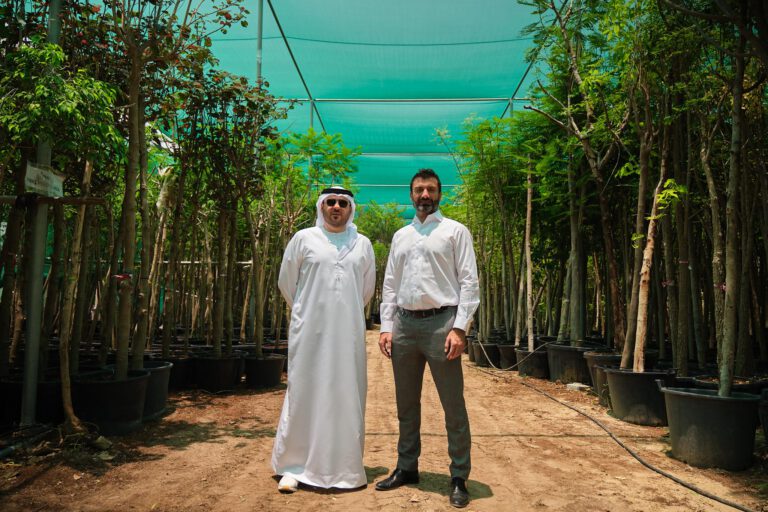
Same temperature, less energy: HT Materials co-founder and CEO Thomas Grizzetti
HT Materials Science CEO Tom Grizzetti tells Green Prophet: “There has certainly been development activity in heat transfer fluids over the last decade-plus. However, the combination of product stability, proven performance and client engagement has been elusive.
“With Maxwell, a multi-patented product, we bring to market a solution that was developed to satisfy both the science and the business sides of the equation. These efforts have resulted in a stable product with provable performance and ultimately significant client engagement,” he adds.
Liquid energy in a jug of Maxwell
Maxwell is an engineered suspension of sub-micron aluminum oxide particles in a base fluid of water or water/glycol (that last part is significant since it means Maxwell can be used in systems that use either water or glycol as their base fluid)—resulting in reduced energy use, emissions, maintenance and costs; and an increase in system capacity.
Same temperature, less energy
HT Materials Science manufacturing facilities
Consider that heating and cooling are attributed to almost half of our planet’s energy consumption, and about 40% of carbon dioxide and equivalent carbon emissions.
Among HT Material Science’s first industrial clients is the German based alumina producer Almatis. By installing Maxwell into the plant’s cooling system, HTMS increased the system capacity by up to 20% while increasing operational output.
The company recently earned a Green Product Award for its work at a facility owned by Johnson & Johnson and for its project with Tabreed at a 600,000 square-foot campus in Abu Dhabi. Tabreed provides cooling services for Samsung, UAE malls, and a geothermal system at Masdar.
Working at the HT Materials Science lab
HT Materials Science is on a mission looking to expand throughout the Middle East as countries like the UAE and Saudi Arabia develop manufacturing and technology parks to keep production facilities like electric cars close to home.
Maxwell is a pretty neat fluid that will be a game changer for carbon accounting globally.
Markets in Tunisia will soon lack greens which require heavy amounts of water
Tunisia is witnessing a worsening water crisis as the demand exceeds the available supply, reported the Tunis Afrique Presse this week.
“The reserves of Tunisian dams have reached their lowest levels in different regions in the country,” Chawki Ben Mansour, central director of the National Company of Water Exploitation and Distribution (SONEDE), said.
The water reserves stored at Tunisian dams are estimated at around 720 million cubic meters, recorded a regression of around 200 million cubic meters compared to the same period last year, Mansour said, calling on citizens to support water-saving policies. Prices for water went up 16% this year, while prices for consumers stayed stable.
Mansour said that SONEDE launched a water awareness campaign a week ago to inform citizens of the severe drinking water situation caused by the drought and lack of rainfall.
According to Euronews is also a ban on using drinking water to wash cars, clean streets or public places and water green areas: “Anyone who breaks these restrictions faces penalties that range from fines to imprisonment for up to six months.”
Strange creatures live in the deep seas. Mining will destroy ecosystems.
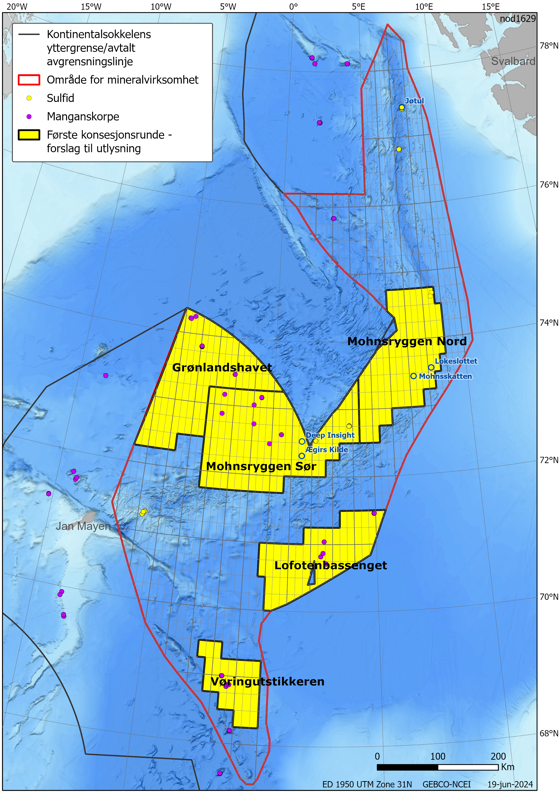
Norway’s Ministry of Energy has presented a proposal for the announcement of the first licensing round for deep sea mining of seabed minerals on the Norwegian continental shelf for public consultation. The proposal sets out the areas where the companies will be able to apply for exploitation licenses, so that exploration and gathering knowledge about whether there is a basis for sustainable mineral exploitation on the Norwegian shelf can begin.
Despite green groups suggesting the great harm deep sea mining can do to yet explored underwater ecosystems, Norway plans to go ahead, championing a need to do it for the environment, they say.
The country states:
“The world needs minerals for the green transition, and the government wants to explore if it is possible to extract seabed minerals in a sustainable manner from the Norwegian continental shelf. A large majority of the Norwegian Parliament supports the government’s step-by-step approach to the management of seabed minerals.
“This announcement is an important next step in the management of our seabed mineral resources. Environmental considerations are taken into account in all stages of the activities. Today, we are presenting our proposal for areas to be announced in the first licensing round for seabed minerals for public consultation. We plan to award licenses in the first half of 2025’,” said Minister of Energy Terje Aasland.
A large majority in the Norwegian Parliament endorsed the government’s proposal to open an area on the Norwegian continental shelf for seabed mineral activities and the main lines of the management strategy. On the basis of this, the King in Council decided to formally open an area in the Norwegian Sea and the Greenland Sea for mineral activities on April 12 this year.
“Access to minerals is crucial to ensure that the world succeeds with the transition to a low-emission society. Minerals from the Norwegian seabed can become a source to meet parts of this demand. Norway’s long experience with responsible and sustainable management of ocean-based resources, makes us well positioned to take the lead and manage these resources in a responsible and sustainable manner,” said Aasland.
The areas open to licensing from Norway are shown below.
The public consultation the Norway Government says is a part of the first licensing round for mineral activity on the Norwegian Continental Shelf. Following the consultation, the Ministry will go through the consultation responses. After this, the first licensing round will be announced.
The announcement will, among other things, include a deadline for the companies, and information about requirements and conditions that will be put on applicants related to, among other things, the environment. As part of their application, the companies will be requested to include a proposal for a work program for the area to which they are applying.
Received applications will be processed in accordance with published and known award criteria. The Ministry aims to award licenses during the first half of 2025. Licensees under an exploitation license must prepare a detailed work program tailored to the area covered by the license and the resources that are assumed to be there. Such activity is assumed to have minimal environmental impacts but will contribute to important knowledge and competence building.
The work program will normally have submission of a plan for exploitation or relinquishment of the area as the final milestone.
Licensees will also be required to share data with the authorities, which is important for building knowledge about resources, the environment and natural assets. Norway will have a step-by-step and responsible development of seabed mineral activities on the Norwegian continental shelf.
The World Wildlife Fund is not happy:
Karoline Andaur, CEO of WWF-Norway, expressed her grave concerns over this announcement: “Licensing almost 400 blocks for deep seabed mining flagrantly disregarded environmental expert advice and the robust criticism directed at the Norwegian government by the international community. This marks a significant blow to Norway’s reputation as a responsible steward of the oceans.
“The Norwegian government is misleading the public by claiming they have only opened areas for exploration. That is not true. The reality is that the licences granted will be for exploration. Experience from the petroleum industry indicates that once significant investments are made, halting projects due to environmental concerns becomes nearly impossible.”
“The strategic impact assessment conducted by the government reveals a lack of sufficient knowledge regarding the vulnerable ecosystems of the deep sea, rendering it impossible to accurately assess the potential consequences of exploration or exploitation. This move risks triggering an environmental catastrophe with irreversible damage to marine biodiversity,” she says.