Home Blog Page 677

New Research Ship To Paint The Red Sea Green

red-sea-ships-marine-photoMarine research on the Red Sea will be more serious, thanks to new ship.

With pirates, environmental pollution, increasing water traffic and a collapse of coral reefs, a new research ship with its course set for the Red Sea port of Eilat is good news for us to hear. According to Hebrew University in Jerusalem, the university dedicated a new $1.3 million research ship at the Interuniversity Institute for Marine Sciences in Eilat.

Purchase and outfitting of the new ship was financed by Israel’s Council for Higher Education, the Israel Ministry of Science and Technology, the Hebrew University of Jerusalem, the Weizmann Institute of Science and private donors.

Lebanese High Society Bike Down Green Carpet to Watch "The Age of Stupid"

6

age-studid-lebanon-bike-premiere-photoNo red carpets for us environment-lovers, stupid!

The typical Hollywood movie premiere is a scenario that we’re all pretty familiar with: celebrities pull up to the red carpet in large, gas-guzzling cars (what would happen if Brad Pitt and George Clooney carpooled in a Smart Car for a change?), pose for the photographers, and then proceed to watch their film.  And the film is usually an action movie with high speed car chase scenes, or a gushy romance, or a goofy comedy.

A couple of weeks ago, the League of Independent Activists (IndyACT) and its partners – the Green Party of Lebanon, the British Embassy in Lebanon, and the American Lebanese Chamber of Commerce – challenged this typical movie premiere movie event with a “Green Carpet” premiere screening for the environmental film, “The Age of Stupid.”

Turkey Unsure to Look East or West for Renewable Energy Development

16

A wind farm in TurkeyA wind farm in Turkey. Should Turkey look east to oil-rich countries, or west to renewables?

Turkey seems to be becoming more interested in renewable energy these days, especially in the areas of solar, geothermal like that of Ormat, and wind energy.

But the future of this country, which straddles the link between east and west, appears to be centered around a proposed amendment to a renewable energy law (links to PDF) , which although passed back in May, 2005, has yet to really become the norm in  a land that is trying to decide whether to align itself with the west, resulting in eventual EU membership, or renew its ties with the Islamic World. Recent measures to dissociate itself with its ally Israel in recent weeks illuminate this dilemma.

The 2010 Eilat Eilot Renewable Energy Conference Looks To Carbon-Free Energy

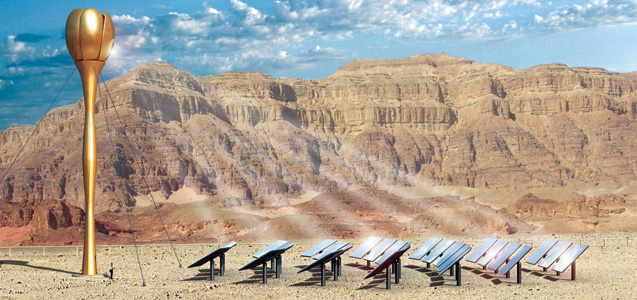
Artist concept of the Timna Renewable Evergy ParkArtistic rendition of the Timna Renewable energy park In Eilat

During a speech at the recent 2009 Israel Presidents Conference, Prime Minister Netanyahu remarked that Israel is embarking on programs to enable it to be almost entirely reliant on alternative energy systems by the year 2020. This plan, which  many  people see as more of a visionary dream (because Israel won’t even be able to curb its greenhouse gases by 2030), may be much closer to becoming reality following the upcoming Eilat-Eilot Renewable Energy Conference, scheduled to take place in Israel’s southernmost city on February 16-18, 2010.

In fact, the very theme of the upcoming conference, sponsored by the Eilat Eilot Renewable Energy Authority, may make it one of the most important of its kind as it will also include the inauguration of a special 200 MW Timna Renewable Energy Park, a center for the development of renewable energy projects.

The World's Poorest Protest Saudi Arabia's Obstructionist Role in Climate Change Negotiations

5

protest-saudi-arabia-climate-change-talks-photoNon-profit groups from 18 developing countries called on Saudi Arabia to “stop playing an obstructionist role” in the current climate change negotiations in Barcelona, claiming the oil kingdom’s delaying tactics will hurt the world’s poor.

“Developing countries need all the support they can get,” said Wael Hmaidan of IndyACT Lebanon and founder of the Arab Climate Alliance in a statement issued Wednesday. “It is unfortunate to have a country among their ranks that is weakening their positions.”

Saudi Arabia considers a climate change deal in Copenhagen “a threat to its oil trade,” the groups said. They claim that to disrupt negotiations, the delegation has tried to remove language that would support vulnerable countries, among other tactics.

Are Israeli Emission Controls Hopeless?

3

gilad-erdan minister environment israelWithout any change in policy, Israel may be heading to double its current emissions by 2030. According to the Jerusalem Post, a study commissioned by Israel’s Minister of the Environment Gilad Erdan (left) and executed by the McKinsey consulting firm found that Israel’s problem is high population growth coupled with rising standards of living.

The Post reports that Israeli emissions, at 10.2 tons per person per year, are more than Western Europe’s but half of the United States’.  The lion’s share of those emissions come from electricity production. The coal power plant in Ashkelon – which we wrote about here (Israel’s Minister of the Environment Says to Shut Down Coal Plant) – will undoubtedly add to that figure.

But there is some hope, McKinsey says. If Israel ramps up solar, wind and natural gas power, implements the electric car, retrofits homes to be energy efficient, and generates power from garbage, then the amount of emissions forecasted for 2030 could drop by as much as 70 percent. That figure would slide even lower if Israelis become vegetarian and cut back on air conditioning and heating.

Can Israel's Prime Minister's Alternative Energy Agenda Help the Middle East?

7

An Israeli solar energy plant
BrightSource solar energy company could be part of the alternative energy solution.

Israeli Prime Minister Benjamin Netanyahu appears to be interested in leading his country away from its current dependence on imported oil and into various forms of alternative energy. But he wants his vision to go far beyond the borders of the tiny State of Israel and for it to be a goal for other nations to strive for as well.

In a recent address at the 2009 Israeli Presidential Conference that occurred October 20-22 in Jerusalem, the Prime Minister spoke about a national project for “developing an alternative to oil within 10 years”.

Although he didn’t present a concrete plan for reaching this accomplishment, he compared this idea with other accomplishments his country has achieved in the technological and medical fields and added that the citizens of his country have two great resources: “minds and hearts” as well as the “desire and ability” to wean Israel away from an energy source that continues to feed the coffers of countries who actively sponsor terrorism; saying that  “dependence on fossil fuels strengthens the dark regimes that encourage instability and fund terror with their petrodollars”.

Looking at the US and China As Stacy Reports From Barcelona Climate Change Talks

stacy-feldman-solve-climate-blogger-green-prophetClimate change activists are pooling their resources as we speak in Barcelona at the Barcelona Climate Change Talks. This is an antecedent to the big United Nations climate change conference in Copenhagen in December where countries are expected to draft real solutions to stopping the over-production of greenhouse gases. Part-time Green Prophet Stacy Feldman reports from Barcelona:

It’s crunch time on global climate change.

This week, delegates from 192 nations are meeting in Barcelona, Spain, for the final five days of global negotiations leading up to the make-or-break UN Climate Change Conference from Dec. 7-18 in Copenhagen.

For two years of these climate treaty negotiations, oil-producing Middle Eastern economies have gotten flack for fighting to protect the oil trade and not the planet. At the Bangkok climate talks in October, the Saudi delegation led a quiet campaign to get compensation from nations that cut oil consumption due to coming carbon regulation, a position it first took back in 2000.

Solar Energy and 9 Israel-related Cleantech Headlines, Week of October 25, 2009

13

solel-solar-energy-tech-photo

During the week of October 25, 2009, SolarEdge announced it raised $23 million in funding from General Electric (GE) and other investors. The deal was identified by BusinessWeek as one of the signs that Israel can become a leader in renewable energy. Sunday Energy and Ormat are collaborating on a solar energy project in Israel and scientists at the Technion have developed a green battery that can last for thousands of hours. For these stories and the rest of this week’s 9 headlines, check below.

Solar

7 Solar Innovators From Israel That Could Fuel Our Planet

Israeli Solar Gets Its Moment in the Sun

SolarEdge Plans Holistic Approach to Solar Energy Efficiency

General

Eilat-Eilot region seeks to become center for renewable energy

Israelis at the forefront of the green industry

Economy

‘Going Green’ would boost economy – environment minister

Partnerships and Deals

Yissum, BrightSource sign research agreements

Sunday Energy and Ormat in $195M deal

Battery

Green battery runs non-stop for years

Your Toilet May Be Overflowing …Without You Knowing It

8

toilet-tank

In order to understand how your toilet may be overflowing I first have to take a step back and explain how toilets work.

How Toilets Work

There are, basically, two parts to a toilet. The “Tank,” and the “Bowl.” The tank is where the water is stored, waiting to be flushed. The bowl is where you do your business. When you are ready to flush, by pushing down the handle you are, essentially, pulling out a plug inside the tank, which then allows all the water in the tank to empty into the bowl and flush your waste down the drain. For a great interactive visual representation visit “How Toilets Work.”

Once you flush, the tank refills. The toilet knows when to stop filling up because it has a floating device called the “filler float”. When the filler float reaches a specific height it blocks more water from coming into the toilet. This height is decided by the plumber and can easily be adjusted.

There is a second precaution against overflow. There is a tube called the “overflow tube” inside the tank. If the water level goes above the top of this tube, the water drains into the toilet. And this is were you may be having a problem.

If the filler float is set to stop the water at a level that is above the top of the overflow tube then every time your toilet’s tank fills up water will flow into the overflow tube and down the drain. Because there is nothing to stop it completely (remember, the “filler float” is set too high) then water will be overflowing constantly.

Essentially, IT IS LIKE LEAVING A FAUCET ON ALL OF THE TIME.

How Can I Know If This Is Happening?

If you know what to look for, it is actually see if this is happening in YOUR toilet.

  1. Open the lid of your toilet.
  2. Look at the back of the bowl.
  3. If you see a stream of water there, even a little, then your “filler float” is set too high.

The fact of the matter is, is that it is difficult to find the correct height for your “filler float” and there is a good chance that your toilet IS overflowing, even if it is just a little.

How Can I Fix This?

It is actually relatively easy to fix. A professional plumber from http://www.drdrip.com.au can take care of it in about 5 seconds. ”

The height of the filler float can be adjusted relatively easily inside your tank. Have in mind, though, that most toilets are different from one another.

After removing the lid of your toilet, look for your filler float, it will look like a hard-plastic balloon. Your filler float will be attached, most likely, to a plastic stick. Near the end of the stick you will probably find a small knob.When you turn it, only adjust it a VERY little bit at a time, you will be adjusting at what point your filler float will stop the water from coming into the toilet. Then flush your toilet and see if there is still a stream of water in your bowl after the tank refills.

Be aware that if you set the filler float to stop at a level that is TOO low, your toilet may not do it’s job correctly because you don’t have enough water in your tank. However, don’t stress. It is just as easy to change back what you did. If you feel uncomfortable tinkering, I guarantee that you have a neighbor that can do it in a jiffy and save you money on your water bill.

Image credit: aerostockians

AECOM Teams Up with Ellerbe Beckett to Create More Sustainable Building In The Middle East

4

aecom green building midde east
AECOM,  a known global provider of technical and management support services, including many environmental projects, has now teamed up with the Ellerbe Beckett architectural firm, known for its environmentally designed building projects all over the world.

AECOM is a Fortune 500 country with more than 44,000 employees. It is in involved in more than 100 countries and had revenues of more than $6.1 billion as of end July, 2009. Current AECOM residential projects are located in the Caribbean, Hong Kong (3 projects), the US State of Texas, and in Australia. Hopefully the new partnership will impact all the Middle East waste.

The Middle East Is Drowning In Waste

14

garbage-middle-eastThe waste produced by Arab cities is among the highest in the world.

Dubai, United Arab Emirates – “The short version of the story is that we’re not doing a very good job of managing waste,” says John Roosen, Technical Director of AECOM Environment Middle East. “Nowhere in the world does. We are going to drown in waste.” 

Roosen’s words hardly overstate the scale of the problem faced by the engineers, scientists and government officials gathered this month at the first annual IQPC City Waste forum in Dubai.

According to a recent report by the Arab Foundation for Environment and Development (AFED), the Arab world produces approximately 250,000 tons of solid waste every day, most of it dumped untreated in makeshift landfills, if it is collected at all. 

Queengil Provides Sensible Drip Irrigation Tape Drop by Drop

queengil drip irrigation israelIt is finally raining in Israel and other parts of the Middle East; but the region’s acute water shortage is far from being over. An Israeli company Queengil, is trying to help alleviate the problem of providing maximum crop irrigation with available water resources, refining the technology of “drip” irrigation which has already been doing so for over 50 years. Its in the same business market at other Israeli drip irrigation companies like Plastro and Netafim.

Since its inception in 1987, the water conservation products made by Queengil have been very useful for farmers in arid areas to provide water for growing a variety of crops, including grains, fruits and vegetables, and a variety of flowers and other plants.

Also known as micro-irrigation and trickle irrigation,  the idea of letting water seep slowly into the ground to irrigate crops has been in existence since ancient times, when clay piping and pots with small holes in them were buried in the ground to let water seep from them slowly to dampen the soil.

Totally "Ungreen" Environment Monstrosities In The Sky – Then and Now

7

The 1933 Soviet Kalilin K7
Hughes’ Spruce Goose and the 1933 Soviet Kalilin K7 (above) are some flying ungreen monsters from the past.

Green Prophet was at the last Paris Air Show looking for green innovation in the sky. Now we take a look at some of the old flying monstrosities that got us to where we are today: The world aeronautics industry, after being considered no more than a curiosity venture during WWI and the 1920’s, finally began to get serious about the role that aircraft could play in both civilian and military use during the early to mid 1930’s. During this time, commercial passenger and cargo airline flights began to become reality and the use of these “flying machines” as a viable military weapon also  began to take shape.

With oil being cheap and plentiful, there was no problem in supplying fuel for aircraft, and along with this, there was virtually no concern for the effects that aircraft would have on the global environment. Some countries, especially Germany and the Soviet Union began to seriously consider the advantage large aircraft would have as both troop carriers and for use in bombing enemy cities in wartime.

In fact, Nazi Germany was able to effectively test its newly developed military fighters and bombers during the 1936-39 Spanish Civil War, which assisted Germany greatly for its subsequent invasion of Poland in September, 1939, and resulted in the outbreak of WWII.

But it was the Soviets who tried to develop a gigantic type of aircraft that could not only carry large quantities of bombs but large numbers of troops as well. This led to the building of a huge prototype aircraft known as the Kalilin K-7 (pictured above), a monstrous aircraft that had a 173 foot (53 metre) wingspan and which was so heavy that two extra engines had to be added. This is to the already 6 engines that had been originally designed to lift the 24,400 kg behemoth off the ground.

SolarEdge Plans Holistic Approach to Solar Energy Efficiency

solaredge solar energy israel power photo home grid networkWith a $23 million investment, SolarEdge takes PV systems to the next level of efficiency.

GE just invested in them. Now, Guy Sella, founder and CEO of Israeli company SolarEdge, is planning a revolution. Don’t be alarmed though, this one isn’t dangerous. His goal is to transform the way photovoltaic systems are now operated, in terms of efficiency, safety and cost.

“People haven’t been looking at photovoltaic systems from a holistic point of view,” Sella tells ISRAEL21c. “Panel manufacturers care only about the panels and panel conversion efficiency. The people that develop classical inverters only care about the efficiency of the inverter. I asked: can we create a system that is better than we currently have?”

The answer, according to SolarEdge, is yes. The Herzliya-based has created “intelligent panels” that work together with a central Power Box, which would replace the passive panels that are the current norm. These new panels provide 25 percent more energy as well as solutions to some of the serious problems that plague current systems.