Before promoting sustainability progress, companies must ensure their initiatives are genuine and measurable. Today’s audiences are increasingly skeptical of vague environmental claims, particularly as awareness of “greenwashing” has grown.
Sydney is best known for the Opera House and the Harbour Bridge. If you’re looking to enjoy dinner with views of these landmarks, here are some great options.
It's sea turtles which may in the end save islands in the Seychelles. They may also better help us understand climate change. Like rings on a tree, scientists have found a way to read sea turtle shells and how they are impacted by climate change tells a story.
For centuries, the Sámi shaman drum was one of the most powerful sacred objects in northern Europe, and one of the most feared by church and state. If ISIS looks bad to us today for its religious fundamentalism, Christians were just as fervent.
Before promoting sustainability progress, companies must ensure their initiatives are genuine and measurable. Today’s audiences are increasingly skeptical of vague environmental claims, particularly as awareness of “greenwashing” has grown.
Sydney is best known for the Opera House and the Harbour Bridge. If you’re looking to enjoy dinner with views of these landmarks, here are some great options.
It's sea turtles which may in the end save islands in the Seychelles. They may also better help us understand climate change. Like rings on a tree, scientists have found a way to read sea turtle shells and how they are impacted by climate change tells a story.
For centuries, the Sámi shaman drum was one of the most powerful sacred objects in northern Europe, and one of the most feared by church and state. If ISIS looks bad to us today for its religious fundamentalism, Christians were just as fervent.
Before promoting sustainability progress, companies must ensure their initiatives are genuine and measurable. Today’s audiences are increasingly skeptical of vague environmental claims, particularly as awareness of “greenwashing” has grown.
Sydney is best known for the Opera House and the Harbour Bridge. If you’re looking to enjoy dinner with views of these landmarks, here are some great options.
It's sea turtles which may in the end save islands in the Seychelles. They may also better help us understand climate change. Like rings on a tree, scientists have found a way to read sea turtle shells and how they are impacted by climate change tells a story.
For centuries, the Sámi shaman drum was one of the most powerful sacred objects in northern Europe, and one of the most feared by church and state. If ISIS looks bad to us today for its religious fundamentalism, Christians were just as fervent.
Before promoting sustainability progress, companies must ensure their initiatives are genuine and measurable. Today’s audiences are increasingly skeptical of vague environmental claims, particularly as awareness of “greenwashing” has grown.
Sydney is best known for the Opera House and the Harbour Bridge. If you’re looking to enjoy dinner with views of these landmarks, here are some great options.
It's sea turtles which may in the end save islands in the Seychelles. They may also better help us understand climate change. Like rings on a tree, scientists have found a way to read sea turtle shells and how they are impacted by climate change tells a story.
For centuries, the Sámi shaman drum was one of the most powerful sacred objects in northern Europe, and one of the most feared by church and state. If ISIS looks bad to us today for its religious fundamentalism, Christians were just as fervent.
Before promoting sustainability progress, companies must ensure their initiatives are genuine and measurable. Today’s audiences are increasingly skeptical of vague environmental claims, particularly as awareness of “greenwashing” has grown.
Sydney is best known for the Opera House and the Harbour Bridge. If you’re looking to enjoy dinner with views of these landmarks, here are some great options.
It's sea turtles which may in the end save islands in the Seychelles. They may also better help us understand climate change. Like rings on a tree, scientists have found a way to read sea turtle shells and how they are impacted by climate change tells a story.
For centuries, the Sámi shaman drum was one of the most powerful sacred objects in northern Europe, and one of the most feared by church and state. If ISIS looks bad to us today for its religious fundamentalism, Christians were just as fervent.
Before promoting sustainability progress, companies must ensure their initiatives are genuine and measurable. Today’s audiences are increasingly skeptical of vague environmental claims, particularly as awareness of “greenwashing” has grown.
Sydney is best known for the Opera House and the Harbour Bridge. If you’re looking to enjoy dinner with views of these landmarks, here are some great options.
It's sea turtles which may in the end save islands in the Seychelles. They may also better help us understand climate change. Like rings on a tree, scientists have found a way to read sea turtle shells and how they are impacted by climate change tells a story.
For centuries, the Sámi shaman drum was one of the most powerful sacred objects in northern Europe, and one of the most feared by church and state. If ISIS looks bad to us today for its religious fundamentalism, Christians were just as fervent.
Before promoting sustainability progress, companies must ensure their initiatives are genuine and measurable. Today’s audiences are increasingly skeptical of vague environmental claims, particularly as awareness of “greenwashing” has grown.
Sydney is best known for the Opera House and the Harbour Bridge. If you’re looking to enjoy dinner with views of these landmarks, here are some great options.
It's sea turtles which may in the end save islands in the Seychelles. They may also better help us understand climate change. Like rings on a tree, scientists have found a way to read sea turtle shells and how they are impacted by climate change tells a story.
For centuries, the Sámi shaman drum was one of the most powerful sacred objects in northern Europe, and one of the most feared by church and state. If ISIS looks bad to us today for its religious fundamentalism, Christians were just as fervent.
Before promoting sustainability progress, companies must ensure their initiatives are genuine and measurable. Today’s audiences are increasingly skeptical of vague environmental claims, particularly as awareness of “greenwashing” has grown.
Sydney is best known for the Opera House and the Harbour Bridge. If you’re looking to enjoy dinner with views of these landmarks, here are some great options.
It's sea turtles which may in the end save islands in the Seychelles. They may also better help us understand climate change. Like rings on a tree, scientists have found a way to read sea turtle shells and how they are impacted by climate change tells a story.
For centuries, the Sámi shaman drum was one of the most powerful sacred objects in northern Europe, and one of the most feared by church and state. If ISIS looks bad to us today for its religious fundamentalism, Christians were just as fervent.
Delegates gathered in City Hall Square of the city to publicly light the Channukah menorah, but with a climate-flavored twist. Instead of singing the traditional words to age-old Channukah songs, the activists changed the words to reflect their reason for attending the conference. “We light this candle for coal, and for cars – when will Israel have a [climate] plan?” they sang with mischievous grins (see video below, in Hebrew).
This clever stunt is one of thousands of NGO (non-governmental organization) activities taking place throughout the duration of the Copenhagen conference. According to the UN framework, only official representatives of nations can make decisions in climate negotiations. But that hasn’t stopped hordes of activists from descending on the Danish capital to push their leaders toward a strong, effective, and just international climate treaty.
By Danny Lev, Analyst in IDC Research IL (www.idc.com)
An old Israeli joke describes how God led Moses through the desert to the Holy Land for 40 years, through hardships and dangers, only to lead the Israelite nation to the only spot in the Middle East where there isn’t a drop of oil.
Two thousand years later, things have remained pretty much the same. Today, Israel is considered an “island-state”, with over 99% of its capacity produced from imported fossil fuels.
In alignment with global trends, Israel has experienced a recent surge of new ventures in the field, comprising commercial, academic and regulatory initiatives. Although a pioneer and home to world leaders in the RE field, the post-80s low oil pricing era left the Israeli RE industry relatively dormant in comparison with its blossoming high-tech activity.
Recent developments in RE market volume and value have once again sparked an interest in RE-oriented R&D, as well as the initiation of ambitious domestic power generation projects. From my position as senior consultant at Ernst & Young’s RE division and later as an IDC cleantech analyst, I personally witnessed the transition of RE companies from marginal tree-huggers to hot investment opportunities. Now all that is left to be seen is if and how the country will harness recent supportive trends in becoming an energy-efficient global market leader.
Israeli, Palestinian, and Jordanians host cross-border workshop on environment blogging in Jordan to spur Middle East change.
The UN climate change meeting in Copenhagen is putting a lot of pressure on oil-producing nations in the Middle East; but the reality is that most countries in the region are failing miserably in all areas of environmental protection. To that end, the United Nations has called for more reporting on the environment in the Middle East to spur awareness and change, and three organizations have taken on the challenge.
Environmentalists and writers from Palestine, Jordan and Israel will meet in Madaba, Jordan this month for a 2-day workshop: “Blogging for the Environment” on December 20-21. The workshop will be hosted by Green Prophet, the premier Middle East environment news blog, the Jordanian youth organization Masar Center, and the Palestinian Volunteering for Peace group that organizes service trips for foreigners.
Funded by the San Francisco-based United Religions Initiative, 15 prominent journalists and bloggers in Arabic, Hebrew and English will meet to brainstorm new ways to report on and instigate environmental change in areas of activism, design, urban health, religion, and clean technologies. The bloggers plan on reporting their encounter (here) on GreenProphet.com.
Uncertainty continued on November 30, when the Dubai government said that it would not guarantee Dubai World’s debt. In any event, the larger story has been the nervousness of world financial markets, which are now also evincing worry about the debt of countries like Greece or Ireland.
Within the Middle East, the focus is on the extent of support that Dubai will receive from Abu Dhabi, the neighboring — and richer — member sheikhdom of the United Arab Emirates (UAE), whether other city-states like Bahrain and Qatar are also at risk, and whether Dubai’s links with Iran will change as a result of its financial situation.
More water than sand? It could happen one day in Saudi Arabia.
This is something that would make Lawrence of Arabia turn in his grave: Recent studies are now showing that sand, once Saudi Arabia’s most common commodity (outside of oil) is now becoming almost as scarce as water.
For those of you who are still fascinated with the 1962 Hollywood extravaganza starring Peter O’Toole and Omar Sharif, there seemed to be an endless amount of the yellowish grainy stuff , especially when a frequent sand storm would obliterate virtually all landscapes until it blew over.
Or, when Lawrence and his Arab friends crossed the seemingly un-crossable Ar Rub’ al Khali or Empty Quarter where people often disappeared forever, and where giant sand dunes have replaced lakes containing such creatures as hippopotamuses, water buffalo, and even crocodiles.
The prospects of solar energy are heating up in Palestine. Rachel reports on a new solar thermal plant at Beit Jala school.
The Talitha Kumi school in Beit Jala, Palestine just became home to Palestine’s first solar thermal plant for warm water supply and central heating, Green Prophet learns.
The 200 square-meter plant, which went into operation on December 2, is a partnership of MAN Ferrostaal, DENA (the German Energy Agency), and the German Federal Ministry of Economics and Technology.
Talitha Kumi is a big school, boasting 830 Palestinian students in grades K-12, including 30 students who live at the school as boarders, as well as a community college with 25 students and a guesthouse with capacity for 100 visitors. Accordingly, utility costs are a huge burden on the school, whose funding comes primarily from outside donations.
But according to Principal Georg Duerr, the new solar thermal collectors will help the school save 20,000 Euros a year. More immediately noticeable, the entire school will now have a consistent, reliable supply of warm water all year round. And of course, as an added benefit, the new system is expected to reduce the school’s greenhouse gas emissions by 57 tons per year, which is about the equivalent of removing 25 mid-size cars from the road.
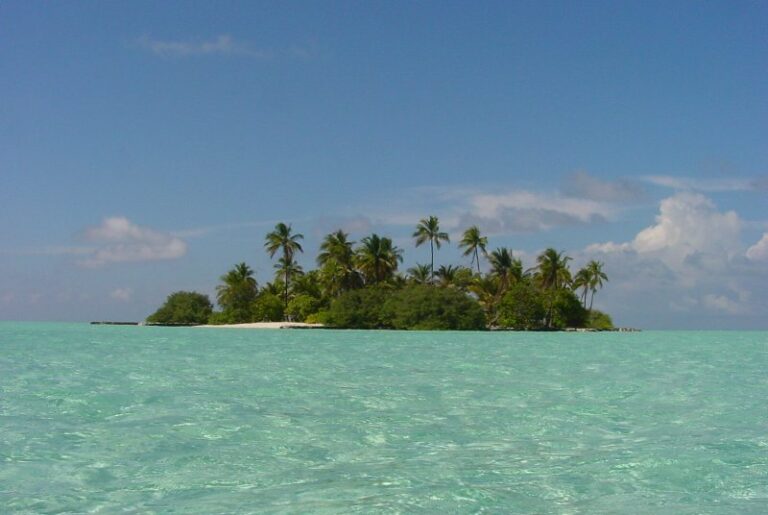
The SEIA: Will their Solar Bill of Rights become reality? Could it work in the Middle East?
Solar energy as one of the world’s best alternative energy sources is already an important discussion topic during the ongoing COP 15 conference in Copenhagen.
One group in particular, the Solar Energy Industries Association (SEIA) is pushing the use of solar energy as a major source of power for countries around the world where there are sufficient photovoltaic sources (i.e. sunshine concentrations for conversion into electricity) to provide solar energy during at least 300 days of the year.
This idea will hold in countries in the Middle East, including Israel where ample sunlight is available as much as 340 days a year. Environmental media source companies, such as America’s Tigercomm, represented by VP Mark Sokolov are at COP 15 trying to make participants more aware of the importance of solar energy as a viable and clean power source.
(The Arrow Ecology solid waste treatment facility near Tel Aviv processes up to 150 tons of garbage a day. Photo courtesy Chen Leopold/ Flash90)
Like death and taxes, garbage is inevitable. And with environmental concerns growing, cities across the globe are searching for smarter ways to dispose of their trash.
Sydney and Santa Barbara are among the cities that are now working with Arrow Ecology, an Israeli company whose revolutionary, ecologically sensible method sorts huge volumes of solid waste, salvages recyclables, and turns the rest into “green” biogas and rich agricultural compost.
The Disi pipeline to supply Jordan with 30% of its water needs is underway.
The building of a pipeline that will supply Jordan’s capital with much needed water gets under way. The construction of a pipeline that will carry 3.5 billion cubic feet of water to the Jordanian capital Amman has commenced after years of water shortage.
Following a deal between Jordan and Turkey, the Disi Water Conveyance Project will tap water from the Disi aquifer, an underground reserve, located on the border between Jordan and Saudi Arabia.
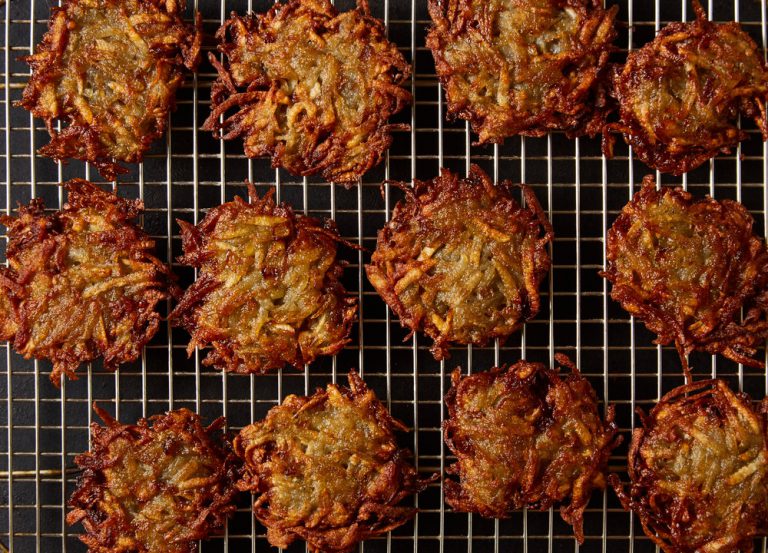
The Festival of Lights. Traditional songs, spinning tops and chocolate coins, candles in the menorah flickering while we wait for the first platter of hot latkehs, our home-made Hanukkah treat. Latkehs! What is it with latkehs? They’re brown, they’re fried, they’re potatoey and oniony and when you fry them, you have to open all the windows. And you can’t resist raising the calorie count even more with toppings of sour cream and applesauce.
Well, they are delicious. Plump and tender on the inside, crisp at the edges. The subtle contrast of sour cream and sweet applesauce on top of robust potato and onion…oy. A hot latkeh is like mother love. We’ll go on a diet tomorrow.
Traditional Potato Pancakes (Latkehs) Recipe
Yield: 25-30 latkehs, made in the food processor or hand-grated
6 large potatoes: 1.6 kg.
4 large onions
6 eggs
1 cup flour and 1 Tblsp. baking powder
2 1/2 teaspoon salt
1 teaspoon white pepper
Oil for shallow frying
1. Cut the potatoes into chunks that will fit into the tube of your food processor. Or hand-grate them. You don’t have to peel the potatoes, just scrub them well and go over them with a knife to remove anything undesirable.
2. In food processor: grate the potatoes with the fine-grating disk.
3. Dump the grated mass into a colander and rinse briefly to avoid discoloration. Allow to drain while everything else is being prepared.
4. Rinse the food processor; fit the knife in.
5. Peel and quarter the onions; puree them in the food processor. Or grate them. (Recommended: wear safety goggles.)
6. Add the eggs to the pureed onions; blend them for a few seconds.
7. Add the salt, pepper, flour, and baking powder to the contents of the food processor. Whirl till all is smooth. Or Beat the dry ingredients into the onion/egg mixture.
8. Start heating the oil in the frying pan; about 2 tablespoons. It needs to be renewed once in a while.
9. Put the grated potatoes in a big bowl and mix the floury batter into that. The mixture will get watery as the potatoes start releasing juice on contact with the salt.
10. Using a 1/4 cup measuring cup, turn out little hills of raw latkeh batter into the hot oil. This works better than using cooking spoons. Flatten out the tops a little. Fry till the first side is brown; gently flip over with a spatula and fry till the other side is brown too. Taste the first one or two to determine what color the latkehs have to be when they’re done.
If you read any story this week make it this one: What could be the most important event of the next decade, world leaders and activists are meeting as we speak in Copenhagen, Denmark to lay the foundations of a plan to stop climate change.
On the forefront of representing the Arab world, and criticizing the oil-producing ones, is Wael Hmaidan, the executive director of IndyACT. We covered Hmaidan and recent protests at the pre-Copenhagen event in Barcelona, where IndyACT helped draw attention to the fact that Arabs are more than oil.
Green Prophet sits down with Hmaiden for a few minutes, when he’s not sleeping or busy campaigning for climate change action at Copenhagen.
What’s your organization’s goals at Copenhagen?
IndyACT as part of the global civil society is campaigning for a strong and ambitious treaty that would save us from catastrophic climate change impacts that could mean the end of human civilization. IndyACT, as the only organization from the Arab region, also works on insuring that the region strongly and positively engage the negotiations process.
Copenhagen is considered one of our last chances to achieve the a global agreement that would save human civilization. According to the UN, we have less than 10 years to radically change our lives to avoid catastrophic impacts of climate change. So our goal for Copenhagen is ‘to save the planet’.
I decided to take some minutes away from the hectic running back and forth to attend sessions in the UN Conference of Climate Change (COP15), taking place in the Danish capital Copenhagen, to grab some lunch.
I stood in a long line and 20 minutes later had a tray of horribly tasting food (but filling) and went looking for a quiet table to sit down. I needed some peace before continuing on my active running back and forth for coverage.
But as I sat down, I noticed that the table next to me had a group of “important looking people” speaking Arabic. Never one to miss a chance for a good story, I put on my best smile and went over and introduced myself as an Egyptian. Several smiles, handshakes, and laughs later, I was sitting at the table with them.
It was all very pleasant. The table was varied. There were people from Lebanon, Tunisia, and one from Algeria (who was quick to make a football related joke of course when he learned from my accent I was Egyptian). I learned that they were here as representatives of the OPEC (organization of the petroleum exporting nations) delegation.
Irrespective of the outcome of the current COP 15 climate change conference still in progress in Copenhagen, “Startup Nation” Israel is already making plans to become a world leader in clean technology ventures, especially in the areas of water, energy and environmental technologies.
Some of these projects will be topics for panel discussions that will be taking place during the upcoming “Globes” Israel Business Conference 2009,” scheduled to be held at David Intercontinental Hotel in Tel Aviv this week on December 13-14.
The two day conference will feature a panel composed of representatives of various sectors of Israel’s investment and development sectors in the fields of alternative and renewable energy, water recycling and purification, and the role the country’s chemical and pharmaceutical industries can play in the development of cleaner and “greener” manufacturing in these important industries.
One of these participants, Booky Oren, chairman of the Arison Group’s Miya Water Venture, will talk about the role the Arison Group is playing in preventing water systems losses by local municipality water utility systems.
Lots of lemons in stock? Why not preserve them for the winter? Miriam offers 2 creative ways.
Now is when lemons are plentiful and cheap, so take advantage and put some up. That was Hamutal’s advice earlier this year when she gave us a recipe for fresh lemon curd.
A jarful of preserved lemon quarters comes in handy for those times when you’ve run out of fresh. But the truth is that cooks in the Middle East like preserved lemons because their taste has softened and mellowed, giving a good acidic balance to mild, pungent, or bland flavors in a dish.
The first of the following recipes was taken from Elizabeth David’s Spices, Salt, and Aromatics in the English Kitchen.
The second comes from Claudia Roden’s Book of Middle Eastern Food (1974). This book has an updated version from 2004, The New Book of Middle Eastern Food.
Lemons Preserved in Salt
1. Steep four whole lemons in cold water for 3 days. Change the water daily.
2. Cut the lemons into quarters or eighths and pack them in a glass jar. Add 1 level tablespoon of coarse salt to each lemon. Put two layers of baking parchment directly over them, and weigh them down with something heavy. Ms. David recommended a clean smooth stone. In warm weather, keep the jar in the fridge.
3. At the end of the week, the lemons will have released their juice, forming a brine. Remove the paper and the weight, cover the jar, and keep in in the fridge. Wait 2-3 weeks to use.
Lemons preserved this way will keep one year.
Pickled Lemons (Lamoun Makbouss) Recipe
Ms. Roden recommends preserving limes this way, too.
1. Scrub lemons well and slice them thinly.
2. Sprinkle generously with salt and leave them to drain in a colander at least 24 hours. This will dissipate their bitterness and “cook” them soft.
3. Put them in layers in a glass jar, sprinkling paprika between the layers.
4. Cover them with a neutral-flavored oil. According to Mrs. Roden, olive oil is too strongly flavored and may dominate the lemons.
5. Close the jar tightly and wait 3 weeks before using. They are best kept in the fridge.
They will be soft and “a beautiful orange color.”
Alternately, you may freeze the lemon slices and proceed to salt them while they’re still frozen. They will release much of their juice and become soft. Proceed as above; the lemons will be ready in only a few days.
How do you cook with fermented lemons?
The flavor of lemon and salt is very intense. Rinse the piece before cooking with it. The best part is the peel – some cooks scoop the pulp out and discard it. I use the whole thing.
Consider these ideas for pickled lemons:
Chop a little piece fine and mash it into a vinaigrette dressing.
Gently mix a few fine slices into steamed broccoli; drizzle some olive oil over everything.
Add a teaspoon of chopped preserved lemon to pea soup.
Put a little bowl of those bright yellow lemon quarters on the table to accompany lamb chops.
Prepare a fillet of fish with a drizzle of olive oil, some chopped basil or green onion, and a few thin slices of preserved lemon. Bake or pan-fry.
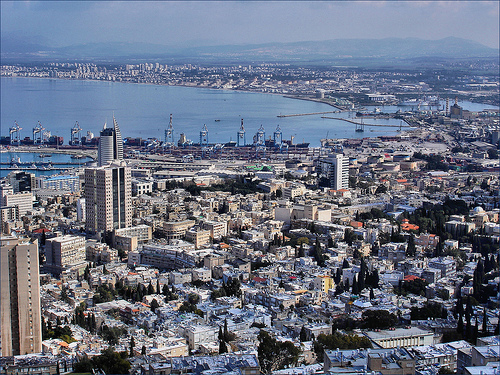
Haifa Bay is lovely, but it’s extremely polluted. Chemical giant there now producing carbon credits with Citi bank.
What would induce a significantly environmentally polluting company like Israel’s Haifa Chemicals to make an agreement with an international banking institution like Citi to meet targets for reducing greenhouse gas emissions?
Haifa Chemicals has long been a producer of various chemicals for use in the food, fertilizer and technical chemicals industries.
Some of these chemicals include potassium nitrate, used both as a food additive and as an ingredient in explosives (such as gunpowder). The company also produces phosphate based fertilizers that are used for a number of food products, including meat and fish, dairy products, and vegetables. The production of these chemicals meant that this company, along with others such as Taro Pharmaceutical Industries and Kitan Textiles has far exceeded set pollution limits.
Haifa Chemicals in particular was formerly engaged in discharging 1.5 million tons of toxic effluents into the Kishon River (one of Israel’s most polluted streams) annually, much of it phosphate based.


 Last night, Israel’s NGO delegation to the Copenhagen climate talks kicked off a week of activism with a very special Channukah candle-lighting.
 By Danny Lev, Analyst in IDC Research IL (
 Israeli, Palestinian, and Jordanians host cross-border workshop on environment blogging in Jordan to spur Middle East change.




 The SEIA: Will their Solar Bill of Rights become reality? Could it work in the Middle East?



 If you read any story this week make it this one: What could be the most important event of the next decade, world leaders and activists are meeting as we speak in Copenhagen, Denmark to lay the foundations of a plan to stop climate change.