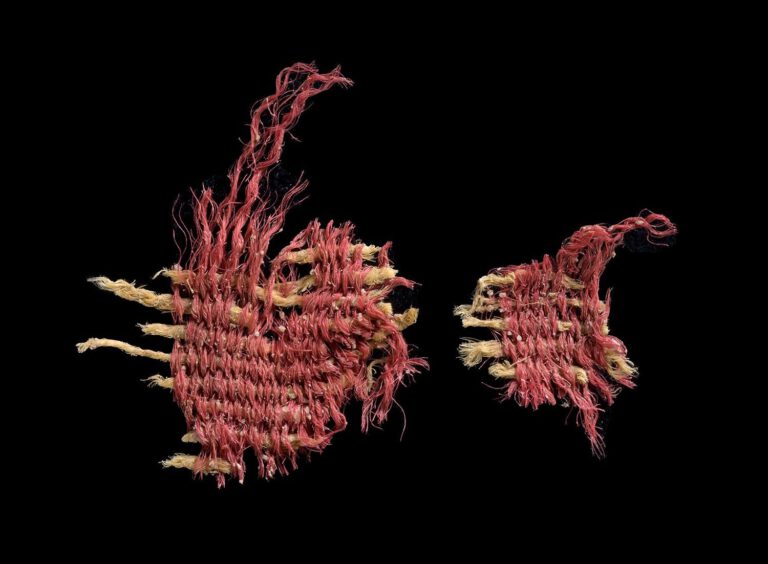

Scarlet red, a pigment made from insects, is used to make frappacinos pink at Starbucks but it was the dye of choice to make the color scarlet in ancient Biblical times. A piece of ancient scarlet-colored cloth was found in a cave in Israel and was recently studied.
The color of the rare 3,800-year-old textile was produced from the oak scale insects, which the researchers identify with the biblical “Tola‛at Hashani” (scarlet worm).
The color scarlet worm is mentioned 25 times in the Bible, often alongside blue (holy Tekhelet) and purple (Argaman – see King Davi’d cloth), which are considered the most precious and prestigious colors in the ancient world.

It is mentioned in the context of luxurious clothing, in the use of Tabernacle textiles, and in other cultic contexts.
The rare textile, which is less than 2cm in size was discovered in 2016 in the “Cave of Skulls” during excavations conducted by the Israel Antiquities Authority and the Hebrew University as part of a broad Heritage Project to save heritage finds in the Judean Desert caves from antiquities theft.
The excavation, led by Dr. Eitan Klein, Dr. Uri Davidovich, Roi Porat and Amir Ganor, uncovered a tiny red textile, which was sent for further research along with dozens of other textiles found in the cave. Despite its small size, the textile’s color caught the researchers’ attention.

Using analytical equipment, they identified the origin of the dye, finding that oak-scale insects produced the red dye used for the woolen weft threads while the warp threads, made of linen, remained uncolored. The textile was dated to the Middle Bronze Age (1767-1954 BCE) using carbon-14 analysis.
The research was led by Naama Sukenik from the Israel Antiquities Authority, Prof. Zohar Amar and Prof. David Iluz from Bar-Ilan University. Like most archaeological research, it takes years to sift through findings and analyze results: The research results were published this week in the Journal of Archaeological Science: Reports.
Related: how to join an archeology dig
“In ancient times, the dye was produced from the female scale insect, which lives on the kermes oak tree (Quercus coccifera),” said Sukenik: “Collecting these kermes was done in a very short window of time – one month out of the year, in the summer, after the female laid her eggs but before they hatched— when the amount of dye was greatest.

The short period in which the kermes could be collected, the difficulty in finding them due to their small size (between 3–8 mm), and their camouflage colors, that make it difficult to locate them, as well as the small amount of dye that can be produced from them — and on the other hand, the beautiful red hue (scarlet) that can be produced from them for dyeing textiles, made their use highly prestigious.”
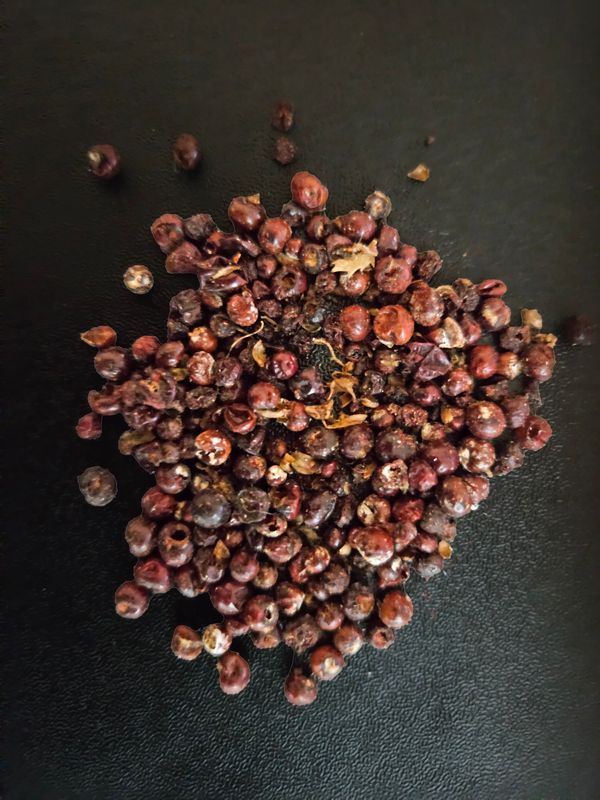
The red dye from kermes was mentioned in ancient trade documents, such as in cuneiform tablets from Mesopotamia, dating back to 1425 BCE.
“In the Bible, the dye extracted from oak scale insects is referred to as “scarlet worm,” says Amar of Bar-Ilan University. The term “worm” in ancient times was a general term for various insects and their developmental stages. The biblical association of this color with a living creature demonstrates impressive zoological knowledge, considering that female scale insects lack legs and wings, to the extent that some Greek and Roman naturalists even mistook them for plant granules.

Throughout history, various species of scale insects have been used to produce red dye. To this day, in South America, another species of cochineal scale insect, which lives on certain species of cacti, is used for dyeing textiles.
According to Prof. David Iluz from Bar-Ilan University: “Although it was discovered that Israel has a native species of scale insect living on Palestinian oak (Quercus calliprinos), capable of producing a red-orange color, the analytical results indicate that in the case at hand, the species of scale insects is Kermes vermilio which lives on the kermes oak tree (Quercus coccifera).
Related: 10 eco tourism trips in Israel
“This tree species is common in the central and eastern Mediterranean region, including Spain, France, and other areas, but is not found in the Land of Israel.”
Despite the wealth of written historical evidence about the widespread use of dyeing with scale insects in the ancient world, until today, very few textiles dyed with kermes insects that predate the Roman period have been found worldwide.
The red textile from the “Cave of the Skulls” in the Judean Desert represents, as far as we know, the earliest evidence of woolen textile dyed with kermes.
“Although it is difficult to know how this textile arrived in this desert cave, it is significant evidence of ancient knowledge in dyeing wool fibers using scale insects to achieve the red color as early as the Middle Bronze Age — about 3,800 years ago,” says Uri Davidovich, an excavation director at the Cave of the Skulls on behalf of the Hebrew University in Jerusalem.
More articles on Biblical dye:
King David’s Purple Discovered
Ancient blue recreated in Portugal
The lost biblical blue “techelet” is found







 A new shipping container coffee house in Dubai