Home Blog Page 669

Environment Journalists, Bloggers and Activists From Israel, Jordan and the PA Unite: Let’s Meet Jordan

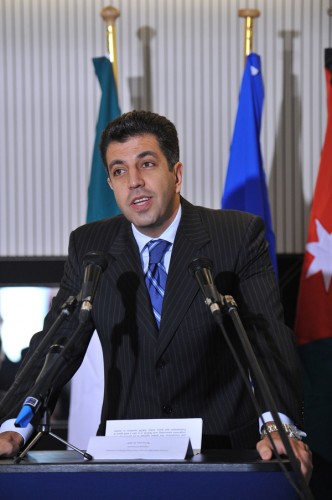
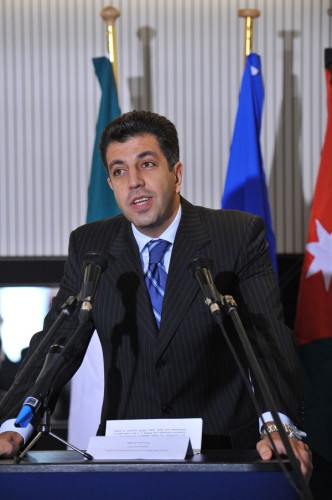
Osama, Khaloud, Zein and Sawsan (from left to right) present green projects from Jordan at Green Prophet’s Environment blogging workshop.

It was 20 hours we will never forget. Nineteen journalists, activists and bloggers from Jordan, the PA and Israel met at an international blogging workshop in Jordan intending to make better environment bloggers (and friends) out of all of us. Hosted by Green Prophet, Volunteers for Peace in Bethlehem and the Masar Center in Jordan, we shared, we ate, we danced and we wrote. Blog posts from the event are forthcoming.

Besides all of our mutual desires to share and to learn more about communicating our regional problems in the global blogosphere, each and every one of us all shared our local environmental issues, projects and dreams. Readers should take note: it’s very uncommon for Palestinians, Jordanians and Israelis to meet in such face-to-face encounters. We overcame our fears and stereotypes to broaden our worldviews and to make change. 

Japan To Build Solar Plant in Jericho, Palestine

10

jericho city solar energyJericho in Palestine will light up with solar power thanks to Japanese initiative.

The Japanese government has agreed to assist the Palestinian Authority with two solar energy projects totaling $23 million, according to the Palestinian Maan News Agency.

Part of the funds, $16.7 million, will be used to assist in alleviating the Authority’s financial difficulties, with the remaining $6.3 million going to construct a photovoltaic solar energy plant in Jericho, just above the Dead Sea.

Rebranding Lod: from Modern Slum to Cultural Gem

2

An ancient mosaic recently uncovered in the mixed city of Lod: Stigmatized as a crime infested, religiously divided city, residents of Lod have launched a grass-roots effort to change the face of the ancient city at the heart of Israel.

Mention Lod to anyone in Israel and more often than not it conjures up images of crime-infested slums, religious tensions and cultural backwardness.

Five minutes from Israel’s ultra-modern international airport is the city of Lod. Smack in the heart of the country, and rich in history, Lod has been Israel’s shameful backyard, the reference place for what Israelis didn’t want their cities to become, and a place most Israelis would never want to visit.

Today’s reality is not a rosy one. Lod has one of Israel’s poorest communities, with a sizeable high-school dropout rate and an enormous drug problem. The World Monument Fund recently included the city on its list of heritage sites, but its culture remains buried by neglect and decay. Indeed the municipality of the mixed Arab-Jewish city was found to be so corrupt and bankrupt that the government threw it out and imposed a former army general as acting mayor.

Tunisia Says Do Your Part in Battle Against Climate Change

2

borj cedria climate change tunisiaBorj Cedria beach in Tunisia. This North African country speaks up after Copenhagen.

The fallout from the failure of the Copenhagen climate change summit that ended last Friday continues to see world leaders lash out at the international community’s missteps. This time it is Tunisia’s Minister of Environment Nadir Hamada, who said the global leadership must understand the need for strengthening its resolve in the face of climate change. Hamada called on the international community to meet its commitments and to face up to the “dire consequences” of climate change no matter how wealthy a nation may be.

He argued that international efforts to address the issue of climate change, “are still far below expectations,” when it comes to addressing the impact of climate change on developing countries. He added that Tunisia is ready to step up its efforts to contribute to reducing carbon emissions and creating the means to battling climate change.

Masdar City's Dream of 100% Sustainability an Example for Other Countries

13

masdar city ecological city imageMasdar City: A model city for sustainable cities of the world?

Masdar City, that 100% carbon neutral eco-city being built in Abu Dhabi, is receiving well deserved attention not only from local environmentalists, but from many individuals and organizations located far from the unique ecological project.

The city currently under construction by an international consortium of construction and architectural firms which include the Australian architectural firm LAVA Architects,  the renowned UK architectural  firm Foster + Partners, America’s General Electric,  and the German BASF construction company. The idea of an environmentally sustainable, and carbon neutral residential and business development has attracted great interest from companies like GE, which is also establishing an “ecomagination” research center in Masdar, like it already has in Niskayuna New York and Munich Germany.

Michigan Looks to Israel to Rev Up Automotive Battery Business

Automotive companies in Michigan are looking to Israeli battery and electric car innovators, like Better Place, to help revive their ailing car industry.

Michigan meet Israel, Israel meet Michigan: In actual fact, the state of Michigan and the State of Israel don’t need an introduction. In some ways the automotive heart of America has been working steadily with Israel for decades.

While it’s no big secret that the Big Three automotive companies in Michigan have tanked, government incentives are now looking to transform America’s battered auto industry into something new. And Israel could play a part.

Ron Perry, executive director of the Michigan Israel Business Bridge, says that Israel’s history as a supplier to the Big Three – General Motors, Chrysler and Ford – is well developed. With a new focus on electric and hybrid cars, Michigan, he surmises, could benefit from collaboration with Israeli battery researchers.

12 Tips for Saving Water in the Kitchen

15

faucet with dropHere at Green Prophet we are concerned about the current water shortage. Today we’re sharing 12 water conservation tips for the kitchen that can impact the Middle East.

1. If you use a dishwasher, always fill it completely and choose the fastest setting.

2. When washing by hand, soak to soften the residue, then scrub with a brush or sponge. Only use running water for a final rinse, never as a cleaning tool.

3. Dilute dish detergent in advance and use a small amount so it will dissolve properly. Excess soap goes down the drain or need more water to be rinsed off.

5. Install a sprayer on your faucet. This distributes a smaller amount of water to a larger area.

6. When washing utensils, don’t fill items like glasses, pots and bowls. Tilt them so that the water reaches the sides and bottom.

7. Defrost foods in the refrigerator to avoid soaking.

8. When washing a jar or glass, put in a small amount of soapy water and shake with the cover on. Then transfer the water to the next utensil. Wipe and rinse.

9. Use a minimum of cooking water to retains nutrients and save on cooking time. Pasta needs much less water than the package instructs, just stir frequently.

10. Save cooking water for soups, grains, and bread dough. Don’t reuse water from washing dishes, but water from cleaning vegetables can be reused in the washing machine, toilet or garden. A microwave or pressure cooker retains more moisture than the stovetop or oven.

11. Make one-pot meals (like mejadera) to save on washing.

12. Place dirty pots in the sink to collect used water, instead of soaking them in clean water. In some countries, like in Australia, they use rainwater tanks to gather rainwater. Suppliers like http://supatank.com.au/ assists homeowners to set up a rain catchment system that connects to the bathroom, kitchen and anywhere where water is most needed during the day.

More water and energy saving ideas:
Ten Tips for Cutting the Cost of Running Your Refrigerator
Nine Tips to Help Your Food Last Longer
Save Water and Energy In Your Washing Machine with Top Tips
Ten Ways to Buy Less When You Breastfeed Your Baby

Photo via lemuelinchrist

COP15 and 7 Israel-related Cleantech Headlines, Week of December 13, 2009

1

During the week of December 13, 2009, Israel’s solar energy field suffered a major setback and it was announced that IDE is set to build the biggest desalination plant in Israel. At the Copenhagen summit Israeli President Shimon Peres emphasized the importance of cooperation between all the countries in the region to work together to help save the environment. For these stories and more, check below.

Investment
Israeli Renewable Energy – Why Israel, Why Now?

Solar
Firms in state of ‘hysteria’ as darkness falls on Israel’s solar industry

The Penny Drops: Israel Solar Energy “Gold Rush” Threatened By Government Hold

COP15
Peres to Palestinian PM: Stalled peace talks hurt us both

Water
SDL to build, run Israel’s biggest desalination plant

‘Water taxes necessary for conservation’

Israel takes the lead in world’s water technologies [Video]

How Does the World's 1.5 Billion Muslims Relate to Climate Change?

13

climate change muslim world

Are the “Sons of the desert” doing their utmost to curtail climate change?

One out of every 4 human beings on this planet is a Muslim.  As such, are members of this planet’s largest religious group doing enough to combat the growing problems of global warming and climate change?

Much of the world’s known petroleum reserves are located in or off-shore from Muslim dominated countries in South Asia, North Africa, and the Middle East. Overgrazing and other environmentally damaging agricultural practices in many of these countries are resulting in “desertification,” a term that not only refers to the abuse of once fertile pasture land, causing it to become arid or desert-like, but also the expansion of existing deserts – especially in North Africa, the Arabian Peninsula, and in  many parts of Asia as well.

Soon after the beginning of the just completed COP 15 climate change conference in Copenhagen, an article appeared in a Canadian Islamic web blog, Muslim Presence.com by the author, Dr. Hind Al-Abadleh , an assistant professor of Chemistry at Wilfrid Laurier University, and who teaches courses in Environmental Chemistry, dealing with the relationship between Islamic religious teaching and the preservation of the environment – particularly in regards to climate change. Professor Al-Abadleh asked the following question: “With all the science behind climate change, is there room for religion to say anything about it?”

The Ultimate Ful and Hummus Recipe

11

Got a yen for the food of strong men? Miriam shows how to make the Middle-Eastern working man’s lunch.

It’s so easy to just bop down to the corner falafel stand and pick up a pita full of the Middle Easts’ favorite fast food. But get to know – and make, another meal, the kind you have to sit down for.

Dark, meaty fava beans set down in a nest of yellow choumous and a beige ring of tehinah, topped with a brown hamine (long-cooked) egg. Parsley, to offset the earthy flavors. Lemon juice, to balance the dish with a little acidity, and a generous drizzle of good olive oil. On the side, pickles for piquancy, and a little bowl of hot sauce. Onion, just because. Some preserved lemon quarters. And fresh pitas. Nutritious, cheap, comforting. Satisfying in every sense. It’s ful and hummous: the Middle Eastern workingman’s lunch.

The ingredients are always the same, but each cook makes them a little different. Some people like dark fava beans, using a traditional pot whose long neck allows slow evaporation of the cooking liquid. Some just boil up the quicker-cooking, lighter, haricot bean. Either way, ful and hummous is easy to make, but requires a number of steps. If you want to do this totally from scratch, you will need to prepare three ingredients the night before: beans soaking in one bowl, chickpeas in another, and a pot of gently-boiled eggs simmering on the stove.

Classic Ful and Hummous
This recipe serves 4-6.

Ingredients:

500 grams/1 lb. of dried fava or haricot beans
water for cooking
5 cloves of garlic
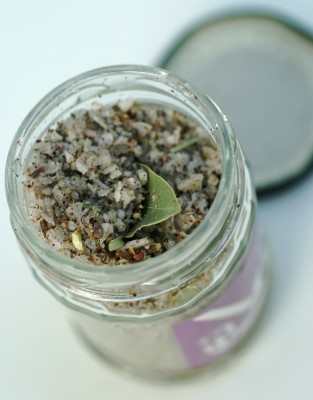
a bay leaf
olive oil
the juice of 2 lemon halves, and 1 more tablespoon
salt
1 tsp. cumin
6 eggs
the brown, shiny peels from 2 large onions
2 cups of chickpeas, or 1 can
1 cup tehina, plus 3 more tablespoons

First: The Ful.
Pick over the beans.
Rinse them and put them to soak overnight in plenty of water. Next morning, drain the beans and put them up to cook in fresh water.
Add a fat clove of garlic, a bay leaf, and some olive oil to the water. Cook the beans till tender. Favas take 1-3 hours. If you choose white beans, they will cook in far less time – up to an hour.
When the beans are soft but not falling apart, crush 2 fresh cloves of garlic into a small bowl. Stir 1 tsp. each of salt and cumin in, and add this seasoned garlic to the bean pot. Add a tablespoon of lemon juice. Stir the beans up. Crush some of them with a potato masher or a fork, so that they’ll absorb the flavors of the seasoning. Let them cook another 5 minutes. Then either turn the flame off, or start serving.

Second: The Hamine Eggs.
You can just boil eggs as usual, or take this opportunity to do it the old-fashioned way. Make several, it’s not worth the trouble for only one or two.
Take 6 eggs and the peels from 2 large onions. Put it all in a pot.
Cover the eggs and peels in plenty of cold water; bring to a simmer.
Drizzle a layer of olive oil over the surface. This prevents the water from evaporating during the long cooking period. Simmer the eggs, covered, over the very lowest flame you can achieve for 6 hours or overnight. They are delicate, creamy eggs, unlike any others.

Third: The Hummous
Put 2 cups of dried chickpeas in a separate bowl. Cover them with plenty of water and let them soak overnight. As with the beans, drain them, and cook in fresh water till soft. It’s not a sin to open a can of chickpeas either. Although fresh-cooked always taste the best, canned chickpeas still make good hummous
Do not add salt to either beans or chickpeas till they are completely cooked and easy to mash.
Put the cooked or canned chickpeas in a blender or food processor. To them, add

1 fat clove of garlic
3 Tblsp. of tehina
salt to taste
juice from 1/2 lemon
2 Tblsp. olive oil

Blend everything to a smooth paste, adding a little more olive oil if you like. We like our hummous with some texture in it, but if you like yours more mayonnaise-like, add more oil and a tablespoon of water, and keep blending till you like it. Once you’re satisfied, cover the hummous and set it aside while the beans finish cooking.

Fourth: Tehina.
Put into a bowl:

1 cup raw tehina paste
3/4 – 1 cup water, depending on how thick or thin you like it
1 fat clove garlic, crushed
salt
olive oil
juice of 1/2 lemon

Blend all the ingredients, either by hand or in the blender. If you’re not used to the ways of tehina paste, don’t be alarmed that it initially becomes very thick when mixed with water. Keep mixing, it will smooth out amazingly.

To serve:
Spoon a generous amount of hummous onto the plate. Take the spoon and spread it into a neat circle, thinner in the middle.

Spoon a ring of tehina on the inside of the hummous circle.

Put a pile of hot beans in the center of the plate. Top the beans with a little chopped onion, chopped parsley, and a peeled, still-warm hamine egg. Squeeze lemon juice over the whole; drizzle olive oil over it. If you’re fond of hot sauce, drizzle a few drops of it over the dish too.

Put some small plates or bowls with pickles, olives, sliced onions, or pickled lemons in them.
Now tear a chunk off your pita and use it to scoop up some of everything. Savor every mouthful, it’s the real McCoy.

Enjoy!

See also:
Organic Trend Hits Tel Aviv Where It Counts. The Hummus.
Pickling 101 – Vinegared Cucumber Salad

COP15 Outcome

13

ice_breaks_10[1] The glaciers are melting – and seas are rising – is climate change to blame?

It’s over: the two week long COP 15 conference on global warming and climate change ended Friday night with a weak agreement to try to keep global warming temperature levels at or below 2 degrees Celsius, and to allocate a sum of $ 30 billion towards dealing with the effects of climate change by the year 2012.

The hastily hammered out deal also calls for a measure of transparency to be established between developed and developing nations towards dealing with the consequences of global warming and climate change.

While not perfect by any means, the agreement, signed by leaders of the U.S., Brazil, India, South Africa, and China, was perhaps better than nothing, and at least kept the conference from ending in failure; with nothing more than photo shots of the participants, along with video clips of the outside “street participants” in running battles with Danish police and with scores of them being arrested and detained until the conference’s end.

A Jewish Heart for Africa Shines Its Jewish-American-Israeli Solar Lights During Hanukkah

5

jewish-heart-africaafrica at nightPicture an African village at night.

It is completely dark.

Look at the continent of Europe above (pictured left); and Africa below. Notice a stark difference?

In Africa, village children struggle to study and complete their homework by candlelight. The medical clinics are closed. Emergency surgeries and nighttime births are performed by the light of a leaking kerosene lamp, held close to patients’ open wounds. And there is no refrigerator. Without proper storage, children will go without vaccines for tuberculosis, measles and other preventable diseases.

But Israel has the power to help, says the Jewish Heart for Africa, a non-profit organization that uses sustainable Israeli technologies to facilitate African development.

Since its founding in 2008, the organization has completed 23 solar projects, powering African schools, medical clinics and water pumping systems in Ethiopia, Tanzania and Uganda. They have provided 70,000 African people with electricity for education, clean water and medical care. 3,000 children have received vaccines stored in their solar powered refrigerators.

Targets for Solar Deployment in the Middle East – The First Step After COP15

4

Rhone-ReschA guest post by Rhone Resch (right), president and CEO of the Solar Energy Industries Association (SEIA):

There is clear evidence that we need to do more and we need to do it sooner to address the pressing problem of global climate change. Yesterday, a delegation of global solar industry groups released a report at the UN Framework Convention on Climate Change (UNFCCC) in Copenhagen that showed how much electricity demand can be met by solar energy through 2020.

The European Union and the United States – the two most accelerated targets – indicated that with the right policies solar meet 12 percent and 15 percent, respectively, of electricity demand by 2020. With world-class solar resources, the Middle East will clearly have the opportunity to play a significant role in meeting similar targets.

The Penny Drops: Israel Solar Energy "Gold Rush" Threatened By Government Hold

9

After a burning hot run, Israel’s solar energy business doesn’t look so hot right now. Hundreds of solar-related jobs at stake.

Not long after local and foreign companies made investments in Israeli solar energy installations to benefit from the very attractive feed-in tariff, a sudden announcement by the Israel Electric Company (IEC) states that its subsidy funds have reached the quota. A panic in the country’s burgeoning solar energy development industry has ensued.

The announcement, published in several local newspapers, including Haaretz, reported the sudden “halt” announcement by the IEC.

The company said that funds allotted by the government’s National Infrastructure Ministry, together with the Public Utilities Authority (electricity sector) have dried up. From all the sun shining on the solar industry?

Eco Rabbi – Parshat Miketz – Solutions for Famine

3

Cow Grazing in WaterEvery week, observant Jewish people read a section of the Torah. This week, our in resident Eco Rabbi looks at Parshat Miketz.

Okay, this week’s parashah is a no-brainer. Seriously, how can an Eco-Rabbi NOT talk about Parshat Miketz? The parashah which contains the solution for dealing with famine…

Parshat Miketz opens with Pharaoh, King of Egypt, receiving a dream in which he sees 7 fat, healthy cows consumed by 7 weak and sickly cows. Then Pharoah sees 7 fat, healthy bundles of grain consumed by 7 weak and sickly bundles.

After consulting with every wise man around he finds Joseph, who had been thrown in jail. While in jail Joseph helped, correctly, interpret the dreams of 2 cellmates. One of them ended back in Pharaoh’s court – and it was he who recommended Joseph to Pharoah.