Home Blog Page 667

Celebrate Tu B'Shevat, New Year's for Trees, Now Jewish Earth Day

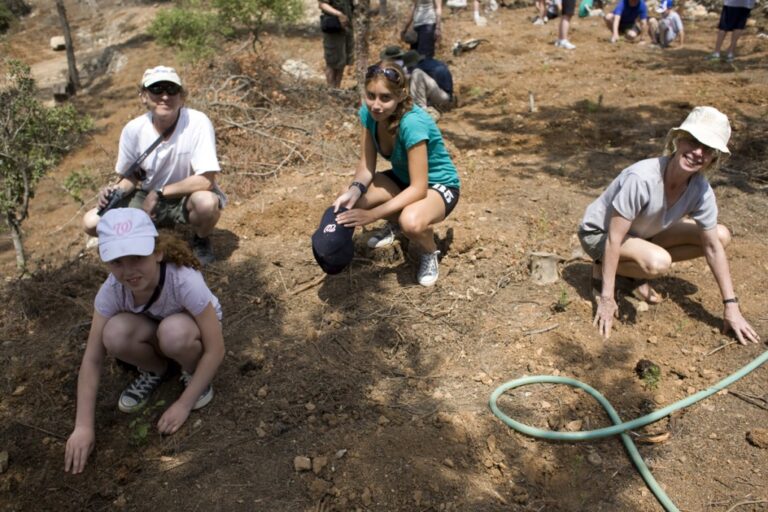
planting trees israel kklNew Year’s for the Trees, is about to be celebrated in Israel and by Jews everywhere. Some people like to plant trees, like this family.

Over in the Holy Land, and the Jewish Diaspora, Jewish people are stock-piling dried fruit and nuts to welcome in one of four different new years celebrated each year. Starting at sundown January 30 (15 Shevat on the Jewish calendar), Jewish people around the world will say happy new year to the trees.

Known as Tu B’Shevat (or Tu B’Shvat), as tradition goes, to celebrate this Jewish version of Arbor Day in style, the trees in Israel rent a DJ and disco ball and go to the desert to dance trance all night long. Well… not really…the trees do not celebrate at all. The onus is on the people.

Organic Pizza Fusion Has Hit Jeddah, Looking to Expand All Over Saudi Arabia

10

Pizza Fusion, a US-based chain, proclaims itself as being committed to “saving the earth one pizza at a time.”  And now its slogan might ring more true.  Now that it has a stronghold in the Middle East.

In late November Pizza Fusion opened its first international franchise in Jeddah, Saudi Arabia (on Prince Abdullah Street at the Rawoda Star Center, for those of you that are hungry) and is looking to expand to other cities in that region.  Other franchise locations are already planned for Jeddah and Riyadh City in the near future.

So what exactly makes Pizza Fusion so great?  (Other than the fact that their pizzas look delicious – check out their Greek pizza above.)  Besides the fact that the pizzas are 100% organic, the restaurants feature eco-friendly building elements such as Energy Star certified appliances, non-VOC paints, FSC certified wood cabinetry, smart lighting systems, low flow faucets, and more.

Yum.

Oren Blonder on Israel's Role in Mideast Water Security

8

peres center peace logoThis interview rounds off our water series of interviews with Israeli water experts. In collaboration with the Strategic Foresight Group we’ve been busy talking with experts and policy makers and shapers from Israel on how it can help achieve water security in the region.

Today we speak with Oren Blonder, director of the Agriculture, Water and Environment Department at the Peres Center for Peace. Prior to working at the Peres Center, Oren served as Project Manager of a wastewater treatment pilot program in the industrial area of Ramat Hovav industrial zone in Israel.

Here are our 5 questions for Blonder:

Middle East Aid Springs Into Action to Help the Human Environment in Haiti

5

Tuesday night’s horrific 7+ magnitude earthquake in Port au Prince Haiti, has all but devastated this island nation, said to be the poorest in the Western Hemisphere.

This catastrophe,  which many seismologists say may dwarf the 2008 earthquake in China (which killed more than 100,000) may even wind up being one of the worst in recorded history with possibly as many as half a million souls lost to the quake’s massive destruction, and many thousands more succumbing to disease, hunger, and thirst.

The latest death toll was 50,000 but thousands more are expected buried under the rubble. The effects to the urban environment, and social ecosystem there, are devastating to say the least.

Earthquakes are common in many parts of the world, especially in the Middle East, the Far East and Southern  Asia, and in many of the world’s oceans. After all, it was a massive undersea earthquake off the western coast of the Indonesian island of Sumatra that resulted in the massive tsunami tidal wave the killed more than 250,000 people in 2004.

And more close to home, the 1999 earthquake in Izmit Turkey resulted in more than 17,000 known deaths, causing widespread devastation. And like this earthquake and the recent ones in Iran and China, the exact death toll will never be known as literally thousands are buried under the rubble of collapsed buildings and will never be found.

We bloggers at Green Prophet usually dedicate our efforts writing about positive news: advances in clean technology,  regional environmental issues, and such. But events like the one in Haiti makes us inclined to pause and reflect on how these sudden natural calamities not only cause widespread grief and sorrow, but also bring people together in what can be referred as their finest hour, to rescue those trapped, provide food and medical aid for the sick and injured survivors.

So far, we learn Israel, Turkey and Lebanon, are three Middle East countries to pledge aid. Also the UAE is setting up an “Air Bridge” to take relief supplies to Haiti. 

Jordanian EU Ambassador Ahmad Massaadeh Named Mediterranean Union Chief

4

ahmad maassaadeh photoWhen Jordanian EU Ambassador Ahmad Massadeh’s name was proposed as the new head of the Mediterranean Union Project on Tuesday, everyone applauded.  The project has been stalled due to infighting, and other representatives are hopeful about Massaadeh’s ability to make progress.

The Mediterranean Union Project, which was launched by French President Nicolas Sarkozy in Paris in July 2008, brings together around 40 nations from the EU, North Africa, the Balkans, and the Middle East.  It attempts to foster cooperation among these nations.

The priorities of the Union are to combat pollution in the Mediterranean Sea, increase solar energy usage, build land and sea highways, and cooperate on higher education and research.  The Union hopes that these goals will be achieved through joint infrastructure projects that will improve regional cooperation.

In his new position, Massaadeh will be based in Barcelona and have Israeli, Palestinian, Turkish and Arab League deputies.

Massaadeh is both a lawyer and a diplomat, and has previously served as Jordan’s Ambassador to the EU, Belgium, Norway, and Luxembourg, as well as the representative to NATO.

Read more about border-crossing cooperation in the Middle East:
Multifaith Green Writers Unite in Jordan
Biofuels Spark Regional Cooperation Between Israel, Palestinians and Germany
It’s the Water that Binds Us, Alexandra Cousteau Finds

::AFP

Israel Can Do More Than Cleantech to Reduce Regional Carbon Footprint

18

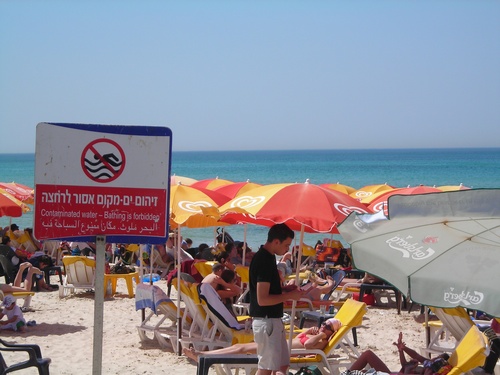
polluted water beach israelSign for polluted water at Israel’s beachfront: obvious in any language

Although much hype and attention is given to Israel’s contribution in the areas of clean technology, particularly solar energy and other forms of  renewable energy more attention needs to be made on the country’s growing “contribution” to global warming.

Despite this small country’s efforts made in the fields of  clean forms of energy, with 7.5 million people, it produces more than its share of air and water pollution, creating a growing carbon footprint problem.

In his blog Energy Inc David Levy explored Israel’s carbon footprint and what he thinks can be done to lessen it.

Sunday Energy Floats New Solar Idea to Boost Power Output on Water

12

kibbutz zeelim
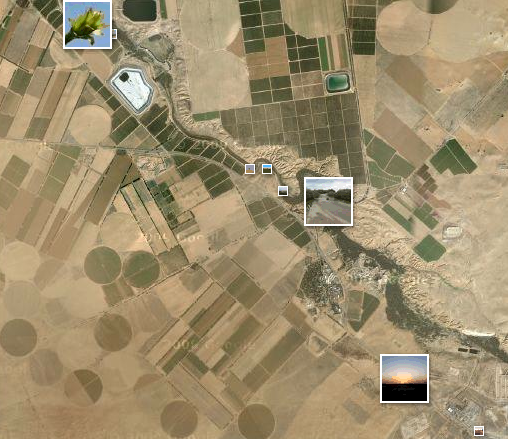
Kibbutz Zeelim from Google Earth. “Solarized” water reservoir located top left hand corner.

Sunday Energy, a PV solar integrator from Israel, who we’ve covered here (Every Sunny Day Is Like Sunday), is about to install a 5 MW PV facility on a water reservoir in an Israeli kibbutz, the business newspaper Globes report. The company says it will be the largest solar project of its kind in the world, to be built at Kibbutz Zeelim in the Negev Desert, in the south of Israel.

Zeelim is to share financing, about NIS 100 million (about $30 million USD), and in exchange it will own half of the facility. Approvals from the state are in so the development is expected to happen fast.

Sunday Energy is developing the technology so that a PV array will float on the water. The water, likewise is expected to cool the panels and boost electricity generation. A plus for the reservoir is that the panels will reduce evaporation, which causes the loss of one cm of water per day in the scorching hot summer months.

::Globes

Read more on Sunday Energy:
Every Day is Like Sunday Solar Energy
Sunday And Ormat To Build Largest Solar Roof in Middle East
Sunday and Advat Winery Toast New Solar Project

Lebanese Food Blog "Taste of Beirut" Has Mouth-Watering Ideas

5

lebanese food blog
Taste of Beirut blog features authentic Lebanese cuisine and a great give-away.

I love this blog. I love Lebanese food, and author Joumana, a Lebanese ex-pat living in the States, presents recipe after delicious-looking recipe, Slow Food style.

Just a small example – the Toom garlic paste, a staple flavoring in Lebanese kitchens. Whirl garlic, lemon juice, salt and olive oil in the blender, thickening the paste if you want with a cooked potato or bread. Use it to flavor almost anything. That won me; I’m an unabashed garlic fan.

Then there are at least four recipes for kibbeh, recipes for flatbreads (the one featuring baby artichokes brought water to my mouth), and many more.

The last time Joumana visited Beirut, Lebanese chef and food project genius Kamal Mouzawak gave her several packages of za’atar spice, herb salt, khamouneh, a spice mix based on cumin, and freekah, wheat smoked in the fields while still green.

She is now running a raffle for them, including a recipe booklet. The raffle is on till Jan. 31st, so if you’re interested, leave a comment on her post about Kamal Mouzawak and the amazing work he’s done with small farmers and local ingredients, here.

Good luck!

More recipes to enjoy:

::Taste of Beirut blog

Siemens to Promote “Green” Solutions at World Future Energy Summit

4

world future energy summitThe World Future Energy Summit is about to take place in Abu Dhabi.

Siemens Corporation has announced that it will launch a number of new and “innovative” initiatives to help fight against climate change and carbon emissions at this year’s World Future Energy Summit. It says it will present “its prove, highest-efficiency industrial solutions” at the summit for a “future sustainable energy supply and smart consumption.”

The summit, which will be held from January 18-21, in Abu Dhabi, has become the flagship place for companies to present new concepts and solutions for energy and green technology for the future.

“Whereas the 20th century was distinguished by growing energy demand, and thus a growing consumption of fossil fuels, today at the beginning of the 21st century we face the question of how we can put our energy system on a sustainable foundation in the face of demographic change, declining fossil fuel resources and climate change,” said Wolfgang Dehen, CEO of the Energy Sector and member of the Managing Board of Siemens AG.

Arad and Actaris Win Massive Water Meter Tender in India

4

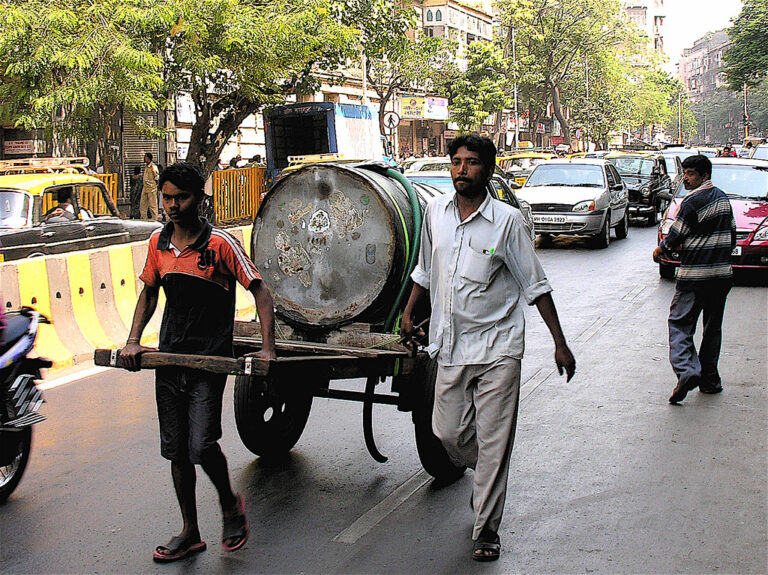
water delivery india mumbaiFor those without water pipes and meters in Mumbai, more traditional methods of water delivery are necessary.

Having good water meters is the first step to knowing where your water is going, and where the leaks are. Mumbai, India is taking steps to improving its municipal water use by ordering a massive stock of water meters from the Israeli company Arad Technologies (the same company developing the fly-by drone plane that reads meters), and the French water company Actaris Metering Systems. Based on the new tender, the companies are considering moving some of their production to India.

To start, the recent and immediate tender deal calls for a $32 million order of 300,000 meters, and web-based water meter reader Arad, and Actaris, will split the revenues. The Israeli Export Institute says that a total of 1.2 million meters are called for in Mumbai, totalling $128 million, tenders that both Arad and Actaris are expected to win, due to logistic difficulties in coordinating different systems in one city.

Arad Technologies president Dan Winter told Globes: “Winning this tender is a breakthrough for us, which opens a new market that is full of opportunities. Arad is in the final stages of two other tenders in India, and in view of the heavy demand, we are considering moving some production there.”

::Globes
Image via jonhurd

Haifa University Study Generates a Profile of the Israeli Cyclist

6

sexy israeli cyclist protest tel avivA new study profiles the average Israeli cyclist.

If you’ve read the title, looked at the picture, and are either excited or worried that Haifa University has discovered that most Israeli cyclists are physically fit exhibitionists… then no, that is not what their research has to report.  The study’s findings are nevertheless very interesting.

The study was a response to the growth of bicycle riding as a leisure activity in Israel.  Professor Nurit Kliot and Dr. Noga Collins-Kreiner conducted the survey together with Paz Rave, a student in the Geography and Environmental Studies Department.  539 mountain bicyclists were interviewed at six different sites throughout the country.

The most popular cycling is cross country – on flat terrain and only mild inclines.  The preferred routes are existing forest paths and single-track trails.  So basically, Israelis are slightly lazy cross country cyclists.  But at the same time, 50% of riders also said that they would be willing to help install signs and prepare additional bike trails.

Chicory, Traditional Middle-Eastern Greens

12

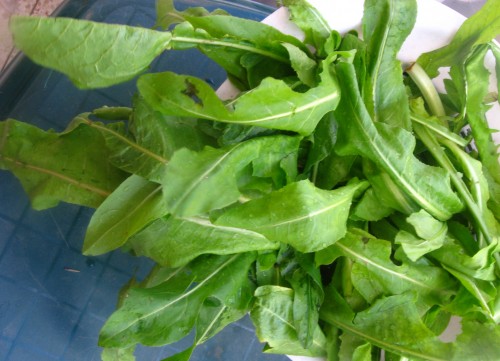
Will chicory become chic?

Chicory, or olesh in Arabic and Hebrew, is a tasty wild edible related to endive. Generations of  Middle Eastern peoples hand-gathered the lance-like, serrated leaves to cook, but you can buy it cultivated now. Unfortunately, this nutritious, inexpensive wild vegetable hasn’t acquired the prestige of, say, artichokes – which are really just big thistles. Like artichokes, chicory requires cleaning and care in cooking, and you have to have a taste for slightly bitter greens to appreciate it.

Bitter greens are a springtime tonic, supporting liver function and delivering easily-assimilated iron to the bloodstream. That’s why native peoples have always delighted to see the appearance of dandelions and chicory after the vegetable-poor winter – before modern agriculture brought fresh produce  to markets year ’round. But no matter how available and enticing mounds of fresh produce may be, the body still likes its jolt of calcium, Vitamin A and iron, which chicory provides in plenty.

We bought a big bunch of chicory in the Ramleh shuk last week. The vendor gave us the traditional recipe, and we cooked it as he said to.

Chicory Sautéed with Onions

Clean the leaves carefully, discarding any yellow or old-looking ones. They need a rinsing or two.

Chop the leaves coarsely. Have ready a medium-sized pot of boiling water with enough room to fit them in it.

Simmer the leaves in the boiling water for 5 minutes. Strain them out, squeezing them to extract the bitter juices.

Save the cooking water and juice to feed your houseplants – they like it.

Note: in early January chicory is still young enough not to taste very bitter. Taste a raw leaf – if the taste is acceptable as it is, don’t bother with the pre-cooking.

Slice a medium-sized onion. Sauté it gently in olive oil till golden.

Add the cooked, drained chicory leaves and stir them in. Add salt and pepper to taste. Cook a further 5 minutes.

That’s it. Now you can serve the chicory as it is. Or saute some thickly-sliced Portobello mushrooms along with onions; a delicious topping for bruschetta.

How chic is that?

Read more about traditional and wild foods here:

A Deadly Scorpion Provides a Safe Pesticide

8

scorpion venom pesticideScorpions deliver a powerful, paralyzing venom — a complex cocktail of poisonous peptides — that immobilize animal prey on the spot. Some of the toxins in this cocktail damage only insects, which is why a Tel Aviv University researcher is harnessing them to create a safe and ecologically sound pesticide.

Prof. Michael Gurevitz of Tel Aviv University’s Department of Plant Sciences has isolated the genetic sequences for important neurotoxins in the scorpion venom. He’s also developed methods to produce and manipulate toxins to restrict their toxicity in certain insects or mammals.

“Two decades ago I realized that scorpion venom is a goldmine for possible insecticidal and therapeutic agents. This raised the question of how to use them as ecologically-safe agents against insects in a farmer’s fields, or in medicinal disorders,” he says.

"Leggy" New Spider Found in the Sands of Samar, the Largest in the Middle East

3

new middle east spiderA new Middle East spider species, Cerbalus genus, is discovered in Israel. Its future uncertain.

It’s like hearing about a wedding and a funeral from the same person: a new spider species has been discovered in Israel, but the bad news is that its habitat is seriously endangered, reports a new University of Haifa study.

The new species is the largest of its type in the Middle East: “It could be that there are other unknown species that will become extinct before we can discover them,” says Dr. Uri Shanas of the University of Haifa, who is heading the research in the area.

Discovered in the dune of the Sands of Samar in the southern Arava region by a team of scientists from the Department of Biology in the University of Haifa-Oranim, “The discovery of this new spider illustrates our obligation to preserve the dune,” says Dr. Shanas, who headed the team of scientists.

Lebanon's Lions, Tigers and Bears Take the Heat

25

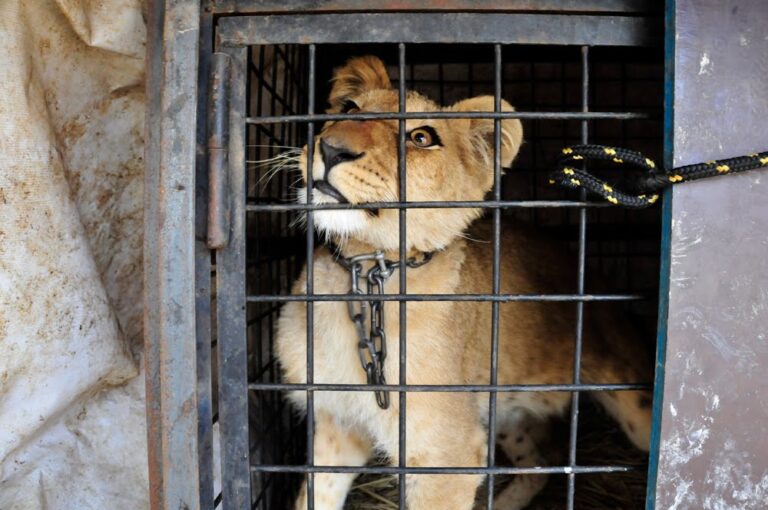
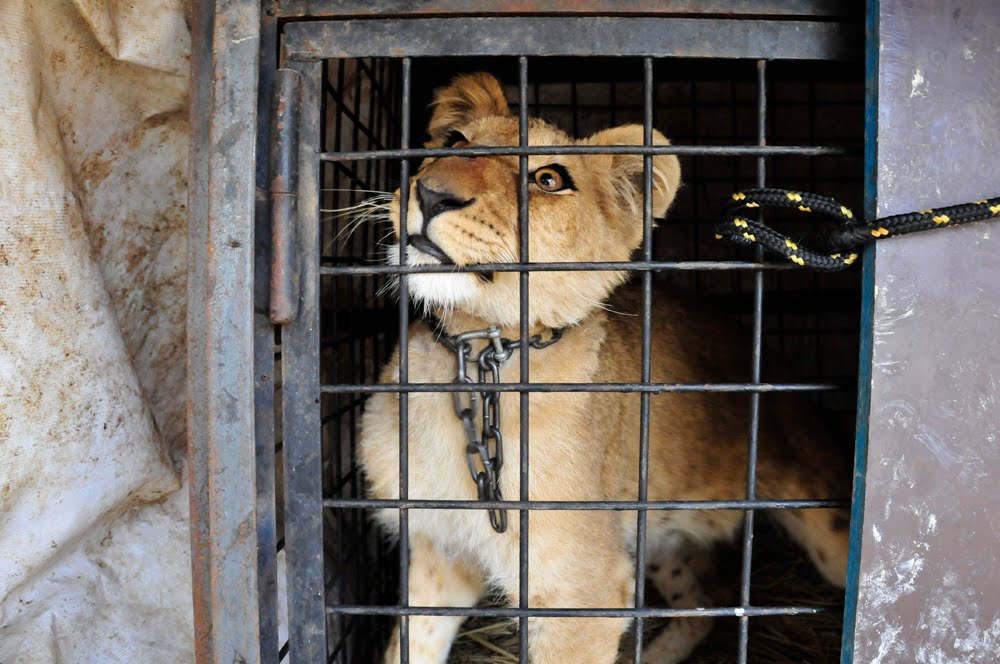
lebanon lion cage circusLebanese animal rights’ activists report serious abuse of mistreated circus animals on ring circuit from Egypt, Jordan, Syria to Lebanon.

Abuse of circus animals comes to forefront of Lebanese politics: When the Monte Carlo Circus’ lions and tigers arrived in Lebanon two weeks ago they were meant to be welcomed by beaming children, adoring parents and cooing students on field trips. But after Lebanese animal rights activists received an emergency alert from THE Jordanian border about abused circus animals en route from Egypt to Lebanon, endearing scenes of charming animals entertaining humans is not at all what took place.

“We received a tipoff from someone at the Jordanian border about some six lions and three tigers coming from Egypt to Lebanon,” Maggie Shaarawi, co-founder of Animals Lebanon, told The Media Line. “They had asked the people transporting the circus animals how long it had been since they had been fed and they said three days. They asked how many days the animals had been in cages and they were told 10 days.”