Creators who want to influence people for good should also think carefully about tone. Environmental storytelling does not need to lecture or shame audiences. It can invite curiosity instead.
The company's Next Generation Process (NGP) Pilot Plant in London, Ontario, has officially moved into initial operating campaigns, generating the kind of structured, repeatable data that separates laboratory promise from commercial viability.
In the modern nutrition universe, that level of commitment deserves an applause. But for those who don’t live in a Nordic fishing village, the nutrition company Zinzino has built its omega-3 research and formulations around these principles, combining biomarker testing, antioxidant protection and traceable sourcing across both sustainably harvested small-fish oils and a vegan marine-microalgae alternative.
Dubai Municipality has set up 12 AI-powered "Ehsan Stations" to safely and officially feed strays. The city also officially supports Trap-Neuter-Return (TNR) programs.
Creators who want to influence people for good should also think carefully about tone. Environmental storytelling does not need to lecture or shame audiences. It can invite curiosity instead.
The company's Next Generation Process (NGP) Pilot Plant in London, Ontario, has officially moved into initial operating campaigns, generating the kind of structured, repeatable data that separates laboratory promise from commercial viability.
In the modern nutrition universe, that level of commitment deserves an applause. But for those who don’t live in a Nordic fishing village, the nutrition company Zinzino has built its omega-3 research and formulations around these principles, combining biomarker testing, antioxidant protection and traceable sourcing across both sustainably harvested small-fish oils and a vegan marine-microalgae alternative.
Dubai Municipality has set up 12 AI-powered "Ehsan Stations" to safely and officially feed strays. The city also officially supports Trap-Neuter-Return (TNR) programs.
Creators who want to influence people for good should also think carefully about tone. Environmental storytelling does not need to lecture or shame audiences. It can invite curiosity instead.
The company's Next Generation Process (NGP) Pilot Plant in London, Ontario, has officially moved into initial operating campaigns, generating the kind of structured, repeatable data that separates laboratory promise from commercial viability.
In the modern nutrition universe, that level of commitment deserves an applause. But for those who don’t live in a Nordic fishing village, the nutrition company Zinzino has built its omega-3 research and formulations around these principles, combining biomarker testing, antioxidant protection and traceable sourcing across both sustainably harvested small-fish oils and a vegan marine-microalgae alternative.
Dubai Municipality has set up 12 AI-powered "Ehsan Stations" to safely and officially feed strays. The city also officially supports Trap-Neuter-Return (TNR) programs.
Creators who want to influence people for good should also think carefully about tone. Environmental storytelling does not need to lecture or shame audiences. It can invite curiosity instead.
The company's Next Generation Process (NGP) Pilot Plant in London, Ontario, has officially moved into initial operating campaigns, generating the kind of structured, repeatable data that separates laboratory promise from commercial viability.
In the modern nutrition universe, that level of commitment deserves an applause. But for those who don’t live in a Nordic fishing village, the nutrition company Zinzino has built its omega-3 research and formulations around these principles, combining biomarker testing, antioxidant protection and traceable sourcing across both sustainably harvested small-fish oils and a vegan marine-microalgae alternative.
Dubai Municipality has set up 12 AI-powered "Ehsan Stations" to safely and officially feed strays. The city also officially supports Trap-Neuter-Return (TNR) programs.
Creators who want to influence people for good should also think carefully about tone. Environmental storytelling does not need to lecture or shame audiences. It can invite curiosity instead.
The company's Next Generation Process (NGP) Pilot Plant in London, Ontario, has officially moved into initial operating campaigns, generating the kind of structured, repeatable data that separates laboratory promise from commercial viability.
In the modern nutrition universe, that level of commitment deserves an applause. But for those who don’t live in a Nordic fishing village, the nutrition company Zinzino has built its omega-3 research and formulations around these principles, combining biomarker testing, antioxidant protection and traceable sourcing across both sustainably harvested small-fish oils and a vegan marine-microalgae alternative.
Dubai Municipality has set up 12 AI-powered "Ehsan Stations" to safely and officially feed strays. The city also officially supports Trap-Neuter-Return (TNR) programs.
Creators who want to influence people for good should also think carefully about tone. Environmental storytelling does not need to lecture or shame audiences. It can invite curiosity instead.
The company's Next Generation Process (NGP) Pilot Plant in London, Ontario, has officially moved into initial operating campaigns, generating the kind of structured, repeatable data that separates laboratory promise from commercial viability.
In the modern nutrition universe, that level of commitment deserves an applause. But for those who don’t live in a Nordic fishing village, the nutrition company Zinzino has built its omega-3 research and formulations around these principles, combining biomarker testing, antioxidant protection and traceable sourcing across both sustainably harvested small-fish oils and a vegan marine-microalgae alternative.
Dubai Municipality has set up 12 AI-powered "Ehsan Stations" to safely and officially feed strays. The city also officially supports Trap-Neuter-Return (TNR) programs.
Creators who want to influence people for good should also think carefully about tone. Environmental storytelling does not need to lecture or shame audiences. It can invite curiosity instead.
The company's Next Generation Process (NGP) Pilot Plant in London, Ontario, has officially moved into initial operating campaigns, generating the kind of structured, repeatable data that separates laboratory promise from commercial viability.
In the modern nutrition universe, that level of commitment deserves an applause. But for those who don’t live in a Nordic fishing village, the nutrition company Zinzino has built its omega-3 research and formulations around these principles, combining biomarker testing, antioxidant protection and traceable sourcing across both sustainably harvested small-fish oils and a vegan marine-microalgae alternative.
Dubai Municipality has set up 12 AI-powered "Ehsan Stations" to safely and officially feed strays. The city also officially supports Trap-Neuter-Return (TNR) programs.
Creators who want to influence people for good should also think carefully about tone. Environmental storytelling does not need to lecture or shame audiences. It can invite curiosity instead.
The company's Next Generation Process (NGP) Pilot Plant in London, Ontario, has officially moved into initial operating campaigns, generating the kind of structured, repeatable data that separates laboratory promise from commercial viability.
In the modern nutrition universe, that level of commitment deserves an applause. But for those who don’t live in a Nordic fishing village, the nutrition company Zinzino has built its omega-3 research and formulations around these principles, combining biomarker testing, antioxidant protection and traceable sourcing across both sustainably harvested small-fish oils and a vegan marine-microalgae alternative.
Dubai Municipality has set up 12 AI-powered "Ehsan Stations" to safely and officially feed strays. The city also officially supports Trap-Neuter-Return (TNR) programs.
Last week Karin asked what weeds in her garden are edible. Today she finds out.
With winter in full bloom in the Middle East (this is when we get rain), urban gardens come alive, whether or not you want them to. The rains and cooler temperatures invite green leafy things to sprout up everywhere. And if you’re into urban foraging, or preserving some old traditions in the region, you might just want to go out and pick them. Take care to give your greens a good wash, because you don’t know who’s been peeing on them.
In your backyard alone you have three plants that are good for eating.
C is hubeisa (mallow in English, halamit in Hebrew) – gets its name from the Arabic word for bread (hubs) and it is indeed one of the most basic of all foraging foods.
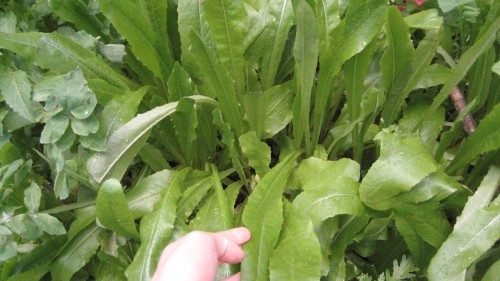
E is ellet (olesh in Hebrew, chicory in English)- also a seasonal delicacy.
And F is stinging nettle which, if you pick carefully, can be used in soup – I’ve also heard of it being used as a medicinal tea.
If you go into your local Arab vegetable stand, you will probably find the ellet, and maybe hubeisa. Ellet has now been cultivated – hubeisa is so abundant that it is still gathered…
Below are the pictures for C, E and F from my previous post. Now, you can get out there and forage for yourselves. Know that you’ll have survival skills if the grim global warming prophecies come to light.
C: This is hubeisa or mallow, in English.
E: This is ellet or chicory.
F: This is stinging nettle. Watch out for the sting!
If you’re already cooking up some weeds, why not make a whole meal? We’ve got tons of Levant area and Middle East cuisine recipes.
Last week my friend from Reuters sent me a note that Israel is to host the second Manitoba-Israel Water Symposium, this January 10-15. The unique and intimate 5 day conference is aimed at boosting international co-operation on key water issues, uniting leading scientific voices, and policy-makers from both Manitoba and Israel to share their knowledge, experience, and expertise on issues related to protecting the health of their own national water systems. There will be lectures for business people, scientists and policy makers on board, as well as “fun” outings and tours that highlight Israel’s water hotspots.
Although not physically based on a kibbutz, the newly formalized Cooperative for Renewable Energy is drawing on the kibbutz’s collectivist ethos to continue advancing sustainability in Israel.
Frustrated by what they perceive to be the Israeli government’s lack of investment in renewable energy and energy efficiency technologies, a few individuals began pooling their resources to start investing on their own. “The cooperative is not only to support its members,” said founding member and acting project manager Roni Segoly, “but also the society, by promoting projects in areas that the government does not.”
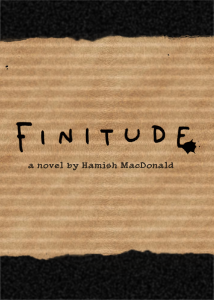
Bradley Winterton, writing in the Taipei Times in Taiwan, recently gave big thumbs up to one of the first climate chaos novels to come out of Britain, Finitude, penned by a Canadian expat in Edinburgh named Hamish MacDonald.
The book is a wake-up call about global warming, and Winterton’s review is the first time the book was
reviewed in a print newspaper anywhere in the world. Go take a look at the review and then if you’re still interested, get your hands on the book. On one level, it’s a fun read, and on another level, it’s what the future may very well look like.
Excerpt from the book review: “In Hamish MacDonald’s ‘Finitude,’ humankind teeters on the brink of extinction after failing to clean up its environmental act and save the planet….This is a coherent, lively and fast-moving attempt to put a widely feared future into imaginative, fictional form.”
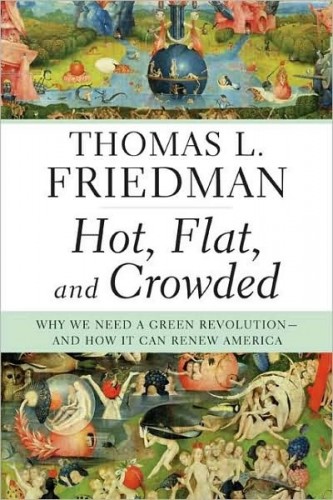
Hot, Flat and Crowded shows people how to embrace clean energy and green technology industries.
The Genus of Genius: Someone once told me that there are three types of genius in the world. The first type of genius flows from those among us that birth brilliant and original ideas. The second type of genius belongs to those who can recognize the first type of genius. The third type of genius stems from those individuals who possess the ability to translate and transmit the first type.
Thomas L. Friedman’s book, Hot, Flat and Crowded (Why We Need A Green Revolution – And How It Can Renew America) indicates that the author likely falls into the third genus of genius. It isn’t the prose that impresses and the content isn’t that original either.
What Friedman does best is present disparate ideas from the worlds for business, science, homeland security and macro-economics into one coherent argument for the green revolution.
More than 45 percent of water in the US alone is lost through leaky pipes. Arad Group can reduce that loss by up to 20 percent with new remote-controlled planes. Image via Reuters blogs.
Actress Jennifer Aniston once said that she saves water by brushing her teeth in the shower. If she and other Americans knew that cities like New York are losing more than 45 percent of their water through leaky pipes, more people might be taking more drastic measures. Running the tap for teeth is nothing compared to what’s really going down the drain.
An Israeli company specializing in water measurement and managing technologies may solve the problem. Arad Group, owned by two agricultural communes in northern Israel, has invented a fly-by solution in the form of an airborne drone that quickly sizes up water meters and identifies leaks in the system. It could save up to 20% of the city of New York’s lost water from going down the drain.
The company has just made a sale in Texas and is in contact with many cities in America, India and the UK about the widespread deployment of its two-pound drone plane, monitored by a technician and a laptop. It can fly up to 900 feet above ground and detect leaks from the air.
We covered the grand opening ceremony of Dubai’s Burj Khalifa Tower, formerly called Burj Dubai. But amidst all the fireworks and fanfare, does this 818 meter high monument to human engineering achievement represent any innovations towards combating global warming, climate change, or other environmental breakthrough – or is it simply another “Tower of Babel,” constructed by misguided human beings still trying to build us a city and a tower with its top in heaven?
The newly completed tower is certainly impressive; with 158 usable stories, more than 50 super fast elevators, and a ground floor foyer that will house the world’s largest indoor fountain. The tower is expected to attract visitors from around the world as well as host a variety of high profile conventions and conferences.
Taking all of this into account, we must also consider the environmental ramifications of this structure which took six years to build, at a cost of more than 4 billion USD, The project’s designers claim that the building and its planned botanical gardens and series of man-made lakes were designed to be as environmentally sustainable as possible, when one takes into account that Dubai is located in a part of the world that has very scanty rainfall and some of the hottest summers on the planet.
It was constructed to withstand the extreme temperature ranges of this Persian Gulf city-state, where external temperatures during the summer can average more than 50 degrees C (122 degrees F).
Another possibly favorable ecological “by-product” of the massive edifice is the large amount of water produced by condensation and so far collected from the air conditioning systems used to keep the entire structure pleasantly cool (estimated at around 15,000 liters), and will be used to provide water for the garden complex that will eventually surround the tower.
The question many may have, however, is what fuel sources are being used to provide the electricity that powers the AC system as well as all the lighting and elevators needed therein?
Mohamed Alabbar, Chairman of Emaar Properties, the development company behind this project was quoted recently as saying:
“Burj Khalifa is the Arab World’s tribute to the art and science of modern engineering and design. Burj Khalifa symbolizes the aesthetic union of many cultures – from Arabia and the rest of the world.”
For years now, Dubai has been trying to show the world that this little UAE sheikdom of less than 4 million people (including guest workers) has the world’s most impressive city from an architectural standpoint. Judging from past projects in this showcase Persian Gulf city-state, such as the ultra luxurious Atlantis Hotel Complex, the largest indoor ski slope in the world, and a series of off-shore island projects, including Palm Island and The World (whose ultra high debt crises is the basis for Dubai’s current financial morass), the completed tower could not have been finished at a more problematic time; both environmentally as well as from a financial standpoint.
Chef Moshe Basson and health expert Christina Pirello put a vegan twist on a classic Arab dish.
After changing location several times, Jerusalem’s Eucalyptus Restaurant has taken root in the prestigious Khutzot HaYotzer artist’s quarter in Jerusalem. Chef Moshe Basson hosted a “Biblical Cooking Class”, taught by visiting American health and nutrition authority Christina Pirello.
Maqluba is a traditional Palestinian, one-pot meal that feeds dozens. It can be made with or without meat.
While Ms. Pirello sliced fennel, onions, and lemons and chatted with the audience in the upstairs dining room, Chef Basson prepped the evening’s main dish in the kitchen. I was waiting to hear more about the foods of the Biblical period, but as the event progressed, it became evident that the focus was going to be mostly on macrobiotic and vegan cooking.
I confess I was a bit disappointed, but the rest of the audience, composed mostly of English-speakers, was content. From what I could see, most of those present were already knowledgeable about, or at least in favor of, the macrobiotic/vegan life.
The engaging Ms. Pirello had nothing but praise for local produce:
“I swear, I’m ready to move here,” she said. “It’s the wonderful food, the friendly people. I was in the shuk (open-air market) yesterday, and I’m telling you, I’ve never seen anything like the abundance, the colors, the aromas, the sensuality. I wanted to buy everything and cook it all.
“Israelis have a better relationship with food than Americans,” she continued. “Americans ask, what’s a sauté? Israelis ask, what’s the difference between a 5-minute sauté and a ten-minute one?” She added that she was impressed by Shabbat and how observing Shabbat rituals has preserved a strong connection to family and food.
I asked Ms. Pirello to describe her impressions of Israeli food habits.
“Israelis eat too much meat,” she said frankly. I don’t think everyone has to be vegan, but with all these beautiful vegetables and grains, there’s no excuse for Israel not to be the healthiest country in the world. And I’d stick to the local food. We ate at a Chinese restaurant last night and it was – not really Chinese. On the other hand, today we ate houmous at some little hole-in-the-wall and it was absolutely delicious!”
I confessed I know little about macrobiotic cooking.
“I don’t label my cooking macrobiotic anymore,” declared Ms. Pirello. She says that a strictly macrobiotic diet will move blood pH into a normal, slightly alkaline state where health and healing take place- but a body can’t sustain that forever. Judging by the mouthwatering recipes on her site – like vanilla flan (based on soy or rice milk) and spicy black lentils with candied onions, I’d say she’s right.
We learned to make a pressed salad from those onions, fennel, and lemons. It had a generous amount of sea salt in it, which surprised some of the audience. Apparently salt is harmful only when added “cold” to finished food – when cooked, it takes its place as an important nutrient. In this salad, lemon juice “cooks” the salt, and both act to marinate the vegetables. The result is that the salad isn’t considered raw.
Ms. Pirello rubbed added lemon juice into the salted vegetables with her hands, saying that when the salad feels cold in the hands, there is enough salt. Then she balanced a stack of heavy bowls over the salty, lemony vegetables to press them down and reduce in volume. This salad should be eaten in small quantities at the end of a meal, as a digestive.
Dinner, served after the cooking course, consisted of many little plates where lentils, black-eyed peas, stuffed Jerusalem sage (a specialty of Chef Basson’s), and the pressed salad disappeared almost as soon as they were served. To drink, water and hibiscus/sage tea.
But for me, the main event was the appearance of Moshe Basson, banging a big tin platter like a gong while ahead of him walked one of his cooks carrying a vast pot of Makluba.
This classic Arab dish is usually made with chicken, layers of vegetables, and white rice, all cooked slowly in broth “till the bones melt,” said Basson. To accommodate the vegetarians among us, however, roasted fennel bulbs took the place of poultry, pre-cooked brown rice substituted for white, and instead of chicken soup, the dish was cooked with vegetable stock.
I felt snobbish and thought that it couldn’t possibly come up to scratch, but was amused at the grand finale. Basson reversed the pot onto the big platter, and knocked on it a few times to loosen the food inside. Then he and Ms. Pirello stood with folded hands and prayed that when they lifted the pot, the dish hold its shape.
Success! And delicious it was, too. I was happy to be wrong. Carrots, zucchini, fat Portobello mushrooms, and fennel, each separately roasted in olive oil and spices – brown rice made aromatic with Basson’s secret vegetable stock – I was in vegan heaven.
Premature babies must gain a certain amount of weight before they can leave hospital. Listening to Mozart could help, finds a new Middle East research study.
Studies show that listening to music composed by Wolfgang Amadeus Mozart in the 18th century has a positive effect on the brain of developing babies. Now a new study in Israel has found that Mozart’s music also appears to have a positive effect on babies born prematurely.
The researchers found that exposure to Mozart’s music causes preemies to expend less energy, which results in faster weight gain and an earlier release home. Conducted at the Departments of Neonatology and Pediatrics at the Tel Aviv Sourasky Medical Center, medical researchers found that just 30 minutes of Mozart a day can make a world of difference in the development of premature babies.
According to the CICC, the Summit will be a full day showcase and series of presentations by Israeli cleantech delegate companies on April 27, 2010 in Palo Alto, California.
The tour will include the delegation of Israel companies and investors, and CICC sponsors and partners and will include private visits and meetings with leading California cleantech facilities, companies, investors, policymakers and utilities on April 26 and 28.
Running for green issues in Beirut: but will the government listen?
The year 2009 was bleak for Lebanon’s environmental track record, according to the country’s Daily Star.
Despite the impressive action of IndyACT, Lebanon’s delegation brought little effect at December’s COP 15 climate change summit; they were not able to accomplish much of anything insofar as solving the many serious environmental issues that now plague the country.
These issues include ones like serious forest fires, the destruction of Lebanon’s remaining cedar groves and forests, some of which date back to biblical times; and serious damage to Lebanon’s coastline due to pollution and eroding beaches which could become worse if a planned Dubai-type island project is undertaken Pollution to the country’s fresh water supplies. This adds to the already seriously polluted coastline was noted recently in our article dealing with a huge garbage dump near the city of Sidon, that can be “smelled before you see it” according to local fishermen.
Water can start wars, but it can also be a bridge to peace. And as a Middle East environment news blog, Green Prophet thinks “green” solutions – be it water, clean energy, clean air – can stimulate and lubricate peace. That’s why we engaged in a series of interviews with Israeli water experts in partnership with the Strategic Foresight Group. There’s been a lot of talk about how Israel manages its water, but what solutions do its experts, policy makers and business people see as viable for water security in the Middle East?
We launched into a deep investigation and found the influentials in the country’s water industry. (Scroll down for the complete list of interviews.) Today’s interview with the desk of the Ministry of Environmental Protection. We hope that loyal readers finds this series useful, and that policy makers, and journalists will have new channels of experts to approach.
The former businessman is working to solutions for peace and cooperation with the nearby Gaza City. He thinks through water is a good way to achieve that. Here are his views on the water situation in Israel and regional water cooperation:
Q. Turkey and Israel have had talks about freshwater supply and purchase in the past. The Turkish government has been positive in its overall response so far but there is some opposition to this in the Turkish political spectrum. If the Turkish government were to agree to supply 1 BCM of freshwater to Israel, is there a possibility that Israel will agree in return to share this water with the Palestinian Authority (PA) and Jordan?
A1. This project that you mention between Turkey and Israel is not economical and therefore is not relevant.
Q2. Israel is counting on desalination as a major source of its future water supply. However, there are limits to the growth of Israel’s water supply based on marginal water alone. What are the other ‘regional’ solutions that Israel can examine in terms of water cooperation with other countries?
A2. Water shortage is a common problem amongst all countries in the Middle East. One of the regional solutions that Israel should consider is transportation of water. They have extra water in Lebanon. Perhaps we should consider transportation of water from Lebanon for all the countries in the region where there is shortage of water.
Q3. Lebanon’s Litani River has a particularly high quality of water, with a very low quantity of chlorates and nitrates present. Water cooperation with Lebanon would therefore serve Israeli interests but in order for this to happen, political cooperation between these two parties is required; in addition Israel-Lebanon relations are inter-linked with the Israel-Palestine conflict. Is it worth it for Israel to find political cooperation with Lebanon in order to secure its water situation or is this not a practical option?
A3. Israel wants peace with all the countries of the region and this could result in a very positive initiative. One of the outcomes of such peace would be cooperation on water. Water can be a cause for war but it can also be a good platform for peace.
Q4. Technical reports suggest that over-pumping is leading to the depletion of groundwater aquifers in the West Bank, both in terms of water levels as well as water quality. This could cause water shortages in the short-run and devastation of the eco-system in the long-run. What can be done to preserve these aquifers?
A4. Desalination is a part of the solution. Both the Israelis and the Palestinians are pumping water; the state of Israel supplies 40 -50 million cubic meters of water every year to the Palestinians. The best solution is for cooperation is the regional management of water.
Q5. Israel has experienced a severe drought period in the recent past. With environmental neglect and the effects of climate change, this can be a frequent and imminent risk in the future. What can be done to minimize the impact of such a danger in terms of national measures as well as well as regional cooperation?
A5. At the national level Israel has implemented the use of re-used water for agriculture. Israel should also utilize and manage a more effective water system. At the regional level Israel can assist and share its experience with others in the region. Another promising effort in regional cooperation is the pilot project that is being implemented in Gaza using sewage water for agriculture.
Will Israeli designed recharging stations keep America going?
Despite the world economic slowdown, a number of advancements were made worldwide in the fields of alternative and renewable energy.
The hottest energy trends of 2009, according to MIT review are:
Natural gas drilling technology
New batteries for hybrids
Carbon capture
Smart grid
Cellulosic ethanol (biofuel from algae)
Nanotech
And in lieu of cut backs in scientific research in areas dealing with solar (see our quick guide to Israeli companies), wind, biomass, and other forms of clean energy sources, significant advancements were made with massive US federal stimulus funding for batteries and renewable energy and programs. These include the US Energy Frontier Research Centers and Advanced Research Projects Agency-Energy (A Year of Stimulus for High Tech).
Published on MIT Technology Review, America’s industrial future is intertwined with high tech the magazine reports, of which alternative and renewable energy development is definitely part of.
If one takes the message of this article to heart, it’s easy to see that Israel is in a similar situation as many “low tech” industries, such as manufacturing of various products, textiles, and even diamond cutting and polishing have now been “outsourced” to countries in Southern and East Asia.
The Arab world is in a water crisis. That much we know from this week’s news. To encourage more regional cooperation, Green Prophet has been building on a series of interviews with influential water experts from Israel. In partnership with the Strategic Foresight Group we are gathering information to understand Israel’s water industry from the key players who maintain it. This series is intended to be a tool for policy makers to follow, for journalists to get on-the-ground contacts, and to eliminate some of the controversy vis a vis Israel’s water relations with the Palestinian Authority and its neighbours.
Today we interview Raanan Boral, who has been working in the field of nature conservation and environment for more than 25 years. He has worked as an advisor to the Minister of Environment in Israel and directed the Environment Protection Division at the SPNI (Society for the Protection of Nature in Israel). Today Boral works as a consultant to non-government and private organizations.
Click below for our questions and Boral’s answers:


 Last week Karin asked what weeds in her garden are edible. Today she finds out.
  Abbie writes: Karin – Now that you’ve opened your eyes to the eating potential of all the wild greens around you, you’ll never look at the landscape in the same way again.




 We covered the grand opening ceremony of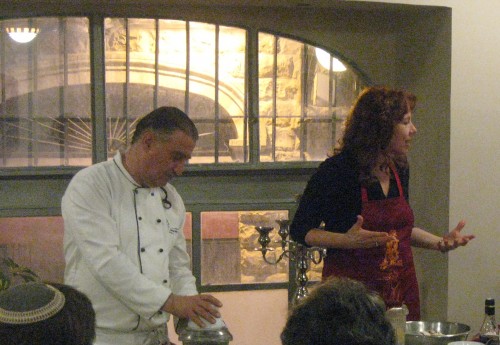
 Chef Moshe Basson and health expert Christina Pirello put a vegan twist on a classic Arab dish.