Home Blog Page 665

Qatar’s Green LEED Convention Center, a Mini Masdar

17

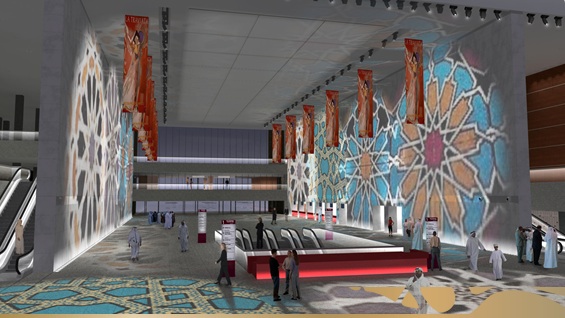
qatar leed convention center led lightingQatar’s new LEED-certified convention center could be as “green” as Masdar City. It will boast a world first of LED lighting in exhibition halls.

Abu Dhabi and Dubai are not the only Persian Gulf locations building environmentally sustainable projects. Now, Qatar is building a unique convention center, which although still unfinished has already achieved the coveted Gold Standard in the Leadership in Energy, Environment, and Design (LEED) green rating system,  making it the first such project to receive such an award.

As reported on the MenaFm.com news site (as of 2021 no longer online), the Qatar National Convention Center project is slated to be completed and ready to house events in 2011. The center will have an area of  177,000 sq meters and will have a specially designed roof containing 3,600 sqm of solar panels which will supply about 12.5% of the project total energy needs.

The center will also include other energy saving features such as LED lighting in the exhibition halls and a special wireless convention management system, reducing the need for paper while providing delegates with free internet access.

It is also being aesthetically well designed with a unique curving escalator. It is being designed so that a number of events can be held at the same time.

According to the information noted LEED specifications, Gold Standard projects consume about 37% less energy than conventional buildings, and efficiently use energy, water, and other natural resources, protect occupant health, improve employee productivity, and reduce pollution.

qatar leed convention center led lighting

Although not a residential project, the center has features that make it comparable to the green philosophy of other regional projects; including Abu Dhabi’s Masdar City which when completed in 2016 will obtain virtually all its energy from renewable sources, and Saudi Arabia’s Kaust University.

qatar leed convention center led lighting

Projects built in this part of the world have to be able to withstand very difficult climate extremes including very hot, dry summers, and occasional violent dust, rain and sand storms. To have a high measure of environmental sustainability, especially in respect to receiving such a high award as the LEED Gold Standard, Qatar’s National Convention Center will be a welcome addition to this country’s futuristic outlook.

qatar leed convention center led lightingWork in progress on the new LEED center.

More on Middle East green building projects:
Masdar’s Dream of 100% Sustainability an Example for Other Countries
Futuristic Dubai Vertical Farm Uses Sea Water to Sustain Crops
Saudi Arabia’s KAUST University is Eco Friendly Environment for Fueling Academic Progress

Environmental Triggers of Arthritis Include Lipstick and Hairspray

3

There are environmental triggers (hairspray! lipstick!) of common autoimmune diseases such as arthritis, a TAU researcher reports.

Our immediate environment interacts with our genetic programming and can determine if we will succumb to an autoimmune disease, says rheumatologist Prof. Michael Ehrenfeld of Tel Aviv University’s Sackler School of Medicine, who is seeking to unravel those mysteries.

Prof. Ehrenfeld recently published a report in Autoimmune Reviews on how “Spondylo-arthropathies,” a group of common inflammatory rheumatic disorders, appear to be triggered by environmental factors. He has also done research on how the dry-eye and mouth disease “Sjögren’s syndrome” can be triggered by environmental influences.

The links between autoimmune diseases, infections, genetics and the environment are complex and mysterious. Why are people who live near airports more susceptible to autoimmune diseases like rheumatoid arthritis and lupus? How do hormones in meat trigger the onset of a disease?

Saudi Arabia to Replace Oil with Sun Power for Desalination Plants

32

saudi arabia solar power desalination plantPredicting peak oil? Saudi water desalination plants like this one to be powered by the sun.

You would imagine that a desert country like Saudi Arabia would have to rely a lot on desalination for a good part of the fresh water it uses. For example, a previous Green Prophet article told about the Kingdom building what they say is the world’s largest desalination plant  in the Al Jubail Industrial Zone on the shores of the Persian Gulf.

Up to now, the more than 28 desalination plants scattered around the Kingdom have had to rely of fossil fuel, most notably fuel oil, to provide to power to run the equipment used to extract salt and other minerals from sea water.

Much of this may be changing, however, as Saudi Arabia is now interested in using solar energy to provide the power needed, instead of oil. According to an article on the UAE Top News media site, the Kingdom is now planning to build solar energy based desalination plants in order to save on energy costs, as well as be in tune with new environmental polices. This might be to secure membership in the International Renewable Energy Agency, otherwise known as IRENA.  

Coriolis Scales Up for the Wind

4

coriolis wind company israel photoA stackable, scalable wind-turbine solution taps into a lucrative $40 billion market. Move your turbines where the wind blows, without heavy environmental impact.

When we think of wind turbines, we tend to picture the standard massive turbine fans the size of airplane wings created by companies like Vestas. While they’re an important carbon-free component to supplying countries with renewable energy solutions, there are those – including environmentalists – who find the massive turbines unsightly and somewhat controversial. Sometimes, new roads have to be laid to secure the mega-blades into the ground near windy shores. And the unsightly wind stations devalue property and real estate.

Meanwhile, an Israeli company is proving that there’s more than one way to catch the wind. Looking to the French mathematician, Gaspard Gustave de Coriolis, the team at the company that bears his name has developed a medium-sized scalable wind technology that can grow with one’s energy needs, investment potential and the changing winds of time.

Based on a single unit that rotates three blades vertically, like a barber’s pole, Coriolis Wind’s solution which we’ve reported on earlier, is scalable – each unit of 50 kilowatts can be stacked together with others to generate as much as one megawatt of power, enough energy to run an industrial park. The product is currently in the prototype stage.

Israel's Eilat Region Could Be Middle East's Clean Tech Beta Site

13

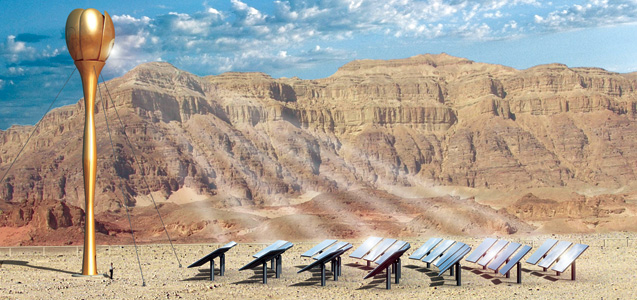
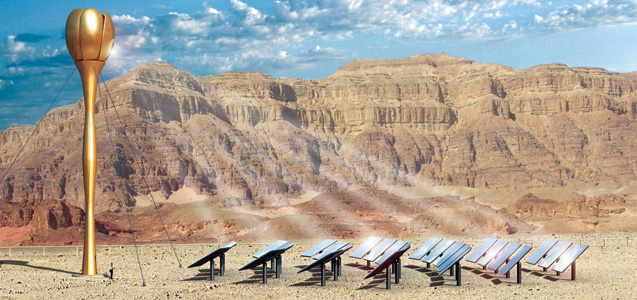
With its year-round sunshine and high temperatures, Eilat and the region are a perfect location for the deployment of alternative energy projects. Here, Aora fires up its sun-focusing flower and solar collectors.

While Israel generates numerous headlines as a solar energy innovator, the country still has plans to build additional coal plants, and there’s relatively little production of renewable and alternative energy on its turf. International media, investors and policy makers have been asking why this is so and hopefully some answers will emerge from an annual coming together of minds in Eilat from February 16 to 18.

Dorit Banet, a co-chair of the upcoming Eilat-Eilot Renewable Energy Conference, tells ISRAEL21c that she hopes the conference will help Israel to color itself greener at home, through education, relationship building and business networking. For three days in February, expect to meet international powerhouses and renewable energy innovators as they converge on Israel’s sunny southern city of Eilat.

Banet was head of the environmental unit in the sunny Eilat-Eilot region located in the southernmost tip of Israel. As she contemplated the region’s business and energy potential, she realized that much more could be done with respect to renewable energy.

Can An Ecological Peace Park Catalyze Peace Between Syria and Israel?

11

peace park israel syriaFollowing a conference on a proposed nature peace park between Syria and Israel in the Golan Heights, Saleem H. Ali, a guest speaker at the conference gives his opinion on the prospects and potential of a peace park.

Ali is associate professor of environmental planning at the University of Vermont and the author of Treasures of the Earth: Need, Greed and a Sustainable Future (Yale University Press, 2009) and the editor of Peace Parks; conservation and Conflict Resolution (MIT Press, 2007).

On January 7, 2010, Tel Aviv University hosted a unique conference on the role of ecological factors in peace-building between Syria and Israel. This was a bold initiative at a time when relations between the two countries have been strained by the Israeli government’s call for a referendum law on relinquishing any portion of the Golan and other annexed territories after the 1967 war.

However, despite the cynicism of many on both sides of the border, the Porter Institute of Environmental Studies, under the initiative of an enterprising postgraduate student Shahar Sadeh, managed to convene a meeting to discuss the prospect.

Even though Syrian participation at the meeting was not possible due to a prohibition of professional contact between the two sides, it was perhaps constructive to have Israelis discussing the issue independently since they are the occupying force in the region and would have to first resolve internal political differences on the issue.

I was asked to attend as the keynote speaker, given my previous research on such efforts worldwide and my background as a Pakistani-American who has explored such issues in the context of regional peace-building in South Asia.

Some “Realists” might roll their eyes on such a prospect but the concept of “peace parks” is more than an idealist’s ramblings and has shown promise in resolving territorial disputes. Warring parties can be made to realize quite pragmatically that joint conservation is economically beneficial and also a politically viable exit strategy from a conflict.

The US used such a strategy in the mid 1990s to resolve a decades-old armed conflict between Ecuador and Peru in the Cordillera del Condor region. The Obama administration’s deputy envoy to the Middle East, Fred Hof, has proposed the Golan peace park effort as a means of a peace-building with Syria as well in a formal paper written for the US Institute of Peace in 2008. In Hof’s plan, water guarantees to Israel which currently gets 30% of its water from the region) could be exchanged for return of sovereignty to Israel.

So the idea is one which policy-makers are considering seriously and there are even detailed maps and plans that have been prepared to consider such a solution. Syrian-American negotiator Ibrahim Suleiman and former director-general of Israel’s foreign ministry Alon Liel discussed this prospect in 2007 when they met with the Israeli Knesset’s Foreign Relations and Defense Committee to develop a plan to establish a jointly administered peace park between Syria and Israel in the Golan.

Golan region good for the Druze

Interestingly, the original Druze inhabitants of the region see themselves as distinct from Israelis and Palestinians since their religious group has its own culture and ethnic identity. The Golan Heights has a population of about 38,900, of which 19,300 are Druze, 16,500 are recently settled Jewish immigrants, and about 2,100 are Muslim. Golan is also an environmentally sensitive region with a cool and moderately wet climate that has allowed fruit orchards to flourish. Underscoring the unique environmental conditions of this area, Israel has allowed Druze farmers to export some 11,000 tons of apples to Syria each year since 2005.

This confluence of interests makes the region an ideal case for implementing a novel dispute-resolution strategy known as environmental peace-building. The strategy involves transforming disputed border areas into transboundary conservation zones with flexible governance arrangements. Such territorial arrangements are increasingly called peace parks.

To some realist commentators this term may suggest idealistic or naive notions of conflict resolution, but it is championed even by military officers, such as retired Indian Air Marshal K. C. “Nanda” Cariappa, a former POW who has called for such a strategy to resolve India and Pakistan’s dispute over the Siachen glacier.

The proposal was initially motivated by Robin Twite’s work at the Israel-Palestine Center for Research and Information during the 1990s. Now the strategic plan for the effort has been laid out in detail and the momentum is there to move forward on this solution, which is feasible in the Golan given the demographics of the region. According to one plan, Syria would be the sovereign in all of the Golan, but Israelis could visit the park freely, without visas. In addition, territory on both sides of the border would be demilitarized along a 4:1 ratio in Israel’s favor.

Two-sided ski resort? Skiing for peace?

When I visited the Golan after the conference, it also occurred to me that another possible solution was also to find a way to make the spectacular Mount Hermon area a particular conservation and recreation zone where Israelis and Syrians could visit without visas but when exiting from this special zone visas would be required. Israel already has a major ski resort on one side and Syria is planning to build a resort on its side of the divide.

The summit of Mount Hermon is still under Syrian sovereignty and including this in the proposed peace territory would give Israelis an incentive to also come to the negotiating table since it would give them friendly access to a unique ecological region. This would be similar to the status of the eastern Sinai under the Israeli-Egyptian peace treaty or also similar to the status of Hong Kong and Macau in China whereby there are separate entrance concessions for these areas as compared to mainland China.

When one examines the status quo between Israel and Syria over the Golan Heights it is clear that neither side is willing, at present, to relinquish its claim to this vital region. Syria has a legitimate claim on the basis of recent history, while Israel has a claim based on the ruins of 29 ancient synagogues, and perhaps more consequentially as a security buffer.

As argued by Rabbi Michael Cohen of the Arava Institute for Environmental Studies, “one way to break through this stalemate of legitimacy is to phrase the dynamic in a different way. That is to say, it is not so much that Israel wants to keep the Golan Heights, but that they don’t trust giving the Heights back to Syria.”

This understanding of the dynamic opens up possibilities for a new scenario whereby a third party is involved. In addition to the peace park proposal, it is also possible to set up a Druze Autonomous Area that is neither Israeli nor Syrian but jointly administered by a commission.

Similar proposals have also been initiated by Friends of the Earth Middle East along the Jordan River, where there is already a “peace island” where Israelis and Jordanians can visit without visas and where the original peace treaty between the two countries was signed and which is currently under deliberations for expansion.

This case is particularly intriguing since under the treaty there is an Israeli kibbutz which is allowed to grow crops on Jordanian sovereign territory. A Yale University architecture class has already been working on the design of the expanded park in collaboration with neighboring Jordanian and Israeli communities. There is also a marine peace park agreement between Jordan, Israel, and Egypt in the Gulf of Aqaba (which was established as part of the first round of Oslo negotiations). The Golan proposal is geographically much more significant in terms of its joint-management potential and also as a means for instrumental conflict resolution between two states that currently do not recognize each other.

Opposers and proponents of land for peace

The conference showed that the fractures are still quite acute. On the one hand there was a speaker from the “settlers association of the Golan” who fervently opposed any land for peace. While on the other hand, there was also a resident farmer and academic scholar from the Golan Heights, Yigal Kipnis, who expressed a willingness to relocate if peace involved giving land back to Syria in exchange for security and joint environmental monitoring.

Academics were also highly polarized in their approach to the issue with some resurrecting ancient narratives of Judaic habitation in the area while others acknowledging that under international law the territory was definitely “occupied.”

As the Obama administration considers its legacy in the Middle East, it should give priority to the Golan conflict and creative approaches to conflict resolution. Using the environment in this context is very promising but we must also be cautious and appreciate that conservation has also been used historically as a means of land appropriation.

Arabs are highly suspicious of conservation efforts in this context just as Native Americans have been suspicious of the US. National Park system, whose establishment often excluded them from their land. Thus any peace park must be one where access and economic development are concurrent with conservation. At the same time, the resolution of the Golan conflict cannot be considered in isolation from the Palestinian issue for too long. Ultimately, to cement lasting peace the Palestinian issue will also need to be resolved. Otherwise, the peace between Israel and Syria might end up being just as cold as the one between Egypt and Israel has become of late.

Ultimately, ecology defies political borders and the governments of the Middle East will need to become aware of this natural reality. Many countries in the region are signatories to international environmental agreements as well such as the Convention on Biodiversity and the Convention on Desertification. Perhaps these agreements will provide another avenue to pursue ecological cooperation as well.

At the end of the day, as erstwhile adversaries realize that they are inherently confined by their ecologies, the chances of cooperation are likely to rise. Even when there is a scarce and distributive resource such as water at stake, cooperation is possible if conservation goals are articulated in terms of the quality of the ecosystem. The Holy Land, and particularly the Golan, presents a diverse array of topographies, climatic zones and biodiversity which has the most potent potential for using ecology as an instrumental tool for conflict resolution.

-Saleem H. Ali

Yemen to Soon Have the World’s First Waterless Capital

14

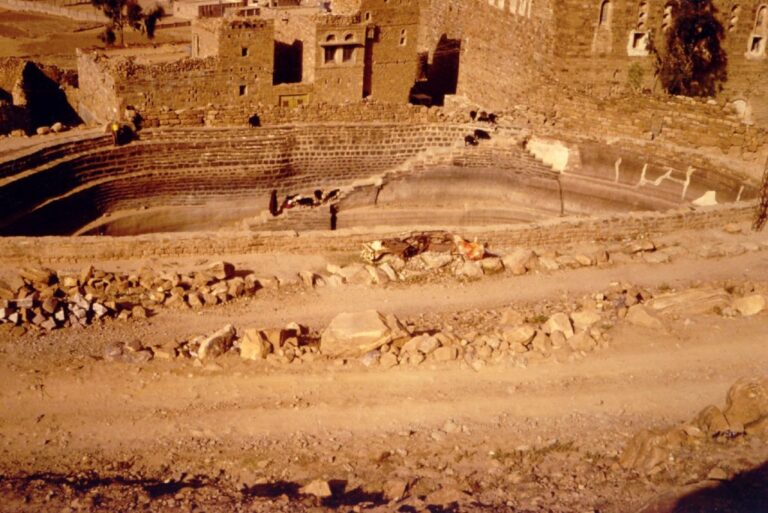
Yemen’s water crisis is worsening as the country struggles with armed conflicts on three fronts. Above: a village well almost runs out of water.

As delegates head to the United Kingdom for a key conference on Yemen, experts warn that Sanaa could become the first capital in the world to run out of water within a decade. “Water is one of the underlying challenges that needs to be addressed in order to secure the long term development and stability of Yemen,” Ginny Hill, an associate fellow at Chatham House’s Middle East and North Africa Program told The Media Line.

“Everybody is so focused on immediate concerns about anti-terrorism, but there are a number of underlying issues that are facing the Yemeni government,” she said. “Resources like water and oil are running out.”

Morocco Developing an Environmental Charter

3

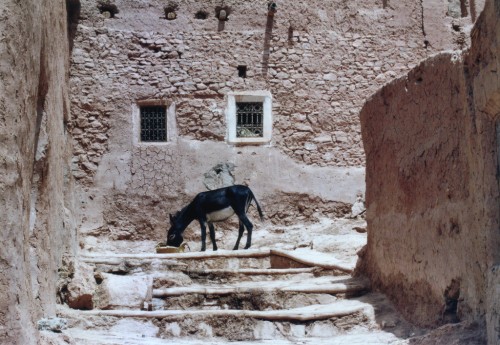
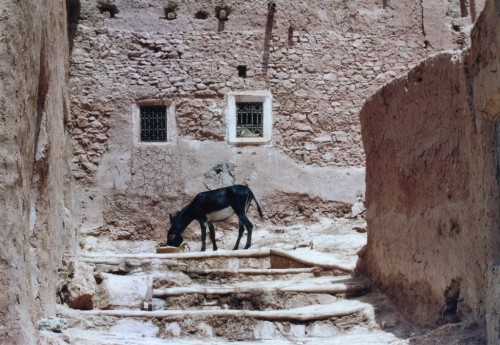
morocco donkey drinking water photoMorocco, still very undeveloped compared to the west, looks to make an environmental plan of action.

Morocco is currently consulting with political and environmental groups and activists over the preliminary draft of the country’s environmental charter, which targets preserving the environment and fostering sustainable development.

While the first draft was taking shape, the government in Rabat is struggling with how to encourage Moroccans to practice environmental stewardship. To address this issue, King Mohammed VI has launched the country-wide consultation, while also holding regional awareness-raising workshops in January to bring awareness to the average citizen.

As the consultation heads for its February 23rd conclusion, there is still much disagreement over the clarity of the draft and its accessibility to Moroccan citizens.

“I think it’s easy for citizens to understand the charter,” Environmental Ministry spokesperson Abderrahim Diab told Magharebia news website on January 24th.

RECIPE for Ma’amoul Cookies, a Tender Arabian Pastry Delight

12

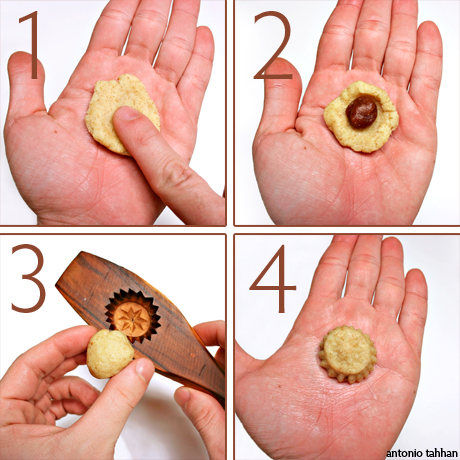
mamaoul cookies sweetiesMa’moul means “filled” or “stuffed” in Arabic, and these tender, crumbly pastries are stuffed with dates or nuts.

Traditionally, they’re made in special wooden molds that imprint the pastry with individual designs – so you know if your ma’amoul is stuffed with walnuts, dates, or pistachios, without having to take a bite.

People all over the western east eat them at holiday times: Moslems during the nights of Ramadan, and Christian Arabs at Easter time. Jews of Egyptian and Lebanese origin eat ma’amoul stuffed with nuts at Purim because tradition says that Queen Esther, heroine of the Purim story, ate nothing but nuts, seeds, and fruit from the day she entered Ahasuerus’s palace. And as she hid her Jewish origin, so the dainty pastry hides the rich nut filling inside.

Lacking the special mold, you can simply roll walnut-sized balls of  pastry, drop a teaspoon of filling in the center of each round, and gather the edges up towards the top, pressing it shut to hide the filling. Here’s the recipe.

Cook Time: 15 minutes

mamoul cookies recipe

Ingredients:

2 cups all purpose flour

1 cup semolina

2 sticks salted butter, softened

1/2 teaspoon allspice

1/4 teaspoon orange blossom water or 1/2 teaspoon rose water

2 1/2 tablespoons sugar

1/4 cup chopped nuts (pistachios, walnuts, or almonds)

powdered sugar for dusting

2 tablespoons milk

Preparation:

Preheat oven to 350 degrees Fahrenheit.

In a medium bowl, combine flour and semolina. Set aside.

In a smaller bowl, beat together butter for 30-45 seconds. Slowly add in flour mixture until combined. Stir in milk, allspice, and orange blossom water. Roll dough into 12 pieces.

In a small bowl, combine nuts and sugar. Set aside.

Grab your dough and push into 2 inch circles onto parchment lined cookie sheet. Place about 1 teaspoon of nut mixture on top of dough. Fold and press dough together to seal the filling. Repeat with remaining dough and nut mixture.

Bake for 20-25 minutes until golden brown.

Drinking Beer in Cans and Other Middle East Regional Recycling Problems

9

old beer cans vintage fritz brew photoThese steel cans will take years to oxidize completely

Let’s face it everybody: recycling, or the lack of recycling that is, is one of the biggest environmental problems this planet faces after climate change.

This situation is a very acute one here in the Middle East, as noted in some previous Green Prophet articles such as “The Middle East is Drowning in Waste,” Lebanon’s Sidon garbage dump (where “you smell it before you even see it”) and Israel’s well known “landmark” the Hiriya garbage mountain that is in the process of being turned into a national park.

But one apparently growing problem, at least in alcohol consuming Israel that is, is the one dealing with litter caused by beer and other beverages processed in non-recyclable containers – especially cans.

Mama Nazima’s Jewish-Iraqi Cuisine by Rivka Goldman

7

jewish iraq food recipes bookA culinary heritage centuries old is preserved in this cookbook.

This is a Jewish collector’s cookbook. It contains 100 old-fashioned recipes that evolved out of the centennial Jewish presence in Iraq, plus a synopsis of Jewish history there.

Through the book run parallel threads, the main one being the recipes. Around the recipes are comments and traditional Arab proverbs revealing glimpses of the old Jewish-Iraqi culture. Another is the author’s memories of her mother, to whom she dedicated the book; and a third, Iraqi anti-Semitic persecution culminating in a pogrom in 1941, and the community’s exit from their ancient home in 1950.

The recipes themselves are appetizing and easy to follow. The author lays great claim on the healthiness of the food, which is easy enough considering that almost every recipe includes fresh vegetables. I was pleased to see two variations on majadra, a combination of rice and lentils. Most of the desserts are based on fruit, such as date-almond balls and apple-cinnamon rolls.

There seems to be a great love of stuffed foods in Iraqi culture. There are stuffed vegetables and leaves, turnovers stuffed with chickpeas or meat, kibbeh dumplings filled with meat or fish. One chicken recipe calls for a stuffing composed of meat and spices. There is even a fruit stuffed with meat: quinces. And the seasonings featured call to mind all the exotic flavors of the Orient. Cumin, ginger, cinnamon, cloves, hot paprika, cilantro and garlic are some.

However, I found mistakes in the recipes. The savory turnovers call for 1 cup of water and 2 of flour, which would produce a thick batter rather a dough. I added another cup of flour and my chickpea turnovers came out fine – I concluded that a typo had been allowed to go uncorrected. This is a problem, because it’s repeated with every savory turnover recipe, and there are three.

A recipe for sweet turnovers stuffed with nuts and honey is missing the flour for the dough until you look at the stuffing ingredients, and there is the flour. These mistakes are annoying and have probably made inexperienced cooks create some strange variations.

The photographs add little, being small, blurry, and for some reason all a monochrome green.

People interested in Jewish cuisine and culinary history will find this cookbook worth having. But I advise reading through each recipe carefully before tackling it, and using your common sense if something doesn’t look right.

Mama Nazima’s Jewish-Iraqi Cuisine is published by Hippocrene Press, NY. ISBN 0-7818-1144-9. You can buy it here on Amazon and in doing so a small percentage of your purchase will support quality environmental journalism on Green Prophet.

Middle-Eastern recipes you might enjoy cooking:

GM's Volt Versus the Renault-Nissan Electric "Better Place" Edition

13

electric car nissan renault Chevy’s Volt Concept Car – Better than Better Place?

In the past year or so, we’ve posted a number of articles dealing with electric cars and the technology surrounding them, especially those being developed by an Israeli company, Better Place, whose total electric version was exhibited at the recent COP 15 Conference on Climate Change in Copenhagen. And if you’ve been reading the news you wouldn’t have missed a recent $350 million investment in the company led by HSBC. So somebody is believing in them.

By this time next year, several types of electric cars are expected to be available to the general public, including General Motor’s new Chevrolet Volt version.

Saudi Arabia Seeks to Join International Renewable Energy Group IRENA

15

saudi arabia irenaWill Saudi Arabia’s IRENA Membership Help Influence  Environmental Change?

Saudi Arabia, a country which still contains much of the world’s remaining petroleum reserves, is now trying to put its environmental “money where its mouth is” by joining the International Renewable Energy Agency (Irena). In an article posted on January 17 in the UAE’s “The National” English news site, Saudi Arabia has expressed interest to join the multinational clean energy organization, headquartered in Abu Dhabi.

Dr. Sultan al Jaber, the chief executive of Masdar, Abu Dhabi’s clean-energy firm, said IRENA, as the energy agency is known, had received “official notification from Saudi Arabia to become a signatory state.” 

During the IRENA meeting, which preceded the opening of the 2010 World Future Energy  Summit, also held in Abu Dhabi,  Dr al Jaber said that he hopes that he will receive official word from Saudi Arabia that it will agree to become a member of IRENA within the next three weeks.

Muslim Reflects on Recycling Potential for the Middle East

8

snow uk roadsThe UK snow-in didn’t stop this Muslim woman from recycling. Now she proposes some reasons why the Middle East should start.

Snowy weather affects our recycling: Snow storms, heavy rain and the lack of grit to melt the snow on roads here in the UK delayed garbage collection for most of the country. That has led to a huge piling of garbage, recycling bins and glass bottles in my particular neighbourhood, but that hasn’t stopped me from organising my household rubbish into recyclable groups to reduce waste.

I’m a passionate Muslim environmentalist and strongly believe that individual effort has an impact globally. In this suburban English area foxes and rats are potentially spreading disease since the high number of rubbish bags in people’s gardens are being ripped open and biodegrading. I will have to resort to take my recycling products to local facilities, once the weather improves!

So how does my recycling affect any Middle Eastern country?

Well, plastic recycling is not widely practised in the Middle East. Even though recycled materials are collected, they’re not taken to recycling plants because companies don’t find it economically viable to do so.

Further information from “Recycling in the Middle East” (no longer updated, 2020 – we removed the link) states that plastic collected is used as land fillers but after 30 or so years the plastic starts to release methane gas, a very dangerous greenhouse gas with high global warming potential.

Why recycle?

• For every ton of paper that is recycled, at least 30,000 litres of water is saved.
• Around 3,000 to 4,000 KWh electricity is cut down.
• A reduction of around 95% of air pollution is achieved.

In Islamic culture recycling is a rewarding scheme which bring benefits to both people and the environment. Wasting on the other hand should be avoided as the Quran states: “…Do not waste by excess, for Allah does not love the wasters.” Quran, (6:141)

If I as a Briton can maintain my recycling come rain or snow I know in the long run it will help the planet as a whole.

Future Waste Management Development

I’m glad to know that while the main contributors of global warming – America, China and Russia – are being pressured to act faster, smaller countries who otherwise don’t get voiced are becoming more active in reducing their land waste.

For example the Abu Dhabi Environmental Authority is one company who plan to provide better administration of waste materials in the Emirates with solutions for the treatment of all types of waste materials.

Further, according to the World Bank estimates, billions of dollars will be invested in the environmental sectors in the Middle East over the next ten years.

Image via zaufishan

Is Israel Coming out of The Nuclear Closet by Planning Nuclear Power Station?

6

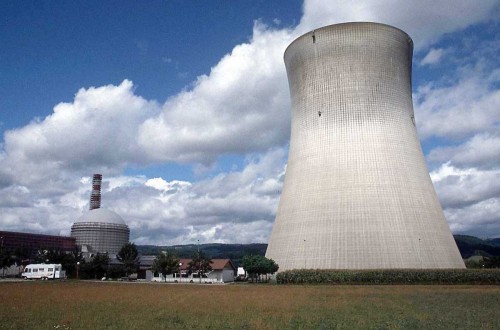
nuclear power station israelCleaner Than Coal? We Doubt it. But Israel mulls nuclear power.

It’s not just Abu Dhabi looking to build a nuclear power plant for generating electricity. According to the business newspaper Globes, Israel is considering building a nuclear power plant of its own in the Negev desert region.

Instead of looking to cleaner energy sources, the Israel Electric Company (IEC) says it is mulling the idea of building  a nuclear fuel power station as an option instead of a coal fueled one.