Creators who want to influence people for good should also think carefully about tone. Environmental storytelling does not need to lecture or shame audiences. It can invite curiosity instead.
The company's Next Generation Process (NGP) Pilot Plant in London, Ontario, has officially moved into initial operating campaigns, generating the kind of structured, repeatable data that separates laboratory promise from commercial viability.
In the modern nutrition universe, that level of commitment deserves an applause. But for those who don’t live in a Nordic fishing village, the nutrition company Zinzino has built its omega-3 research and formulations around these principles, combining biomarker testing, antioxidant protection and traceable sourcing across both sustainably harvested small-fish oils and a vegan marine-microalgae alternative.
Creators who want to influence people for good should also think carefully about tone. Environmental storytelling does not need to lecture or shame audiences. It can invite curiosity instead.
The company's Next Generation Process (NGP) Pilot Plant in London, Ontario, has officially moved into initial operating campaigns, generating the kind of structured, repeatable data that separates laboratory promise from commercial viability.
In the modern nutrition universe, that level of commitment deserves an applause. But for those who don’t live in a Nordic fishing village, the nutrition company Zinzino has built its omega-3 research and formulations around these principles, combining biomarker testing, antioxidant protection and traceable sourcing across both sustainably harvested small-fish oils and a vegan marine-microalgae alternative.
Creators who want to influence people for good should also think carefully about tone. Environmental storytelling does not need to lecture or shame audiences. It can invite curiosity instead.
The company's Next Generation Process (NGP) Pilot Plant in London, Ontario, has officially moved into initial operating campaigns, generating the kind of structured, repeatable data that separates laboratory promise from commercial viability.
In the modern nutrition universe, that level of commitment deserves an applause. But for those who don’t live in a Nordic fishing village, the nutrition company Zinzino has built its omega-3 research and formulations around these principles, combining biomarker testing, antioxidant protection and traceable sourcing across both sustainably harvested small-fish oils and a vegan marine-microalgae alternative.
Creators who want to influence people for good should also think carefully about tone. Environmental storytelling does not need to lecture or shame audiences. It can invite curiosity instead.
The company's Next Generation Process (NGP) Pilot Plant in London, Ontario, has officially moved into initial operating campaigns, generating the kind of structured, repeatable data that separates laboratory promise from commercial viability.
In the modern nutrition universe, that level of commitment deserves an applause. But for those who don’t live in a Nordic fishing village, the nutrition company Zinzino has built its omega-3 research and formulations around these principles, combining biomarker testing, antioxidant protection and traceable sourcing across both sustainably harvested small-fish oils and a vegan marine-microalgae alternative.
Creators who want to influence people for good should also think carefully about tone. Environmental storytelling does not need to lecture or shame audiences. It can invite curiosity instead.
The company's Next Generation Process (NGP) Pilot Plant in London, Ontario, has officially moved into initial operating campaigns, generating the kind of structured, repeatable data that separates laboratory promise from commercial viability.
In the modern nutrition universe, that level of commitment deserves an applause. But for those who don’t live in a Nordic fishing village, the nutrition company Zinzino has built its omega-3 research and formulations around these principles, combining biomarker testing, antioxidant protection and traceable sourcing across both sustainably harvested small-fish oils and a vegan marine-microalgae alternative.
Creators who want to influence people for good should also think carefully about tone. Environmental storytelling does not need to lecture or shame audiences. It can invite curiosity instead.
The company's Next Generation Process (NGP) Pilot Plant in London, Ontario, has officially moved into initial operating campaigns, generating the kind of structured, repeatable data that separates laboratory promise from commercial viability.
In the modern nutrition universe, that level of commitment deserves an applause. But for those who don’t live in a Nordic fishing village, the nutrition company Zinzino has built its omega-3 research and formulations around these principles, combining biomarker testing, antioxidant protection and traceable sourcing across both sustainably harvested small-fish oils and a vegan marine-microalgae alternative.
Creators who want to influence people for good should also think carefully about tone. Environmental storytelling does not need to lecture or shame audiences. It can invite curiosity instead.
The company's Next Generation Process (NGP) Pilot Plant in London, Ontario, has officially moved into initial operating campaigns, generating the kind of structured, repeatable data that separates laboratory promise from commercial viability.
In the modern nutrition universe, that level of commitment deserves an applause. But for those who don’t live in a Nordic fishing village, the nutrition company Zinzino has built its omega-3 research and formulations around these principles, combining biomarker testing, antioxidant protection and traceable sourcing across both sustainably harvested small-fish oils and a vegan marine-microalgae alternative.
Creators who want to influence people for good should also think carefully about tone. Environmental storytelling does not need to lecture or shame audiences. It can invite curiosity instead.
The company's Next Generation Process (NGP) Pilot Plant in London, Ontario, has officially moved into initial operating campaigns, generating the kind of structured, repeatable data that separates laboratory promise from commercial viability.
In the modern nutrition universe, that level of commitment deserves an applause. But for those who don’t live in a Nordic fishing village, the nutrition company Zinzino has built its omega-3 research and formulations around these principles, combining biomarker testing, antioxidant protection and traceable sourcing across both sustainably harvested small-fish oils and a vegan marine-microalgae alternative.
The international community has been pressuring Spain to reverse its decision. Above is a video of Arab students, explaining why you should vote in a petition against this exclusion. Boycotting environmental science that could better our planet. Green Prophet says boo to Spain.
If you agree that solar research should never be a part of any organization’s agenda or politics, sign the petition.
Walking the streets of any modern city, you are likely to encounter wasted materials. Materials that – with a little imagination, skill, and love – could be transformed into something beautiful and new. Materials are thankfully being snatched up by design studios all over Tel Aviv in order to recycle and reclaim them. Some of the studios we’ve mentioned in the past are Studio Mesila and Junktion.
We’re happy to add another one to the list – Ubico Studio in south Tel Aviv.
Founded in February 2008 by Ori Ben-Zvi, an industrial designer, Ubico is a combination design studio and small production unit. The studio offers sustainable furniture made from materials sourced entirely from dumpsters, renovation work, and the streets of Tel Aviv.
As the studio describes its focus: “Our focus is on generating high quality design with good craftsmanship made solely of recycled and reclaimed materials.”
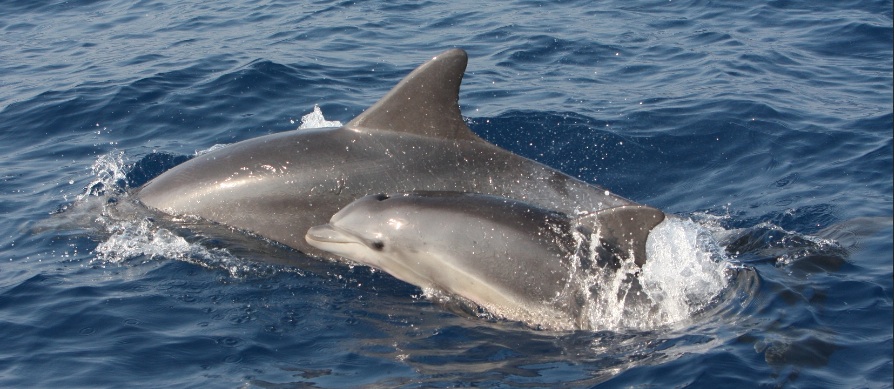
Dolphins “trawling” behind fishermen’s trawling nets are getting snared at sea.
If you love fish, there is nothing like catch from the Mediterranean Sea. But extensive commercial fishing, a new study finds, is endanging the sea’ dolphin populations. This has been shown in a new study carried out at the University of Haifa’s Department of Maritime Civilizations. “Unfortunately, we turn our backs to the sea and do not give much consideration to our marine neighbors,” states researcher Dr. Aviad Scheinin.
The study, supervised by Prof. Ehud Spanier and Dr. Dan Kerem, examined the the two top predators along the Mediterranean coast of Israel: the Common Bottlenose Dolphin (Tursiops truncatus) and bottom trawlers.
Wind versus sun on the Golan Heights: which will win?
The Golan Heights, currently under dispute by both Israel and Syria, was thought to become a major location for wind power in Israel when we posted our first Green Prophet article about it back in August, 2008. At that time, there was already a wind farm in place on the Northeastern Bashanite Ridge sector, where ten turbines generate 6 MW of energy, which goes to “wind power” local factories and about 20,000 people.
A new license was granted to the Mey Eden Water Company (the same company that built the original 10 turbines at Tel Aseniya in 1992) to construct a much larger turbine farm costing $500 million. The 400 MW wind farm of about 150 turbines was to be spread over 140 km of the Golan Heights. Haaretz reported the deal is worth $600 million and that Mey Golan would partner with US energy giant AES Corporation.
But all this may be changing now, and according to a just published article in Haaretz.com , the huge airliner-sized wind turbines may take a back seat to new projects dealing with photo-voltaic solar panels being installed on both private dwellings and commercial enterprises on the “Heights”.
The Jerusalem Seminar in Architecture, an international conference series initiated in 1992, is devoted to discussing contemporary issues in the fields of architecture, urban planning and design. And since green design is one of the most important issues in contemporary architecture, the last conference (25-27 of January, 2009) was on the subject of Green Design: from Theory to Practice.
The conference was chaired by Dr. Ken Yeang, one of the world’s leading architects in environmental design. In his theme statement for the conference he wrote that:
“The need to save our environment for future generations is one of the greatest challenges that humankind must address today; this task is fuelled by the growing realization that if we maintain our current rate of growth, consumption and way of life, this may be our last millennium on Earth. The singularly most compelling question for any designer is: how do we design for a sustainable future?”
During the celebrations for Israel’s 50th anniversary in 1998, Israel’s senior publicists were polled to name the most effective public relations campaign in Israel’s history. The winner? A 1965 campaign to publicize the new law prohibiting picking wildflowers.
Until the law was passed, families and groups of schoolchildren, along with their teachers, picked flowers as a pastime. Entrepreneurs sold bouquets in cities and along the side of the road.
Uzi Paz described the campaign in his recent book, Le-Ovdah U-le-Shamrah: Shmurat Teva be-Yisrael. To Work It and to Preserve It: Wildlife Preservation in Israel. An excerpt appeared in the February-March 2010 issue of the Society for the Protection of Nature in Israel’s magazine, Bishvil Hateva. As the acting director of nature preservation department in the Ministry of Agriculture, Paz got the idea when the law to protect national parks and nature reserves was being developed. Paz knew the importance of preserving wildflowers no matter where they grew.
Once the law passed, the public needed to develop awareness. How would people know which flowers were included in the ban? Bracha Levi Avigad designed this poster with illustrations of the protected flowers and a warning: “It’s forbidden to pick them!” The poster was sent to government offices, banks, and medical clinics and most important, every school and kindergarten in the country. Children began to educate their parents about which flowers not to pick. On Fridays, newspapers published pictures of seasonal flowers, and radio hosts discussed the flowers on the air. Reporters flooded the agricultural ministry with requests for more information.
The children of the ‘60s internalized the message of protecting nature and became the true guardians of Israel’s wildflowers.
As a kid who grew up in Canada with natural gas heating, cooking and a natural gas clothes dryer, it’s great news to see that a Canadian company, the Bontan Oil and Gas Company, based in Toronto, has found what could be up to $6 billion dollars worth off natural gas off the coast of Israel. This could mean even cleaner energy for Israel which has no formal diplomatic relations with its Arab neighbours who own oil. While natural gas is not the cleanest fuel out there, it does burn cleaner than oil.
The Jerusalem Post reports that the Canadian company had been exploring for natural gas off the coast of Israel, and announced yesterday that it had located what appears to be up to 6 trillion cubic feet of natural gas off Israel’s coast in two separate sites.
It can take decades of forest growth before the ‘cooling’ CO2 sequestration can overtake these opposing ‘warming’ processes, finds new study on Yatir Forest (above).
We’ve been buying carbon credits, and have been busy planting trees hoping to stave off climate change, but the simple formula we’ve learned in recent years – forests remove the greenhouse gas carbon dioxide (CO2) from the atmosphere; therefore forests prevent global warming – may not be quite as simple as we thought, finds a new research project.
It could take decades until trees we plant now will have any effect on the overall greenhouse gases they sequester.
Forests can directly absorb and retain heat, and, in at least one type of forest, these effects may be strong enough to cancel out a good part of the benefit in lowered CO2. This is a conclusion published January 22 in Science by scientists from the Weizmann Institute’s Faculty of Chemistry in Israel.
A new fund based in Abu Dhabi to accelerate clean tech has just closed its first round of financing. Masdar City is expected to get a big boost.
Abu Dhabi’s “Masdar Clean Tech Fund” just completed its first closure, and was successful in raising an impressive $265 million. The fund is co-managed by Masdar Venture Capital and DB Climate Change Advisors, and is looking to build a diversified venture capital and private equity portfolio that will include some of the world’s most promising and pioneering clean tech and renewable energy companies. The Fund is made up of commitments from the Abu Dhabi Future Energy Company, the Consensus Business Group, Credit Suisse and Siemens AG.
Beyond investing in technology, the fund will support projects in environmental resource management, such as water and waste management, both important issues in a part of the world where water resources are becoming scarcer and inadequate waste management programs are resulting in increasing problems for people living on the Arabian Peninsula.
When most of us think about retirement homes, we think about sad, isolated places with TVs turned to the highest possible volume, very few visitors, and a faint smell of old soup. Not so in Neveh Amit in the Jerusalem area, where the residents are energetic and environmentally conscious.
The residents/gardeners (aged 75 to 100) spend every Tuesday afternoon growing vegetables in their organic garden. They take great pride in their vegetables, and according to one resident they grew cucumbers as long as an arm. Another said that the eggplants made a salad that fed more than 100 people.
The garden keeps both the residents and the environment healthy. The residents get to exercise, keep active, and enjoy healthy organic produce. The environment is polluted with fewer pesticides, and fewer fossil fuels are required to transport food to the community since the residents enjoy the fruits (and vegetables) of their labor.
Avi Amenou leads the gardening activity every Tuesday afternoon and has assisted in specially designing the greenhouse to make it old-age-friendly. The greenhouse is completely wheelchair accessible and the vegetable beds are higher than normal so the residents can work without bending over. The weekly activity includes gardening and a discussion of agricultural theories, biology, and water conservation.
Better Place’s financial batteries get “supersharged” with a massive $350 million investment.
If you’ve been following clean tech news, you’ll know that Shai Agassi’s Better Place electric car development company has received a substantial “charge” for its financial batteries by receiving funding of $350 million. The investment comes by way of a consortium of investors that includes the international group HSBC Israel Corp.
According to Globes, Better Place will receive one of the largest ever clean technology funding deals in Israel, which will give the company a value of more than $1.25 billion.
Better Place has already shown that it can convince some worldwide automobile concerns to pay attention to its concepts – Denmark, the US, Canada, Japan and Australia, for example. The technology includes developing a network of batter exchange stations to give its cars built by Renault-Nissan a much better driving range than other concepts such as GM’s Chevrolet Volt.
The researchers found that quitting smoking after a heart attack has about the same positive effect as other major interventions such as lipid-lowering agents like statins or more invasive procedures and the study results were reported in the Journal of the American College of Cardiology.
“It’s really the most broad and eye-opening study of its kind,” says Dr. Yariv Gerber of from the Sackler School of Medicine at Tel Aviv University. “Smoking really decreases your life expectancy after a heart attack. Those who have never smoked have a 43% lower risk of succumbing after a heart attack, compared to the persistent smoker.”
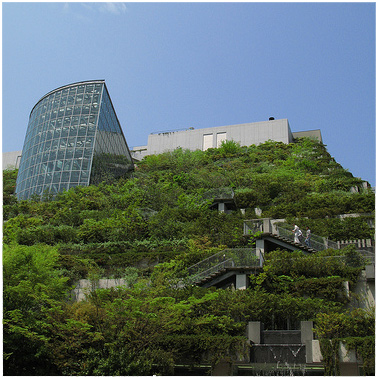
While many countries are taking pride in their sustainable of “green” building technologies, and LEED certification as we learn from Qatar, Israel may have gotten the upper hand by unveiling what it refers to as a “living building.”
It even includes residency for local animals including porcupines.
This new living-with-nature concept was inaugurated on January 26, when the building, known as the Gutman Visitor Center was dedicated by both Israeli government officials and those of the Society for the Protection of Nature in Israel (SPNI), of which the Gutman building is an integral part of.
The building is located in a wooded area of Jerusalem, near the Knesset and Supreme Court buildings. The area in which the Center was built has been favorite location for bird watching, and the SPNI has operated a bird watching and research center there for years.
There are a number of features that make this kind of building concept very unique and different from so-called “green buildings” such as environmentally sustainable projects we have written about on Green Prophet such as Qatar’s National Convention Center, and Abu Dhabi’s Masdar City which integrate renewable energy and environmentally sustainable features into them.
A “living building” on the other hand is not made from dead materials, but is designed to function as its name implies: to be in perfect harmony with the “natural flow of life” around it. In the case of the Gutman Visitation Center, not only is it built mostly from recyclable materials, but it has features that allow it to not only exist harmoniously with nature but to even allow nature, i.e. wildlife, to live in and around and on its premises.
The building has a ‘living roof’ as was noted in The Jerusalem Post:
“The roof is a ‘living roof,’ and not a ‘green roof.’ What is a green roof? It is a roof of plants that require watering. A living roof is comprised of native Middle Eastern flora which bloom according to the seasons and do not require any watering.”
The building’s construction also includes holes and spaces for wildlife to hid in and make homes. Amir Balaban, featured in the article, added that a family of rare porcupines have already moved into a space behind an air conditioning vent.
A living building defined:
Living buildings are a concept that appears to be gaining in popularity, especially in natural areas. They incorporate many environmental features that enable them to be in total harmony with nature. As noted in the tenants of the Cascadia Region Green Building Council, in the American Northwest, a living building has to meet the following criteria:
A) It generates all of its own energy with renewable resources,
B) It captures and treats all of its water on site and
C) It uses resources efficiently and for maximum beauty
The Center is located in one of several natural areas in Jerusalem that the SPNI plans to oversee and protect. The idea is to encourage a blend of both natural and developed areas in which both can live in harmony with each other.
The current border wall between Egypt and the Gaza Strip. According to experts, a new underground wall will cause serious damage to Gaza’s Coastal Aquifer.
The Coastal Aquifer, the main freshwater resource for Palestinians living in the Gaza Strip, has been in danger for a long time. The environmental impacts of last year’s war between Israel and Gaza created serious damage, merely compounding years of steady pollution.
Recently, Egypt began construction on a 10 km (7 mile) wall to cut down on smuggling tunnels between Egypt and Gaza. And as if the beleaguered aquifer didn’t have enough problems, experts in Gaza determined yesterday that this underground steel wall will cause even further damage to Gaza’s aquifer.
Solar energy companies from Israel are expected to be of great interest in Texas. A new meet in February hopes to make matches between solar-strong Israel and wind-strong Texas.
Everything is big in the State of Texas. The Stetson hats are big, the oil fields are big, the cars are big, and if state legislators have their way, renewable and alternative energy will also be big in the region – with a little help from Israel. On February 22, companies and investors in Texas are scheduled to hold intimate meetings in Austin with Israeli clean tech firms and investors.
The one-day conference, timed to coincide with other related local events, aims to establish business and trade ties in the alternative energy industries between the State of Israel and the State of Texas, two entities which at first glance don’t appear to have much in common.
In the past, however, the two have cooperated in the fields of medicine and defense. This time, Texas VCs and state agencies already committed to participate in the conference represent over $1b in investment potential.


 Walking the streets of any modern city, you are likely to encounter wasted materials. Materials that – with a little imagination, skill, and love – could be transformed into something beautiful and new. Materials are thankfully being snatched up by design studios all over Tel Aviv in order to recycle and reclaim them. Some of the studios we’ve mentioned in the past are
 Dolphins “trawling” behind fishermen’s trawling nets are getting snared at sea.
 Wind versus sun on the Golan Heights: which will win?







 A new fund based in Abu Dhabi to accelerate clean tech has just closed its first round of financing. Masdar City is expected to get a big boost.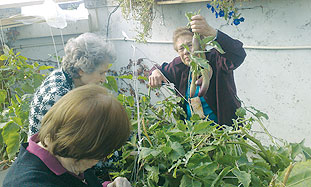


 Pipe use and smoking is increasing in the Middle East, but new research shows this habit is bad for your heart.