Home Blog Page 654

Saudi Arabia and IBM to Develop Solar-powered Desalination Plant

0

Green Prophet’s post on solar powered desalination plants earlier this year reported Saudi Arabia’s interest in harnessing solar energy to drive its growing array of desalination plants. This week the oil-rich kingdom announced a partnership with IBM to pursue this goal. King Abdulaziz City for Science and Technology (KACST), Saudi Arabia’s leading R&D institute, will team with IBM to study the possibility of building a solar powered desalination plant in the city of Al Khafji, in the northeast of the country, according to a report in ArabianBusiness.com.

Book Your Tickets for the Arava Institute's Ultimate Trans-Boundary Middle East Eco Tour This Winter

3

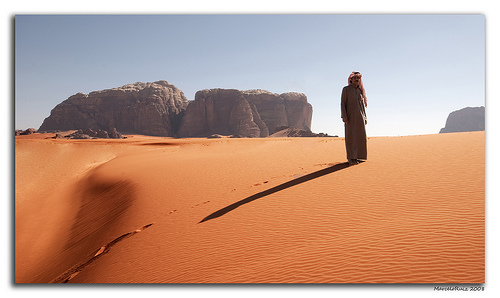
Want to tour Israel, Palestine and Jordan in the ultimate eco trip? [image via: Marcelo Ruiz]

Now that the spring holidays are mostly behind us, you may be looking ahead to plan your winter holiday.  If you’re an eco tourist, interested in becoming an eco tourist, a fan of cross cultural activity or just a Middle Eastern afficionado, we’ve got a suggestion for you.  The Arava Institute’s Trans-Boundary Eco Tour.

The tour, which will take place between December 26-31, 2010, is the first of its kind and is being organized by the Arava Institute for Environmental Studies (AIES) – one of the Middle East’s premier environmental research and teaching programs.

Tamar Natural Gas Needs Fuel to Power Better Place Cars

natural gas fieldNatural gas for electric cars? The power has to come from somewhere.

You might be wonderiing what the Tamar natural gas fields have to do with the Better Place electric car technology company, which recently received a big financial boost from the HBSC banking consortium, and now (hopefully) the Chinese auto company to produce another electric car version, the Chery.

How Better Place comes into the picture in this new gas field off the coast of Israel was in Globes: more fuel sources will be needed to provide the electricity needed for projects like Better Place, which will put even more strain on Israel’s already overloaded electric power plants to supply electricity for the country’s increasing power needs, which include future power plants being fueled by natural gas instead of presently by coal and fuel oil.

Moroccan Stuffed Artichoke Hearts

0

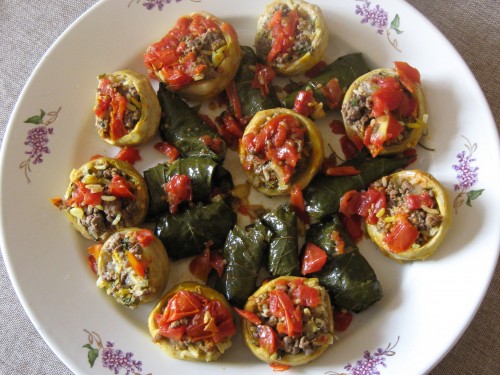
Plateful of stuffed artichoke hearts and vine leaves

Do you love artichokes? We do. Here’s a healthy recipe perfect for the Middle East.

It’s springtime, and the markets of the Middle East display piles of these artichoke thistles with the succulent hearts.

The hot climates of North Africa and the Middle East produce a fantastic variety of vegetables that are easy to stuff and cook in a piquant sauce. These home-made delicacies are traditional in cultures where the housewife depends on local, seasonal produce (like in the Slow Food movement) rather than packaged foods trucked in from far away.

Take local produce, fill it, and simmer it. What could be a greener way to cook, or more delicious? It takes a little work, but it’s worth the effort for the tantalizing aroma and savory taste. (Vegetarian options are offered below.)

No fresh artichokes in your area yet? You can legitimately cook up  a bag full of frozen artichoke hearts. They are one of the few vegetables that stand up to freezing.

Moroccan Stuffed Artichoke Hearts

Ingredients:

2 tablespoons white rice

1 cup boiling, salted water

14 frozen artichoke bottoms

2 tablespoons olive oil

1/3 cup minced onion

1 cup ground beef

2 large, minced garlic cloves

1/4 cup chopped cilantro

1/4 teaspoon. sweet paprika

1/4 teaspoon ground cumin

1/8 teaspoon ground cinnamon

1/8 teaspoon ground ginger

1/4 teaspoon salt

1/4 teaspoon ground black pepper

4 fresh, chopped tomatoes

2 sliced garlic cloves

1/8 teaspoon turmeric

1 cup of water, stock, or white wine

Method:

1. Boil the rice, uncovered, in the boiling salted water, for 10 minutes. Rinse with cold water and drain. Put in a medium-sized bowl.

2. Heat 1 tablespoon of olive oil in a skillet, add onion and cook over medium-low heat for 4 or 5 minutes.

3. Add ground beef and saute about 4 minutes or until all the meat has changed color. Take the skillet off the flame.

4. To the meat, add the minced garlic, cilantro, paprika, cumin, cinnamon, ginger, salt, and pepper. Mix well and add to rice. Mix the rice and meat well.

5. Sprinkle the artichoke bottoms with additional salt and pepper. Spoon stuffing into them. Spoon the remaining 1 tablespoon oil into a heavy pan or casserole and add the artichokes.

6. To the pan add the chopped tomatoes, sliced garlic, turmeric, and a little salt, plus more pepper to taste.

7. Add 1 cup of water, stock or white wine to the pan. Bring to a simmer. Cover the pan and cook over low heat for half an hour or until artichoke bottoms are tender. Serve this dish hot, with a little of the sauce and chopped tomatoes spooned over each artichoke.

Turn this dish vegetarian.

  • Eliminate the ground beef and cinnamon.
  • Use brown rice or cooked quinoa.
  • Quickly toast 1/2 cup of pine nuts in a hot skillet and mix them with the rice.

More about spices loved in the Middle East here:

The ABCs of Traditional Middle Eastern Spice Remedies, Part I

A New "Chery" On Top For Better Place's Electric Car Infrastructure?

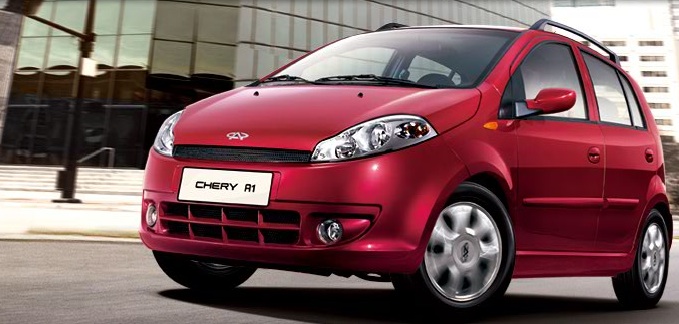
chery car china red photoWould you drive a Chery? The Chinese firm is partnering with Israel Corp. a major stakeholder in Better Place to develop its own electric car with Austrian and Italian partners.

The tiny nation of Israel is stoked, because it could be the first nation in the world to adopt a fully electric car for the mass market. Its high standard of living, rising fuel prices, and small area make it a perfect pilot site for the Better Place idea – a highly networked grid of charge stations and battery replacement depots to make driving the electric car convenient. Unlike petrol-fueled cars as we know, electric cars can take hours to refuel. That’s why Better Place has developed a quick battery replacement depot, to avoid the wait. The depot was debuted in Japan last year.

Part of Better Place’s business plan has been intertwined with the investment from Renault-Nissan, which has been designing a series of models of cars with the switchable batteries. The cars have been showcased around the world, most recently at the climate change conference in Copenhagen, and also in Israel at the Better Place education center. Green Prophet attended the inaugural ceremony. But news out yesterday, is that the mega Israeli holding company, Israel Corporation, will be developing its own line of cars with a Chinese firm, Chery.

Are You An Eco-Sexual?

woman flowers sexy photoHomo. Bi. Hetero. Now a new label for sexual preference that connects to the environment: eco-sexual. Image via gribanov.

The Middle East is rife with labels that divide. And now, just when we thought another couldn’t possibly be invented, those who are bringing the green movement into our bedrooms have a new tag for us to wear: eco-sexual.

With Earth Day quickly approaching (April 22, 2010), and the recent publication of the book Eco-Sex: Go green between the sheets and make your love life sustainable (March 2010) by Jewish author, Stefanie Iris Weiss, expect to hear more about how you can green your love life in weeks to come. (Stay tuned for a review in a future column.)

What exactly is eco-sexuality? The idea is simple. Every aspect of your personal life – from birth control to your bedding to the bling you wear – has an impact on the environment and your health and well-being.

Syria Brainstorms on Renewable Energy at International Event

0

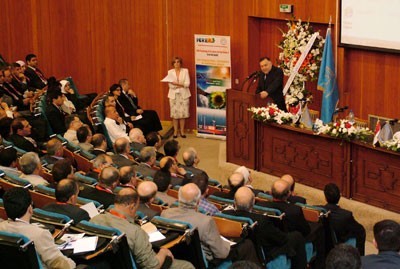
Though lacking the resources that have enabled richer Arab states, and the UAE in particular, to play a leading role in promoting renewable energy, Syria is also looking to boost its involvement in this field. This week, the Higher Institute for Applied Sciences and Technology (HIAST) in Damascus is hosting an International Conference on International Energies (ICRE) and Exhibition.

Architect Cameron Sinclair Gives a Damn

0

architect cameron sinclairWith a mantra to “design like you give a damn,” Sinclair has transformed thousands of lives.

Whether to save governments billions of dollars in mutual conservation efforts or to share information about the harmful effects of meat, great things happen when people get together to achieve a common good.  Few people know this better than the co-founder of Architecture for Humanity, Cameron Sinclair.  Fresh out of college in 1999, with only $700 and a website, the 24-year-old architect and Kate Stohr joined forces to create a non-profit organization that provides “innovative solutions to housing problems all over the globe.”  Today that organization has 80 chapters in 20 countries, and can usually be found at the scene of virtually every serious natural disaster.

Enviromena Solar Company Awarded Enviro Prize, and Busts Arab Stereotypes

0

enviromena solar energy awardArab solar energy company gets awarded for its sustainable vision in Beirut, Lebanon.

They sealed a $15 million round of financing this year; now Abu Dhabi’s solar developer Enviromena Power Systems (“Enviromena”) won the “Sustainable Development of the Environment Award” at the Takreem Arab Achievement Awards held in Beirut last month.

Hosted by Al Jazeera’s star Laila Al-Shaikhli, in Beirut, the awards were to honor achievements in the Arab world. Presented at a gala dinner of over 500, the winners met with Lebanese President Michel Suleiman the following day, and included Prince El Hassan bin Talal of Jordan (who we met 2 months ago) on the jury committee as well as former United Nations Secretary General  Boutros Butros-Ghali.

Sage Advice on Natural Deodorants (7 Tips)

1

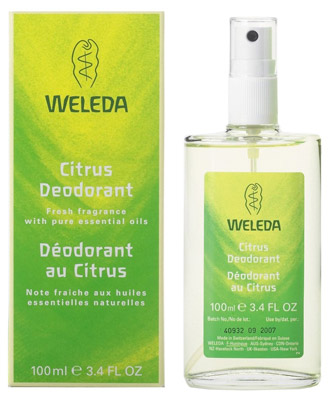
weleda natural sage deoderantweleda citrus deoderantWhen it comes to a safe deodorant what are your options? Karin picks Weleda’s “Sage” deodorant as a good choice. But you have options. Read on.

People like us who are concerned with the environment, apply the same basic common sense to our bodies, right? That’s why many environmentalists and even just every day folk have stopped using anti-perspirant (containing aluminum) to stop sweat. On HowStuffWorks they explain in depth how it works.

Basically  aluminum ions in the anti-perspirant go into our body cells, the ones that line our sweat glands at the epidermis – the top layer of the skin. Aluminum ions, and then the water that passes by them, eventually block the ducts so the sweat can’t get out.

Arab Company Agrobics Cleans Industrial Wastewater, Inspired By Olive Waste

1

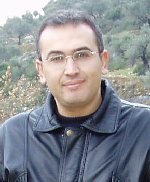
“If agricultural wastewater went straight to the wastewater treatment plant, the facility would just collapse,” says Dr. Isam Sabbah, left, founder of the clean tech company Agrobics.

Growing up in the Galilee region of Israel, Dr. Isam Sabbah was all too aware of the problems associated with the waste from olive presses. He’d seen organic wastes and oils flowing into the streets and through the valleys nearby his home. As a student of environmental science at the Technion Israel Institute of Technology in the northern city of Haifa, he learned just how polluting the agriculture industry can be to groundwater. It became his goal to make the industry more environmentally friendly.

With a PhD in environmental sciences in hand, about seven years ago the Galilee Society (the Arab National Society for Health Research and Services that strives to achieve equitable health, environmental and socio-economic conditions for Palestinian Arabs in Israel) charged Sabbah with a research project to investigate ways of safely dealing with olive oil waste, pulp and oils.

A Quick Guide To Travelling By Bike in the Middle East

2

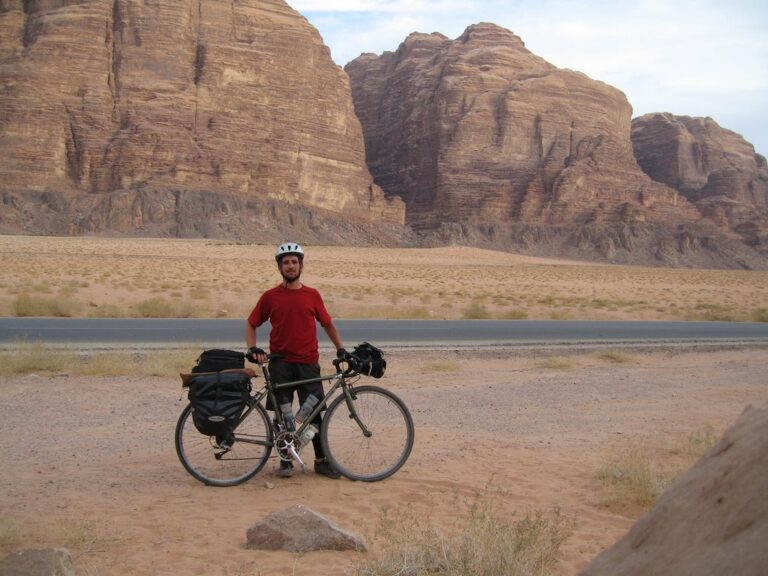
cycling jordan tyson maneringYou can cycle through the Middle East, with some advance planning: ie burka coverings for women going through Saudi Arabia, and special VISAs for Syria. Image via Tyson Manering while cycling through Jordan.

Bicycle touring enthusiasts interested in going on biking tours of the Middle East are now discovering that this sport is not just confined to North America, Europe and Asian countries like China and Japan. While it is true that Western countries have the most developed system of bike touring maps and travel info, Middle East countries also have cycling information that can enable either individuals or groups to undergo a unique and interesting travel experience. Eco-tourism at its finest. But is cycling the Middle East possible and safe?

Meat Free Mondays at Tel Aviv University

1

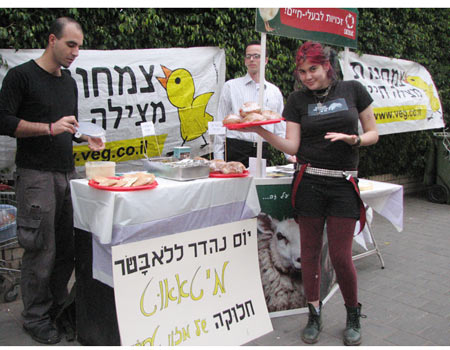
meatfree mondays meat free monday israelTel Aviv University students join Paul McCartney’s and Yoko Ono’s international effort to raise awareness about the impact of meat on our health and environment. [Photo credit: Erez Katsav]

A couple of weeks ago, Tel Aviv University students joined others at Harvard, Oxford, Columbia, and many other universities worldwide in a campaign – Meat Free Mondays – that demonstrates their high level of education regarding vegetarianism’s positive effect on the environment.

The meat industry is one of the most energy intensive and carbon emitting industries in the world, and so vegetarianism (or vegawarianism) is a more eco-friendly option.  Even if it is for only one day of the week, as in the case of Meatless Mondays in Tel Aviv.

Basata and Sinai’s Siwa Oasis for eco-tourism

0

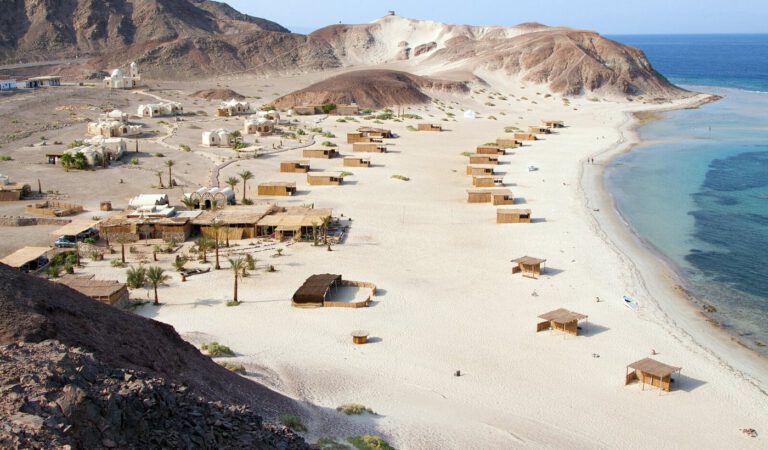
basata eco lodge, sinwa, sinaiThe Siwa Oasis is becoming a hot eco-tourism spot in Egypt, away from the glam of 5 star hotels. Alexander the Great loved the spot. 

While high-end, luxury travel continues to suffer somewhat, not all segments of Egypt’s tourism sector are declining. Eco-friendly destinations are continuing to burgeon. On the Red Sea coast are dozens of small environmentally sound “off-the-beaten-track” camps that house scores of Egyptian and foreign visitors daily.

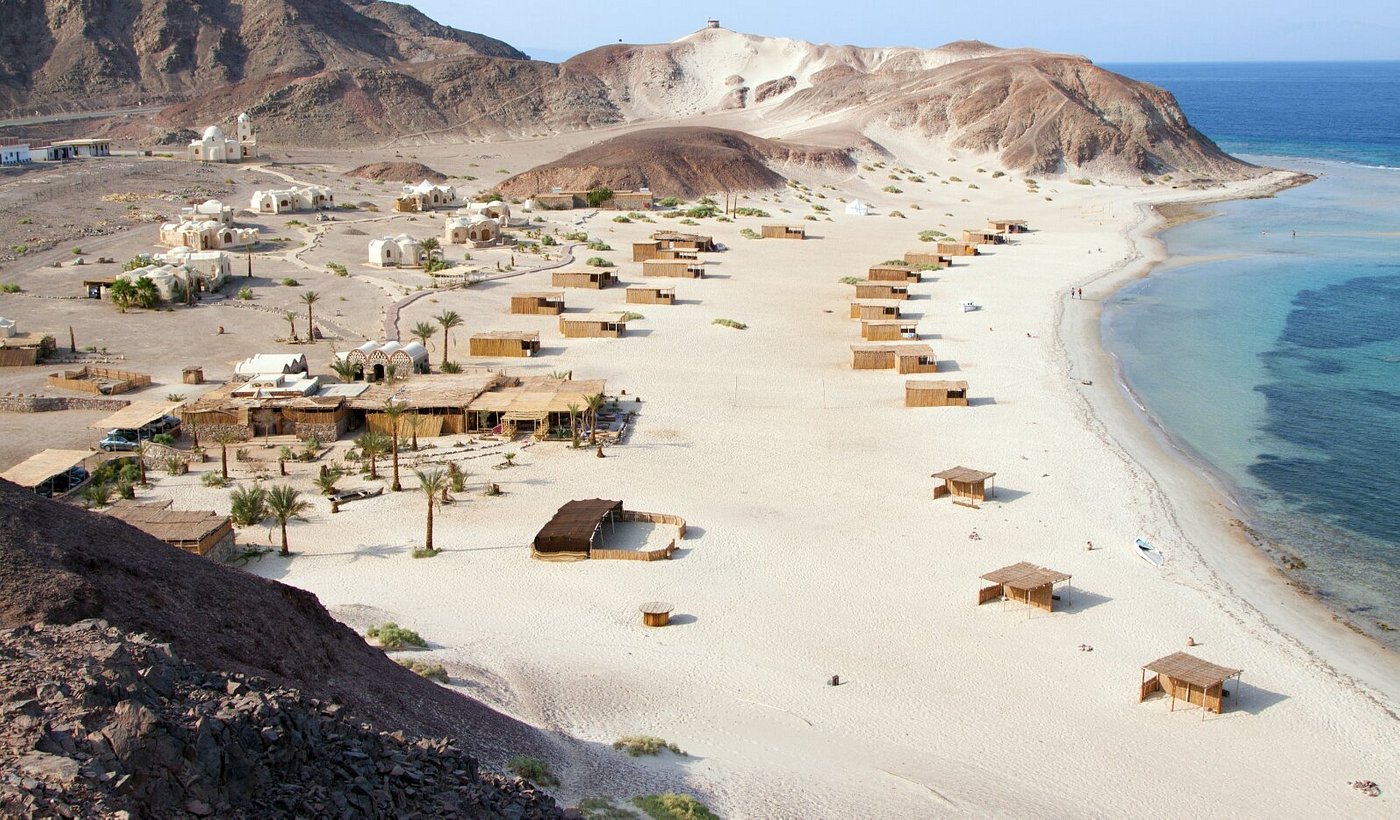
One of those places is Basata, arguably the first such eco-lodge in the country. Lining the pristine sandy beaches are small huts, capable of housing two, three, four and more campers nightly. One of the draws to the camp is their low waste production.

According to Maria Wuersel, co-owner of the camp, they produce their own water. She said that each guest receives an introductory course in water management, which includes what the waste water is used for: flushing the few toilets, pre-washing dishes, and more.

“We use much less water and expel less waste than your typical hotels elsewhere,” she said in a phone interview.

Although many destinations across the country expect a fall in clientele this year, Wuersel argued that because Basata is so different from the average high-end locations in Egypt, their profits are not expected to drop.

“We expect things to stay about the same. Everything thus far is the same and we are already fully-booked for all the major holidays,” she said.

Because most of Basata’s visitors are not the typical “mass tourism” common in Egypt through tour operators like Hassan’s Alexandria-based agency, the fear that the global recession will affect the camp is unlikely.

“Our clients are going to come, we are confident because they want to have this experience. We are not in fear at this time of losses, but we will see by the end of the year,” she added.

Becoming even more popular than the Red Sea eco-lodges is the Western Oasis of Siwa. It is here where legend tells that Alexander the Great received his divine mission to conquer the world from Athena at Siwa’s Oracle.

It is here, in the midst of Egypt’s barren Western desert that the plush town opens to the visitor. Its green landscape filled with trees, palm trees and farming that betrays the area, reminding even the most knowledgeable visitor that from the sandy desert life somehow manages to surface.
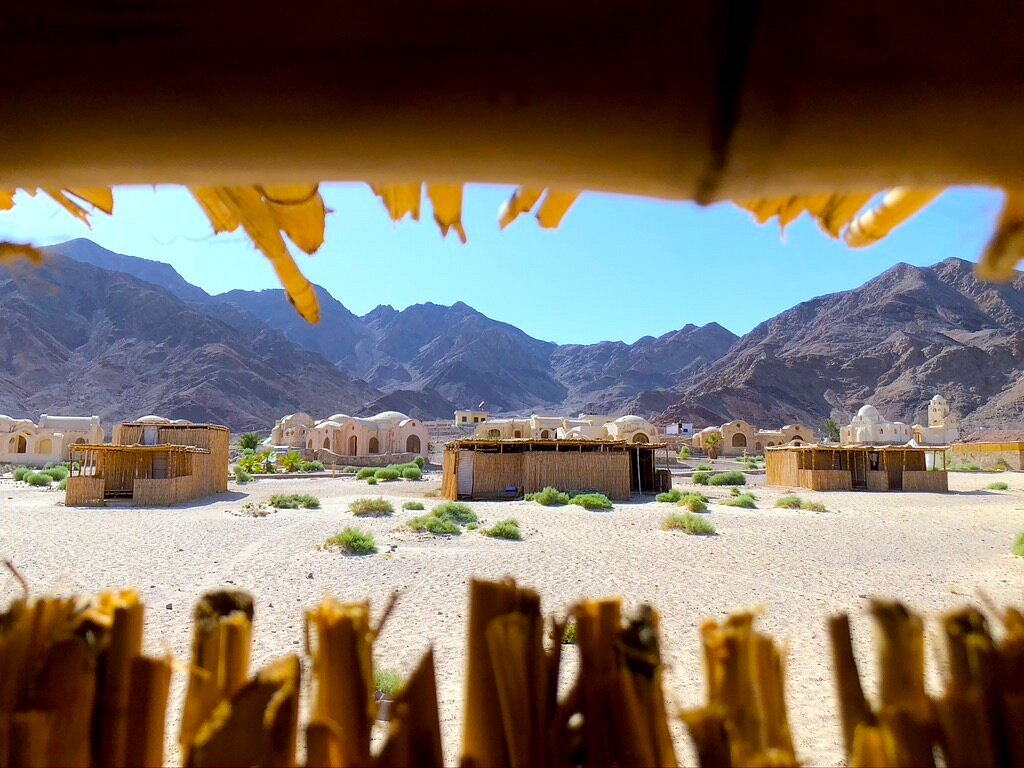
Unlike the hundreds of high-end luxury resorts on the Red Sea and northern coasts of Egypt, Siwa boasts its “traditional” experience. There are no five-star monster hotels, at least not yet and no airport. Getting to Siwa requires a 10-hour bus ride from Cairo across the desert towards Libya.

People come from all over the globe to experience the pristine calm that Siwa’s over 230 natural freshwater springs offer; a far cry from the bustling cities and markets that line much of Egypt’s streets. Locals in Siwa offer some of the most exquisite organic materials that are inaccessible anywhere else in the world.

Entirely free of chemical fertilizers, the residents sell their trinkets to tourists and ship them to Egypt’s Crafts – a Cairo-based shop selling the high quality organic materials and souvenirs – for those unfortunate few who don’t make it to the oasis.

There are worries, however, that the current economic crisis will deal Siwa a major blow. With no airport – one is scheduled to open sometime this year or early 2010 – Siwans wonder if tourists will stop coming.

Hassan said he has already booked a number of tours of the oasis for the spring – it is too cold for most tourists to venture into the desert in the winter months.

“I think Siwa and the Red Sea environment places will do just fine this year because the types of people going to these places are going to go there anyway,” he argued. The reason is because eco-tourists are not as worried about financial considerations. The prices are already measurably cheaper than the five-star resorts and hotels in the country.

The only question for Wuersel and Siwa to ask is whether people will venture to Egypt in the first place. At least the draw of such “untouched” landscapes will keep tourists whetting their appetite when searching for that new destination.

Despite government worries that tourism will dwindle in light of the global economic crisis, and ministry of trade said that overall growth dropped into the negatives (3 percent) in 2009, Minister of Tourism Zoheir Garranah is confident that now is the time to invest.

“I am an astute believer in investing even more heavily when things are bad,” he began, “because when they start to rebound the investment pays back dramatically.”

With eco-tourism still booming, one wonders where the government will invest in and if the future projects will be beneficial.

::Basata website

Abu Dhabi’s "Wondering Where the Lions Are" (And Why The Corals Won't Come Back)

1

abu dhabi water pollution persian and arabian gulf photoScientists seek to solve the mystery of disappearing coral in Abu Dhabi. Bring in Inspector Clouseau!

It doesn’t take a whole lot of common sense to figure this one out: you build monolithic structures and artificial islands on a fragile seashore along the Persian Gulf, have oil tankers pulling petrochemicals from the land which leaks into the water. Add a little global warming, sewage and fish farming to the mix, and well, corals –– one of the most delicate structures in the marine ecosystem –– just die.

That’s what’s been happening west of the city of Abu Dhabi, the capitol of the United Arab Emirates, where a coral “wipe out” 10 years ago, has failed to revive itself. The whole sad story of the mess humanity is doing to this world makes me think of the old Bruce Cockburn song “Wondering Where the Lions Are.”