Home Blog Page 650

Holyland and Israel’s Commons, The Government’s Song

2

israel army base iaf air force construction projectA real estate scandal in Jerusalem reveals Israel’s government’s dangerous stance on the privatization of land development, and use of open spaces, Yosef argues.

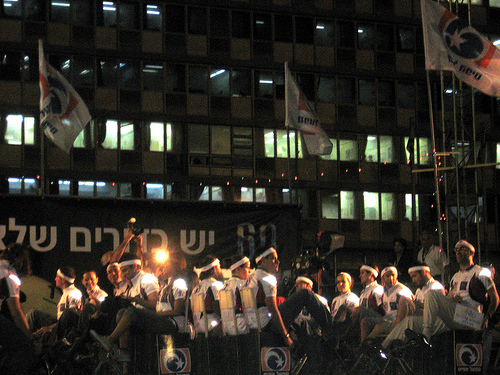
As the Israeli press reveals one new real estate scandal after another including but not limited to the Holyland complex in Jerusalem, the ease with which “developers” were able to purchase zoning clearances through the payment of bribes from leading public officials continues to stun the society. In an article in Haaretz (April 22, 2010, p. 11), Prime Minister Benyamin Netanyahu is reported to have commented on both the scandals and pending government legislation to further liberalize the approval process for building projects by stating:

“It is very important to remove bureaucratic barriers and to make the planning and building process faster and more efficient. That’s exactly what we have done with the proposed legislation to reform planning and building procedure.”

The comments reveals much about the government’s ideological commitments to resource use in the country, part of the general “reform” instituted by Israeli governments since the first Likud-led government came to power in 1977. The party and its allies advocate the predominance of the free market system (see the Likud’s Economic Outlook). In its grand rush to privatize land use in Israel, the government now seeks to further enable free market forces to wrest control of the country’s land resources for private development.

Omani Handicrafts Facing Extinction Versus Machine Made Imitations

1

omani handicrafts oman old man photoAt stake for Oman is the extinction of traditional handicrafts in the face of cheaper, machine made imitations.  Man making khanjars (traditional Omani daggers). [image via: v.williams46]

Omani handicrafts – such as silver items, woven cloths, and pottery – may have been passed down from generation to generation and faced difficulties such as material shortages or lack of interest among the younger generation in the past.  But now these crafted items face a new challenge: the machine made imitation product.

Rare Sea Turtles and Other Wildlife Living Happily on Persian Gulf Atoll

1

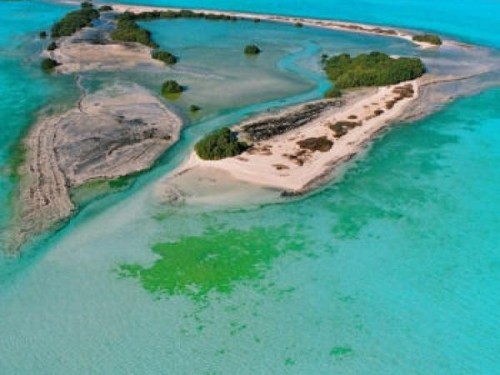
bu tinah abu dhabi island paradise Not in the Pacific, but near Abu Dhabi: Bu Tinah island is small paradise for birds and marine life

Increasing salinity and higher water temperatures may be causing problems for wildlife in many parts of the Persian Gulf. But in one location at least on Abu Dhabi’s Bu Tinah islands, located 130 km west of the sheikdom’s capital, rare hawksbill sea turtles, dugongs, dolphins, and thousands of birds appear to be very happy on or around the island, according the Abu Dhabi newspaper The National.

H&M Israel's CEO, Andrew Horesh, Speaks About Sustainable Clothing

0

H&M Israel’s CEO talks about his motive for importing H&M’s sustainable fashion line

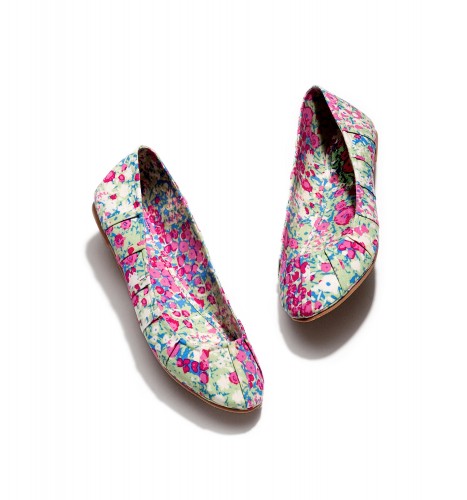
Thousands of Israelis have flocked to the newly opened H&M stores in Tel Aviv, Jerusalem, and Haifa – many of them unaware that they were, in fact, on their way to buying sustainable fashion.  As we mentioned in a previous post, H&M Israel has featured the Garden Collection – H&M’s first collection made entirely of organic cotton and recyclable materials – prominently as a shop-within-a-shop and in the window displays.  Last week we talked to Andrew Horesh, H&M Israel’s CEO, to learn more about the collection as well as about H&M and sustainable clothing.  

Egypt Nears Completion of Hybrid Solar Thermal Plant

0

solar field for hybrid solar thermal plant in Kuraymat, Egypt

Solar field at Kuraymat, Egypt is now fully assembled. Image via changents.com

Ra, the sun god of the ancient Egyptians, would be proud: Egypt’s first large-scale solar thermal facility is nearing completion. A parabolic trough solar field, incorporating nearly 2,000 collector units and covering 130,000 square meters, has been installed at the Kuraymat project site, located about 100 kilometers south of Cairo. The solar power plant is scheduled to become fully operational in the fall.

Israel Defense Ministry Stalls on Sewage Treatment

3

raw sewage jerusalem dead seaRaw sewage from Jerusalem flows straight into the Dead Sea.

Many of Israel’s army bases were built quickly, in isolated spots, and 150 of them are not even connected to the country’s sewage system. The waste  ends up in the groundwater, contaminating fresh water sources and crops and preventing the water from being recycled for agriculture. Last year, Green Prophet reported that half of Israel’s untreated sewage stems from a lack of IDF sewage infrastructure.

Tel Aviv Requests Public's Help in Boardwalk Redesign

0

A rendering of Tel Aviv’s new central promenade: stairs leading down to the beach, a paved lower level, shade-providing structures and new sidewalk and beach furniture. (image courtesy of Tel Aviv Municipality)

Two years ago, Tel Aviv presented a plan to redesign its central promenade. The plan – vague, unclear and buried inside another policy proposal – drew plenty of opposition from the public.

Last week, however, an improved version of the plan was presented at a public hearing. Over 100 residents showed up, all eager to make their voices heard. City officials listened to their concerns, and promised to take them into consideration as they draw up the plan’s final version. But neither the process nor the plan itself could please everyone.

Forbes Names Israel's Shari Arison As One of the World's Greenest Billionaires

2

shari arison israel billionaire miya water forbesWe know that billionaires with their minds and hearts in right place, can do right by the planet.

Taking notice, Forbes business magazine has looked beyond its regular annual billionaires list and has plucked out Israel’s banking and cruiseline heiress Shari Arison as one of the world’s greenest.

Greenest billionaires, that is.

Shari joins Silicon Valley billionaire Vinod Khosla, Google cofounders Larry Page and Sergey Brin and Germany’s billionaire Aloys Wobben, among others.

With a personal net worth of a cool $3.4 billion, Shari –– whose eco-spriritual website Essence of Life I used to write for –– may be taken for a bit of quack in Israel, but not in my books. She’s a huge believer that sustainability and profitability go hand in hand, a green prophetess in a country where bribes and scandals around real estate deals and greed emerge daily (see Holyland bribe story).

Shari’s family name is most well-known around the world for Carnival Cruiselines, established by her father Ted in the United States. She’s published a memoir Birth: When the Spiritual and the Material Come Together where she spells out how businesses should benefit both the investor and the broader community.

Zapping the "Bugs" Out of Water With UV Light

0

Fair is foul, but foul is not fair. A new technique for cleaning water using UV light.

Does your drinking water smell foul, or are you worried that chemicals might be damaging your family’s health? Water treatment facilities currently use chlorine that produces carcinogenic by-products to keep your tapwater clean, but Tel Aviv University scientists have determined that ultra-violet (UV) light might be a better solution.

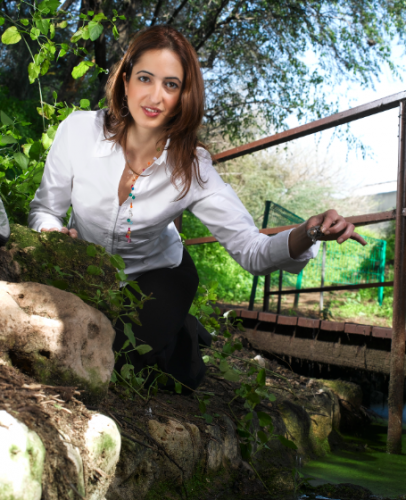
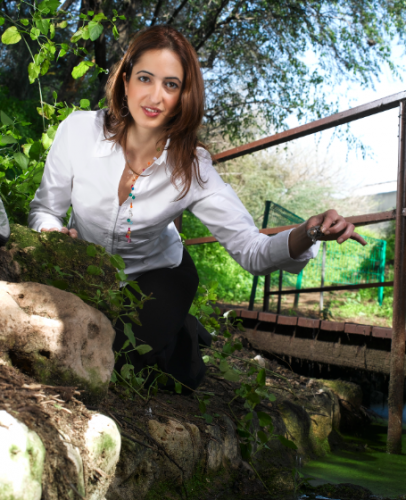
Dr. Hadas Mamane of Tel Aviv University’s Porter School of Environmental Science and Faculty of Engineering (pictured left), with Prof. Eliora Ron and their doctoral student Anat Lakretz of TAU’s School of Mechanical Engineering have recently determined the optimal UV wavelength for keeping water clean of microorganisms. Their approach could be used by water treatment plants as well as large-scale desalination facilities to destroy health-threatening microorganisms and make these facilities more efficient.

“UV light irradiation is being increasingly applied as a primary process for water disinfection,” says Lakretz. “In our recent study, we’ve shown how this treatment can be optimized to kill free-swimming bacteria in the water — the kinds that also stick inside water distribution pipes and clog filters in desalination plants by producing bacterial biofilms.”

Green Your Shabbat Candles With Beeswax

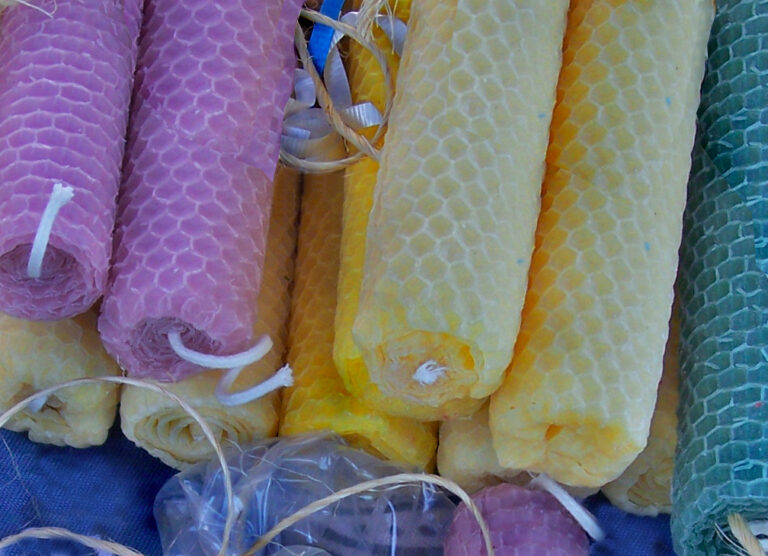
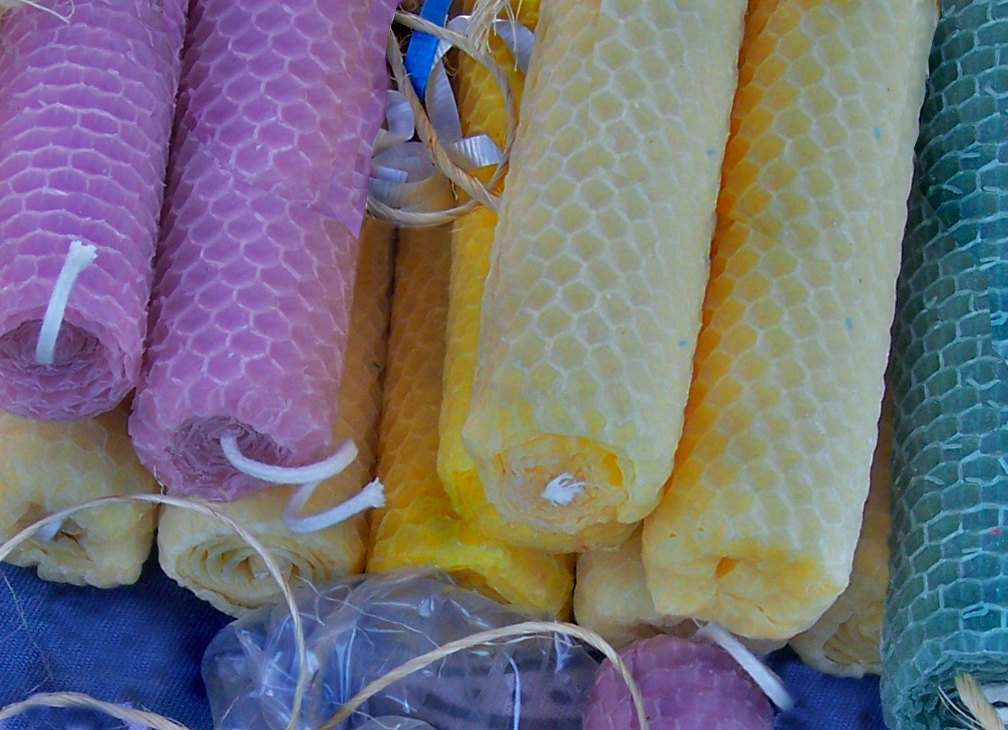
beeswax rolled candles color colourful photoEvery Friday night religious Jews light candles for Shabbat, the Sabbath or Shabbos. Guest poster Debra A. Waldoks sends us this tip in “light” of Earth Day today. Jewish or not, consider the ramifications of earth-friendly candles.

My husband called me out on it: He claims that I am “green” when it affects my personal health but I couldn’t care less when it is “just” about the environment. For example, we use Nature Babycare diapers because they are chlorine-free, made from 100% natural material (not petrochemicals) and they did not cause diaper rashes on our children.

The fact that they are biodegradeable is, of course, a plus, but my husband alleges that the environment was not my primary concern in choosing a diaper. And I admit it, sort of. It is true that I first became interested in doing more “green” things as I learned that our family’s health would be affected. However, most green changes not only affect your health but also the health of the environment. Chemicals that are bad for our personal health are also more likely to release toxic chemicals, greenhouse gases, and carbon dioxide into the air and water. And I’ve grown to appreciate that as well. Which brings us to our home-made beeswax Shabbat candles.

Time to Hook Your Car Onto the Road Train?

road train australia photo trucks truckers Road train hauling works for truckers, mate. But will it work for cars in the Middle East?

All aboard! A road transport concept known as road trains may be a partial solution to energy savings and pollution reduction on major motorways according to Greenbang. This concept, which is presently being used by long distance motor freight hauling in countries like Australia and Argentina may soon be adapted for “towing” private cars as well.

For the uninformed, a road train usually refers to a motor freight transport in which two or more transport trailers are attached to a truck “tractor” for long distance hauling. This concept has been used by Aussie truck drivers for years to haul cargo across the vast Australian outback, which saves having to have two or more trucks on the road to haul the same amount of freight.

Now, a different version of the road train concept is being worked on by a consortium of European organizations to find ways to make a similar transportation system for cars in order to not only save fuel, but reduce the amount of auto emissions as well.

These organizations have organized a project known as SARTRE, which means Safe Road Trains for the Environment.

Under this concept, a number of car drivers will “connect” themselves electronically behind a truck or similar vehicle and become part of a ‘road train’ which will enable them to move down the highway driverless and without having to have their foot on the accelerator pedal (sort of like a group participated cruise control).

The method, which frees the driver from actually driving the car while “on board” is estimated to save fuels costs by as much as 20%, as well as being less polluting. By use of special wireless communication systems, drivers will be able to read, rest, eat, make phone calls and do other tasks that are not normally possible while driving.

road train

One might wonder if this concept would catch on in Mediterranean countries, as well as in the Middle East, where driving often takes on the form of an adrenalin rush and where short tempers often lead to numerous road accidents.

Drivers in these countries would have get used to not being ‘in control’ of their vehicles while being a part of  a road train; especially in countries like Saudi Arabia, in which we explored in the article on the deathly Saudi road games.

Saudis having the highest percentage of road fatalities in the world (of course they do as women are not allowed to drive; maybe women could drive on the road train, because technically they’re not driving).

Or how about Lebanese  high-line car owners; where glitz and status are more relevant than other issues, especially protecting the environment.

And last, but not least, there’s that billionaire in Abu Dhabi, who owns a white gold V10 Mercedes Quad Turbo sports job that can do a 1/4 mile in 6.89 seconds. We’re sure he can’t wait to take the car train – or is it the Night Train?

All in all, I really don’t think that the Middle East is quite ready to fall in line for this kind of road trip.

More on the environmental issues of car transportation:

Saudi Arabia Has Highest Percentage of Fatalities From Road Accidents

Gulf Nations Look to Tesla’s Electric Roadster to Speed Around the Middle East

Iran Unveils Powerful 150 HP Compressed Natural Gas Sedans

Israel Celebrates Earth Day Today With an Earth Hour Sweeping Across 14 Cities

0

Israel holds Earth Hour a little later than the rest of the world, but just in time for Earth Day.

Stubborn as always, Israel insists on doing things a little differently.  The official international date for Earth Day, the worldwide energy saving campaign, was on March 27th and many other Middle Eastern countries – such as Egypt and Dubai – observed it already.  But Israel thought it would be better to observe Earth Hour a little later, on Earth Day, with a 14-city energy saving salute.

Are You Growing Poison In Your Garden?

0

autumn-crocusesFamiliar garden plants harbor poisons in their hearts.

Sounds dire, doesn’t it? Yet it’s true. Many well-loved and familiar flowers grown for their beauty actually have high levels of toxins and should be handled with great respect.

Greenpeace Mediterranean Demands that Nestle-Osem Give the Orangutans and Rainforests a Break

0

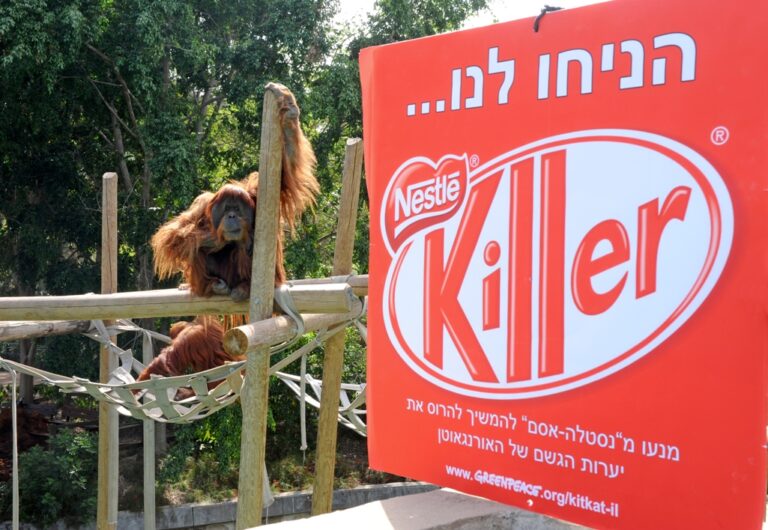
kit kat greenpeace nestleGreenpeace activists won’t give Nestle-Osem a break. They say that the Indonesian rainforests and orangutans are more important than Kit Kat bars.

Greenpeace activists and protesters stormed the central production factory of Nestle-Osem in Shoham, Israel today as part of a global campaign urging Nestle to stop sourcing its palm oil from Sinarmas.  Sinarmas, unfortunately, is currently uprooting the trees, orangutans, and other forms of plant and wildlife from the Indonesian rainforests in order to make room to plant the palm trees that generate the oil that Nestle requires.  Kit Kat bars are good, but not good enough to warrant that.

A Genetically Engineered Lab Rat Spares Animal Suffering

1

robot ratGenetically engineered animal tissue could spare millions of animals from the cruelty of experimentation. Image via likecool

We green types are sensitive to animal suffering. We can’t stand it when we read that animals are going extinct (like tuna). We get excited to see videos about animal behavior (read about Isabella Rossellini’s new Green Porn series), and we certainly cringe over the fact of life that animals have to die in medical research. But there is another way, finds a Tel Aviv University researcher who has developed a novel way to genetically engineer tissue from animals. The effect is that up to 95% of the animals used in research may be spared, or never bred in the first place. Huge amounts of resources could be spared as well.