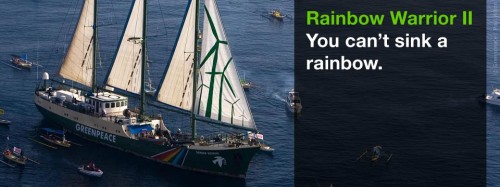
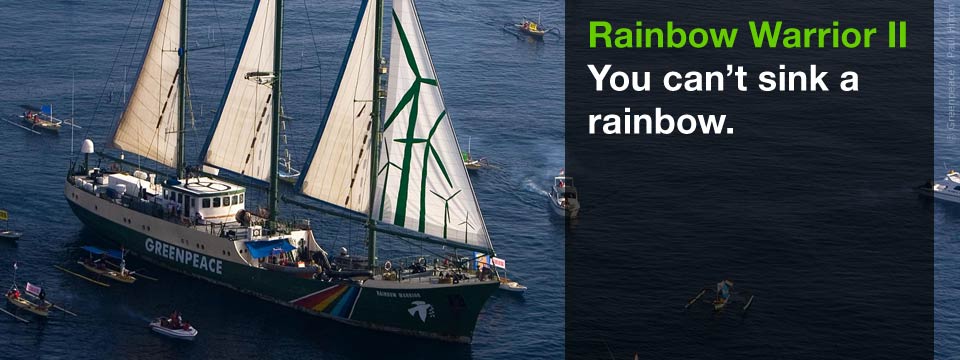
Put down your matkotand take a tour of Greenpeace’s flagship, the Rainbow Warrior, this week.
Beachgoers on Tel Aviv and Haifa’s shores will be seeing something a little different over the next days, in the form of Greenpeace International’s famous flagship – the Rainbow Warrior. The most famous of all of Greenpeace’s eco-activist ships, the Rainbow Warrior’s name was inspired by a native American prophecy that predicted a time when human greed would make the earth sick and a band of warriors would descend from a rainbow to heal it. And so the ship travels the globe, protesting environmental crimes and disasters.
Profitability + altruism + saving the planet? Yosef I. Abramowitz from Arava Power, Kibbutz Ketura Israel – one of the latest ventures in clean tech launched from an Israeli kibbutz.
The Kibbutz Movement celebrated its centenary in 2010, but the last decades of the 20th Century were not kind to Israel’s collective settlements. The shift in Israel’s economy, politics and society beginning in the late 70s stripped the kibbutzim of their status and pioneering role, and brought harsh economic realities to their doorsteps. Being the pioneer elite for Zionism was no longer enough; kibbutzim were now required to pay their own way as well.
The patient has now stabilised, but in many cases this has meant kibbutzim having to abandon their socialist ideals and privatise their internal economies. While kibbutzim still offer an attractive lifestyle, based on their bucolic setting and community orientation, they have not managed to regain their sense of mission and purpose and leadership role in Israeli society. They are moving into the business of clean tech, Bloomberg reports.
Israel’s solar, water and other cleantech companies showcased their products this week at an exhibition in Tel Aviv.(Image via Israel Export Institute)
In his keynote address at the Cleantech 2010 Expo in Tel Aviv yesterday, the governor of Israel’s central bank, Stanley Fischer, emphasized the potential of cleantech as a growth engine for Israel and called for increased private investment to drive this growth.
“The field can serve as an engine for growth, and assist in diversifying exports and export [markets] and thereby reduce harm from [economic] crises. In addition, developing the sector will help promote environmental issues in Israel, reduce Israel’s dependence on imported fuel and assist Israel’s integration in the OECD,” Fischer explained, as reported in the Haaretz daily.
If you like to beguile the slow, hot summer hours with a good food book, you will love this one.
Author Peter Mayle, famous for his series of books on life in Provence as a British ex-pat, traveled left Provence to get a better taste of food festivals in other regions. He sat down at long trestle tables all over France and celebrated frog’s legs with plenty of garlic. Blissful cheeses. Chickens with blue feet.
Mayle experiences a wine tasting that goes on all afternoon and needs “a medicinal bottle of champagne” to cure the resulting hangover. (Something like what this reviewer experienced after the IsraWine Expo 2010.)A truffle auction that kicks off at early Mass. A marathon where sweating, cross-dressing runners wait for each other to catch up. Hilariously, the proper etiquette involved in kissing a fellow Frenchman.
I have quite a taste for post-apocalyptical fantasies myself (such as Cormac McCarthy’s chilling ‘The Road’, reviewed here earlier on GP), so I picked up ‘Everyone Can Be A Hero’ with some eagerness. It is a novel for teenagers set in a Britain devastated by a nuclear accident, where the remaining population is forced to return to the skills of the past in order to survive – quite a contrast to books like Let the Snog Fest Begin! or the ubiquitous Twilight series which throng the 12+ shelves in Waterstones and other bookshops.
The cover of ‘Everyone Can Be a Hero‘ is promising. It’s made of cardboard, laced with rough string, and my worries that this would mean it would be hard to open the book properly were not fulfilled. The paper is recycled. All of which sets the scene well for a new reality in which resources are scarce. Life is indeed different in this 2040 world. Roads have returned to wilderness. Children skate to school. Families all have allotments and grow their own food. There are some great ideas in here: I particularly liked the annual M1 sailboarder race.
For many mothers in the Middle East, breastfeeding in public is an issue because of modesty. In my post on breastfeeding in hijab, I mentioned Muslim women who use nursing covers. In this post I’ll explain what a cover does and how to choose one that is functional, comfortable and “green.”
Libyan pivot irrigation at Al KHufrah Oasis: These are not crop circles or part of an Alien movie plot!
Libya, in North Africa, now drilling for oil with BP is a country that is not exactly known for having ample quantities of fresh water let alone enough water to be used to any extent in agriculture. Yet this North African desert country, ruled by a man who most people consider to be a bit “eccentric” (if not entirely off the wall) has been involved for years in growing crops by a method known as pivot irrigation.
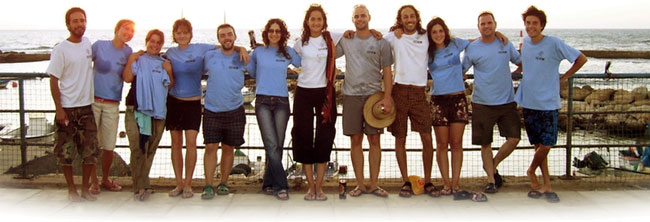
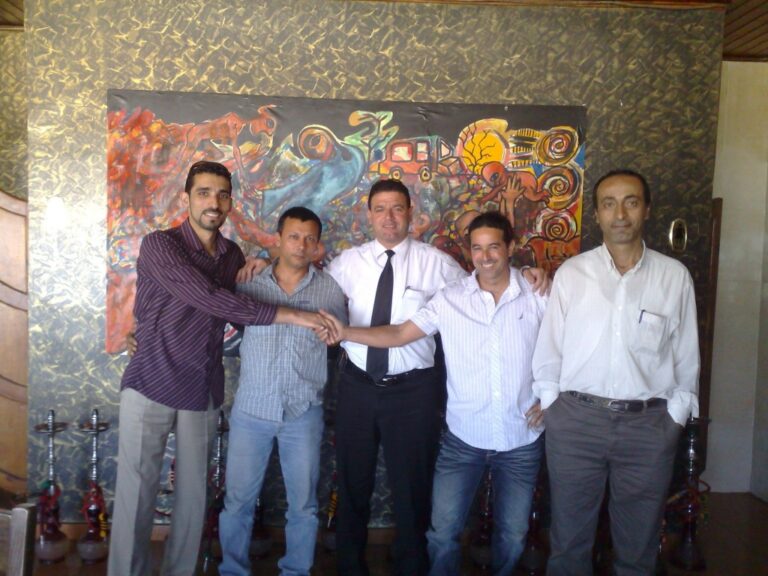
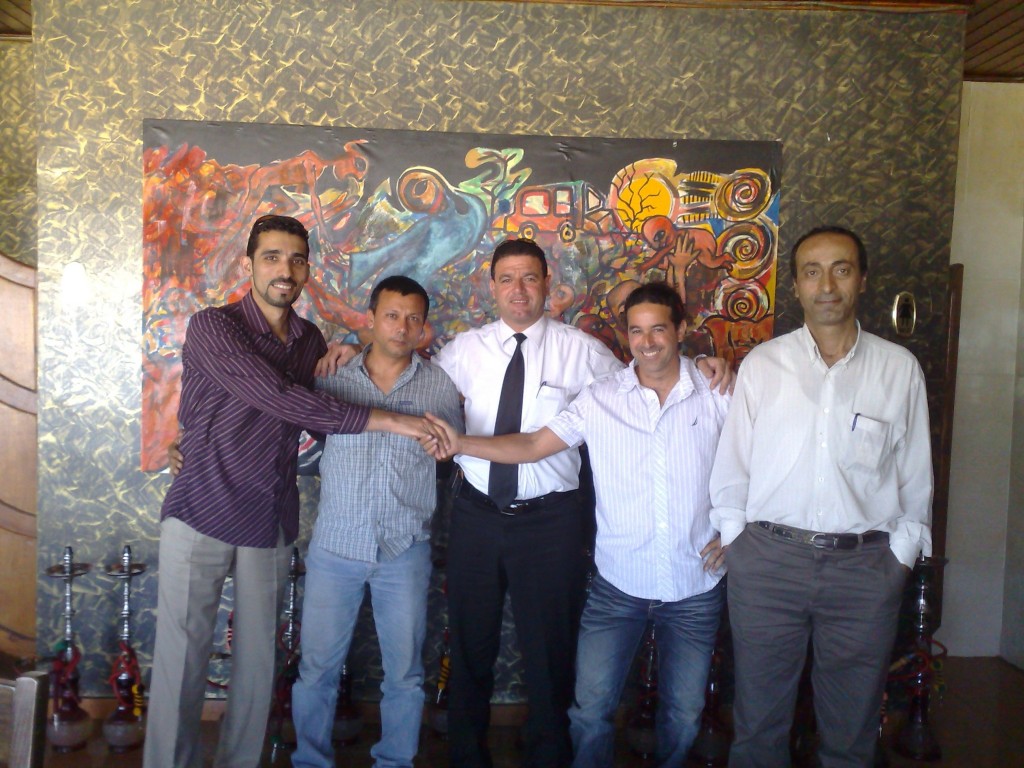
Jonathan Gilben, co-founder of GoEco, talks about his passion for eco-tourism. (Jonathan pictured at the center of this photograph and in the video clip below.)
A few weeks ago we wrote about GoEco, an organization founded by Jonathan Gilben and Jonathan Tal in 2005 that has pioneered bringing the concept of volunteer eco-tourism to Israel. We were so inspired by the organization’s altruistic mission and by its ability to attract good-doing volunteers that we decided to get in touch with Jonathan (Gilben, that is) and hear a little more about their programs.
To make up for the gap in its traditional supplies, the Libyan government, headed by Gaddafi, undertook the largest civil engineering project in the world, popularly known as The Great Man Made River Project (GMMR), to green the northern deserts of Libya
Libya invests $20 billion in massive man made river to irrigate the thirsty nation. It took new roads to build, and a vast amount of resources. So far investment interest from the US has been poor.
BENGHAZI, Libya — From the sky, Libya’s Grand Omar Mukhtar Reservoir resembles a shimmering blue circle nestled in the desert sands. At ground level, the artificial lake is so vast that it’s impossible to photograph the whole structure with anything but a fisheye lens.
In fact, it takes a good 10 minutes to drive around the reservoir’s 3.5-kilometer perimeter gravel road. Holding 24 million cubic meters of water, Omar Mukhtar is the second-largest reservoir in the world — and a crucial element in Libya’s ambitious, $20 billion Great Man-Made River (GMMR) project.
“Before the implementation of the GMMR, the Libyan people were desperate for a few drops of water throughout the year,” says a government brochure describing the project. “Now, with a daily flow of over six million cubic meters, there is enough water to supply each citizen in the Great Jamahiriya with over 1,000 liters per day. In addition, 135,000 hectares of land will be freed from drought.”
The GMMR ranks easily as the largest and most expensive irrigation project in world history. Conceived in the late 1960s, its mission is simple: to pump water from Libya’s vast, underground Nubian Sandstone Aquifer System in the south to populated coastal areas in the north where most of the country’s six million inhabitants live and work.
Phase I of the GMMR, with a price tag of $5.5 billion, commenced in 1984 and since 1991 brings two million cubic meters of water daily from the immense Sarir and Tazerbo basins 1,200 kilometers north to the coastal strip between Sirte and Benghazi.
Phase II, costing just over $8 billion, carries 2.5 million cubic meters per day from the Murzuq Basin, feeding the cities between Sirte and Tripoli. Libya’s capital received its first supplies of GMMR water in September 1996.
Following the completion of Phase II, a third phase — estimated to cost $6 billion — was built to connect the two existing networks. Total production of the GMMR comes to 6.43 million cubic meters a day, using 1,149 production wells, most of them more than 500 meters deep.
Over the next 50 years, cumulative investment is expected to hit $33.7 billion, with total production of 120 billion cubic meters of water, said quality control manager Salim al-Hawari.
Without the GMMR, it’s evident that Libya would soon face a crisis of enormous proportions. According to the UN Development Program, available renewable water per person in Libya is expected to drop from the 1955 benchmark of 4,103 cubic meters annually to only 332 cubic meters by 2025.
Al-Hawari bushed off concerns by environmentalists that the water in the Nubian Sandstone Aquifer System — which accumulated during the last ice age — may actually run out within half a century at present rates of consumption.
“Total volume of fresh groundwater stored in the Nubian Aquifer is about 373 billion cubic meters. Therefore, if annual groundwater extraction of 1.38 billion cubic meters remains constant, recoverable reserves should last for a period of 4,860 years,” said the engineer, interviewed at GMMR’s Phase II headquarters in Qasser Bin Ghashir, just outside Tripoli.
To put things into perspective, the total quantity of cement used to build the GMMR is enough to build a concrete road from Tripoli to Sydney, Australia. If superimposed on a map of the United States, the GMMR — which Col. Muammar Qaddafi has called the “eighth wonder of the world” — would easily stretch from Louisiana to western New Mexico and up into northern Colorado.
Despite its massive cost, civil engineer Abdulmajid M. Elgaoud said Libya had no other alternative.
“I think it’s quite clear,” said Elgaoud, who as secretary of the People’s Committee has overall responsibility for the GMMR’s management and implementation. He said his country’s options were limited to piping fresh water from Greece across the Mediterranean to Libya; transporting water by ship or building desalination plants.
Based on official studies, the Great Man-Made River Authority (website not working Nov, 2019) concluded that one Libyan dinar would buy 0.74 cubic meters of piped water, 0.79 cubic meters of desalinated water or 1.05 cubic meters of water transported by ship. By comparison, the GMMR provides a whopping nine cubic meters of freshwater for that same Libyan dinar.
“Desalination plants were among the options, but so far, it’s expensive, because we’d have to generate power and then use this power to run the desal plants. So accordingly, if the cost of power is high, so would the cost of desalinated water. That’s one reason the water from our project is much more feasible,” Elgaoud said.
In addition, he explained, “the desalination plants would be on the coast, and the water needed for agriculture is inland, so you’d have to pump the desalinated water again to irrigated areas, and that would be expensive. So in fact, the cost of our tap water today is 28 cents per cubic meter, while desalinated water wouldn’t cost less than 85 cents. And when you add that to the cost of pumping the water inland, it comes to between $2.50 and $3.00 per cubic meter. So in fact, our water is quite economical.”
At present, 70 percent of the water produced by the GMMR goes to agriculture, with another 28 percent for municipal use (drinking water) and the remaining 2 percent for factories and industries.
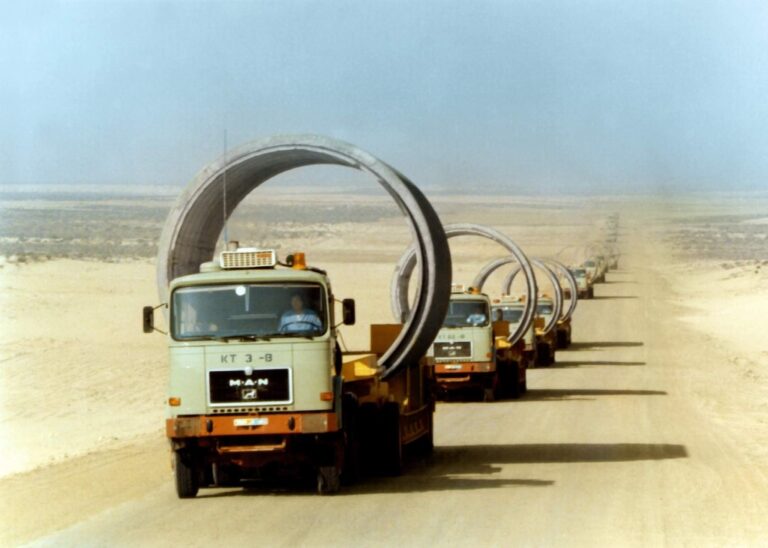
All pipes used in the project are manufactured in Libya in accordance with American Water Works Association standards. Two factories, in Sarir and Brega, produce a combined 200 four-meter-diameter pipes per day. Since production began in September 1986, the two plants have manufactured around 530,000 pre-stressed concrete cylinder pipes weighing 75 to 83 metric tons apiece. Laid end to end, the pipes would stretch 4,000 kilometers.
“We monitor the pipes 24 hours a day using satellite technology, because if there’s any corrision, the pipes will burst,” said Elgaoud, noting that several thousands of kilometers of special-haul roads had to be built across the desert just to transport the pipes to where they needed to go. The pipes are laid in trenches seven meters deep and must be buried underground, he said, because of the extremely high pressures involved.
Elgaoud said the GMMR continues to expand, offering enormous potential for joint ventures and investment by American companies. “But this depends on the willingness of American companies to come and establish joint ventures,” he said. “Honestly, we expected more interest than we’ve seen up to now.”
On the other hand, Elgaoud praised an irrigation venture between his agency and two U.S. equipment manufacturers, Valmont and Case, that aims to grow wheat, corn and other crops on previously unusable land. “We think this project could be an example for other investments if it succeeds,” he said, “and I think it’s going to succeed.”
(This guest post is written by Larry Luxner, journalist and photographer.)
New construction in the West Bank, a national water scandal, a shift to green by kibbutzim, and more headlines related to Israeli cleantech and the environment.Image via alicia bramlett.
During the week of June 22, 2010 news spread that a male birth control pill has been created (by an Israeli professor). Such a pill, once on the market, could help protect the environment as well. Meanwhile, BP’s oil spill in the Gulf of Mexico has Israel carefully planning its delivery of the natural gas it recently discovered, and BrightSource Energy’s planned solar plant in the Mojave Desert is expected to be the most efficient in the world. For these stories and more, see this week’s headlines below.
It’s as though oil drilling has reached a holding pattern off the Red Sea coast of Egypt as the media, investors, drilling companies, governments and NGOs work to establish or even decide on the cause of the oil spill off the coast of Egypt’s Red Sea last week. Some say the spill was caused by a leaking rig; others blame the spill on the hot weather releasing oil from previous bilge dumps (like from Russian tankers). But stocks of oil and gas companies invested in the region are taking a nosedive. Bloomberg reports that stocks of the Maridive & Oil Services SAE, an Egyptian marine and oil services company, fell to their lowest levels in the past 13 months. The spill, lo and behold, will hurt the company’s profits.
BP to go ahead with deepwater drilling in the Mediterranean Sea, off the coast of Libya, which holds Africa’s largest oil reserves – the 9th largest in the world. Should activists be alarmed? Above: pivot irrigation in the Sahara, paid for by Libyan oil wealth.
While a tropical storm approaching the Gulf of Mexico might worsen the BP oil disaster, Libya is going to allow the same company to begin drilling in its offshore deepwater region next month. Shukri Ghanem, the head of Libya’s National Oil Company who serves also as Libya’s de facto Oil Minister, confirmed on June 27 the 2007 agreement with BP, which allows it to drill in the Libyan deepwater region of the Mediterranean Sea. This is despite the negative news about oil pills, not only in the United States, but more recently in the Red Sea, off the coast of Egypt.
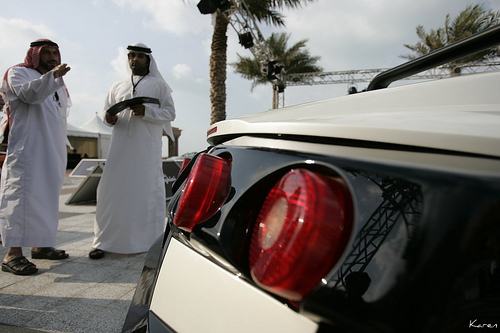
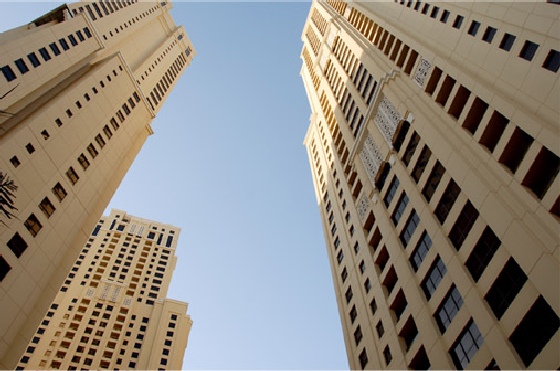
Abu Dhabi tells its residents not to pollute the environment by abandoning their cars. [image via: k.a.r.e.n]
We’ve heard of personal cars causing all kinds of pollution – air pollution, noise pollution… But abandoned cars polluting the streets and parking lots of a city? That’s taking pollution to a different level. And the Municipality of Abu Dhabi has decided that it won’t tolerate it anymore, calling on owners of personal vehicles not to abandon their cars in roads, parking lots, or public places.
Who to believe? That Dubai properties hasn’t paid or that Hopkins Architects reneged on their agreement?
There are different species of architectural firms operating in the feeding frenzy that is Dubai. Some, such as Foster&Partners, are contributing to the country’s environmental malaise, while others, such as Studied Impact, are trying a bit harder to reduce their environmental impact. Others still are suing for recompense.
Ira wrote about the Palestinian-Israeli wind power cooperation deal last week. Karin updates us with details on how Brothers Engineering Group plans on rolling out new business with Israel Wind Energy.
A path toward peace may be blowing in the wind, if a new wind energy project between a Palestinian and an Israeli company succeeds. The two companies, Israel Wind Power based in Ramat Gan, near Tel Aviv and Brothers Engineering Group from Bethlehem in the West Bank, have just announced their intention to cooperate in the building and selling of wind turbines in the West Bank region and beyond.

 Put down your matkot and take a tour of Greenpeace’s flagship, the Rainbow Warrior, this week.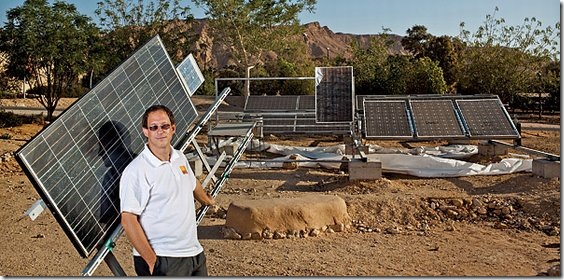
 Profitability + altruism + saving the planet? Yosef I. Abramowitz from Arava Power, Kibbutz Ketura Israel – one of the latest ventures in clean tech launched from an Israeli kibbutz.
 Israel’s solar, water and other cleantech companies showcased their products this week at an exhibition in Tel Aviv. (Image via Israel Export Institute)
 If you like to beguile the slow, hot summer hours with a good food book, you will love this one.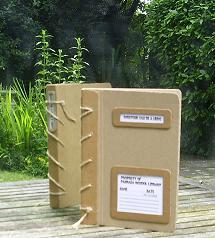
 I have quite a taste for post-apocalyptical fantasies myself (such as Cormac McCarthy’s chilling ‘The Road’, reviewed


 Libyan pivot irrigation at Al KHufrah Oasis: These are not crop circles or part of an Alien movie plot!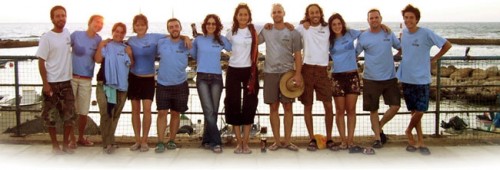

 New construction in the West Bank, a national water scandal, a shift to green by kibbutzim, and more headlines related to Israeli cleantech and the environment.Image via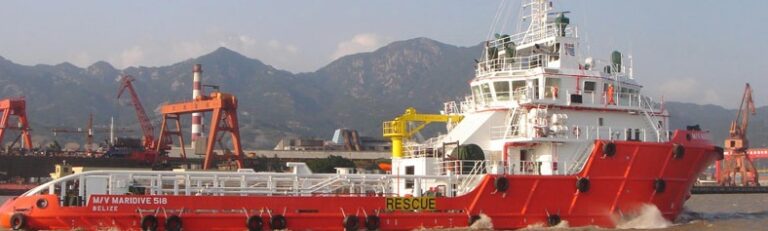
 A Maridive rescue boat.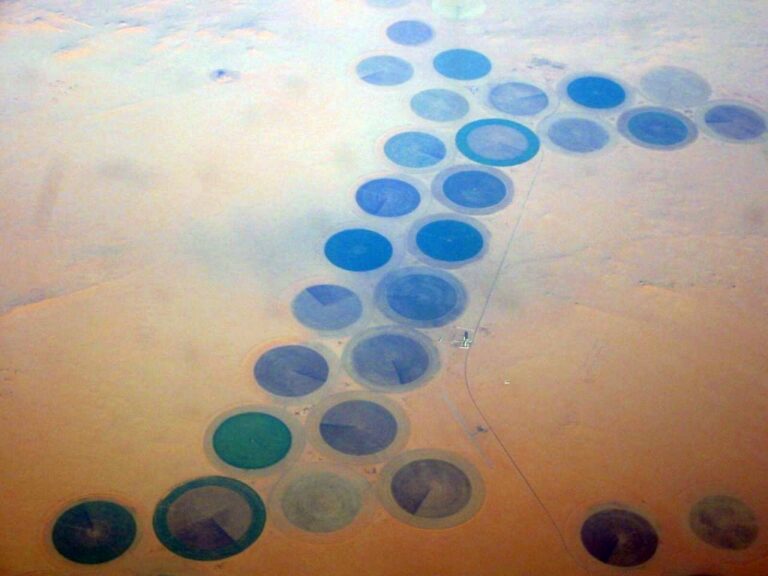
 BP to go ahead with deepwater drilling in the Mediterranean Sea, off the coast of Libya, which holds Africa’s largest oil reserves – the 9th largest in the world. Should activists be alarmed? Above: pivot irrigation in the Sahara, paid for by Libyan oil wealth.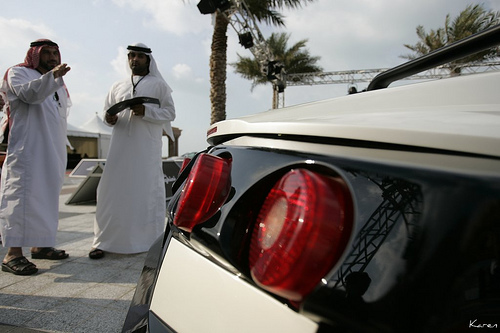

 Ira wrote about the