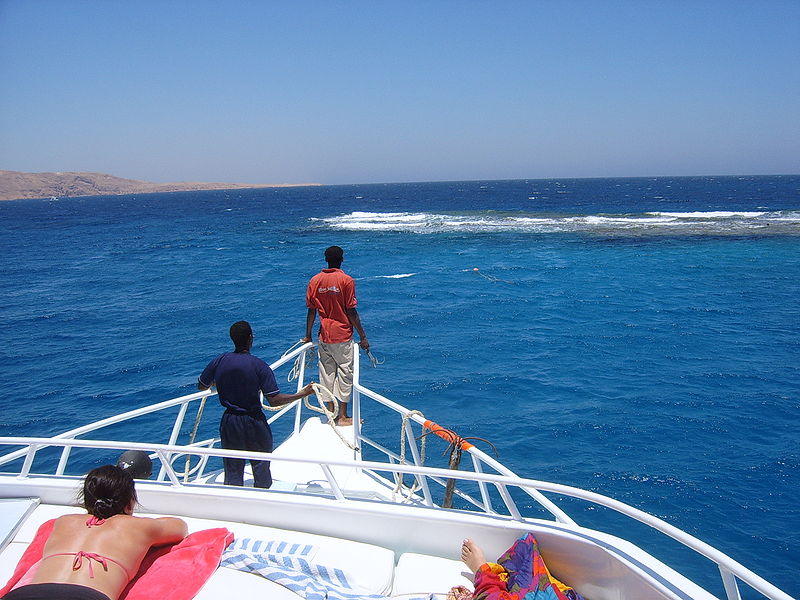
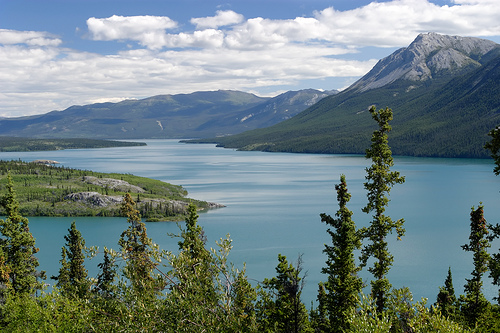
Will Alaska’s crystal clear lakes quench the thirst of the Middle East?
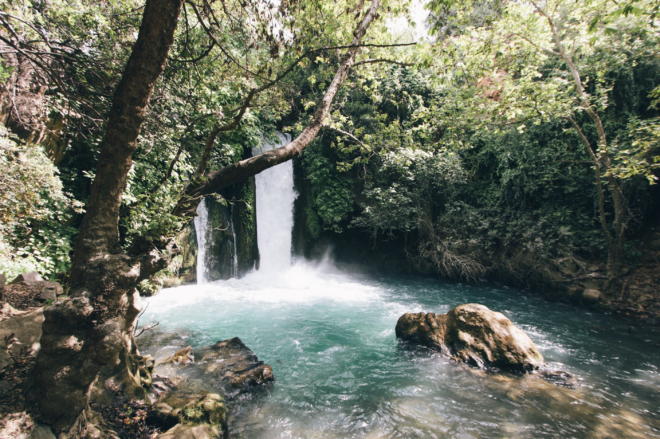
It looks like the old water trading game is once again getting attention. While it formerly involved such schemes as towing icebergs from Antarctica to Saudi Arabia, as well as bringing water in converted tanker vessels from Turkey (which now has a severe fresh water shortage itself ), we now have a new water importing scheme to dream about. This new plan involves bringing fresh water from an even further location: an Alaskan lake known as Blue Lake, located near the town of Sitka in southeastern Alaska. Reported on the National Geographic environmental news site, Alaska has numerous deep, clean lakes full of fresh water that is constantly being renewed. In fact, water in lakes like Blue Lake is a completely renewable resource.”
Kibbutz Sde Elihuya, home to organic agriculture in Israel. Mario Levi brought the idea of manure for compost from Italy
Treat all five of your senses with a Bio-Tour of organic agriculture at Kibbutz Sde Eliyahu.
With the summer in full swing (and heat, and humidity), we have featured a variety of eco-tourism options in the Middle East over the past few weeks. Some options have been delicious (such as the organic goat cheese farm in northern Israel) and some have been aesthetically fascinating (such as the public buses-turned-bed and breakfast suites in the Negev desert), but not all have been multi-sensual. Kibbutz Sde Eliyahu, one of the foremost organic kibbutzes in Israel, claims that it can provide an eco-tour that will please all five senses.
Kibbutz Sde Eliyahu invites visitors to what it calls a “Bio-Tour”, which they describe as a “unique tour in the clean air and the chemical free environment of organic farming at its best. Experience with all your senses. See, hear, smell, taste and feel.”
The Bio-Tours have a variety of attractions, and can therefore be tailored to each group, whether you decide to go alone, with family, with young children, or with friends. The lengths of the tours can vary as well, and usually range between 2-3 hours.
Various stops on the extensive Bio-Tour can include:
the organic pomegranate vineyard
the kibbutz’s compost heap
facilities for growing, drying and processing organic herbs S.D.E. Spice Factory
the fish farm
the Bio-Bee factory that manufactures insects as an organic form of pest control
Miriam recommends natural teas and a tincture for third-trimester ladies – and their husbands.
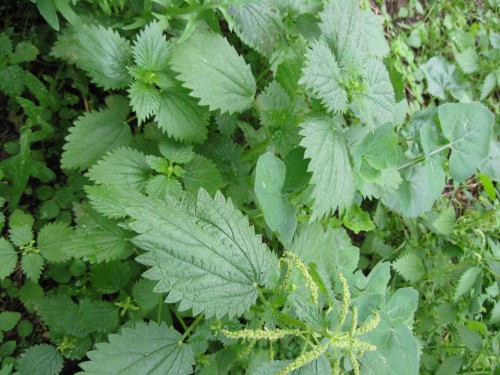
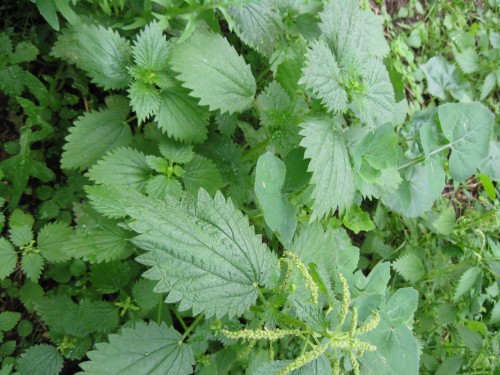
Having actively worked as a doulah for many years, I’ve always used herbalist’s wisdom to support women in pregnancy. Here are some herbs to ease the wait of the lady in waiting: The third trimester can be trying. Exhaustion, possibly return of nausea, feeling fed up. To strengthen the adrenals, supplement minerals and boost hemoglobin, drink this simple nettles tea:
Abu Dhabi’s oil wealth funds energy infrastructure transformation with General Electric at the helm.
In 2005, a light bulb went off for GE, which pledged to spend $1.5 billion on alternative technology by 2010. Their Ecomagination department eclipsed that goal in 2009 and has recently committed a further $10billion to the cause. Masdar City in Abu Dhabi will be the first to showcase the results.
Naps Systems Oy, a Finnish solar panel company is providing boutique solar panel services to the Middle East. They mix aesthetics, quality and service with good green energy.
Working with airports in Morocco (above picture) and gas pipelines in Libya to prevent corrosion, the Finnish solar panel producer and integrator Naps Systems Oy is comfortable working with major industrial firms, and would be happy to customize solar panels for special building projects.
While some efficiency may be lost in ordering solar panels beyond the common dark blue, Naps’ CEO and President Timo Rosenlöf tells Green Prophet that he sees no reason why solar panels shouldn’t be produced in different hues, or in special designs, even at the cost of efficiency. Green Prophet met Rosenlöf on our recent clean tech media tour of Finland; and he is very interested in doing more business with the Middle East.
When we think of the environment today, the West looks like the clear leader. But did you know that some of the world’s most important discoveries originated in the Middle East?
The Middle East, perhaps because of its challenging environment, has seen the genesis of many environmental discoveries and techniques. Some of these are so ancient and ubiquitous that we take them for granted: domestic animals; agriculture; and of course cities. The five discoveries listed here range in age from seven thousand years to cutting-edge, and yet they all remain important today.
Irrigation qanats from Iran
The Persian Qanat: Aerial View, Jupar
Agricultural irrigation has been invented at many times and places. However, by far the earliest civilizations to use irrigation were the Egyptians and Mesopotamians.
Irrigation systems in the fertile crescent were used to raise barley in otherwise arid land; they date back to at least 5,000 BC, and quite possibly earlier. Some of these systems, such as the qanats in Iran, are still in use today after nearly 3000 years of operation.
Windmills did not appear in Europe until the 1200s, but they are mentioned in Persian texts as early as the 600s AD, and al-Masudi’s description of Sistan in 950 AD makes it clear that they were already commonplace in that region. (It seems likely that waterwheels are also of Middle Eastern origin, but the earliest known examples are Roman.)
The vast bulk of all wind power, historically, has been used to drive sailing vessels. Still, after a millennium and a half, fixed-point wind power remains one of the most promising methods of generating clean energy.
Harvesting Fertilizer from Doves
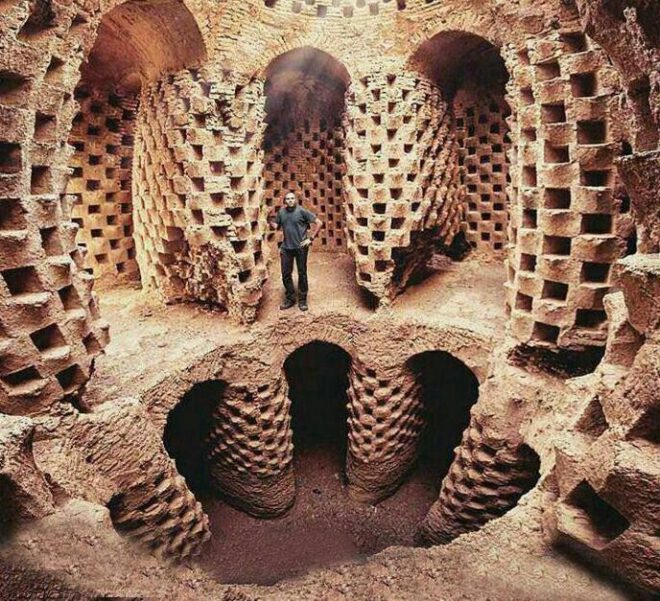
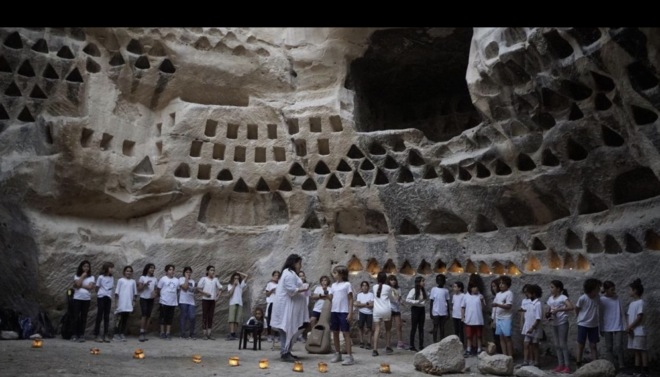
Dovecoats in Isfahan
The famous medieval dovecotes or pigeon towers of Esfahan, in Iran, are usually regarded as architectural attractions. But they are also the most visible part of a larger technology: harvesting fertilizer.The purpose of the dovecotes is to harvest nitrogen and phosphorus from pigeon droppings, and replenish the marginal soils of the region.
A related, though less dramatic technique is to graze sheep and goats over gardens after the harvest. There is an important environmental lesson here.
Just as early societies struggled to avoid using high-quality fertilizer as low-quality fuel, modern societies struggle to recycle livestock waste, while we simultaneously expend large sums on producing synthetic fertilizer.
Dovecoats in Israel
Reforestation and Erosion Control
Ein Gedi, Israel
The Middle East was heavily deforested by the dawn of history, and combatting erosion and desertification have been constant challenges. It has long been both the birthplace and the best testing grounds for erosion control techniques, ranging from ancient terracing to modern synthetic, modular water diversion blocks.
Israel has run a particularly successful reforestation campaign in the last half-century, being one of relatively few countries worldwide to show a net gain in forest cover. Israeli immigrant Moshe Alamaro has also been one of the major proponents of aerial reforestation, using repurposed military technologies to plant seedlings in remote or hard-to-access regions.
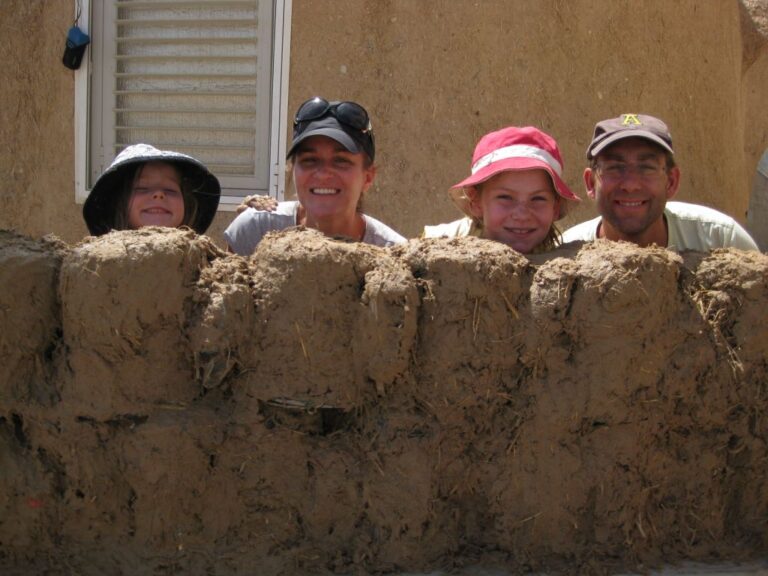
An Australian family of five goes on a 5-month worldwide eco-tour. Their adventure begins at Kibbutz Lotan in Israel as GoEco volunteers for 5 weeks. Read about the Wood-Auster family experience, told by dad Arron.
My wife Amy and I (Arron) made a decision to pull our family out of the day-to-day suburban world in Australia and venture on 5-month world trip. We wanted an experience that would expose our family of 5 to new cultures, languages, foods and most importantly different ways in which other families and societies co-exist in a less consumption-oriented way.
But was this possible? One month at Kibbutz Lotan in the Arava Desert in Israel ticked all the boxes and – as we were to discover – many more.
Barn owls as biological control. Arab farmers in the Levant use nesting boxes to encourage the owls to move in. This means much less pesticide to control rodents.
Known for his work with birds and other feathery friends Prof. Yossi Leshem of Tel Aviv University is showing how nature can provide the best medicine — not only for pest problems, but also for diplomacy. For decades, Prof. Leshem has been pioneering environmentally-friendly techniques in pest control, using owls and birds to keep populations of predatory mice at bay in farmer’s fields in Israel.
Over the years, his projects have extended to Europe, North America and more locally in the Middle East. This year, farmers from Jordan and the Palestinian Authority were joined in the project by 50 Israeli-Arab farmers — showing that natural pesticide control is not just good for the environment, it’s good for peace as well. (Warning: ridiculously cute owlet picture below)
Today, through Webcams trained on owl nests, thousands of nature enthusiasts can track the progress of owl and predatory bird nesting boxes Prof. Leshem and his colleagues have set up in various locations, tools to reduce the use of dangerous pesticides. Owls, if given good homes and the right conditions, can control the damage caused by mice and other small mammals to farmer’s fields, he says.
Baby barn owls. Are these faces only a mother could love?
“We were pleasantly surprised by the birds at the Tirat Tzvi kibbutz. The barn owls that nested in the water tower successfully raised four nestlings,” he says. “We noted the abundance of rodents in the kibbutz fields and decided to raise another brood. They can be seen on the Internet site, where the nestlings can be seen with their first feathers.
“This has been an exceptionally successful year for the barn owls,” Prof. Leshem concludes.
Almost 1,900 nesting boxes have been placed all over the country, about 600 of them in the Bet Shean Valley and the Jezreel Valley in Israel. Barn owls have occupied almost 80% of the nesting boxes, and many farmers are now enjoying the services of these “unique pest controllers,” he says.
On another note, owls have a mixed rap depending on the country. They are considered unclean in Islam, and a bad omen in the Middle East. Iran legends suggest they bring illness to children. So getting this project off the ground required some cultural sensitivity, Prof. Leshem said.
Some Aloe Vera gelato I saw in Milan…but I wasn’t brave enough to taste it!
You’ve heard of aloe vera gel, aloe vera cream, but have you ever head of aloe vera ice cream? Well maybe the Italians have got it right with this uniquely flavoured gelato, since the health benefits and general uses of this plant go beyond what you might think. It may seem like a strange addition to your diet, but like all natural supplements it is important to make it a part of your daily routine in order to feel the benefits. Once you do you will be able to notice that the aloe acts as a natural cleanser for your digestive tract, improving your bowel regularity.
The plot thickens: The Egypt Government says Red Sea oil spill is not a rig spill. The warmer weather has just released old oil, now surfacing. Or it’s come from passing tanker. Image via wikipedia
BP’s oil spill is a disaster with no end in sight. It only illuminates the alleged Red Sea oil spill, rife with controversy. As BP oil pumps into the Gulf, Egypt’s got its own spill to contend with, replete with accusations of cover-ups. Environmentalists and news reports said that the oil spill has been caused by a rig in the Red Sea, but the government says otherwise. Egypt authorities say the oil is just from old spills now surfacing.
Engineering students from Israel’s Technion have developed an anaerobic digester to help solve fuel and pollution problems in Nepal.
Inspired by a lecture from Bernard Amadei, a US engineer from Colombia University who founded Engineers Without Borders, a group of 30 Israeli engineering students decided to open a chapter and a goodwill project of their own last year. They are now working through Engineers Without Borders to reduce greenhouse gas emissions and pollution in Nepal, while providing a much-needed source of energy.
A kibbutz company in Israel leases 100 acres of land off of Bedouins in the Negev Desert to plant new solar panel project. Image via dlisbona
Israel’s Bedouin population may not be the most impoverished among the Bedouin clans in the Middle East, but they are very much marginalized people in need of some good opprtunities. And what could be better than a green ones? A new sunny land deal connects a local kibbutz and two clans, and it is expected to inject monetary resources into the Bedouin community.
Last week the Israeli business newspaper Globes reported that the Arava Power Company has signed contracts to build three solar power fields on land owned by the Tarabin and Abu Karinath Bedouin clans near Lehavim in the Negev.
Prince Charles delivers a speech targeted to Muslim population and how it mobilize to quell environmental problems, such as over-population in the developing world. Image via the Telegraph
Known as an ardent environmentalist – he’s even got his own line of organic food Duchy Originals – the United Kingdom’s Prince of Wales, heir to the throne, calls on Islam to save the environment. On June 9, His Royal Highness Prince Charles delivered a speech on “Islam and the Environment” at the Oxford Centre for Islamic Studies (OXCIS). He was invited as Patron of the center to give a talk at the celebration of the Centre’s 25th anniversary. It’s advice that applies to the Muslim world everywhere, even in the Middle East.
A green oasis in Amman – the King Hussein Park, Jordan.
Greetings from Amman, where I’m representing the Green Prophet at the URI MENA 8th annual conference. What’s URI MENA? It’s the Middle East – North Africa (MENA) region of the global United Religions Initiative (URI), dedicated to promoting interfaith cooperation. About 50 representatives of URI MENA member organizations (called CCs – Cooperation Circles) are gathered here for a three-day conference, including CCs from Jordan, Egypt, Iraq, Iran, Israel, Morocco, Palestine, Tunisia and the United Arab Emirates.
Why is the Green Prophet, an environmental website, involved in this interfaith initiative?
A birth control for men is in the works. It complies with strict religious traditions in Judaism, and it could control population growth in the Middle East and developing nations.
Most western environmentalists would agree that population control is one of the most important measures humanity can take to stop the over-consumption of Earth’s limited resources. While the west has already self-ajusted to having less babies, in favor of a career or pure environmental reasons (as this curious Grist editor points out); the same baby birth controls don’t seem to be in place in most regions of the Middle East.
Yes, the lifestyle in the Middle East is becoming more petroleum dependent and modern (see our post on a gold plated mercedes for proof), but people are still having lots of babies. To combat the growing population of the region Prince Charles, father of 2 – an heir and a spare – has recently advocated that followers of Islam adhere to the religion’s environment principles and practice population control. He called on religion in general to help save the environment.
With mostly all the onus on women, how about a birth control pill for men? If more responsibility is put on the man in developing or in-transition countries, maybe there will be better population control. I recently interviewed Prof. Haim Breitbart who is hot on the trail for developing a male version of the birth control pill. Tested on mice, the effects are reversible, and the molecule he has invented causes no adverse effects on the male mouse’s performance.

 Will Alaska’s crystal clear lakes quench the thirst of the Middle East?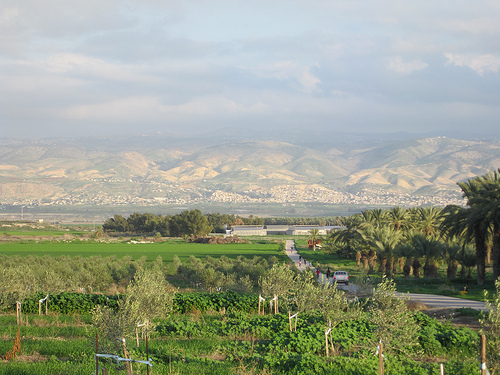



 Naps Systems Oy, a Finnish solar panel company is providing boutique solar panel services to the Middle East. They mix aesthetics, quality and service with good green energy.
 When we think of the environment today, the West looks like the clear leader. But did you know that some of the world’s most important discoveries originated in the Middle East?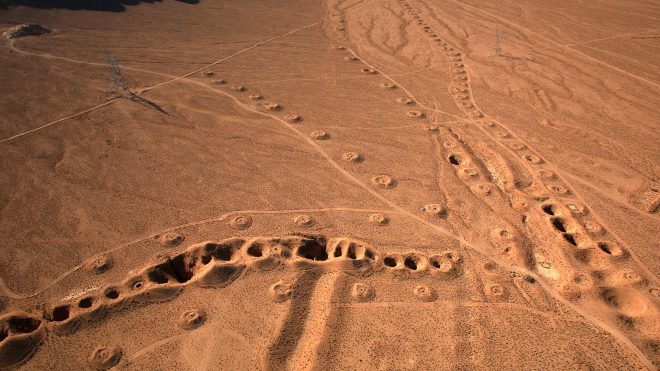

 An Australian family of five goes on a 5-month worldwide eco-tour. Their adventure begins at Kibbutz Lotan in Israel as GoEco volunteers for 5 weeks. Read about the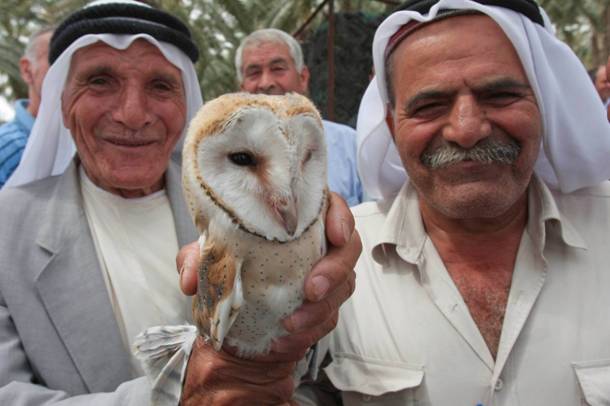

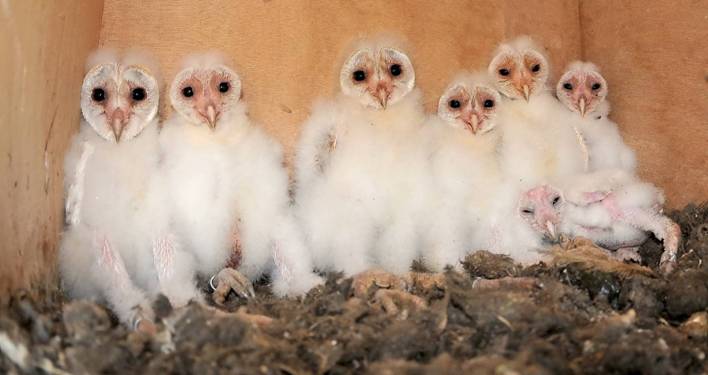 Baby barn owls. Are these faces only a mother could love?
 Some Aloe Vera gelato I saw in Milan…but I wasn’t brave enough to taste it!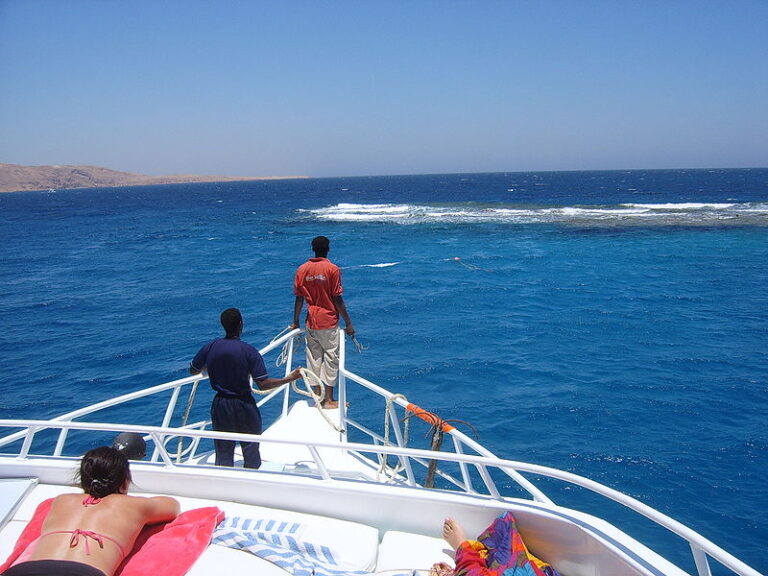
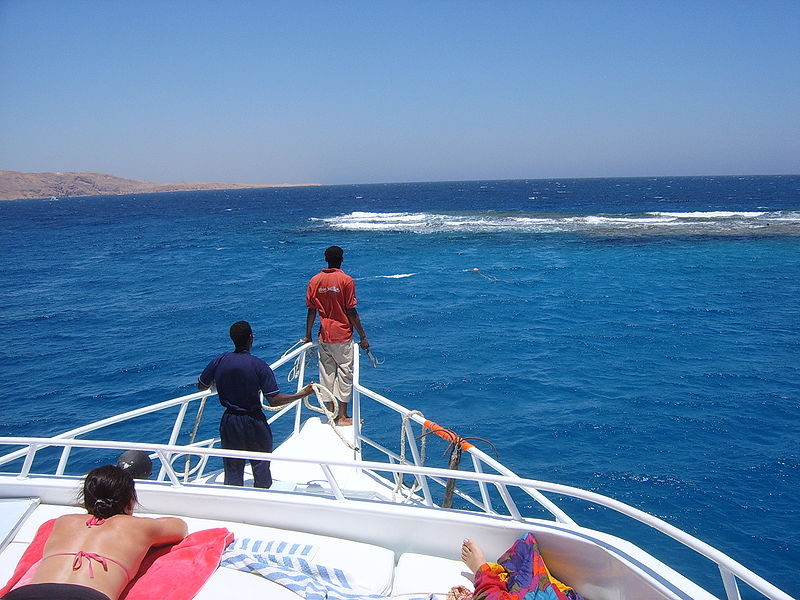 The plot thickens: The Egypt Government says Red Sea oil spill is not a rig spill. The warmer weather has just released old oil, now surfacing. Or it’s come from passing tanker. Image via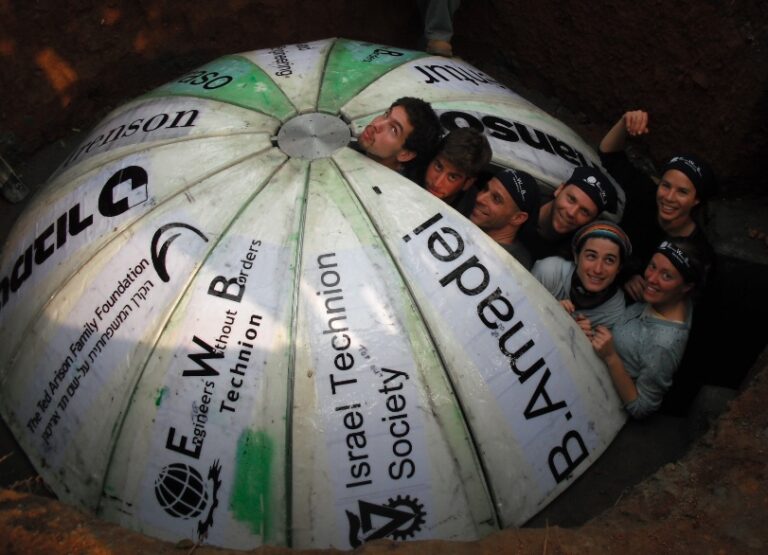
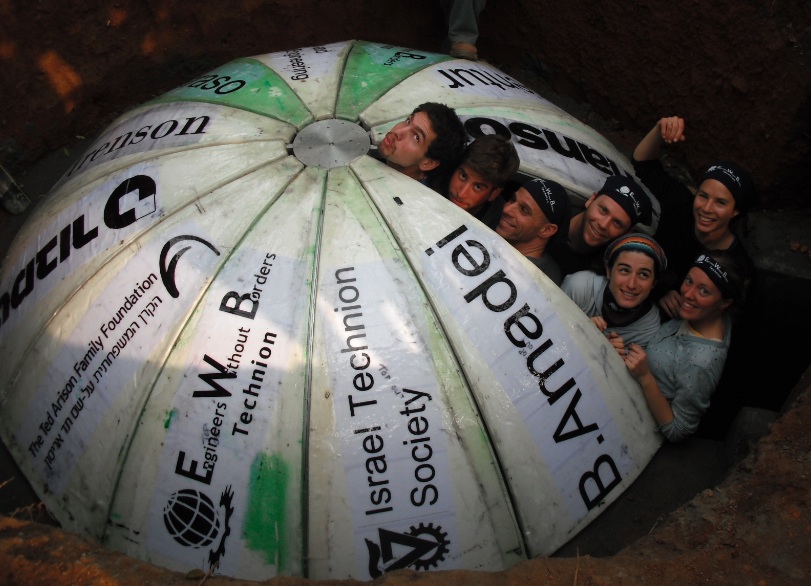 Engineering students from Israel’s Technion have developed an anaerobic digester to help solve fuel and pollution problems in Nepal.
 A kibbutz company in Israel leases 100 acres of land off of Bedouins in the Negev Desert to plant new solar panel project. Image via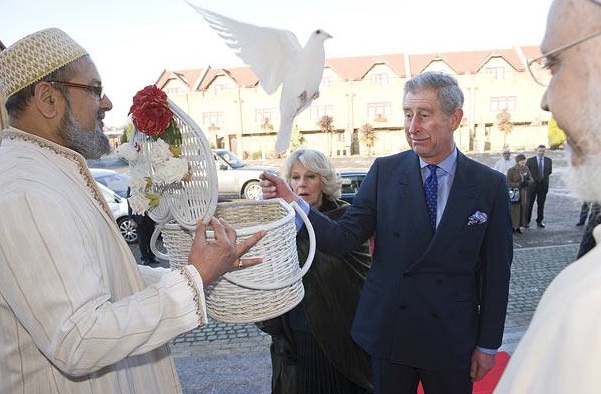
 Prince Charles delivers a speech targeted to Muslim population and how it mobilize to quell environmental problems, such as over-population in the developing world. Image via the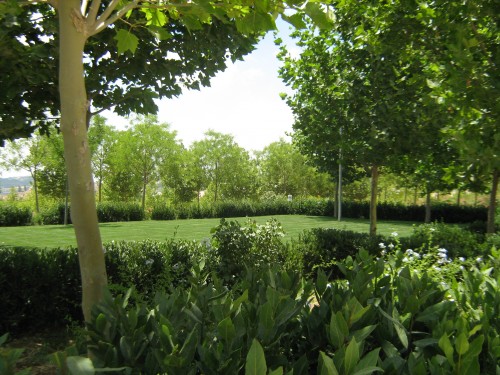
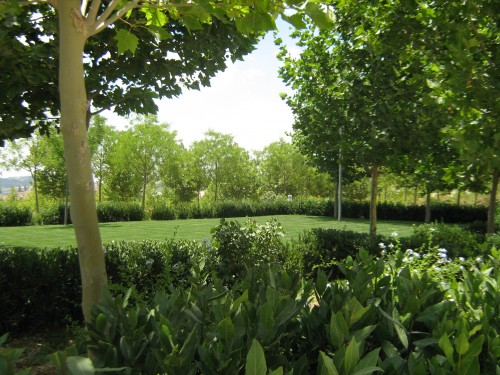 A green oasis in Amman – the King Hussein Park, Jordan.
 A birth control for men is in the works. It complies with strict religious traditions in Judaism, and it could control population growth in the Middle East and developing nations.