Home Blog Page 633

Palestine’s First Solar Power Electric Car Takes to the Streets of Hebron

palestine solar powered electric carThe Palestinian electric car isn’t much to look at, and it couldn’t carry a large Arab family, but it is solar powered!

Just when we all thought Shai Agassi’s Better Place electric car company had the electric car technology field sewed up in this part of the world,  some university students in the Palestinian West Bank city of Hebron have come up with someelectric car innovation of their own, reports Maan News.

Although not as sophisticated as Agassi’s technology, which involves developing not only a full size electric car, the Renault Fluence, and an exchangeable lithium- ion batter pack to power it; these unknown Palestinians have developed a home-made version of an electric powered vehicles whose batteries are charged by solar energy.

Israel Becomes A Nation of Pedalers (Cycling Freaks)

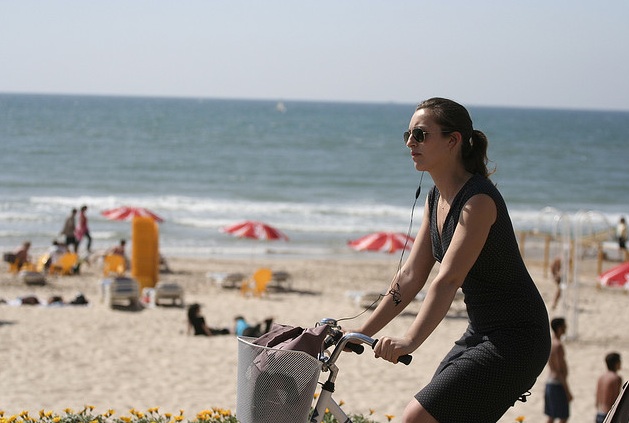
israel cycling tel aviv promenade beach boardwalk photo of womanYou can lose your life cycling on the roads in Israel. Almost once a month, a cyclist gets killed by a car by a drunk or negligent driver. Despite the risks, the sport is catching on like wildfire.

Bonnie Eshel, president of the Israel Cycling Federation says biking in Israel today is super-dangerous: “We live today facing the threat of death every time we decide to hit the road on a bike.

“Practically every day there are accidents, and the fact that we don’t have a higher number of fatalities is more a matter of luck. I feel this personally. One time they will throw things at me from a car that is traveling 80 kilometers an hour, another time they spray water, and once they even held a knife to me from out of the car window,” she says.

“Just last Friday, a truck passed me and honked when it was right next to me as it tried to get close to me and just at the last minute I managed to control the bike, but I was very close there to sprawling onto the road.”

Despite the dangers, Bonnie joins a growing number of Israelis who are buying road and mountain bikes and who are hitting the city streets, highways and cycling trails. Cycling in Israel, and cycling in the Middle East as eco-tourism has a lot of benefits. This piece looks at the cycling movement in Israel.

Better Place Smart Grid To Solve Storage Issues Preventing A True Clean Grid

0

better place coffee cupJack meets with Better Place in Israel and talks shop about how their rechargeable battery solution can fix the grid.

One of the biggest problems with switching an electric grid over to clean energy is storage. Most clean energy solutions are unreliable over short periods of time – when clouds come out, solar panels don’t produce. If the wind changes direction, or stops, wind turbines don’t produce. However, if the energy could be stored efficiently, then energy companies could produce excess during peak production times and otherwise reserve it for a rainy day… literally.

“The lack of good storage options has plagued utility operators for generations,” according to a recent Nature article: “Obligated to provide a steady supply of electricity to meet constantly varying demand, they have conventionally resorted to the costly and inefficient method of adjusting the output of a coal-fired plant, say, or by turning on a gas-powered ‘peaker’ plant during periods of high demand.”

Storage is a must for any promises of electric vehicles to work. Better Place, the electric car company says their solution provides clean transport and a solution for the grid.

Greening The Grid

In a recent visit to Better Place, as part of the PresenTense Summer Global Institute, I had the fortune of meeting with Mike Granoff, head of oil independence policies at Better Place. He explained that he is often asked if their solution for our dependency on fossil fuels, of bringing electric cars to the masses, is truly a “green” solution.

The Best Baba Ghanoush Recipe in the World

baba ghanoush baladi eggplant pictureBaba ganoush, baba ghannouj or baba ghannoug (Arabic بابا غنوج ) is an Arab dish of eggplant (aubergine) mashed and mixed with various seasonings. It’s one of the best flavors the Middle East has to offer.

Scientists say after seven or so years your body’s bones and organs regenerate, meaning most of us are a lot younger than we think, and that we truly do become what we eat over a short period of time. So those of us who live in the Middle East are eventually built from the amazing variety of fresh food one finds here. Among which is the magical and versatile eggplant, one of the most consumed vegetables in the Middle East, which like the tomato, is actually a fruit.

If we are going to be made of eggplant, it might as well be the best eggplant out there. And if you are looking for the king of all eggplant dip recipes, go no further. This one, I’ve developed over a few years is sure to make your guests salivating and waiting for an invitation to dinner, no matter how informal. The trick is in the oven, the eggplant and the tehini (tehina), you use. And take it from this lazy vegewarian, it’s one of the simplest things you can do in the kitchen.

The best baba ghanoush in the world – the recipe:

Ingredients:
Eggplants
Lemon juice
Tehina
Garlic
Salt
Olive oil
Parsley (optional)
Bread for dipping

Choosing your eggplant:

When choosing your eggplant, find one that’s firm, heavy in the hand, and which has a shiny skin. If you are lucky enough to lay your hands on a “wrinkled” variety, known in some parts of the Levant as baladi eggplant, meaning ‘wild’ or ‘from the land’ in Arabic, then you are almost guaranteed the best eggplant dip in the world. If you do lay your hands on the baladi variety (see my picture above), buy more than one.

They are not always in season, and most chefs would argue that these make the most splendid dip. Big thick grooves, a deep purple color, and a wide rather than a long fruit is what defines the baladi. Their cooked meat tends to be darker, and with fewer seeds and less water. Find them in markets, ones that tend to cater either to the gourmand or to the average working class person.

Smokin’ eggplants that sometimes explode

Now that you have your eggplant/s in hand, you want to cook it. Throw it in the oven at pretty much the highest temperature your oven can go. There is no need to prick the eggplant, but you may want to put a bit of tin foil under it, or a tray to catch the juice that might spill out. This is one of the rare moments when lazy chefs like myself can burn the food, and say that I’ve done it on purpose when the family complains of the smoke.

And you want the eggplant to smoke. So whether you are cooking in C or Fahrenheit, let the oven blast. If you are energy-saving conscious, cook the eggplants with other foods that need high heat, like potatoes or a casserole.

There is no set time for cooking. It depends on how much water is in the eggplant, and how high you want to go. I estimate an hour of high temp cooking will do the job. Keep the door closed. Having a convection oven can keep away the smoke. Small toaster ovens don’t really work well, but if you don’t have a fancy high-powered German oven like I do, you could try tossing them on the barbecue or into the coals of a fire (wrapped in tinfoil) to achieve the same, if not better, effect. The smoke is what adds to the flavor.

After adequate baking (you also have to make sure that the eggplants don’t totally dry up), take them out of them oven and sit on a plate to cool. You can also serve the dip hot or warm if you can’t wait, so up to you.

Putting the eggplant dip together

Slice open the eggplant with a knife. If the innards looks a bit deflated with some brownish broth swirling around, you’ve probably done a good job cooking. If the meat of the eggplant is tough and really juicy, light green, and hasn’t deflated, chances are you need to cook it longer. You need to be the judge of that.

baladi eggplant dip baba ghanoushBaladi eggplant innards straight from the oven.

Scoop out all the eggplant innards, scraping even some darkened caramelized bits from the inside. Place it all in a medium sized bowl, leaving the hard skin behind. I’d drain the liquid. It’s bitter.

Now depending on how rich you want the dip to be, you add tehina, or tehini, however you call it, to taste. Don’t use tehina already prepared as a dip. But the raw unmixed variety that comes in a jar, plastic or glass. Tehina is a sesame seed paste which can be bought throughout the Middle East, and in health food stores or the ethnic sections of most grocery stores in America, the UK, and Canada.

Sometimes I pour half a 350 ml jar into the eggplant innards, or sometimes – like in the hotter weather when you want it to be more light – I add in only a few tablespoons. Whole, organic tehina tastes best, especially when there are crunchy bits in there, and make sure you stir it before you add it in. Don’t just pour in the oil that tends to collect on top of the tehina jar.

baba ghanoush recipe eggplant dip baladiThe trick to a good baba ghanoush is fresh, high quality ingredients. Organic and local if you can get them.

Now you want to add lemon juice. Real lemon juice. The bottled variety doesn’t cut it. Neither does vinegar. Again depending on taste, add in a half lemon or up to two whole lemons (the juice) depending on how much eggplant you have and how much juice is in the lemon. One part of my family likes it sour, the other part less so. I make it both ways to please all, at least some of the time. Half to one whole lemon per medium sized eggplant is a good estimate.

Now add in fresh garlic. Again, dried or frozen garlic doesn’t work. You can add two or three teeth per eggplant with a garlic press. Add in some rough sea salt to taste, a few tablespoons of high grade olive oil, and some *fresh* parsley to garnish. The parsley is optional.

Mix it all together with a big spoon. No need to blenderize it as Hamutal suggests in another baba ghanoush recipe we’re featured.

If you’ve added a lot of tehina paste you might want to thin out the dip by adding some water. Go for dip which has the consistency of porridge, or a bit thinner than hummous spread, depending on your reference point. The more often you make this dip, the better it gets. At least that’s what my family tells me. Try it yourself. It’s pretty much a recipe that you can’t go wrong by. The key here is not in the precise quantity of ingredients you use, but how fresh they are.

Baba ghanoush, or eggplant dip, ready for devouring.

When your baba ghanoush dip is ready, serve it on crusty bread, on your home made pita, serve it on crackers, dollop it on pasta, or just scoop it into your mouth. It can store in the fridge for about a week. But it’s usually gobbled up well before the due date.

Want some more vegetarian recipes?

More baba ganoush
Shakshuka Tunisian Tomato Eggs Recipe
Za’atar-topped Pita
Moroccan Stuffed Artichoke Hearts
Apricot Chutney

Green Prophet Flies To: Mazen Abboud's Environment Blog in Lebanon

green prophet blog review
Green Prophet launches a new weekly series taking an in-depth look at the Middle East “green” blogosphere. This week: Mazen Abboud – a Christian minority’s view on green issues in Lebanon.

The growing awareness of environmental issues throughout the Middle East is manifested in the Internet, which includes an ever growing number of websites, forums and blogs focusing on the environment. Some of the blogs are written in Arabic, others are written in Arabic and include translation into English, and, yet, others are written only in English.

In this weekly review “Green Prophet Flies To…”, we’ll look at a blog from a different country in the Middle East. We aim to give clues to the current environmental issues that each country is dealing with, as well as talk about the identity of the bloggers and the environmental agendas they pursue in their own countries and in the region at large. Here you will find valuable data, opinions and news on environmental topics and exploits which are not discussed anywhere else.

This week we fly to Lebanon and look at Mazen Abboud’s Blog, active from April 2009. In his blog Mazen Abboud writes that he is “an environmentalist, a freelance journalist and a businessman.”

Sustainable Muslims break the terrorism link

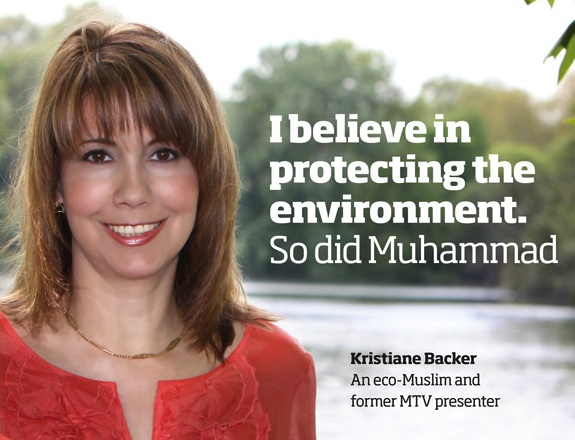
environment muslim qu'ran muhammad photo kristiane backer
Muslims everywhere can be at “peace with the earth and be at peace with heaven” by adopting environment message from the Qu’ran, advocates new UK campaign launched by Muslim convert.

Shocking statistics and a love for the environment have inspired a new campaign which highlights Islam’s Eco message in order to break the link between Islam and extremism. Inspired by Muhammed is a new campaign which showcases Muslims who have been inspired by their faith to contribute positively to society and focuses on areas such as women’s rights, social justice as well as the environment. Its message can impact the Middle East and the world.

Launched by the Muslim convert Kristiane Backer (pictured above) on behalf of the Exploring Islam Foundation, the campaign hopes to improve public understanding of the more positive aspects of Islam.

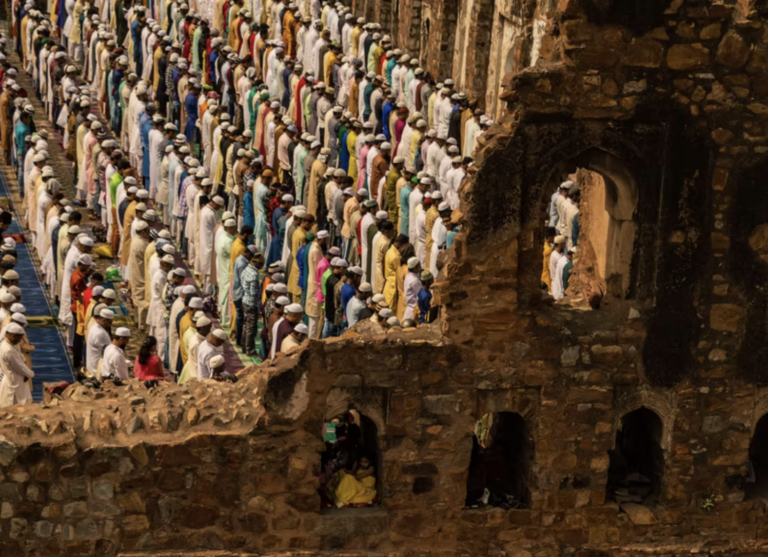
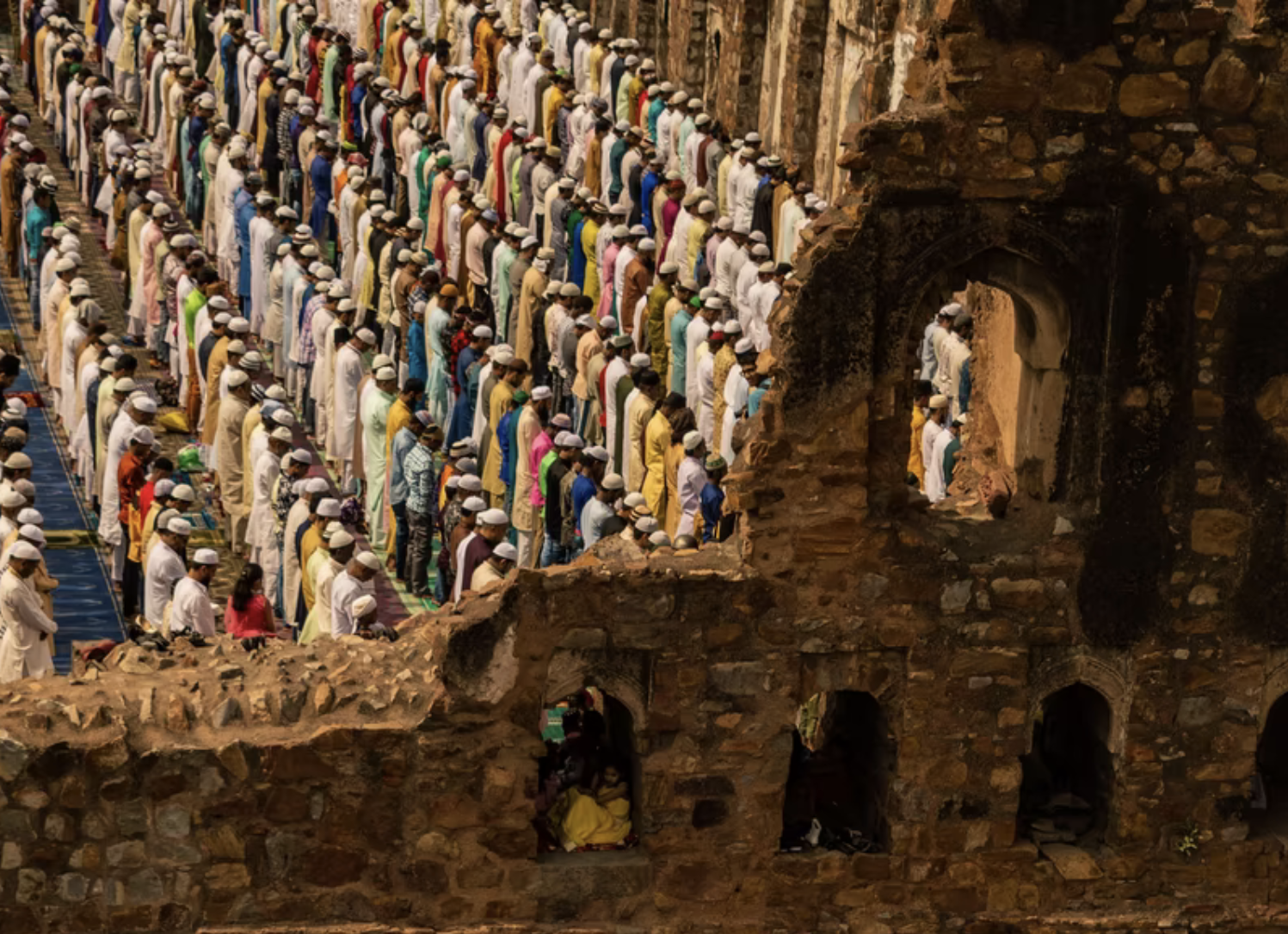
Islam muslims praying Pakistan
Muslims praying in Pakistan

The campaign was prompted by shocking finds from a May 2010 national poll in Britain which found that more than half the British population associated Islam with extremism (58%) and terrorism (50%). The opinion poll also discovered that just 6% of the British population believe that Islam promotes active measures to protect the environment.

inspired muhammad environment logoKristiane, the former MTV presenter from Germany, is one of the campaign profiles and talks about her awareness of green issues and how she’s adopted an environmentally-friendly lifestyle to suit her Islamic beliefs.

She explains: “Green living and the preservation of our resources are essential principles of Islam. ‘Don’t be wasteful, for God does not like the wasters,’ the Qur’an tells us. Prophet Muhammad reminded his companions to respect nature and use its resources moderately, not to waste water even when next to a flowing river.”

inspired by muhammad environment islam muslim

Backer explains: “The environment is everyone’s concern. According to Islam, life is sacred, as is everything in the natural world. Many verses in the Quran are concerned with nature, the earth and its resources. The earth is a trust from God and we are its ‘stewards’, a role we need to fulfil with responsibility and respect towards all creation.

The Koran tells Muslims to not be wasteful

“I have always cared for the environment. In Germany, where I grew up before I moved to the UK, green conscience is part of the national psyche since the Green movement was founded there in the 1970s. Similarly, green living and the preservation of our resources are essential principles of Islam. “Don’t be wasteful, for God does not like the wasters,” the Quran tells us. Prophet Muhammad reminded his companions to respect nature and use its resources moderately, not to waste water even when next to a flowing river.

“Having done courses in Sustainable Environment at a London university, I know there are many small things each of us can do to care for the environment. They will have an immense impact in the end, it is the ripple effect. If every household replaced just three 60-watt incandescent bulbs with efficient bulbs, the pollution savings would be like taking 3.5 million cars off the road!

“I do what I can. I recycle, switch off the lights when not at home and ride my bicycle around the neighbourhood. I eat organic halal meat, feed the birds with leftover bread and boil the kettle half full and I try to use green, organic products whenever I can from fruits and vegetables, and skincare to cleaning materials.

“Today we can all draw inspiration from Muhammad and try a little harder to live green, to recycle and to conserve energy. And to re-establish harmony between us and the world around us.”

The high profile media campaign is really hoping to change people’s perceptions of Islam in the UK and includes adverts at bus stops, tube stations and even on London’s iconic black cabs. A fun and informative website www.inspiredbymuhammad.com has been launched to explain Islam’s ethical principles and includes short videos to explain Islam’s more environmentally-friendly aspects.

Following Muhammad’s “green” ethics

The prophet Muhammad’s ethic that the planet is sacred and should be cared for is highlighted as is his respect for the environment. Muhammad encouraged water conservation (see Waqf for Water), planting trees and turning forests into protected conservation areas called hima as well as limiting waste.

Other high-profile Muslims on the website also discuss how Islam has inspired animal welfare through the prophet’s example who taught that animals should be treated with the same respect as a person.

The campaign is a great way of getting the message of peace and understanding within Islam to the wider general public and also reminding Muslims of their duties towards the environment. Its affects could reverberate to the entire Middle East.

As Kristiane says, “Today we can all draw inspiration from Muhammad and try a little harder to live green, to recycle and to conserve energy. And to re-establish harmony between us and the world around us.”

::Inspired by Muhammed website

Read more on greening Islam:
Water Conservation Values in Islam
The Muslim World Wants to Green Hajj
Breast Feed Baby in Hijab

Fast Forward Asks, "What is the Best Mode for Public Transportation in Lebanon?"

public transport lebanon cycling

A bicycle?  A train?  A bus? What is the best mode of public transportation for Lebanon? [image via: 350.org]

Fast Forward, the organization that led a protest composed of 150 cyclists storming the streets of Beirut a few weeks ago in order to promote sustainable transportation, isn’t tired yet.

It believes that the Lebanese people “deserve a modern public transportation system that can make our lives easier” and more sustainably, and will not rest until its message has been received.

It recently approached the public at large via the organization’s Facebook page and asked, “What’s the best mode for public transportation in Lebanon?”  Some responses were thoughtful, some impractical, but above all it was refreshing to see people thinking about the problem.

Israeli Citizen Group "Save Adullam" To Fight Oil Shale Plans

8

adullam-park-oil-shale Israel’s Energy Initiatives’ (IEI) oil shale ambitions threaten the environment, and livelihood of Judean hills residents. [image courtesy of Moshe Moreno]

By now, with the world’s worst oil spill off the Gulf of Mexico causing irreparable damage, and with numerous cleaner alternatives to choose from, a wiser civilization might leave destructive, polluting energy in the ground, or below the sea, and harness the sun and the wind instead. But the American IDT Corporation is pushing a potentially ruinous oil shale scheme in Israel with a license that permits them to bypass environmental assessments or community engagement.

Israeli Company Makhteshim-Agan Industries Invests $1 Billion in Pesticides

3

Makhteshim-Agan Industries pesticidesAgrochemicals might be big business, but they are a bad deal for the environment and human health.

Israeli firm, Makhteshim-Agan Industries, believes that there is a bright future for chemical pesticides. It has just bet $1 billion dollars on this hope, buying out the Albough chemical manufacturer in a move which, according to Ha’aretz, will transform the Israeli company into the “biggest generic player” in North America’s pesticides industry.

There’s big money to be made from agrochemicals, although whether Makhteshim-Agan’s investment was wise financially remains a moot point since since Albough’s businesses focuses on a single product – the broad-spectrum herbicide, glyphosate:

Making Innovation Matter in Water's Terms

Ambika, a research analyst who specializes on Middle East environment issues including conflict and water, reports on her trip to Sweden, where she finds grassroots solutions like the Peepoo Bag –  ones that could impact the developing world.

Along the banks of the beautiful Lake Siljan, in the idyllic town of Leksand, Sweden, over 1600 people from 120 countries came together for the 5th Global YES Summit in partnership with the Tallberg Foundation. The Summit brought together almost 150 projects and new ideas, developed by people who have a desire to tackle the challenges facing us today.

These projects and initiatives attempt to solve issues of social cohesion, climate change, environmental degradation, poverty, and youth unemployment. These ideas, which are focused mainly on the grassroots and community level, have the potential to start an innovation revolution in developing societies.

The projects were divided into five broad themes of water, energy, land, cities and people. Each project was not only environmentally sustainable in its own way, but extremely innovative in its approach. Several of these projects, such as the Peepoople bags, SolarCool, KickStart, Solvatten, and others, simply adapted existing knowledge into effective inventive solutions for the future. These exciting new innovations are mostly uncomplicated and easy to implement, with the power to change and transform the society they are introduced into.

Syria Campaigns to Curb Country's Voracious Plastic Bag Appetite

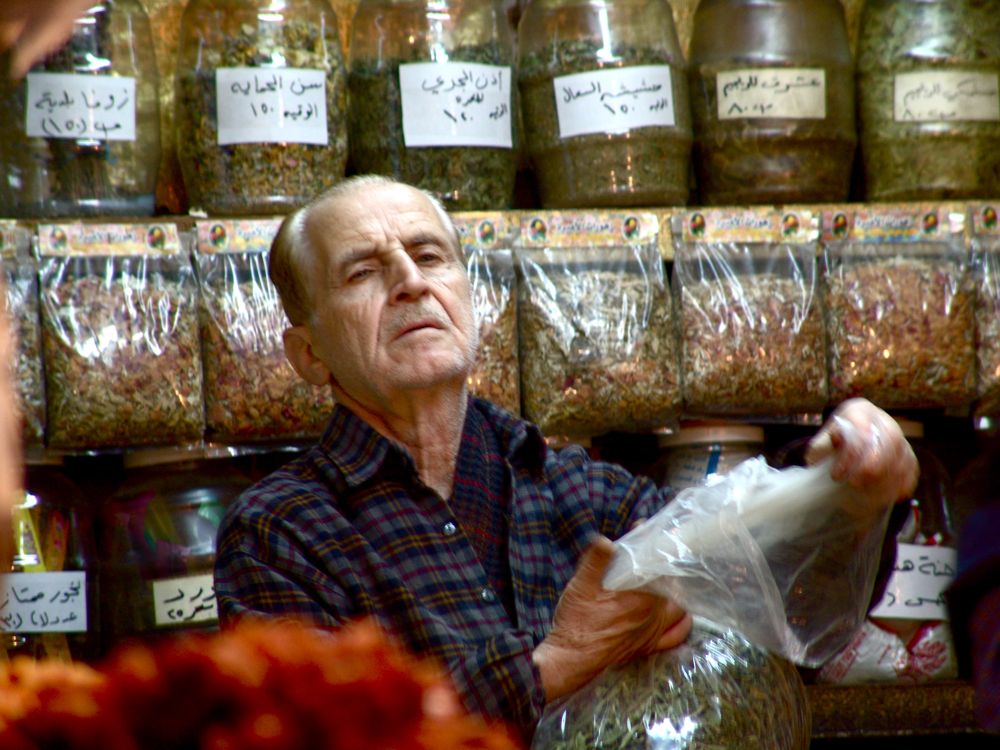
plastic bags syria damascus market spice phot0 Estimates of 15 million bags per day consumed in Damascus alone! Moshe uncovers news in Arabic – that Syrians are launching a campaign to “say no to plastic bags.”

Where bags litter highways, byways and in a region where camels choke on plastic bags, Syria is joining other countries in the Middle East, such as Lebanon, the UAE, campaigning to ban plastic bags. The Syrian Ministry of Environment is launching a campain to cut down on plastic bags because of their bad effects to human beings as well as to the environment.

Technofarm’s Irrigation Project Aims to Boost Libya’s Self-sufficiency in Food Production

3

irrigation projects great man made river libya photo mapNew agriculture projects feed Libya, thanks to the Great Man Made River. The artificial irrigation project, the most expensive in history, is good while it lasts.

BENGHAZI, Libya — Greg Cunningham is a long, long way from home. Since early 2004, the Colorado agribusiness consultant has lived in eastern Libya — growing wheat and corn irrigated with water piped in from the Sahara Desert. Cunningham, general manager of Technofarm International Ltd., holds the distinction of being the first American businessman in Libya once the doors opened. But risk-taking is nothing new for this 54-year-old entrepreneur, who’s lived and worked in at least 20 countries from Egypt to the Philippines.

“We did not have an ambassador here even a year ago, and a lot of American companies are uncomfortable investing in a country where there’s no active embassy,” Cunningham told The Diplomat. But he added that “Libya’s a very friendly place. Never in five years has anybody given me any trouble.”

Are Iran Oil Sanctions Finally Kicking In?

iran oil sanctionsAs major oil companies pull out of Iran, analysts differ over the import of new economic sanctions.

By all objective standards, this week Iran is facing some version of a moment of truth. Responding to the impending imposition of beefed-up United Nations economic sanctions, French oil company Total announced publicly that it was suspending oil shipments to Iran and the Spanish oil giant Repsol withdrew from a contract to develop part of a large Iranian oil field. Even Iran’s neighbor, the United Arab Emirates, announced a series of moves to comply with the strengthened sanctions regime.

But analysts disagree over the import of the sanctions, and the degree to which the new approach will influence the Iranian government.

“These new sanctions will target Iran’s financial sector, Iran’s ability to trade, Iran’s ability to communicate with the external world and travel, which begins to target the energy sector, and squeeze a number of companies connected to the revolutionary guard,” Dr Emanuele Ottolenghi, a Senior Fellow at the Foundation for the Defense of Democracies and author of Under a Mushroom Cloud – Europe, Iran and the Bomb, told The Media Line. “All of these things combined will have a significant effect.”

“Obviously, it could have been much tougher, but there are some aspects of the resolution which if implemented honestly, conscientiously and resolutely can do a great deal of damage at a time when the Iranian economy is particularly fragile due to the vast incompetence of the current government. And the internal political situation makes the government more vulnerable,” he continued. “If you look at sanctions as a way to slow down and damage the efforts of the regime then these efforts are valuable.”

“Those who think that sanctions will solve the problem are wrong: sanctions are not going to convince President Ahmadinejad or the Supreme Leader Khamenei to reconsider their approach to nuclear power, nor are sanctions going to bring down the regime,” Dr Ottolenghi said.

“But if properly implemented, sanctions can achieve two goals: first, to reduce the ability of Iran to procure and acquire sensitive technology abroad which will significantly slow down the Iranian race to nuclear weapons. The second value of the sanctions is that they will immensely raise costs for Iran to engage in all of its illicit activities, wreaking havoc into the system by, for example, by sowing discontent among those within the regime who are in it just for the profit.”
But Dr. Seyed Mohammad Marandi, a professor at the University of Tehran, argued that the sanctions would fail in their stated goals.

“I don’t think that sanctions will have a major effect on Iran, especially since the Iranians had been preparing for the sanctions for quite awhile now,” he told The Media Line. “Iran is trading less and less with Europe and North America; and has been finding alternative partners in Asia, Latin America and Africa.

“Beyond diversifying its trade, Iran has also become more independent, for example in its consumption of oil, with heavy investment in oil refineries,” Dr Marandi said. “So Iran is much more independent than it was a few years ago.”

“There will be a minor effect,” he continued. “For example hospitals will have difficulty importing equipment from Europe. But at the end of the day it’s not going to have a major effect on the Iranian economy, and the irony is that the more sanctions that the west places on Iran, the greater the gap between them and the less leverage Western countries have over Iran.”

Dr Mehrdad Khonsari, a former Iranian diplomat and Senior Research Consultant at the Centre for Arab and Iranian Studies, argued that the sanctions would delay, but not solve, the principal conflict between Iran and the West.

“The sanctions will obviously have some kind of an effect on the Iranian economy by making conditions worse for all Iranians,” he told The Media Line. “But it will not be of sufficient strength or magnitude to force the Iranian government to change its stance or go a different way.”

“Life will become harder, Iran’s flexibility within the international community will be marginalized, but it doesn’t mean that the sanctions will achieve the behavior which they are aimed at achieving,” Dr Khonsari continued. “The oil companies are not pulling out, and those who are buying Iran’s oil are still buying the oil. What they are doing is essentially making sure that there is no new investment or technology and that production levels don’t increase.”

“If the international community were serious about containing Iran’s development towards nuclear weapons, they would recognize reality: we are moving towards a military confrontation, which is exactly what Ahmadinejad wants,” he said. “Sanctions are not working; diplomacy is not working; so what else is left? The choice is very clear.”

More on oil, green news and not-so green, from the Middle East:
Saudi Arabia to Replace Oil With Solar Power
Jordan Activists Worry About Oil Spill in Red Sea
Red Sea Oil Spill Cover Up Worse Than Expected
(This story is reproduced from the Middle East News Source – The Media Line)

Above image via azrainman

Smokers Decompose Slower Than Non-Smokers


“Smoked pigs” decompose slower than those that don’t smoke. (They were actually injected with nicotine).

With smoking rampant in the Middle East, and rates in children increasing all the time, a new CSI study, using pigs of all creatures has found that those injected with nicotine decompose slower than those pigs which weren’t injected, reports the New Scientist.

I.D.E. Launches Third Desalination Plant in Israel

0

ide desalination israelShimon Peres, Shari Arison and other notables toast water to Israel’s latest desalination plant, dubbed the largest of its kind in the world.

With news of new business in China this week, IDE launches its third desalination plant in Israel:
Champagne glasses containing the finest fresh water were raised in a toast last month to celebrate the opening of Israel’s third desalination plant, this one in the northern city of Hadera. Lauded as the largest reverse osmosis desalination facility in the world, the plant that takes water from the Mediterranean Sea and makes it safe to drink is expected to produce 127 million cubic meters of water each year – enough to meet the water needs of one in every six Israelis. But is it green?

Created with an investment of nearly half a billion dollars, the plant was built by IDE Technologies, an Israeli company that has already built two seawater desalination plants on the country’s Mediterranean Sea coastline, along with the Housing and Construction Group, a real estate and development firm owned by the Arison Group.

It was the government that put in place the plan to create the desalination plant, to meet the demands of a growing population and an imperiled water supply, dependent almost entirely on winter rainfall.

aerial view desalination plant IDE IsraelAerial view of the new desalination plant in Hadera.

In a 25-year agreement with the government and with its full blessing, the water will be produced at just over 50 cents per cubic meter. IDE’s first desalination plant, built on the coast in Ashkelon, has been performing well since 2005, according to company reports. There is a third plant at Palmahim, just south of Tel Aviv, and two more are planned along the coast, in Ashdod and Soreq.

A new era of cheap water?

“The success of the mega-desalination plant concept has ushered in a whole new era of plentiful, affordable water for a world facing severe water challenges,” says Avshalom Felber, IDE Technologies CEO, in a press statement. “With the launch of the Ashkelon plant in 2005, we pledged to continue pursuing further breakthroughs in plant capacity and water cost.”

Ofer Kotler, CEO of the Housing and Construction Group (‘Shikun U’Binui’ in Hebrew) says: “As one of the most complex and largest building projects our group has ever undertaken, we are especially pleased to present this plant to a country facing severe water challenges.”

The project was financed via a consortium of international banks, including the European Investment Bank, Calyon, a French investment bank, and Portuguese investment bank Esperito Santo. Back in 2007, Euromoney, a prestigious business and investment magazine, touted the ‘global village’-style economic deal for the Hadera plant as the Project Finance Deal of the Year.

ide desalinationInside the Hadera desalination facility in Israel.

IDE boasts technological breakthroughs in the fields of thermal and membrane desalination, and also, perhaps surprisingly for a country in the Middle East, in snowmaking. In desalination, the salt is removed from seawater using a process called Reverse Osmosis (RO) one of two ways to use desalination membranes to process water. In RO, water from a highly pressurized salty solution is channeled through a water-permeable membrane to separate it from its salty component. The second approach found in desalination plants like in Saudi Arabia is via a process called electrodialysis.

IDE is owned by two mega-industrial companies in Israel. The chemical company ICL has a 50 percent stake in IDE (this company also extracts potash and chemicals from the Dead Sea) and Delek Group, an energy and infrastructure investment company and holding tank, owns the other half.

The new desalination plant at Hadera is the largest of its kind in the world, and is expected to produce enough water for one in six Israelis.

Not an environmentally correct solution

Environmentalists in Israel do not see desalination as a definitive long-term solution for solving the water crisis in Israel and the Middle East, however. One prominent group is Friends of the Earth Middle East (FOEME), whose Israel director Gidon Bromberg points out that desalination plants have a lot of corporate money at stake, in the hands of a few stakeholders.

In addition, in the context of climate change and protection of local environments, reliance on the extremely energy-intensive and pollution-emitting desalination process doesn’t appear to be a viable long-term solution, he says.

Bromberg and others dedicated to the protection of local water resources suggest that water-strapped countries like Israel, Jordan and others in the region first identify more effective means of reducing water use at home and cut back on water-intensive agricultural practices.

This debate between industry and the environment isn’t new, and now is the time to create common ground and circumvent a crisis, Shmulik Shai, general manager of H2ID, the Hadera desalination plant, tells me.

He says that for the past five years Israel has been facing a severe shortage in its three main sources of water: The Sea of Galilee, its mountain aquifer and its coastal aquifers. Below the red line in terms of volume and nitrates, if the country doesn’t find a solution now, these sources could be damaged indefinitely, he warns.

“The balance of rainwater is not good enough,” says Shai. If there’s one short season of rain and a spike in population, Israel’s semi-arid climate could find itself with a “chronic shortage problem,” he continues. And while 70 percent of the country’s water is supplied by rain that falls in the winter months, there are periods of drought in Israel when the rain does not come down at all. To make things worse, rainfall is not evenly distributed, he remarks.

The new plant will furnish a good portion of the 750 million cubic meters of water that Israelis require for personal use, he says. And among the desalination technologies that the Hadera plant utilizes are those developed by IDE, including new processes and new mechanisms, such as how to pressurize the water. To date, IDE has constructed some 400 desalination plants in 40 countries, with a total water output of 2,000,000 cubic meters per day.

More on desalination:
Saudi Arabia to Use Sun Power at Desalination Plant
New Hadera Desalination Plant Could Revive the Dying Jordan River
Japan and Saudi Arabia Co-develop Desalination Technologies

Read our series of interviews with Israeli water experts:
1. All the Water in Israel: Interviews with Government, Analysts and Researchers
2. Interview with Israel’s past water commissioner, Shimon Tal
3. Gidon Bromberg on Water Security and Sustainability in the Middle East
4. Read our interview with Israel’s Water Commission
5. Interview with Eli Ronen, the Chairman of Mekorot
6. Interview with Ranaan Borel (SPNI) on Water Security in Israel