Home Blog Page 619

Interview With Entity Green, Jordan’s Sustainable Development Organization

0

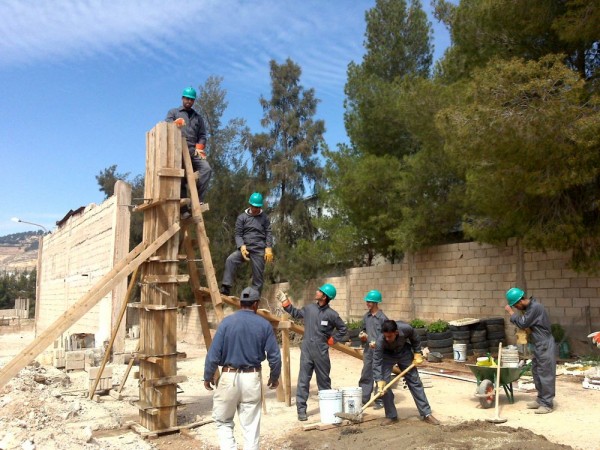
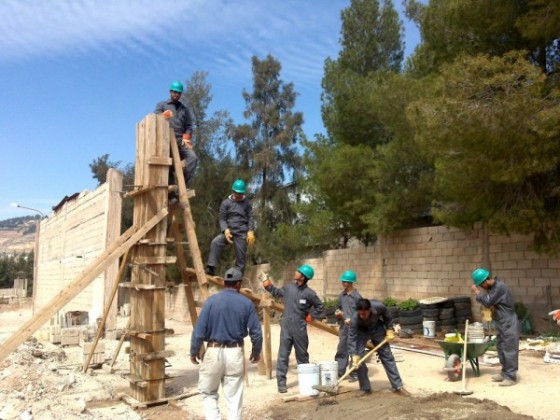
Entity Green brings greener development, recycling, and eco-friendly lifestyles to Amman, Jordan. Above, an EG team constructing a new building.
After learning about the farmer’s market, Souq al Balad, that Entity Green helped organized in Amman a few months ago, we decided we wanted to know what else this organization was up to. And so we spoke to Anselm Ibing, manager of the organization’s recycling program, to learn more. Here’s what he had to say.

Foster + Partners in Jordan: What’s Sustainable About a Green Airport?

3

Queen Alia Airport green airport masdar jordan
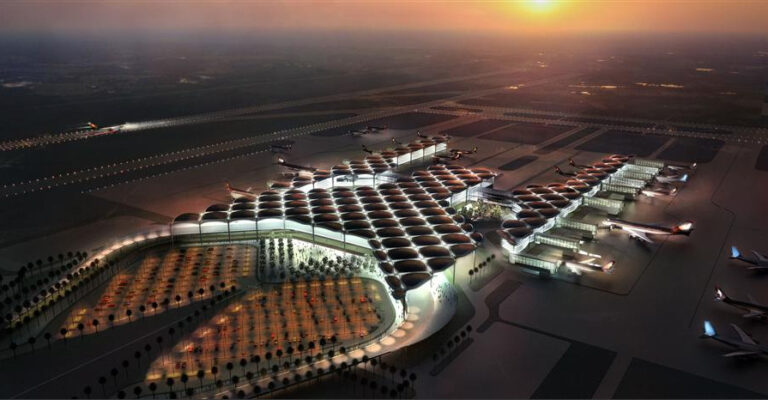
Inspired by palm trees, Masdar City architects will expand Queen Alia Airport, to become a “green” airport in Jordan.

A couple of months ago, fellow Green Prophet writer Tafline Layline wrote a blog about the dubious green credentials of Fosters + Partners projects across the Middle East. The architect firm behind ambitious green projects such as Masdar City may be claiming to “design energy efficient, socially responsible buildings” she explained, but they are feeding the ‘bigger, better, more’ mentality which is damaging our planet. Tafline explained that they weren’t challenging our constant urge to grow and consume, and with price tags in the billions were they really sustainable?

Everyone knows that a green building is only as green as those living inside- so unless you change the behaviour of people and they way they treat resources in every aspect of their lives, than what it is the point? And that’s exactly what I was thinking when I heard about Foster + Partners plans for to green (and expand) Jordan’s Queen Alia Airport, which is expected to be completed sometime in 2011.

Israel Cleantech Intelligence: Tidal Power and 7 More Headlines

Tel Dan StreamIsrael-China, foreign investment in Israel, oil munching bacteria and more headlines related to Israeli cleantech and the environment. Image by Or Hiltch.

During the week of July 25, 2010, Israel’s first tidal power plant was completed in Jaffa. An Israeli-Palestinian team has received a grant to address clean water issues in Israel and the Middle East and a new campaign by Israel’s Water Authority to distribute 2 million water aerators was launched. For these stories and more, see this week’s headlines below.

Ban Saudi’s Bottled Water?

4

bottled-water-creativeNot only does Jibal Faifa Water Company’s bottled water contain excess levels of cancer-causing chemical, but plastic bottles are the bane of the environment

It comes as no surprise that water, that miracle of life without which we would quickly shrivel up and die, dominates the headlines. We are either witch-hunting BP for its role in polluting numerous water sources, marveling at Libya’s man-made river, or watching cautiously as Egypt struggles to provide water to its citizens. Then there is the water that comes in bottles. We assume its safe, but is it really?

Animation: Past Life Regression For Eric-Sun, The Abandoned Cell Phone

cell phone charging in Africa

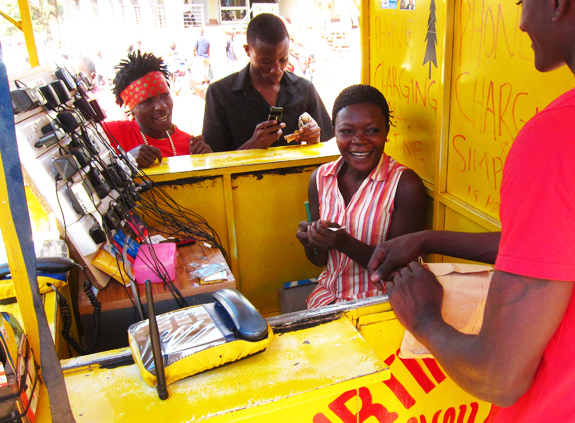
The next time you think of replacing your cell phone, remember it’s made of nickel, silver, gold, platinum, as well as plastics and other finite materials; will you reconsider?

We love to share clever designs with our readers, to write about the technologies we hope will save the world one micro chip at a time. There are motorized bikes, energy reduction innovations, smart grids, and numerous other designs worth sharing. But rarely do we consider the ethics of design; nor do we ponder the origin of components that make up the technologies that render life more convenient. For Australian designer Leyla Acaroglu, these questions are central.

American Vertical Farm Concepts Good for the Middle East

0

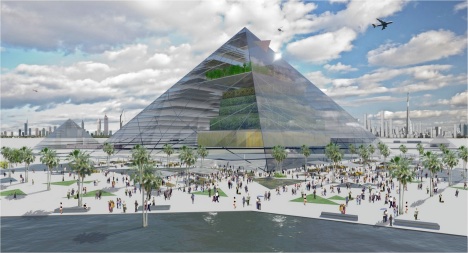
Inspired by Babylon’s Hanging Gardens? Weber Thompson’s Vertical Farm pyramid concept can be used in  Abu Dhabi or Dubai as well.

American cities like Newark New Jersey are a long way from Abu Dhabi or Cairo; but vertical farming concepts now being planned for American cities, are also being considered for locations in the Middle East as well. In a recent published article in Treehugger, giant pyramid shaped structures, as well as specially designed skyscrapers will produce large amounts of vegetables and other agricultural produce by means of soil-less hydroponics.

Summer Heat Jams Power Production in Oil-rich Saudi Arabia

0

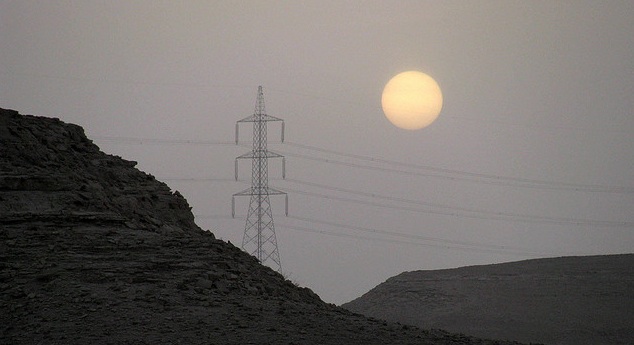
saudi arabia summer hydro electric linesSaudis, Kuwaitis and Emiritis experience summer blackouts, despite being oil- and gas-rich. Lack of infrastructure and change in lifestyle to blame.
With temperatures reaching up to 50 degrees Celsius or 112 Fahrenheit more the a few countries in the region are struggling to keep up with people’s needs to keep cool in the scorching summer heat. In Israel, which sadly gets most of its energy from coal and natural gas, the public power company the Israel Electric Company issued a statement on Sunday calling for Israelis to minimize their electricity use between noon and 5 pm for the rest of the week as the company’s production was reaching its limits, the Jerusalem Post is reporting.

The paper also pointed out the Israel only keeps a single digit power reserves compared to the 17-25 percent which is considered necessary. While it’s quite plausible the electricity might be in shortage in Israel as the country lacks any significant natural resources, the fact that blackouts are occurring in the United Arab Emirates home to the world’s seventh largest proven oil reserve is maybe more surprising.

Only 1 in 25 Emiratis Use Their Legs to Walk

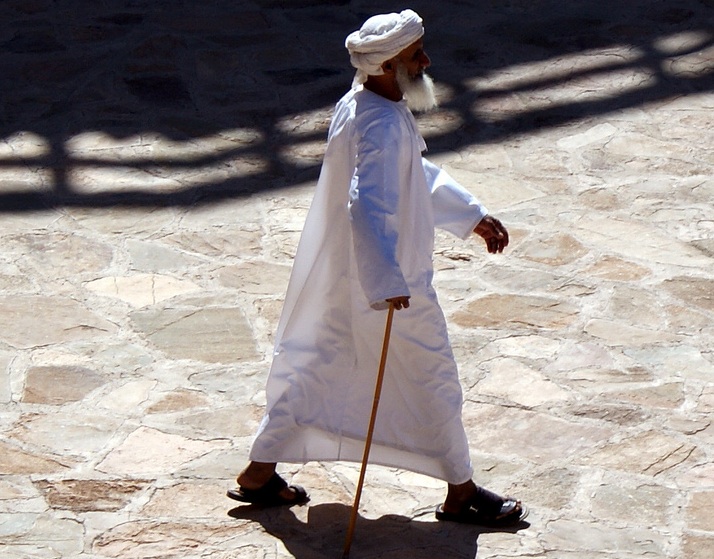
arabian man walking with stick photoLegs? Who needs them when you can drive. Maybe this is why diabetes rates in the Gulf region are among the highest in the world.
We already know about the terrible rates of road accidents in Saudi Arabia, the dangerous practice of car drifting, and the admiration for gold-plated cars. Now, a new study finds residents of the United Arab Emirates to be highly sedentary, Adam Gonn from the Media Line reports.

A mere 4% of people living in the United Arab Emirates walk on a weekly basis, a new study by an international shoe maker has found. Commissioned by South Korean shoe manufacturer RYN ahead of their forthcoming entrance into the Gulf shoe market, the study into Emiratis’ walking habits found that both UAE citizens and expatriates alike are not walking regularly enough. In spite the fact that the walking infrastructure in the United Arab Emirates is well advanced compared to most countries in the world, just 4% of residents walk on a weekly basis,” read the report.

RECIPE: Herb-Crust Chicken Shnitzels

0

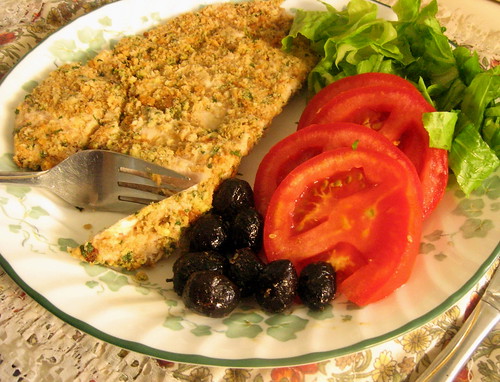
chicken-shnitzels-with-herb-crustChicken fillets pounded thin and fried are shnitzel in Israel. Miriam serves a healthier, herby, baked version.

Sizzling summer weather takes away our appetite for anything but light, nutritious food. Coming in from the street feeling broiled ourselves, a quick, home-cooked meal is the answer. Like these organic chicken fillets. They’re  more interesting than the usual fried shnitzel because herbs like the ones featured in our Middle Eastern spice series, breadcrumbs and nuts protect the meat and keep it juicy – and make a lively, flavorful crust.

Most shnitzels are fried, but these you bake in less than 15 minutes. Less time over a hot stove, and healthier for you.

Killing Marine Life With Your Sunscreen

3

coral reef death by suncreen
Normal coral (left) exposed to ultraviolet filters found in sunscreen “bleaches” white (right) when the algae living inside it die.

Go to the beach. Swim. Kill some ecosystems and go home. All in a full day trip to any of the world’s sandy getaways. Until recently, this was a trip to get away from the world’s problems, but now, with the reporting on what our sunscreen is doing to marine life, the ocean jaunting is becoming increasing dangerous to our planet’s wonders of the sea. National Geographic (in 2008) has done extensive research on the topic in recent years and their reporting has been staggering, almost shocking.

Putting The “Green” In Egypt’s High School Business Education

vintage-revolution-recycled-egyptStudents enrolled in The British International School in Egypt produce a successful line of eco-products made from billboards

In September, 2003, Nelson Mandela stood in front of the World Parks Congress audience, and he said, “…the future belongs to our youth, and if we do not involve our youth in conservation management, we will not succeed in our efforts to save nature or humanity. That’s the bottom line.” Fast forward and head north, where Egypt’s green movement is growing; from Ana Seco’s eco-fashion workshops to a Nile awareness mission initiated by college students, Egyptian citizens are emerging from the dark ages of denial. This is especially true for some of the country’s youth.

Breezy or Stifling – What is Your Clothing Doing to You?

2

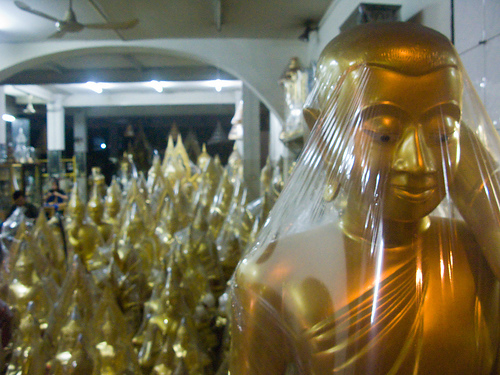
covered statue clothing plastic wrapIs your skin all covered up with material that stops it from being able to breathe? Maybe you should rethink your choice of fabric.

Sitting here in the sticky summer heat, it is difficult to choose what to wear when really any extra layer on our skin is something we wish we could avoid. The choice can be made easier for you when you consider not just the article of clothing, but the material from which it is made. But with all those fabrics out there; cotton, polyester, acrylic and silk, who really knows what is best?

This Oil Munching Bacteria Could Clean What BP’s Left Behind

2

oil eating bacteria bp photoProven bacterial technology can clean up the oil that BP’s cleaning crew leaves behind
Prof. Eugene Rosenberg and Prof. Eliora Ron of Tel Aviv University are using naturally occurring oil-munching bacteria, grown in the lab, to clean the hard-to-reach oil pockets that occur when oil mixes with sand and organic matter on beaches and forms a thin layer on the Gulf’s precious waterways.

It’s taken millions of dollars to cap it, and it could take billions more to clean it up. BP’s oil spill in the Gulf of Mexico is acknowledged the environmental catastrophe of the century. But this new solution may help “bioremediate” the remaining problems. “It’s worked to clean up an oil spill on the coast of Haifa, Israel, so we’ve already got good evidence it could work in Florida too,” says Prof. Ron.

Abu Dhabi Chef Removes Threatened Fish From Menu

0

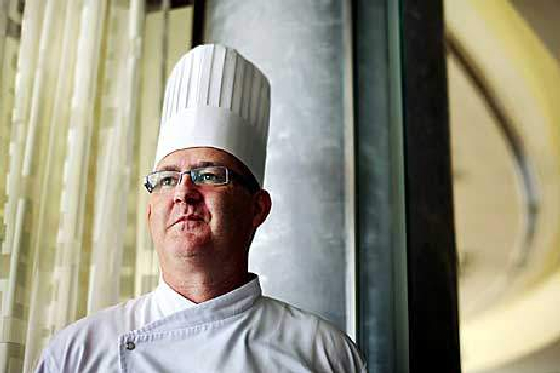
Chef-Olivier-LoreauxExecutive Chef Olivier Loreaux takes fishy matters into his own hands by replacing the threatened hammour with more sustainable varieties

The struggle to preserve our threatened fish populations, such as the bluefin tuna, is complicated. On the one hand, they are an important source of protein for humans, as well as a source of income for the men and women who fish and distribute them. On the other hand, the ocean’s ecological health depends on sustainable populations. Finding the balance is key, but government regulation is often suspect, and consumers are not always well-informed. Executive Chef Olivier Loreaux has taken these slippery matters into his own hands.

Israeli Arabs and Jews Throw Out The Garbage Together

0

trash israel Forum for Environmental Justice photoA member of the Forum for Environmental Justice looks at environmental hazards in the Galilee region.

They meet once a month to venture into the field together, discuss environmental problems and devise ways to cooperate to solve them. Most recently, earlier this month, Israeli Jewish and Arab politicians, community leaders, the public and media toured the Sha’our Stream in the Beit Hakerem Valley, in Israel’s Galilee region. Considered a hazardous zone, “it stank like crazy from overflowing drainage,” says Shelly Sharron, English media coordinator for the Abraham Fund Initiatives.

A Jerusalem-based NGO that works to promote equality and social inclusion for all of Israel’s citizens, the Abraham Fund is hosting the Forum for Environmental Justice in an effort to improve the smell of that stream and combat other environmental hazards. A relatively new project that sprouted from seeds planted five years ago, each month the forum brings together municipal leaders from the Jewish and Arab communities in the mixed Galilee region of northern Israel and beyond, encouraging them to find solutions to their shared problems of environmental waste and hazards.