Home Blog Page 603

“Teva Ivri” Hosts Flood Festival to Give Noah a Break

0

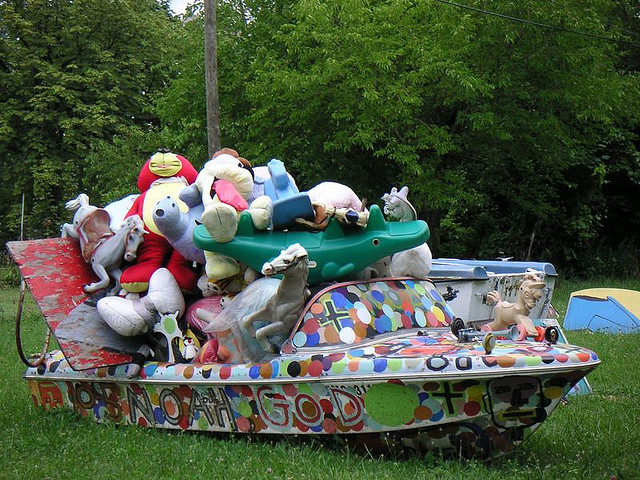
noah arkIf you knew a giant flood was coming, what would you put in your ark?

Teva Ivri, a non-profit organization committed to Jewish environmental responsibility, understands that the Biblical Noah saved humanity and animal species from annihilation in a major climatic change with his ark.

And they want to give him a break this time around.  So they are hosting a Flood Festival – a Jewish environmental celebration – in Emek Refayim in Jerusalem this Friday (October 8th) to show others how they can do their own small part to help our species and our planet survive a potential future climate change.
Israel’s SolarEdge Raises $25 Million And Keeps Its Edge

0

SolarEdge PowerBox PV optimizer solar

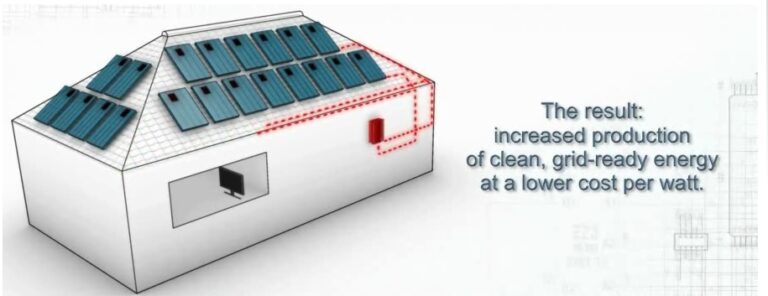
SolarEdge recently secured $25 million in VC funding that it will use to maintain its lead in the PV optimizer market despite steep competition from companies within Israel and abroad.

Unaffected by a global decrease in venture capital investments in cleantech, Israeli solar energy company SolarEdge has successfully raised $25 million in a Series C round from Lightspeed Venture Partners, Opus Capital, Genesis Partners and several other investors.

SolarEdge, which has created “intelligent panels” that work together with a central Power Box to enable the production of up to 25% more energy, plans to use the funding to increase its production capacity and market growth.

Israel Shares Strategies For Taking Back The Desert Oasis November 8-11, 2010

1

desert-conference-israelOver 500 people from 50 countries will join the Third Annual International Conference on “Drylands, Deserts and Desertification: The Route to Restoration,” on November 8-11, 2010.

Although their own water problems are far from over, Israel has mastered techniques that are crucial to desert survival. In addition to developing among the most advanced irrigation procedures, leading to improved water conservation, they have restored much of the country’s deforested regions in order to prevent the further spread of drylands. Leading experts are now preparing to share their expertise with the rest of the world at an upcoming conference in Israel.

Organized by the Jacob Blaustein Institutes for Desert Research (BIDR) at Ben-Gurion University of the Negev, in cooperation with the United Nations Educational, Scientific and Cultural Organization (UNESCO), the conference highlights Israel’s role as a leader in this critical field. The event will be held in the presence of Luc Gnacadja, Executive Secretary of the United Nations Convention to Combat Desertification.

Syria’s Dustbowl Attributed To Wasted Water

0

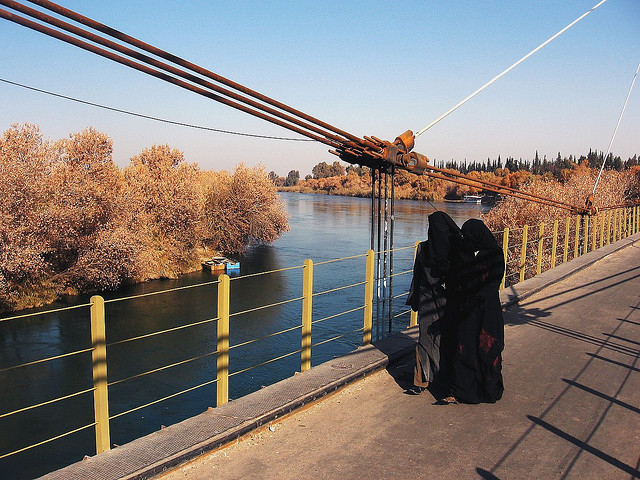
euphrates-water-wasteSyria’s livelihood is going down the drain. Unless the country learns to conserve, their future will be painfully dry.

The Euphrates River, which meanders diagonally through the top quarter of Syrian territory, was once a source of agricultural bounty. Expatriates recall a time of lush plenty: orchards blooming with fruit, healthy cotton fields, and sparkling streams. Syria had it made with an agricultural surplus which could have easily sustained a healthy, vibrant population.

But then in the 1960s the Khabur River Project was developed to build a series of dams and canals, leading to excessive extraction. A culmination of that, a four year long drought exacerbated by rising temperatures, and old-fashioned bad management has dried up the Euphrates’ largest tributary, the Khabur River. Some are in denial, but scientists claim that unless the country learns how to stop wasting water, Syria faces a shriveled future.

Saudi Arabia’s Desalination Market A $50 Billion Opportunity

0


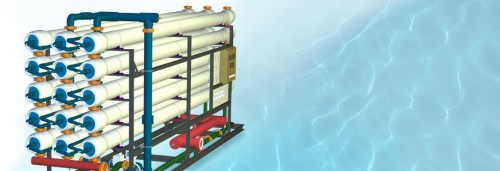
Saudi Arabia now using more reverse osmosis desalination in the Kingdom over any other water processing method.

Like neighboring Kuwait, where virtually all supplies of fresh water comes from desalination, the Kingdom of Saudi Arabia has now reached a level of need for fresh water in which it requires at least $50 billion of investments in new desalination plants to meet its growing fresh water needs. This revelation was reported in the Saudi Gazette. To help bring their needs to market, sesalination and other regional technology issues are part of  the 4-day  Saudi Water and Power Forum (SWPF) 2010 which began earlier this week. Based on the theme of “Sustainable Prosperity Through Knowledge, Innovation and Cooperation”  the held at Jeddah Hilton is aimed at being part of a “catalyst for change.”

Local Eggs, Industrial Eggs, and Salmonella

4

image-fresh-eggs

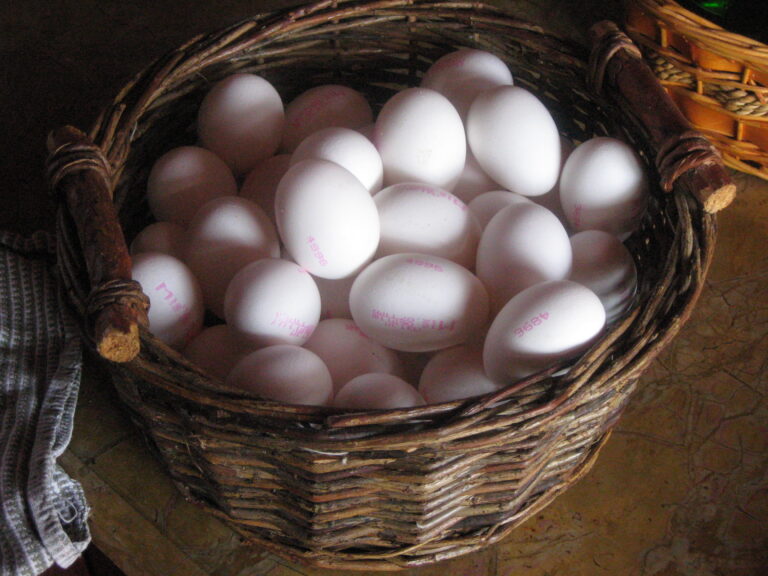
The recent salmonella outbreak in the U.S. provoked a debate: are local eggs really safer than eggs from industrial farms?

Over this past summer, half a billion eggs were recalled in the U.S. due to salmonella contamination. Salmonella, a debilitating and potentially life-threatening illness, is caused by the salmonella enteriditis bacteria.  The eggs came from two Iowa industrial egg farms, each producing millions of eggs daily. According to the Centers for Disease Control and Prevention, about 1, 608 people across the U.S. fell sick with with salmonella poisoning from those eggs.

With market withdrawals, public safety alerts, and new health measures in place at  egg farms, the outbreak has been contained. But the question arises: are eggs from small, local farms safer ?

Water Wars In The Past – Five Mideast Countries Tackle Sandstorms

0

sandstorm middle east menTraveling sandstorms force Middle Eastern countries to cooperate, despite former water disagreements.

Approximately two thirds of the Middle East is comprised of desert, including as it does the largest continuous expanse of sand (in Saudi Arabia) known as Rub’ Al Khali or the empty quarter. With so little moisture there are no hovering clouds, and therefore no protection from the pounding sun. The ground gets hotter, creating a wind convection that blows a most furious sandstorm though the region.

These sandstorms have always existed. Camels are one of few creatures that seem impervious to them, evolved as they are to cope. Human beings are not nearly as well equipped. Not only do they risk being blinded by or choking on biting walls of sand, but they are quickly disoriented as visibility is reduced. Realizing that human beings have destroyed everything that might have held the sand in place, five countries have agreed to a plan to reduce the severity of future storms.

Get Your Shoes Shined for “International Walk to School Day”

2

shoes walking
Started in Great Britain, we ask all kids in the Middle East walk to school on October 6!

If you usually drive your kids to school, get out your walking shoes: October 6, is International Walk to School Day.  This “green” event began in Great Britain in 1994, and has spread to 40 countries including Israel and Turkey. Too many children are driven or bused from door to door, even though they live near school.

At the end of the school day near my kids’ elementary school, the buses are lined up on the narrow street. Cars vie to get as close to the entrance as they can, so their children won’t have to walk more than a few steps. The school asked the municipality to subsidize a traffic guard to help kids cross from the school to the parking lot, but that misses the point. Near-accidents happen on a daily basis, and the huge  traffic means that the kids who walk to school are less safe than they would be if everyone walked.

Aish HaTorah Starting an Eco-Fellowship Program about Jewish Responsible Living

4

[youtube]http://www.youtube.com/watch?v=RlWhKwb1zX8[/youtube]

Aish’s eco-fellowships will teach young participants why being green is being more Jewish.

Aish HaTorah, a leading organization in the realm of creative Jewish educational programs and leadership training, was founded in 1974 and has been trying to revitalize the Jewish community ever since. Now it is expanding its programming on Judaism and the environment by attempting to create an eco-fellowship that will focus on “the Jewish Biblical and traditional requirements for compassionate and sustainable living and how that applies to modern times.”

Ecowash Washes Car In A Water-Parched Desert

1

waterless-car-washIt is no longer necessary to waste gallons of water when washing your car. A new biodegradable product will keep it clean, and protect it from the harsh sun.

With virtually no freshwater resources, Dubai relies extensively on energy-intensive and environmentally-destructive desalination facilities to provide water. But the emirate also lies amidst a hot desert expanse with recurring sandstorms that leave in their wake dry land and dirty cars.

Dubai’s elite take their status symbols – such as cars – so seriously that they must be protected at every cost – even at the cost of 100 gallons per car wash. Though the folks behind the UAE’s new “ice park” are clearly blind to the perils of climate change, the Canadian founders of Ecowash M.E. aren’t, and have imported an environmentally sound method to save Dubai millions of liters of water each year.

Ellen Thrives On Pinkerton and Hopkins’ ‘Local Food’

local-food book review
Tamzin Pinkerton and Rob Hopkins guide us away from domineering supermarkets and into our own backyards. Ellen has the details.

Tamzin Pinkerton and Rob Hopkins are authors of ‘Local Food, How to make it happen in your community’ – a big, hearty book. In a time when the supermarkets look set on taking over, they give  practical guidance on how to set up community projects to help us gain more food independence: food security, self-sufficiency and organic eating are central to their message. ‘Local Food’ is packed with real- life examples of community schemes including farmer’s markets, community gardens and school projects.

Global Investment Plummet Hits Israeli Cleantech Companies… Except BrightSource and Ormat

0

Ormat Geothermal PlantA slow recovery in the global cleantech sector has left many Israeli companies without VC funding and media coverage, while BrightSource Energy and Ormat Technologies continue to thrive.

The decrease in VC investments in cleantech companies over the past year and in particular Q3 is raising questions about the cleantech industry’s recovery. According to NASDAQ, research by the Cleantech Group found that investment in cleantech companies during the quarter was about $1.53 billion with North America “accounting for 61% of total clean-tech venture capital, while Europe and Israel accounted for 25%, China for 10%, and India 4%.”

Obama Touts Israeli-Developed Solar Company BrightSource

3

obama bightsource solar energyAbout to break ground later this month in California, and with an IPO in the horizon, US President lauds clean tech companies like BrightSource for creating new “green” jobs.

To bolster his leadership position and defend his support of clean technology, US President Obama lauds the solar energy company BrightSource for creating jobs and green energy sources in California in a recent public address. Watch the video below the fold.

Green Clean Your Carpet (Flying or Otherwise)

2

Before taking your carpet in for a super toxic clean, consider whether you want to live with all those chemicals.

Carpets add a lot to any room – color, warmth, a way to decrease echo… and if you usually have your carpets cleaned traditionally, they add a lot of toxic chemical residues as well.  Most carpet cleaners use the same nasty chemical used by traditional dry cleaners – perchloroethylene (Perc) – which can cause both short and long term health damage.  But, as with dry cleaning, eco-friendly alternatives are popping up everywhere so that you can get green home carpet cleaning.

So if you were hoping that flying your carpet around in true Middle Eastern style would be enough to get the dust and stains out… but just couldn’t get your carpet to fly?  Now you can look for an alternative.

Lebanon’s Mediterranean Apocalypse: Scuba Diving In Waters Devoid Of Life

0

lifeless-Mediterranean-sea dead sea lebanonThere’s no need to worry about being distracted by color and life while diving in the Mediterranean. There’s none left.

Previously off-limits to human beings, Jacques Cousteau brought the wonders of the ocean depths to the general public in two ways: he helped create the first French underwater film called “18 Meters Deep,”   and with Émile Gagnan, the precursor to modern scuba diving equipment, the aqua-lung. Had he foreseen how such an introduction would lead to a near-absolute destruction of the silent color and diversity that lives below the surface, the intrepid explorer may never have shared his secrets.

But he did, and though he can’t be blamed, we have subsequently ruined many coral reefs and other marine ecosystems around the world. The Red Sea is in danger, the Gulf States continue to pressure their waters with blind expansionism, and the Eastern Mediterranean’s ecosystem is so disfigured that, sans the distraction of beauty, it has become the perfect place to learn how to dive.