Home Blog Page 592

Israel Cleantech Intelligence: Ormat and 7 More Headlines

0

oil field equipment

Ormat’s Waste Heat Recovery solution, hunger in Africa, fighting desertification and more headlines related to Israeli cleantech and the environment.

As part of Israel’s plan to reduce energy use by 20%, new televisions and computer monitors that aren’t energy efficient may be outlawed. General Atlantic is in talks to acquire a stake in irrigation systems maker Netafim Ltd. and France’s Alstom is looking to invest in Israeli cleantech startups. For these stories and the rest of this week’s headlines, see below.

Vegetarian Haricot Bean Stew Recipe

4

image-white-bean-stew

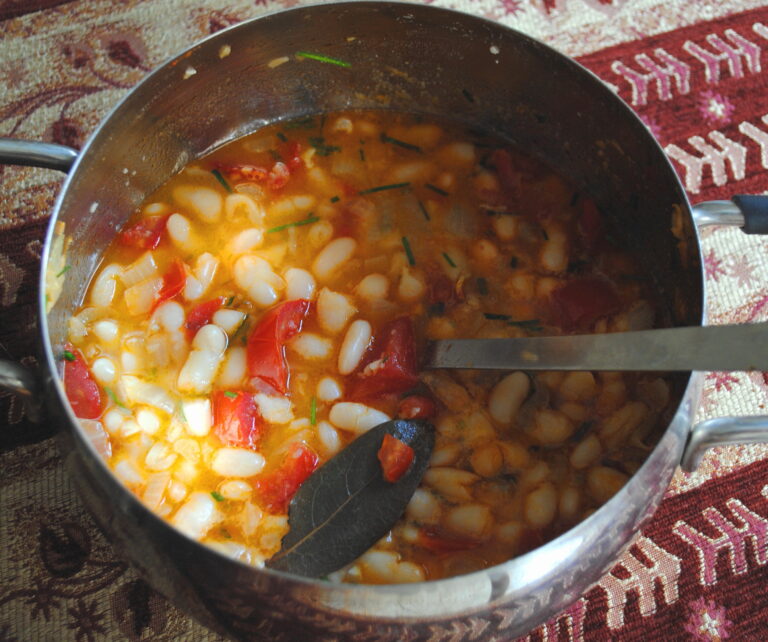
Feel like eating something flavorful and satisfying, but not heavy? Stewed haricot beans answer your hunger – and they’re easy to make.

A hearty vegetarian stew, aromatic with herbs and spices (see our series on Middle Eastern spices). Great with rice or fresh pita and a simple protein like cheese or an omelet on the side.  Or for a real feast, serve them next to our lemon-scented couscous.

Raise or lower the cayenne heat at will, but make sure to include those herbs so well-loved in the Middle East – garlic, sage, and rosemary.

Louise “Goes Slow” ‘Round England

go-slow-england Interested in finding out about Slow Food, Slow Travel and some of the most beautiful places in England to slow down?  Want to know about people who have chosen the Slow Life?  This is the book for you – a journey and a resource.

It is a gentle meander through England, a ramble across the counties, a dip in the sea, a view from a cliff, a walk on the moor, an exploration of people who have created or conserved spaces of tranquility, and a discovery of unspoiled and restored locations.  It is also a tribute to those who strive hard to create a Slow Life and run a business.

For any reader who thinks Slow is easy, they will soon discover it’s not. As demonstrated through the life stories of the people named in “Go Slow England,” time, commitment, hard work and an ability to balance organic dreams with making a living are essential ingredients for success.

Black Cloud Season in Cairo

2

black smog cairo

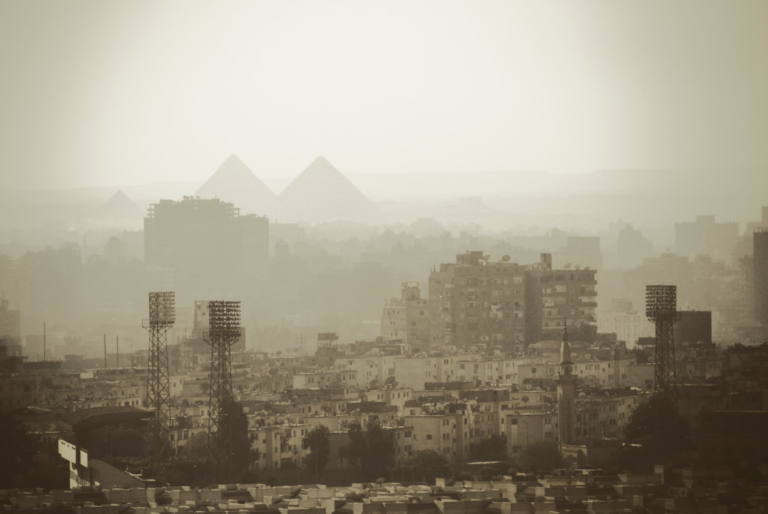
In the West, leaves are falling from the trees. In the Middle East, Fall means the return of the throat-burning smog which settles over Cairo, Egypt once again. Rice fields are to blame.

Every year a noxious black smog hangs over Egypt as the seasonal burning of rice straw by farmers begins, and with it comes a surge in allergic reactions and lung infections. The inky haze lasts from October to November; it is a time when hospitals see a rise in patient numbers, and parents consider keeping their children out of school to avoid the worst of the throat-burning smog.

“Straw burning-induced pollution causes acute health problems,” Mahmud Abdel Meguid, chairman of the state-run Abbasiya Chest Hospital, told IRIN. “This pollution causes a long list of diseases, including chronic obstructive pulmonary disease, and chest sensitivity at best, and respiratory failure at worst.”

“This has led to pressure on the hospital,” he added. “Sometimes we run out of respirators for the patients.”

Egypt’s farmers have been burning the waste after the rice harvest for over 12 years. With more than 486,000 hectares of land devoted to the staple, farmers have huge amounts of straw to dispense with and torching it is the easiest solution.

The straw could be converted to animal feed or biofuel, but farmer Gamal al-Saedy says no one in his area of Sharqia, about 150km north of the capital, Cairo, has found a buyer. That makes burning “the normal solution for us”.

But it may have consequences for the rest of his community.

Suffering  from respiratory problems

Emad Hosni, a 30-year-old villager from the same governorate as al Saedy, has been visiting the Abbassiya Chest Hospital for more than three years seeking treatment for his respiratory problems: “My suffering increases particularly in October and November when the farmers burn the rice straw,” Hosni said. “I lock myself up in my home when I see the black cloud, but I am really afraid that my children may have respiratory diseases too.”

The Environment Ministry says rice straw burning accounts for 42 percent of Egypt’s overall air pollution during the two-month season, but it regards industrial pollution, the burning of garbage, and vehicle emissions as the biggest year-round threats to the air quality of the country’s 80 million people .

The ministry says it has managed to reduce the amount of pollution caused by straw burning, pointing to a decrease in the amount of land growing rice, and the presence of nine factories that buy the straw from farmers.

“Compared with previous years, the burning this year is much less,” said Ahmed Abulsoud, responsible for air quality at the Environment Ministry. “The cloud used to appear for 15 days, but now it appears briefly.”

However, with the burning of an estimated four million tons of straw this season, critics are loath to accept that the impact is minor: “True, the government does its best to reduce the burning, but the reality is the cloud is ushering in diseases that were rare in the past,” said Mohamed Awad Tag Eddin, Egypt’s former health minister.

“The farmers must get to know that the burning of the straw puts them and their fellow countrymen in extreme peril,” he told Egyptian TV recently.

More environment news from Egypt:
Top 5 Arab Designers
“Eco Options Egypt” Makes Egyptian Environmentalism Easy and Accessible
Gone Seabass Fishing…In Egypt’s Desert

Egyptian Govt Cracks Down On Illegal Red Sea Development

0

red-sea-illegal-developmentDoes new crackdown demonstrate a gradual shift in Egyptian environmental policy?

The Red Sea Governorate is cracking down on illegal, unsustainable development in Hurghada, Egypt, where 200,000 citizens are custodians of one of the earth’s most unique marine ecosystems.

Though challenges to its coral reef system and overall health are numerous – including tourism and oil spills – many businesses and residents have stepped up to the plate to keep it safe.

Since the 1980s, the Hurghada Environmental Protection and Conservation Association (HEPCA), comprised of a collection of dive centers and hotels, has lobbied on its behalf, and the Red Sea Sustainable Tourism Initiative was established in 2000. Even so, until now, bad eggs have been hard to regulate. This may change with the recent move to prosecute two resort owners who defied local construction and environmental law.

Young Israeli Clean Tech Innovators to Participate in Global Entrepreneurship Week

0

[youtube]http://www.youtube.com/watch?v=v3dXZc11jko[/youtube]

Young Israeli entrepreneurs contribute their cleantech ideas to Global Entrepreneurship Week.

Global Entrepreneurial Week, a worldwide initiative that hopes to inspire the next generation of creative, entrepreneurial people to “generate new ideas and to seek better ways of doing things” is taking place next week (November 14th-19th).  Throughout this week around 40,000 events are expected to take place in approximately 100 countries.  The Middle East is well represented with events taking place in Egypt, Bahrain, Saudi Arabia, Lebanon, Jordan and the United Arab Emirates, and Israel is observing Global Entrepreneurial Week with a Cleantech Open Ideas Award Ceremony.

Twenty-two countries (including Israel) will be participating in the Global Cleantech Open Ideas Competition, a field are very well suited to the mission of Global Entrepreneurship week, which hopes to support sustainable enterprises. 

Climate change killing ancient crops in the Cradle of Civilization

0

pharaohs egypt
Warming temperatures are creating a shift in agriculture in Egypt, the cradle of civilization.

Human civilization began with the growing of wheat in the fertile crescent. Fifteen thousand years ago in the Middle East, people started to select and later to cultivate strains of wheat and began farming, and the rest is, as they say, history. (You can read the history of ancient emer wheat here).

Warmth and sun is needed. But not too much. With the onset of climate change, temperature rises are actually beginning to cut into wheat yields. Although Egypt was one of the original lands of the fertile crescent, it has now become the world’s biggest importer. With Ethiopia damming the Nile, agriculture could change forever in the Nile region.

The North African and Middle Eastern countries of Algeria, Tunisia, Cypress and Egypt were still exporters of wheat as late as the nineteenth century. But as temperatures have risen in the Middle East, that has changed.
Egypt no longer can grow enough to export any surplus.

emmer or emer wheat from Israel being sifted by a woman
Emer wheat is one of the world’s oldest cultivated grains. What about plant diversity in this species and thousands of others? How can we hold onto the past for our future? We need a world seed vault.

Increasingly, the first wheat farming region now relies on wheat supplies from places that only warmed up enough to able to support wheat farming in recent centuries.

Russia and Ukraine were insignificant wheat growers until the end of the 20th century. But as the world has warmed, the conditions have improved for farming wheat at higher latitudes. The region now provides 30% of the world’s wheat.

But, temperatures are not going to simply conveniently stop at the perfect temperature for wheat farming. This year, in got too hot for wheat, even in Russia, with temperature records that were broken worldwide. And with too much heat, yields drop. Russia lost a third of the wheat crop this year. It stopped exporting.

Egypt, as well as Tunisia, Algeria and Jordan, all reacted to the Russian ban by buying extra wheat on the spot market. Worldwide, wheat prices have nearly doubled in just four months from $4.26 a bushel.

Haguy Ben Yehuda making emmer wheat into bread
Haguy Ben Yehuda making ancient emmer wheat into bread in Israel.

Scientists estimate that even the small amount of wheat that Egypt can now produce for its own market could fall by another 15% by 2050 if temperatures increase by two degrees Celsius, and by more than a third if temperatures rise by four degrees.


Abu Dhabi Boaters Get New Trash Dump (And It’s Not The Sea)

1

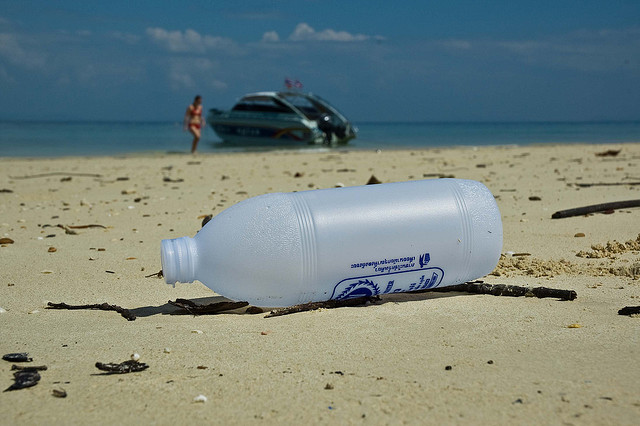
sea-trashTo stop boaters from dumping trash in the sea, Abu Dhabi set up trash facilities at Yas Marina Port.

It’s hard to know where trash comes from, since we seem to be brimming in it. Every single piece of plastic ever made still exists, and a lot of it gets washed into our waterways. The Pacific Ocean, the Mediterranean, and the Atlantic, along with major rivers such as the Nile, are all polluted. That some marine life continues to thrive is a strong testament to nature’s resilience.

But if we don’t curtail the extent to which solid waste and contaminants such as oil seep into our rivers and seas, our fish will become increasingly toxic. Not to mention that International law requires that countries keep their oceans and seas clean. Abu Dhabi has finally taken the first step towards making that easier for boat owners to do.

Israel Moving to More Natural and Organic Wines

0

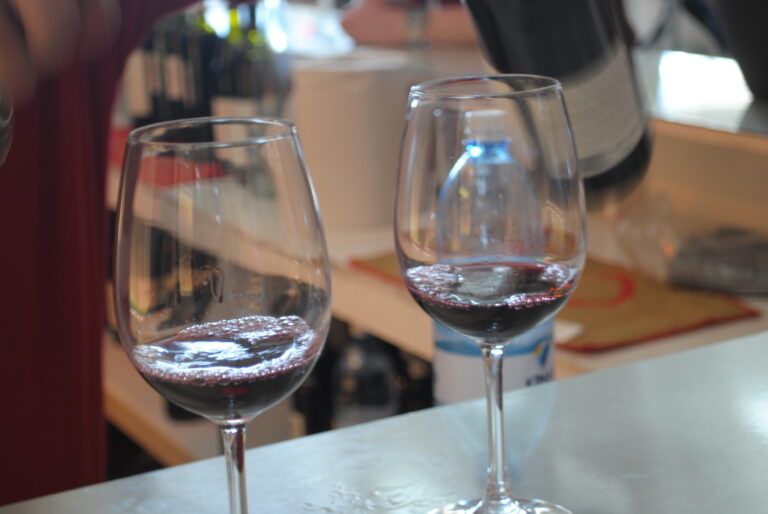
image-israeli-wineIsrael’s main wine event showed a welcome growing trend towards more natural wines.

“Natural wines” are taking off in Israel. At the Sommelier wine event, held in Tel Aviv last night November 8th and continuing through today, we found that some wineries already have organic vineyards, while others are greening their production facilities through recycling and water conservation. Innovations like wind- and solar-powered wine production are happening in Israel already.  At our last visit to a major wine exhibit, there were far fewer signs of green winemaking. It’s encouraging to see the change.

France’s Alstom Enters Joint Venture to Invest in Israeli Cleantech Technology

0

Alstom's light rail train for JerusalemAlstom, which is providing the trams for the Jerusalem Light Rail project, will invest in Israeli cleantech

The French energy company Alstom, which recently acquired a 10% stake in the solar company BrightSource, is embarking on another green project in Israel, TheMarker reported this week. In a joint venture with Rotem Industries (the business arm of the Dimona nuclear research center) and Gefen Biomed Investments, Alstom will support technology startups in the field of clean energy.

How Vegetarians Can Solve The Middle East Water Crisis

3

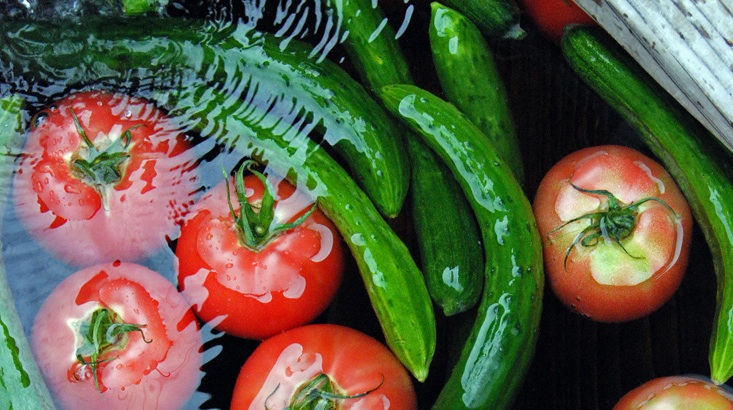
cucumbers and tomatoesHope floats. Want to help save water and feed nine billion people? Go vegetarian.

For vegetarians who have researched all the possible angles to justify their meatless habit – it’s healthier, we might say, or Islam sanctions it, it is no secret that raising meat taxes the environment. In addition to methane gases released, particularly by giant beef and chicken factories (a sustainable free-range facility is far less onerous), raising meat requires significant water resources. Now a leading water expert is spreading the news that scaling back our carnivorous ways is an important step in alleviating the Gulf countries’ serious water woes.

Iran to Construct Middle East’s Largest Artificial Lake in Tehran

6

tehran artificial lake
The greatest artificial lake in the Middle East, in Iran? Environmentalists in Tehran haven’t decided how a giant artificial lake, Chitgar Lake, will impact their city. Developers already have their plans.

As artificial islands in Dubai start to smell foul, authorities from the Iranian city of Tehran are pushing for a giant artificial lake for the western side of the city. Debates on construction of a vast artificial lake in the west of Tehran continues: The critics believe that the environmental impact assessment of the construction has not been done in a correct way and that the method of assessment has become “personal.”

5 Supermarket Vegetables You Can “Upcycle” and Grow At Home

0

grow potatoes in bagBring home basil, mint, garlic, tomatoes and potatoes from the supermarket and grow them into your own organic garden.

If  you dream of growing a few sustainable crops but don’t have garden space, you still can. Start at your local supermarket. Many commercial vegetables can be rooted at home and like in the nature experiments we did in school, they will grow into real food like tomatoes, potatoes, basil, mint and garlic.

Make sure you have an appropriate plant  container. A bucket with a few holes drilled in the bottom, a conventional window box, recycled and clean gallon cans, even an old boot for a touch of humor in your garden.

(We once grew geraniums in a recyled – and clean – toilet.) See our post on gardening for food  for more ideas. As long as it has drainage holes and good-quality dirt in it, with room enough for new roots, it’s a container and you can grow food in it.

Israel Has Plans To Outlaw Dinosaur TVs

0

old-school-televisionHigh energy dinosaurs may get the axe as part of Israel’s plan to reduce energy use by 20%

Energy doesn’t come easily to Israel. With few resources of its own, apart from solar – the widespread exploitation of which is beginning to take shape – and maybe natural gas, officials have to get creative about the energy they do have.

Since asking consumers to cut back requires a serious paradigm shift, the National Infrastructures Ministry is taking a different approach, requiring computer screens and televisions to be more efficient than they currently are.

Bahrain University Exhibits Eco-Friendly Inventions Created by Students

1

"bahrain university student project"Bright green ideas from Bahrain University students were showcased at a campus exhibit last week.

Since universities are supposed to train the next generation of thinkers, creators, and doers, it is only fitting that the projects generated by their students be showcased and highlighted in order to encourage new ideas.  At Bahrain University, apparently, the value of student projects is not lost on the administration – to the contrary, they celebrate student work and exhibit it.  This was the case last week when a two-day exhibition of eco-related student projects took place at the university under the patronage of University President Dr. Ibrahim Mohammed Janahi.