Home Blog Page 565

Egypt’s Social Change Begins With Cleaning The Streets

0

cleaning Egypt streets cairo
Making a difference in Egypt comes with one piece of rubbish at a time

As the world’s eyes are watching Egypt’s people uprise against its government, the need for change has already began impacting the streets of Cairo. After seven days of demonstrations rubbish, placards and dirty water have collected in the roads which the Egyptian people are not leaving for outsiders to clear up, despite their frustration for economic survival and better living.

Iraqi Sheikh Threatens To Demonstrate If Kurds Don’t Share Water

0

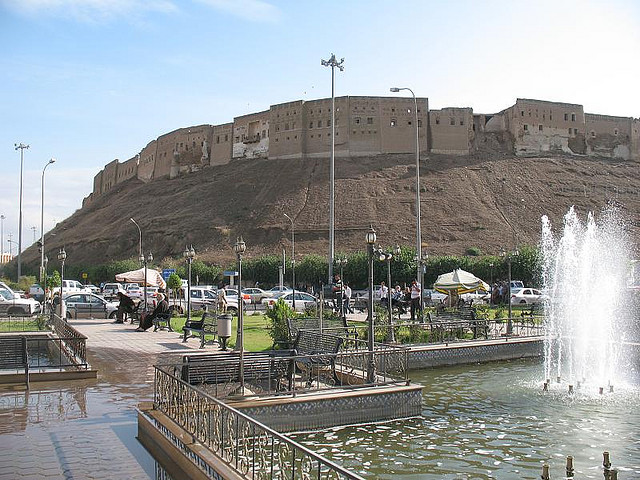
kurdistan-iraq-water-fountainDespite this water fountain in Kurdistan, water there is scarce. This is not how poor Iraqis perceive their own shortages.

We have long suspected that in the coming years, as climate change and population expansion put pressure on natural resources, conflicts will arise. The ongoing Egyptian protests demonstrate how repressed rage eventually surfaces when autocrats rule and people are deprived of basic goods and services. It is also interesting how such suffering can skew perception. Iraqis living in the oil-rich Kirkuk province near Kurdistan believe that their Kurdish neighbors are maliciously depriving them of water via the Dukan Dam, though that is not the case. Water scarcity in the entire Middle East region is putting pressure on everyone, but already tense Sunnis seek to pin the blame.

Hawksbill Turtles Travel 20km Per Day

0

hawksbill-turtleIranian Hawksbill turtles are the most adventurous international travelers. See where other turtles like to roam.

Like people, Hawksbill turtles aren’t all domestic homebodies. Some – like me – prefer a more nomadic lifestyle. At least, this is what researchers have discovered Hawksbill turtles in the Persian Gulf. In recent years, the Hawksbill’s population has declined by 80%. In order to protect remaining turtles, the Emirate Wildlife Society and World Wildlife Fund (EWS-WWF), in conjunction with the Marine Research Foundation (MRF), began tracking their movements – with some startling results.

Jan Eric Visser Experiments with Post Fossil Fuel Design

2

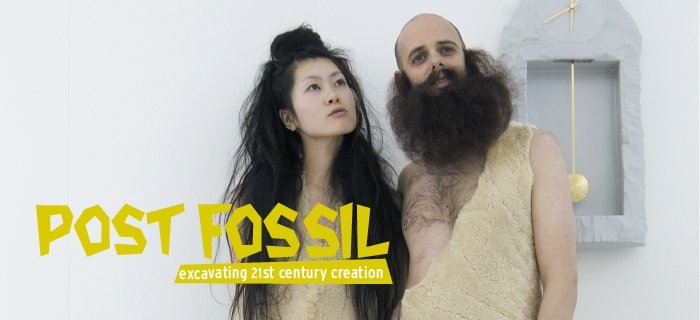
"sustainable design exhibition"Exhibition in Israel brings together sustainable “contemporary cavemen” (and designers).

Post Fossil, a current exhibition at the Design Museum in Holon, Israel, asks the question: how to create in a post-fossil-fueled world?

As the exhibition description states, “Time has come for extreme change.  Society is ready to break away from last century for good.  To break with creative conventions, theoretic rules and stigmas that now are questioned, challenged and broken…A new generation of designers retrace their roots, refine their earth and research their history, sometimes going back to the beginning of time…Like contemporary cavemen, they reinvent shelter, redesign tools and manmade machines, and conceptualize archaic rituals for a more modest, content and contained lifestyle.”

One such “contemporary caveman” is Dutch visual artist Jan Eric Visser, who has been transforming his household garbage into artwork for over 20 years. 

Bike Sharing Down to a Science

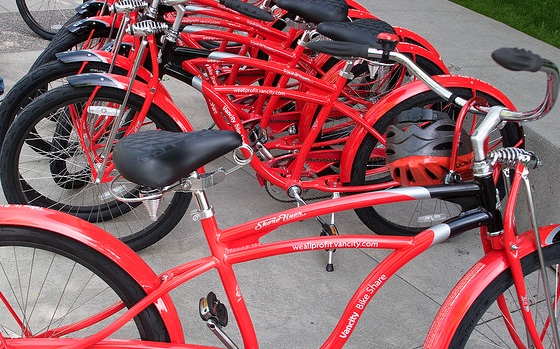
bike shareNew algorithms make bike sharing more efficient.

The environmentally-friendly concept of  bike-sharing is taking over European cities like Paris, and Tel Aviv is about to get its own too –– although that’s been in the works for several years. Bike sharing, if you haven’t experienced it allows a subscriber to “borrow” a bike from one of hundreds of locations in the city, use it, and return it to another location at the end of the journey.

It’s good for commuters and for running short errands. The idea is gaining speed and subscribers at the 400 locations around the world where it has been implemented, there have been growing pains — partly because the projects have been so successful. About seven percent of the time, users aren’t able to return a bike because the station at their journey’s destination is full. And sometimes stations experience bike shortages, causing frustration with the system. But Tel Aviv University researchers have  a solution to turn bike sharing into a science.

Abu Dhabi To Plant Sewage-Fed Forest By End Of 2011

0

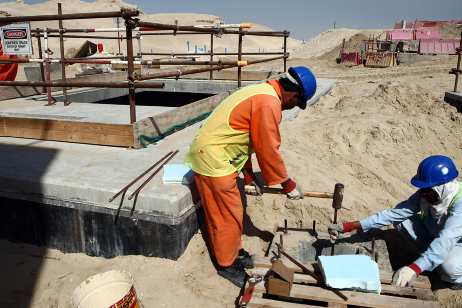
abu dhabi wastewater sewageAbu Dhabi leads the Gulf Region in environmental innovation. This time, a desert forest irrigated with treated wastewater.

Last year we were somewhat alarmed that the UAE had ambitions to plant one million trees. Even though the carbon sponging benefits are potentially enormous, the water required to keep said trees alive might have overwhelmed the pros. A new initiative circumvents this dilemma. Developed by a joint coalition of Abu Dhabi’s’s Water & Electricity Authority, Veolia water, and the construction company Besix, a four acre forest 40km outside of the capital will create a carbon sink, a habitat for living things, and an educational facility.

7 Books for New Year’s Resolutions on Sustainable Food!

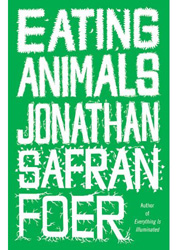
Eating-Animals-Jonathan-Safran-FoerBolster your New Year’s food resolutions with seven recycled titles: largely published before 2011 but still relevant. Eating sustainably can make a huge impact on our planet.

Dig in.

1. Eating Animals (Penguin, 2011)

Part memoir, part science: novelist Jonathan Safran Foer’s takes a philosophical look at how we justify what we eat . Prepare yourself for an epiphany.
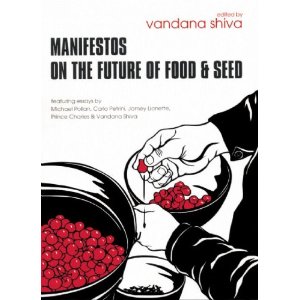
food-manifesto book cover2. Manifestos on the Future of Food & Seed (South End Press, 2007)

Food activist Vandana Shiva edits a collection of papers from advocates of the slow food movement, organic farming and local eating.  A choppy ride, but in the end these varied views (from the likes of Prince Charles and Michael Pollan) make a solid case for food deindustrialization.
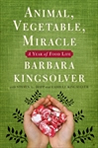
animal-vegetable-miracle3. Animal Vegetable Miracle: Miracle of Our Year of Sustainable Eating (Faber & Faber, 2007)

A chronicle of the year that author Barbara Kingsolver and family went to the woods, unlike Thoreau, to eat deliberately. Their radical experiment to “go locavore” explores my mom’s old gem “you are what you eat”.
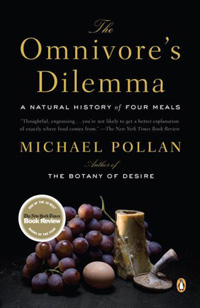
4. The Omnivore’s Dilemma: A Natural History of Four Meals (Penguin Press, 2006)

Michael Pollan explores modern American eating: dubious trends with far-reaching influence. If you like your wake-up calls loud and clear, crack this binding.
5. New Book of Middle Eastern Food (Alfred E. Knopf, 2000)

Claudia Roden’s original 1973 classic updated and expanded.  Culled from 30 years of extensive Middle East travel, she’s concocted simple prep methods for over 800+ regional recipes from Syria, Jordan, Lebanon and Turkey.  Read it for the recipes, but also for the riveting stories behind this extraordinary food.
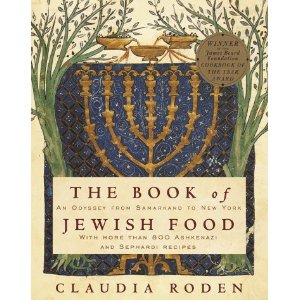
jewish food6.  Book of Jewish Food (Alfred E. Knopf, 1996)

Oy, Claudia, again with the 800+ recipes?

Here’s the story of the Jews told through the story of their cooking, with emphasis on development of both Ashkenazic and Sephardic cuisine. Ms. Roden’s stories are as delicious as her recipes.
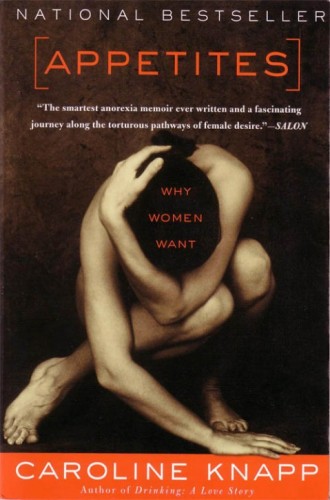
caroline-knapp-appetites7. Appetites (Counterpoint Press, 2003)

It’s sad to tag this as an “anorexia” book.  Sadder still that its author died before publishing more of her sagacious take on the modern female experience. Caroline Knapp’s memoir of her war with self-image expands to explore wider cultural messages.  It’s a powerful call to all women to learn what it is to “feed both the body and the soul”.

ELTE Weaves New Life Into Aging Persian Rugs

0

elte second life rugWhat’s almost as good as a Persian or Turkish Rug? An old one given new life with special dye.

In addition to oil, Iran has a commodity that no one needs to fight about: carpets. According to the Financial Times, in 2008, that country’s exports accounted for 30% of the world market. A staggering number of people rely on carpet-making for their livelihood: 1.2 million weavers craft 5 million square miles of carpet each year. (Learn how to green clean your carpet.) Unlike is some places, where a Persian or Turkish rug is merely a fancy decoration that hardly gets used, carpets in the Middle East are functional. (The Solaris carpet can even generate energy!) As such, they get worn to the bone, so to speak. Instead of letting them go, a Canadian company, ELTE, gives them a second life.

VW and GM in Full Gear for Electric Cars in Qatar

0

VW’s XL1 looks great and saves fuel.  But is it affordable?

Although the much written about Better Place electric car concept is a favorite on Green Prophet; and is even  criticized as being an electric car monopoly in its origin country Israel,  the cars themselves have yet to hit the streets on a commercial basis. At present, they are still considered as being in the testing stage.  In other parts of the world electric concept cars, especially dual engine hybrid models, are now on display at various motor shows, including a recent motor show  in Qatar.

What Egyptian Regime Change May Mean for Regional Energy Cooperation

4

egypt solar energySparked be energy shortage, and Egypt in so much turmoil, what will happen to solar energy projects like this one?

Many of us are following the recent turn of events in Egypt, in which the people have decided that it’s now time for some “changes” in the Land of the Nile. While the political ramifications of what will happen if Egypt’s long time leader Hosni Mubarak is forced to resign his post as Egypt’s President is still unknown, the question of continued environmental cooperation between Egypt and other countries is even more uncertain.

Ehrlich Architecture Trumps Hadid And Foster With UAE Parliament Win

1

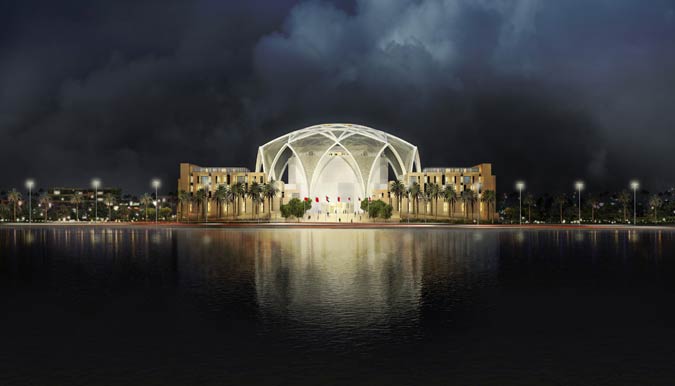
ehrlich-architecture-uae-parliamentConsidered a huge upset in the architecture world, Ehrlich firm wins bid to build the new UAE Parliament Building.

Foster & Partners have a solid footing in the Middle East, with Masdar City and other popular projects under their belt. And Iraqi architect Zaha Hadid is a celebrity who inspires red-carpet treatment wherever she goes. Both firms bid for the new United Arab Emirates parliament building design competition in Abu Dhabi, but their entries were eclipsed by Ehrlich Architecture’s beautiful dome building. Architect’s Newspaper called it the biggest upset since 1987 when Frank Gehry won the Walt Disney Concert Hall Bid.

The Grass Is Greener In The UAE

2

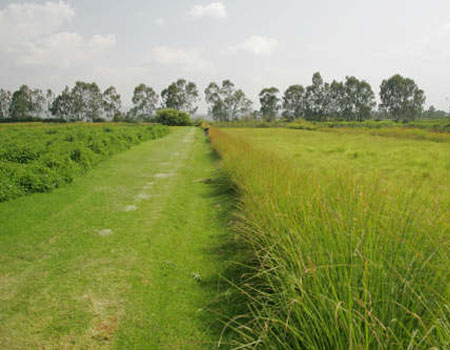
How green is your fodder? Turns out, in the UAE, not so green. A new program aims to change that.
In order to combat the dual challenge of desertification and regional water shortages, the United Arab Emirates are experimenting with myriad innovations. The latest encourages local farmers to switch to a different variety of fodder. A variety that uses less water. Not surprisingly, indigenous grass species are better adapted to survive in the Emirates. After a decade of testing, the Ministry of Environment and Water, along with the International Center for Agricultural Research, are urging farmers to make the switch.

3 Wild Edibles And How to Eat Them

2

edible weeds photoMiriam suggests ways to cook free wind-sown vegetables.
At this time of year, you may find free vegetables growing in your own backyard (like Karin did), or in your windowbox. Springing up from wind-sown seeds and roots that slept underground through last summer, the newly green landscape is actually full of green vegetables. The first thing is to identify what’s growing out there. Take a reliable local field guide with you – or a reliable local grandma who’s foraged and eaten wild greens since childhood – and pick the plants they say are safe. Chicory is coming up around now – read this post on how to cook it with onions. Then take your bounty to the kitchen and cook it up.

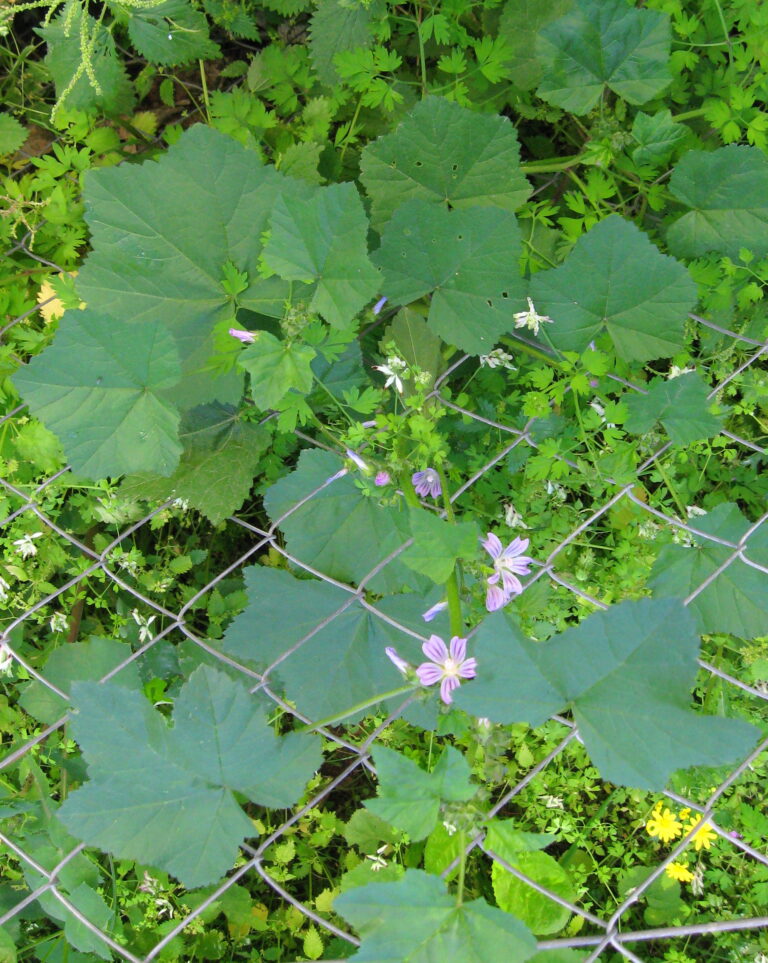
Mallows. The youngest, tenderest leaves of the mallows, make a fine addition to the salad bowl. The taste is mild and just sort of green – you’d never guess how rich in vitamin C mallows are. Stuff bigger leaves with rice and pine nuts just like grape leaves. Roll them up and cook them in a lemony, tomatoey, olive oily sauce. In early summer when mallows flower, eat the flowers in salad or dry them to add to winter teas.

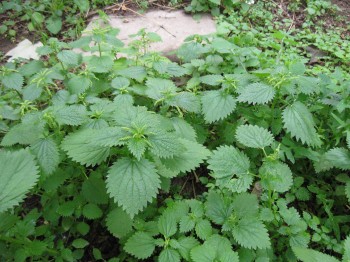
Nettles (photo below). Yes, they sting. But they’re full of iron and other good minerals that protect your kidneys and adrenals. Nettles have a taste slightly like seaweed. They’re good rinsed, shaken dry, and dropped into soup 10 minutes before serving. Or try a cup of chopped nettles instead of spinach in a souffle.They’re particularly good paired with sharp cheese.

Hint: either wear gloves or use scissors to cut them in the field. Use the scissors or a pair of tongs to handle them.  Nettles lose their sting when cooked or dried. And once their light-green seeds have matured and are brown, nettles are best left alone until next year.

image-nettles

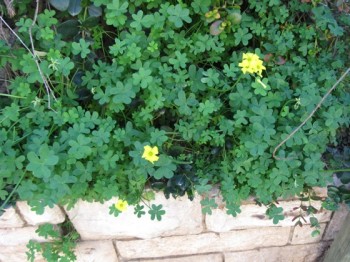
Cape Sorrel. Just ask the neighborhood kids what “hamzutzim” are. They’ll know how best to eat the fresh, sour-tasting leaves and flowers – raw. But don’t make an entire salad out of them, because their oxalic acid, like rhubarb’s, is only OK up to a point. Just toss a small handful into the salad bowl, along with other greens, or line a sandwich with the leaves instead of lettuce.

image-cape-sorrel

More on wild edibles from Green Prophet:

Go Wild With Two Winter Salads

Edible Weeds in Your Middle Eastern Garden

Photos of nettles, and Cape sorrel by Miriam Kresh.

Do Creases Make You Cross? 10 Tips for Wrinkle-Free Clothes without Ironing

8

electric irons aren't necessary to keep clothes wrinkle-free.
With planning and proper care you can cut back on your ironing for greener clothes.

My friend finds ironing relaxing. I find it a chore, especially in the hot climate of the Middle East. And according to the Consumer Energy Center, operating an electric iron uses one kilowatt hour an hour, almost twice as much as a washing machine. Irons need to be replaced frequently, and they make your home harder to cool in the summer. Fortunately, people dress casually in the Middle East and most people think wrinkles aren’t a big deal. But if creases make you cross, follow these tips to cut down on ironing:

Jordan’s Envoy in Washington Outlines Environmental Priorities

1

sahara forest project imageThe epic Sahara Forest Project in Jordan. More planned for its green future.

Jordan, one of the five most water-deprived countries on Earth, has more than just a casual interest in developing technologies such as solar energy, water desalination and nuclear power. Its very survival depends on it. So says Alia Hatoug-Bouran, Jordan’s former environment minister and recently minted ambassador to the United States. But Bouran — the first woman ever to represent the Hashemite Kingdom in Washington — said Jordan can’t do it alone. To realize its full potential, she said, her thirsty desert nation of 6.3 million people needs U.S. and European investment, as well as a comprehensive Middle East peace settlement that encourages greater cooperation with neighboring Israel.