
Home Blog Page 54

Warehouse Supply Chain Management: Challenges and Best Practices

0
Oxagon, floating city, port city, Red Sea, Saudi Arabia, circular city,
Homes that are also warehouses. An efficient idea?

Managing a warehouse supply chain effectively is the foundation of any successful business in logistics, manufacturing, or distribution. 

The process involves numerous complexities, from inventory control and demand forecasting to navigating disruptions and optimizing efficiency. 

Warehouse supply chain management plays a vital role in ensuring that goods flow seamlessly from suppliers to customers, but it is not without its challenges. 

In this guide, we’ll explore the key obstacles businesses face in this domain and outline best practices for streamlining operations, reducing costs, and enhancing overall productivity.

The Role of Warehousing in Supply Chain Management

Transport of goods in ecological truck sustainable. Green environmentally friendly transport and shipping.

Warehousing plays a critical role in supply chain management through efficient storage, strategic location, and security and risk management. 

It supports the smooth flow of goods, facilitates timely distribution, and ensures product availability to meet market demands.

Efficient Storage

Effective storage is fundamentally about maximizing the utilization of existing warehouse space. This includes arranging products so that they occupy less space and are more conveniently accessible.

By achieving this, warehouses can accommodate more goods without the necessity for additional space. It also accelerates the picking and packing processes, reducing delivery times.

Numerous warehouses currently integrate high-capacity storage systems, such as pallet racks and shelving units designed for diverse product dimensions. 

Strategic Location

Transitioning from the topic of storing items, the location you decide upon has significant importance. A judicious site ensures your products reach customers swiftly and economically.

If your storage facility is near main roads, harbors, or city areas, you can economize on shipping costs and duration. This decision also impacts the pace at which you can replenish your stocks.

Proximity to suppliers reduces the waiting time for fresh inventory.

Determining the appropriate spot involves consideration beyond merely observing a map. Consider your customers’ locations and delivery speed expectations. Warehouses situated centrally decrease transit durations across cities or states.

Security and Risk Management

The cornerstones of warehouse management include maintaining safety measures and mitigating any potential risks. 

These processes are designed to guard your commodities against incidents such as burglary, harm, or disappearance.

This includes the setting up of surveillance devices, alarm systems, and admission regulation mechanisms to observe and control the individuals accessing the warehouse. 

Educating the workforce about safety guidelines is also crucial so that everyone is prepared to respond correctly to any uncertain circumstances.

Challenges in Warehouse Supply Chain Management

container shipping

Warehouse Supply Chain Management deals with tasks such as inventory management, warehouse space optimization, and addressing security concerns. 

These tasks demand strategic planning, efficient processes, and proactive solutions to guarantee seamless operations.

  • Inventory Management

Effective inventory management is crucial for business owners, e-commerce companies, and warehouses to ensure optimal operations. 

Businesses can enhance cost-effectiveness and minimize material scarcity risks by prioritizing accurate demand forecasting and streamlined procurement processes.

Focusing on improving inventory accuracy and control facilitates efficient distribution and transportation logistics, ultimately enhancing overall operational efficiency.

  • Warehouse Optimization

Warehouse optimization is crucial for maximizing efficiency and minimizing costs. Implementing advanced warehouse management systems (WMS) can significantly enhance inventory accuracy and streamline operations.

Automation and robotics also play vital roles in improving warehouse efficiency, reducing workforce turnover, and preventing inventory loss.

Focusing on data-driven decision-making enables businesses to make strategic choices that improve logistics management and cost-effectiveness.

  • Security Challenges

Security challenges in warehouse supply chain management are a critical concern for business owners, e-commerce companies, and warehouses. 

Protecting inventory from theft, damage, and unauthorized access is paramount to maintaining smooth operations.

According to industry data, inventory loss due to security breaches costs businesses billions annually. Implementing strong security measures such as surveillance systems, access controls, and employee training can help mitigate these risks.

Staying updated on the latest security technologies and best practices is essential for safeguarding valuable assets in the warehouse environment.

Best Practices in Warehouse Supply Chain Management

Maximize your warehouse layout and design to enhance efficiency, foster strong supplier relationships, prioritize inventory management, implement advanced WMS and automation, focus on warehouse safety, and make data-driven decisions for a streamlined supply chain.

Optimize Warehouse Layout and Design

To optimize warehouse layout and design, businesses can implement the following best practices:

  1. Maximize Vertical Space: Increase storage capacity by using tall shelving units and mezzanines to efficiently store inventory and materials, reducing the need for excessive floor space.
  2. Apply Lean Principles: Organize workspaces using lean principles such as the 5S methodology to streamline processes and eliminate unnecessary movements and operations, thereby enhancing overall efficiency.
  3. Implement Cross-Docking: Directly transfer incoming goods to outgoing vehicles, reducing storage time and handling costs, and reducing inventory holding costs.
  4. Create Adaptable Layouts: Design the warehouse layout to be adaptable and modular, allowing for easy reconfiguration in response to changing business needs or seasonal variations in inventory levels.
  5. Integrate Technology: Use Warehouse Management Systems (WMS) and advanced software solutions to optimize layout planning, material flow control, and real-time inventory tracking for better operational visibility.
  6. Incorporate Safety Measures: Design the layout to ensure compliance with OSHA guidelines, reduce workplace accidents, and enhance employee well-being.
  7. Streamline Workflow Efficiency: Place high-demand items closer to shipping areas while minimizing travel distances for pickers, packers, and material handlers.
  8. Optimize Dock Operations: Efficiently allocate dock space based on traffic volume and types of inbound/outbound shipments to minimize congestion, expedite loading/unloading activities, and improve truck turnaround times.

By incorporating these best practices into warehouse layout and design strategies, businesses can effectively address logistical challenges while enhancing cost-effectiveness and overall operational efficiency.

Foster Strong Supplier Relationships

Cultivating strong supplier relationships is crucial to optimizing warehouse layout and design. Suppliers play a pivotal role in ensuring a smooth flow of inventory and materials.

Working closely with suppliers can improve cost-effectiveness, inventory accuracy, and logistics management within the supply chain. 

By nurturing these relationships, warehouses can enhance their distribution operations, address material scarcity challenges, and streamline procurement processes.

Prioritize Inventory Management

Focusing on inventory management is essential to enhancing warehouse efficiency and meeting customer demands. 

By integrating advanced WMS (Warehouse Management Systems), businesses can realize a 25-30% boost in productivity and accuracy levels.

Incorporating data-driven decision-making ensures enhanced inventory accuracy, reduces instances of material scarcity, and lowers overall costs by improving demand forecasting and procurement processes.

Implementing Advanced WMS

Implementing advanced Warehouse Management Systems (WMS) can significantly improve warehouse operations. 

These systems utilize automation and real-time data to enhance inventory accuracy, streamline logistics, and enhance cost-effectiveness.

Advanced WMS also supports superior workforce management by offering practical insights for efficient resource allocation, reducing material scarcity risks, and addressing challenges related to user acceptance.

Automation and Robotics

Warehouses are increasingly turning to automation and robotics to improve efficiency and productivity. 

Automated guided vehicles (AGVs) and robotic arms can handle material scarcity, enhance workforce turnover, and optimize warehouse space utilization.

For instance, AGVs have shown a 40% increase in inventory accuracy and a 25% reduction in labor costs. Robotics also facilitates cost-effectiveness by streamlining operations management for shipping and receiving.

Focus on Warehouse Safety

After implementing automation and robotics in warehouse operations, it is crucial to prioritize warehouse safety to ensure a secure working environment. 

Emphasizing safety reduces the risk of workplace accidents and promotes employee well-being, ultimately improving productivity and cost-effectiveness.

Implementing safety protocols such as regular equipment maintenance, employee training on proper handling techniques, and enforcing strict adherence to safety guidelines significantly 

Data-Driven Decision Making

Data-driven decision-making is crucial for warehouse supply chain management. By utilizing advanced Warehouse Management Systems (WMS) and automation, businesses can harness real-time data to improve inventory accuracy, optimize warehouse layout and design, and streamline logistics operations.

With a focus on cost-effectiveness and demand forecasting, data-driven insights enable efficient procurement and material handling, ultimately driving improved inventory control and distribution.

Final Thoughts

Warehouse supply chain management presents various opportunities, including inventory accuracy and workforce retention. 

To advance these opportunities effectively, business owners and warehouses can implement best practices such as optimizing warehouse layout, nurturing strong supplier relationships, and prioritizing inventory management.

By focusing on these strategies, businesses can enhance their warehouse operations and logistics to ensure cost-effectiveness and efficiency in the supply chain. 

With a proactive approach to addressing opportunities and implementing best practices, warehouses can streamline their operations and improve overall performance in the dynamic landscape of supply chain management.


Distemper in Dogs: Symptoms, Treatment, and Prevention

0

distemper in dogs in Dubai

Canine distemper is a deadly, contagious disease mainly affecting a dog’s gastrointestinal, respiratory, and nervous systems. It causes many symptoms that cause discomfort in dogs. 

Various sources reported a K9 distemper outbreak across the UAE in 2022. Though it has already passed, dogs in the UAE can contract the disease anytime. 

Fortunately, dog owners can prevent distemper in dogs by understanding this disease and knowing what to do when your dog gets infected.

What is Distemper in Dogs?

Canine distemper is a fatal disease caused by the paramyxovirus. It’s highly contagious and lethal, especially in puppies. 

The virus attacks various vital organs and causes symptoms like discharge from the eyes and nose, seizures, and convulsions.

How Does Distemper Spread in Dogs?

As the number of pet owners continues to rise in Dubai and throughout the UAE, the risk of a distemper outbreak is still high.

The distemper virus in dogs can be transmitted in several ways. A dog in direct contact with an infected dog can easily acquire the disease. 

The virus can also spread through airborne transmission. When an infected dog barks, coughs, or sneezes, the distemper virus spreads and can affect healthy dogs that are nearby.

Luckily, the virus can’t live long outside a dog’s body and can easily be killed by using cleaners and disinfectants.

A pregnant dog infected with distemper may also pass the virus to its puppies. Sadly, the chances of survival of a newborn puppy are very low. 

Still, veterinarians may treat the pregnant dog before it gives birth and the puppies when born to manage symptoms, as distemper in dogs doesn’t have a cure.

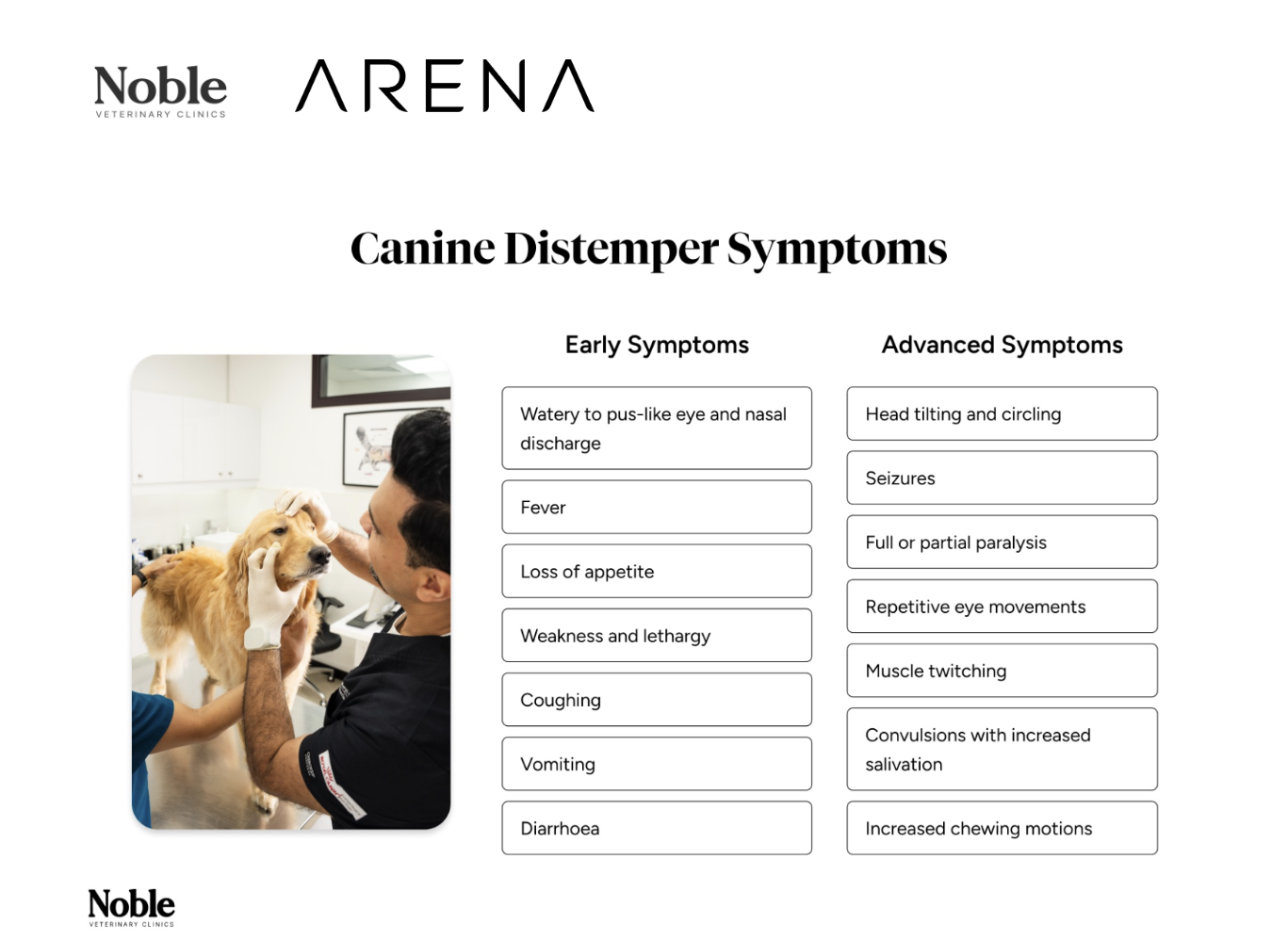
Symptoms of Distemper in Dogs

Once a dog is infected by distemper, it can experience various symptoms. As the disease progresses, the symptoms of K9 distemper become worse.

Here are the early symptoms of canine distemper.

  • Discharge from the eyes and nose, ranging from watery to pus-like consistency
  • Fever after three to six days after infection
  • Loss of appetite
  • Weakness and lack of energy
  • Coughing
  • Vomiting and diarrhoea 

When symptoms progress, especially without vet medical care, advanced symptoms may appear in dogs. The advanced symptoms of distemper are fatal neurological signs that may include:

  • Head tilting
  • Circling
  • Seizures
  • Full or partial paralysis
  • Repetitive eye movements
  • Muscle twitching
  • Convulsions with excessive salivation
  • Increased chewing motions

When advanced distemper symptoms appear after a few days, the dog may not survive. If it does, the virus usually causes permanent damage to its nervous system.

How is Canine Distemper Diagnosed?

Distemper in dogs

When dogs show signs of distemper, they should be brought to the veterinarian immediately. Many vet clinics in Dubai have the capabilities and equipment to diagnose canine distemper accurately, so it’s important to choose your vet wisely.

Diagnosing distemper involves checking for symptoms and performing diagnostic exams. One of the common tests performed to diagnose distemper is the PCR, or Polymerase Chain Reaction, which detects the distemper virus.

Other tests that the vet can perform include checking for antibodies present in the dog and testing the urine, blood, or nose and eye discharge.

Treatment Options for Distemper in Dogs

Currently, there is no cure for distemper in dogs. Instead, vets offer supportive pet care while managing the symptoms of an infected dog. 

To manage symptoms, use IV (intravenous) fluids to prevent dehydration from vomiting and diarrhoea. Medications may also be administered to alleviate a dog’s discomfort, pain, and nausea. 

Respiratory support and antibiotics might also be given when the dog’s condition becomes too severe.

During treatment and recovery, it’s advised to keep the infected dog away from other dogs to prevent transmission. Even after recovery, it’s best to isolate the dog because it can still shed the virus, which can last from two weeks to eight months.

Preventing Distemper in Dogs

Essential dog vaccination can prevent canine distemper. In Dubai, most vet clinics administer the DA2PP vaccine, which protects dogs from five common diseases, including canine distemper. 

The DA2PP is a core vaccine usually given when puppies reach six to eight weeks of age. After the first shot, the vet will provide you with a dog vaccination schedule for the next DA2PP shots.

It’s important to follow the vaccination schedule to ensure your dog grows healthy and is protected against distemper and other canine diseases.

Your guidance and proactiveness also matter when making sure your dog is safe from distemper. When going out with your dog, always be cautious when socializing with other dogs, especially puppies. 

Responsible Dog Ownership Against Distemper

With the proper knowledge about distemper, you can help keep your dog healthy and virus-free. Keep your dog’s vaccination up-to-date, especially if you have a puppy with an underdeveloped immune system.

If you notice any symptoms of distemper in your dog, contact emergency vet services immediately. The chances of survival will depend on how prompt the vet care will be to manage the symptoms.

The key to your dog’s health is regular monitoring, routine vet consultations, and preventive measures to keep it safe from disease. 

Frequently Asked Questions About Distemper in Dogs

Is canine distemper curable?

No, canine distemper is not curable. Still, there are treatment options available to manage symptoms like vomiting and diarrhoea, which can lead to dehydration.

What is the distemper vaccine?

The distemper vaccine is a core vaccination that’s essential for dogs. It protects your canine companion from the fatal and contagious distemper virus.

Can a dog survive distemper?

Yes, some dogs may survive distemper. Recovery is challenging but achievable. However, most distemper survivors often have permanent neurological damage and would need extra care and attention.

Can I touch a dog with distemper?

You can touch a dog with distemper, but you must be strict with hygiene as you can transmit the virus to other dogs you might touch. When caring for an infected or recovered dog, always disinfect your hands and other items you may touch or use on the dog.

Can distemper spread to humans?

No, distemper doesn’t spread or affect humans. However, humans can be carriers of the distemper virus to other animals.


Kurdish villagers stop Turkish Government from building solar power plant in their nature reserve

0
Kurds resist solar farms on their nature reserve
Kurds resist solar farms on their nature reserve in Turkey

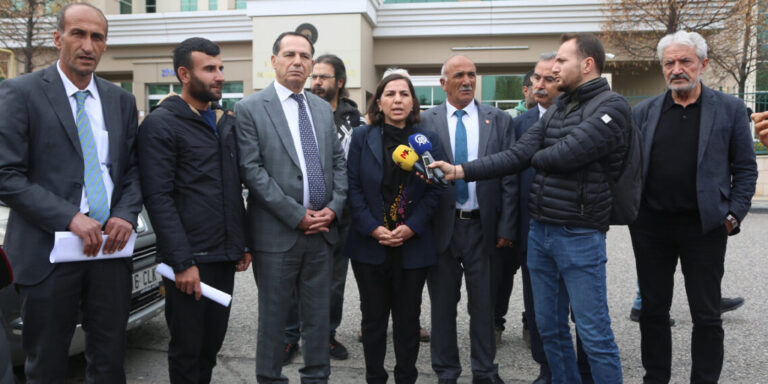
Residents of Çanakyayla which is a Kurdish-majority village in Turkey’s Bitlis Province, have successfully halted a solar energy project, citing ecological concerns and displacement risks, the Mezopotamya Agency reported on Monday. The victory followed lobbying efforts led by the Ecology Commission of the Peoples’ Equality and Democracy (DEM) Party.

The solar energy project, was planned by a company owned by Vahit Çiller, a former MP of Turkey’s Justice and Development Party, and was scheduled to begin in December. Following a meeting with ministry officials, the environmental impact assessment process was frozen.

Kurds stop solar project in Turkey
A Kurdish family in Turkey. This community that has a mountain that looks like Mount Fuji has stopped a solar energy power plant. Via Facebook.

Semra Çağlar Gökalp, DEM Party deputy for Bitlis, applauded the decision. “The planned site is a protected nature reserve with vital water resources. Halting this project is a victory for both the environment and the community,” she said. Gökalp highlighted that the location’s ecological sensitivity made the project untenable.

The village leader, Hikmet Karabalık, warned of the devastating impact the project would have had on the community. “This initiative would destroy our water sources and roadways, leaving 20,000 cattle without access to water and forcing residents to leave the area. Such destruction is unacceptable,” Karabalık said.

While the decision to suspend the project was celebrated, DEM MP İbrahim Akın cautioned that similar proposals might reappear. “Energy companies, often with international backing, continue to push harmful projects. Although this is a win for now, we must remain vigilant,” Akın stated.

Turkey has a history of eliminating dissent. Ali Ulvi and Aysin Büyüknohutçu were a loving couple who cared about their land, their forests and the planet. They were murdered eight years ago in Antalya, Turkey while challenging mining in a stone quarry.

environmental activists murdered in Turkey, Aysin Büyüknohutçu, Ali Ulvi

Turkish environmentalists were killed for protecting the land. The least we can do is petition that justice is served.

The solar energy plant project reflects broader concerns in Kurdish-majority regions of Turkey, where energy and infrastructure projects have faced criticism for their ecological impact. Large-scale projects, such as the Ilısu Dam on the Tigris River, have submerged historical sites, displaced residents, and damaged ecosystems. These dams violate human rights.

Additionally, deforestation and environmental degradation in areas such as Tunceli (Dersim) and Şırnak (Şirnex), often linked to military operations, have drawn condemnation from environmentalists and local communities.

Ataturk Dam

There are 145 mine projects in such an important area, when in fact it should have been on the UNESCO World Heritage List. The Euphrates ecosystem is being heavily damaged, says Barış Yıldırım, a lawyer in Turkey. Read here how Turkey is destroying archeology and wildlife without hesitation. 

“We will stand by any community that defends their land, water, and way of life,” the DEM Party, known for its focus on ecological and social justice, stated in a press release. You can read more about how Turkey uses forest fires as a tool of war against the Kurds in this dissertation paper here.


City garden project pays you to compost and earn coupons for food

0
Tel Aviv green city award
Lira Shapira is a city farm in Tel Aviv

Tel Aviv one of 7 cities to win a world Green City Awards 2024

Tel Aviv has won Future Green City award for the Tel Chubez Agricultural Farm and the Lira Shapira initiative in Tel Aviv. The award was made at the Future Green City World Congress held in Utrecht, Netherlands. (In other news Tel Aviv gets an A- for sustainability).

The project was selected alongside six other cities for its unique model that bridges urban sustainability with community engagement that encourages a sustainable urban lifestyle.

Lira Shapira

Lira Shapira is a green local currency that rewards residents for separating organic waste for compost to enrich the farm’s crops. For every kilogram of organic waste separated and processed, residents receive one Lira, which can be spent at local businesses—thus not only protecting the environment but also strengthening the local economy and community.

Lira Shapira

Lira, the name for the old form of currency in Israel, can be spent on buying food from the garden.

The initiative is operated by local residents from the Shapira neighborhood in collaboration with the Tel Aviv-Yafo Municipality’s Environmental and Sustainability Authority.

Ruth Molcho, represented Lira Shapira at the congress: “Receiving this award was especially moving, as we realized that our small initiative at the Shapira neighborhood was gaining global recognition.”

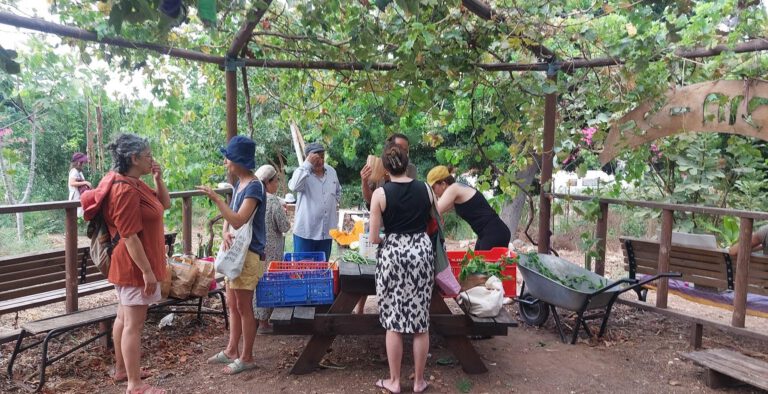
Tel Chubez is an urban agricultural farm located in the Shapira operating on principles of a circular economy. This vacant city land was transformed three years ago into a farm, providing residents with a green, productive space within the City, increasing wellness and access to fresh and healthy food while strengthening community resilience and increasing biodiversity.

Related: Fugee Fridays 

Tel Aviv–Yafo is constantly growing with massive construction and infrastructure projects. Preserving urban nature and connecting residents to it, maintaining and increasing the quality of life in this intense urban growth are significant challenges. Shapira neighborhood is located in the southern part of the City. In addition to the urban renewal phases, it has been identified as a vulnerable neighborhood in the climate change era dealing with more extreme heat waves and potential floods.

hydroponics urban farming tel aviv
Refugees from Sudan learn how to be modern farmers on a roof in South Tel Aviv. This is a project from 8 years ago to show how hydroponics can feed people in dense urban environments.

The farm, occupying four dunams, is being maintained by city employees, Lira Shapira NGO and volunteers. The cultivation method incorporates principles from permaculture and Biodynamics without any pesticides, focusing on growing local species following the seasons and a variety of over 60 fruit trees and local wildflowers that create an ecological system and habitat for birds and insects. The farm includes workshop plots where courses and training sessions are held to transfer the practices to participants’ yards to improve biodiversity and attract butterflies and honeybees.

Tel Chubez was included in the City Urban Nature Sites Index, together with 100 more sites. It is on the infrastructure layer, and future planning will have to avoid violating the area, as it has become an anchor for future urban green belts.

Tel Chubez became a green anchor for residents, plants and animals within a relatively short time. A model for collaboration internally in the municipality and externally with non-profits and businesses working together to build a new nature-based platform where environmental, social, economic and health positively impact.

Oceanwell’s pods mine for fresh water in the deep sea. Raises $11M USD

0
Oceanwell harvests fresh water from the deep of the sea

OceanWell secures $11M in series A to build deep-sea water farms as a new approach to desalination, with less energy used, no waste

Desalinating water seems like the golden solution to a dry world. Israel does it. Saudi Arabia does it. Island communities are doing it. But desalination should be a last resort because it’s energy intensive and it has environmental coastal effects. The salty brine is devastating to animals and plants on the shore. Could a novel solution from the US mine water from deep in the sea, using the ocean pressure as the means to drive osmosis through desalination membrane cells?

OceanWell water farm visualization

OceanWell, a water technology company based in Los Angeles, announced $11 million in Series A funding this week to scale its modular deep-sea water farms and launch California’s water farm pilot with Las Virgenes Municipal Water District (LVMWD).

Related: harvesting energy from the waves

OceanWell is developing modular deep-sea water farms made up of pods that harness natural hydrostatic pressure at depths of 400 meters for reverse osmosis desalination. Each pod can produce up to one million gallons of fresh water daily, and the modular design allows for scalable projects based on demand.

Each pod requires 1.5MW to operate to pump water from the pod to the shore. And the salt water released from the process is not considered detrimental to the ocean floor.

This technology ensures ultra-clean water by filtering out salts, bacteria, viruses, pesticides, and PFAS, while its components are engineered for durability in harsh deep-sea environments. Unlike traditional desalination methods that are energy-intensive and threaten marine life, OceanWell’s technology reduces energy consumption by up to 40 percent, while protecting marine life and eliminating toxic brine disposal.

“Our goal is to provide utility-scale, reliable and sustainable freshwater solutions that can supply clean drinking water to communities across the globe,” said Robert Bergstrom, Founder and CEO of OceanWell. “We’re grateful to our investors whose collective expertise across water technology, manufacturing and infrastructure project development will be invaluable to our company, and particularly as we look to scale up operations in the coming months.”

Kubota Corporation, a century-old leader in water infrastructure manufacturing, the family office of Jon Hemingway of Carrix Ports, and Charles McGarraugh, former head of metals trading at Goldman Sachs, participated in the round.

There is a rising mismatch between clean water supply and demand – with experts projecting that 5 billion people could be without clean drinking water by 2050. The problem is driven by rising demand for water in key economic sectors like agriculture, industry and manufacturing and compounded by the effects of climate change such as drought and flooding.

Oceanwell
How the pods work

Since 1970 water demand has increased by 1.7x, while global supply has dropped by 50 percent. OceanWell aims to provide affordable, abundant freshwater with its deep-sea pods, which produce 1 million gallons per day of potable water each. OceanWell’s first water farm is being developed in its home state, California.

Since its founding in 1890, the Osaka, Japan-based Kubota Group has been working to solve social issues through superior products, technologies, and services in the areas of food, water, and the environment. To address the globally worsening issue of water scarcity, Kubota has increased investment in cutting-edge water technologies. Japan is a large island in need of alternative freshwater solutions.

“One of Kubota’s goals is to provide comprehensive solutions for the entire ‘water circulation loop’ from water production and supply to wastewater treatment and reclamation. OceanWell’s innovative technology, which can provide a stable long-term supply of potable water to water utilities in water-scarce regions, is indispensable for achieving this goal,” said Eiji Yoshioka, Director and GM of the Water and Environment Infrastructure Consolidated Division of Kubota.

Today’s announcement comes a year after OceanWell partnered with Las Virgenes Municipal Water District to establish California’s first water farm, aimed at supplying fresh drinking water to a region recovering from years of record-breaking drought.

US Navy Seals
A US Navy Seals dive test pod

Previously, the company completed prototype testing at the US Navy’s Deep Ocean Simulation Facility. OceanWell is supported by a working group of 24 state water authorities in California and aims to build 15 water farms across the globe.


8 alternative Christmas trees green up your holiday!

1

Alternative Christmas Tree

Celebrate Christmas without a tree?  Absolutely! Skip the chopped-down conifer, pass on the plastic fakes, and leave the live sapling planted out in the wild. Start a new tradition. You’ll save a tree, save the planet, and save money too.

I’m in the middle of another international move, marking the eighth Christmas that my daughter has experienced in a most atypical way. Families everywhere base travel on school holidays, and for us that usually meant trips happened in late December. No need to “tree up” since we weren’t staying home, which meant the run-up to the day was fairly Scrooge-like in terms of decor.

Amanda took it on herself to make tabletop trees out of painted cardboard, like those I crafted from old magazines in a 1970s Girl Scout troop (lead image), or the one shown below made from corrugated cardboard.

Alternative Christmas Tree

Another year, she taped ornaments in a tree-shape on the inside face of our apartment entrance door, including some colorful fairy lights.  A version appears below. She topped hers with a cut-out of Justin Beiber’s face (“Hey, ma, every tree needs a ‘star’!”).

Alternative Christmas Tree

But no need to take a page from my kid’s book.  Tear a few from your own old magazines or phone directory, and repurpose some pages into a sculptural tree. Just be sure to send them to recycling when the holiday is over.

Alternative Christmas Tree

Can’t condone destroying old books?  Then temporarily enlist them as holiday decoration, as shown below in the color-coded virtual Christmas tree. If you lack sufficient tomes in tonal alignment, add some quick book covers using old newspaper or kraft wrap.

Alternative Christmas TreeHello book lovers!  Make some sense of those towers of hardcovers sprouting all over your digs, and stack them in a sort-of-tree-shape.Suggest you pass on the large tree light bulbs and go with low-voltage fairy lights instead.  Don’t want to spoil the holidays with an unintended book burning.


Alternative Christmas Tree

I especially like this next one – borrow a neighbor’s ladder if you must – and you can find many variations on the theme. Trick it up in oversized paper ornaments as shown here – or wind some cotton cord through the steps and hang traditional tress decorations along the threadlines.

Alternative Christmas TreeGlue shells (or buttons, or corks, or bottle caps) to a conical styrofoam base and create a forest of small trees that can be displayed year-round.


Alternative Christmas Tree

Or go fully eco-event-planner and paint empty egg cartons in a palette of greens, here trimmed with empty Keurig coffee cups. Be sure to use water-based or acrylic paints and non-toxic glues, so that the entire assemblage can be recycled when the party’s over.

Alternative Christmas Tree Drop the Ho Ho Ho, and instead chant Reduce Reuse Recycle. It’s what the Ghost of Christmas Future is all about. Or when all else fails, rent a Christmas tree.

Why Outdoor Spaces Are Essential for Community Revitalization

0
London playground
A playground in London

If you’ve ever driven through a city without green spaces, you know the feeling. It’s dark, drab, and lifeless. Even the most industrial cities can be revitalized by adding trees, grass, bushes, and planter boxes. Even better, the more outdoor spaces you create in a city, the more likely you are to see people getting out into them. Yes, outdoor spaces are essential to breathing energy into a community. Here’s why:

Playgrounds Are Ideal Meeting Spaces

Parents around the world would likely line up to tell you how lonely it can be to have young kids. Especially if you don’t have friends with kids or family close, sitting at home with your little ones all day often feels isolating. Yet there are few places to go meet other lonely parents out with their kids. Aside from the library, most indoor spaces will charge a fee to hang out and entertain your child. This leaves parents to find local parks, which can be both a refuge and a sanctuary. 

Visit any local park, and you’re bound to find parents lounging on benches while their kids make friends on outdoor playground equipment. Even better, lots of parents actually make friends in parks, too. Some will form meetups and playdates, and you can find droves of toddlers playing in the sand while moms and dads take a break. These outdoor spaces are critical to parents in need of fellowship and commiseration over the trials of keeping tiny humans alive. 

Open Spaces Are Easier for Parents With Kids

A girl and a boy on a playground swing in Ohio, USA
A playground swing in Ohio, USA

In addition to being a great meeting place, outdoor, open spaces are easier for parents struggling to manage kids. Shopping or eating indoors can be a hectic experience for parents, especially of little ones. You constantly have to make sure they’re not breaking something, knocking something over, or screaming. It’s a reality for parents that those without kids, or with grown children, tend to overlook.

Outdoor spaces like parks, hiking trails, and even nature preserves offer parents a bit of a breather from these stresses. So, you’ll often find parents more relaxed and able to engage with other adults while their kids explore playgrounds, nature, or even just an open field. Ensuring you have plenty of these outdoor locations in your city can go a long way toward welcoming people from all walks of life to spend time in shared spaces together. 

Outdoor Events Are Fun

Do you want to revitalize a community? Schedule outdoor events in open spaces in your city. Sure, communities can come together at City Hall for city council meetings. City dwellers might even encounter each other while out shopping in local stores or eating at restaurants. But those experiences can often be negative (fighting over city legislation) or fleeting (waving hi at the bookstore). These aren’t ideal opportunities for building community. 

Outdoor events, in stark contrast, are a great way to bring people together over something fun. A Fourth of July picnic day, a Day of the Dead festival, or a Christmas tree lighting are all experiences that tend to spark joy in attendees. They’re a great chance to get people to chat about local happenings, the holidays, their costumes, and more. They also send the message to your community that you are all part of something larger, which is a great feeling. 

Corporate events taking place outside are often talked about for their relaxed atmosphere and engaging setups that bring people together. Nevada professionals operating around Clark County often hire expert AV labor and staffing solutions in Las Vegas with Audio Visual Nation to make sure every sound system, stage light, and visual element enhances the outdoor experience. Their teams handle the unique challenges that come with open-air venues, from managing acoustics to weatherproofing equipment. With their support, organizers can focus on creating memorable events that run smoothly from start to finish.

One Word: Barbecue

A birthday party in the Netherlands. Outdoor parties are great with the weather works in your favor.

Barbecues are the lifeblood of many communities. There are few things that bring people together like eating food outside. Again, you can have a giant spaghetti feed or a bake-off in a recreation center or local dining hall. The people who attend will have a good time. But arriving at a location that requires you to walk inside a building can be off-putting for many. It often feels like the spotlight focuses on you when you walk in the door. 

A barbecue stimulates the exact opposite of this feeling for many people. You can show up at a park with people milling around and get a feel for what you’re walking into while you’re still in the parking lot. Barbecues in local parks offer people the chance to warm up to each other, start conversations, and break bread — or hot dogs. Even more introverted people can show up and hang back while still feeling like part of the community. 

Clean-Ups and Gardens Get People Involved

One way outdoor spaces can revitalize a community that many won’t think of is through community organizing and volunteering. More than 50% of the U.S. population volunteered to help their neighbors at the height of the pandemic. People want to help each other. They want to get involved, and helping brings people together. Often, it seems, people don’t volunteer or help out because they just don’t know how to get involved. 

Organizing a community clean-up, planning a community garden, or revitalizing a park can be a great way to get locals involved. These are all opportunities for parents to bring kids out and teach them about community service. Introverts and shy people can join without feeling pressured to socialize. And new residents can come out to meet their neighbors. Meanwhile, your outdoor spaces are getting a facelift!

So many reasons exist to ensure your city is filled with outdoor spaces for residents to enjoy. They bring people together, remind them they’re a community, and encourage them to have fun. Whether it’s a playground or a nature trail, outdoor spaces meant to be shared are ideal locations to generate excitement and energy around your city, county, or state. People want to be part of something larger than themselves, and they often just need to be shown the way.

The Updated Essential Questions of Sustainability for Corporations

0
Mudhif
An ancient hut now the center of the design world in Dubai. The world is looking back to the past to see what the future can bring.

The world is changing. There is no question about it. But everyone can attest that it’s not for the better.

Climate change is a real threat to humanity and probably one of the biggest problems we’re facing in the 21st century. The BBC reported that human-made climate change was responsible for 10 of the deadliest extreme weather phenomena in the last 20 years.

Citing data from the World Weather Attribution (WWA), the news outlet says that storms, heatwaves and floods in Europe, Africa and Asia claimed the lives of more than 570,000 people.

An Action Plan for Sustainability

Rising global temperatures, increased income inequality and geopolitical tensions are by-products of climate change. 

The systematic disruption of the status quo is set to deepen unless consumers, governments and corporations band together to come up with actionable plans.

Strategic management consultant Dr. Oliver Eitelwein believes disruption is needed so we can reconsider what we thought to be fact and reshape how we interact with our environments. Dr Eitelwein’s statement points to one word: sustainability.

Business leaders have the power to enact change. In this article, we’ll discuss how corporations can increase their sustainability practices.

What Does Sustainability Mean to My Business?

IMB sustainable development goals
ESG environment social governance investment business concept. Women use a computer to analyze ESG, surrounded by ESG icons .close to the computer screen in business investment strategy concept.

It’s not an easy question. But starting with the basics will help plan a roadmap. 

Define what sustainability means for your business. Does it encompass social impact, environmental responsibility or economic endurance? Once you have the answers, incorporate them into your sustainable business strategy.

How Can My Business Actively Contribute to Conservation?

Partnering with NPOs and conservation warriors is the first step in committing to change. Collaboration work makes a positive impact on your business and communities.

This requires extensive research and ensuring your brand’s ethos aligns with your partner’s mission statement. 

For example, if your company prides itself on sustainable packaging or recycled materials, it’s worth checking out initiatives that reduce plastic use in the environment. 

This partnership ethos also applies to industrial waste streams. For instance, responsible management of IBC totes and steel drums diverts waste from landfills and conserves resources. For companies seeking such a solution, this is the operational standard that defines providers like Kelly Drums.

Right now, ocean conservation remains a passionate cause for many. However, the ocean plastic crisis is hindering much-needed research in discovering new species. 

Merit researcher Dr Adrian Glover leads deep-sea exploration for the Natural History Museum. He says in some regions of the deep ocean, his team has calculated over 80% of the species they bring up as samples are discoveries.

The world’s oceans need projects and startups recovering trash so that scientists like Dr Glover can continue with their work. 

“To see those places littered with plastic, to see people losing their income and way of life… it’s the driving force behind why we clean,” says 4ocean.

Are My Customers Willing to Pay More for Sustainable Products?

Bootstrapping in business, whether you run a startup or a brewery, means doing everything you can with your own hands and skills before you pay someone else to do it.

It’s a fine balancing act when integrating sustainable practices without compromising profit margins. You’re answerable to board members and shareholders where the bottom line is always increased revenue.

Maddyness says that assessing the economic value consumers place on a product or service is important. Yet, as business leaders, you must discern the financial implications of going green.

Eco-conscious consumer trends point to a willingness to make decisions with the environment in mind. Yet, the current economic climate is the difference between a higher price point and making sustainable choices. 

How do I Measure My Sustainable Goals?

Business with a purpose has emerged in recent years as a marketable buzzword but at its core lies a spirit of aligning business goals with environmental and sustainability objectives.

Sustainability Magazine claims companies are continuously embracing business models that incorporate corporate social responsibility (CSR) and other sustainable practices into their metrics. Yet in doing so, some are greenwashing their mission statements to increase their green credentials.

Rose Stuckey Kirk, Chief CSR Officer at Verizon, tells the publication companies must maintain a firm grip on tracking goals set in their initiatives. Integrate analytics for each project and set goals aligned with your business strategy.

How Can I Use Technology to Advance Our Goals?

Sara Beeri
Sari Beeri from MIT uses AI to map city trees for urban planners and to assess the impact of climate change

The World Economic Forum describes businesses as the engines of innovation; harnessing emerging technologies to accelerate solutions.

Merging all lines of business towards sustainable management includes production and value chains. 

Cloud-based digital technologies present a solid starting point and flexible integration of datasets. This solution can scale at the same pace as a company moves towards net zero. 

Explore green IT innovations, blockchain for supply chain transparency or renewable energy sources to increase energy efficiency.

Humanity is in flux. We are standing at the precipice of inevitable change. One wrong move could mean all the hard work we’ve done until now will be null and void. 

Corporations are capable of swaying opinions and leading the masses. Use that power to bring about change for the sole purpose of protecting this world for future generations.

DoTERRA Plants 500,000 Trees, Sowing Positive Seeds of Change in Hawaii

0

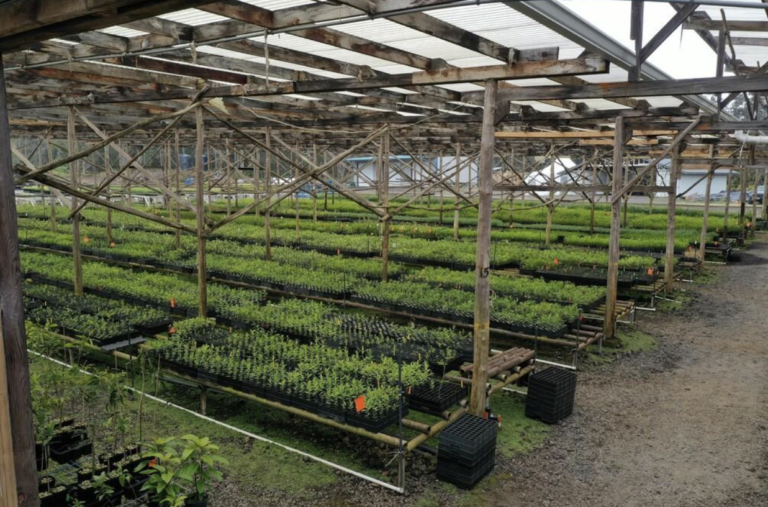
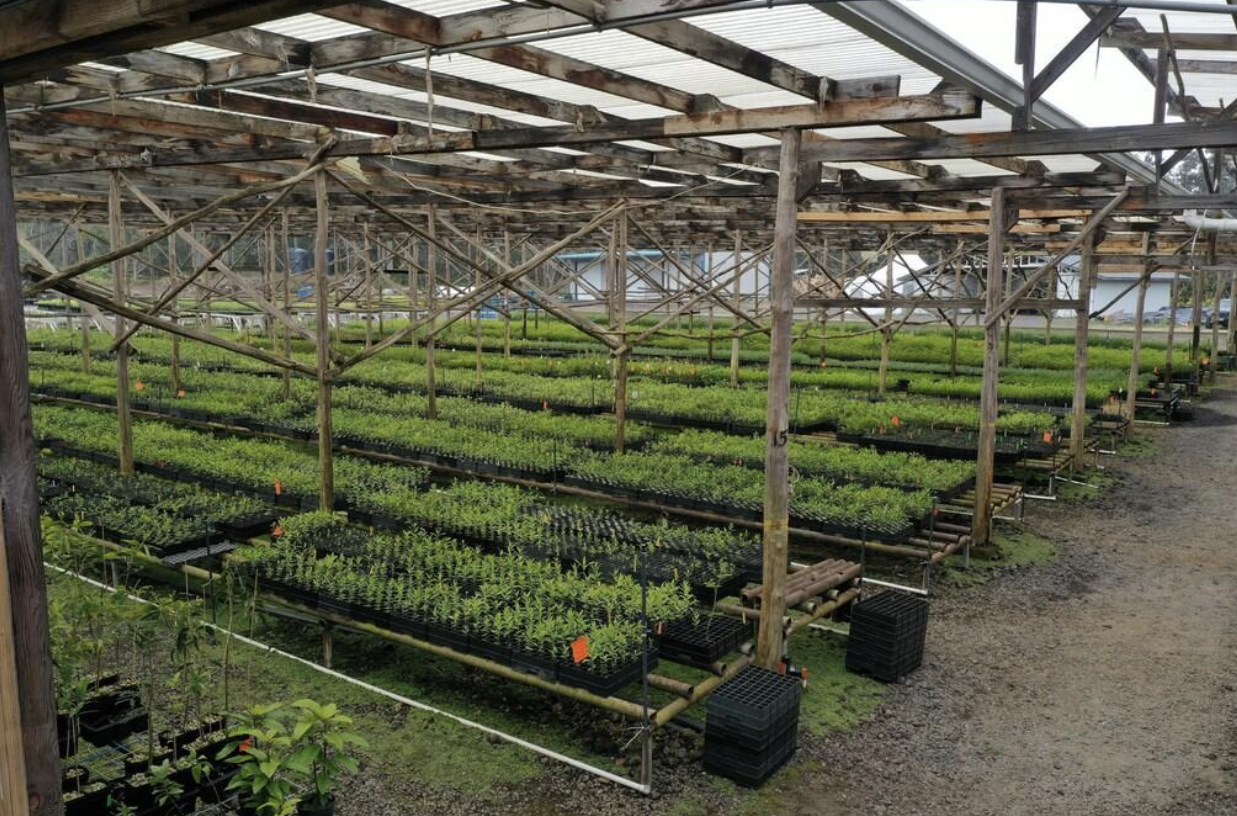
Doterra greenhouse

doTERRA’s Hawaiian reforestation project hits a major milestone.

In the lush oasis of Hawaii’s Big Island, a green revolution is taking root. DoTERRA, the essential oils giant, has reached a significant milestone in its ambitious reforestation project. The company has successfully planted over 500,000 native trees at the Kealakekua Mountain Reserve, marking the halfway point of its goal to plant 1 million by 2030.

The KMR project, launched in 2018, spans an impressive 9,627 acres. DoTERRA’s partnership with the Hawaiian government aims to conserve and protect remnants of the native forest while rebuilding an ecosystem threatened by centuries of over-logging and grazing.

The effort is the largest reforestation project in Hawaii, with many locals rolling up their sleeves to carefully plant seedling after seedling back into Hawaii’s fertile earth.

Beyond Planting: The Ripple Effects of DoTERRA’s Reforestation Project

Greg Hendrickson, general manager of KMR, expressed his enthusiasm for the project’s progress. “Reaching the halfway point to our 2030 goal has been an amazing collective effort involving our community, partner organizations, and the incredibly committed team at KMR,” he said in a press release. 

The impact of this reforestation effort extends beyond the trees themselves. Hendrickson noted that the project has already begun to heal the land and encourage the return of native birds. 

One of the key components of the KMR project is the sustainable harvesting and distillation of ‘Iliahi, or Hawaiian sandalwood. This practice allows doTERRA to produce a highly valued essential oil while simultaneously supporting the growth of other native Hawaiian species.

“I’ve always believed that in order for a forest to be productive, it needed to be protected,” Hendrickson said in a video. “But in order for it to be protected, it needed to be productive. The resources we get from the oil are put right back into this forest.”

The company’s commitment to responsible sourcing and environmental restoration hasn’t gone unnoticed. In 2021, doTERRA received the SEAL Environmental Initiative Award for its work in native forest restoration, including its efforts with ‘Iliahi.

“The ethical and sustainable sourcing of ‘iliahi (Hawaiian sandalwood) at KMR requires a commitment to restore the natural habitat that previously existed on the land, and to do so in a way that reverences the remarkable culture of the Hawaiian Islands,” Hendrickson said in a LinkedIn post shared by doTERRA. “KMR is helping ‘iliahi and other native Hawaiian species thrive once more.”

The KMR initiative is not simply about planting trees. DoTERRA has developed a comprehensive management plan in partnership with the Hawaii State Division of Forestry and Wildlife. This plan aims to reestablish a healthy native forest, ensuring that the reforestation efforts have long-lasting effects.

The company also established a nursery that supplies the trees for the KMR project and serves as a valuable resource for other conservation efforts in the region.

DoTERRA’s approach to sourcing and sustainability isn’t limited to the borders of Hawaii. The company’s Co-Impact Sourcing model partners with local growers around the world, emphasizing fair wages, sustainable practices, and community development.

The success of the KMR project thus far is encouraging, but the work is far from over. With a goal of planting 600,000 trees by the end of 2024, doTERRA is on track to surpass its 2030 target. 

“We are proud to be part of this prestigious group of organizations and individuals who are doing what it takes to make our world a better place,” doTERRA posted on LinkedIn.

Villa construction in Dubai: 10 key steps

0
Build a villa in Dubai
Villa construction in Dubai: 10 key steps

Building a villa in Dubai offers a unique opportunity to construct a home to your precise
specifications in one of the world’s most vibrant and luxurious cities.

Thanks to the availability of land in ultra-exclusive gated communities, such as Palm
Jumeirah and Emirates Hills, and access to world-class service providers in the home
construction industry, building a villa in Dubai can easily become a reality.

If you’re considering villa construction in Dubai, read on for an outline of the process and
how to make your dream villa a reality.

Villa construction in Dubai

Step 1: Design Consultation

The first step in building a luxury villa in Dubai is the design consultation phase, which
includes meetings with selected architects and designers to discuss your overall vision,
preferences, and lifestyle requirements. This includes discussing the villa's architectural
style, layout, and unique features, which helps to set the foundation for a personalised

design approach. At this stage, you may meet with several architects and designers to
ensure you select a team that aligns with your vision.

Step 2: Source land or property for renovation

The next step in the villa construction process is to source land if building a luxury villa
from scratch or acquire a property to renovate. Working with an experienced design firm
and real estate agency will provide you with knowledge on the most exclusive destinations
in Dubai to own land or to purchase a luxury villa in need of renovation. You will also want
to consider factors such as proximity to schools, local amenities and leisure facilities, and
zoning laws.

Step 3: Development of mood board & initial sketches

Following the initial design consultation, your chosen architects and designers will create
various mood boards and initial sketches to capture your desired design aesthetic. There
will often be multiple revisions at this stage until your vision is finally realised.

Step 4: Final design drawings & 3D renderings

Once an initial round of sketches has been completed the final design drawings and 3D
renderings will be created. These will offer a comprehensive view of the villa’s final
design, including the interior and exterior spaces. The 3D renderings are instrumental in
helping to visualise the space, providing an opportunity to make any final adjustments
before construction commences.

Step 5: Secure planning permission & legal requirements

Before any building work starts, it is essential that planning permission and other legal
requirements are secured. This is especially important if you are building from scratch.
Your designated team will need to work with the relevant local authorities in Dubai to
ensure your planned villa complies with zoning laws, building codes, and other regulatory
standards.

Step 6: Source contractors & project management team

The next step is to source skilled contractors and assemble the right project management
team for the planned build. This team will likely consist of highly experienced engineers,
builders, and project managers responsible for executing the design vision to the most
exacting standards while ensuring high-quality craftsmanship. A reputable design studio or
architectural agency will be able to project manage the build and will boast deep industry
contacts, ensuring the very best team constructs your new villa in Dubai, on time and
within budget.

Step 7: Build starts

With the design finalised, the land secured, the planning and legal requirements in place,
and a team assembled, it’s time to start building your dream villa in Dubai. This is arguably
the most exciting phase when your dream villa starts to take shape, covering everything
from site preparation and laying the foundation to constructing walls, roofs, and interior
spaces. Regular site visits and progress updates ensure the build is on track and aligned
with the design.

Step 8: Furniture & styling

As construction nears completion, attention shifts to sourcing luxury furniture and bespoke
high-end items as part of the villa’s interior styling. Furnishing and accent pieces are
selected to match the villa's design, ensuring harmony in colour, texture, and material. With
wellness a key trend in the home construction industry, many people opt for a focus on
sustainable and eco-friendly items, including natural fabrics that will help enhance overall
well-being.

Step 9: Snagging & furnishing

Interior design

Snagging is the process of identifying and fixing any minor issues before the final
handover. Once this process is completed, the villa is fully furnished and expertly styled
according to your preferences, ensuring every detail is perfect. This step ensures the space
is move-in ready and styled to perfection.

Step 10: Closing & handover of villa

The final step involves the official handover of the completed villa. During this step, the
project team will conduct a thorough walkthrough to ensure all expectations are met. Once

you are satisfied, the villa is closed and the ownership transferred, marking the completion
of the luxury build process.

How can I build a luxury villa in Dubai?

The best way to construct a villa in Dubai is to work with a reputable architectural and
design studio that specialises in building luxury villas in Dubai. The best will boast in-
depth knowledge and industry intelligence and will offer a bespoke service, advising and
offering guidance on every facet of the build process, from land acquisition to architectural
drawings and furnishing your new home.

Meet the Marsh Arabs of Iraq at Dubai Design Week

0
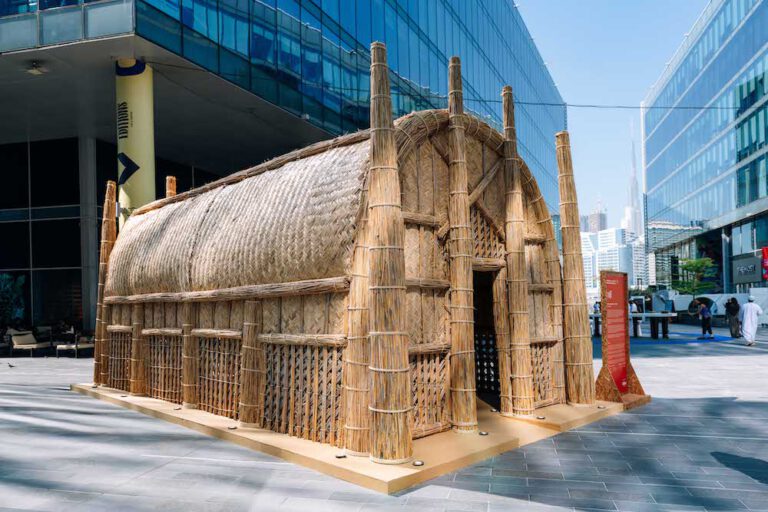
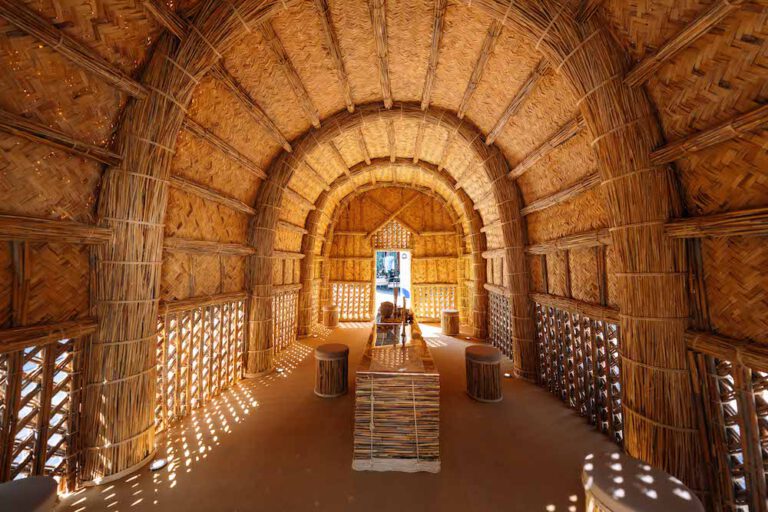
Mudhif, from the Arab Marsh people built at Dubai Design Week

We got so much international attention when we wrote about the Iraqi mudhouse called a mudhif built with US veterans and Iraqi refugees in the US. You can read the story here. Vernacular architecture is that built without a plan by local people is taking the world by storm as people consciously and subconsciously are drawn to simpler times when design was functional and from materials that nature made.

Mudhif

Mudhif, from the Arab Marsh people built at Dubai Design Week

The proof is in the pudding at Dubai Design Week where a designer from Kuwait, with Mesopotamian origins, recreates an Iraqi or Mesopotamian mudhouse. Don’t you feel like you’d like to step inside?

Mudhif, from the Arab Marsh people built at Dubai Design Week

Mudhif, from the Arab Marsh people built at Dubai Design Week

In the US they were constructed of phragmites, an invasive reed grass, and built on the grounds of the Schuylkill Center for Environmental Education in Northwest Philadelphia.

Ola Znad, the designer, turns the traditional gathering place for Marsh Arab communities into a multi-sensory experience. The buildings were designed, of course, for centuries before without any one person taking claim. She says they were crafted in Iraq from locally sourced reeds and mud: the materials that have supported Marsh Arab communities for generations.

According to the paper The Ecology of the Mudhif, the mudhif was built and used, by the Marsh Arabs of the region, until 1993 when Saddam Hussein began to drain and dam the marshes, in an attempt to destroy the life and culture of those Arabs. But after his defeat 10 years later in 2003, the Arabs dug up his dykes, canals and damns, re-flooded the marshes and began to resume their ancient way of life.

Inherently nomadic, the author muses: “the prejudice against a fixed life is strong, only the lowest of the tribe will condescend to remain stationary; but change is in progress.”

Related: What is Vernacular Architecture

The paper notes that mudhifs were built by the culture which not only developed the world’s first cities, with their great mud-brick ziggurats and temples; it also invented writing, for the keeping of temple records. And of course, for sustenance, the cities had to be surrounded by agricultural villages hence, in the marshes, buildings constructed entirely of reeds. Is this why our pull toward them is strong?

Related: read about the origins of writing in Iraq

By portraying the Mudhif as an open and inclusive space, Znad says she “reflects the traditional architecture of the Marsh Arabs and emphasizes the contemporary need for sustainable design.”

This is true in every culture everywhere especially the UAE which has designed itself out of the desert from scratch over the last 50 years. It may be why cardboard was also featured this year. We are all going back to the basics.

Enjoy the photos and if you are at the Dubai Design Week this week drop us a line.


Most Israelis concerned about climate change, new survey

0
climate change activist Tel Aviv
An overwhelming majority of the Israeli public is concerned about climate change. Some 1,180 respondents from all adult population groups in Israel were asked about their knowledge and attitudes towards climate change and its impacts on the environment, economy, society, and health. While Tel Aviv may get an A for Sustainability, the survey looked at parts of Israeli society.
The survey was conducted by the National Institute for Climate Policy Research in cooperation with the Laboratory for Communication Research and Social Bias headed by Dr. Yossi David from the Department of Communications Studies, and in consultation with climate researcher Dr. Avner Gross, all from Ben-Gurion University of the Negev. The data was collected between June 26-30, 2024 by the research institute ‘Panel-Hamidgam’.

The breakdown of climate concerns

  • Concern about climate change crosses political lines.
  • 77% of the Israeli public is concerned about climate change; the difference between right-wing and left-wing voters is smaller than expected: 72% of right-wing voters and 89% of left-wing voters express concern about climate change.
  • There is an understanding that the climate crisis is man-made.
  • There is high trust in science and scientists (63%) compared to very low trust in social media (only 14%).
  • There is a willingness to change behavioral habits for the sake of environmental protection (36% are willing to eat less meat, 33% are willing to travel more by public transport).
How the study was developed and why
Bike lanes in downtown Tel Aviv

One-third of survey participants expressed a willingness to change their behavior for the sake of environmental protection. 36% are willing to eat less animal-based food; 33% are willing to travel more by public transport; 24% are willing to fly less and only 13% are willing to pay higher taxes to promote environmental protection.

“It seems that the public is readier to change their habits than policymakers believe,” said Tamar Zandberg, head of the National Institute for Climate Policy Research at Ben-Gurion University and former Minister of Environmental Protection.

“The most significant change that Israelis are willing to make is in their dietary habits, although the issue is not usually associated with climate change in Israel. Our conclusion, therefore, is that it is not only possible but necessary to think about more ambitious policy measures. The public is eager to hear from decision-makers as moral compasses and are waiting for a call to action at the individual and community level, in order to reduce environmental damage.”

Another key finding from the survey indicates that the majority of the Israeli public (77%) is concerned about an increase in air pollution influenced by human activities, such as burning fuels; 76% are concerned about extreme events, such as fires, heatwaves, and floods; and 51% are concerned about the flooding of coastal cities due to rising sea levels.

For most Israelis, climate change is caused by humans, but belief in conspiracy theories that challenge the scientific consensus on climate change is also high. 62% of respondents believe that there are economic interests behind the claims about climate change; 58% of respondents believe that there are political interests and 40% believe that science is divided on whether there is climate change.

“The Israeli public is surprisingly knowledgeable about the dangers of the climate crisis, despite the lack of sufficient public discussion on these issues,” noted Dr. David.

The findings also show that the Israeli public wants change but doesn’t have enough reliable information. Most of the Israeli public from all political backgrounds (63% in total) has high trust in science and does not trust social media. The highest level of trust is in scientists and academics (63%); trust in friends and family is also prominent (59%), 40% expressed trust in the Ministry of Environmental Protection and only 14% expressed trust in social media. The high trust in scientists and science indicates the need to make scientific knowledge about climate change and environmental protection accessible to the public.

“This is one of the most interesting findings of the survey in my opinion. This finding indicates the public’s thirst for reliable scientific knowledge and the ability of such knowledge to influence public attitudes,” explained Dr. Gross. “It seems that the involvement of academia in the climate discourse in Israel and in direct dialogue with the public is crucial.”

The entire Israeli public recognizes the need to promote policies that will enable adaptation to climate change. There are some differences between right-wing and left-wing supporters, but they are significantly smaller than the differences in other countries, particularly the United States.

It seems that self-identifying leftists tend to be slightly more concerned than rightists about the impacts of climate change; they are more supportive of promoting policies to reduce climate change and are more willing to change behavior to cope with climate change than rightists.
An overwhelming majority (89%) of respondents from the left expressed concern about an increase in air pollution resulting from human activities, while the center (76%) and the right (72%) expressed similar concern. The differences found were relatively small compared to the United States and indicate that attitudes towards climate change have not yet been fully politicized in Israel.

Women are more concerned than men

Examining the differences between men and women shows that women are more concerned than men about the impacts of climate change. While an overwhelming majority (85%) of women expressed concern about an increase in air pollution resulting from human activities, a smaller majority (69%) of men expressed similar concern. Women are more supportive of promoting policies to reduce climate change and are more willing to change behavior to cope with climate change than men. 43% of women are willing to eat less animal-based food compared to 28% of men; 35% of women are willing to travel by public transport compared to 30% of men; 26% of women are willing to fly less compared to 22% of men.

“The data on the differences between men and women is similar to the data we know from other places around the world,” emphasized Dr. David. “However, the differences between right and left in Israel are smaller than in the United States, for example, indicating that the issue has not been fully politicized in Israel.”

Tamar Zandberg added that “this indicates that there can be broad and cross-party support for more significant policy measures to address the climate crisis.”

The survey findings show that an overwhelming majority of the Israeli public believes that climate change is dangerous to humanity and that the government should prepare for climate change.

“Public attitudes and perceptions towards the climate crisis are critical elements in humanity’s response to the greatest challenge in its history,” explained Tamar Zandberg. “Governmental policy actions – local, national, and international – require agreement, support, and even public pressure for their implementation. This is the time for climate decision-makers to establish a series of actions that will reduce the ongoing damage to the environment and correct behavior-changing laws, as suggested in the survey.”

UAE’s EDB signs $27M USD deal Yellow Door Energy for 60 new solar PV projects

0
The Yellow Door Energy team

The Emirates Development Bank (EDB) has signed a financing agreement of $27 million USD with Yellow Door Energy (YDE), a leading sustainable energy partner in the MENA region, to support the development and operation of over 60 solar photovoltaic (PV) plants across the United Arab Emirates.

EDB’s financing will expand YDE’s portfolio of solar PV systems, enhancing its capacity to lease solar power plants through solar leases, also known as power purchase agreements (PPAs) tailored for industrial and commercial enterprises. Under this strategic collaboration, Yellow Door Energy will offer leasing opportunities to major industrial players in the UAE.

These companies will benefit from long-term access to clean electricity, significant energy cost savings, and promotion of sustainable energy usage across the nation.

Yellow Door Energy solar installation

Ahmed Mohamed Al Naqbi, Chief Executive Officer of Emirates Development Bank, said: “Our strategic collaboration with Yellow Door Energy marks a new milestone in our mission to enhance the UAE’s renewable energy landscape and accelerate its journey towards a net-zero future.”

Jeremy Crane, Group CEO of Yellow Door Energy stated: “As a company founded and headquartered in the UAE, we deeply value our relationship with the nation’s leading federal bank. Together, we are committed to supporting businesses in reducing their energy costs, enhancing resilience, and achieving their sustainability and Net Zero goals.”

EDB’s plan to provide AED 30 billion in financing to support five priority sectors, including renewables, underlines its crucial role in driving economic growth and fostering a more resilient economy.

Since the launch of its strategy in 2021, EDB has provided a cumulative total of AED 12.97 billion in financing, including more than AED 1.78 billion to empower the renewable energy sector, further consolidating its position as a leader in sustainable finance. Seems like the UAE is a hot place to be for financing and developing renewable energy projects.

Cocoa, coffee and tea push up global food import bill for wealthy countries

0
Grinding coffee in Ethiopia

The global import food import bill is expected to increase by 2.2 percent from the previous year to more than $2 trillion in 2024, pushed up by higher prices for cocoa, coffee and tea and also buoyed by higher import costs for fruits and vegetables, according to Food Outlook, a report from the UN’s Food and Agriculture Organization.

Import expenditures on cocoa, coffee and tea are anticipated to increase by 22.9 percent, accounting for more than half of the overall increase in value terms. That reflects soaring international prices for these commodities due mostly to weather conditions and logistics issues. Cocoa prices reached almost four times their ten-year average earlier this year, those for coffee nearly doubled, and those for tea rose 15 percent above their usual long-term levels.

Exports of these commodities play an important role in the economy of numerous countries, FAO economists noted. Coffee export earnings in Burundi and Ethiopia typically cover nearly 40 percent of their respective food import bills, tea does the same for more than half of Sri Lanka’s bill, and Côte d’Ivoire’s cocoa exports more than offset all of the country’s food import costs.

Meanwhile, declining import bills for cereals and oilseeds offer relief to lower-income countries. High-income countries account for two-thirds of the global food import bill and will face a 4.4 percent increase in 2024, while the bills for upper-middle-income, lower-middle-income and low-income countries are likely to contract.

The FAO Food Outlook, a biannual publication, offers updated forecasts for the production, trade, utilization and stocks of major food staples as well as explores a series of topical themes. In particular, olive oil and fertilizers are featured in the latest issue.

FAO’s latest forecasts point to favourable output outlooks across most basic foodstuffs, although global production systems remain vulnerable to risks from extreme weather events and rising geopolitical tensions and policy changes which could tip delicate demand-supply balances and dampen prospects for international trade in food commodities and global food security.

Wheat and coarse grains output is expected to decline in 2024 from high levels but remain above utilization rates. Rice, meanwhile, is a bright spot, with the 2024/25 season poised to mark a record-breaking harvest, which could enable global rice utilization, reserves and international trade to increase. Per capita food intake of wheat and coarse grains is expected to decline somewhat in Low-Income Food-Deficit Countries while that for rice is expected to increase by 1.5%.

Global meat and dairy production is forecast to increase moderately while that for sugar declines. Worldwide fisheries output is set to expand by 2.2 percent driven by aquaculture. Soybean and palm oil outputs are on course to expand while those for rapeseed and sunflower seeds contract. Global vegetable oil consumption could exceed production and lead to stock drawdowns for the second consecutive season, while robust crushings are expected to result in expanding global inventories for oilmeals.

Von der Leyen’s COP29 Absence Sends the Wrong Message on Climate

0

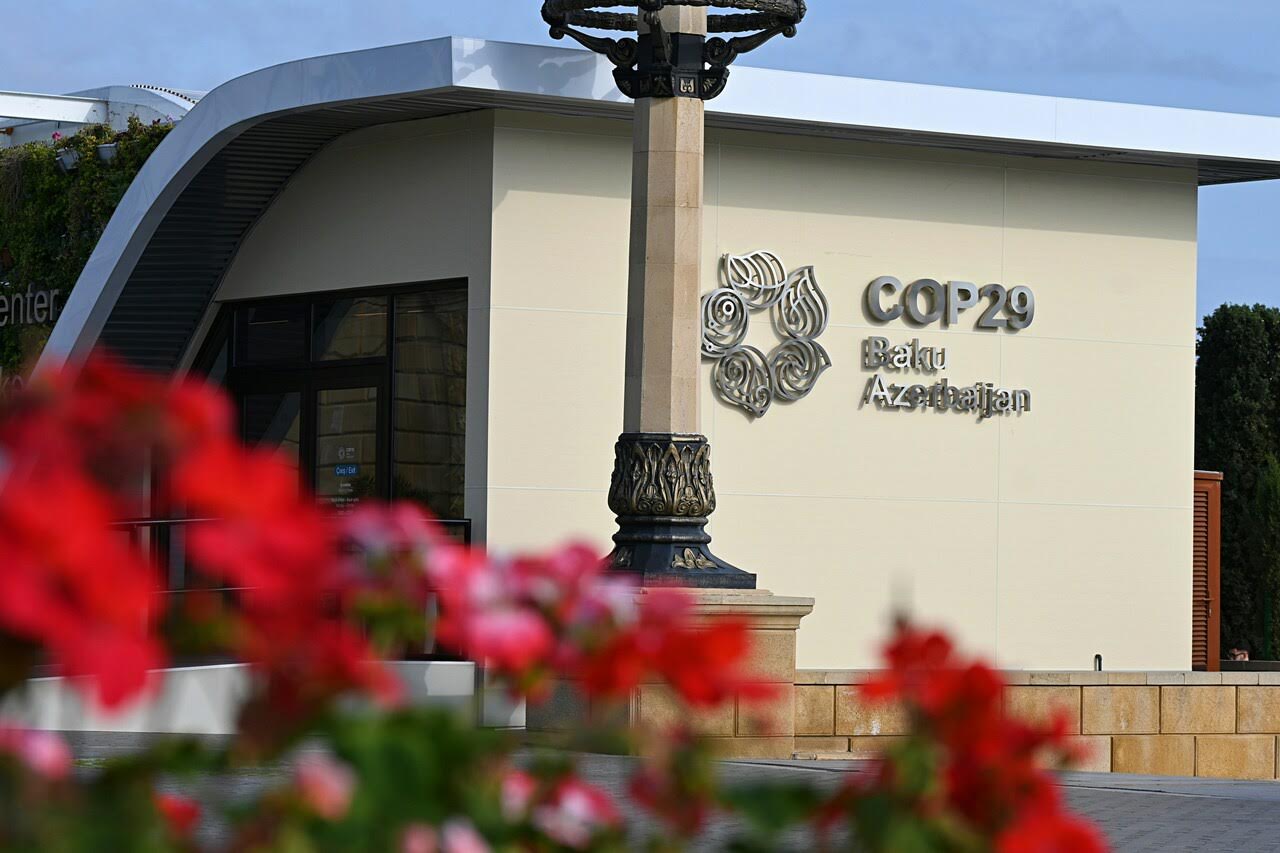
Cop29 Baku

As Europe faces mounting environmental challenges, European Commission President Ursula von der Leyen’s decision to skip the COP29 climate summit in Baku signals a troubling lack of urgency. While the Commission cites its “transitional phase” as the reason for her absence, this explanation feels hollow against the backdrop of an escalating climate crisis that demands the EU’s full attention and leadership. COP29, held in a country economically tethered to fossil fuels, is already mired in controversy. Von der Leyen’s absence only adds to concerns that the summit will lack the commitment needed for substantive progress.

The climate summit’s agenda this year is as pressing as ever, focusing on critical topics such as funding climate action in developing countries and establishing frameworks for carbon trading. With the frequency of climate-driven natural disasters increasing worldwide, immediate action is essential. In Spain’s Valencia region, for instance, deadly floods have recently destroyed homes and taken lives, serving as a sobering reminder that climate change is not a future threat—it is already here. Against this urgent backdrop, von der Leyen’s absence could be interpreted as a troubling signal that the EU has other, more pressing concerns than addressing the climate crisis.

An Inconvenient Absence Amid Global Turmoil

Von der Leyen is not alone in her decision to miss COP29; other prominent leaders, including French President Emmanuel Macron and the outgoing U.S. President Joe Biden, are also skipping the summit. However, the EU’s role as a climate leader sets it apart, particularly as it faces the likelihood of a less climate-conscious U.S. administration. Without strong EU representation, there is a risk that COP29 will be dominated by fossil fuel-producing countries like Azerbaijan, which holds a vested interest in slowing the transition away from oil and gas. This situation threatens to turn the summit into more of a greenwashing spectacle than a forum for meaningful action.

European lawmakers and environmental advocates have voiced their disappointment. Michael Bloss, a German Green MEP, called von der Leyen’s decision “a fatal signal,” while WWF’s climate specialists warned that the absence of key leaders could undermine confidence in global climate commitments. The climate crisis will not pause for political convenience, nor will it wait for ideal conditions to act. Europe’s climate leadership is critical, particularly as other global powers waver on their commitments.

The EU’s Complicated Climate Commitments

In recent years, the European Union has prided itself on its ambitious climate policies, from the European Green Deal to its commitment to cut emissions by 55% by 2030. Yet, von der Leyen’s absence from COP29 raises questions about the EU’s true priorities. As discussions around implementing the European Green Deal remain contentious, the debate on front of pack labeling systems such as Nutri-Score somehow continues to attract attention. This controversial system, which rates foods based on a simplified color code, has sparked endless debate and backlash. This focus reflects misplaced priorities, as time is diverted from more significant issues like climate action.

Initially implemented in France in 2017, Nutri-Score aims to help consumers make healthier food choices by ranking products from green “A” to red “E.” However, this attempt at nutritional clarity has been met with widespread backlash for oversimplifying complex dietary information, confusing consumers, and undermining cultural food traditions that define the European diet. It has also been criticised for encouraging the consumption of proteins, which often translates into eating meat – hardly an environmentally friendly consumer choice. 

The EU’s emphasis on initiatives like the harmonization of labeling over pressing climate issues can appear tone-deaf in the current context. Prioritizing these debates while Europe endures deadly climate-induced events sends a confused message to the world.

Financing and Transparency: The Stakes of COP29

COP29 is a critical moment for securing climate finance for developing nations—a key factor in enabling them to implement their climate action plans. Developing countries have long called for clear commitments from wealthier nations, not just promises. Yet, the financing debate has stalled, with disagreements over the amounts, sources, and mechanisms of support. With the EU’s leadership role diminished by von der Leyen’s absence, there is a real risk that the conference will yield only superficial outcomes.

Azerbaijan, as COP29’s host, has established the Baku Global Climate Transparency Platform, intended to enhance transparency in climate commitments. But Azerbaijan’s poor track record on transparency, coupled with its dependence on fossil fuels, calls into question its commitment to meaningful climate action. The country ranks high in corruption indices, and restrictions on civil society have intensified ahead of the summit. The irony of a petro-state presiding over a climate summit is not lost on observers, and von der Leyen’s absence only adds to the perception that the EU is failing to lead.

The Path Forward: A Call for Focused Climate Leadership

The stakes at COP29 could not be higher. From the latest global temperature records to the devastating floods in Valencia, the evidence of climate change’s impact is undeniable. Europe, with its legacy of environmental leadership, has a unique responsibility to push for substantial progress, particularly as other global leaders falter in their commitments. The EU’s leaders must urgently re-evaluate their priorities to reflect the gravity of the climate crisis. Instead of being sidetracked by secondary issues or internal political considerations, Europe needs to focus on the larger picture, pressing for robust international commitments and ensuring that financing mechanisms meet the scale of the challenge.

In von der Leyen’s absence, the EU delegation will be led by climate commissioner Wopke Hoekstra, but the symbolic weight of Europe’s top official missing the summit will linger. As world leaders convene in Baku, the hope is that they can overcome the limitations imposed by the summit’s context and make real progress on climate action.The world needs a climate commitment it can count on, not only when it is politically convenient but when it matters most.